



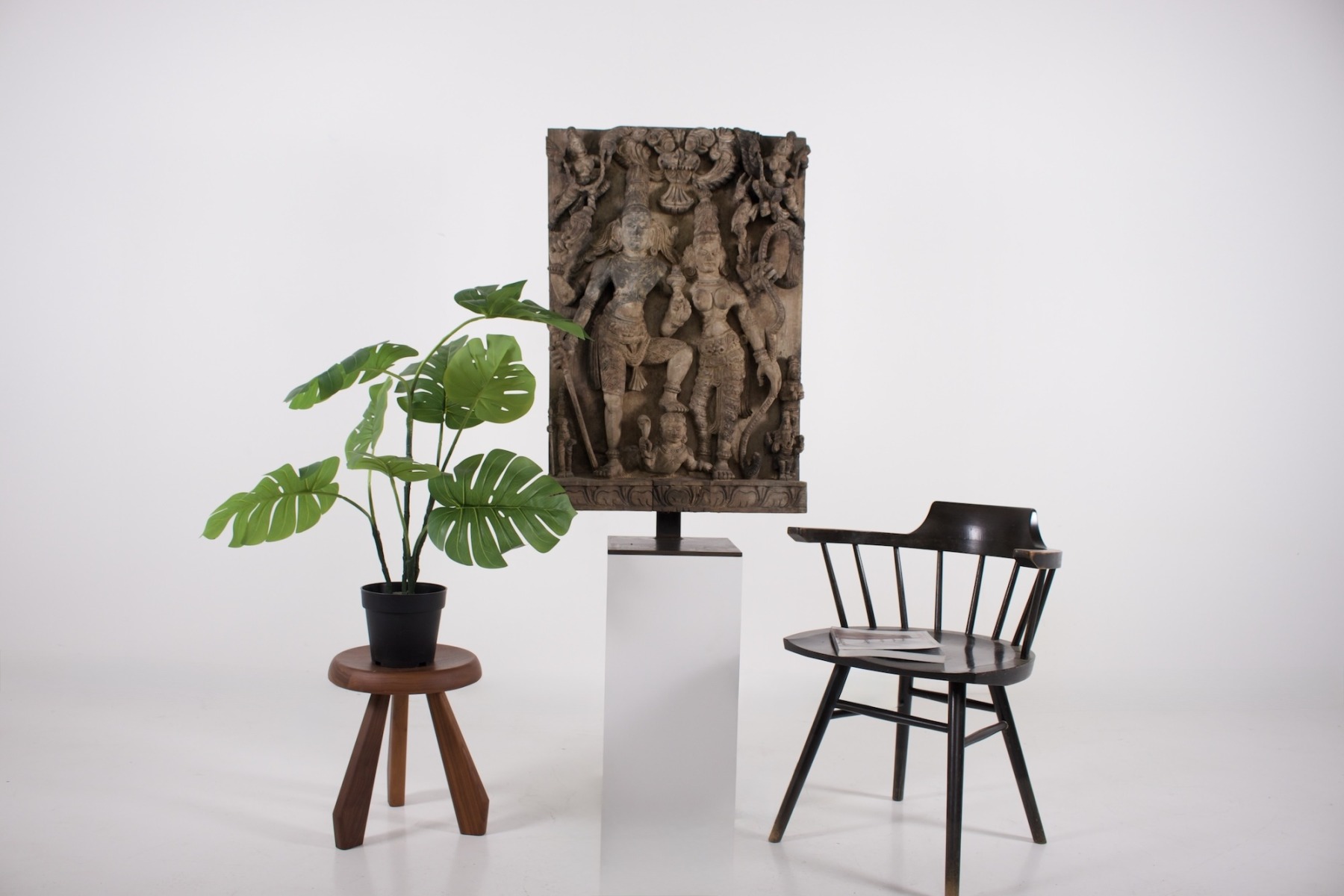








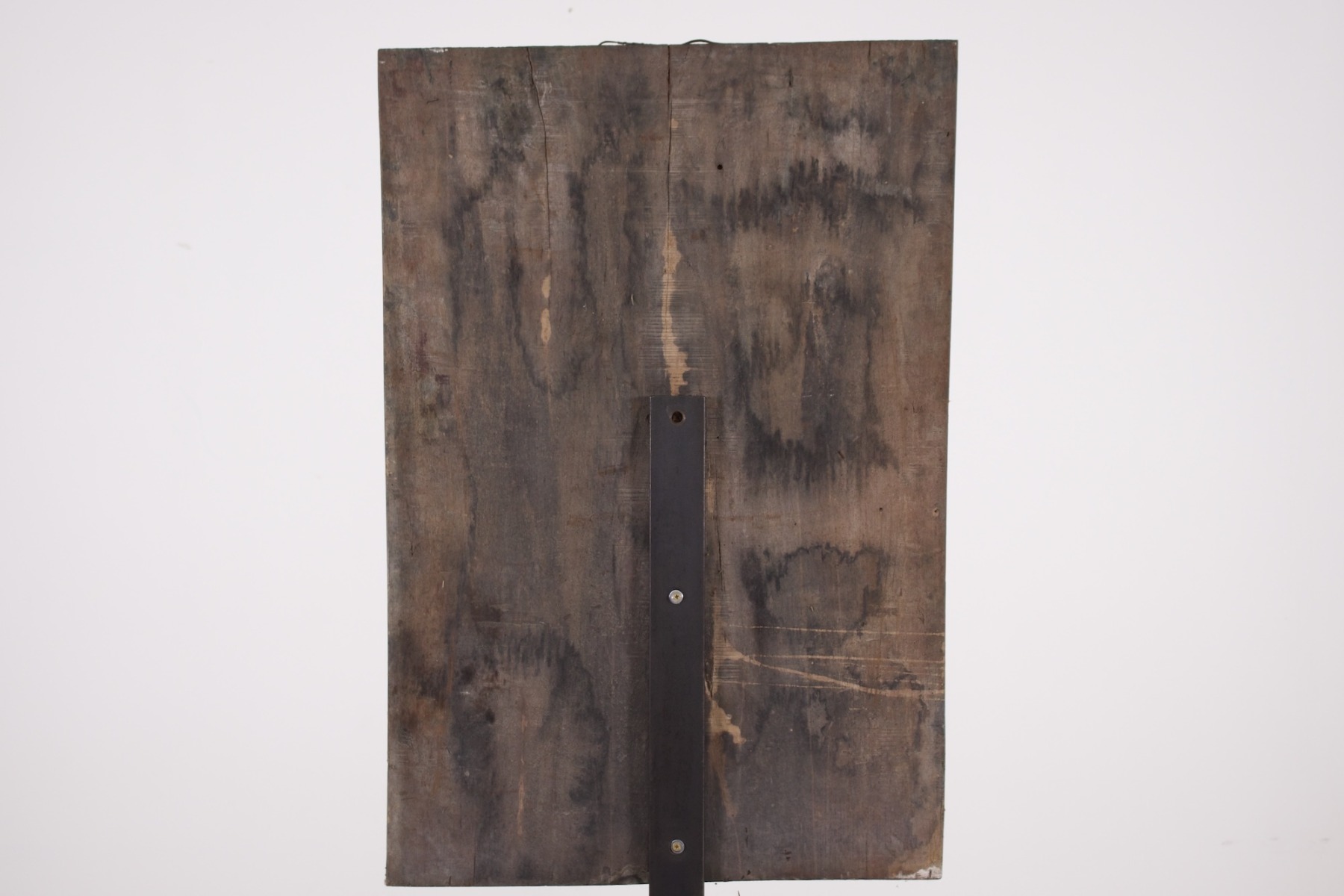
Shiva Tripurantaka and Parvati Temple Chariot Panel
€3500,00
An important carved wooden temple chariot panel depicting Shiva Tripurantaka and Parvati. Originating from Tamil Nadu (South India) and dating from the 19th century or earlier, this high relief derives from a processional chariot used in significant Hindu ceremonies.
- Panel only: H 90 cm x W 63 cm x D 12 cm
- Height on stand: 100 cm
- Provenance: Former collection of Claude de Marteau, accompanied by a certificate.
1 available in store

A temple chariot panel dedicated to Shiva, Destroyer of the Three Cities
This remarkable carved wooden panel once adorned a processional chariot (ratha) from Tamil Nadu, utilized during major religious festivals, such as the Ratha Yatra, when deities would depart the temple to traverse the streets amidst their devotees. Executed in deep relief with remarkable finesse, this composition depicts Shiva in one of his twenty-five manifestations, Tripurantaka Moorthi, the « Destroyer of the Three Cities », accompanied by his consort Parvati and their divine entourage, all major figures within the Shaivite tradition, one of the principal branches of Hinduism.

A temple chariot in Madras in 1850. Two panels are visible. (Source Wikipedia)
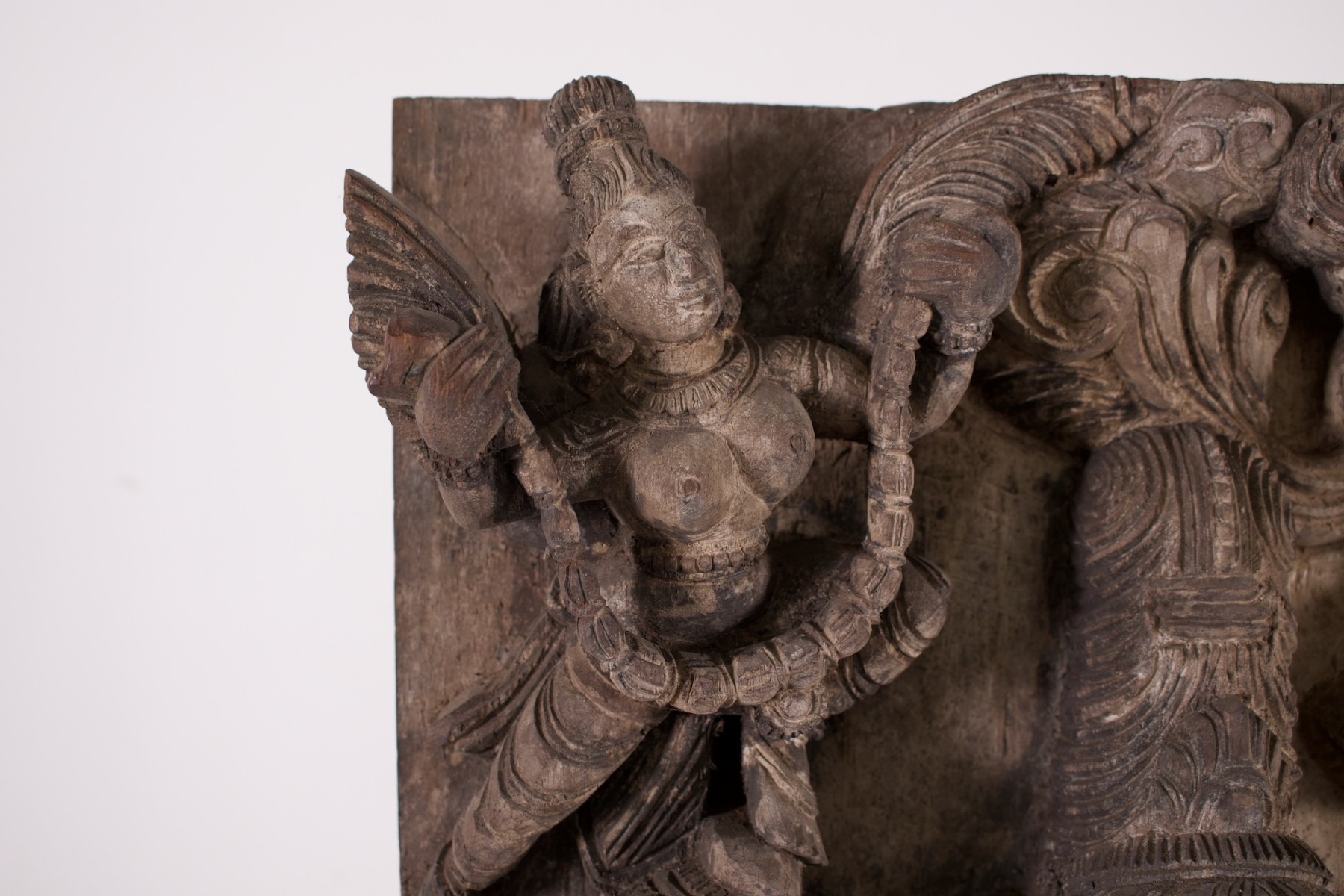
The scene is dominated by an imposing Kirtimukha, or « Face of Glory », an emblematic protective mask in Hindu sacred architecture. According to tradition, this creature born of Shiva protects sanctuaries and repels harmful influences. On either side, two celestial female figures, probably Apsaras or Vidyadharis, float in the air presenting garlands of flowers in homage to the divine couple.

The Face of Glory and the two celestials, the axe (right hand), the antelope (left hand), and the bow made from Mount Meru.
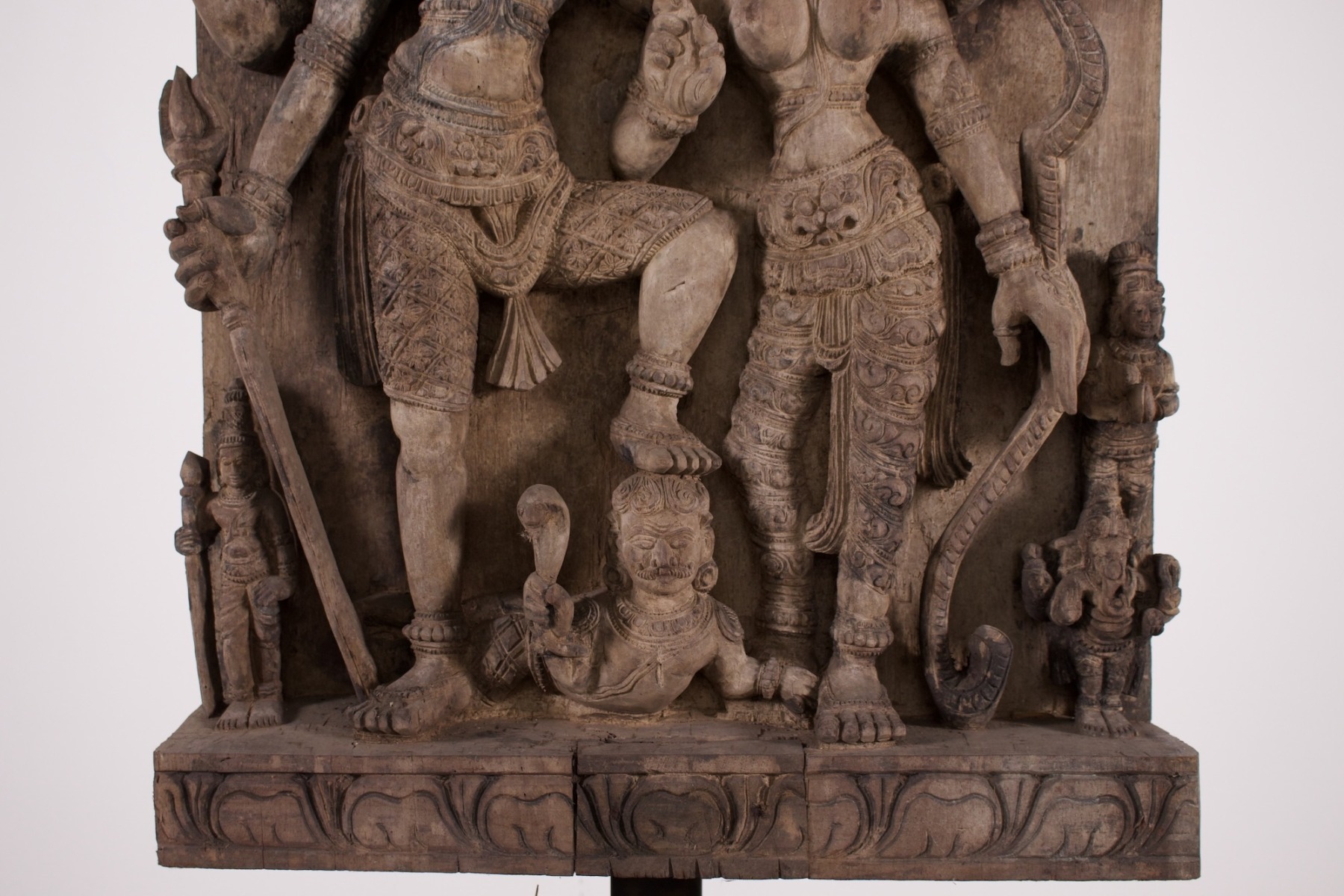
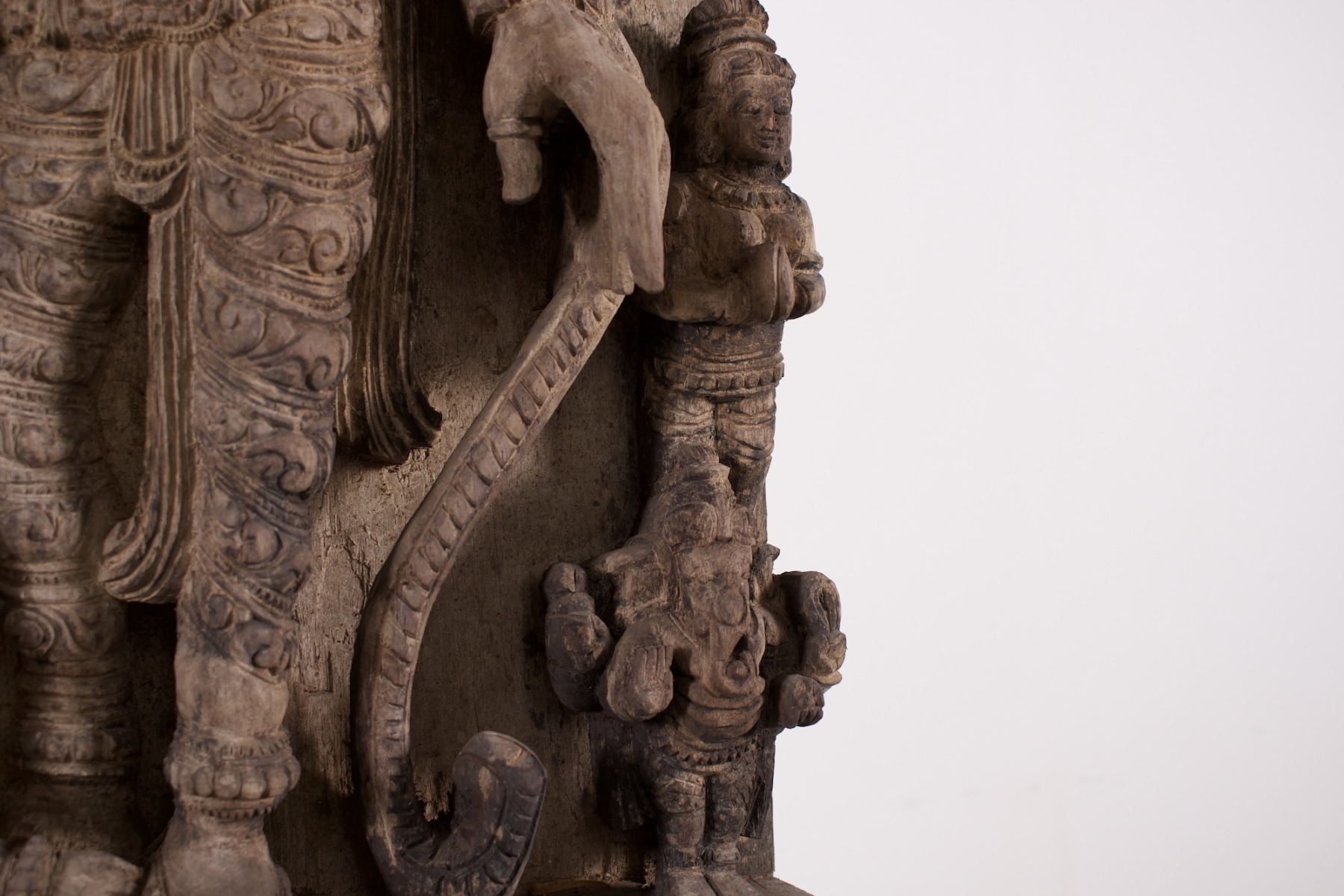
The main register shows Shiva and Pārvatī richly adorned, depicted in an attitude of majesty. In the lower register, Ganesha, easily recognizable by his elephant head, takes his place alongside his brother Skanda (Kartikeya), while a devotee or companion of Shiva harmoniously balances the composition on the opposite side. Beneath Shiva’s foot lies Apasmara Purusha, the demon of ignorance and spiritual forgetfulness, depicted holding a cobra. His subjugation expresses the victory of divine knowledge and cosmic order over the forces of chaos.

Left: A devout guard beneath the arrow embodying Vishnu; beneath Shiva’s foot, Apasmara. To the right of the bow, Ganesha and his brother Skanda.
According to Hindu tradition, three demons had built the three flying cities of Tripura, constructed of gold, silver, and iron. To destroy them, the entire universe became Shiva’s weapon: the Earth formed his chariot, the Sun and Moon his wheels, Mount Meru his bow, and Vishnu his arrow. With a single shot, Shiva launched the Pāśupatāstra, reducing the three cities to ashes and restoring cosmic order. This episode symbolizes the victory of the divine over evil, as well as the destruction of the three spiritual impediments: ego, karma, and illusion (māyā).
Shiva holds in his right hand the parashu, the sacred axe that severs the bonds of ignorance and earthly attachments. In his left hand, he controls an antelope, a symbol of the human mind, always in motion, unstable, and difficult to tame. By holding it peacefully, Shiva demonstrates his perfect mastery of the mind and passions. The association of the axe and the antelope expresses the balance between the power of divine knowledge, capable of cutting through ignorance, and the wisdom that calms the mind, while Pārvatī, by his side, personifies Shakti, the creative energy inseparable from Shiva.
The Anointing of Ashes: The Origin of the Tripundra
After the complete destruction of Tripura, Lord Shiva approached the residue of the burnt cities. He gathered the sacred ash (Bhasma or Vibhuti) and smeared it on his body and face. With his finger, he drew three horizontal lines on his forehead.

The Tripundra symbolized by the 3 lines of ashes from the cities destroyed by Shiva.
You might also like…


Discover also...


Delivery to Belgium

Delivery to France

Delivery to Luxembourg
