









Gilded Wood Maravijaya Buddha – Burma, Konbaung Period
€3900,00
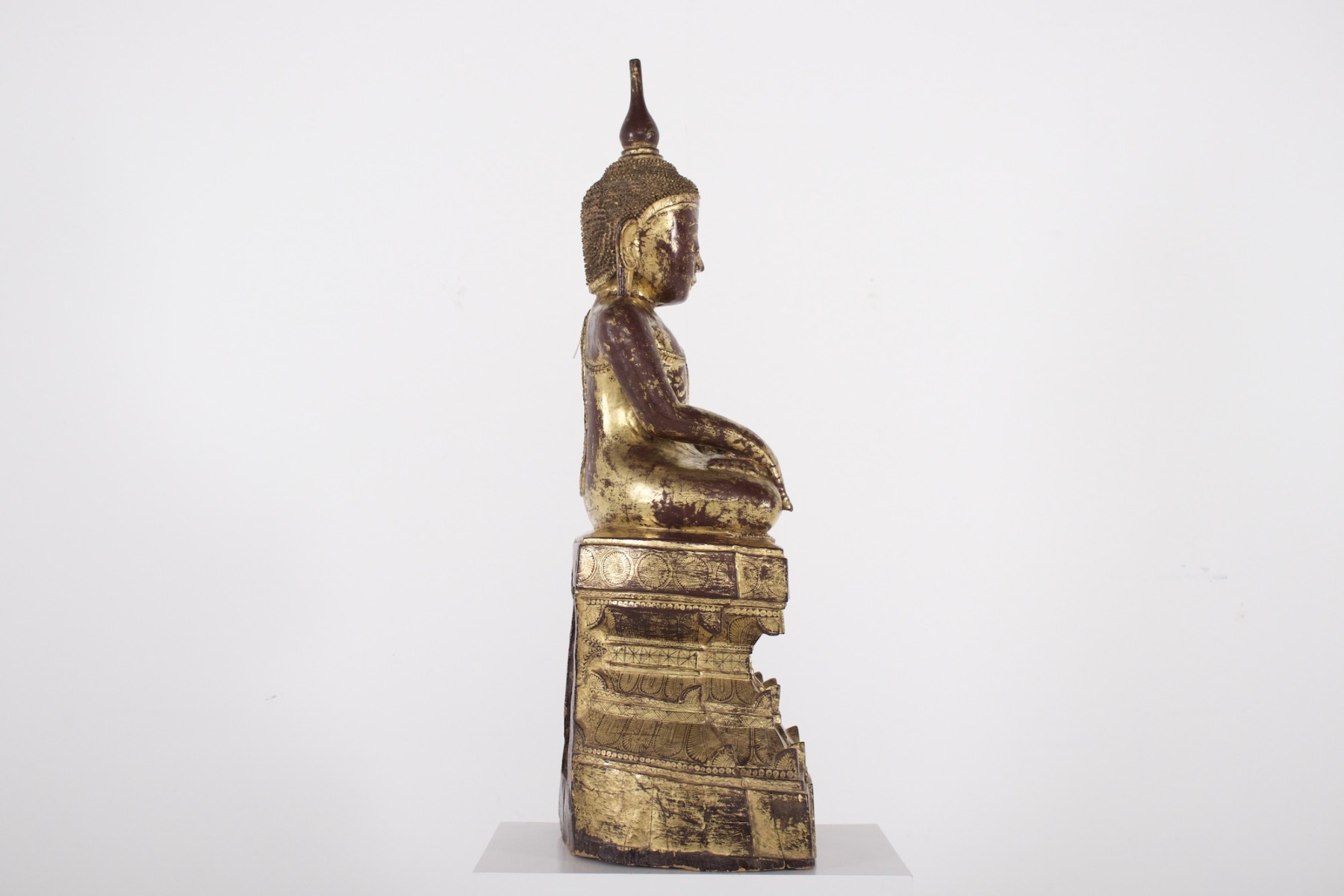
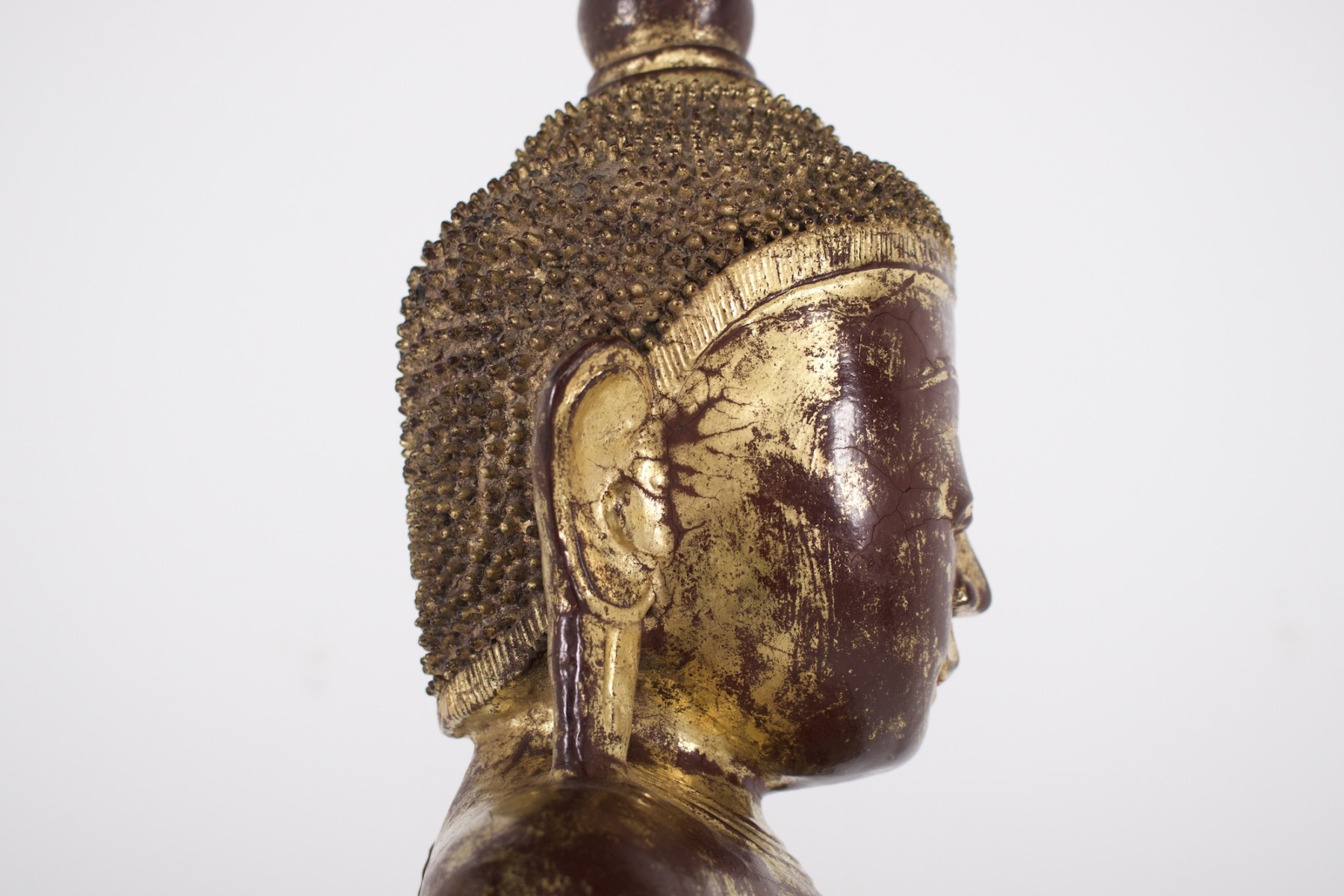
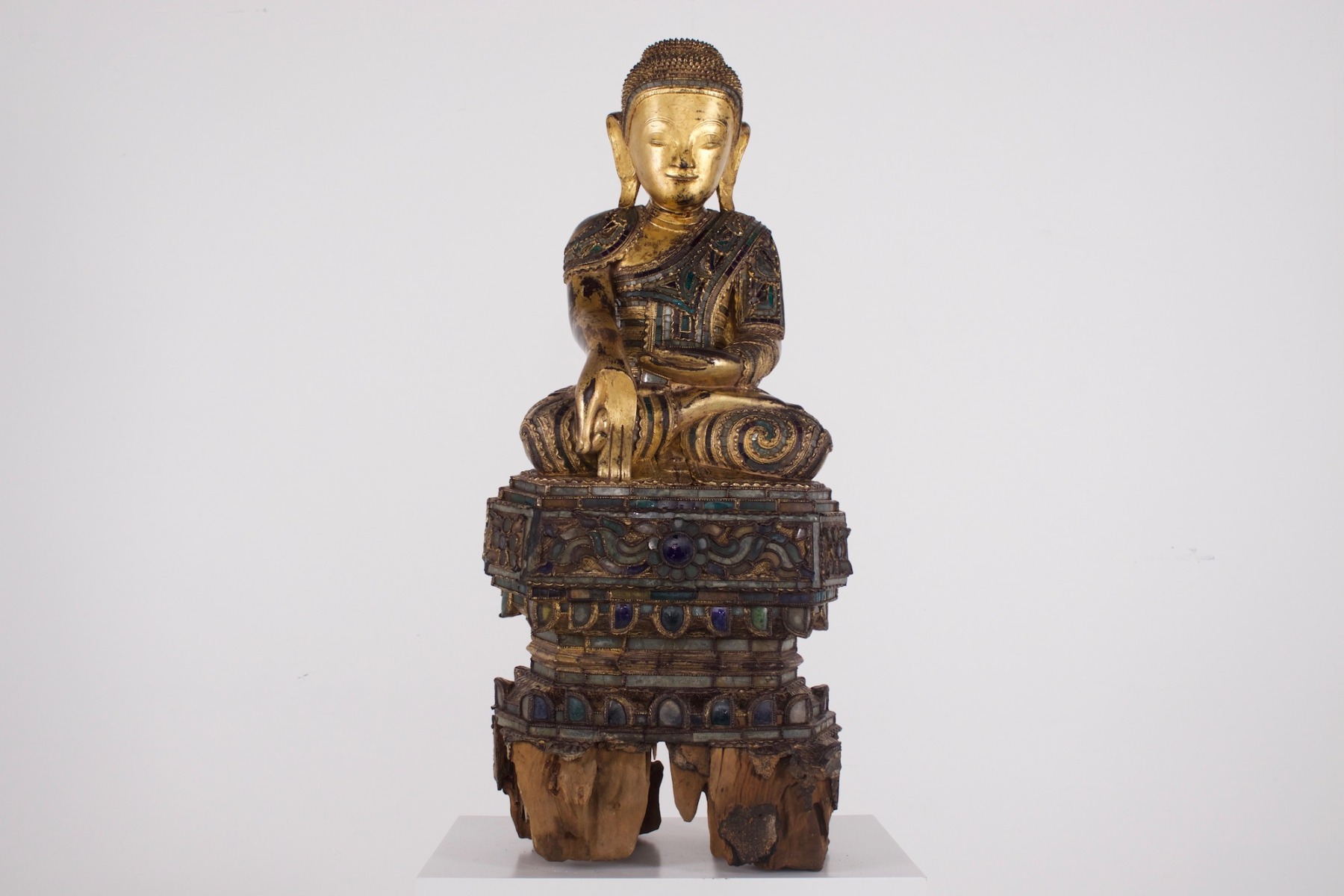
- Maravijaya Buddha in carved wood, covered in wine-red lacquer and gilding. Burma (Myanmar), Shan States, Konbaung period (1752–1885).
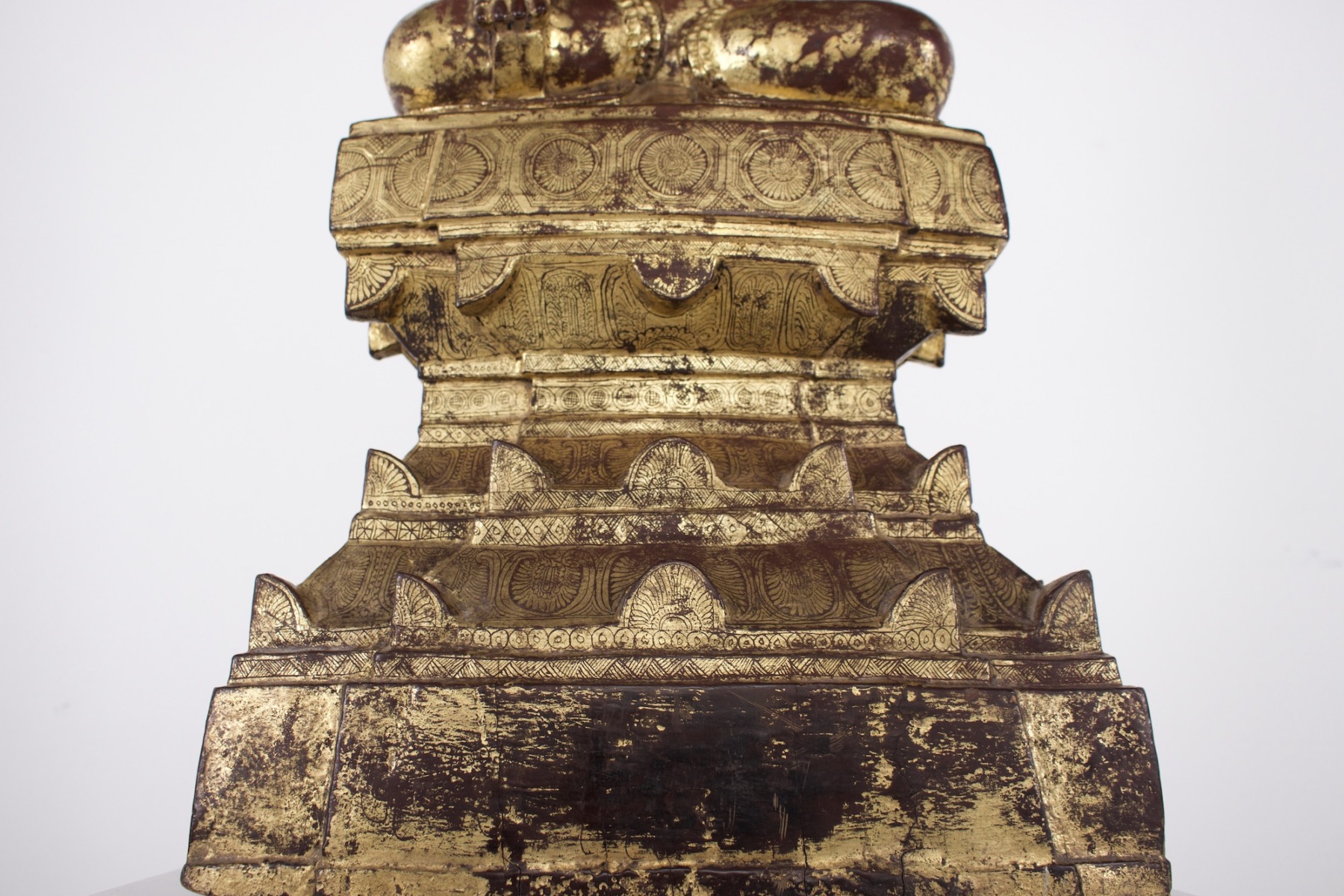
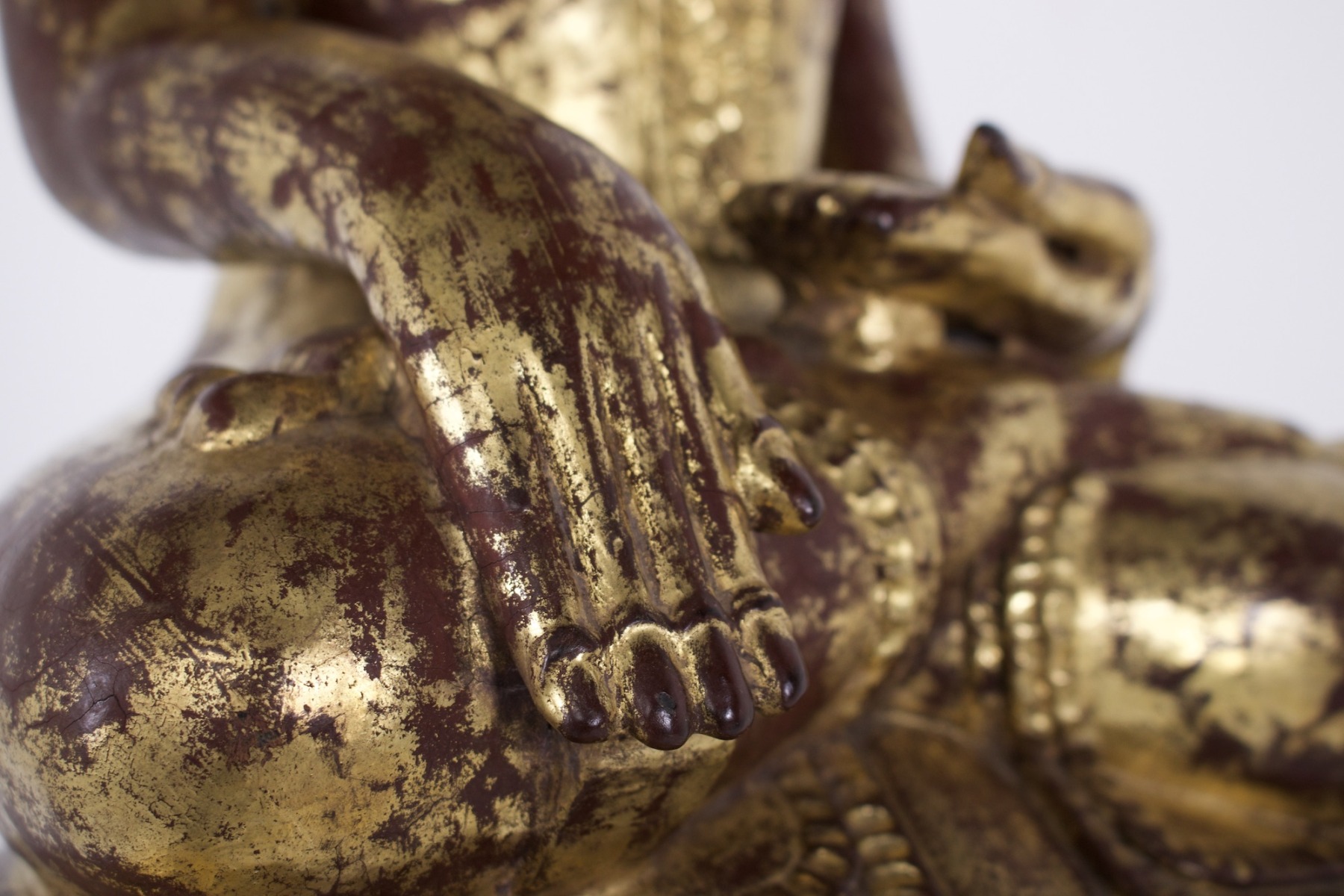
- Depicted in vajrāsana, seated on a stylized double lotus base. The right hand touches the earth to call the goddess as witness to his victory over Māra, marking the attainment of enlightenment.
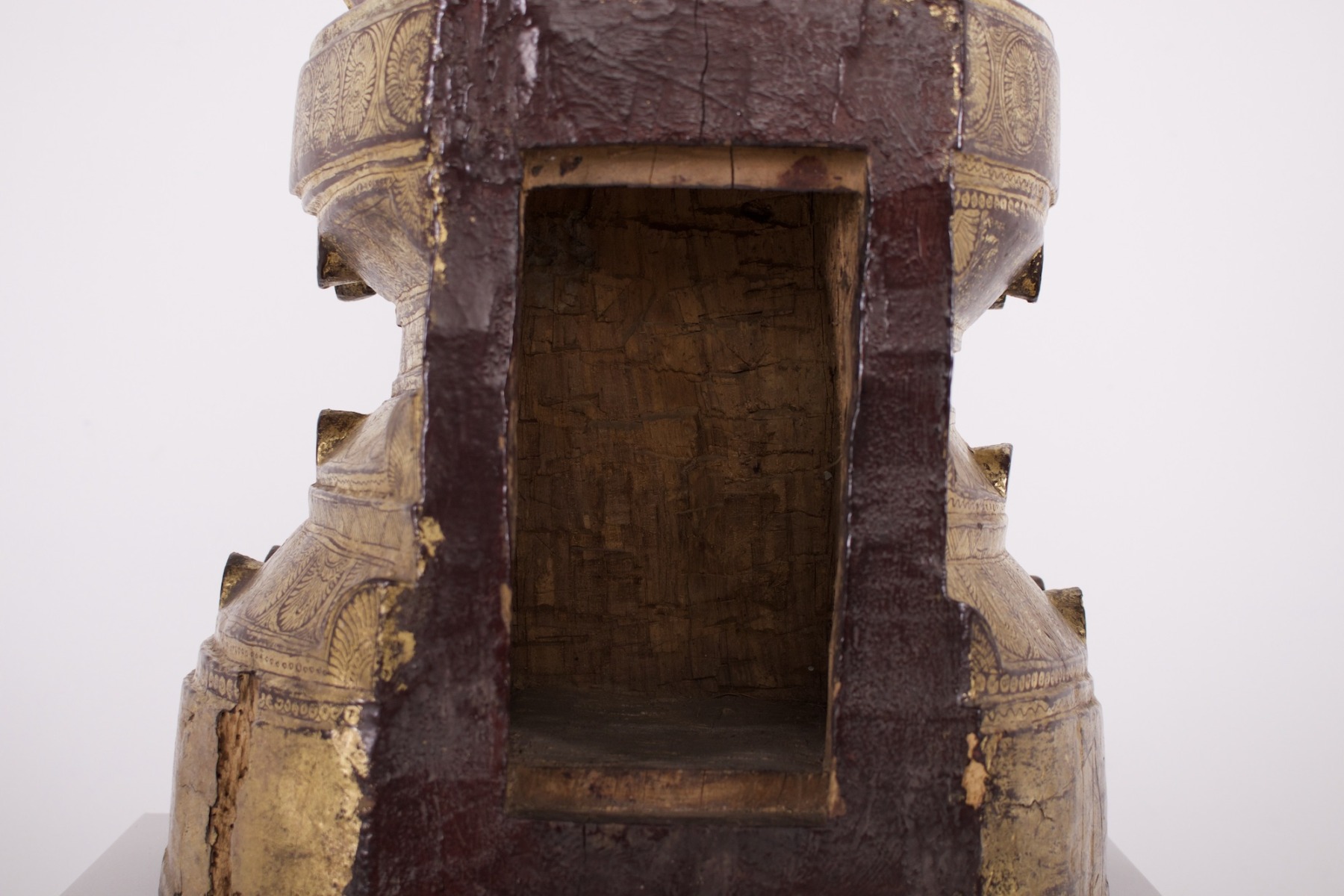
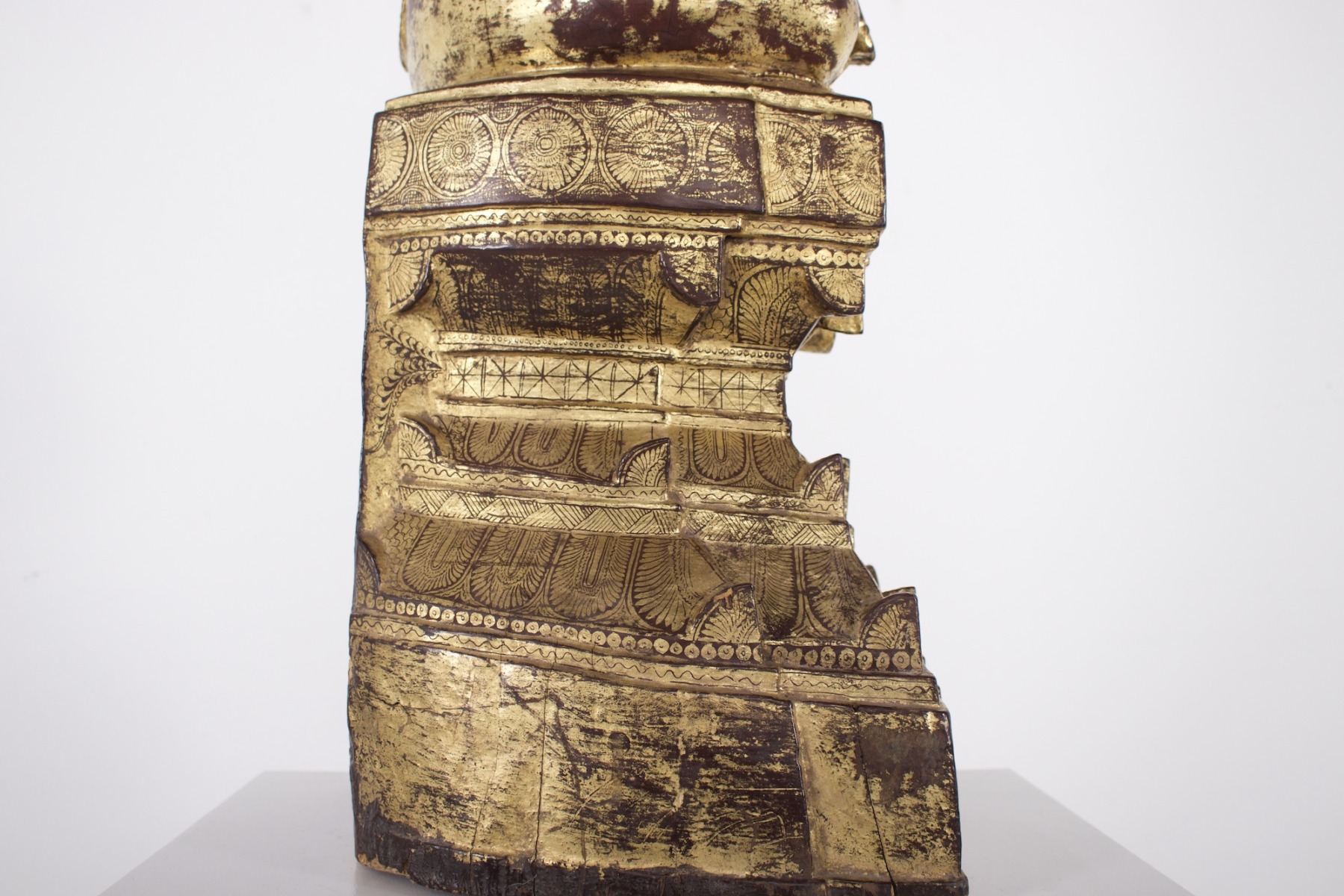
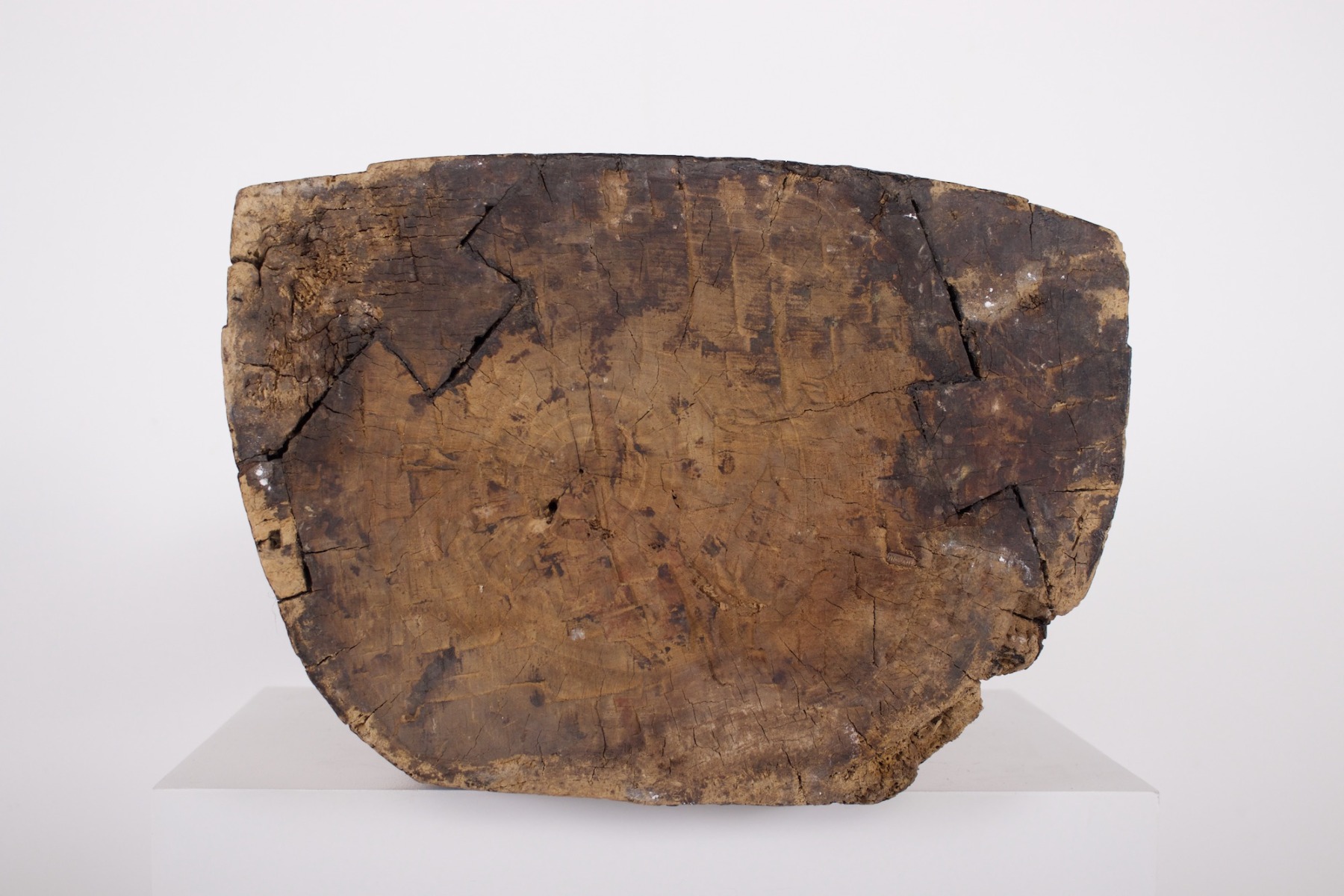
- The sculpture, preserved in its entirety, features refined ornamentation. The back of the throne, adorned with a double register of lotus petals, reveals an open reliquary cavity.
- Attached uṣṇīṣa flame.
- Dimensions: H 89 × W 38 × D 27 cm.
- Weight: 16.58 kg.
- Provenance: Claude de Marteau estate.
- Sold with certificate of origin.
1 available in store

Bhumisparsha mudrā, earth-touching gesture
In Theravāda iconography, the bhumisparsha mudrā posture is omnipresent, particularly in Burmese and Thai statues. The Buddha is depicted in a meditative position, legs crossed, left hand resting on the knees, while the right hand touches the earth with the fingertips. This gesture refers to the episode where Siddhārtha Gautama, confronted by Māra’s assaults, invokes the earth as witness to his accumulated merits throughout his existences.
In Thailand, this posture is particularly associated with the Sukhothai and Rattanakosin styles, characterized by slender silhouettes and a serene expression. In Burma, notably in the Mandalay and Konbaung styles, it is equally widespread, with fuller faces and more ornamental treatment of drapery and bases.
This gesture expresses a fundamental principle of Theravāda Buddhism: the accumulation of pāramī (perfections) and the central role of karma in attaining enlightenment. Unlike the Mahāyāna and Vajrayāna traditions, which develop more symbolic or esoteric forms, Theravāda favors a direct representation of the historical Buddha. The bhumisparsha mudrā thus becomes a visual synthesis of the determination and merits leading to enlightenment.
You might also like…


Discover also...

Delivery to Belgium

Delivery to France

Delivery to Luxembourg
