



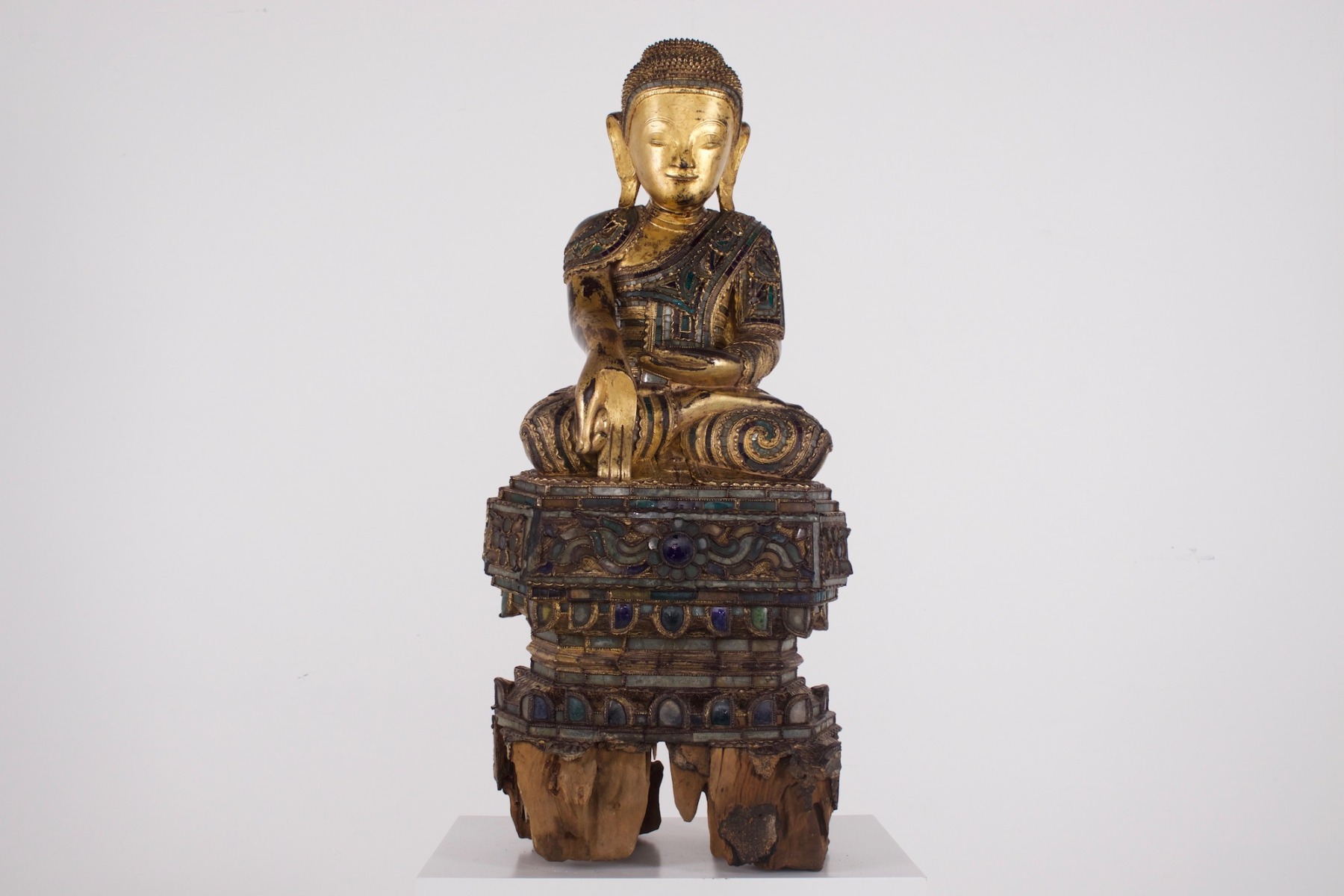
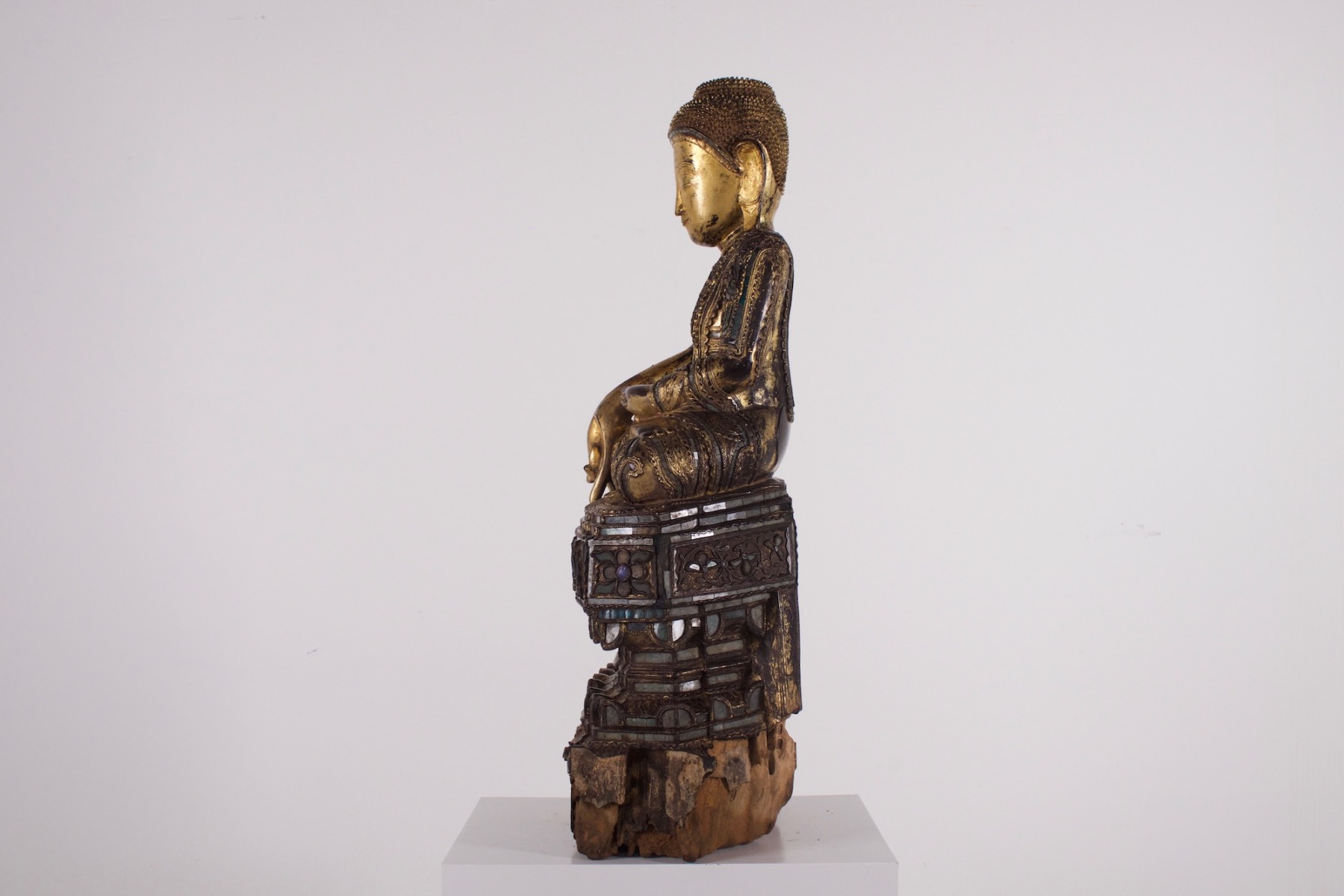
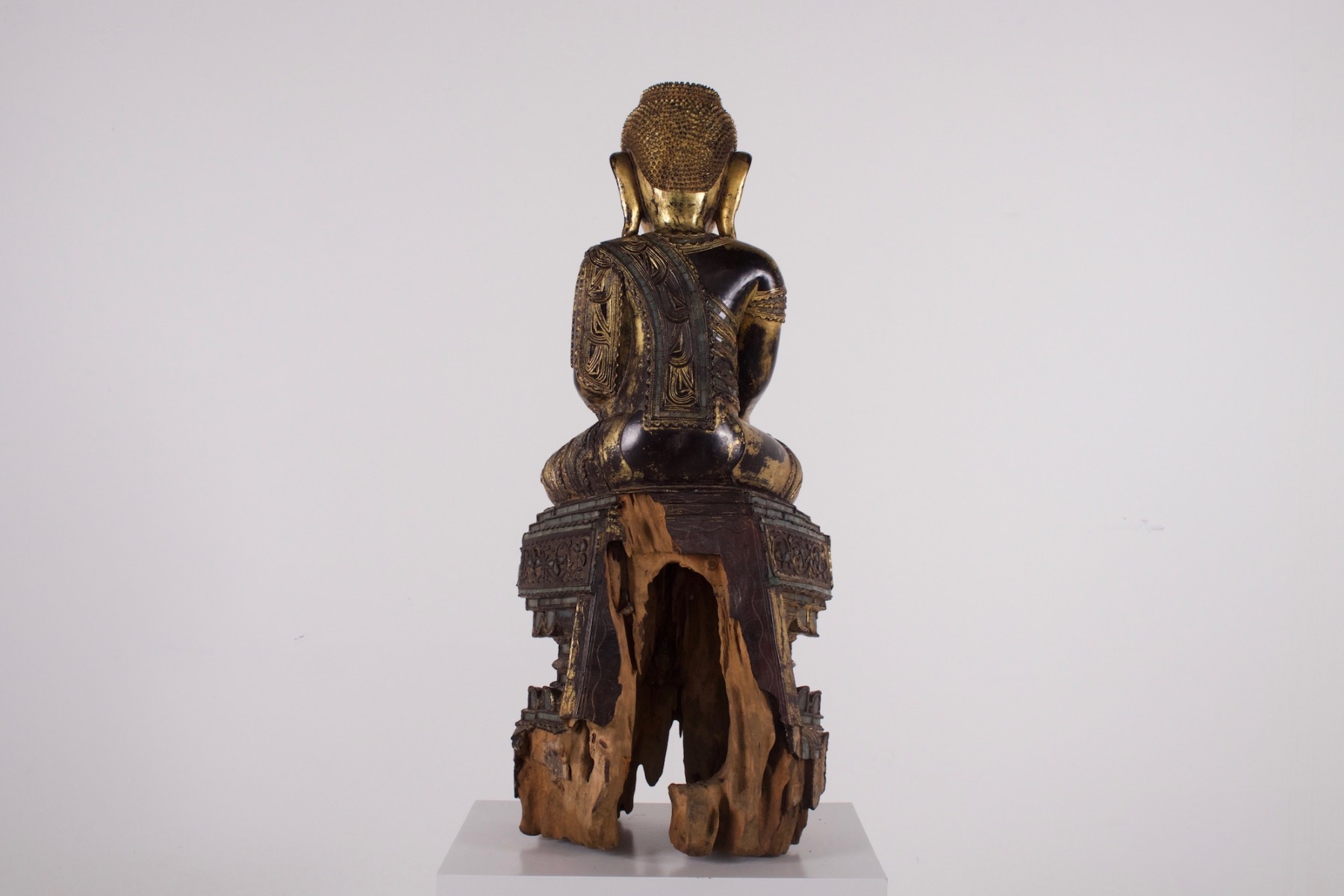
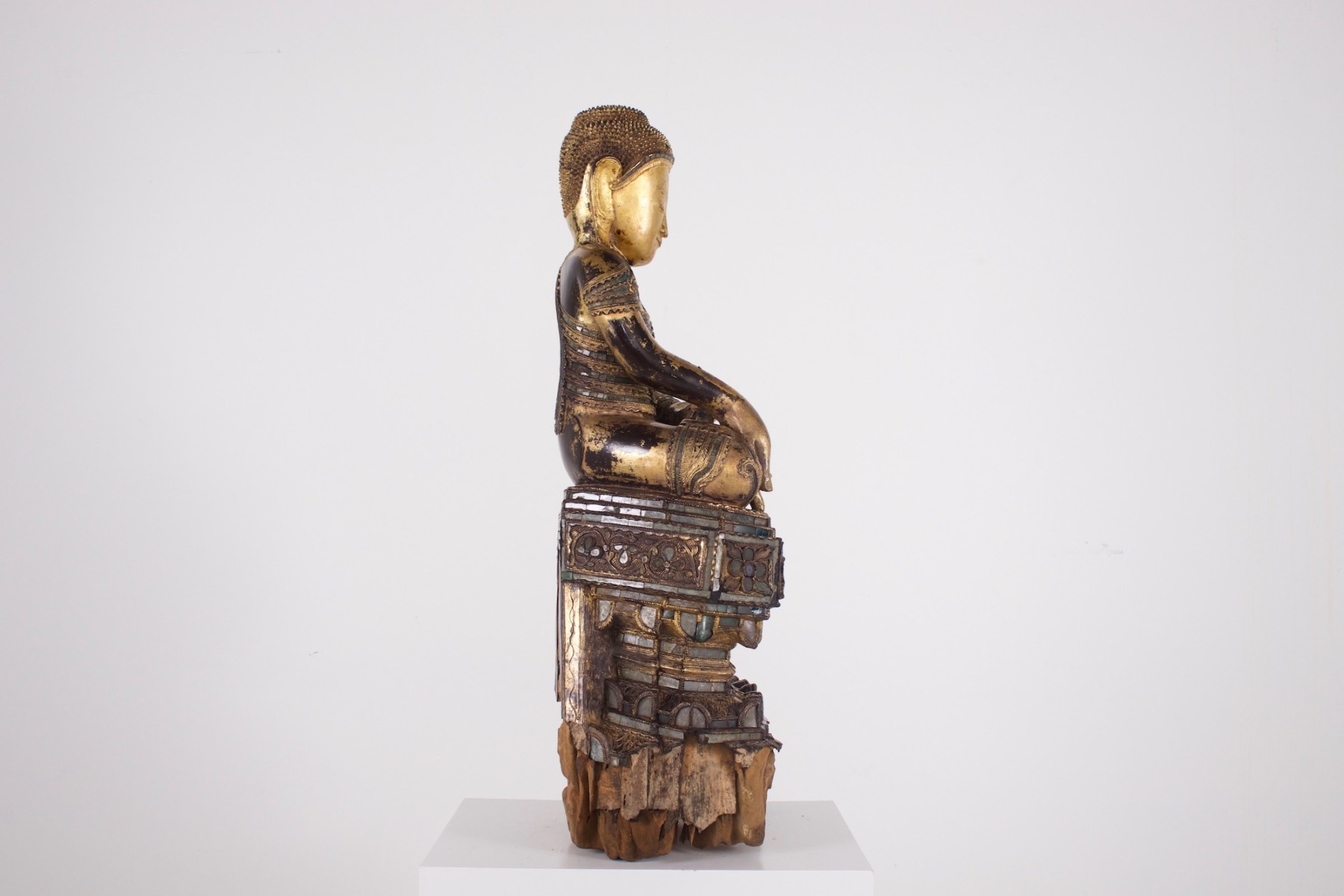

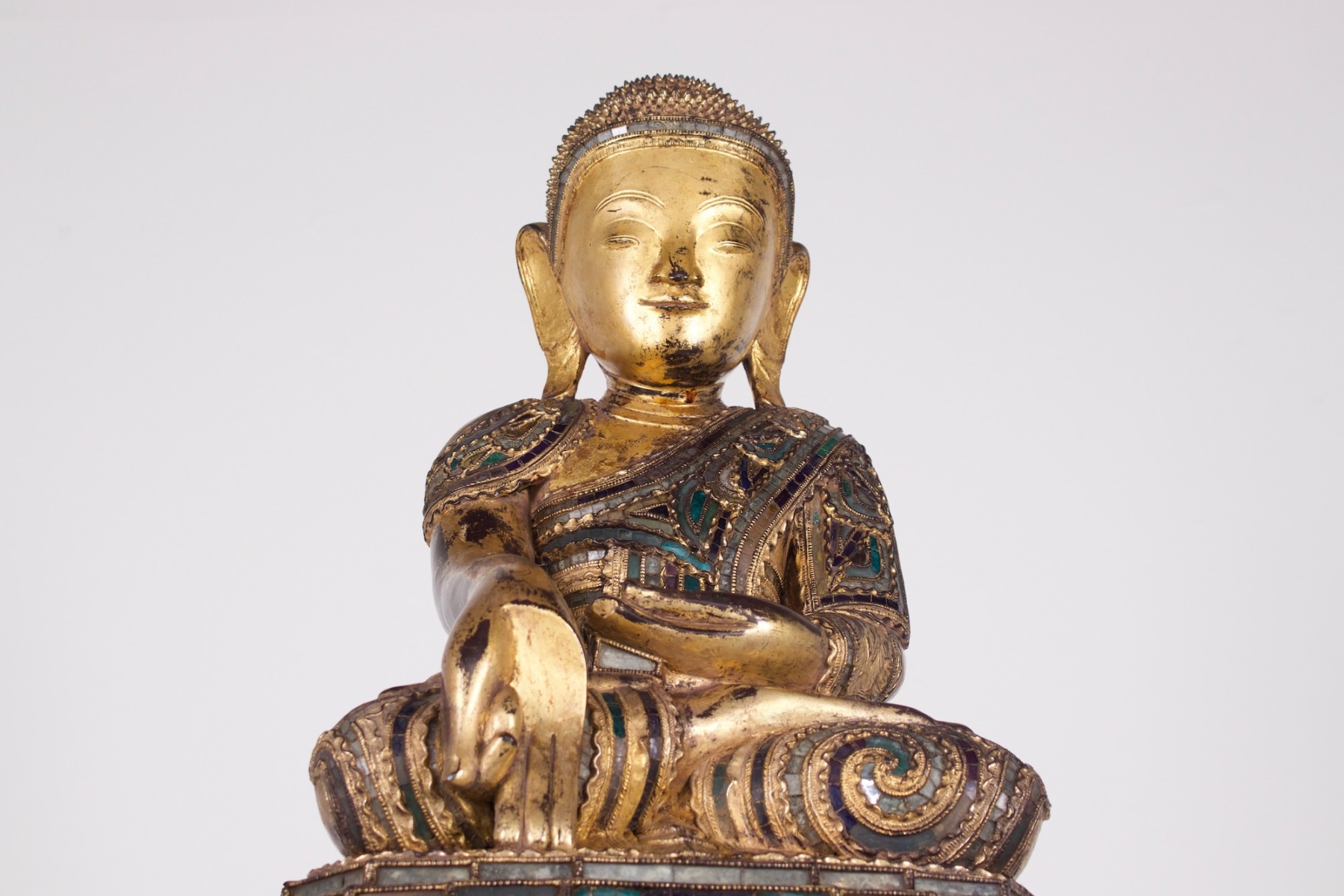
Burmese Gilded Wood Medicine Buddha – Konbaung Period
€5800,00
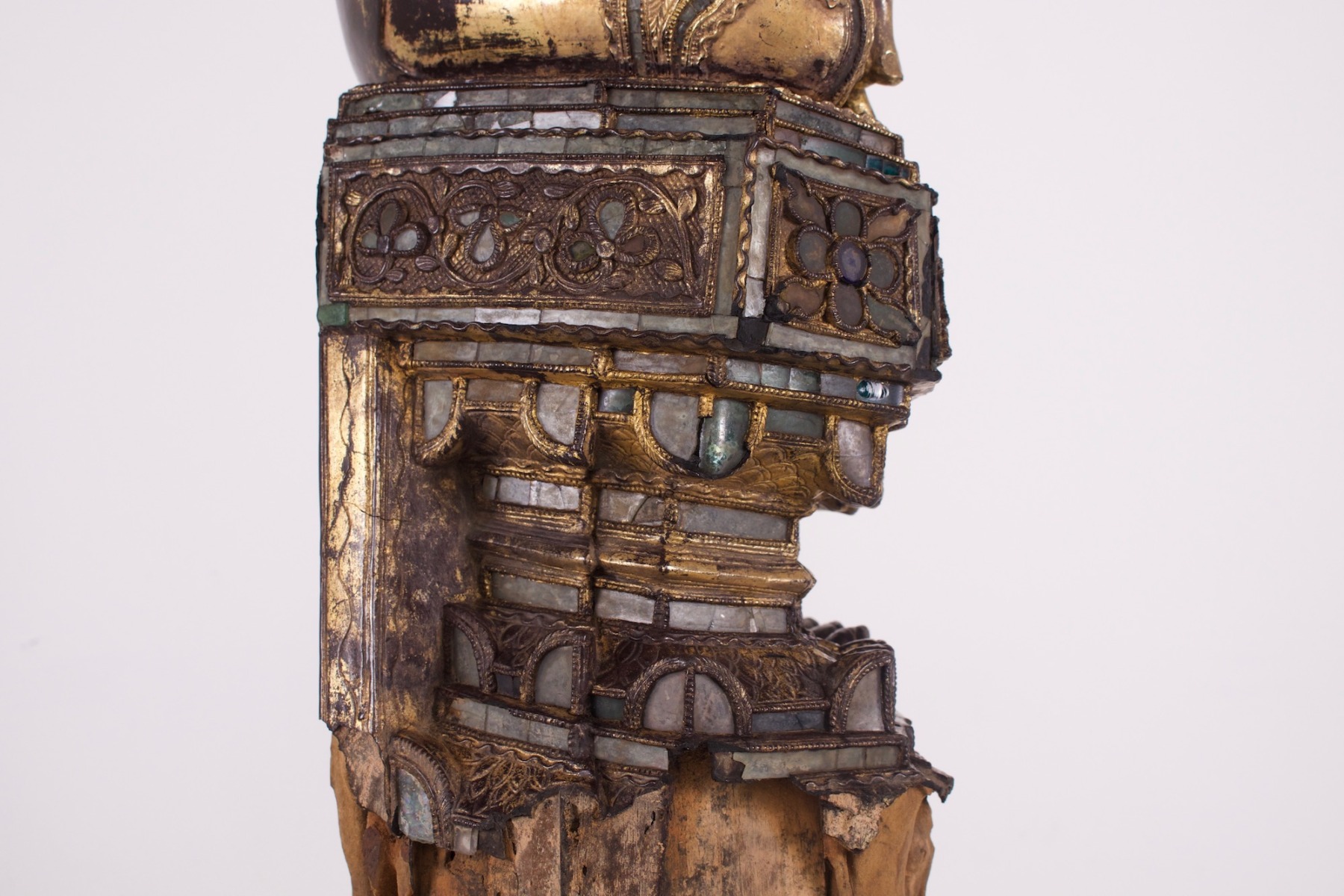
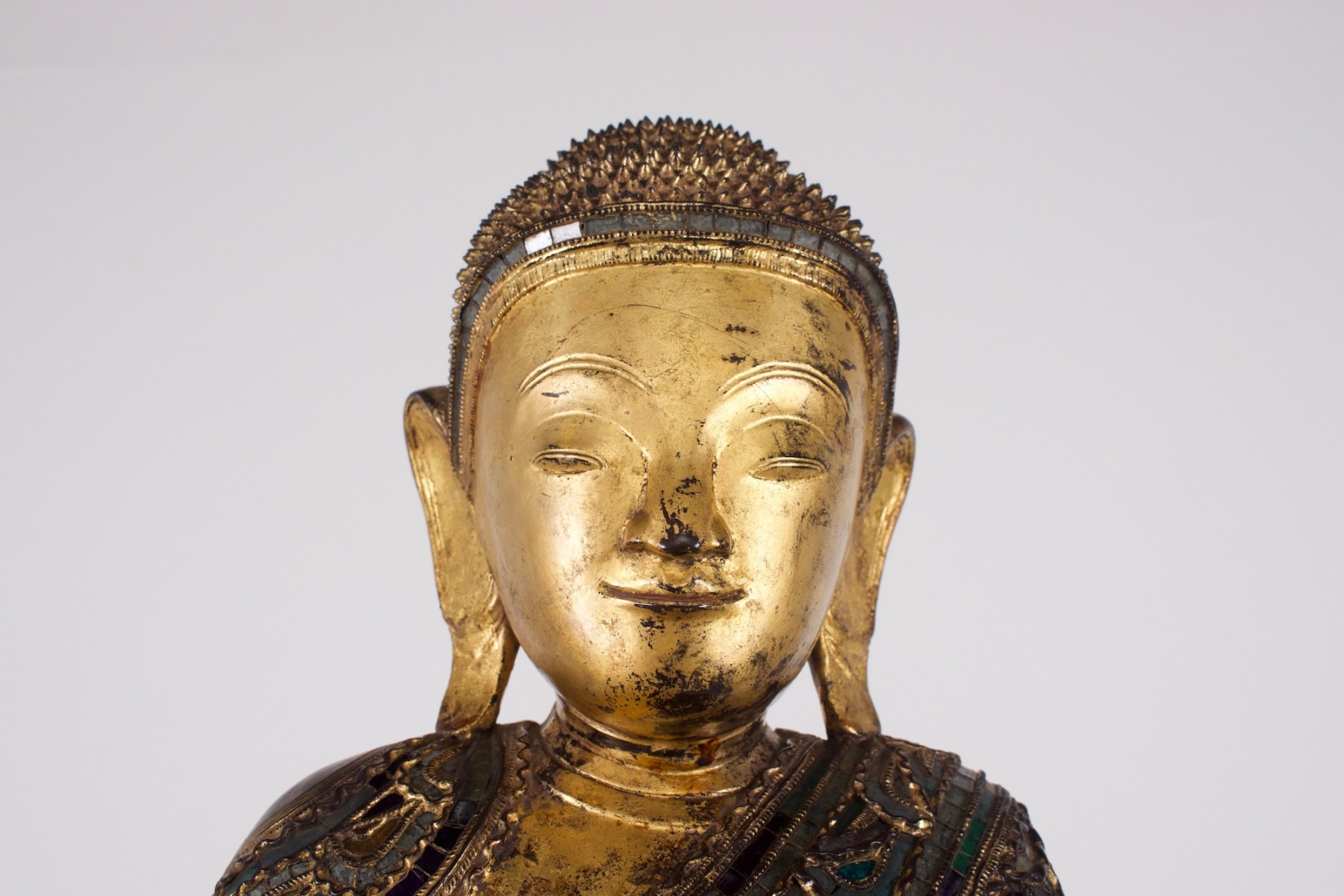
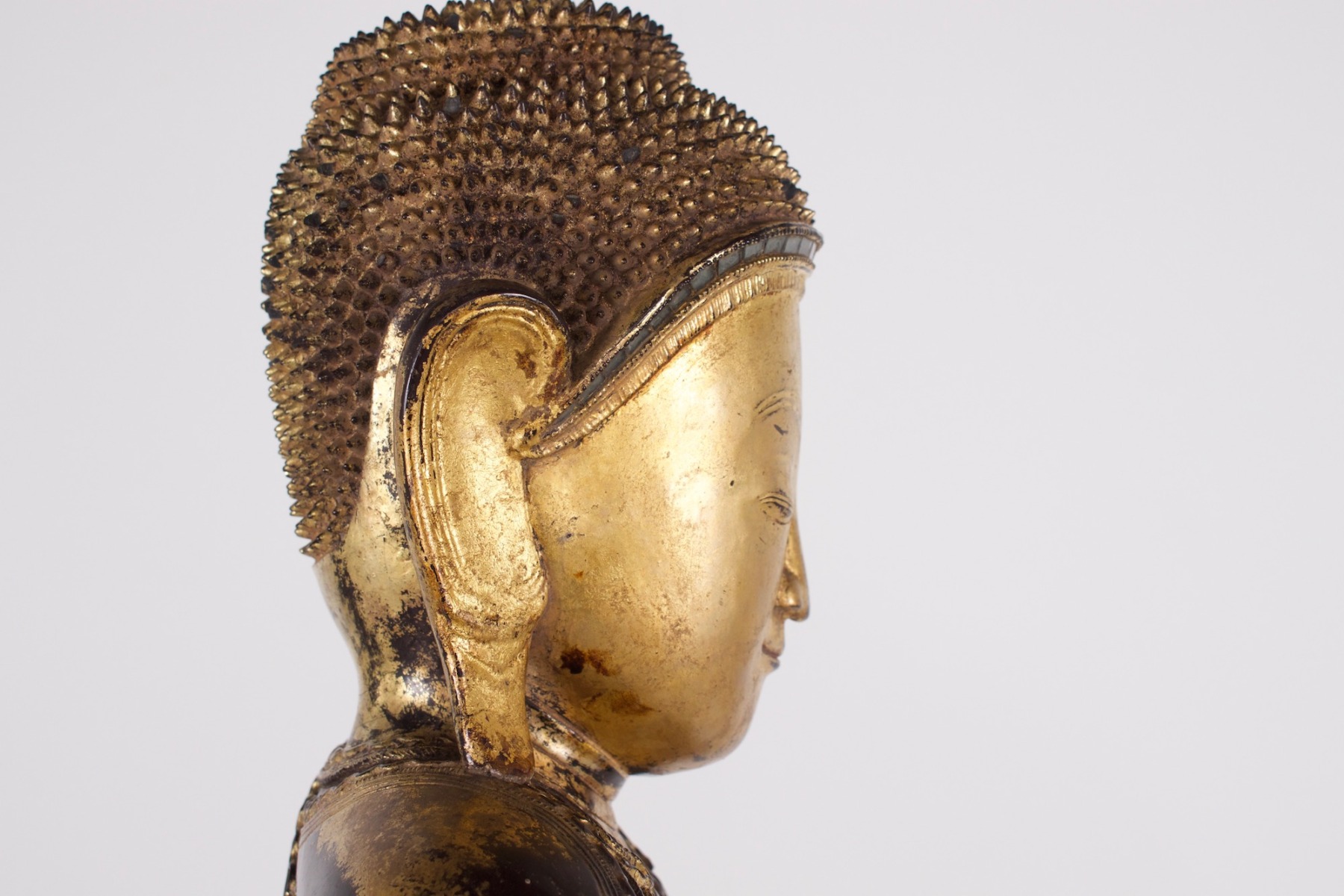
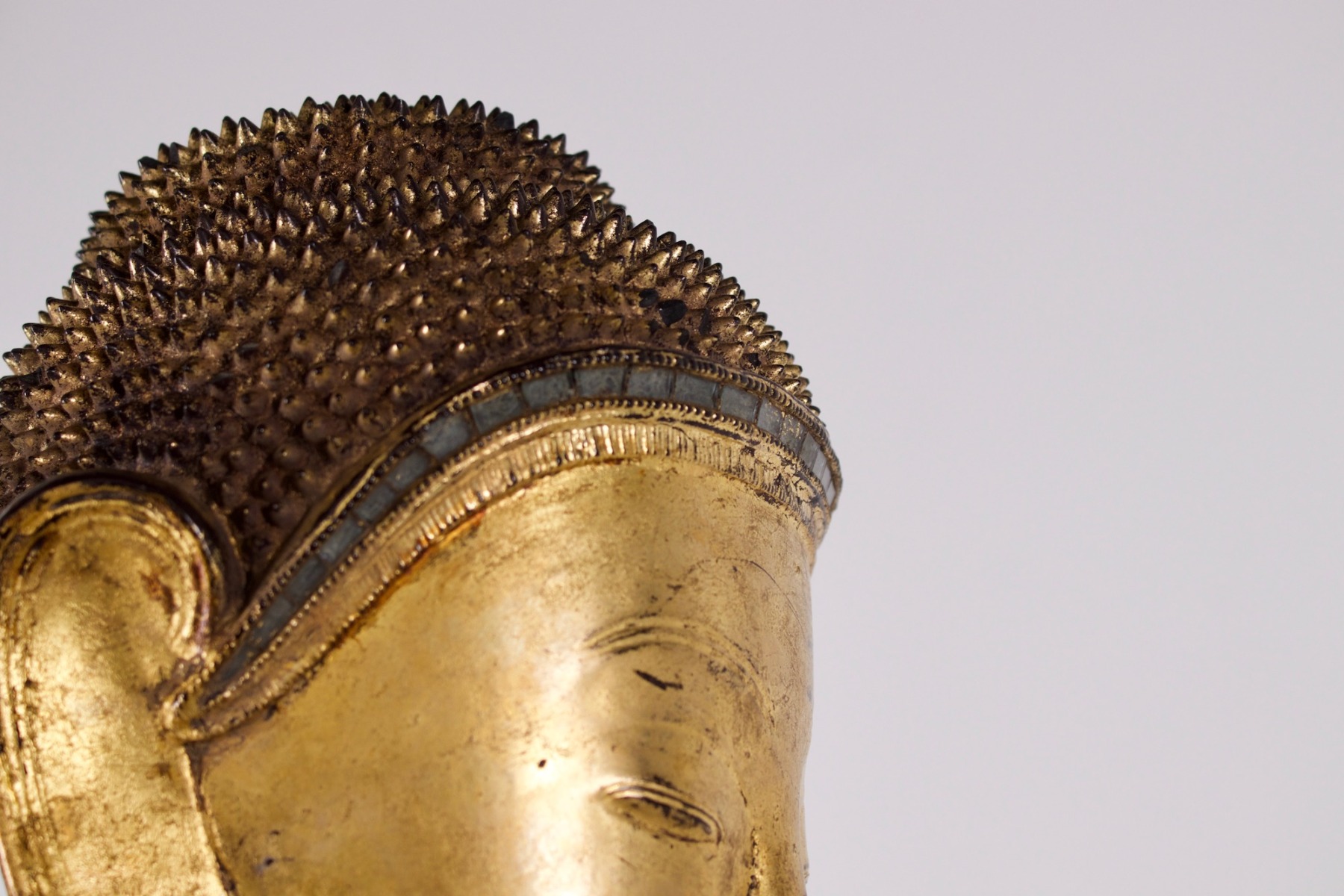
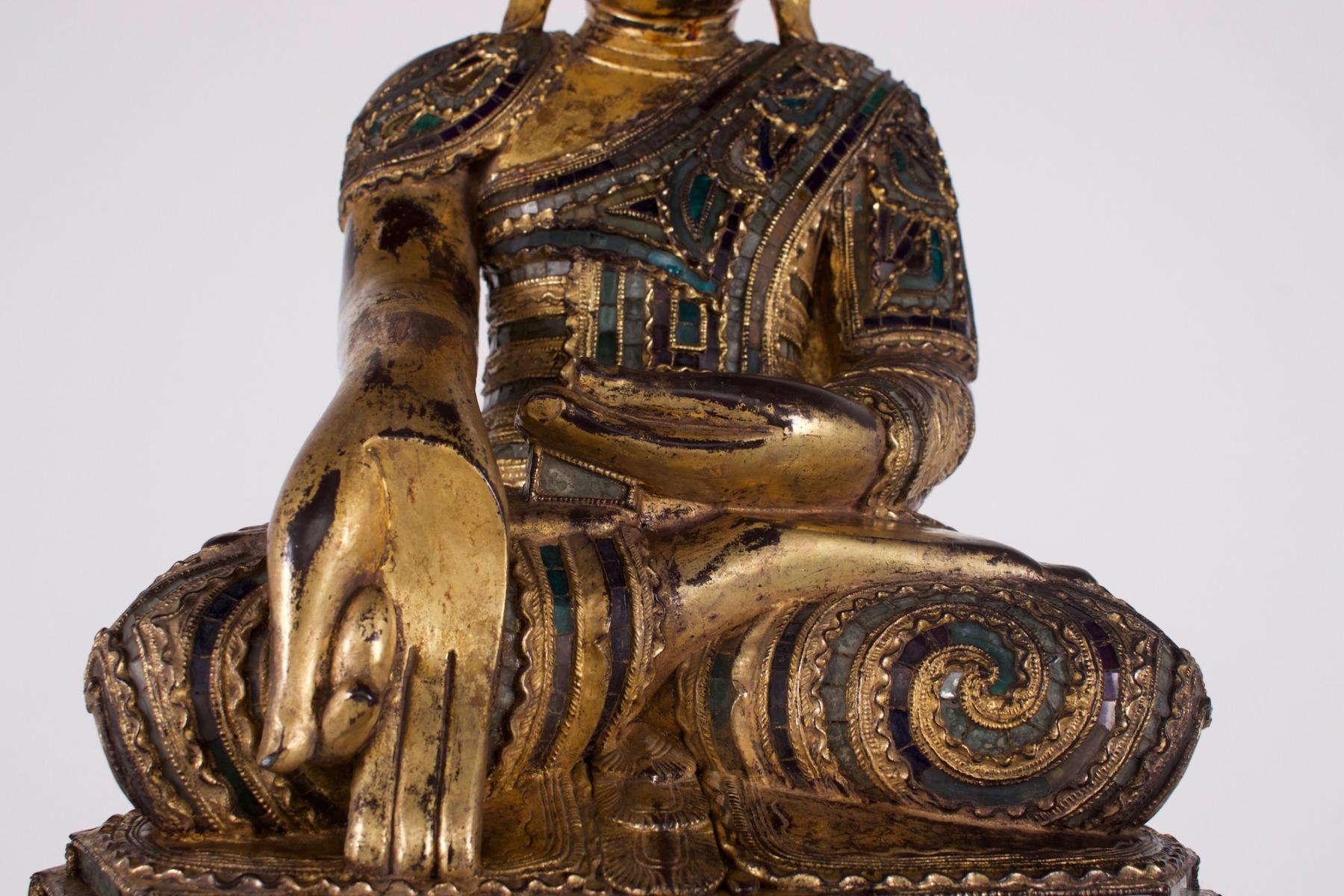
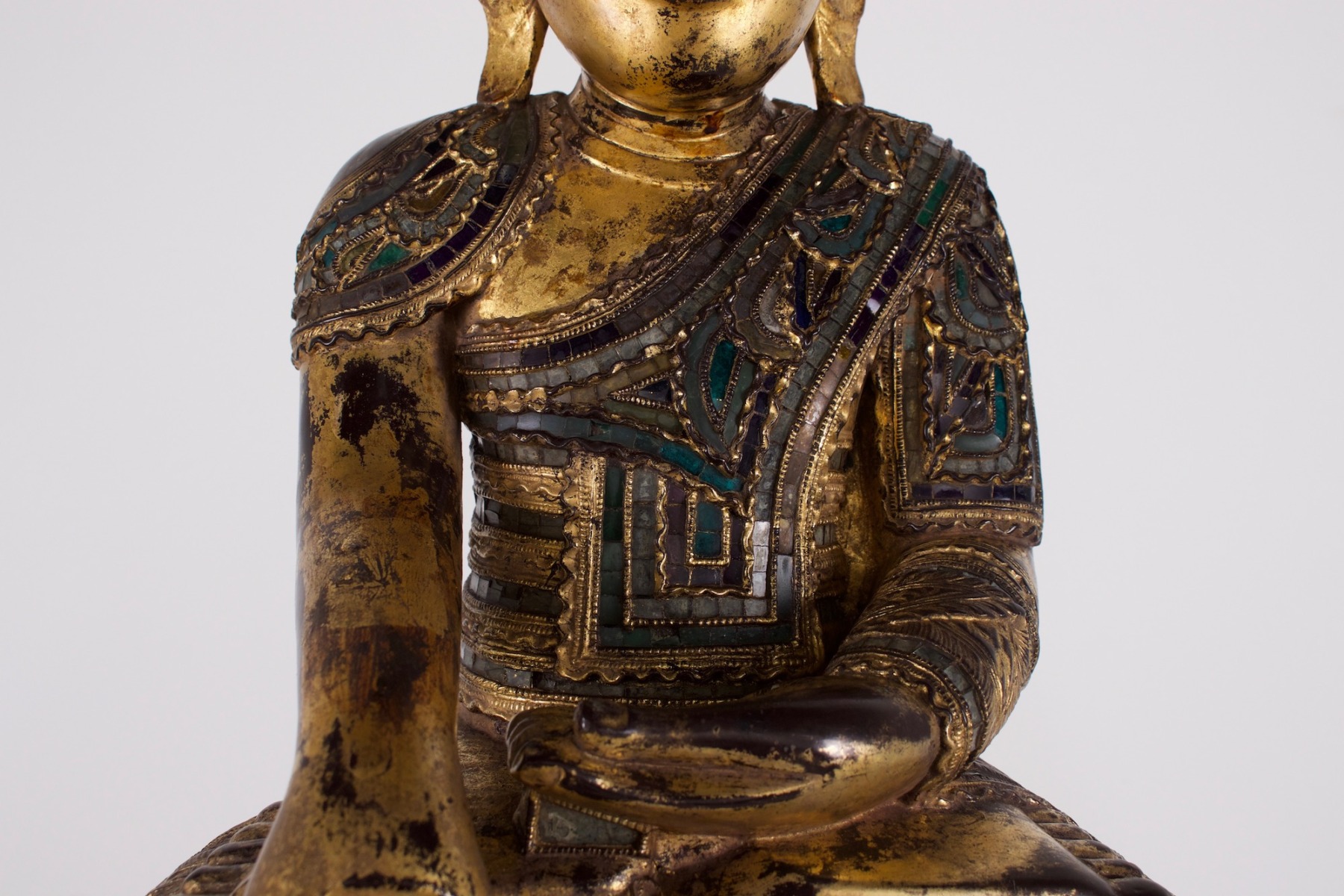
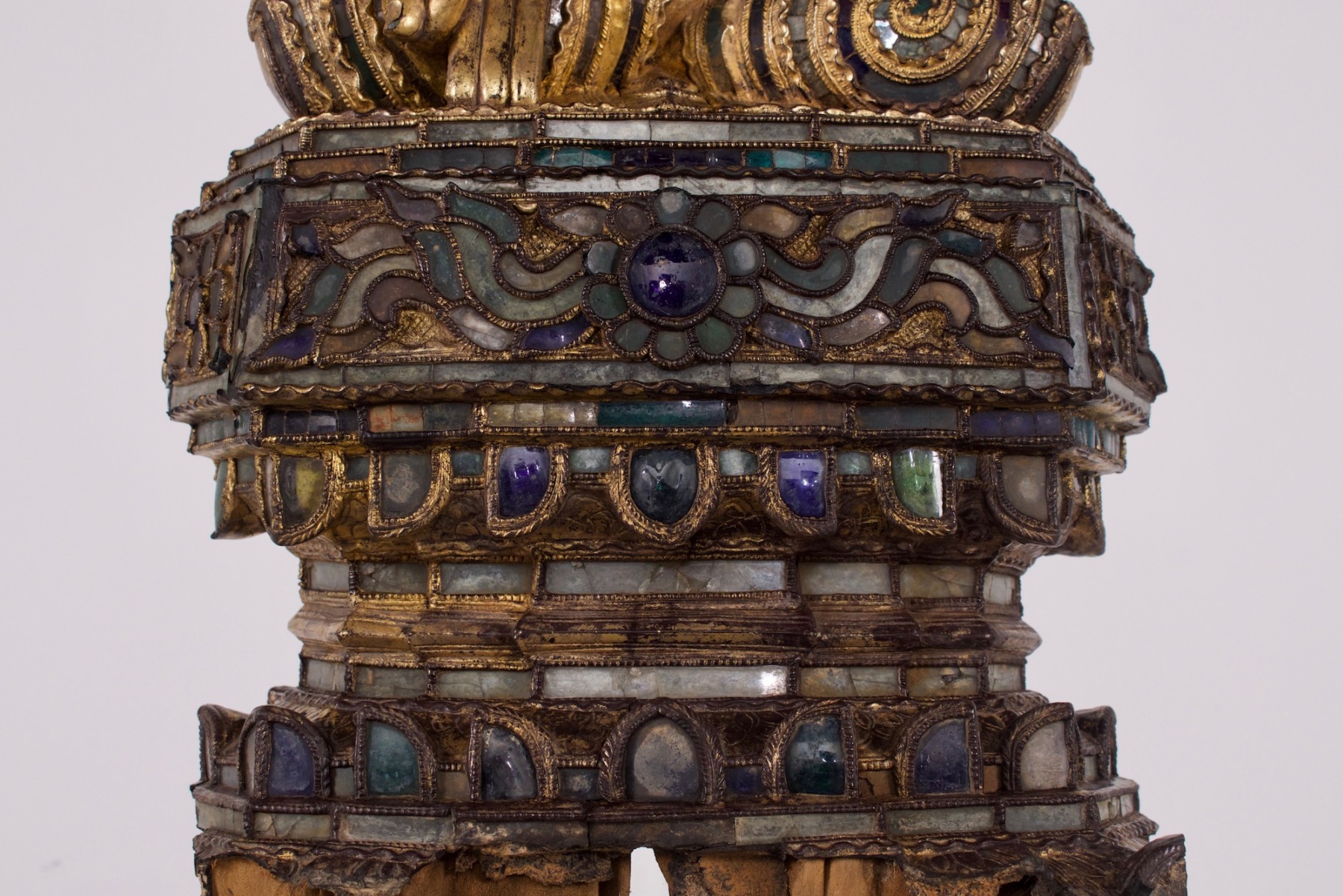
- Image of Bhaishajyaguru Buddha in gilded wood, lacquer and glass bead decoration (Mica)
- He is one of the Mahāyāna Buddhas of the past, who became an emanation of Shakyamuni specializing in physical and spiritual healing and protection against calamities.
- Burma (Myanmar), Konbaung period, 18th/19th century.
- H 81 cm x W 33 cm x D 21 cm
- Provenance: Claude de Marteau Collection
- Sold with certificate of origin.
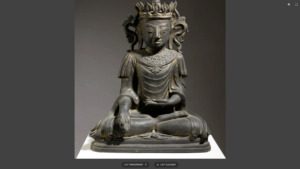
- Compare with a similar image in the Avery Brundage Collection at the Asian Art Museum of San Francisco, inventory number B72S1.
- Also to be compared with a copper-alloy example in the Collections de la Compagnie de la Chine et des Indes (dispersed in 2021).
1 available in store

Gilded Wood Bhaishajyaguru Buddha – Burma, Konbaung Period
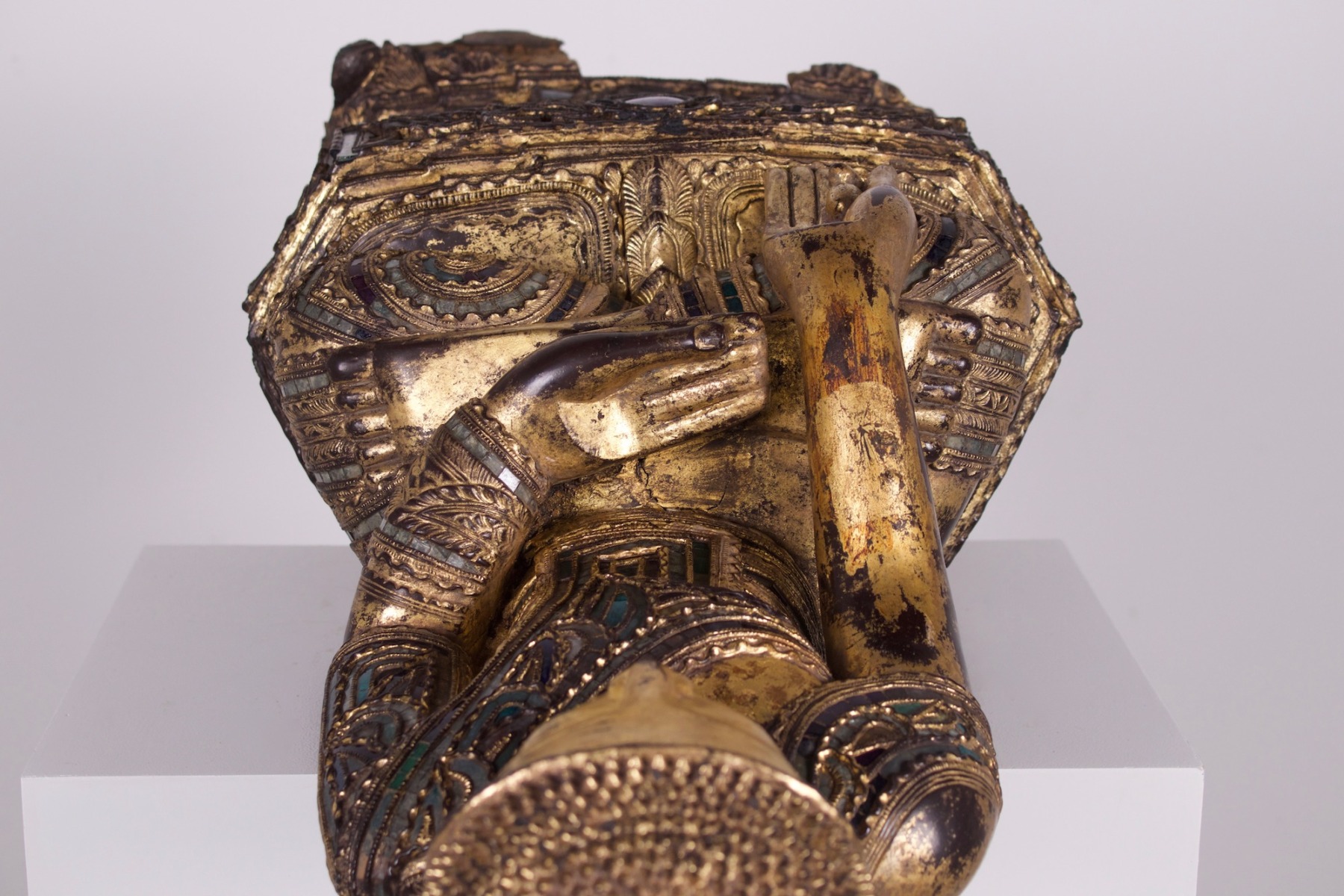
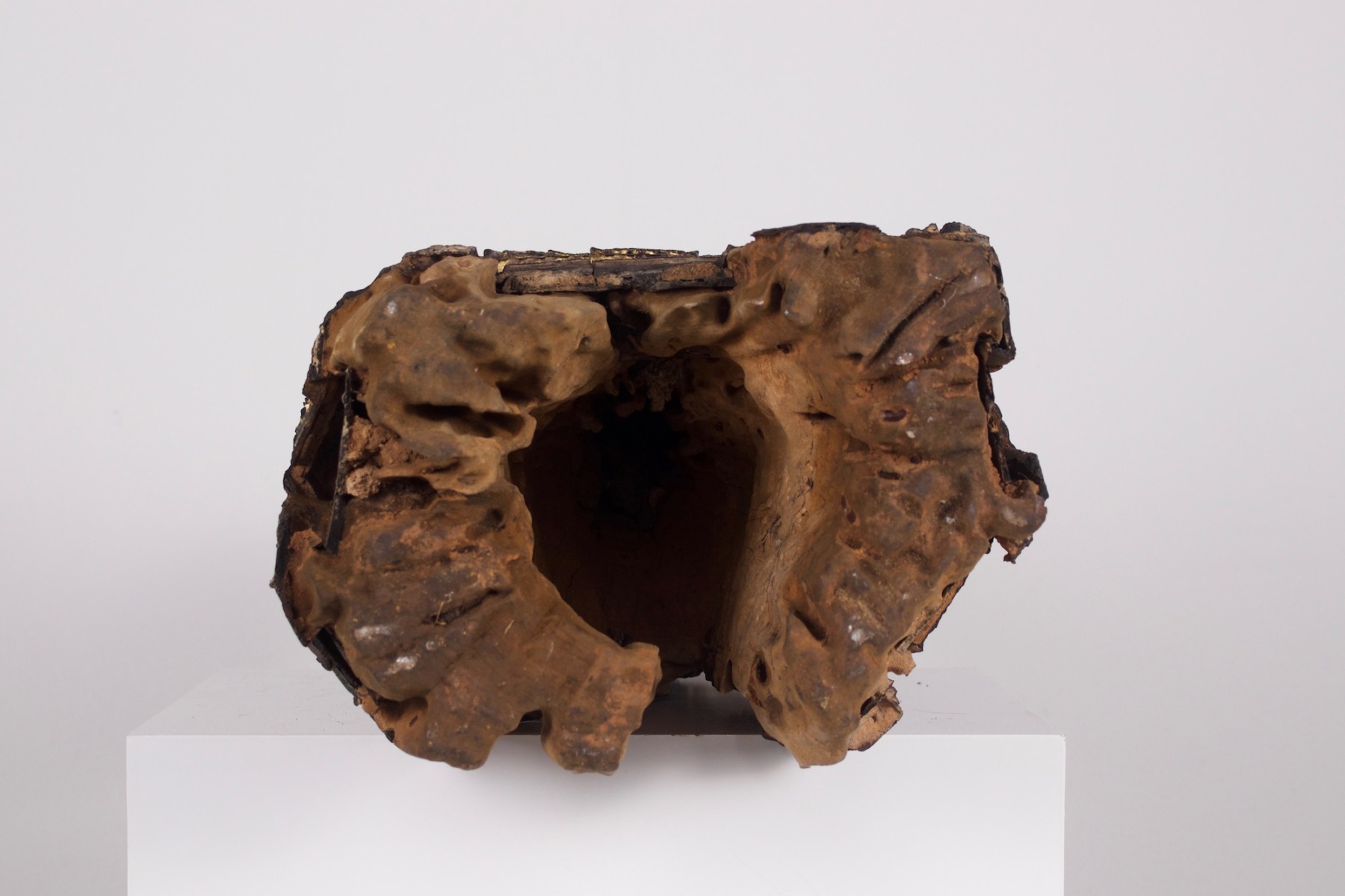
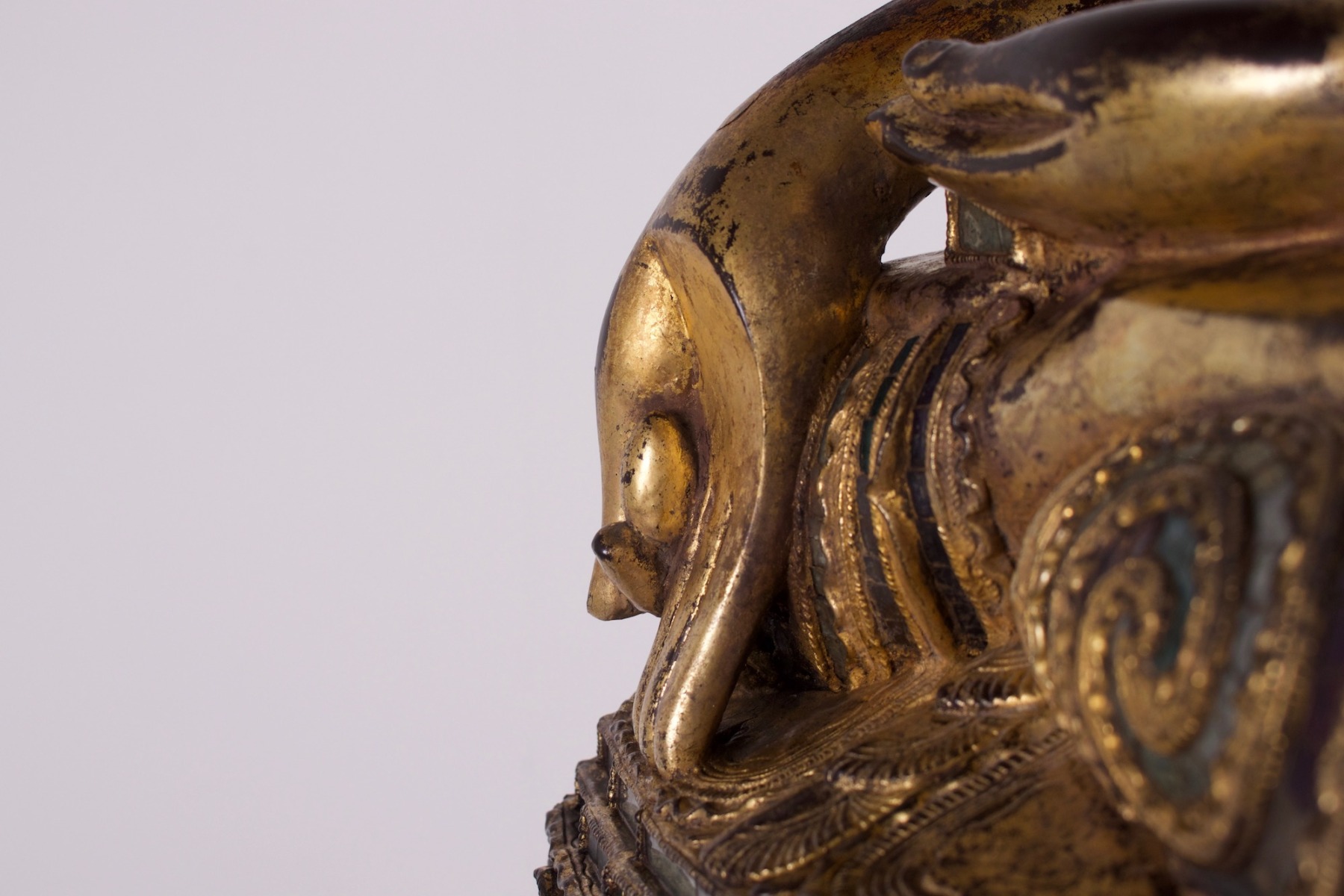
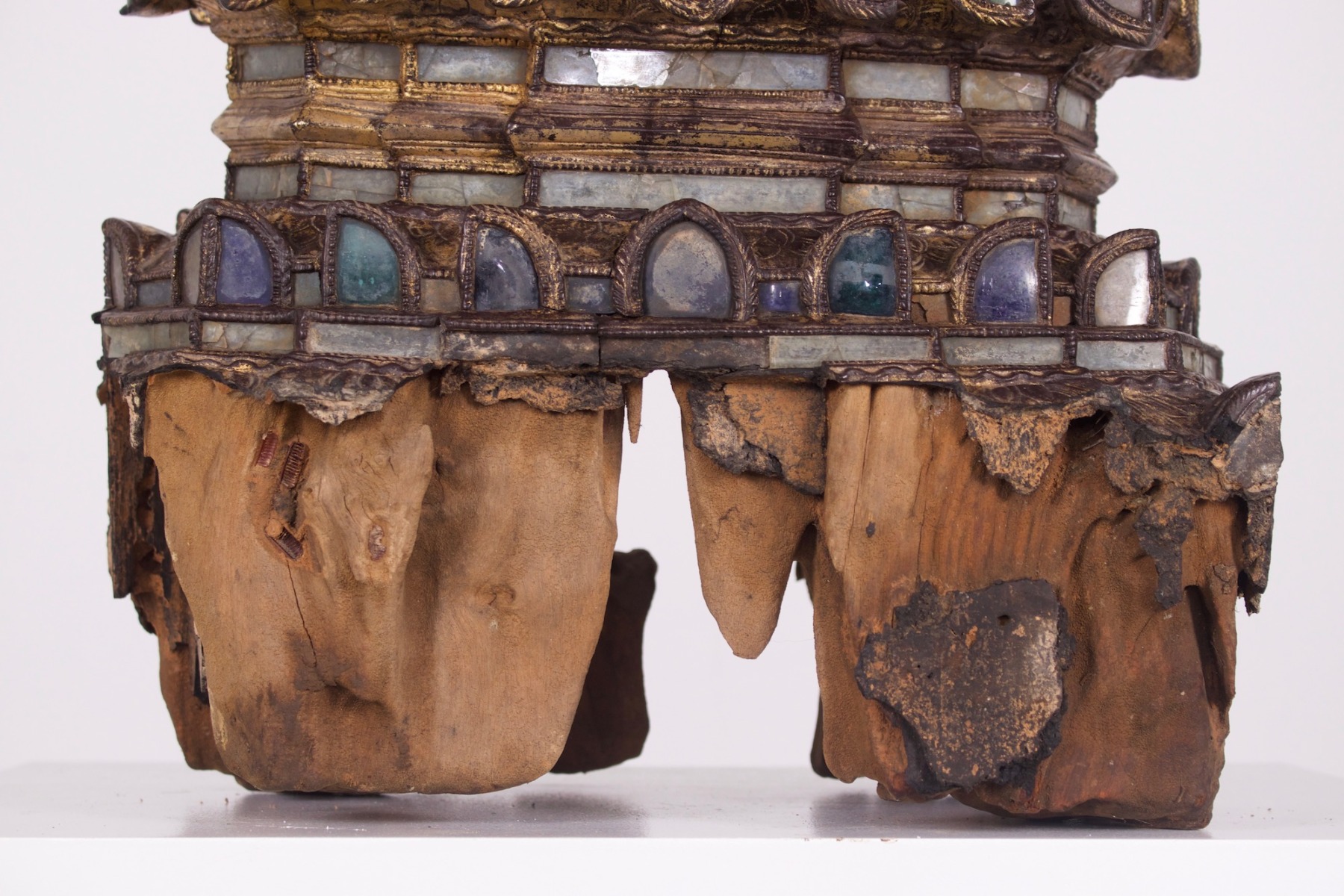
Image of Bhaishajyaguru Buddha, also known as the Medicine Buddha or Healing Master, carved in wood, covered with black lacquer and gilding, enriched with applied decoration and glass bead ornaments. Burmese work (Myanmar), Konbaung period, 18th–19th century.
This representation is distinguished by the quality of its execution and the richness of its decoration, but above all by an iconography uncommon in the Burmese context. The right hand is presented in varada mudra, the gesture of giving, holding the myrobalan fruit. This attribute constitutes a determining element of identification: it allows unambiguous recognition of Bhaishajyaguru, where a quick reading might lead to an assimilation with the historical Buddha.
Conversely, the vast majority of Buddha images in Burma represent Sakyamuni in the earth-touching gesture (bhumisparsha mudra), the dominant posture in Theravada art. The presence of the myrobalan, associated with healing virtues, introduces here a symbolic dimension foreign to this standardized iconography.
Burma being historically rooted in the Theravada tradition, the appearance of a Medicine Buddha, linked to the Mahayana current, must be considered marginal. It testifies to doctrinal and iconographic exchanges with neighboring cultural spheres, probably Himalayan or Sino-Indian.
Through the precision of its attributes, the richness of its decoration and the singularity of its iconography, this sculpture stands as a rare example in Burmese art, at the border of usually distinct traditions.
Comparisons and Iconography
A comparable Sakyamuni Buddha in quality and period of execution from the Inle Lake region in Shan State. Avery Brundage Collection, Asian Art Museum of San Francisco


You might also like…


Discover also...


Delivery to Belgium

Delivery to France

Delivery to Luxembourg
