



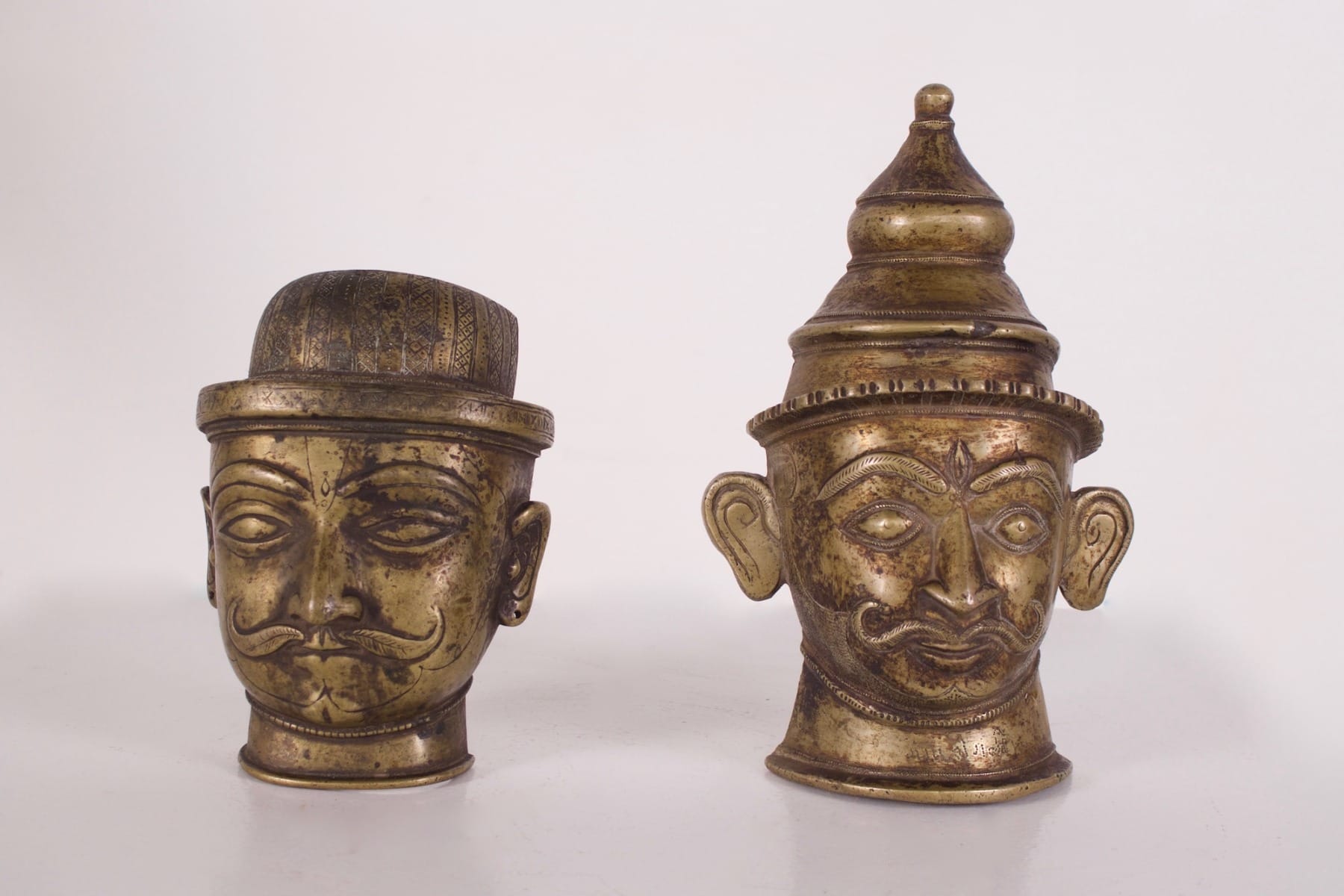

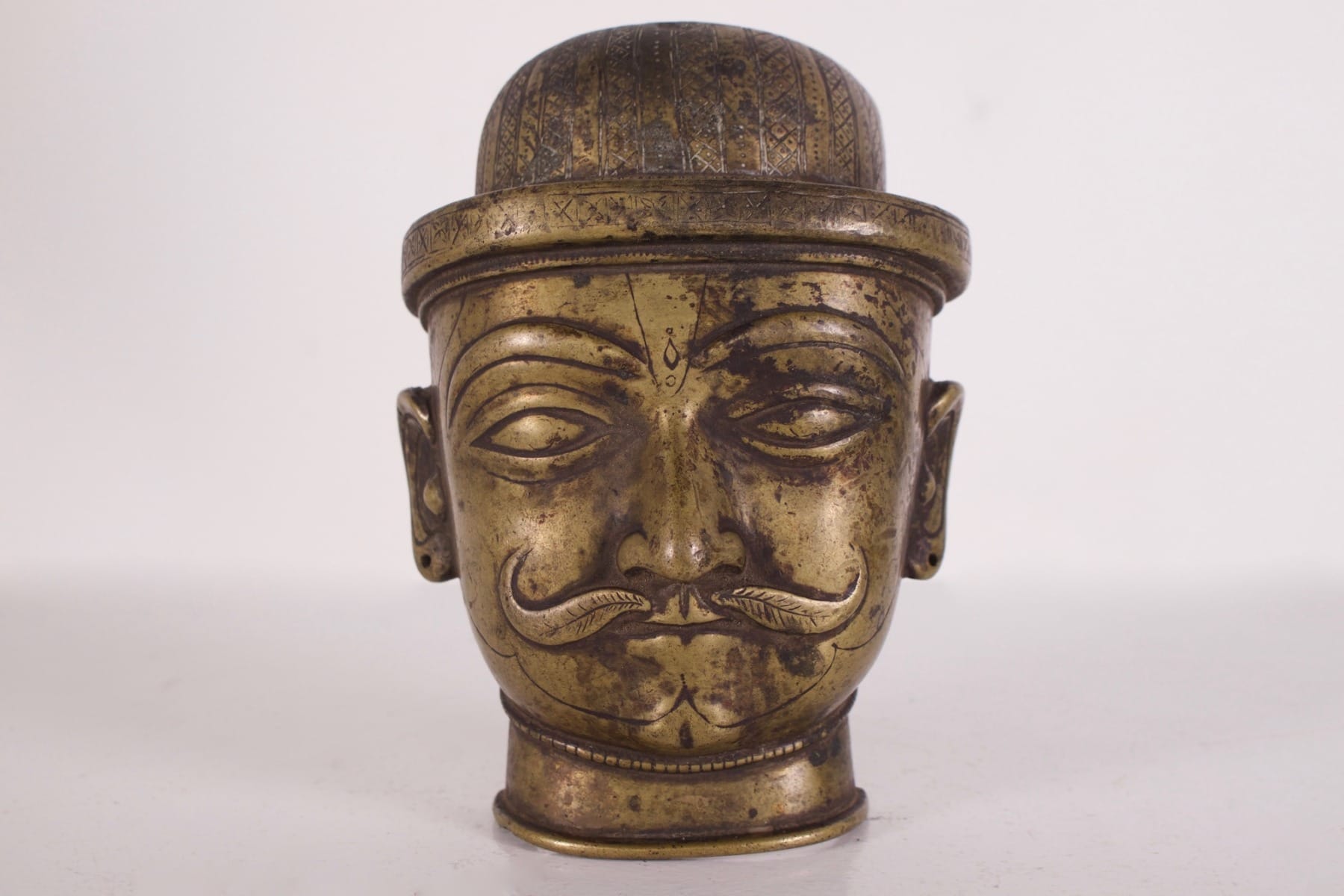
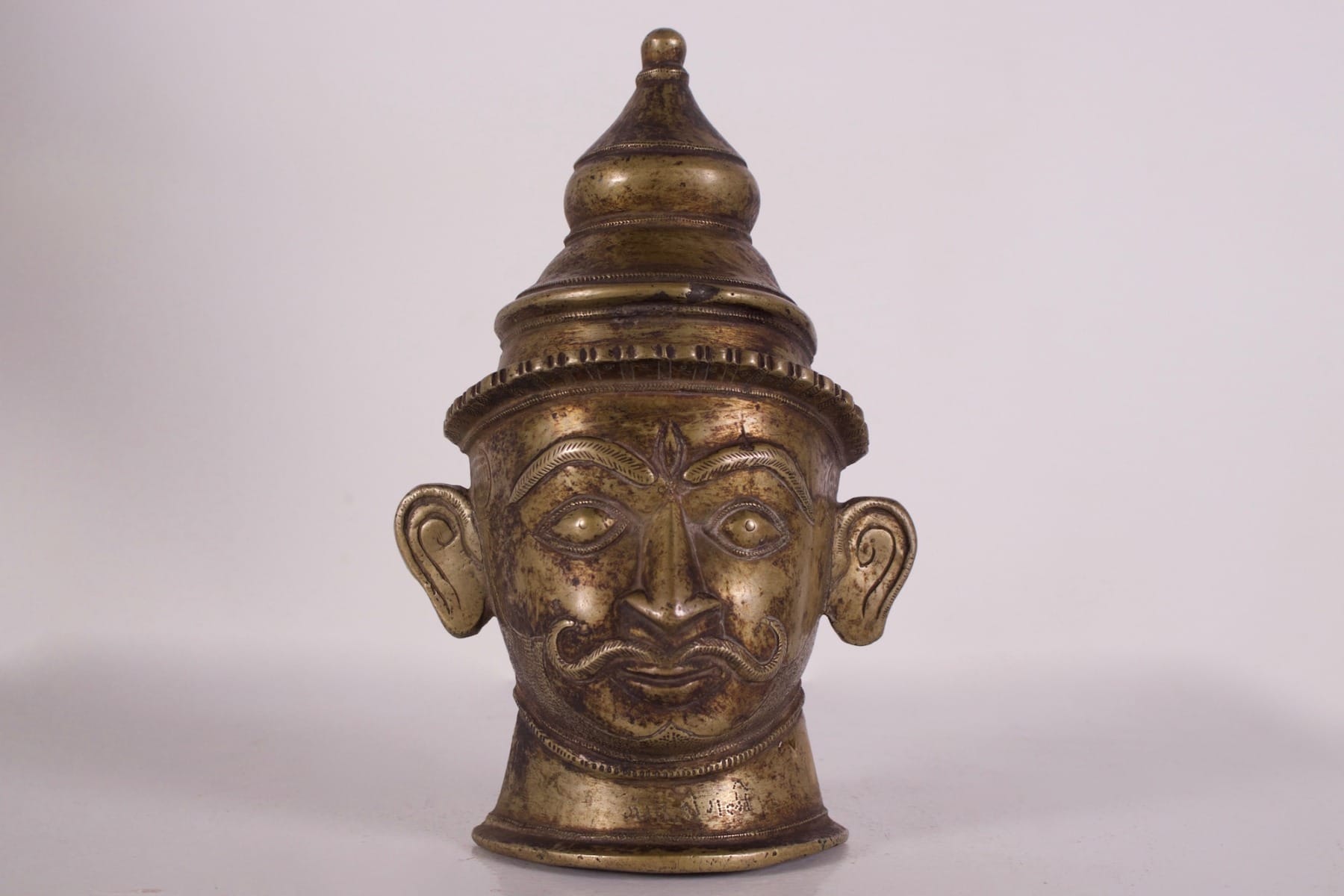

Pair of bronze Mukhalinga, India
€500,00
In Hindu iconography, the mukhalinga or mukhalingam (i.e., “linga with a face”) is a linga cover with one or more faces, traditionally made of brass, bronze, or silver and cast in lost wax representing the face of Shiva. India, 19th century.
- The term “linga” refers to an emblematic symbol of the worship of Shiva, a sacred egg or phallic-shaped object representing creation; they are placed on top of the linga to cover it and preserve its vibrations and power.
- Provenance: Estate of Claude de Marteau.
- Left H 16 cm x W 12 cm
- Right H 24 cm x W 15 cm
- Overall weight: 2.7 KG
1 available in store

This pair of Mukhalinga in copper alloy, datable to the 18th-19th centuries, belongs to an ancient tradition of Shiva worship in India. The term mukhalinga — literally “linga with a face” — here designates a metallic linga cover giving a human appearance to the abstract form under which Shiva is traditionally venerated. Both pieces originate from the collection of the dealer and collector Claude de Marteau.
The linga constitutes one of the oldest and most sacred emblems of Shiva. The British Museum notes that this symbolic form, crafted in stone, clay, or metal, spans the entire history of Shaivite worship. From the early centuries of our era, representations also appeared where the face of the god emerges from the linga, thus uniting his abstract presence and his anthropomorphic manifestation.
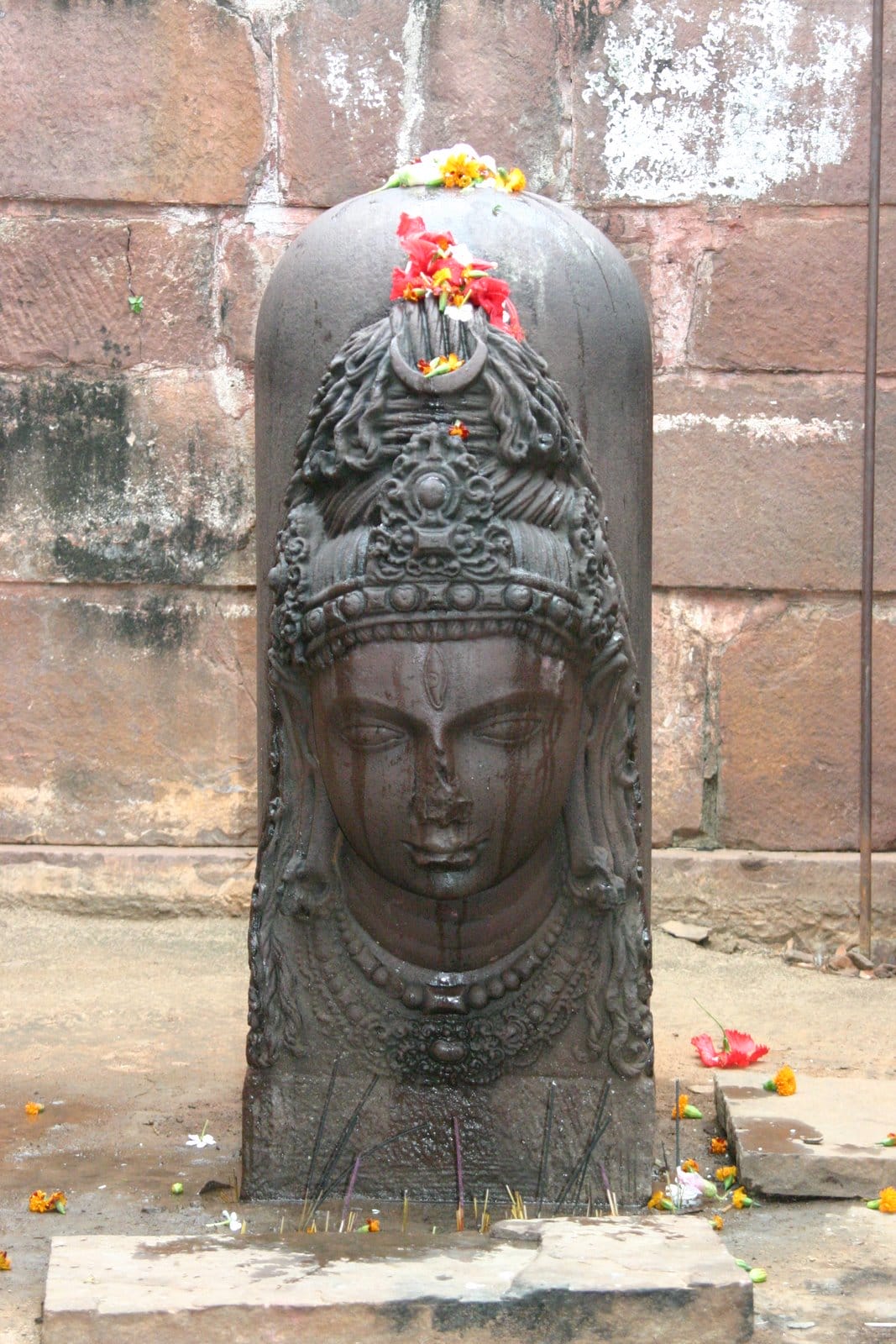
A mukhalinga with one face, source Wikipedia.
Giving a face to Shiva
In metallic Mukhalingas, this principle takes a particularly concrete form: the linga cover was placed on the linga during worship to give it the face of Shiva. This transformation allowed the devotee to establish a more direct visual relationship with the deity, essential to the Hindu notion of darshan, the exchange of gazes between the god and his devotee.
The strongly defined features of these two examples — large eyes, marked eyebrows, mustache, adorned ears, and structured hairstyle — belong precisely to this iconography. The National Museum in New Delhi holds a metallic Mukhalinga from Karnataka/Maharashtra, highlighting its protruding eyes, thick eyebrows, mustache, and jewelry. Another museum collection documents a bronze Mukhalinga from Maharashtra, dated between 1701 and 1900, confirming the permanence of this type in Western India.
These linga covers were therefore true devotional objects, installed on the emblem of Shiva during ritual practices and subject to being handled, removed, or replaced according to the circumstances of worship. Their patina and the softening of certain surfaces take on full meaning in this context of prolonged use.
Differing in their dimensions and modeling, the two pieces form a coherent ensemble illustrating the variations of a single ritual type. Their joint presence offers a particularly evocative testimony to the way Indian religious art was able to give a face to the symbolic power of the linga, making Shiva himself appear at the heart of the cult object.
You might also like…


Discover also...


Delivery to Belgium

Delivery to France

Delivery to Luxembourg
