





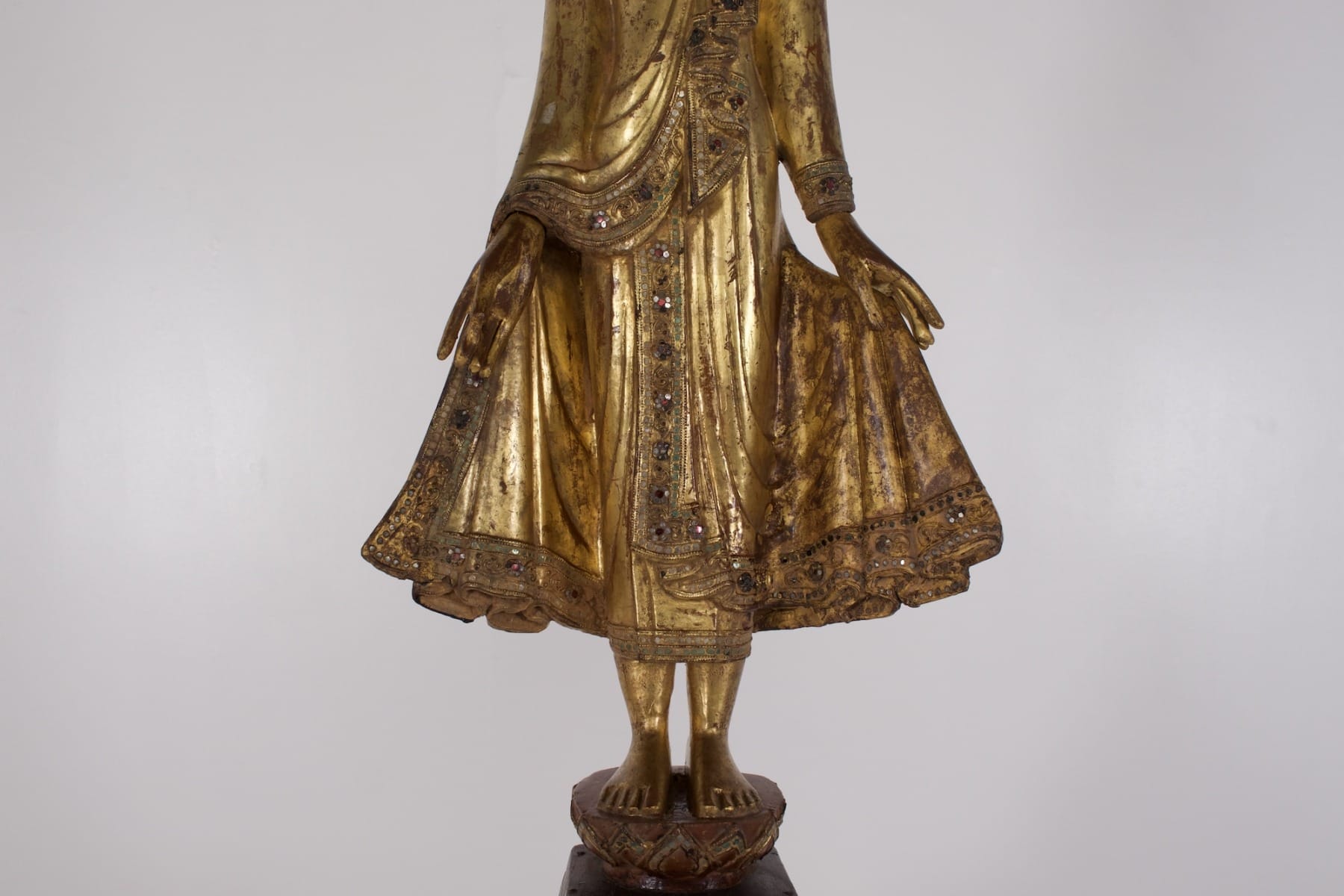


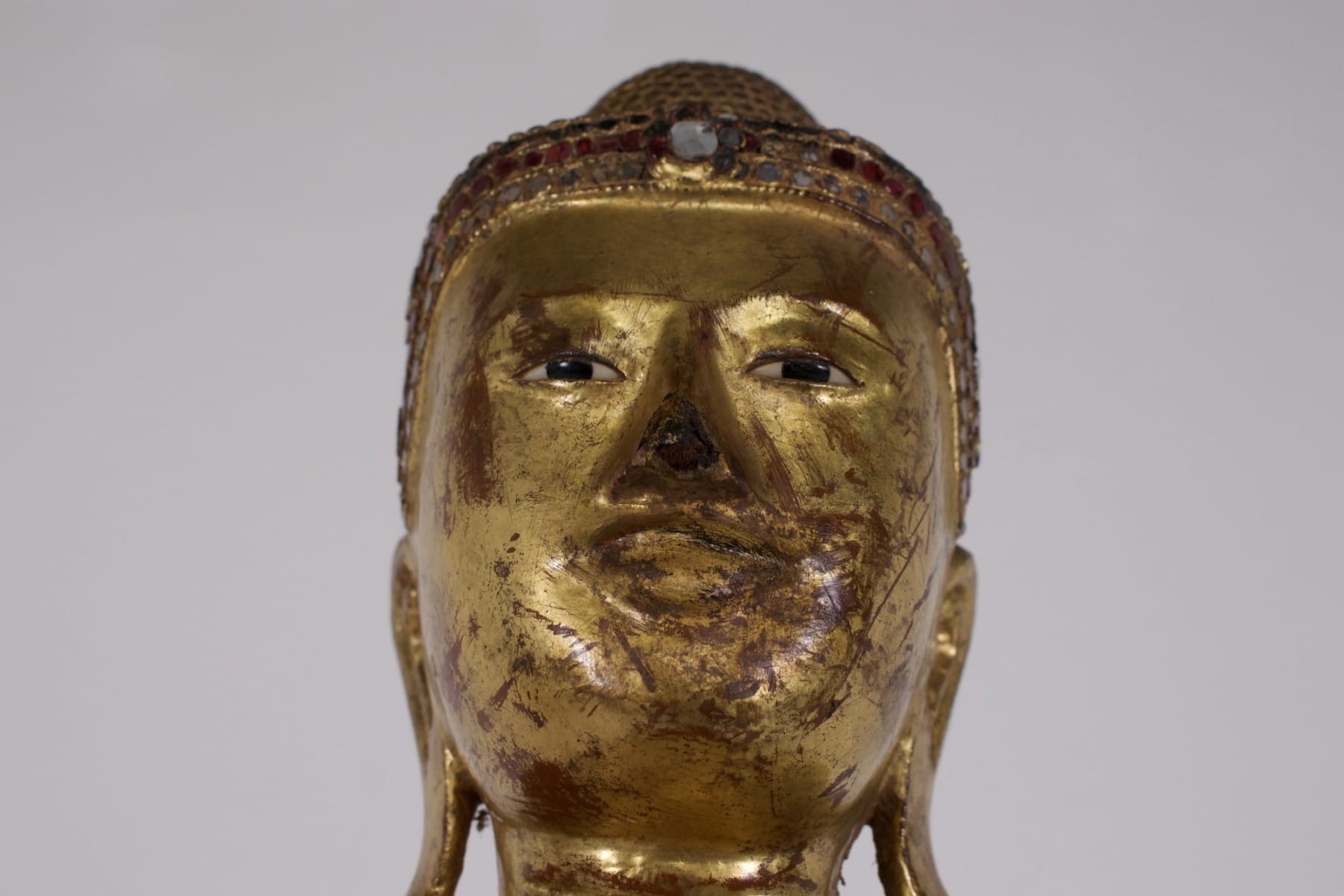

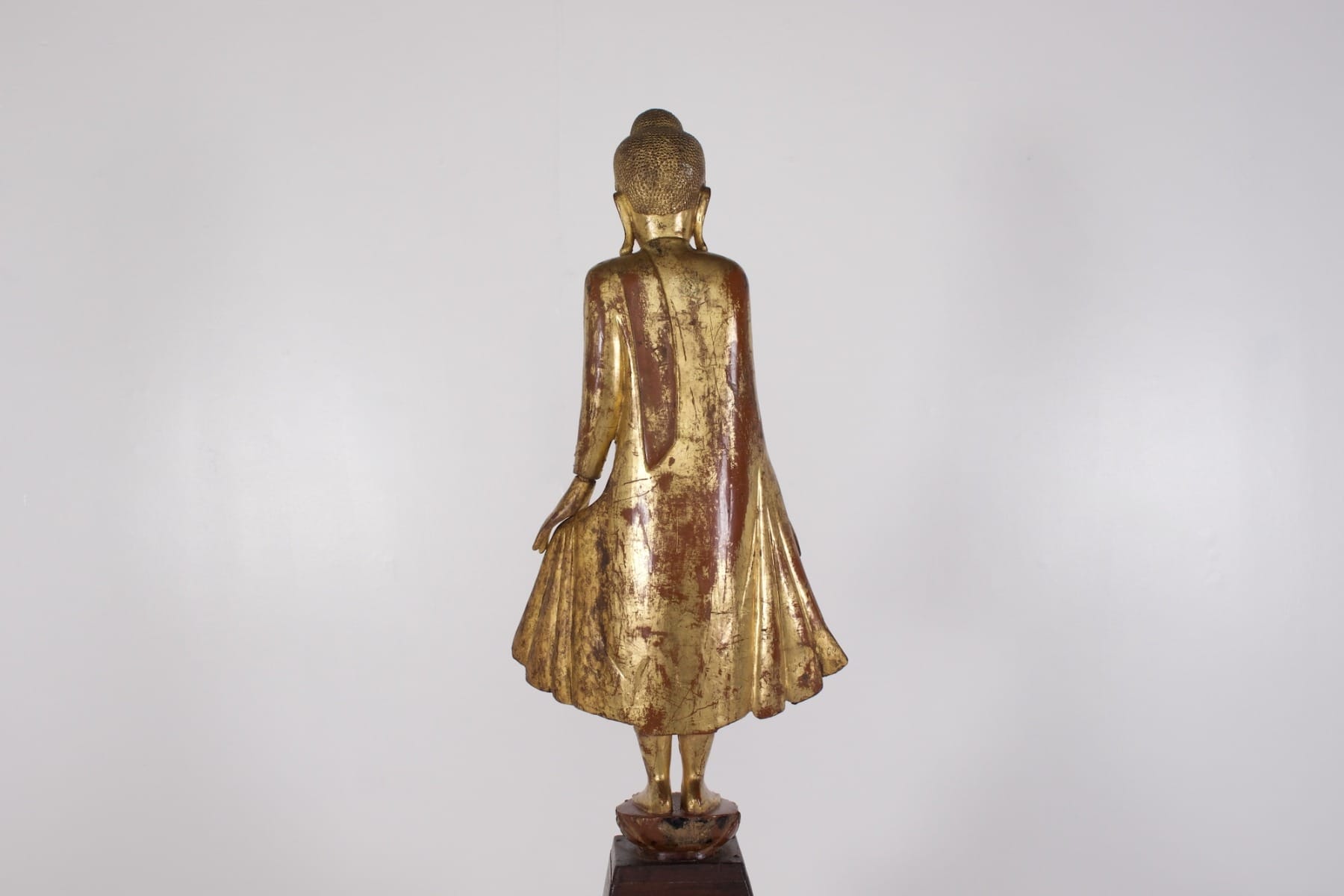

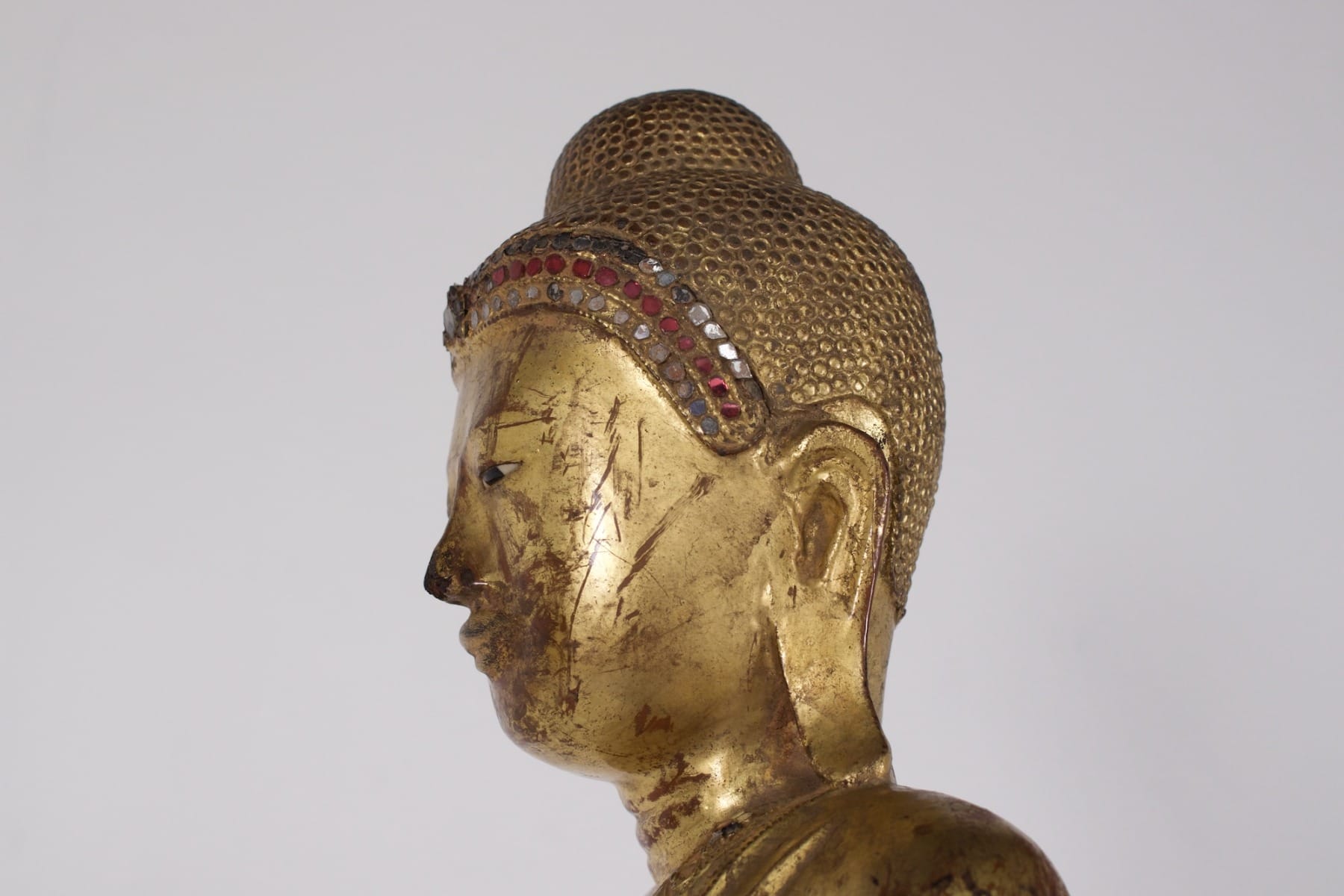

Standing Gilded Wood Buddha from Burma – Mandalay, 93 cm
€1950,00
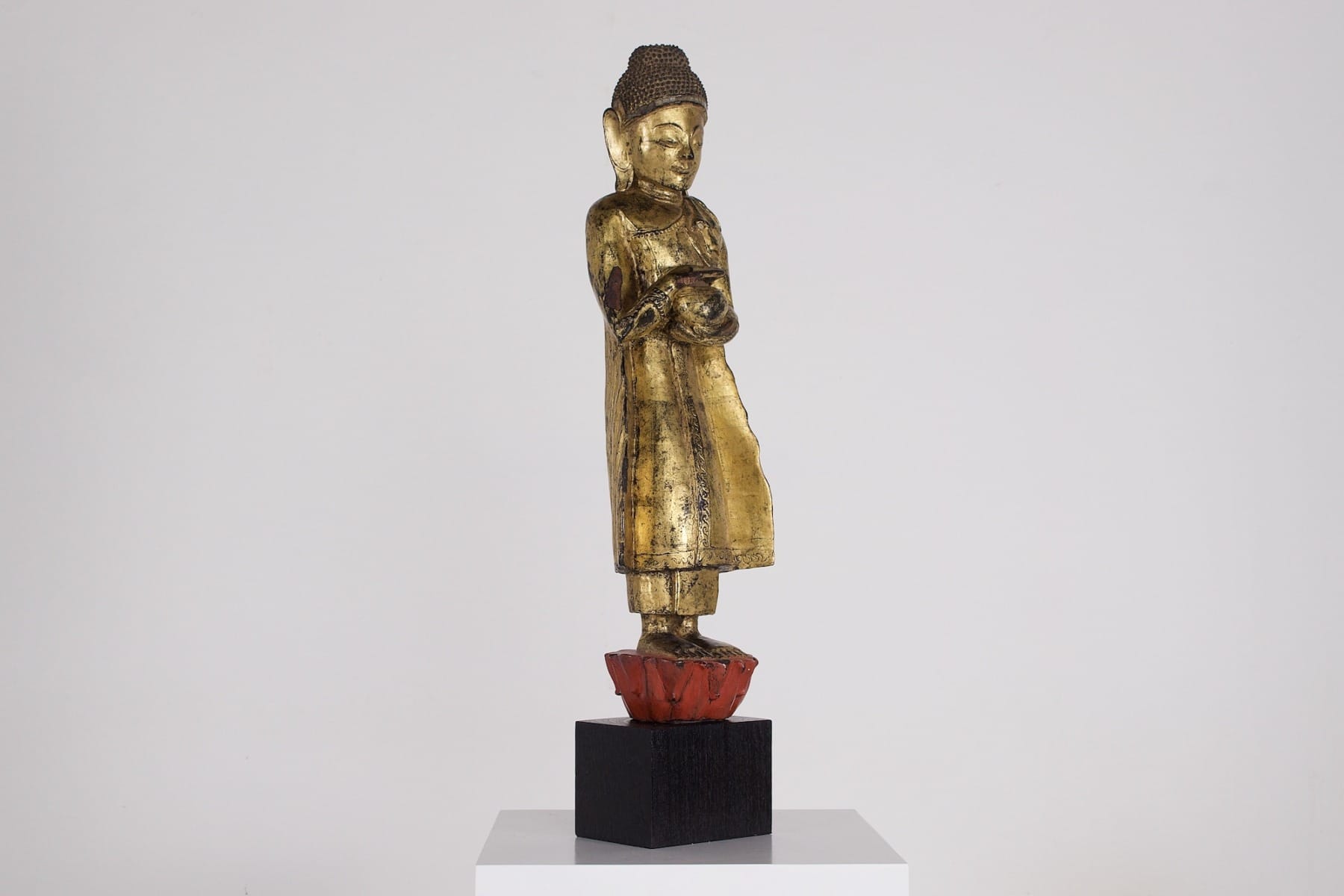
Antique gilded wood Buddha statue, standing holding the myrobalan fruit. Myanmar, early 20th century.
- This Buddha image, specific to the iconography of Theravada Buddhism, comes from a group preserved for nearly 50 years in the home of collector Claude de Marteau and is sold with its certificate of provenance.
- Dimensions including base: H 95 cm × W 38 cm × D 13 cm
- Statue: H 79 cm
- Base footprint: 19 cm × 19 cm
1 available in store

The Standing Buddha with Myrobalan: An Iconography of Healing
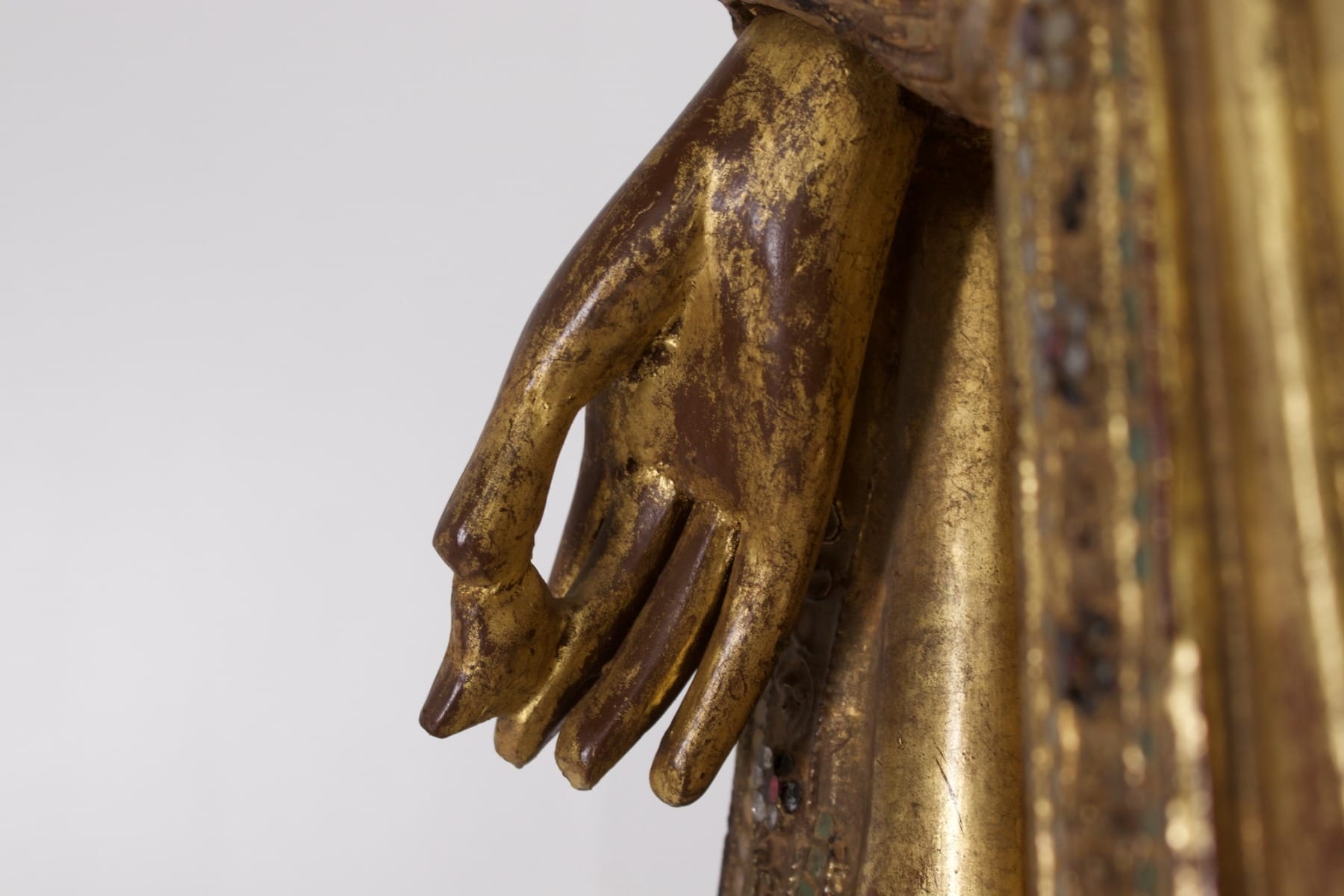
In Burmese religious art, the standing Buddha holding a myrobalan, a fruit renowned for its medicinal properties, embodies a particular dimension of compassion and healing. This iconography recalls that of Bhaiṣajyaguru, the Medicine Buddha of the Mahāyāna tradition, but is also rooted in the Theravāda tradition of Burma, where it is notably associated with the historical Buddha, Shakyamuni.

The right hand of the Awakened One holds the myrobalan
According to Buddhist tradition, Shakyamuni received a myrobalan from the god Sakka (Indra) after his Awakening. In Burmese sculpture, the fruit thus becomes the symbol of a healing that transcends the body and evokes the capacity of the Buddha’s teaching to relieve spiritual suffering.

In Burmese Buddhist art, the historical Buddha Shakyamuni is represented with his left hand holding a fold of his monastic robe.
The standing posture, combined with the gesture of holding a fold of the monastic robe, is particularly characteristic of certain Burmese representations from the 19th century. The British Museum and the Los Angeles County Museum of Art hold sculptures closely comparable to this one, in which the Buddha presents the myrobalan in one hand while holding his garment with the other. This iconography illustrates the richness of Burmese Buddhist art, which has integrated themes of healing present in different Buddhist traditions while developing its own forms of representation.

The Buddha statues at the time of their loading at Claude de Marteau’s.
You might also like…

Discover also...



Delivery to Belgium

Delivery to France

Delivery to Luxembourg
