



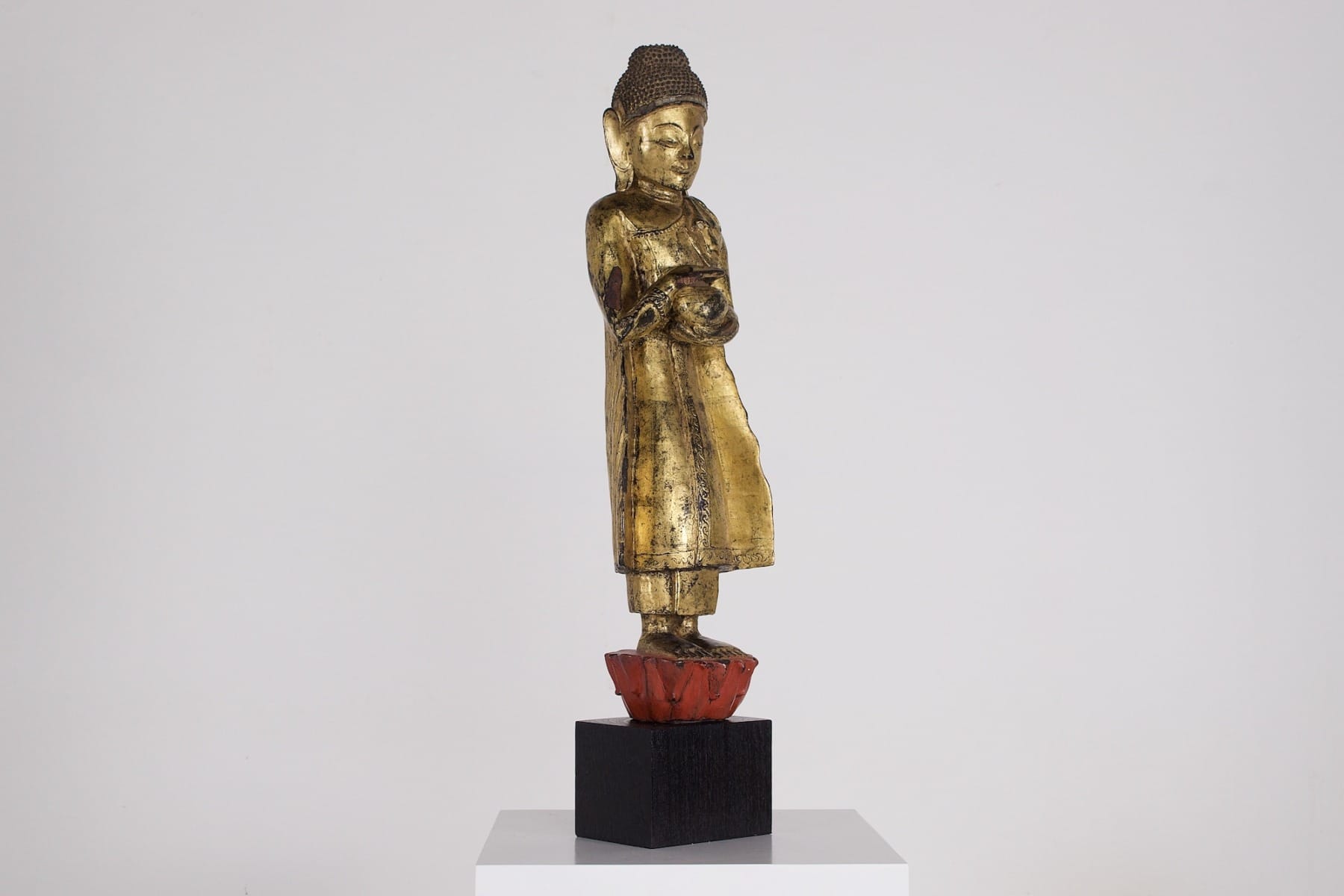
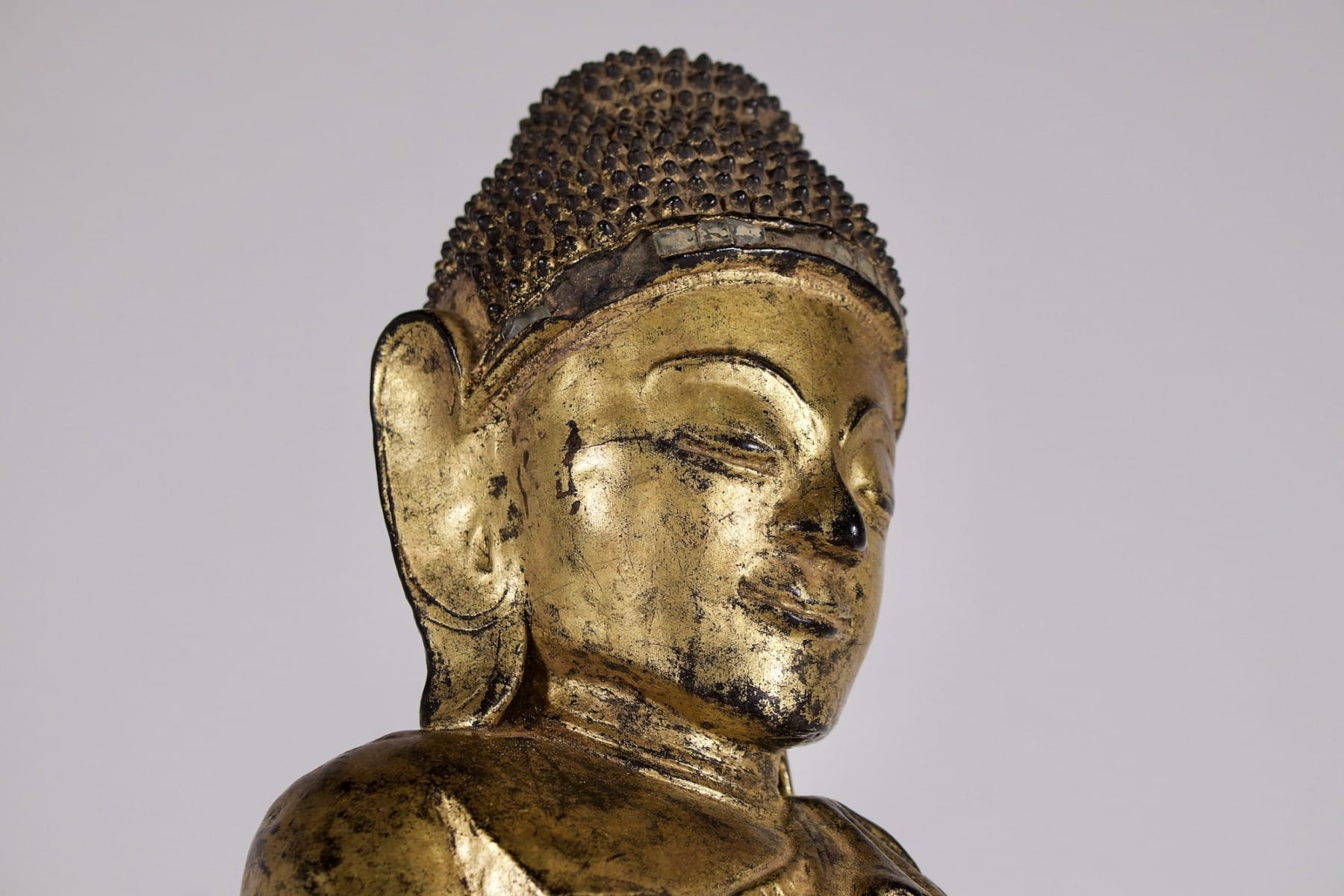


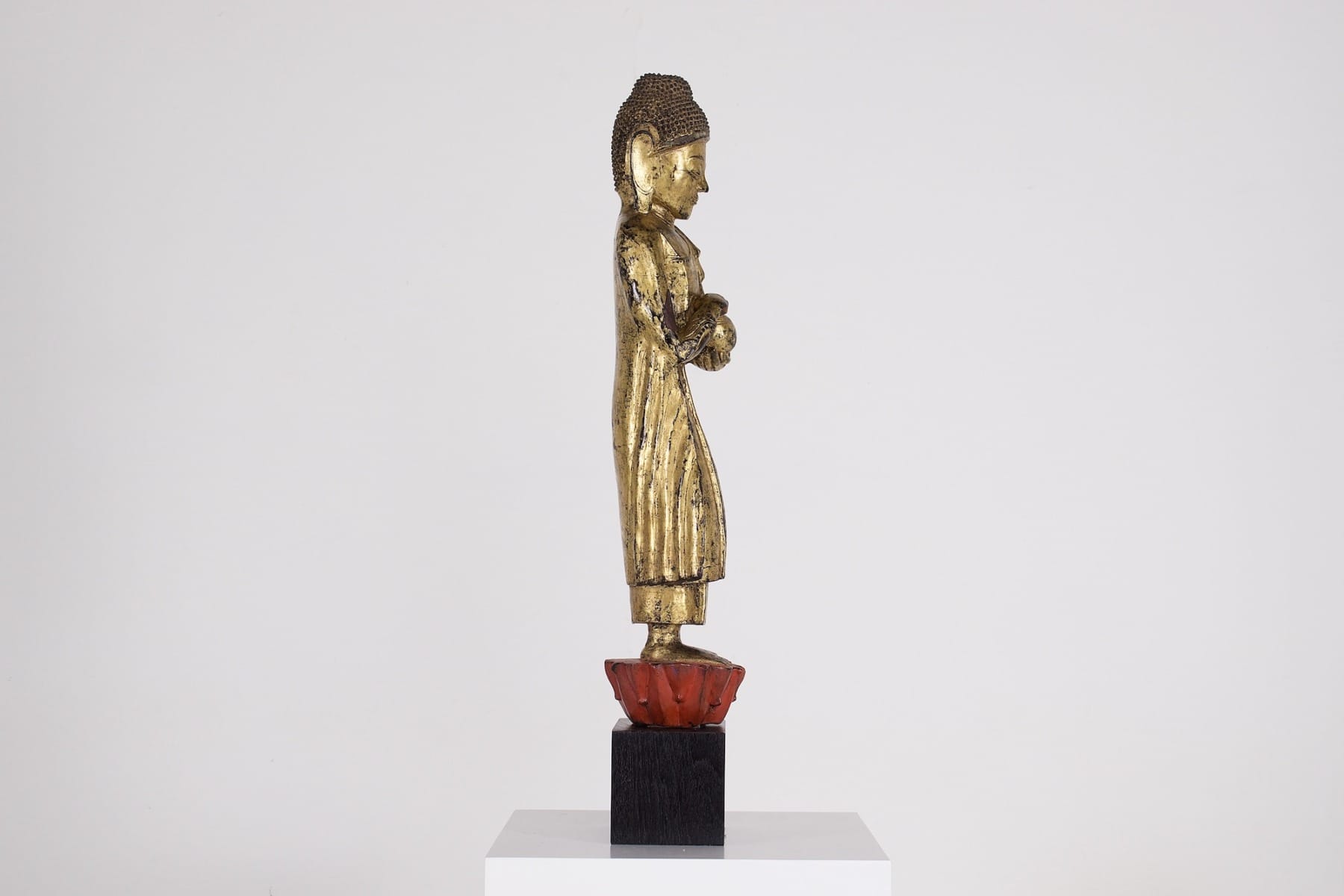
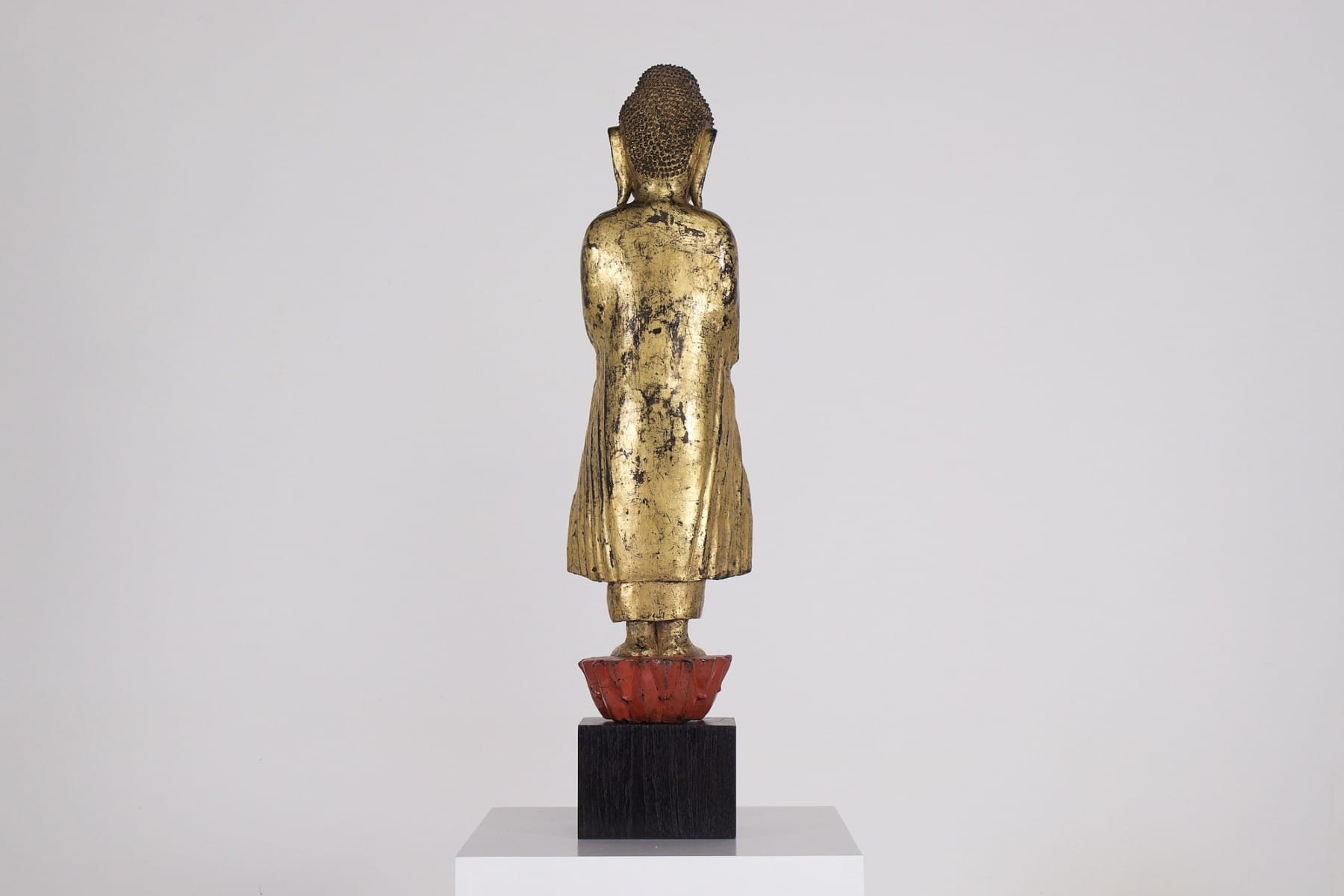


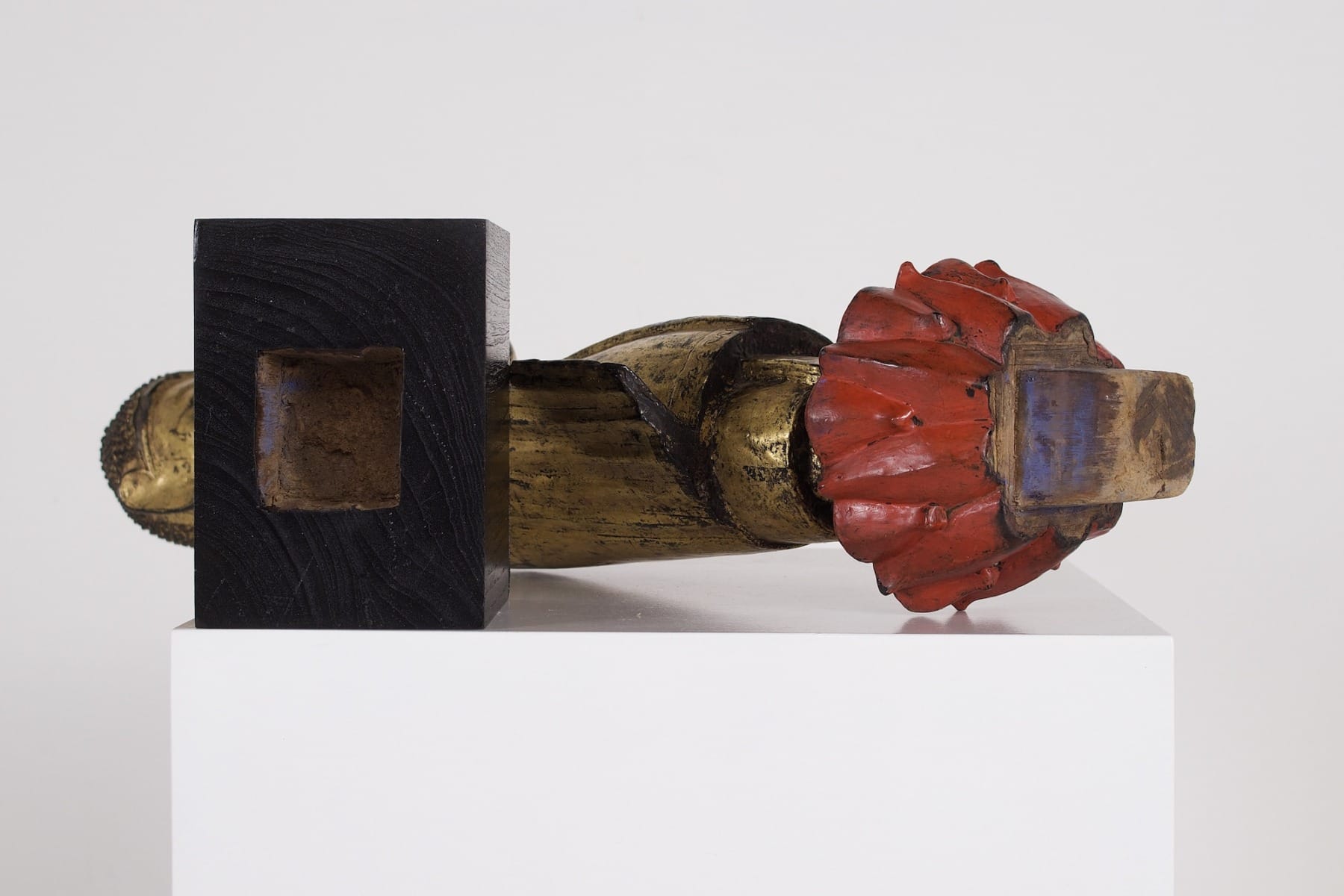

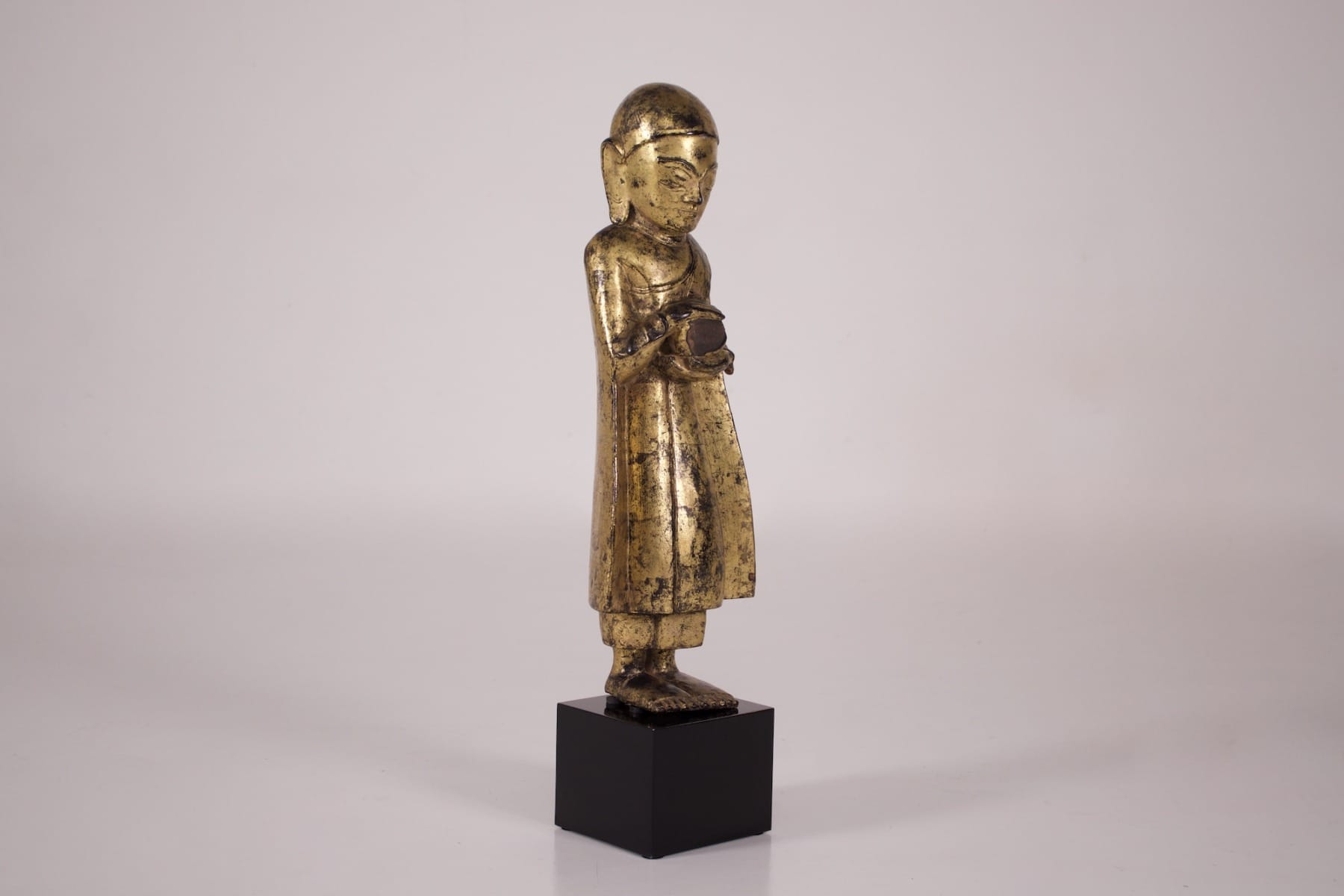
Buddha with alms bowl, Burma, Mandalay.
€1280,00
- The Buddha is represented in this posture as a reminder of his fundamental teachings on renunciation, simplicity and the importance of monastic practice.
- The begging bowl symbolizes the abandonment of material possessions and the link between the monastic community (Sangha) and the laity who support the monks by offering them food.
- He is sometimes seen as a representation of Dipankara, the Buddha of the past preceding Shakyamuni (historical Buddha) but in the Buddhist canon, he is instead depicted standing with his bowl(piṇḍapāta) and hand in abahaya mudra or varada mudra.
- Burma, Mandalay period, late 19th century. Gilded wood and dry lacquer. Vestiges of verroterie (mica) ribbon around the face.
- Provenance: Estate of Asian art collector and dealer Claude de Marteau. Discover the Claude de Marteau story
- Sold with certificate of origin.
- H with base 80 CM X P 15 CM X L 20 CM.
Base P 12 CM X L 16.5 CM.
1 available in store

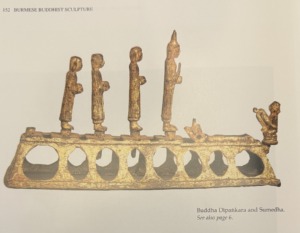
Dipankara is shown in the first position, standing on the right. Sumedha (the future Shakyamuni, is in front of him)
In a previous life, Gautama Buddha (Shakyamuni), then called Sumedha, was a wealthy Brahmin turned hermit. He knelt down and spread his long black hair on the ground so that Dipankara Buddha could cross a mud puddle without dirtying his feet. This encounter took place long before the awakening of Sumedha, who would later become Gautama Buddha (Shakyamuni).
Bibliography: “Burmese Buddhist Sculpture – The Johan Möger Collection”, Otto Karow, White Lotus, p.152
You might also like…


Discover also...



Delivery to Belgium

Delivery to France

Delivery to Luxembourg
