



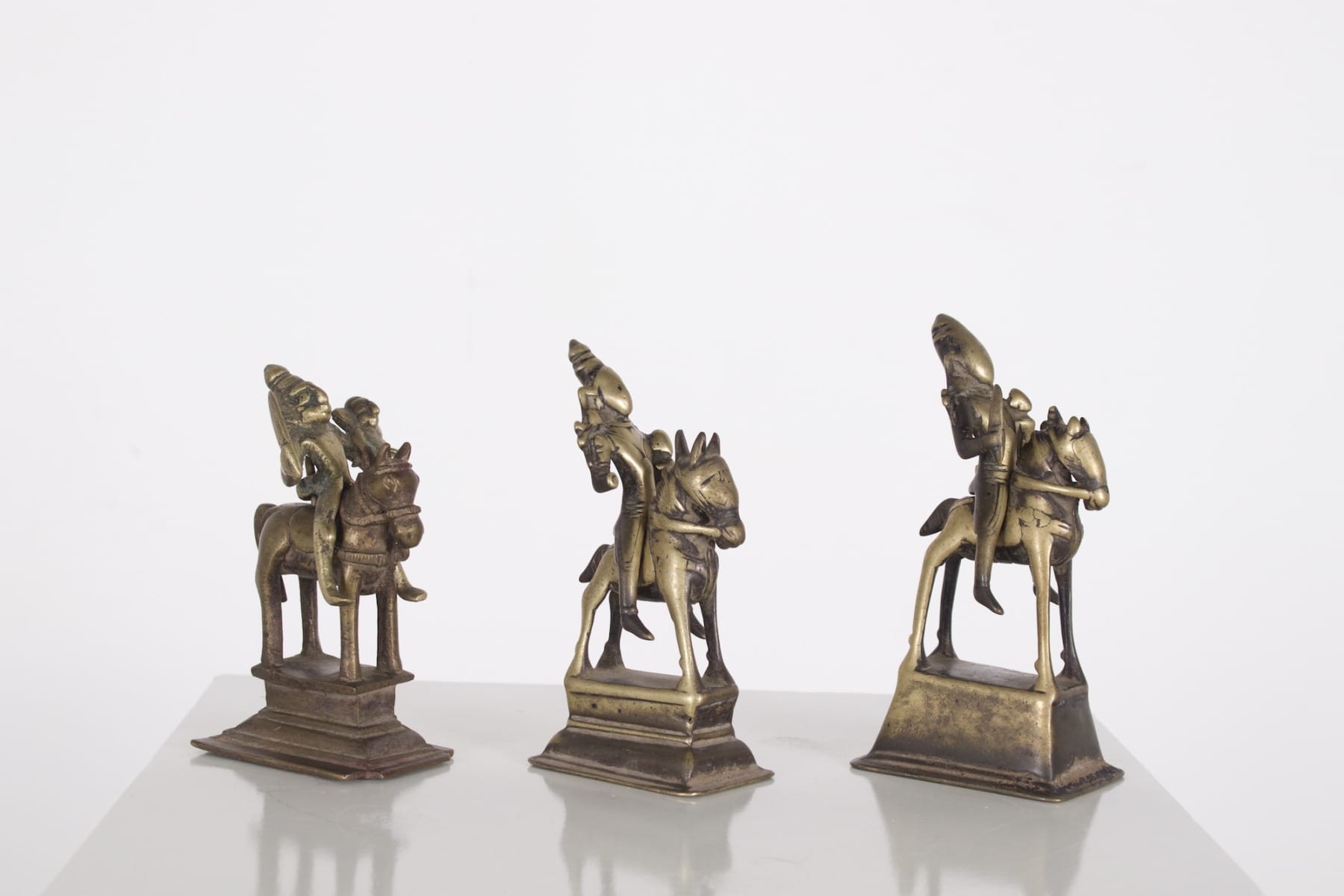

Three equestrian bronzes of Khandoba – India, 18th century
€750,00
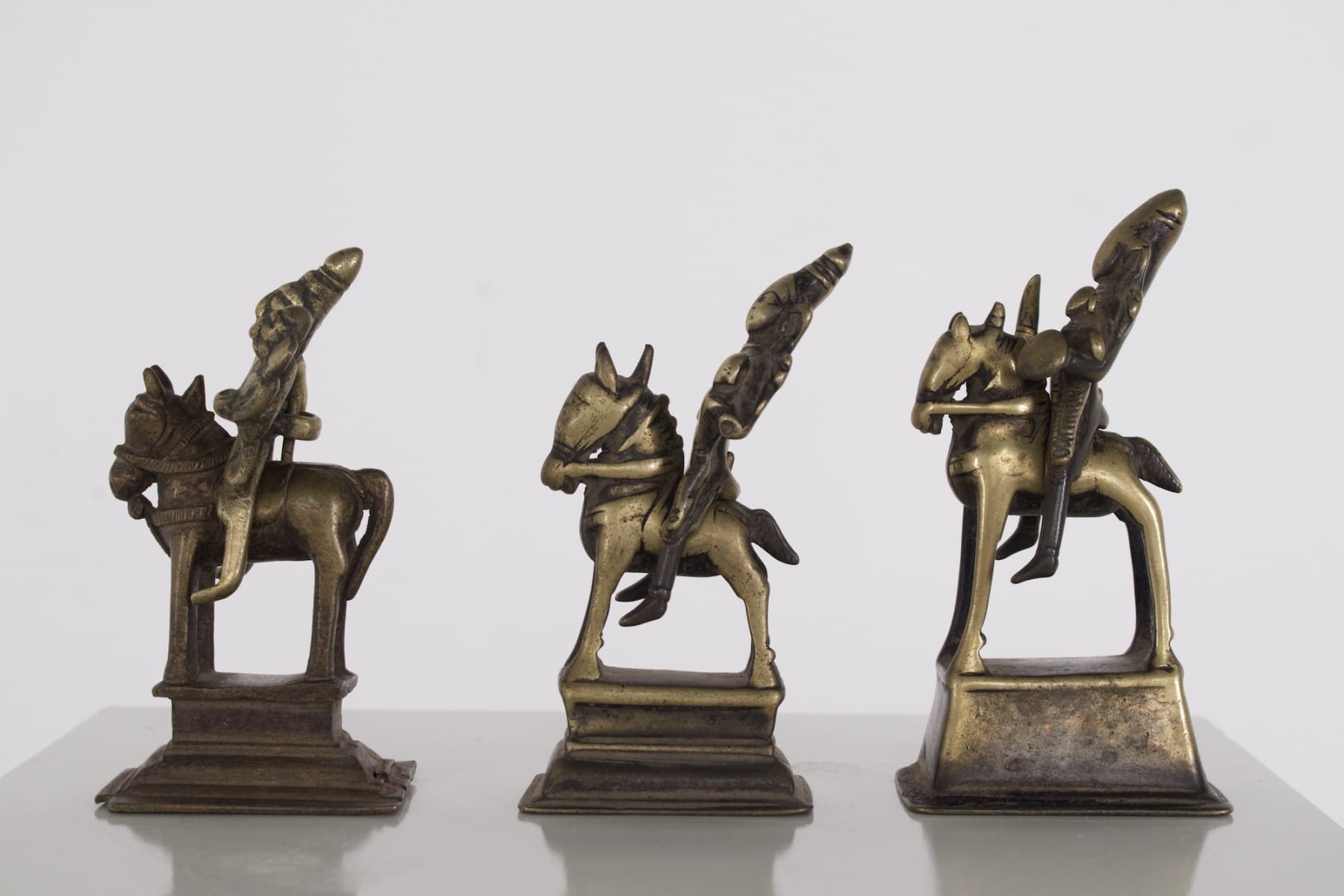
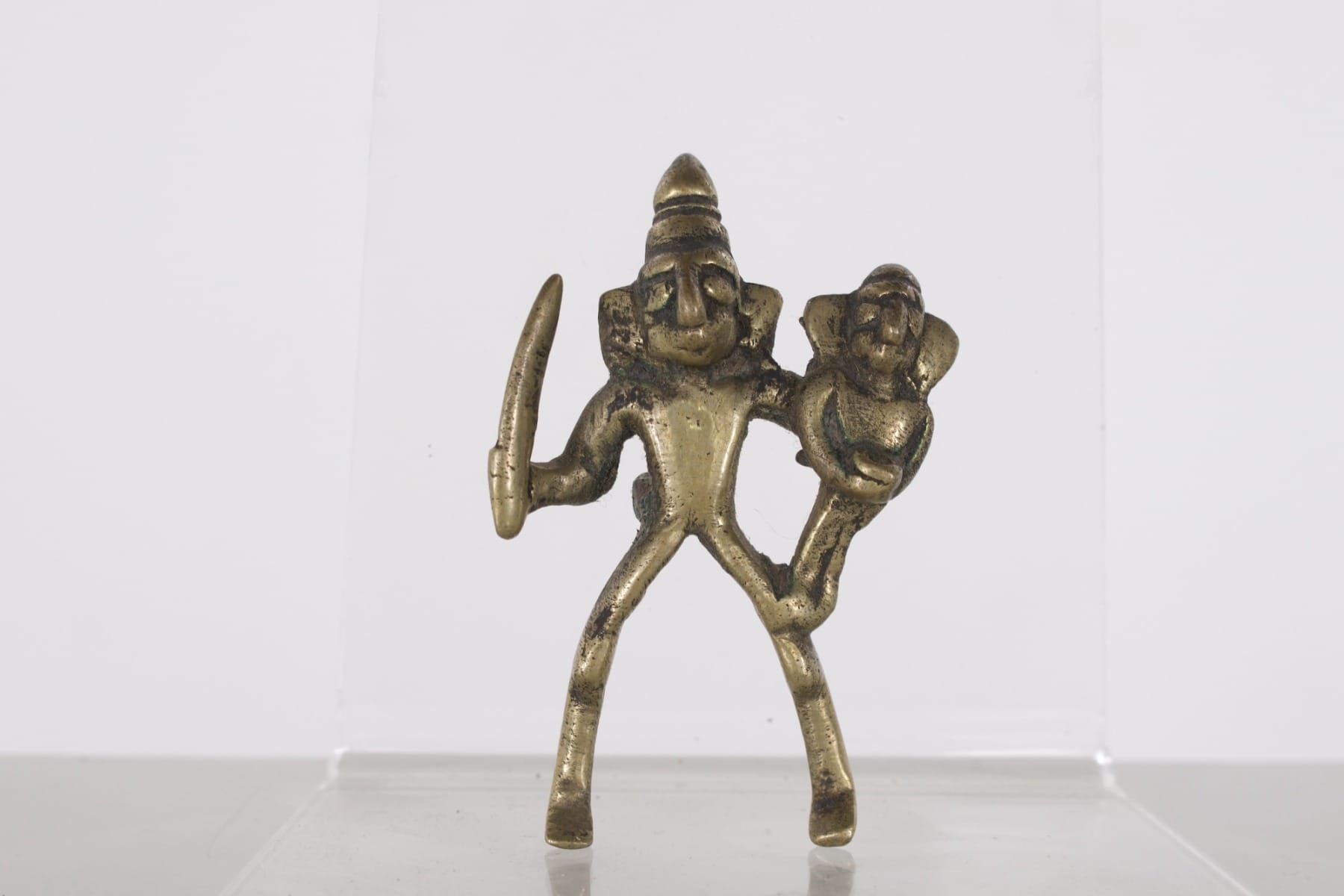
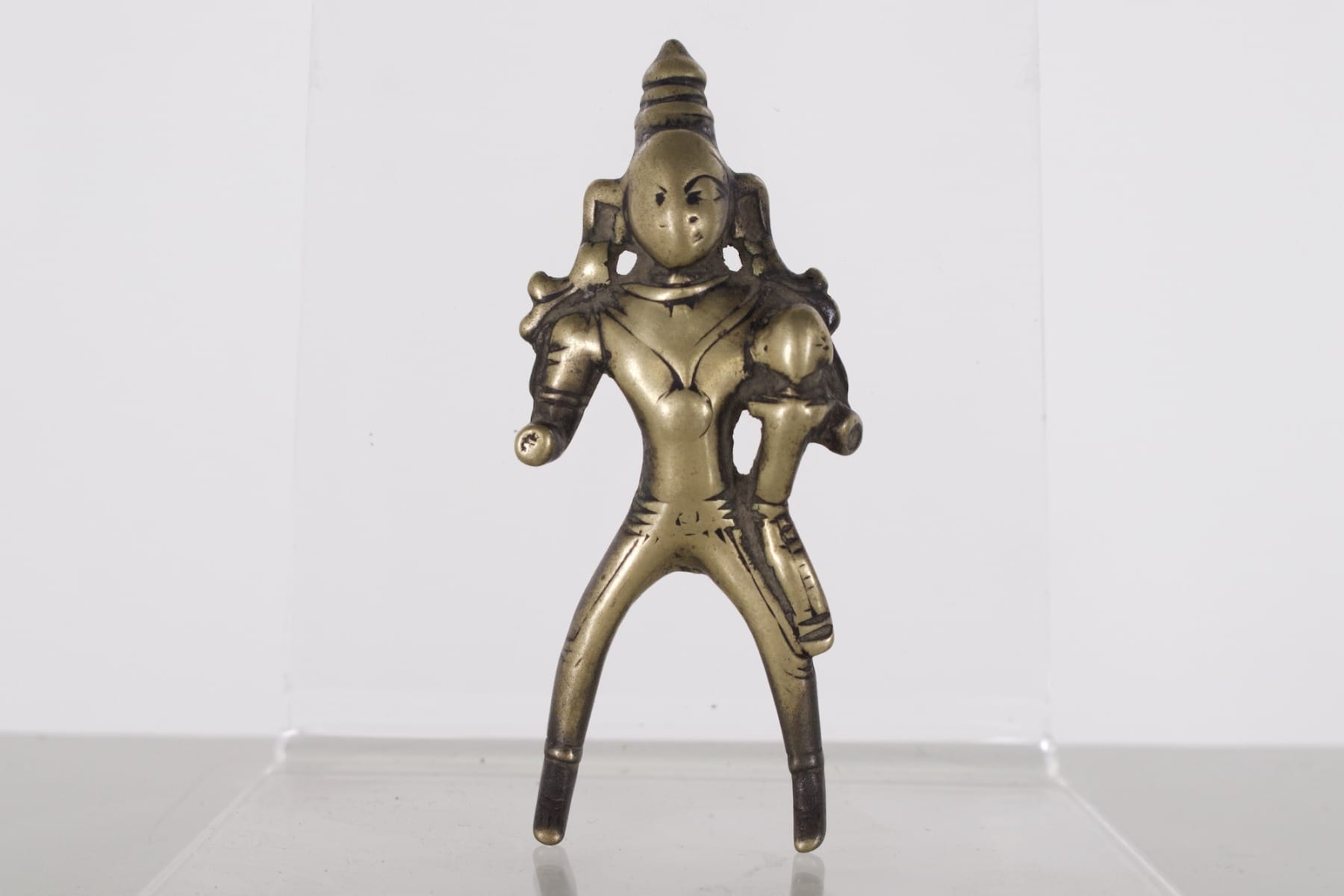
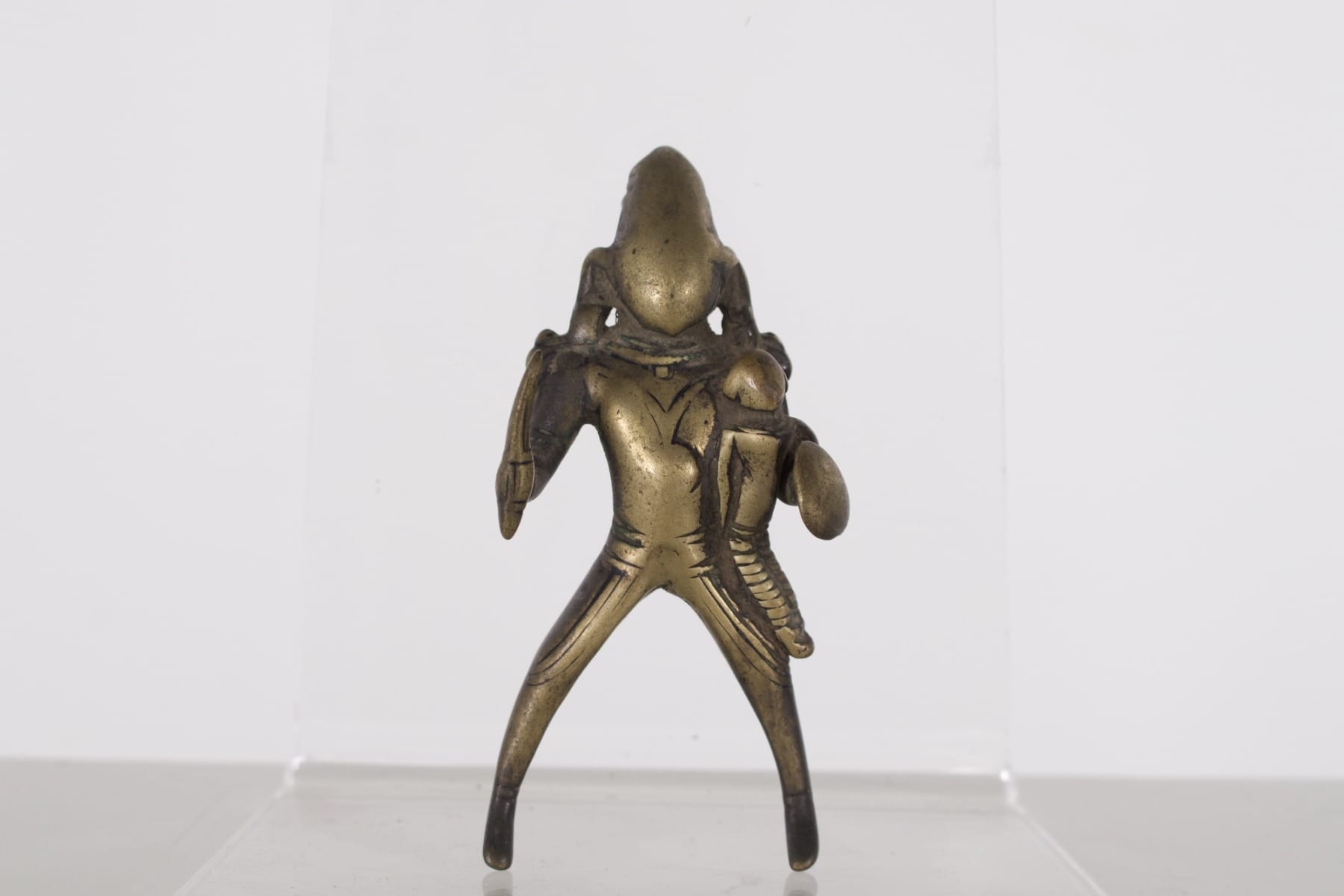
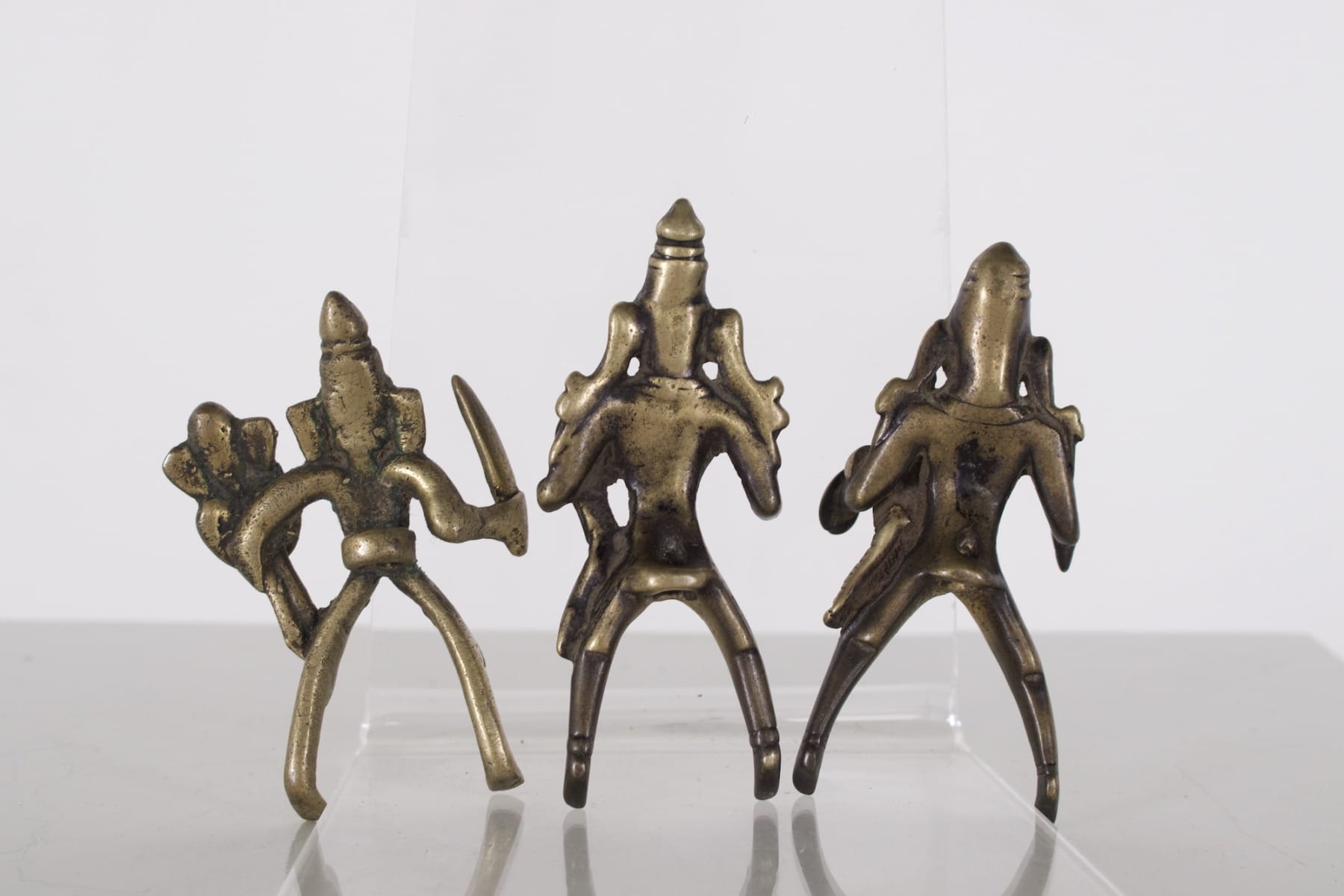
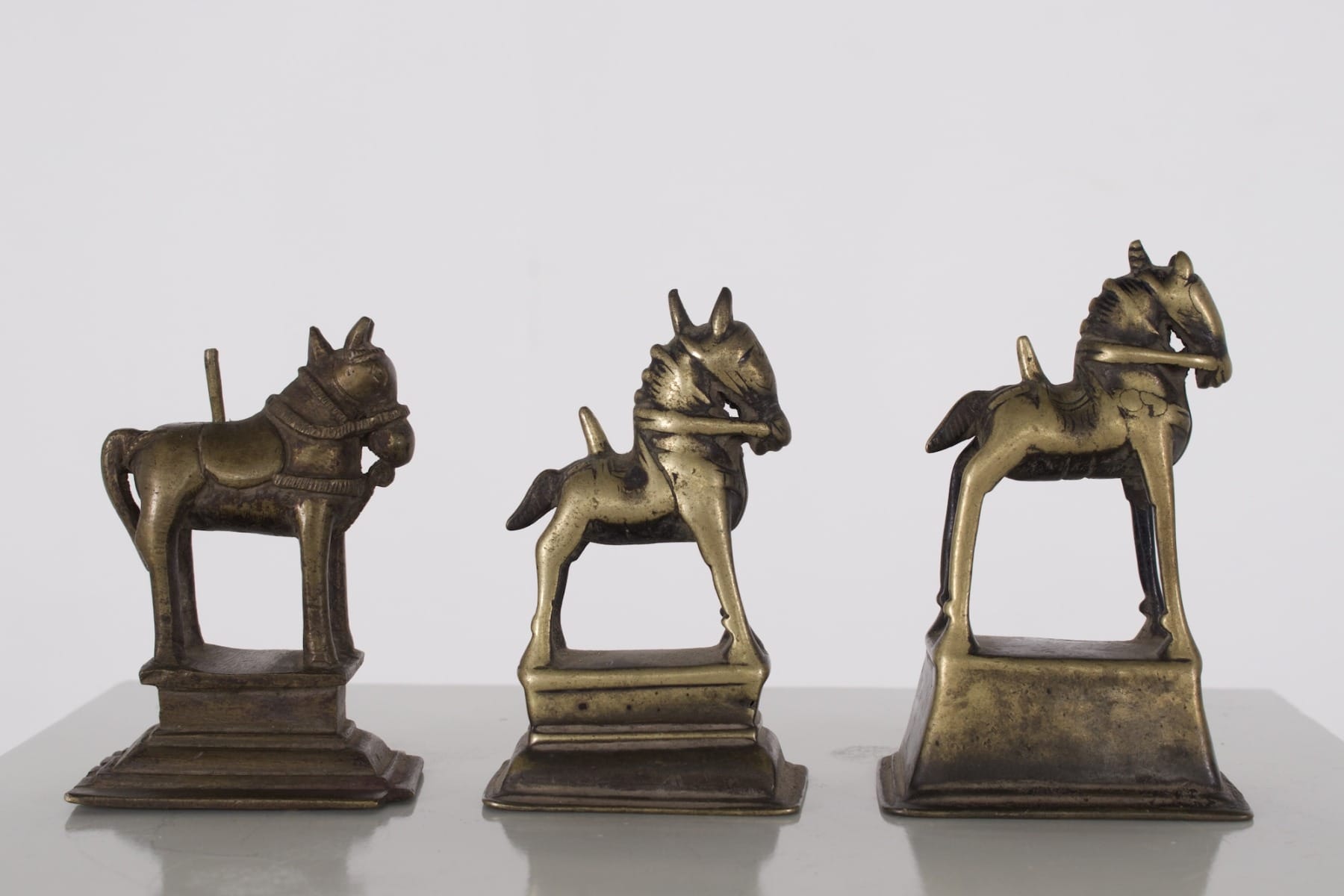
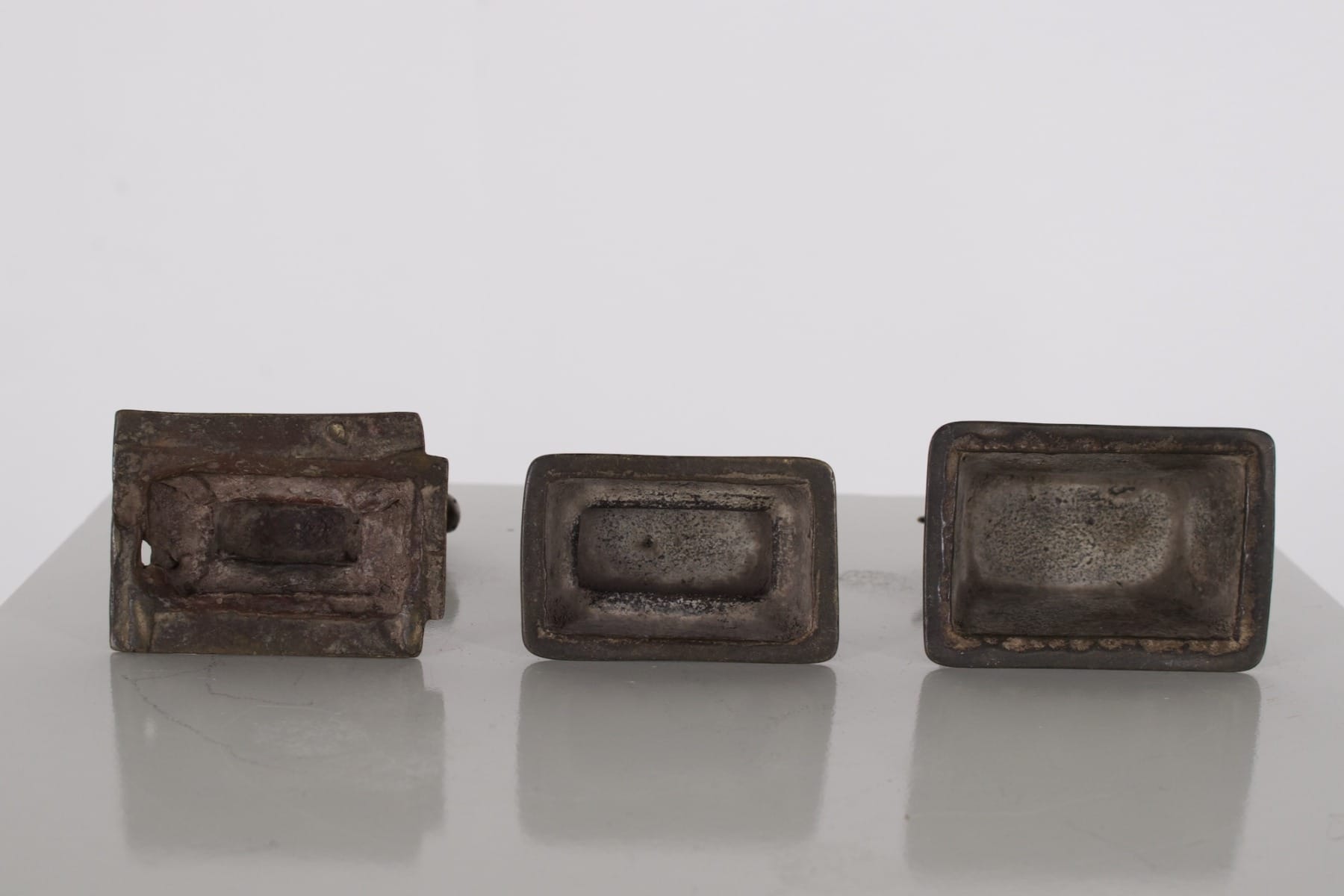
Set of three equestrian figures of Khandoba in copper alloy, Western India, Maharashtra, 18th century. Their stylized modeling and surfaces smoothed by long devotional use bear witness to the folk cult of this regional manifestation of Shiva.
- Provenance: Former Claude de Marteau collection
- Dimensions of the largest rider: H 14.5 cm x L 7 cm x w 5 cm
- Total weight: 984 grams
- Sold in one indivisible lot.
1 available in store

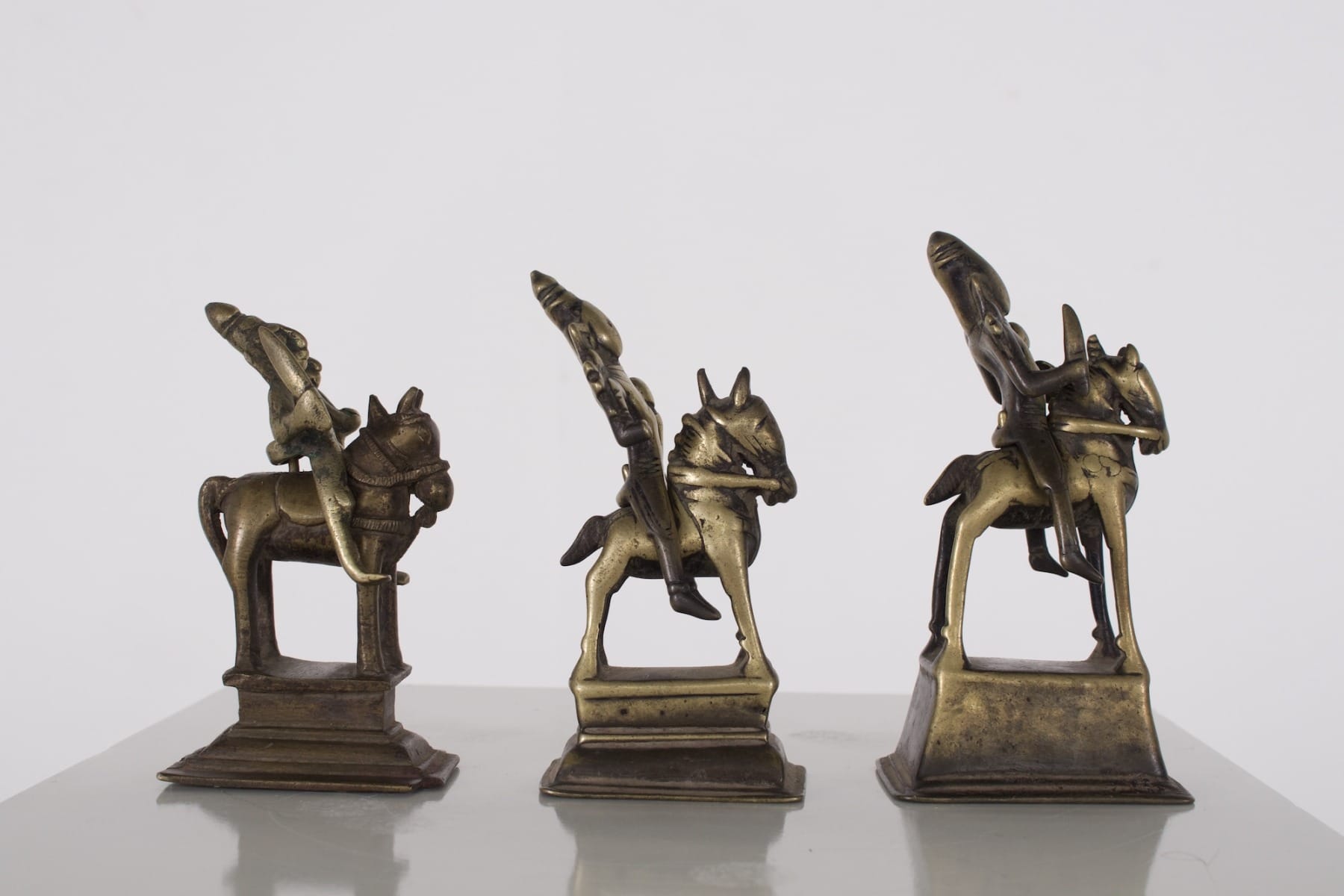
This set of three Indian bronzes depicting Khandoba on horseback belongs to the folk religious traditions of the Western Deccan, likely Maharashtra. The three statuettes follow the same iconographic type while exhibiting subtle variations in casting and modeling: the equestrian god stands upright on his mount, wearing a tall conical headpiece, while the horse rests on a substantial tiered rectangular base.
Khandoba, also known as Khanderaya, Malhari, or Malhari Martand, is a deity particularly revered in Maharashtra. Integrated into the Hindu pantheon as a manifestation of Shiva, he nonetheless possesses a very distinct regional identity. His image is primarily that of a warrior god: he frequently appears mounted on horseback, armed with a sword and sometimes accompanied by other Shaivite attributes.
Khandoba, equestrian god of Maharashtra
The primary center of his cult is located in Jejuri, near Pune, where his sanctuary remains one of the major pilgrimage sites of Maharashtra today. Khandoba is particularly associated with warrior, farming, and pastoral communities, who invoke him as a protective deity. His cult thus developed at the intersection of the Shaivite tradition and regional religious practices deeply rooted in the rural society of the Deccan.

The ritual of Khandoba, a form of Shiva in India.
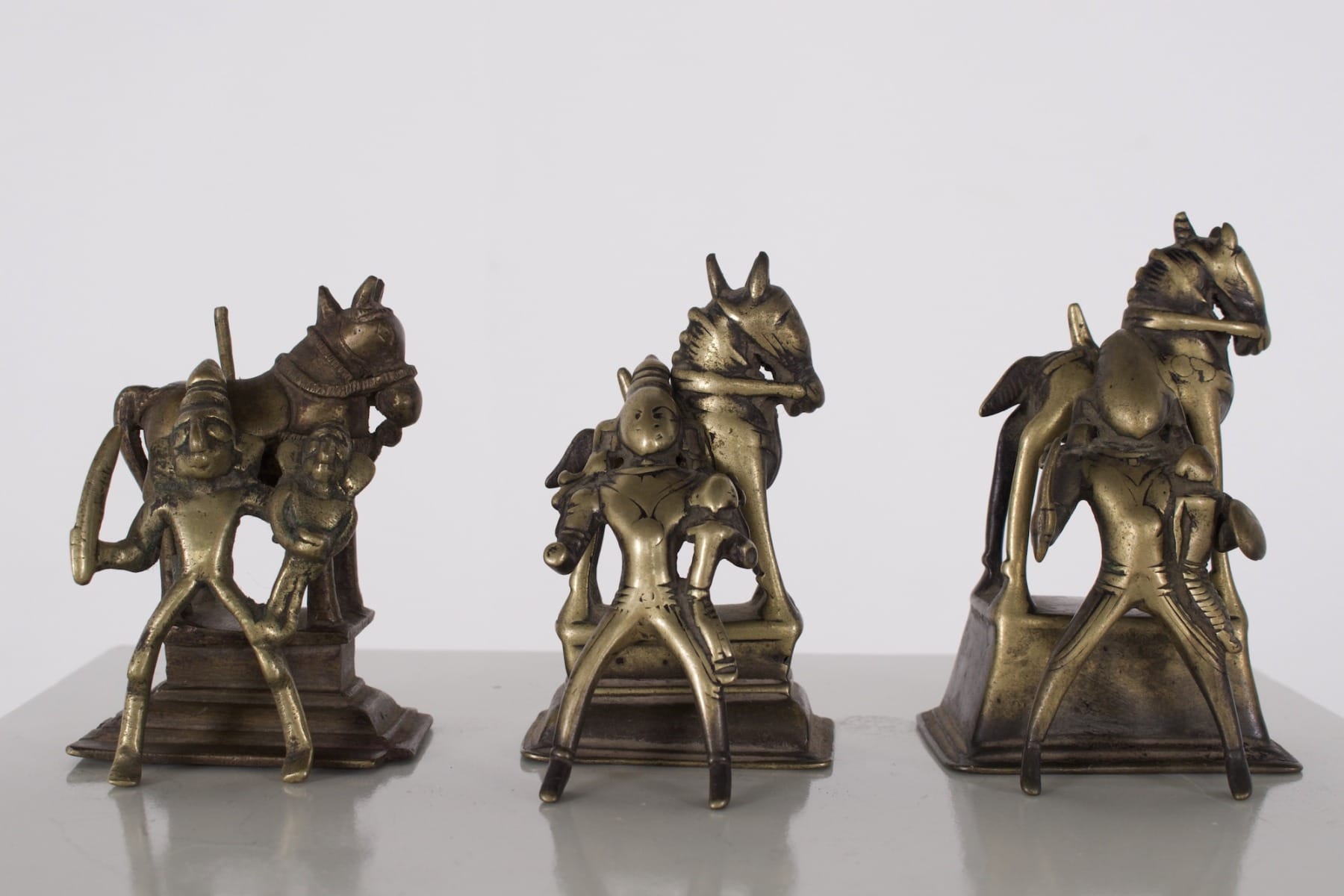
In his most well-known iconography, Khandoba is accompanied by one of his wives, generally Mhalsa, sometimes Banai, sharing the mount with him. However, some sculptures represent him alone or considerably simplify the secondary figures and attributes. The present examples belong to this folk production where identification relies more on the general silhouette of the warrior god on horseback, his headpiece, his weaponry, and the votive character of the image than on a strictly codified iconographic program.
Furthermore, the three statuettes each offer a different interpretation of the same subject. The horses, with thin and highly stylized limbs, are treated with an economy of means that contrasts with the vertical presence of the riders. The tall headdresses, weapons, and details of the harnesses animate the silhouettes, while the architectural bases lend these small bronzes an unexpected monumentality.
A patina shaped by ritual gesture
These figures were intended for a religious or domestic context, comparable to the small altars and devotional bronzes dedicated to Khandoba found in Maharashtra. Their format allowed for installation in a family shrine or a ritual space, where the deity could receive prayers and offerings.
These three equestrian figures of Khandoba form a set particularly evocative of the folk religious arts of Western India in the 18th century. Their patina and the wear on their surfaces are consistent with those observed on several comparable bronzes from the Claude de Marteau collection, as well as with early examples that have appeared on the art market.
You might also like…


Discover also...


Delivery to Belgium

Delivery to France

Delivery to Luxembourg
