



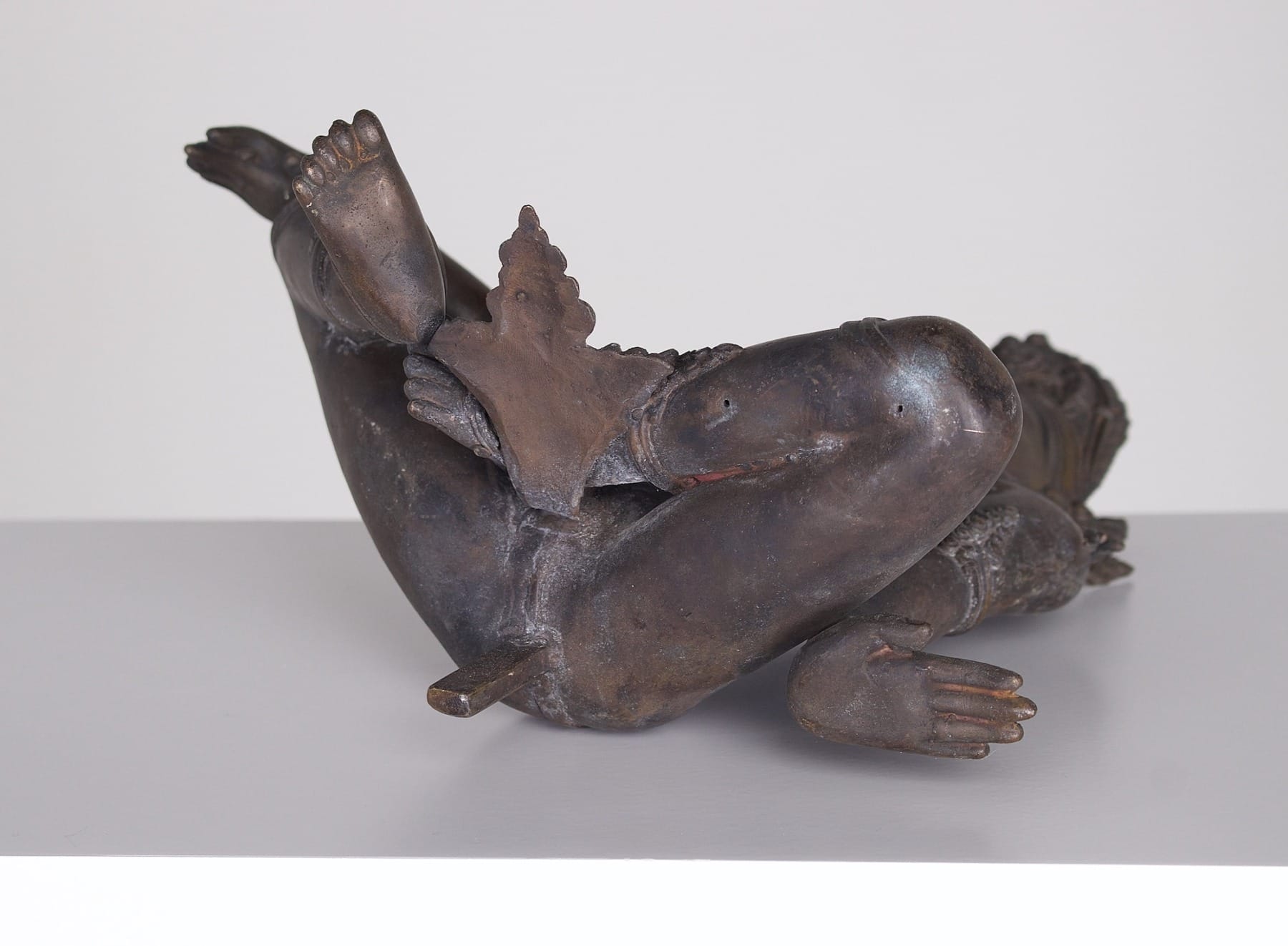
Bronze Indra Statue – Nepal
€1800,00
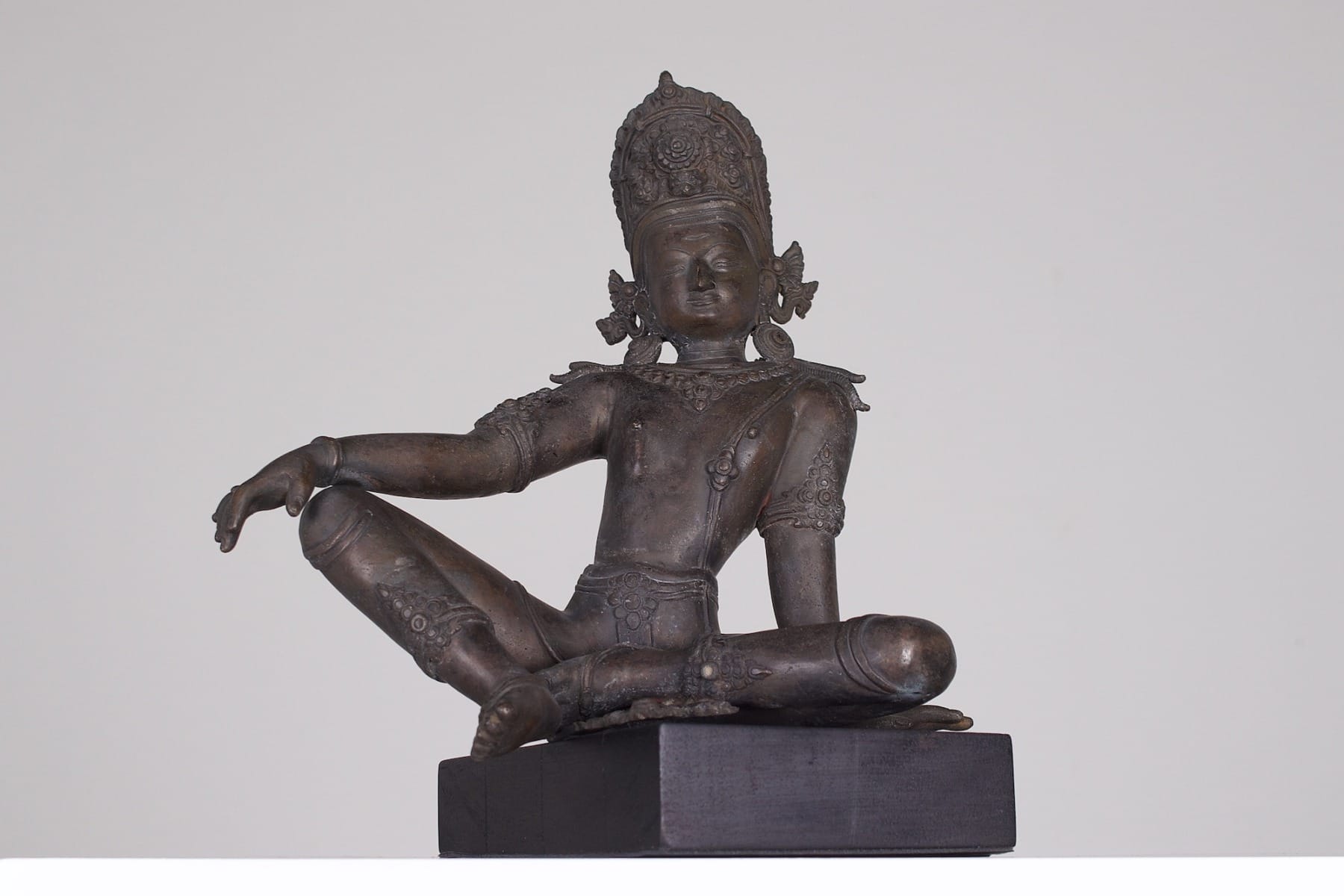
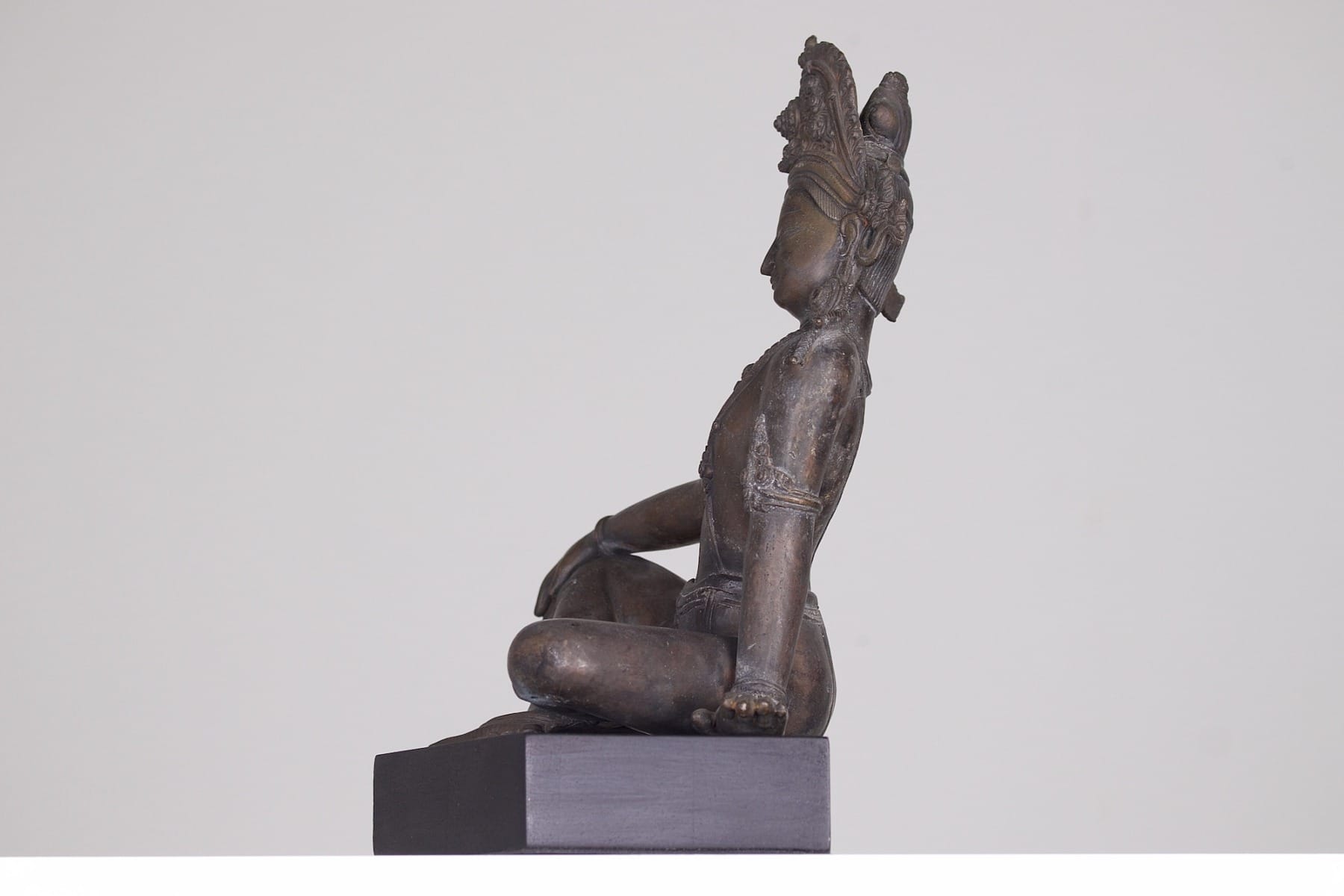
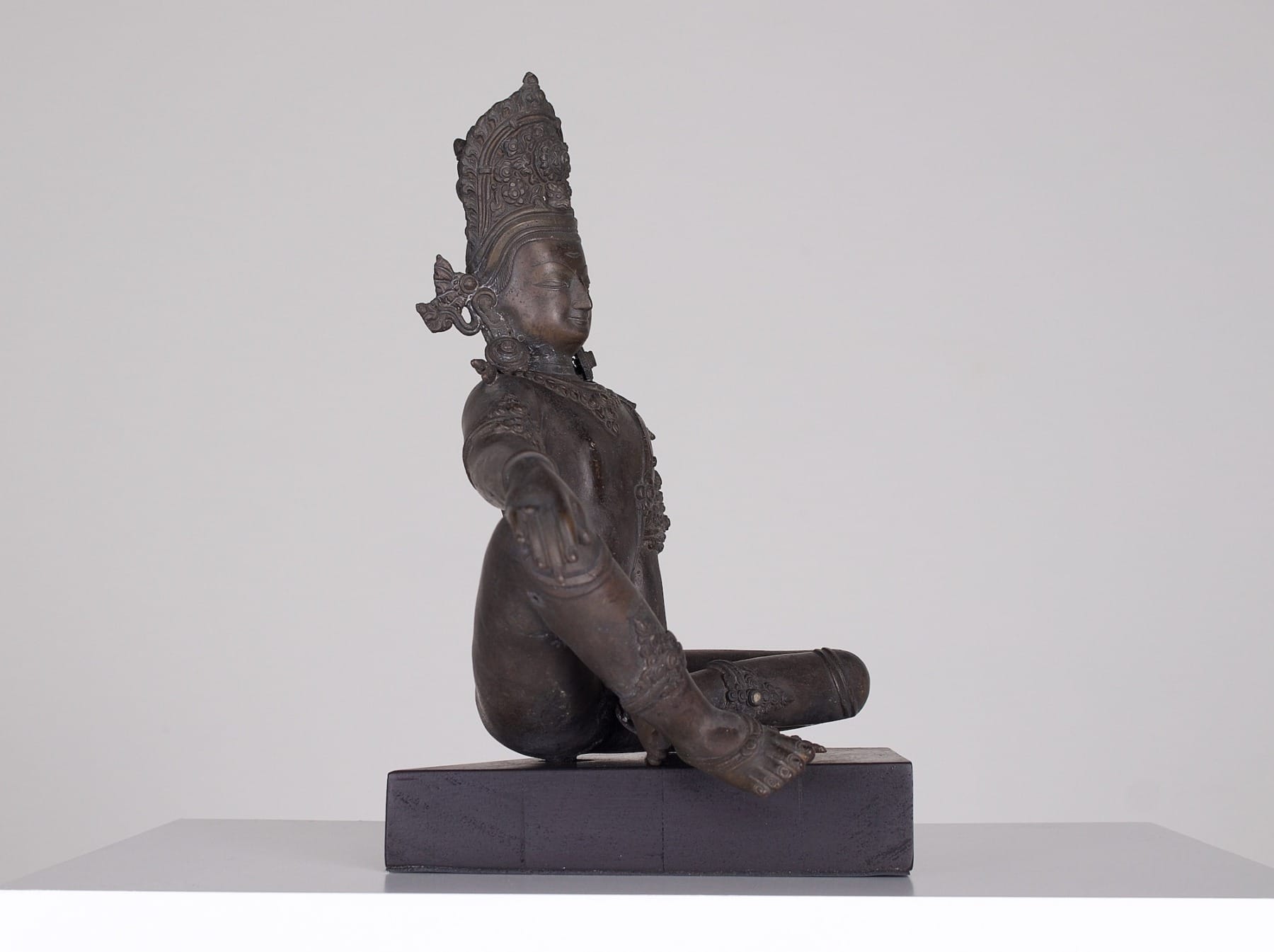
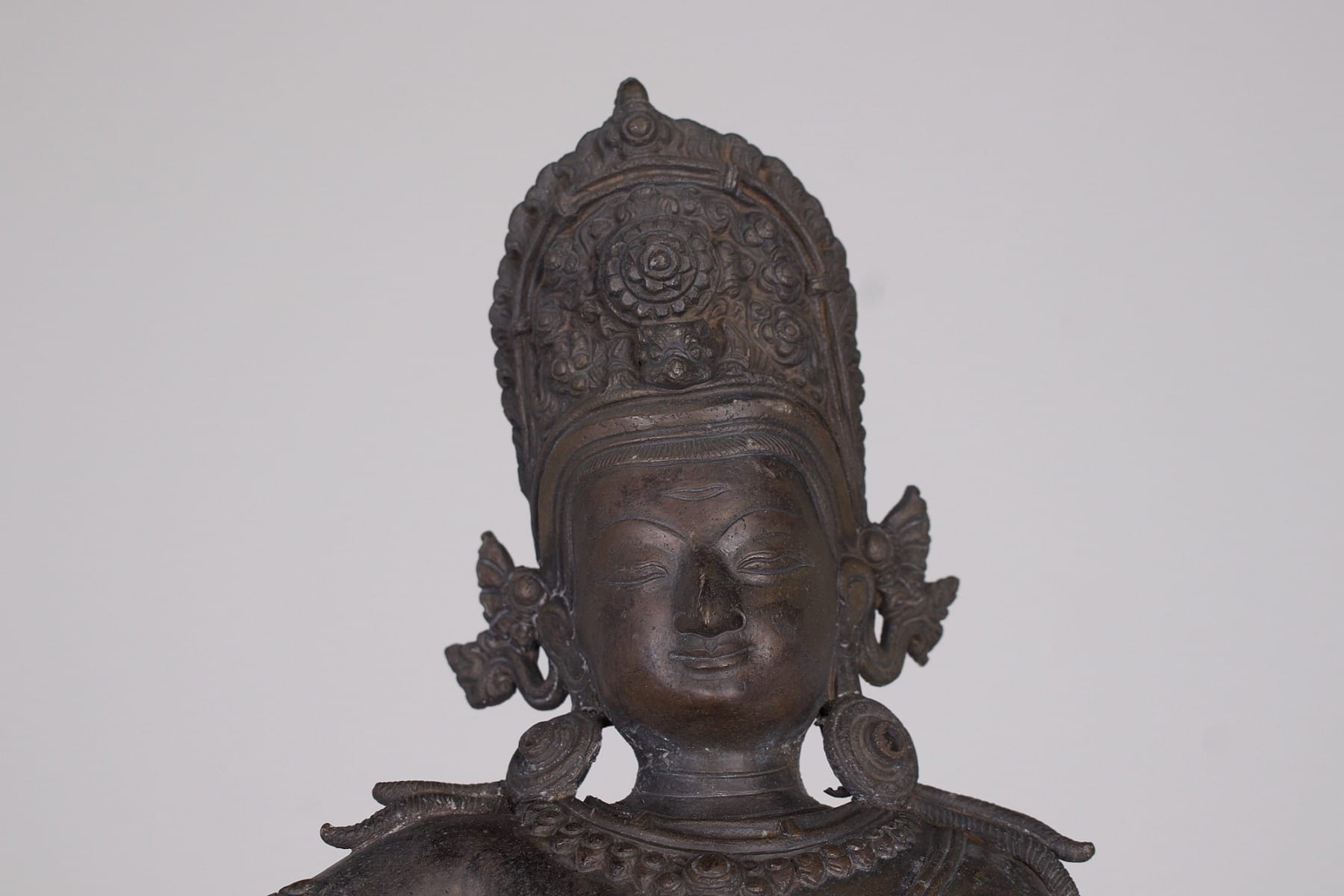
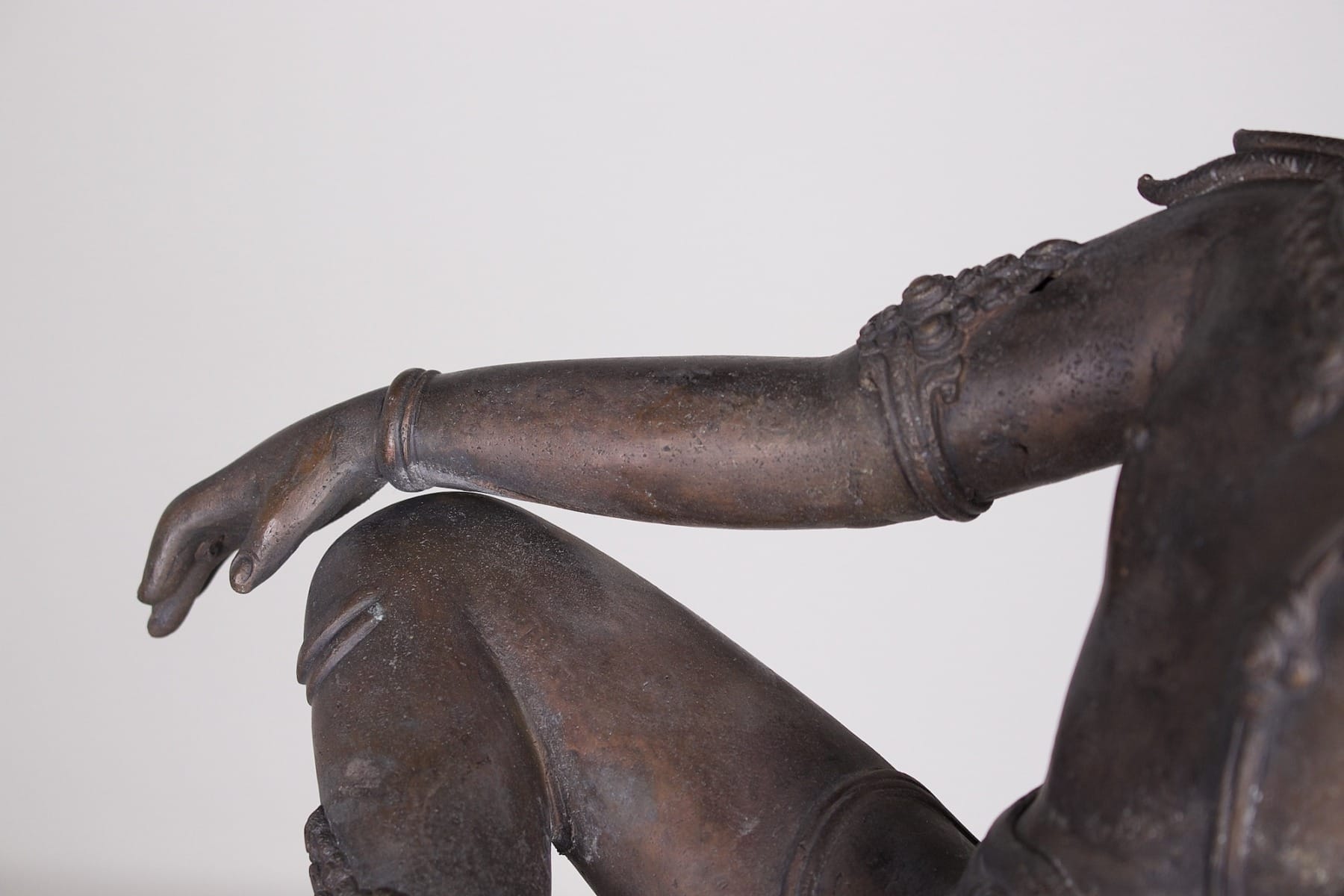
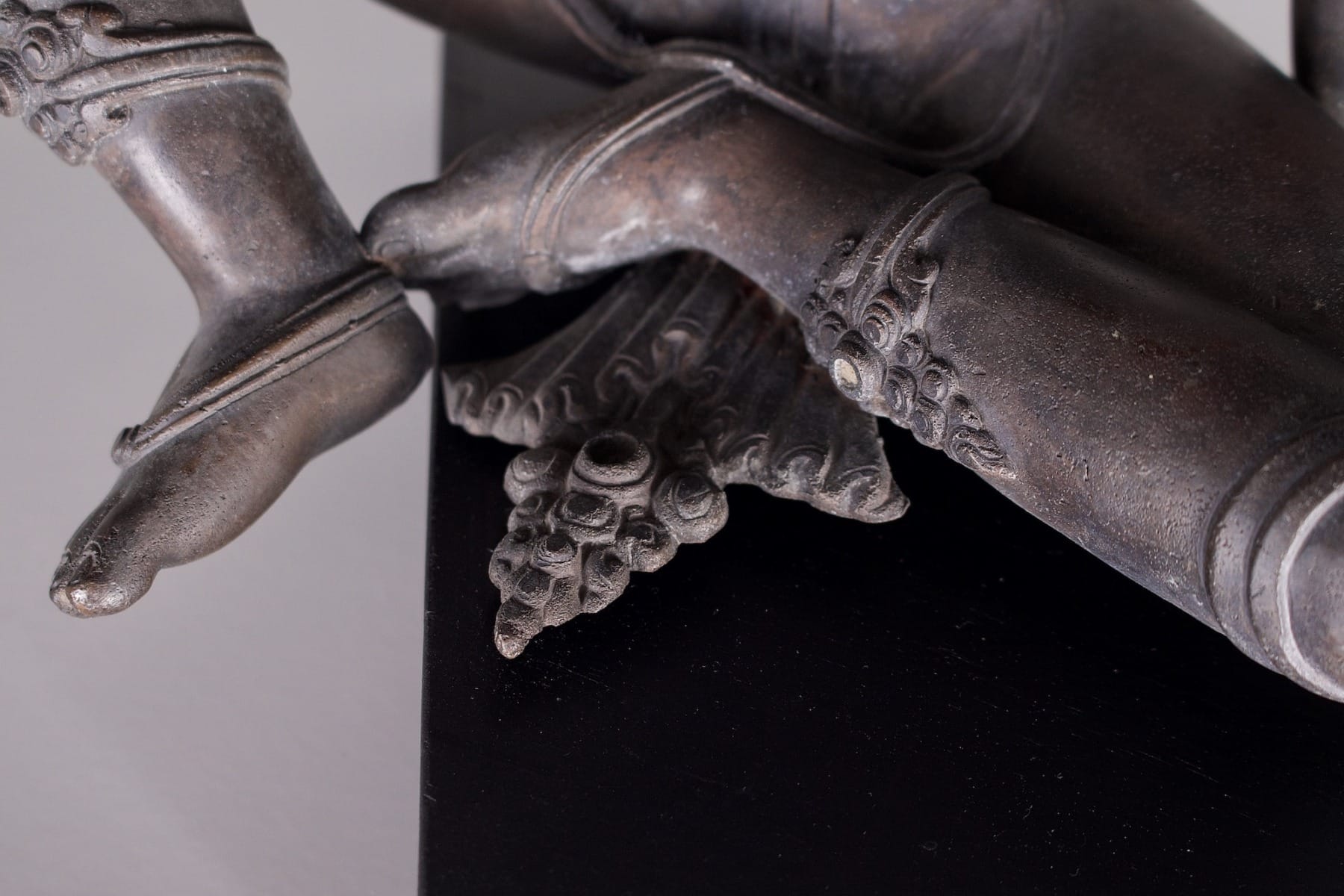
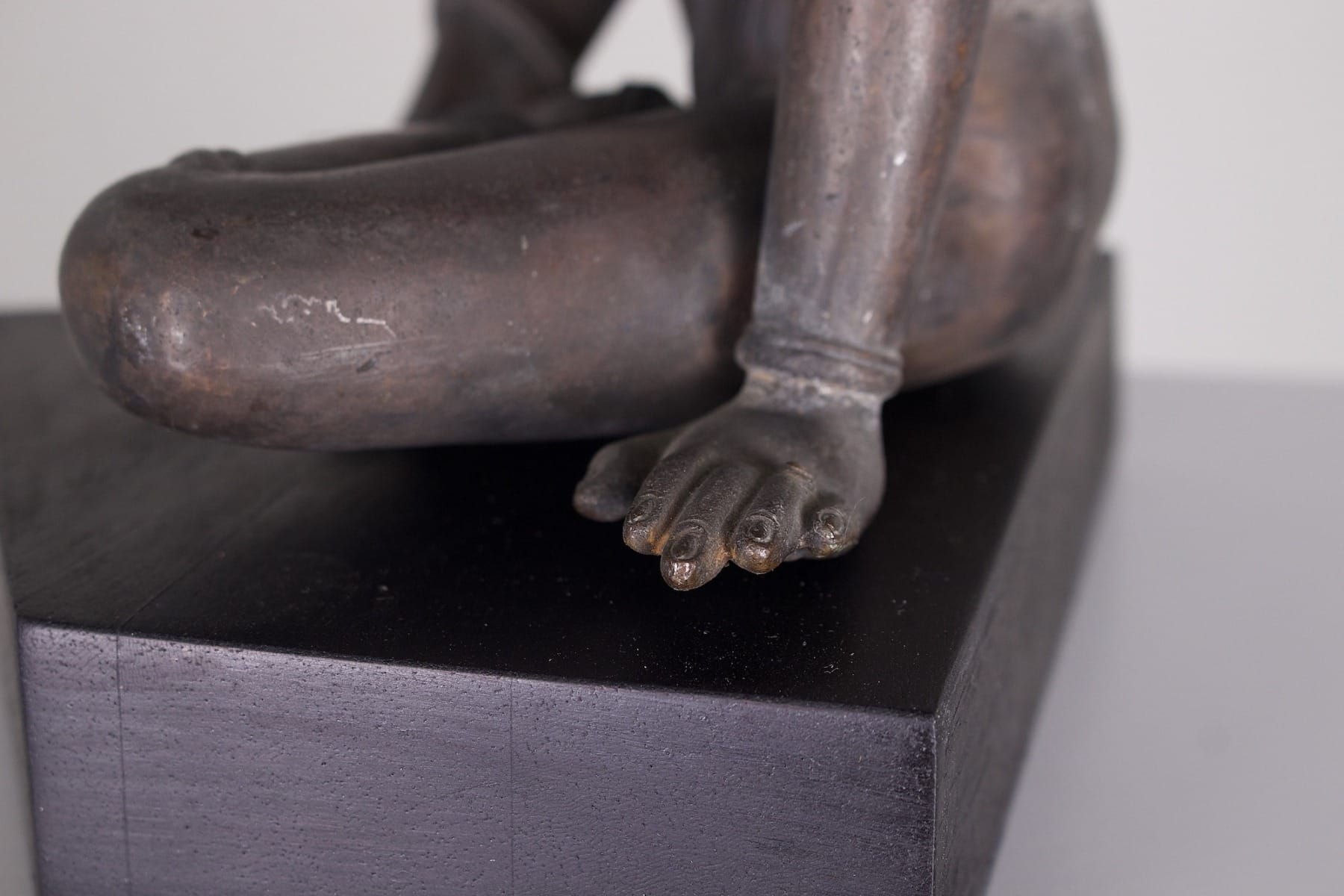
Statue of Indra in Nepalese bronze, depicted seated in lalitasana (royal ease posture). In Hinduism, Indra is the king of the gods, an ancient Indo-European deity associated with storms and war.
- In Buddhism, under the name Śakra, he becomes a celestial sovereign, protector of the Dharma and servant of the Buddha.
- This sculpture belongs to the 19th-century Newar craft tradition and is made using the lost-wax technique.
- Provenance: Former Claude de Marteau collection.
- Sold with certificate.
- Dimensions: H max 34 cm × D max 16 cm × W max 26 cm.
Height without base: 30 cm.
Base (modern): H 4 cm × W 20.5 cm × D 16 cm.
1 available in store

Indra in the Buddhist tradition
Indra rules over the realm of the Thirty-Three Gods (Trāyastriṃśa), located at the summit of Mount Meru. He is no longer a supreme deity, but a powerful deva, subject to the law of karma and the cycle of rebirths.
In Burma, this same deity is known as Thagyamin, the Burmese form of Sakka/Indra, integrated into the Theravada Buddhist tradition and the world of the Nats.
- Protector of the Buddha: he appears in many episodes of Śākyamuni’s life. He is notably present at the Miracle of Śrāvastī alongside Brahmā, and intervenes in certain accounts before or after the Buddha’s awakening.
- Protector of the Dharma: venerated in Buddhist traditions across Asia, notably in Mahayana Buddhism, known as Taishakuten in Japan and sometimes depicted holding the vajra, symbol of spiritual power.
- Conditioned being: despite his status as a celestial king, Indra remains subject to samsara. He is described as prone to pride and to the impermanence of his power, illustrating a still incomplete spiritual realization.
In Himalayan Buddhist statuary, Indra is depicted either in a posture of adoration, often kneeling before the Buddha, or as a celestial sovereign holding the vajra.
About this piece
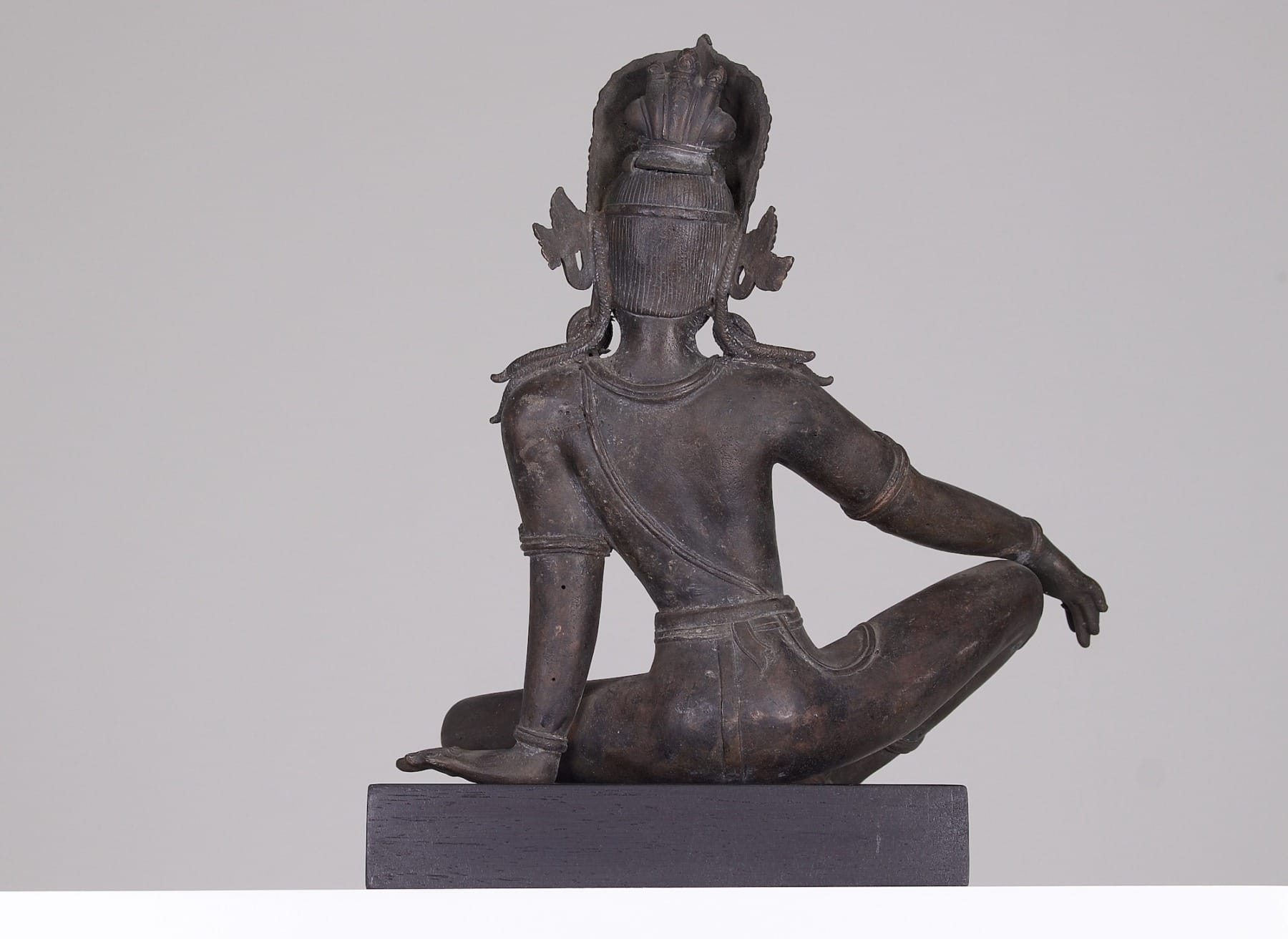
A technical detail appears at the left arm, where two small holes are visible. They most likely correspond to vents related to the lost-wax casting process, allowing air to escape and ensuring proper flow of the molten metal.

Two holes, most likely vents on the left arm.
Two similar holes are also present under the left leg, an area without any iconographic attribute. This distribution confirms their technical rather than decorative function. Such traces are common on ancient bronzes and attest to casting constraints and the artisan’s skill.
This sculpture comes from the Claude de Marteau collection, built around a significant body of ancient Buddhist and Asian works.
You might also like…


Discover also...

Delivery to Belgium

Delivery to France

Delivery to Luxembourg
