



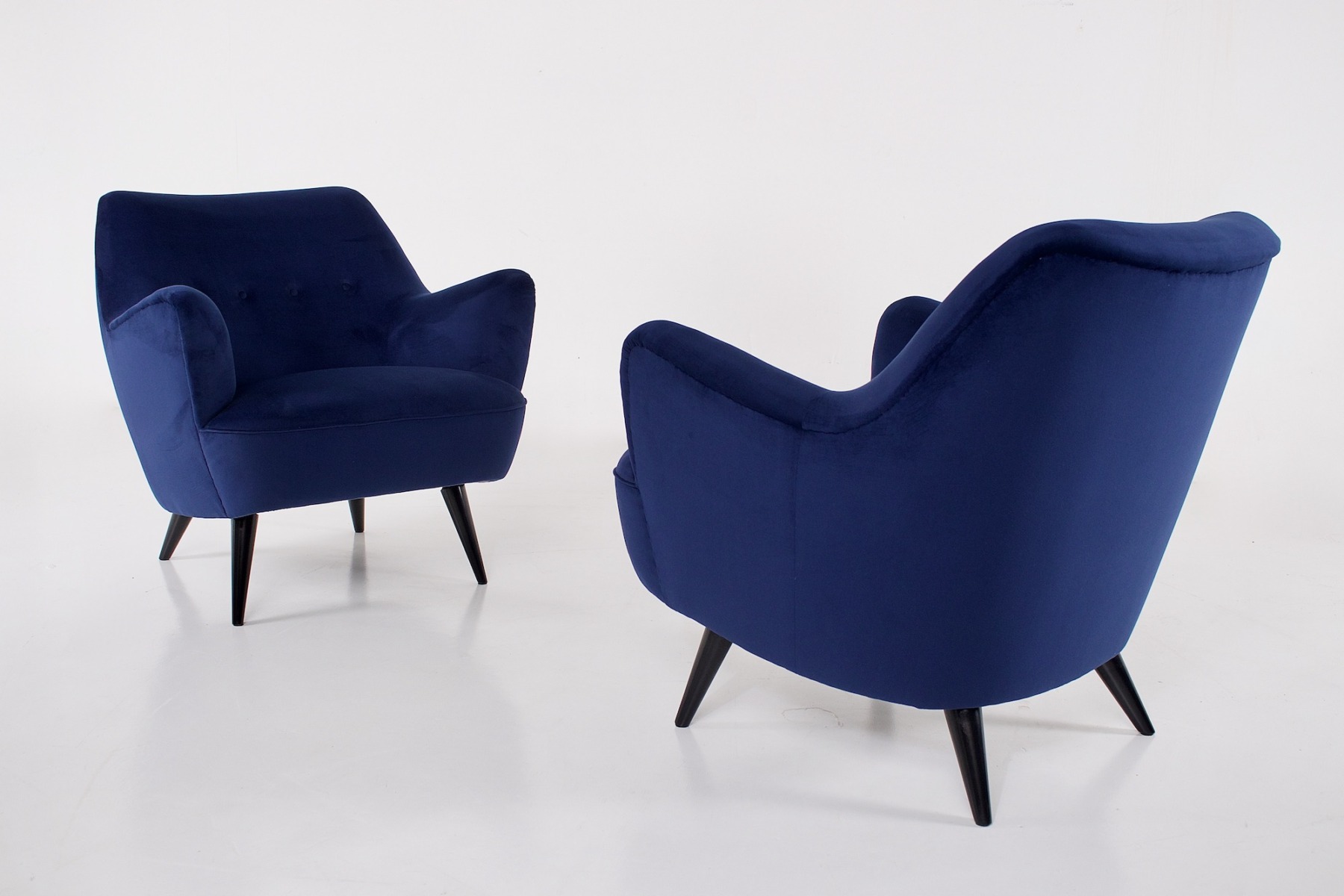
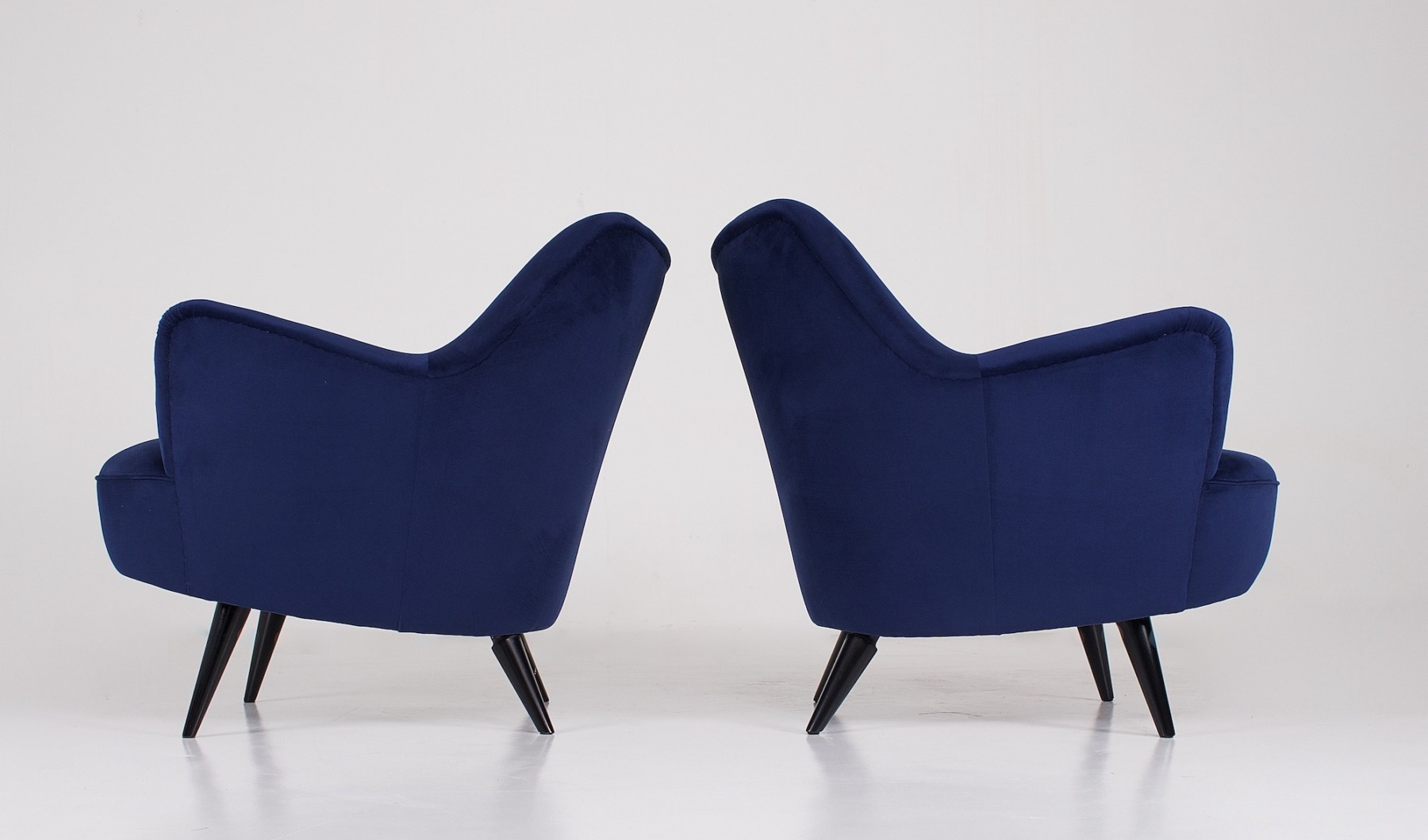
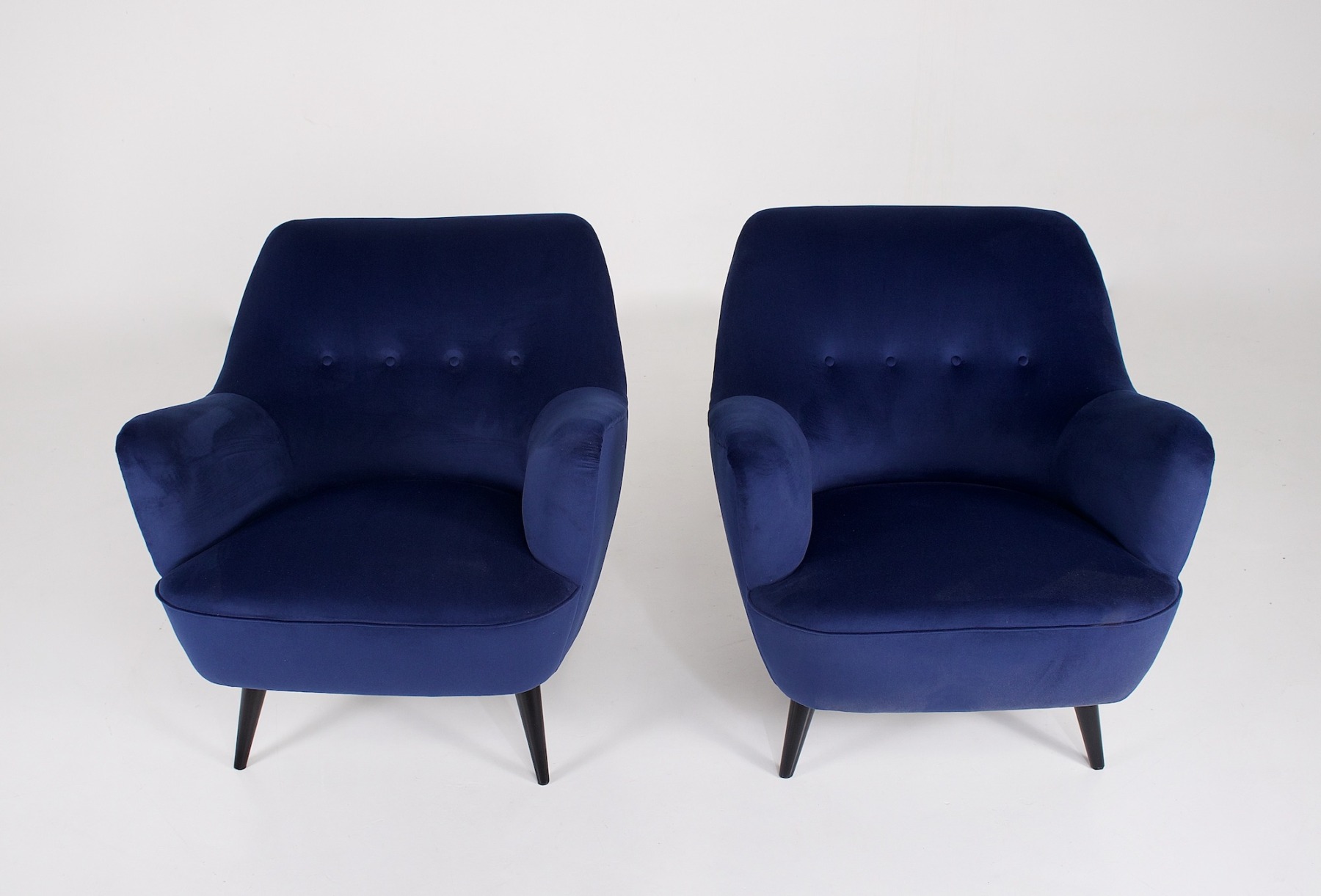

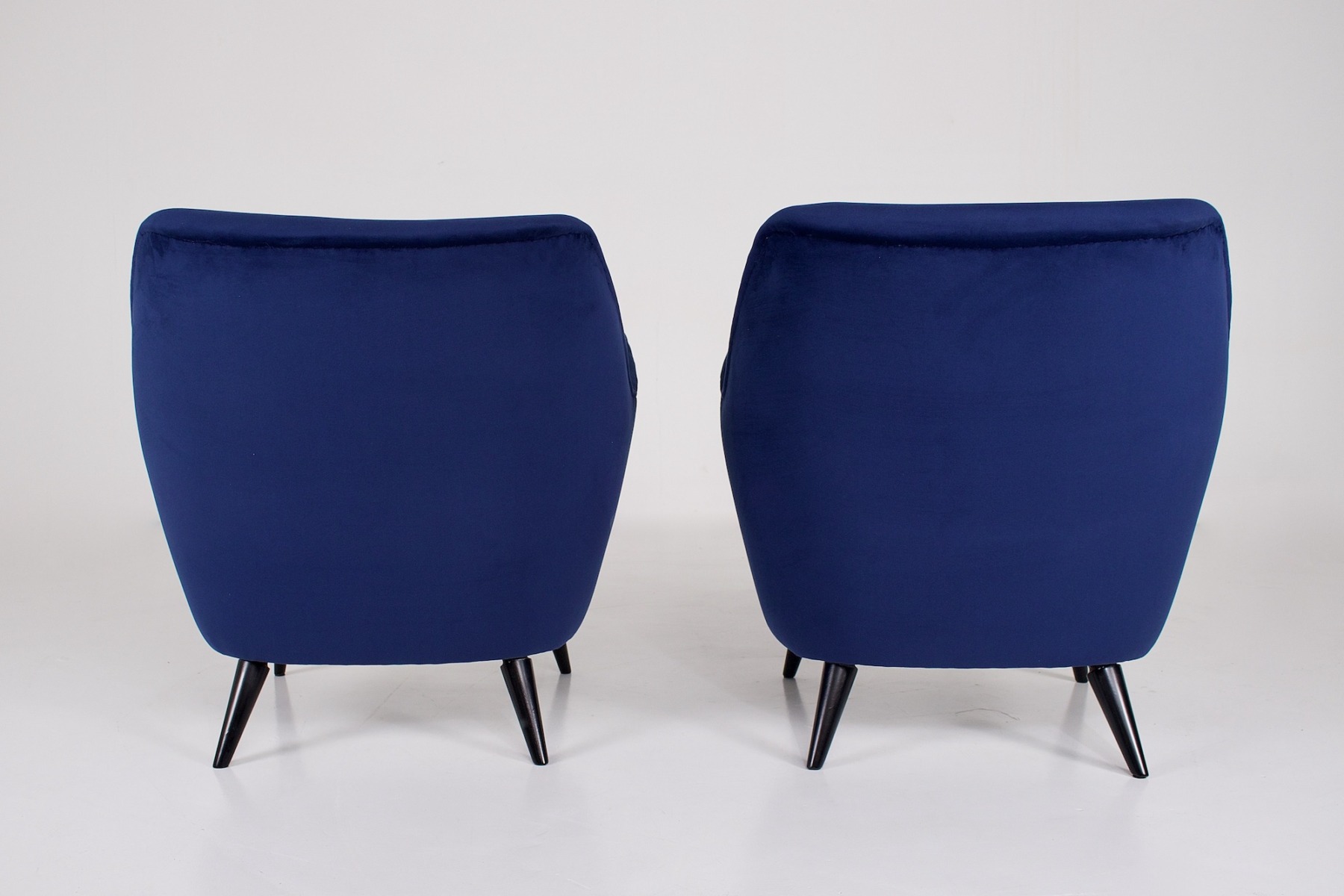
Pair of Eugen Schmidt “models 6050” armchairs 1956
€7200,00
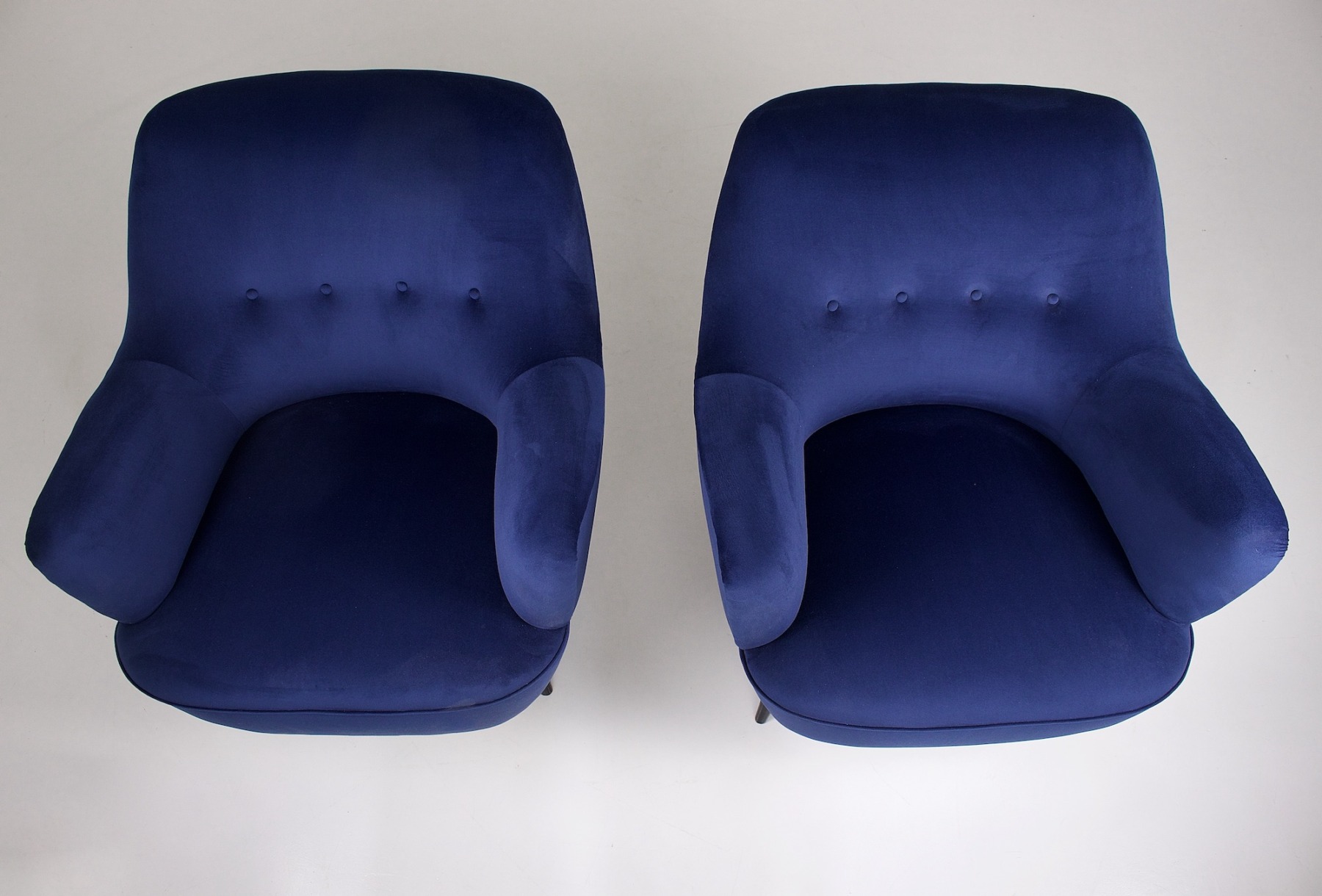
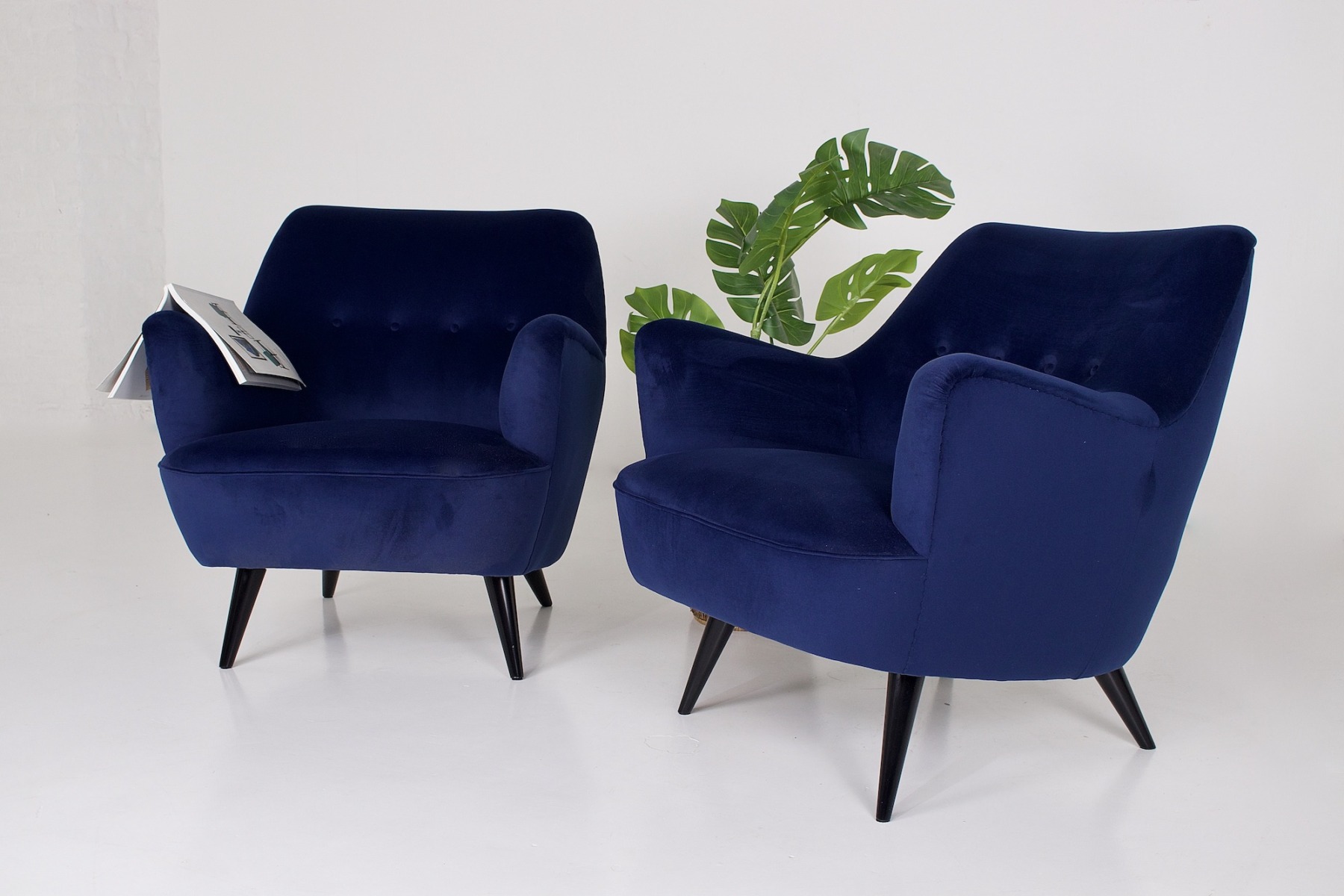
Pair of club armchairs produced by Etablissements Eugen Schmidt (Soloform) in 1956.
- The armchairs have been fully restored by our restorer; the original upholstery in horsehair, jute, and copper and steel springs has been preserved.
- They offer a firm, comfortable and resilient seat, typical of armchairs produced by the more confidential craftsmen of the time.
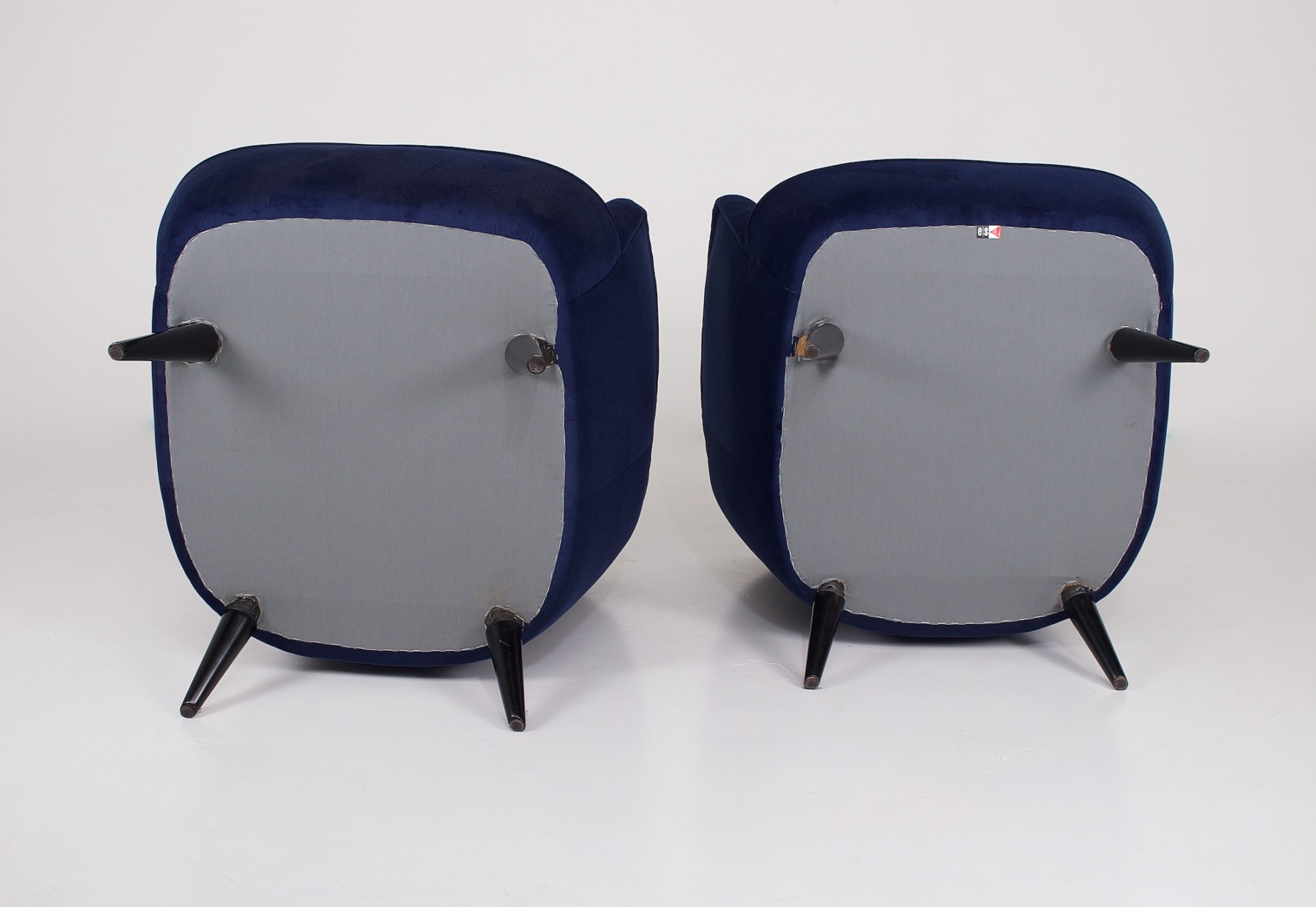
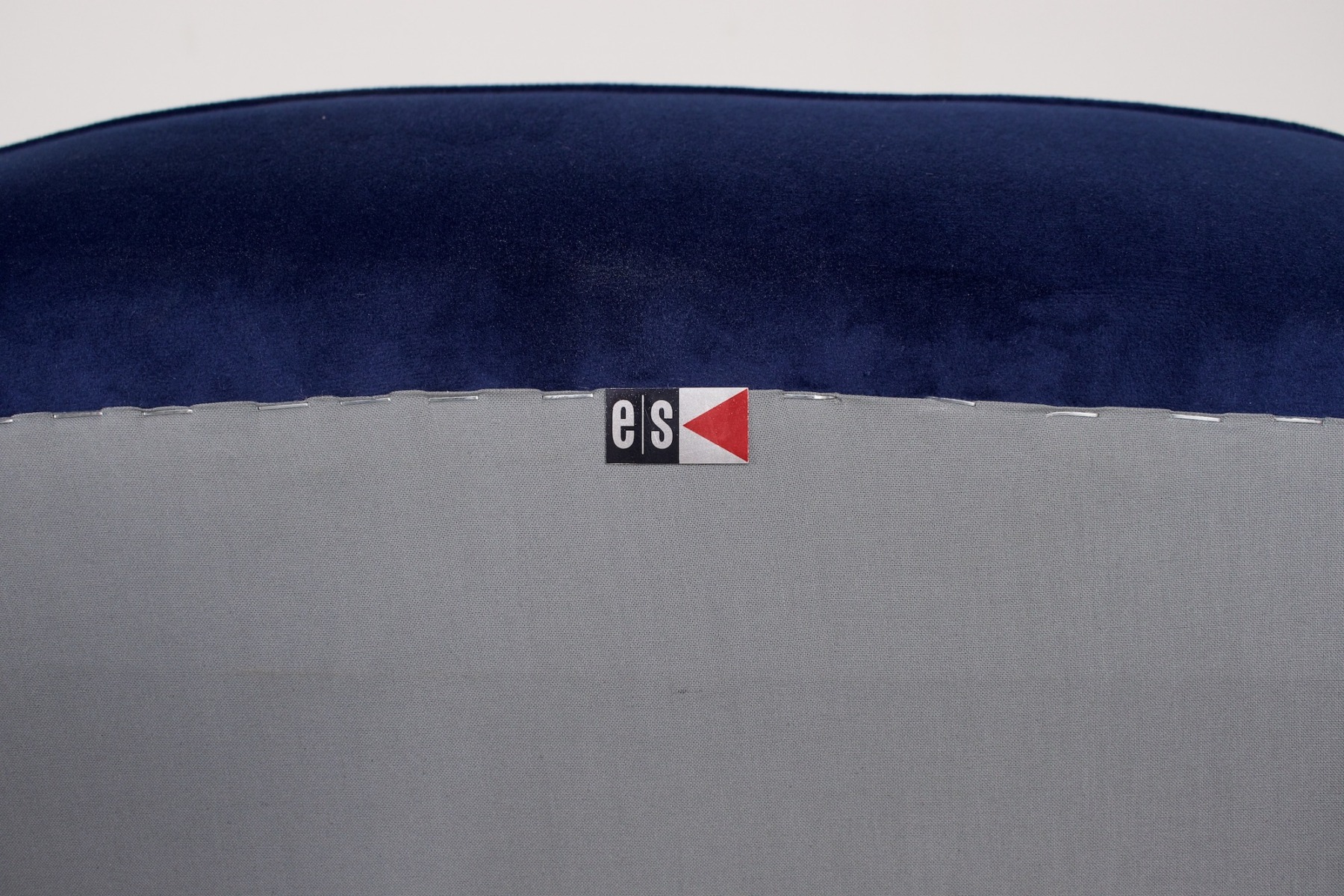
- The publisher’s label, found during the stripping, has been replaced.
- Bibliography: Deutsche Digitale Bibliothek for a similar model reproduced in a period photograph, (Historical photographic archive of the Soloform German Design Council).
- H 74 CM X D 87 CM X W 71 CM.
- Seat height 39 CM.
1 available in store

Eugen Schmidt armchairs model 6050 – Soloform, 1956
This pair of model 6050 armchairs is a production of Eugen Schmidt establishments, a manufacturer of upholstered furniture located in Darmstadt and associated with the Soloform line. Produced in 1956, these seats are part of the post-war renewal of furniture, when the traditional armchair evolved towards lower, more open, and more sober volumes, characteristic of modernist furniture of the 1950s.
Eugen Schmidt’s production remains relatively confidential today, but several institutional sources allow it to be better situated within the history of German design, whose style sometimes approaches, as is the case here, that of Italian design of the 1950s and 1960s. The Museum Oberschönenfeld notably preserves Soloform model 40A armchairs designed as early as 1953 by architects Hans Mitzlaff and Albrecht Lange and manufactured by Eugen Schmidt in Darmstadt. The museum’s documentation describes Eugen Schmidt as a high-end modern furniture manufacturer active for several decades.

Sofa Model “6051” and armchair Model “6050” for Eugen Schmidt GmbH (Source Deutsche Digitale Bibliothek)
The Deutsche Digitale Bibliothek also preserves several documents from the Historisches Fotoarchiv Rat für Formgebung, the historical photographic archives of the German Design Council. These include a vintage print dedicated to Eugen Schmidt’s model 6019, which entered the Rat für Formgebung archives in April 1958, as well as documentation concerning other models produced by the same house. These archives directly place Eugen Schmidt among the manufacturers monitored by German institutions responsible for documenting post-war industrial design.
For this pair of vintage armchairs, the attribution is also supported by a particularly interesting material element: during stripping, the original label of the Eugen Schmidt editor was found inside one of the seats. It was preserved and put back in place after restoration. The correlation between this original mark and historical documentation thus allows these armchairs to be identified within the Soloform production of the mid-1950s, rather than relying solely on stylistic attribution.
A traditional upholstery preserved during restoration
The restoration also made it possible to preserve a normally invisible but essential part of these design armchairs: their original upholstery. Under the covering, horsehair, jute canvas, and the old system of copper and steel springs were found. Rather than replacing this assembly with contemporary foams, these different elements were preserved and restored.

The armchairs during their stripping, a period artisanal work, still impeccable.
This choice makes it possible to preserve not only the historical construction of the seat, but also an important part of its original comfort. Horsehair and springs provide a very different firmness and resilience from that of a modern foam armchair: the seat accompanies the body’s weight while gradually retaining its shape.

The shaping, made from horsehair.

The armchairs during their stripping: A sound structure, copper and steel springs, webbing, jute and horsehair…
This construction testifies to the care taken in the manufacture of these 1950s armchairs. Behind a relatively simple silhouette lies a true upholsterer’s work combining structure, webbing, springs, jute canvas, and horsehair. The preservation of this assembly thus makes it possible to preserve the comfort of these seats as much as their external appearance.
By their generous volumes, their low seating, and their traditional construction concealed beneath a sober and modernist form, these Eugen Schmidt model 6050 armchairs constitute an interesting example of post-war design armchairs.
Documentary sources: Museum Oberschönenfeld – Bavarikon and Historisches Fotoarchiv Rat für Formgebung – Deutsche Digitale Bibliothek.
You might also like…
Discover also...


Delivery to Belgium

Delivery to France

Delivery to Luxembourg
