



Egg Chair with Ottoman – Arne Jacobsen
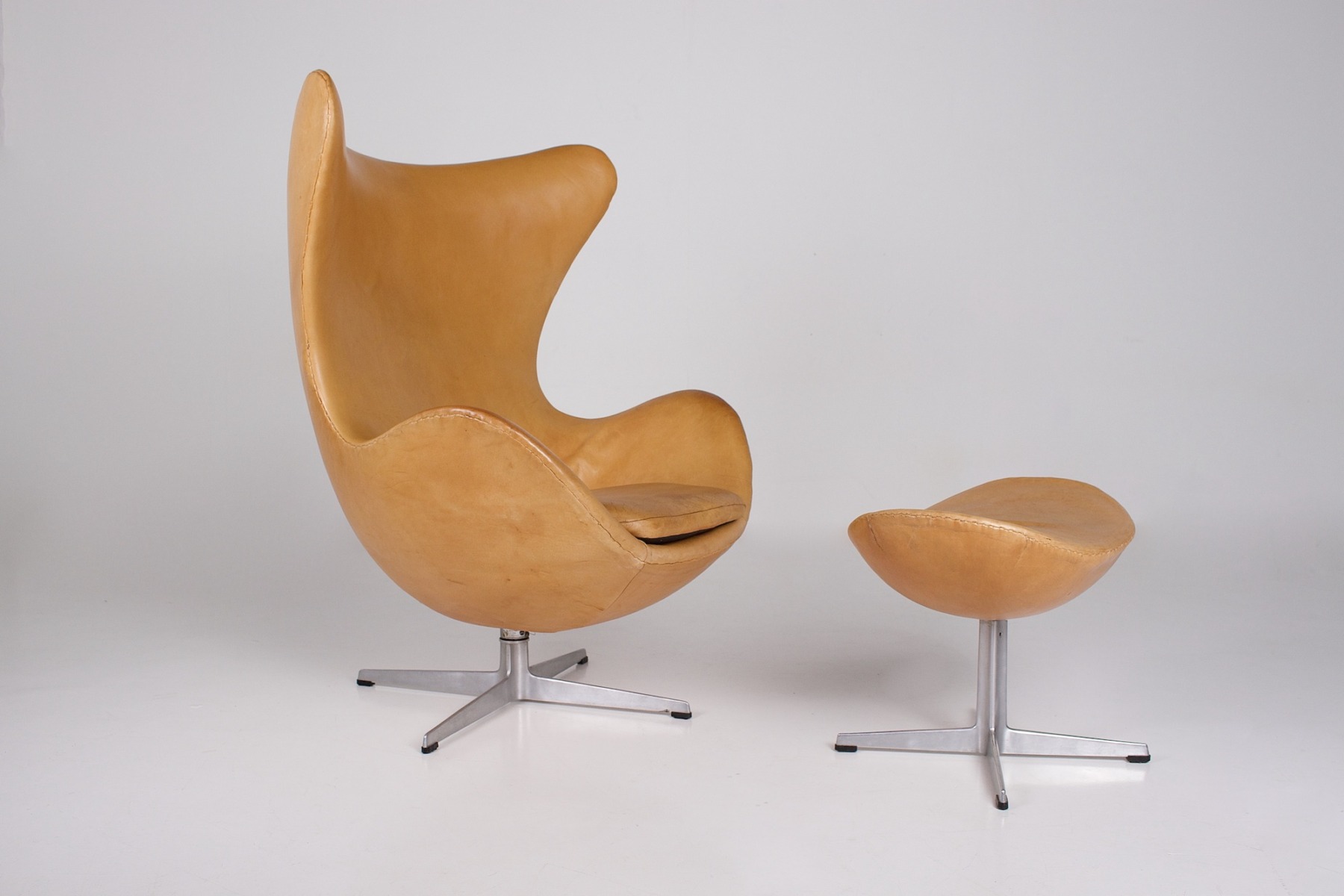
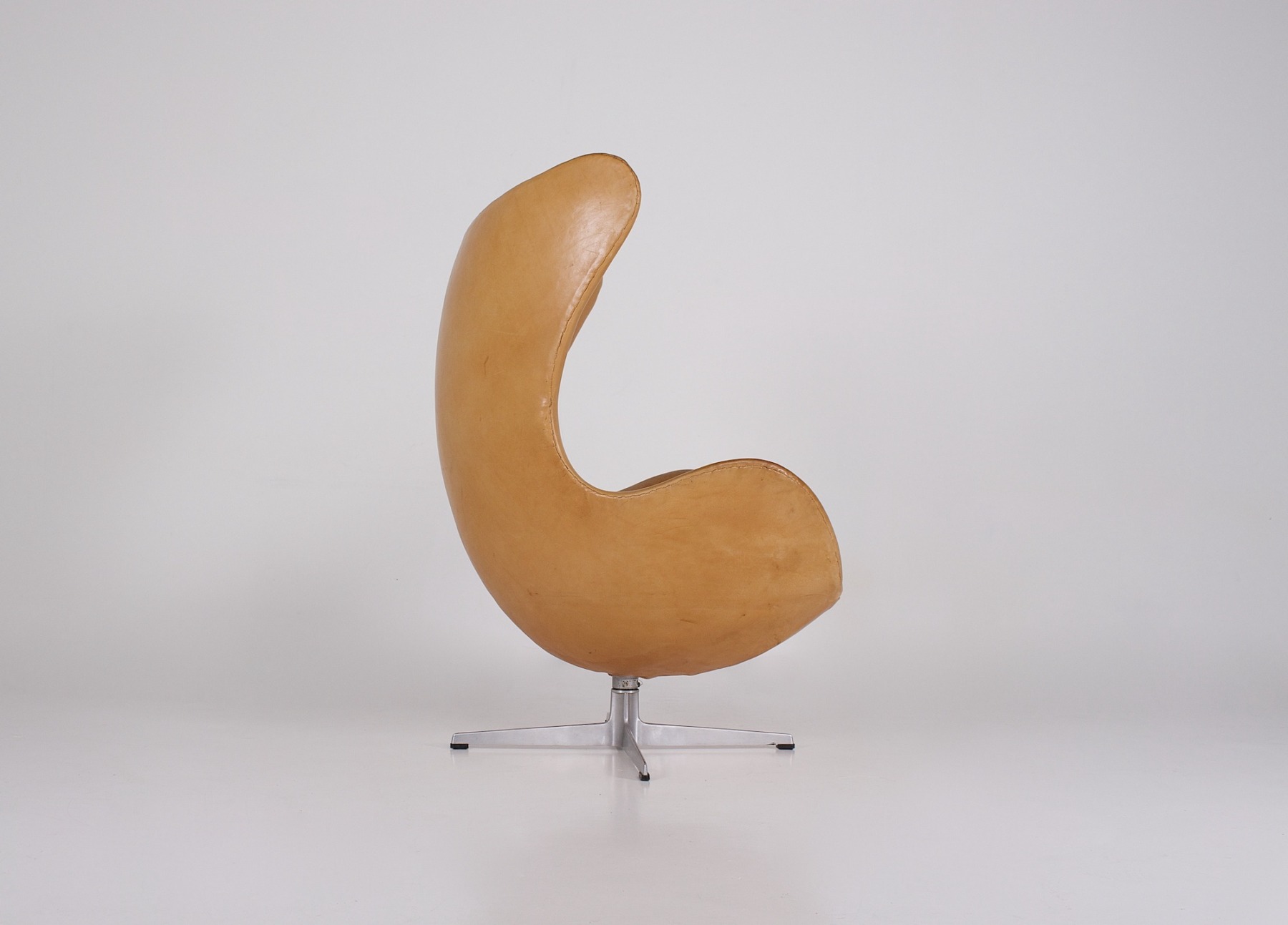
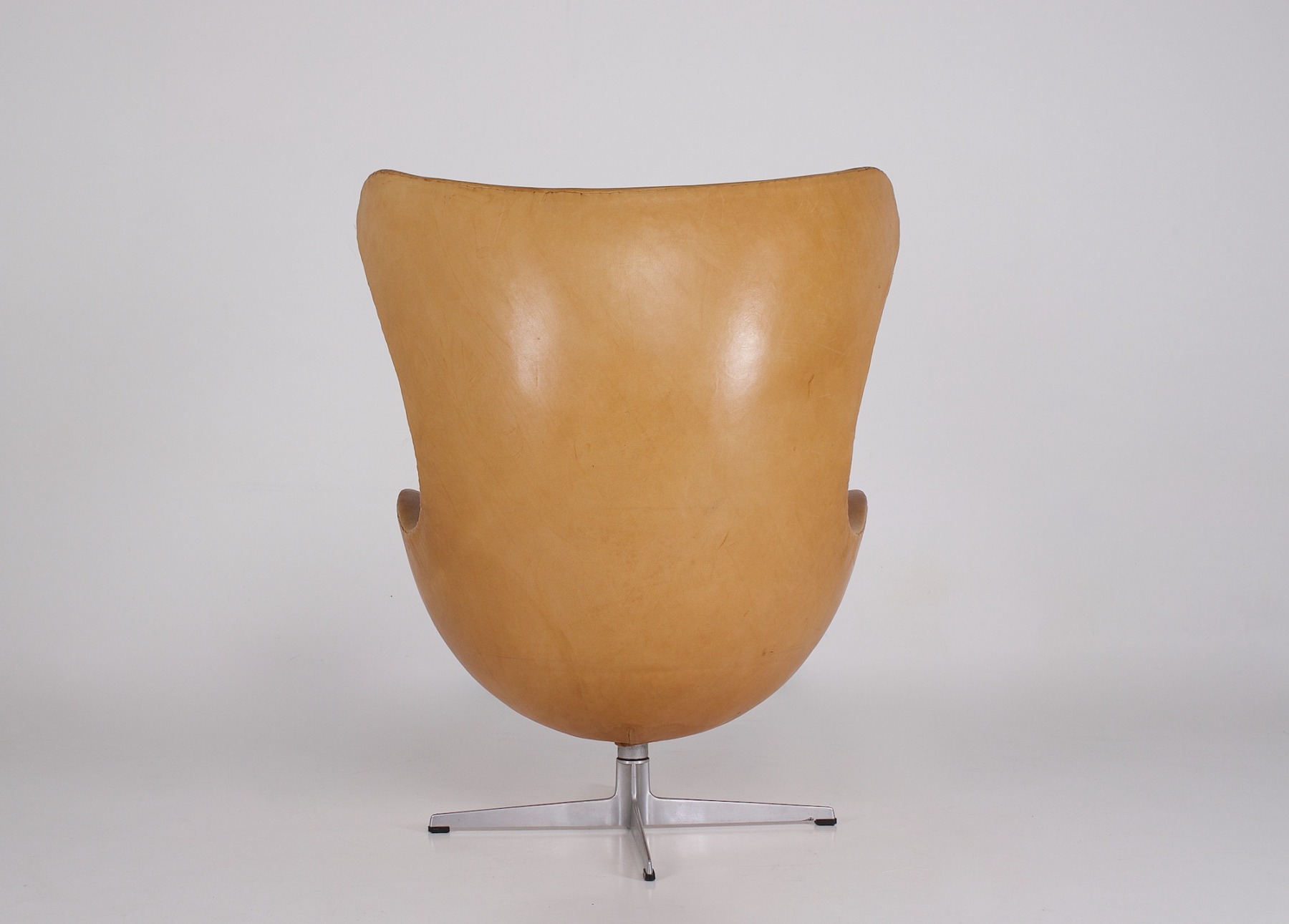
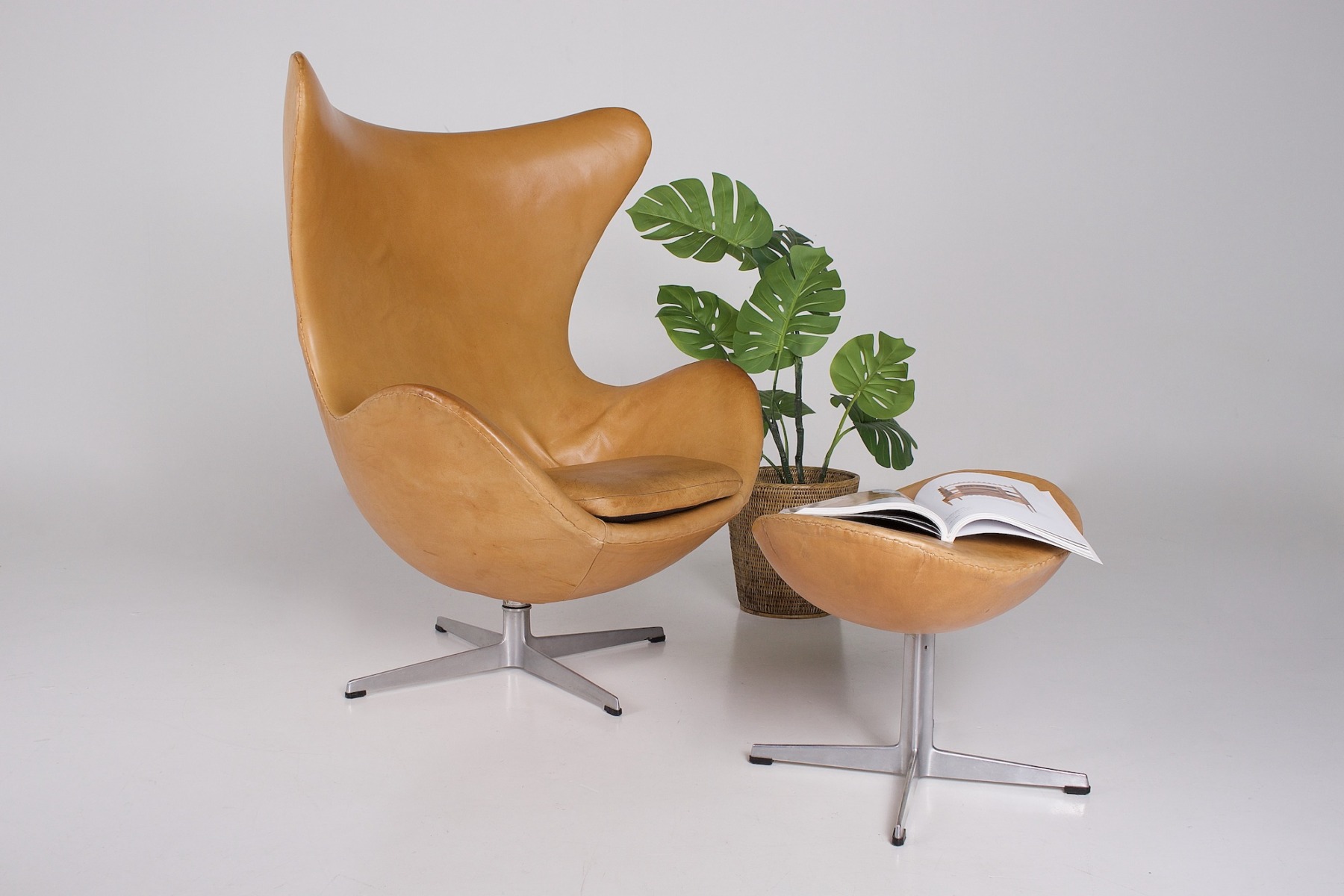
Egg armchair with ottoman (model 3316) designed by Arne Jacobsen and produced by Fritz Hansen in 1958 for the SAS Royal Hotel in Copenhagen.
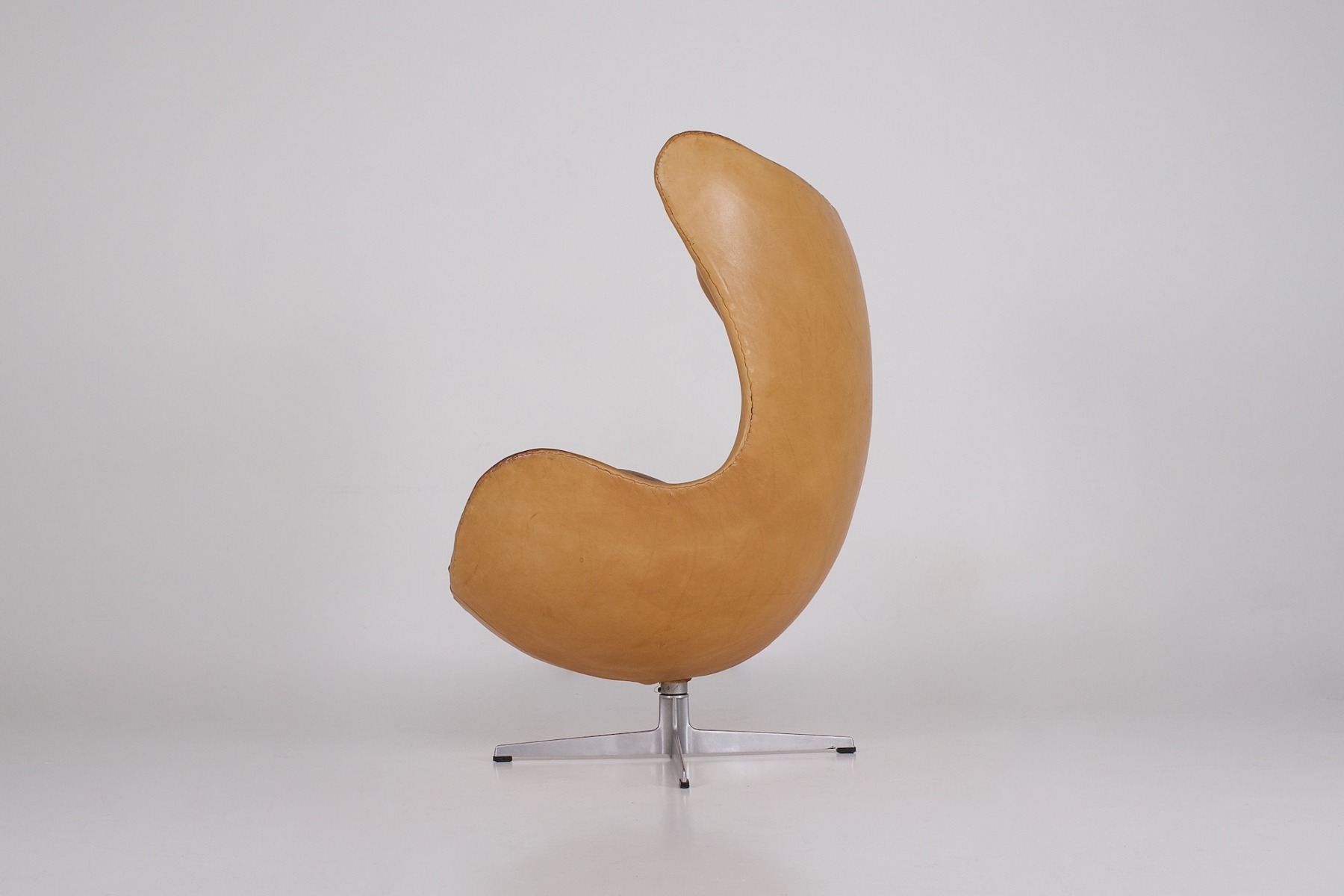
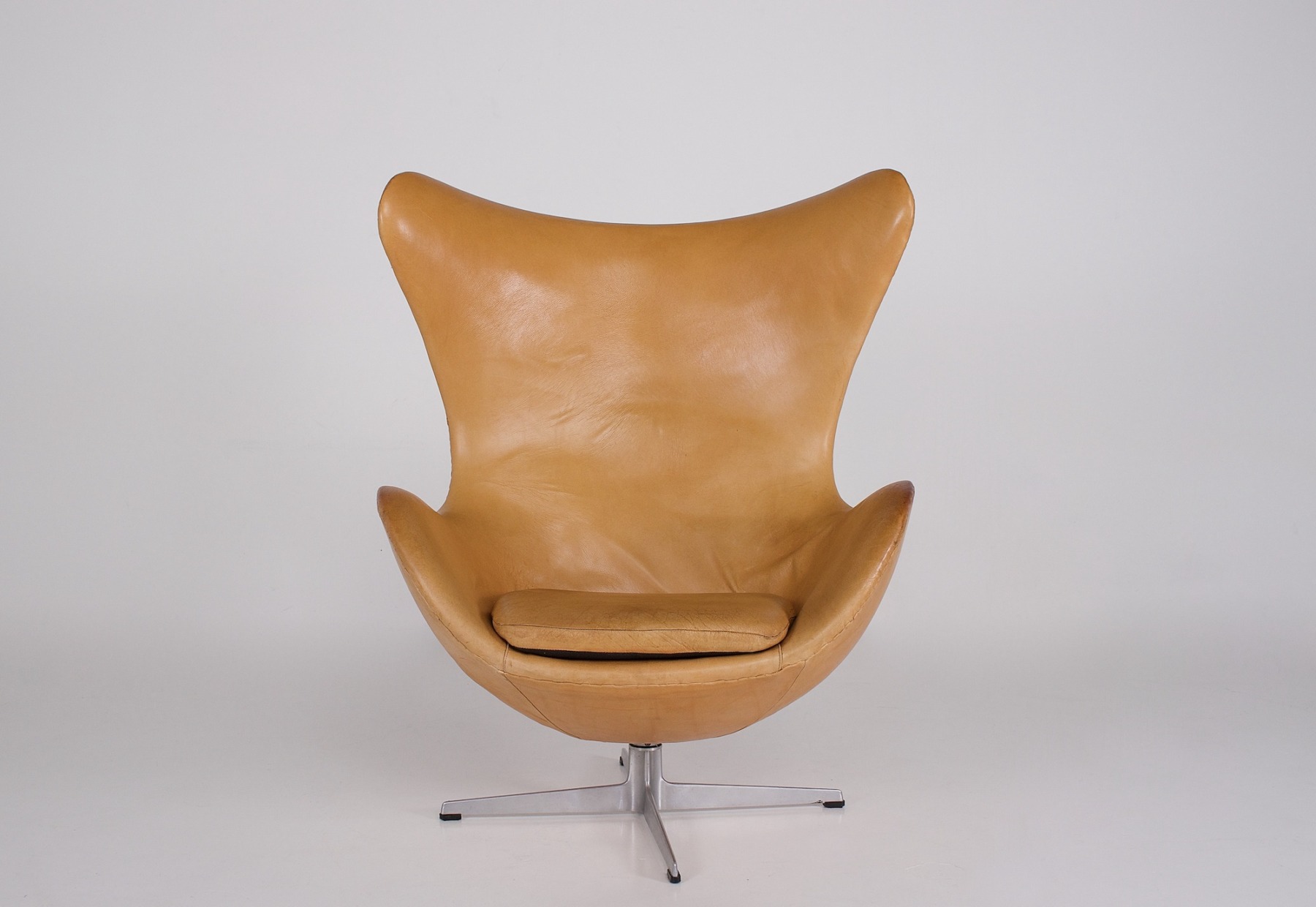
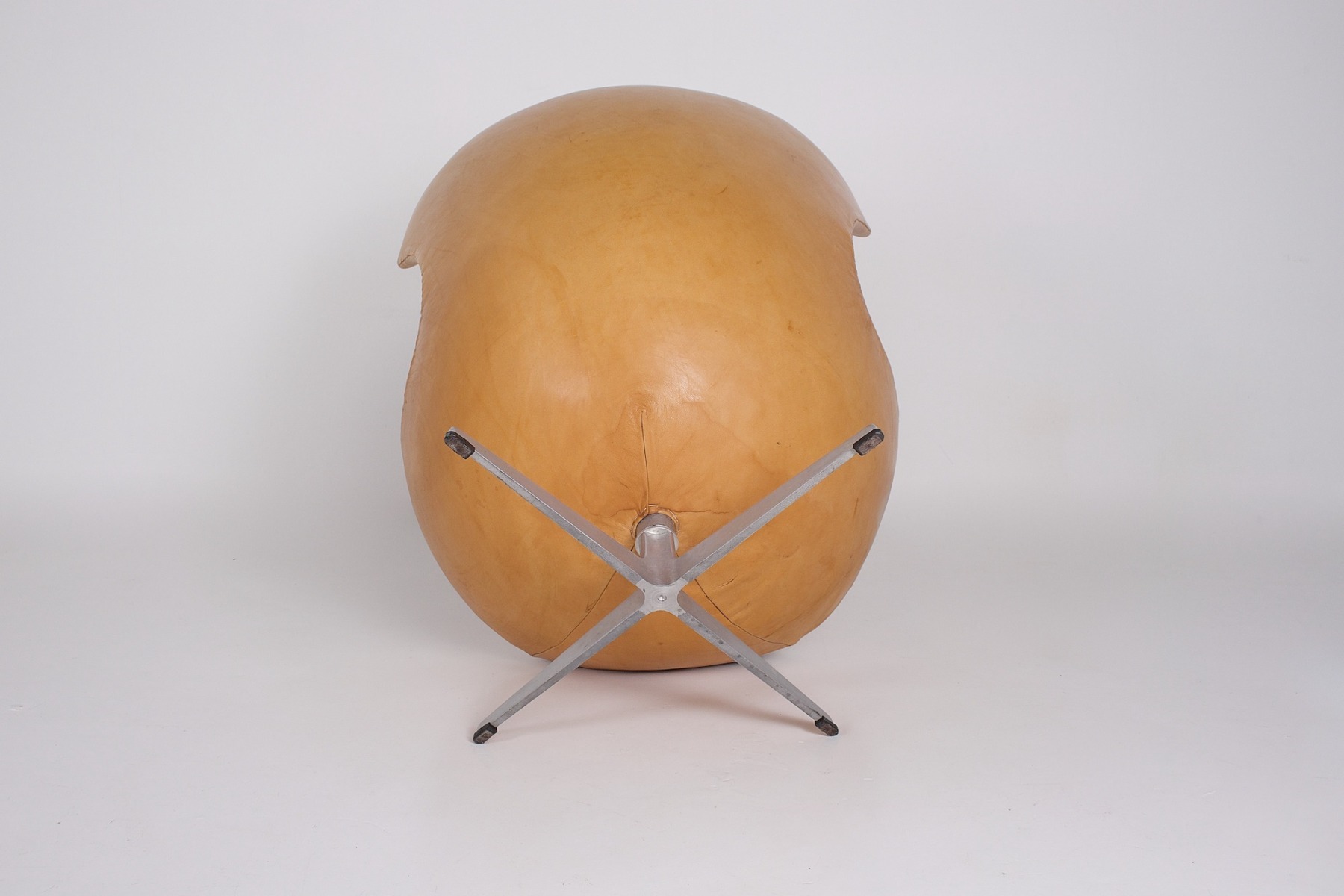
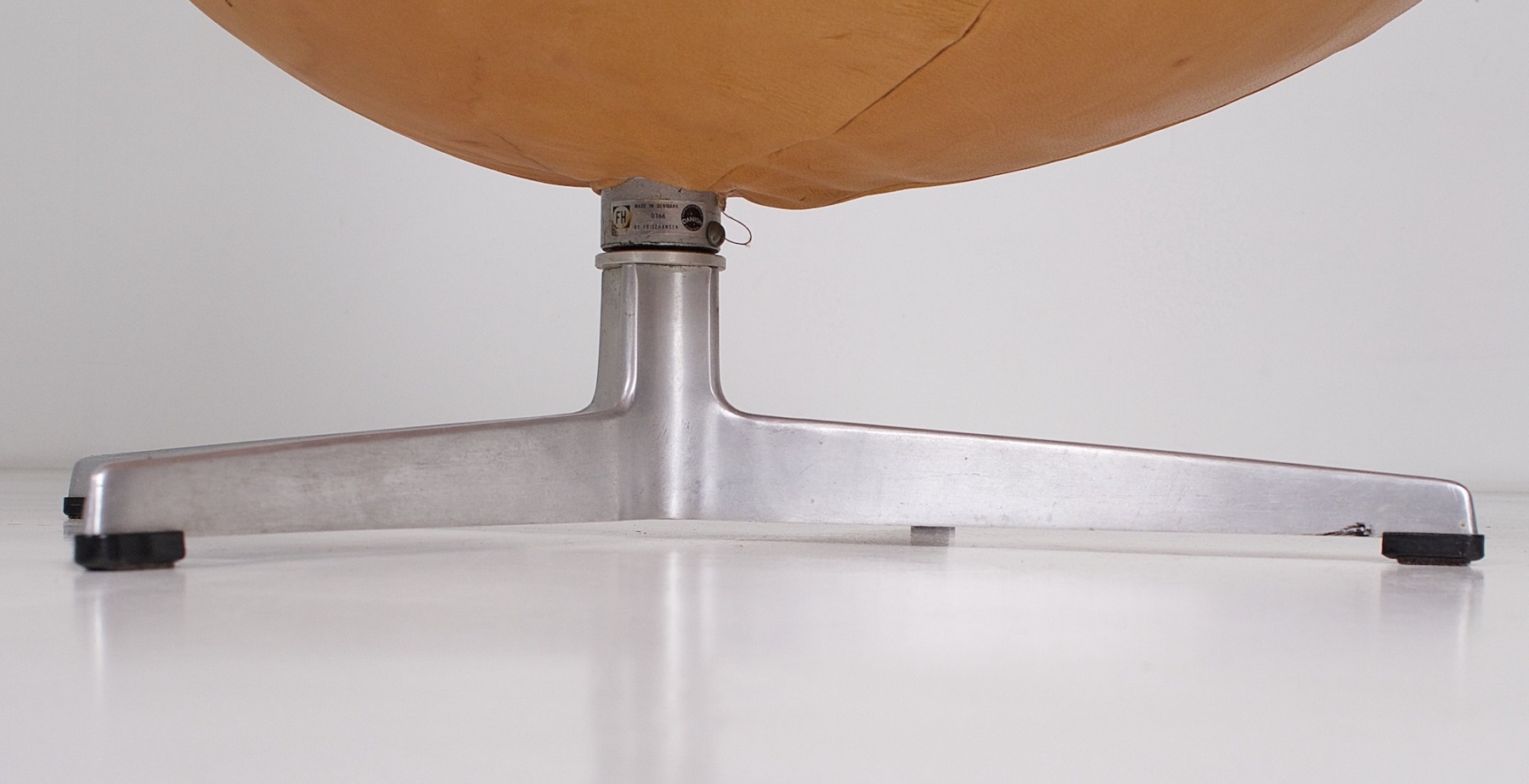
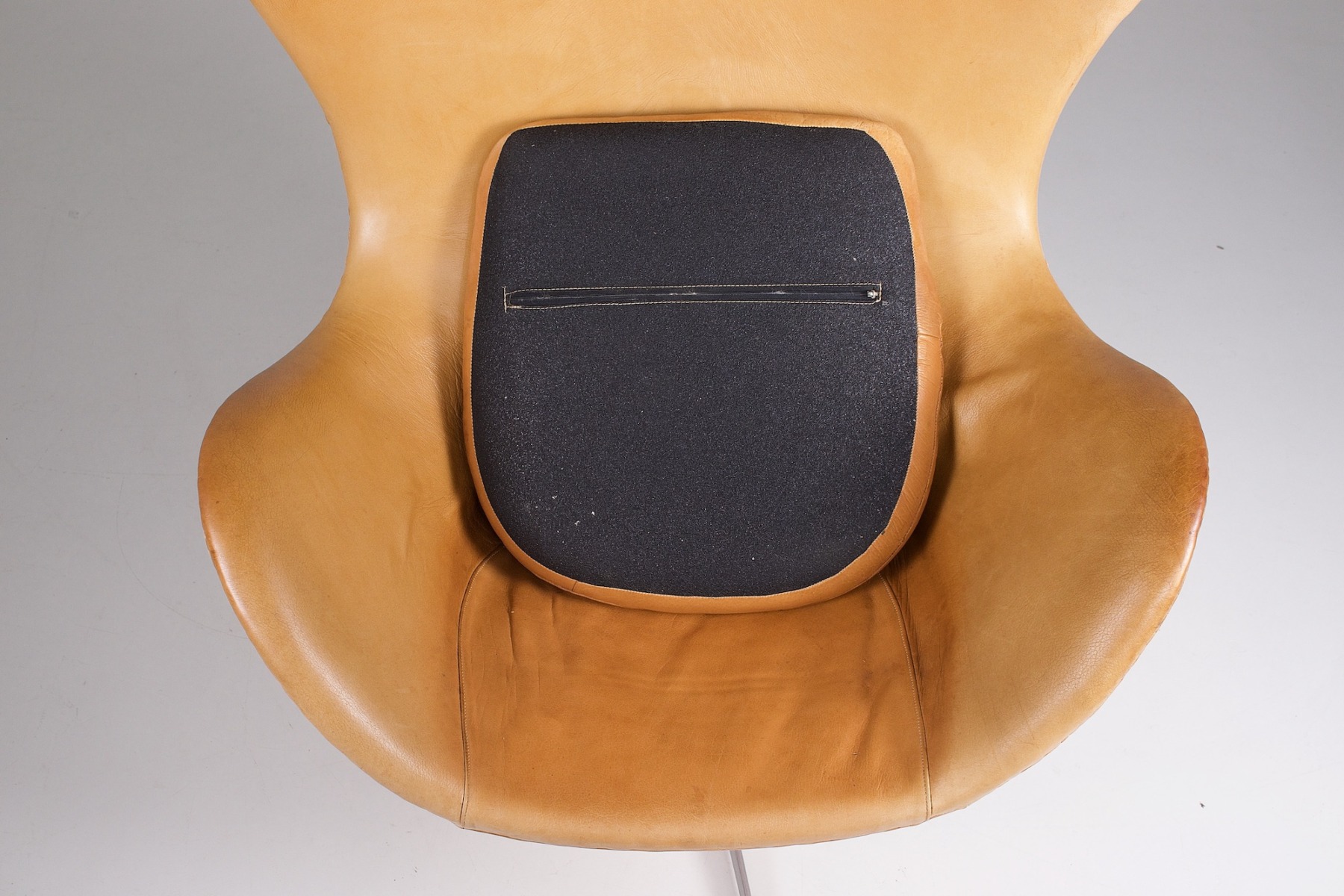
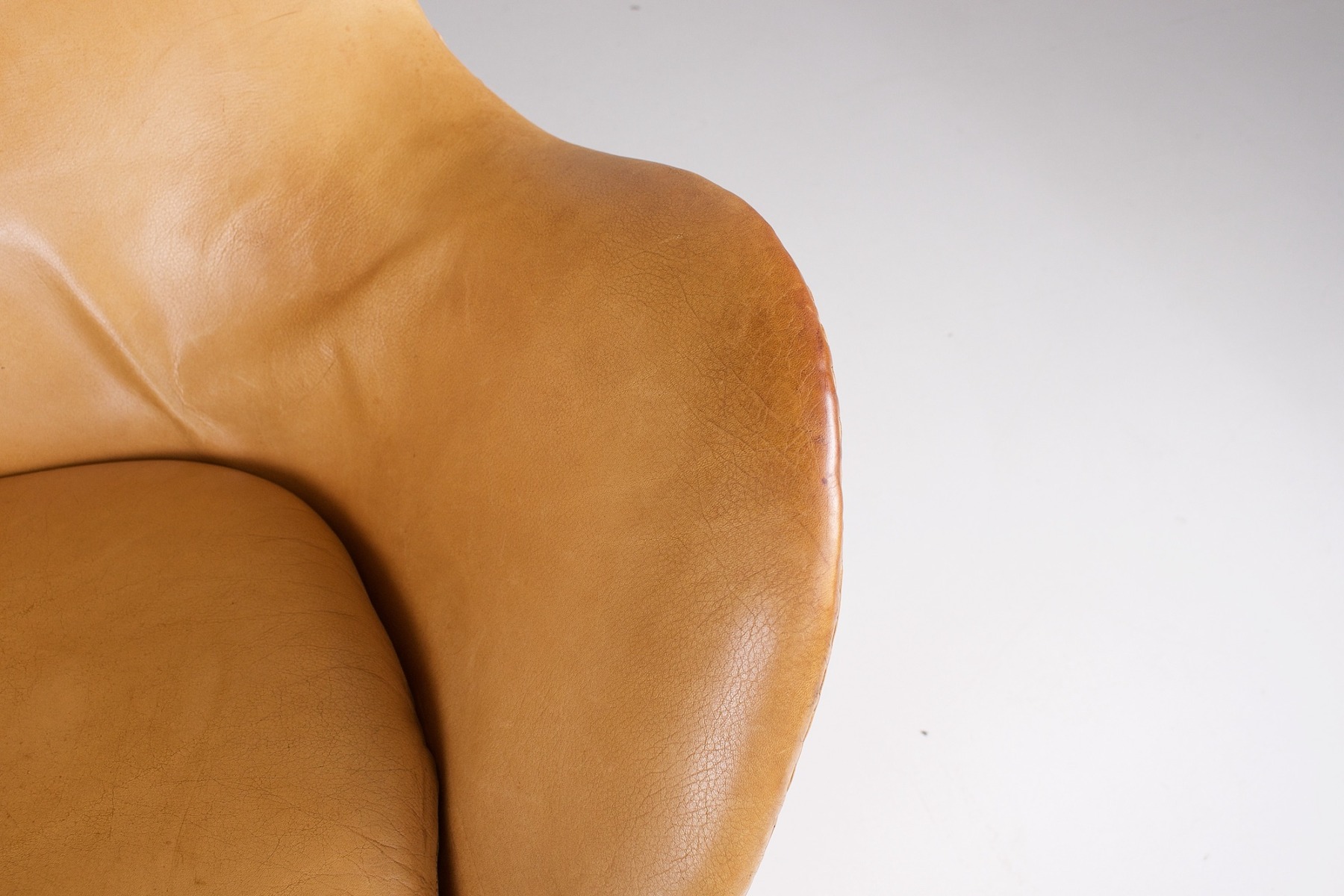
- This Danish design icon is distinguished by its enveloping and organic silhouette offering remarkable comfort and natural ergonomics. The set is upholstered in cognac/honey natural leather and rests on a swivel aluminum base.
- Chair H 100 CM X D 69 CM X W 87 CM X Seat H 39 CM.
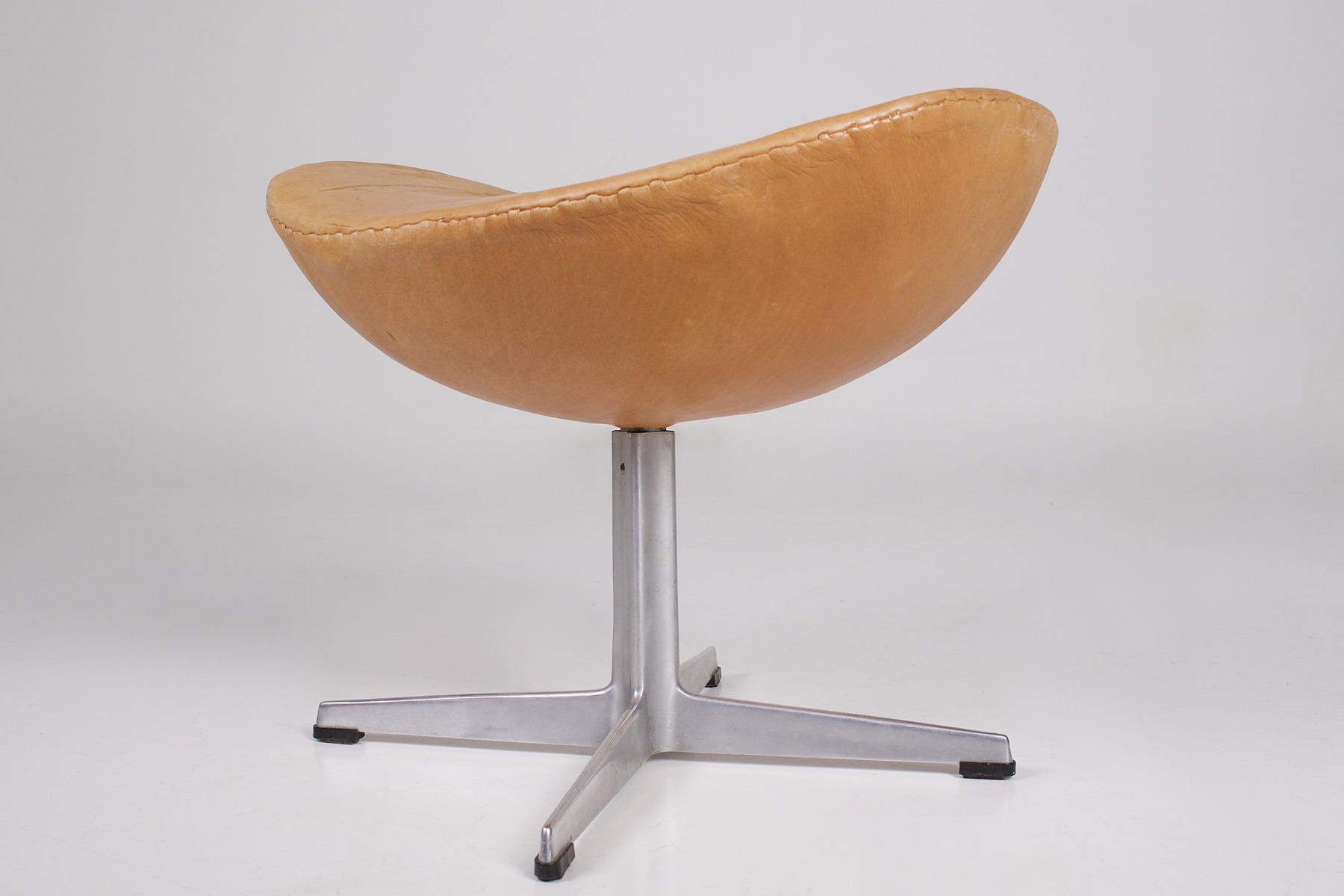
- Ottoman (fixed, non-swivel) W 53 CM X D 39 CM X H 35 CM.
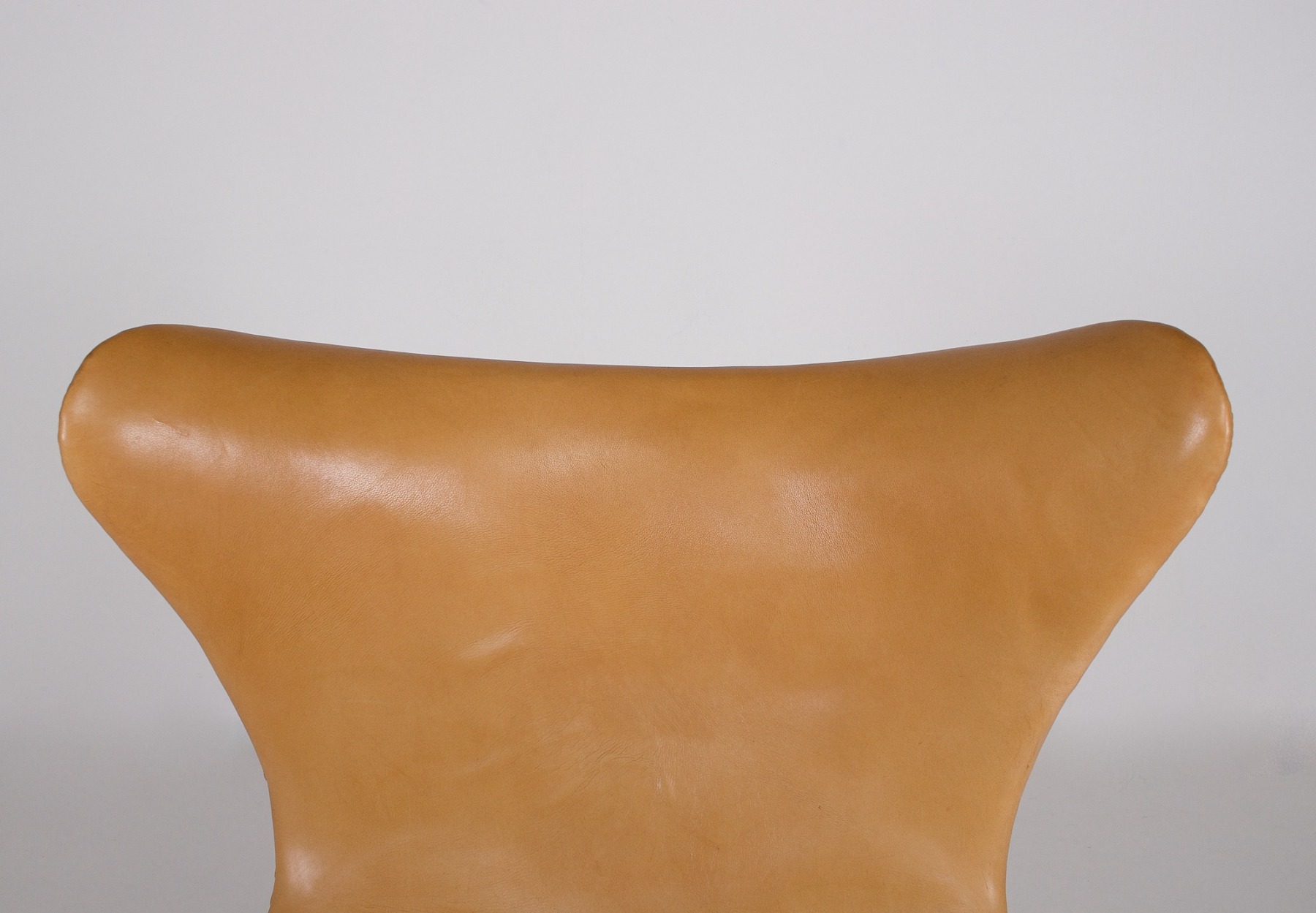
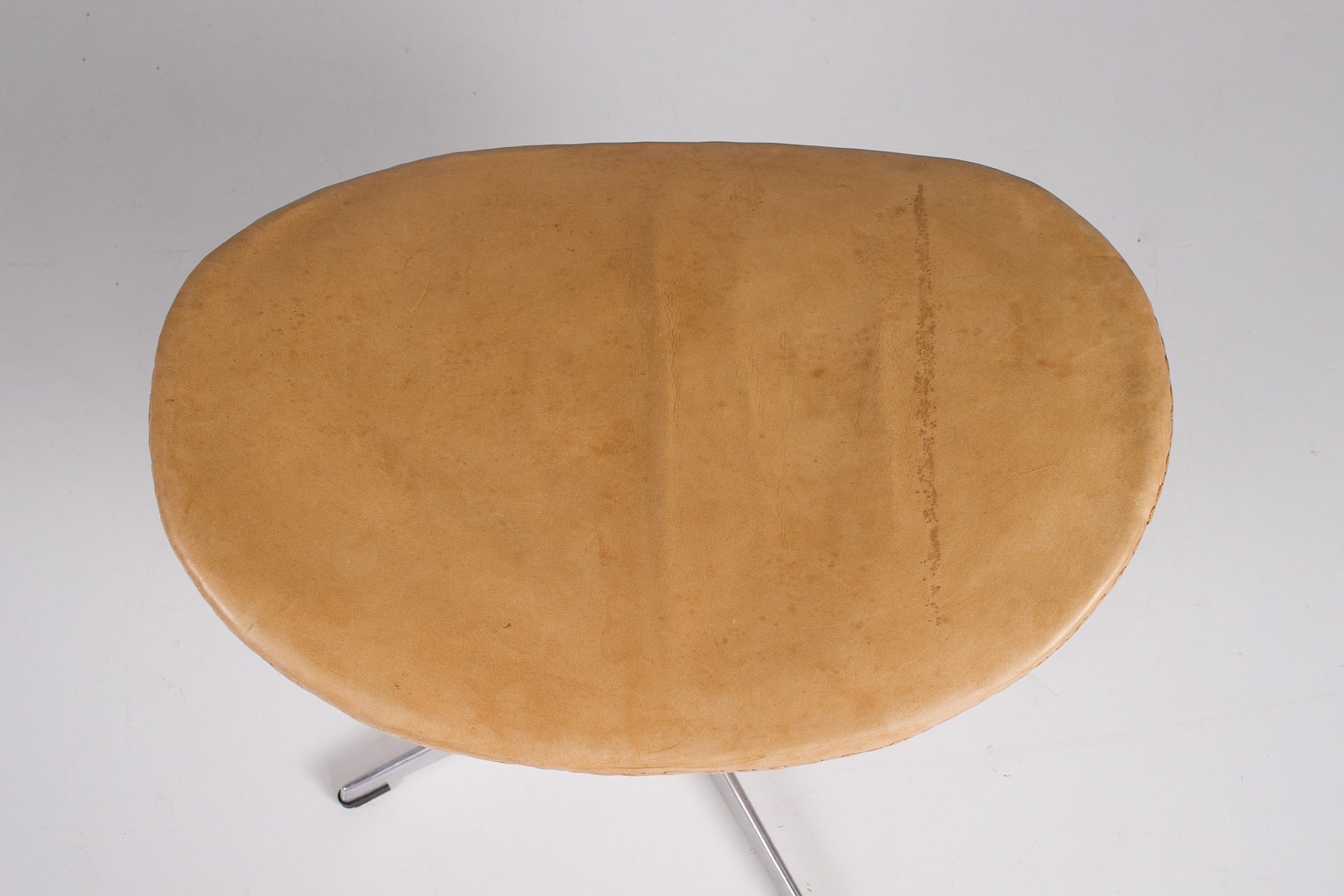
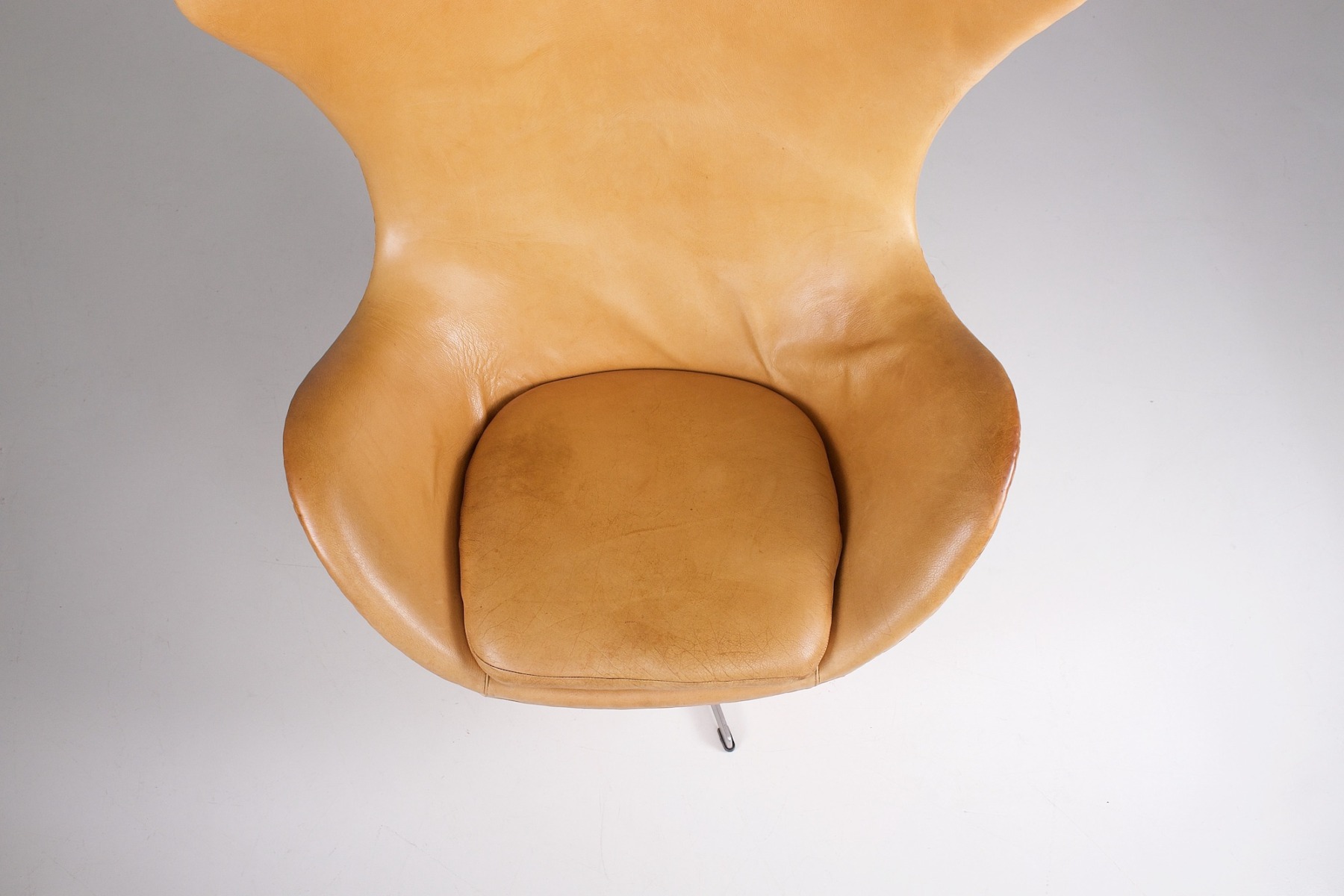
- Marks of normal wear (see photos).
Sold

Egg Chair by Arne Jacobsen – History and Design of the Model
First presented in November 1958 at the Scandinavian Forms exhibition at the Musée des Arts décoratifs in Paris, Arne Jacobsen’s Egg chair was added to Danish manufacturer Fritz Hansen’s catalogue as early as January 1959. It marked the introduction of a model destined to become one of the icons of 20th-century design.
The first version of the Egg chair was upholstered in brown leather and set on a moulded shell covered in foam. From the mid-fifties, Arne Jacobsen explored the possibilities offered by synthetic materials, enabling the creation of unprecedented enveloping forms in the furniture of the time. Over the years, the model evolved: a wider range of upholstery, improved comfort, and structural changes. The aluminium base appeared in 1963, while the internal structure gradually adopted fibreglass combined with polyurethane foam.
Although commonly referred to as 3317 or “Egg”, the chair has had several numbering systems at Fritz Hansen. Initially introduced as No. 3315, it was later listed as 3317 before adopting the designation 3316 from 1973 onwards.

The Egg and Swan chairs in a suite at the SAS Royal Hotel.
The Egg chair was originally designed for the lobby of Copenhagen’s SAS Royal Hotel, inaugurated in 1960. There, Arne Jacobsen developed a holistic approach to design, creating the architecture, furniture, and lighting. The chair’s enveloping form responds to the building’s strict lines, creating a controlled contrast. Rotating on its axis, it offers a 360° view while providing a sense of seclusion within the space.
Today, this Arne Jacobsen icon features in the permanent collections of many institutions, including the Vitra Design Museum, confirming its status as a major piece of Scandinavian modernism.
You might also like…

Discover also...


Delivery to Belgium

Delivery to France

Delivery to Luxembourg
