



Modernist furniture and lighting
Industrialization allowed for the expanded use of materials such as steel, chrome, brass, glass, crystal, molded plywood, fiberglass, and synthetic foams, as well as woods like teak, rosewood, or oak.



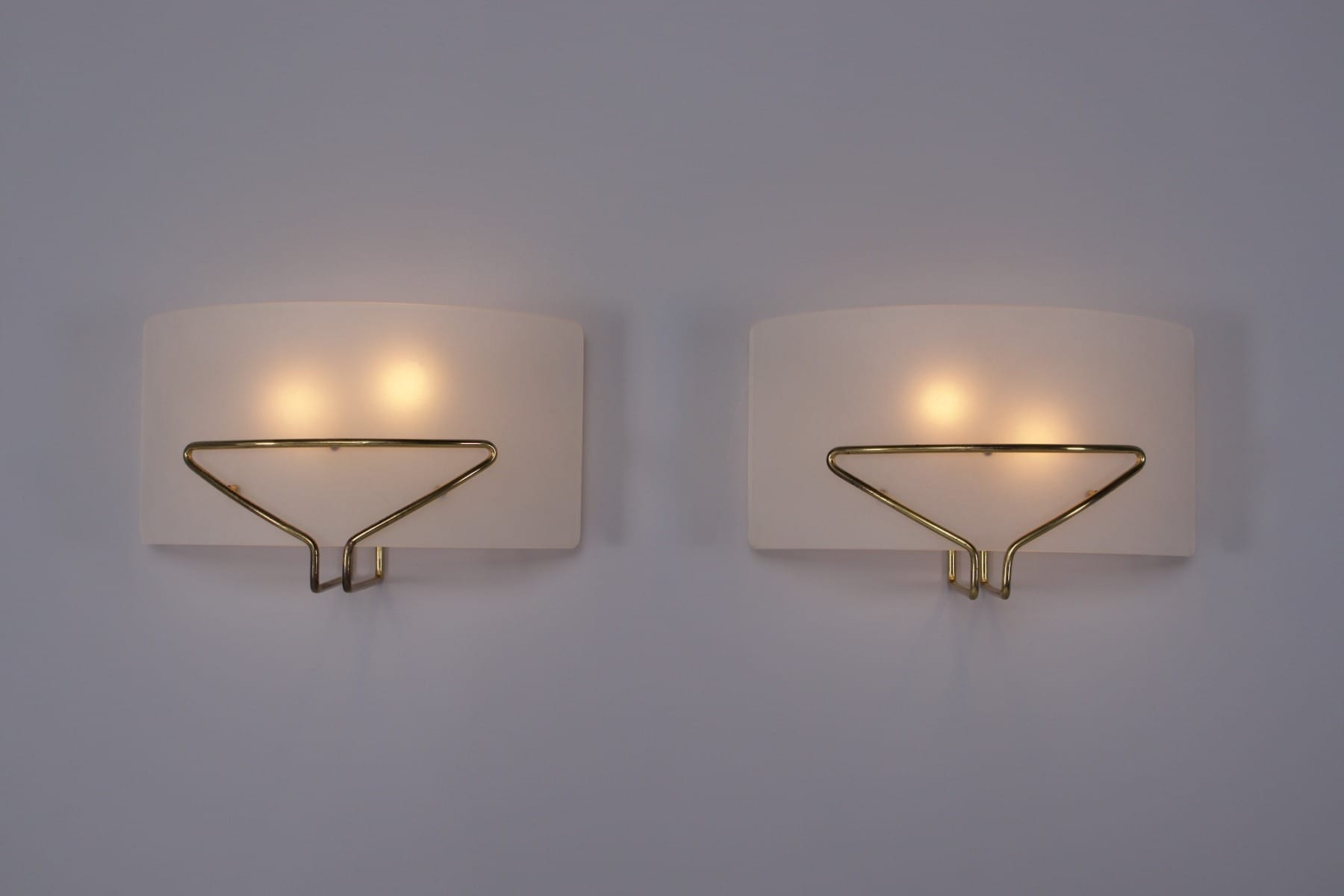

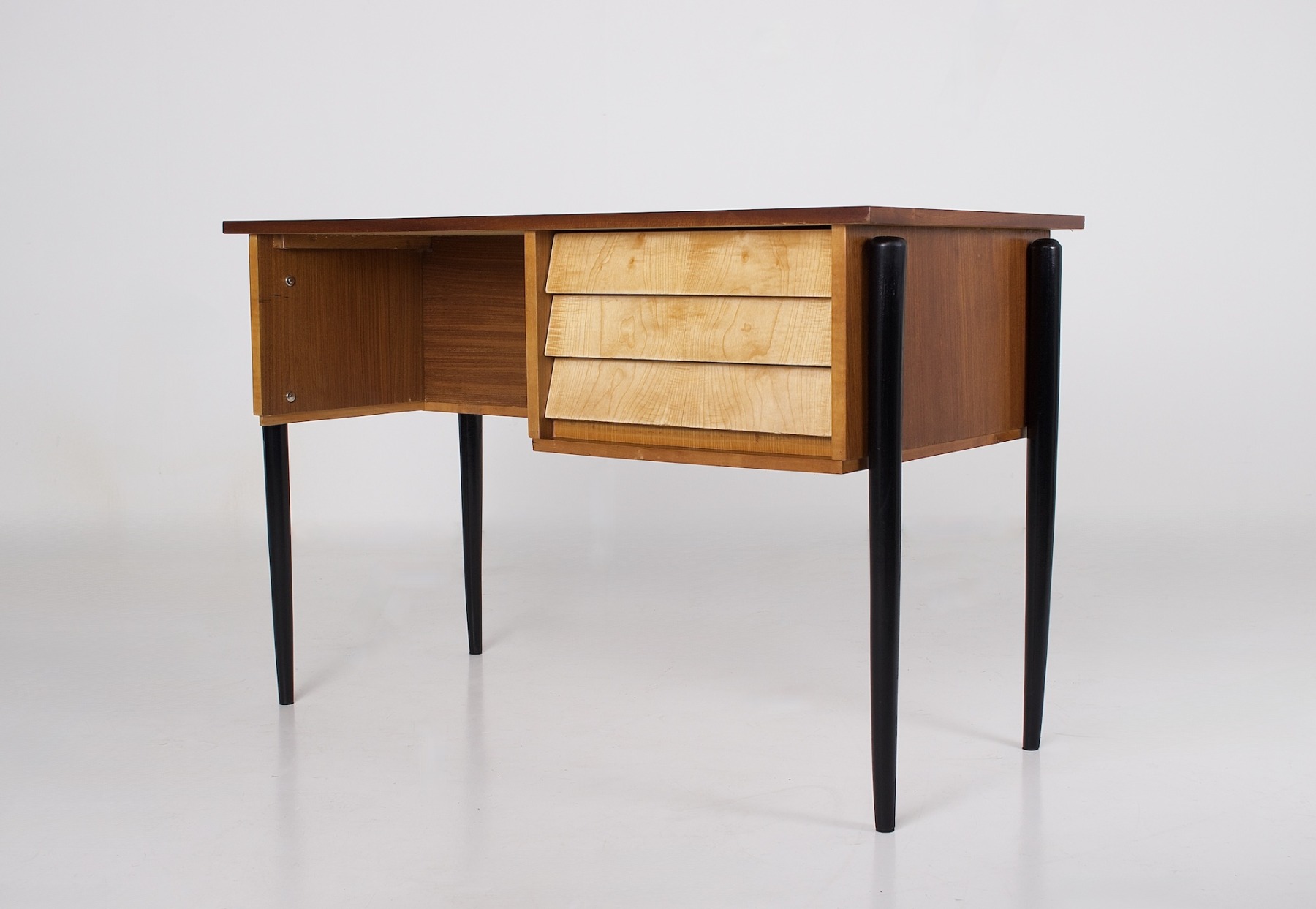
Modernism in furniture and lamp design
Modernist furniture and lamps are part of a movement to break with traditional decorative styles in favor of simpler, functional forms adapted to contemporary uses. In both furniture and lighting, this approach prioritizes structure, legibility, and the accuracy of proportions, without recourse to superfluous ornament.
The foundations of this language were laid during the interwar period by figures such as Jean Prouvé, Charlotte Perriand, Ludwig Mies van der Rohe, or Marcel Breuer, who notably introduced tubular steel, an assertive constructive logic, and a new relationship between object, space, and use.
After the Second World War, and even more so during the post-war boom, modernism spread widely across Western Europe. Industrialisation enabled broader use of materials such as steel, chrome, brass, glass, crystal, moulded plywood, fibreglass and synthetic foams, as well as woods such as teak, rosewood and oak.
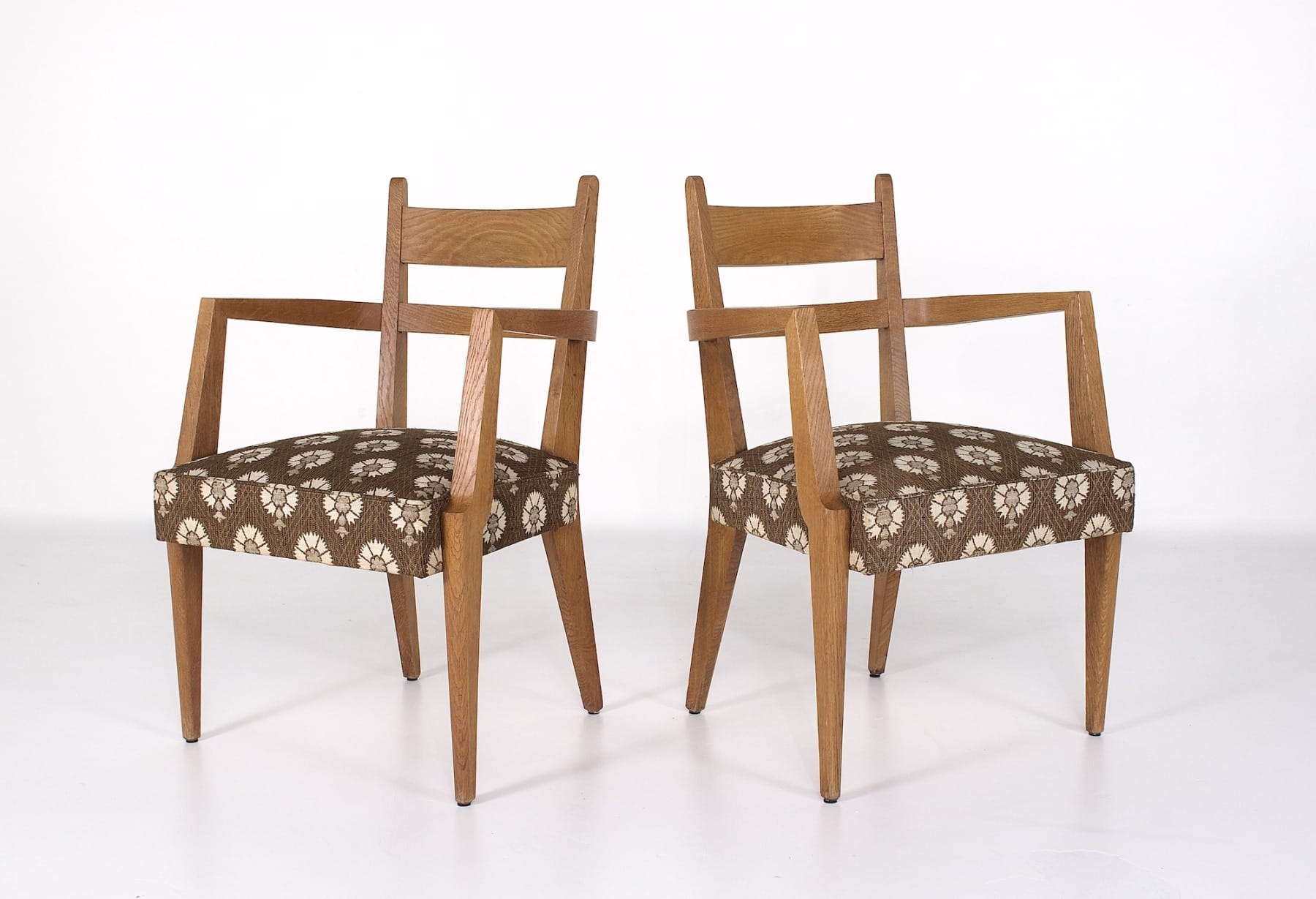
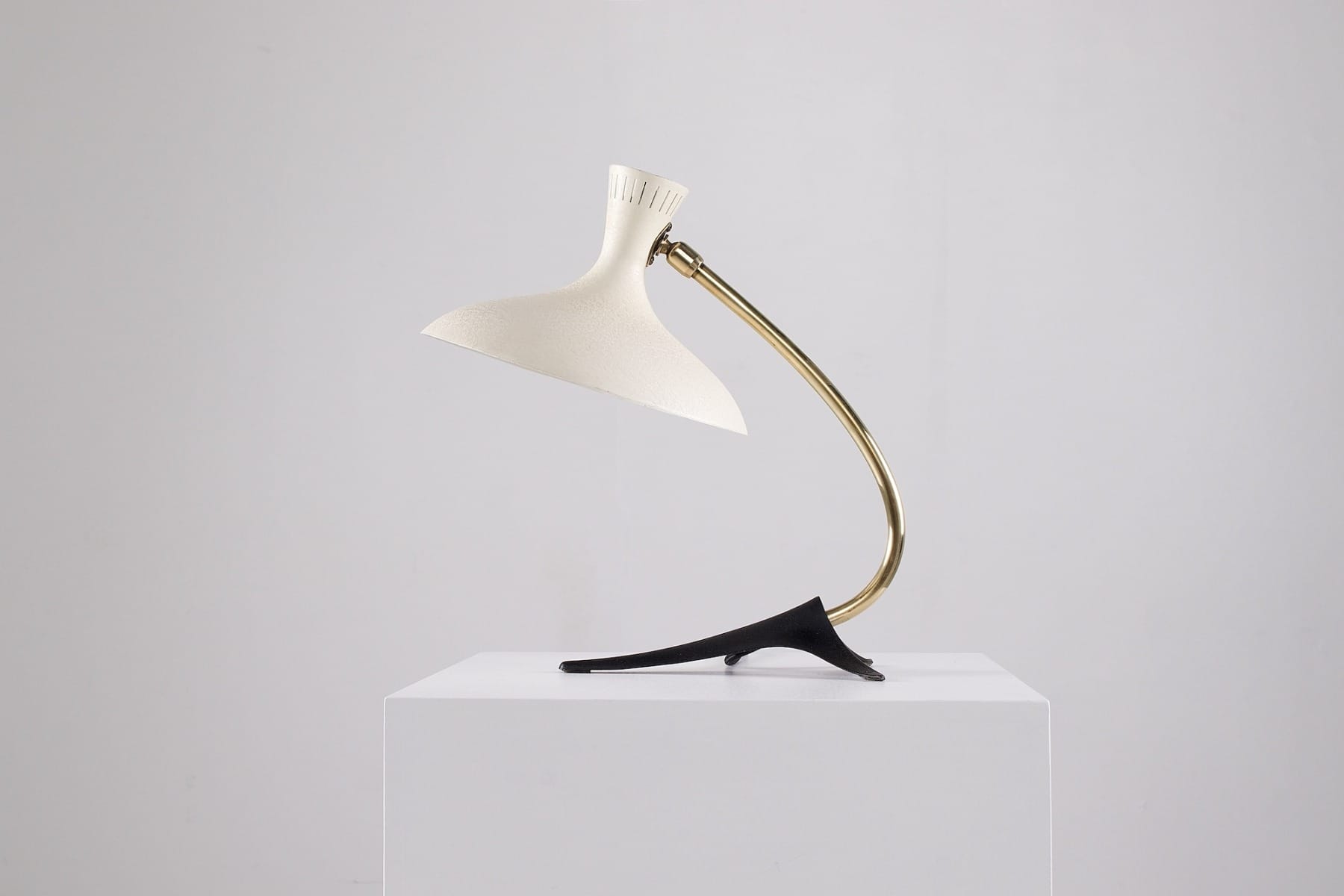
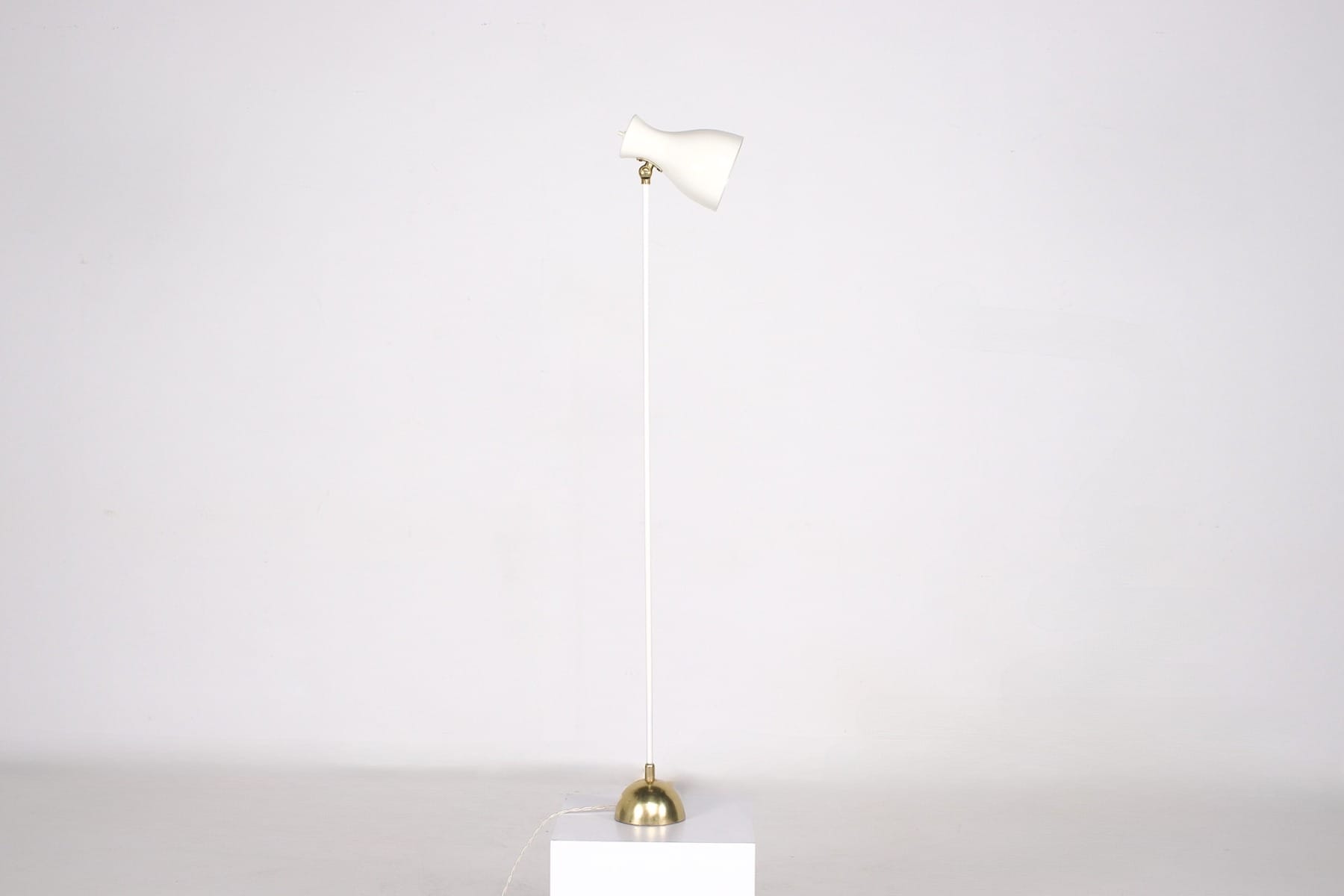
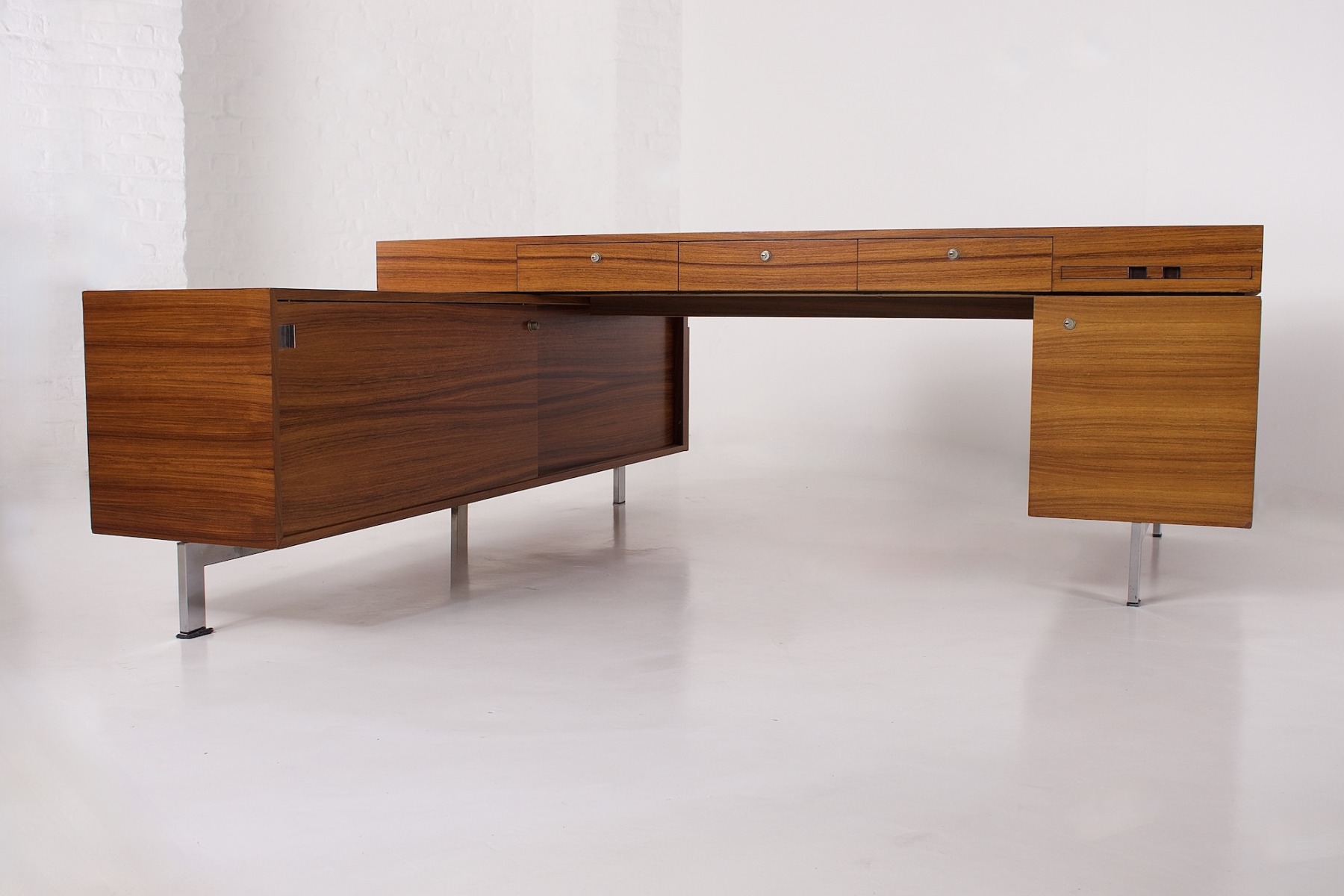
This period saw the development of many typologies: modernist armchair, low lounge chair, shell chair, coffee table, desk, as well as table lamp, floor lamp, ceiling light and above all the wall sconce, whose presence is decisive in structuring an interior. Modernist wall sconces hold a special place, thanks to their ability to bring together light, geometry and architecture.
Designers such as Charles and Ray Eames, Arne Jacobsen, Pierre Paulin and Gino Sarfatti extended and renewed this research from the 1950s to the 1970s. The pieces presented here reflect this exacting standard, where material quality, precision of joinery and coherence of design allow these pieces of furniture and lighting to retain an undiminished presence today.
The modernist furniture and lighting presented here illustrate this approach, where every element is conceived in direct relation to space and use.