




F1 Armchair – Willy Van Der Meeren
€750,00
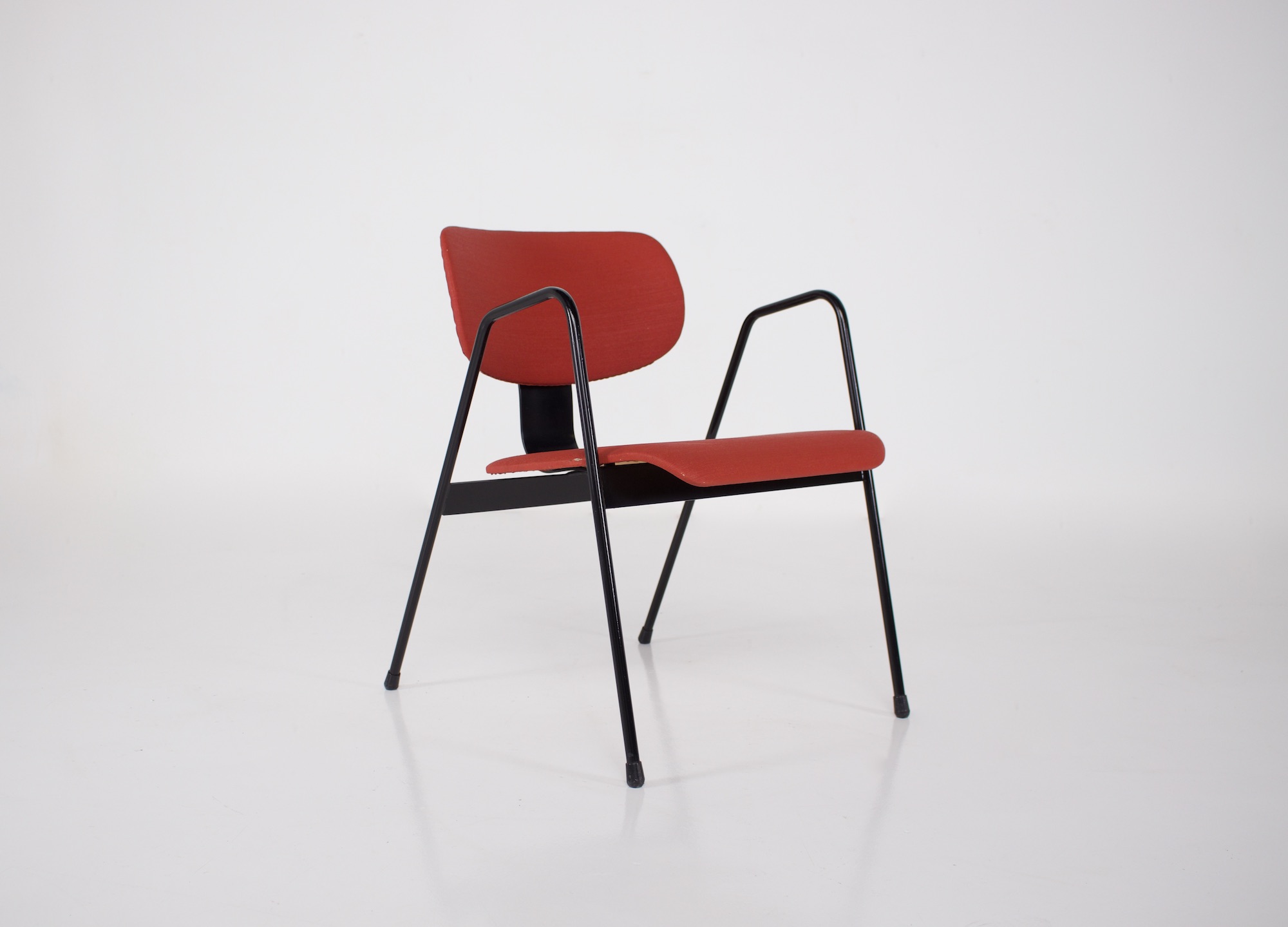
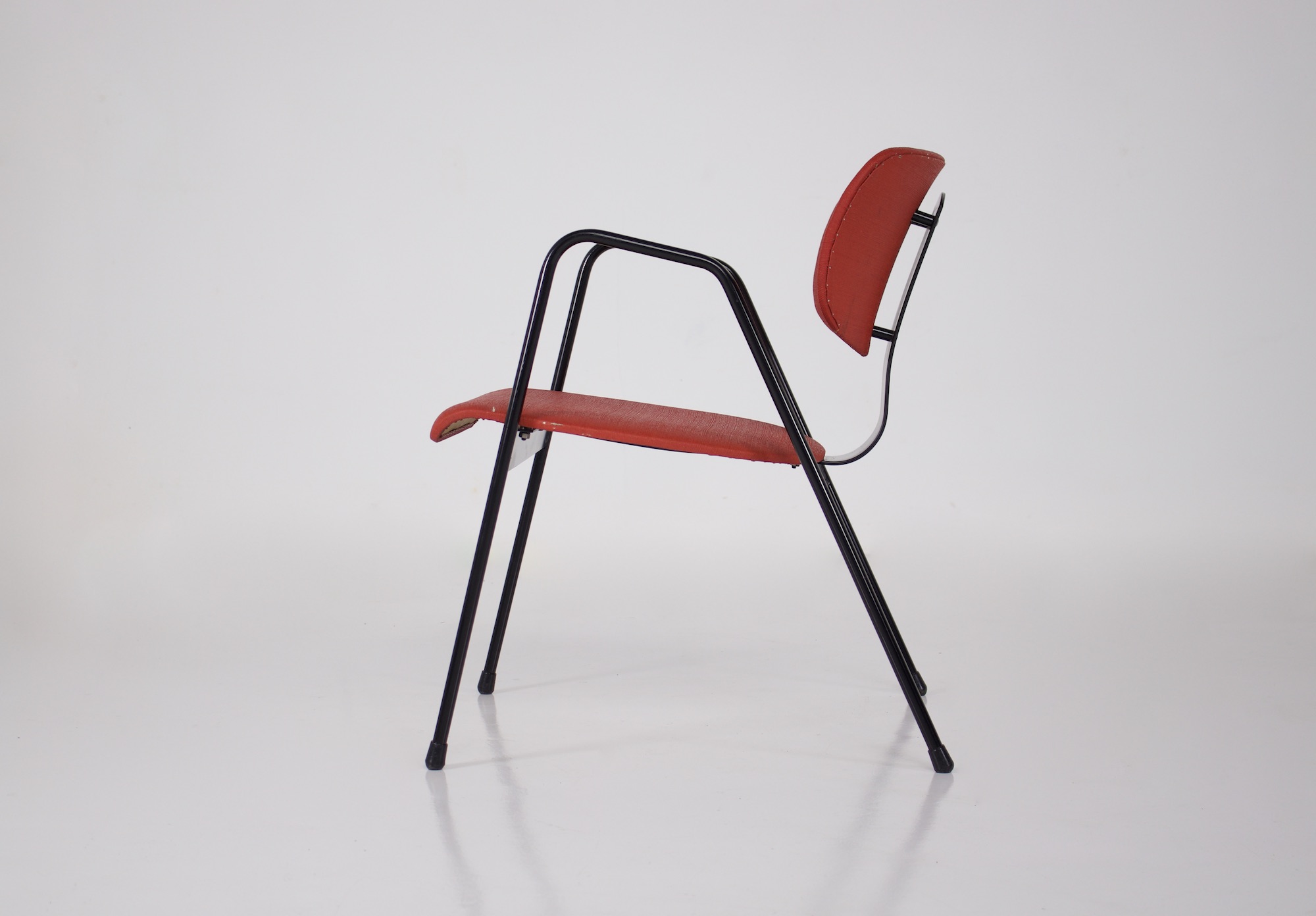
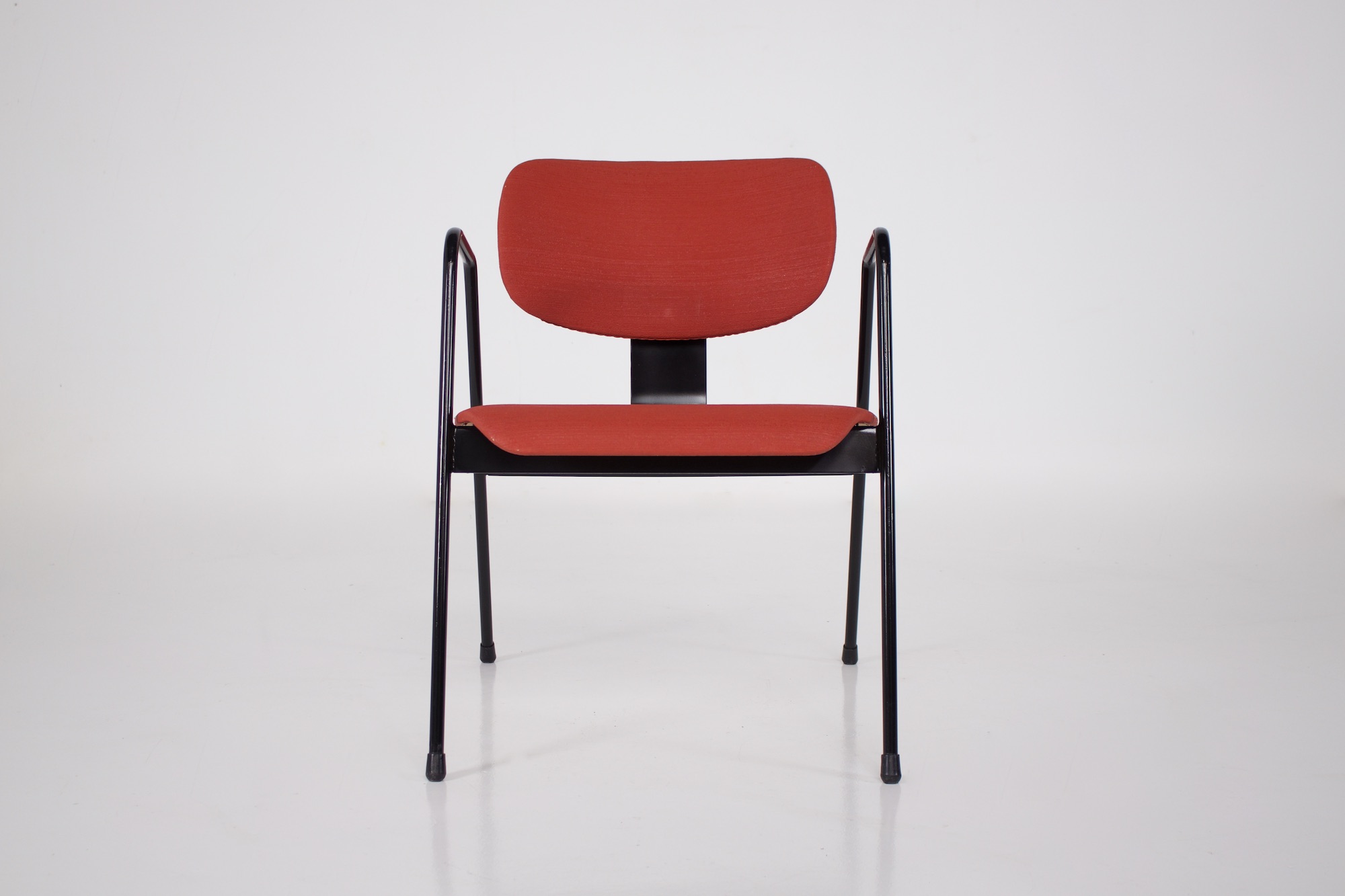
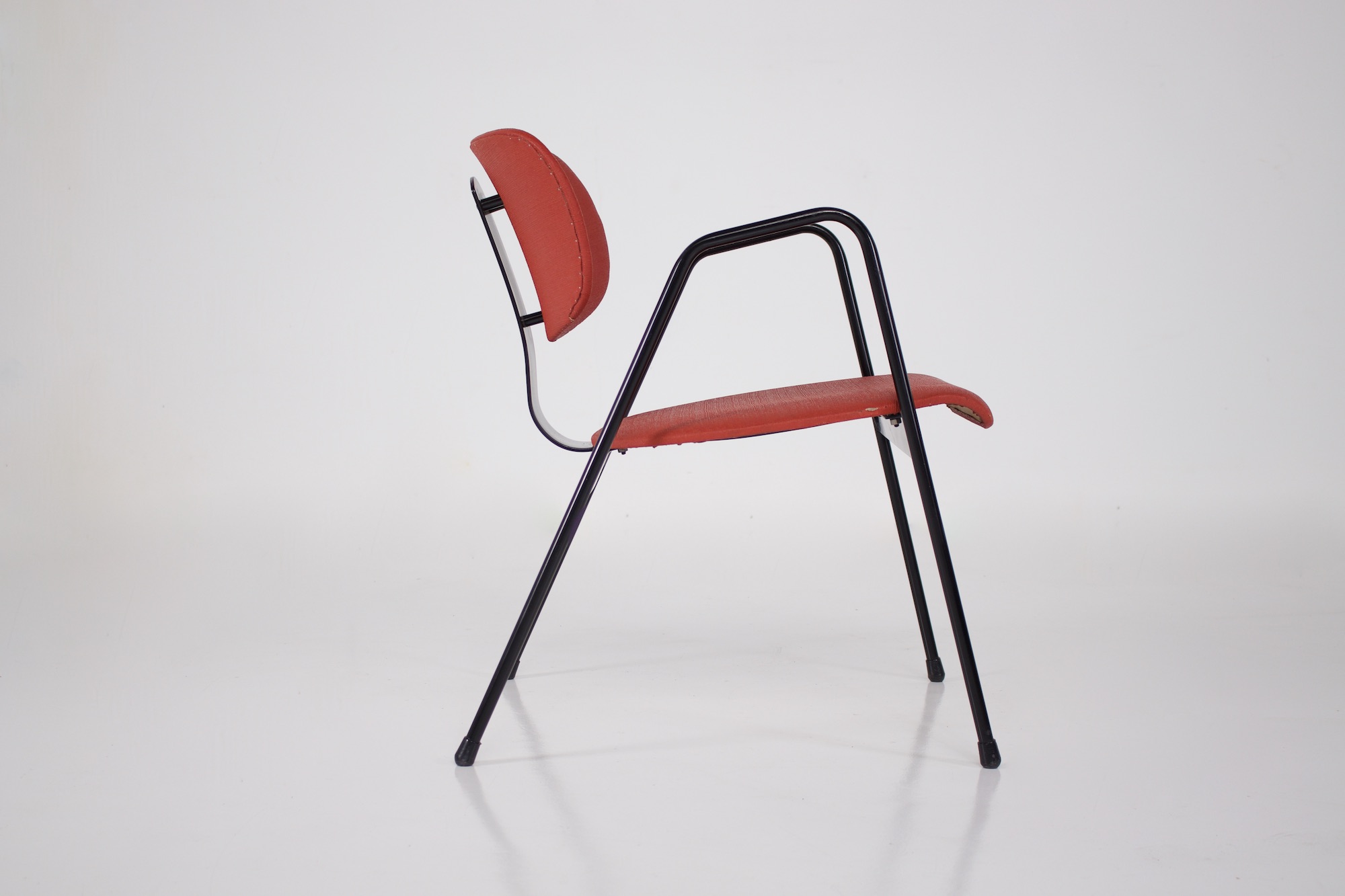
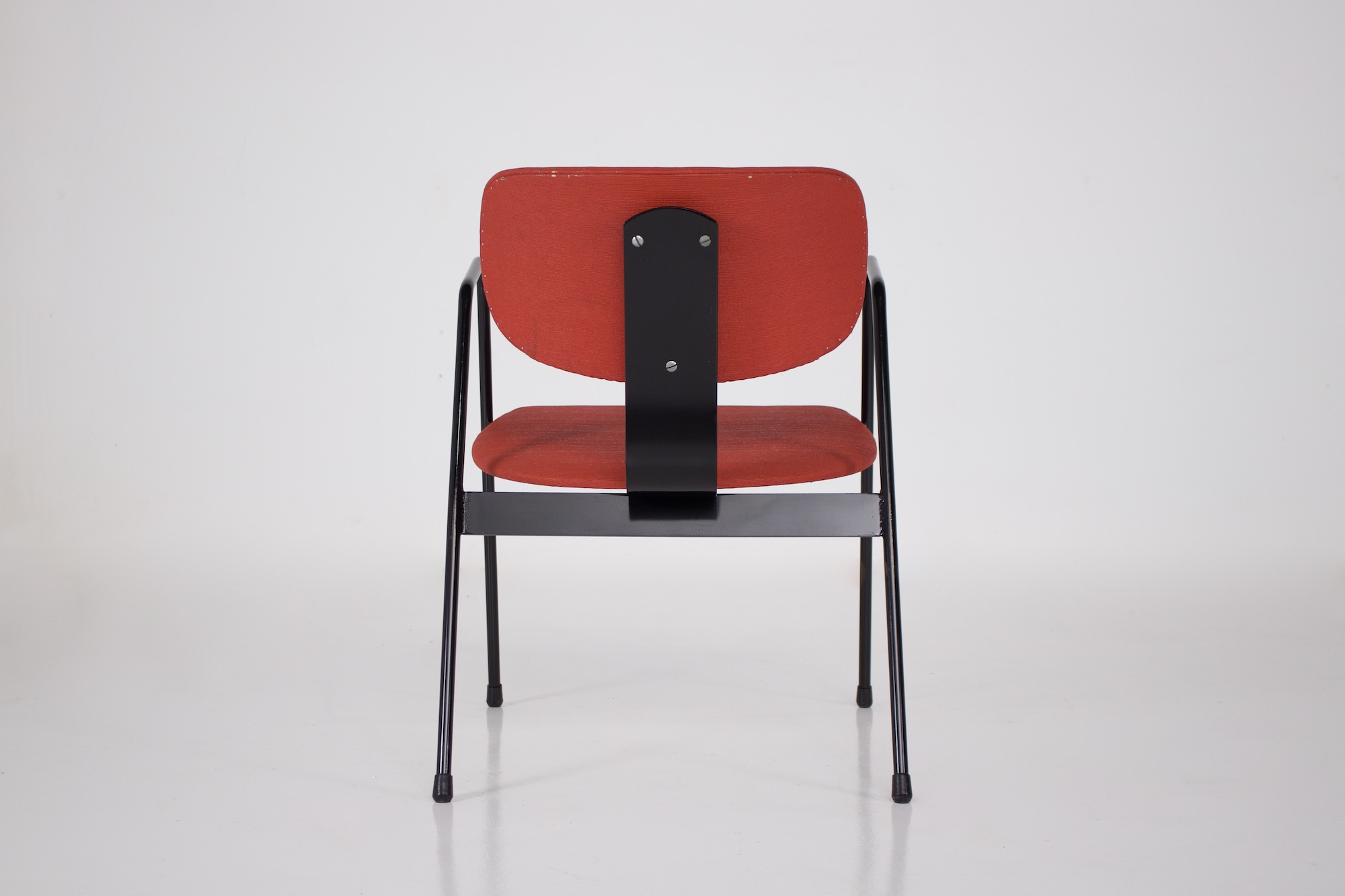
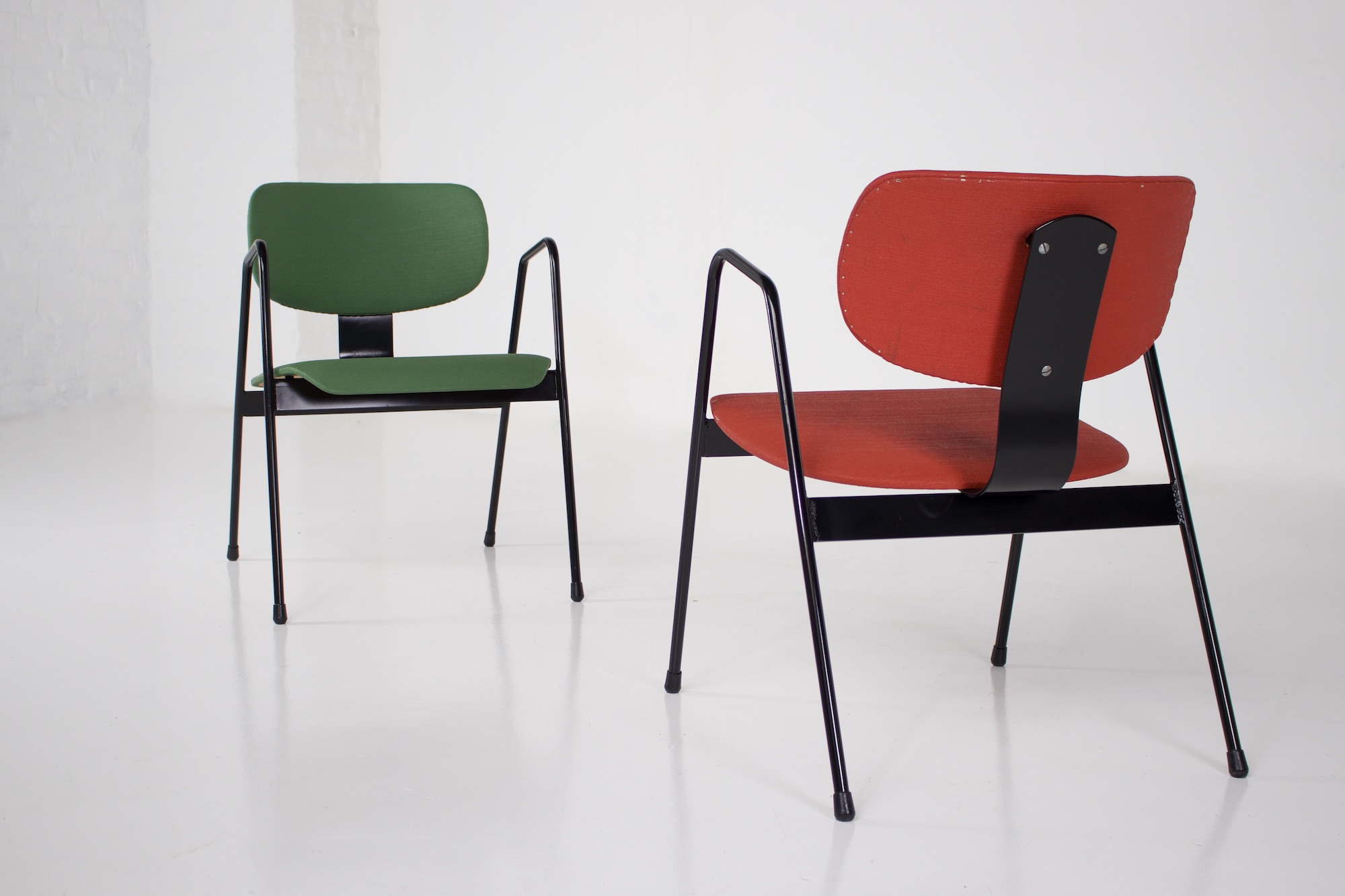
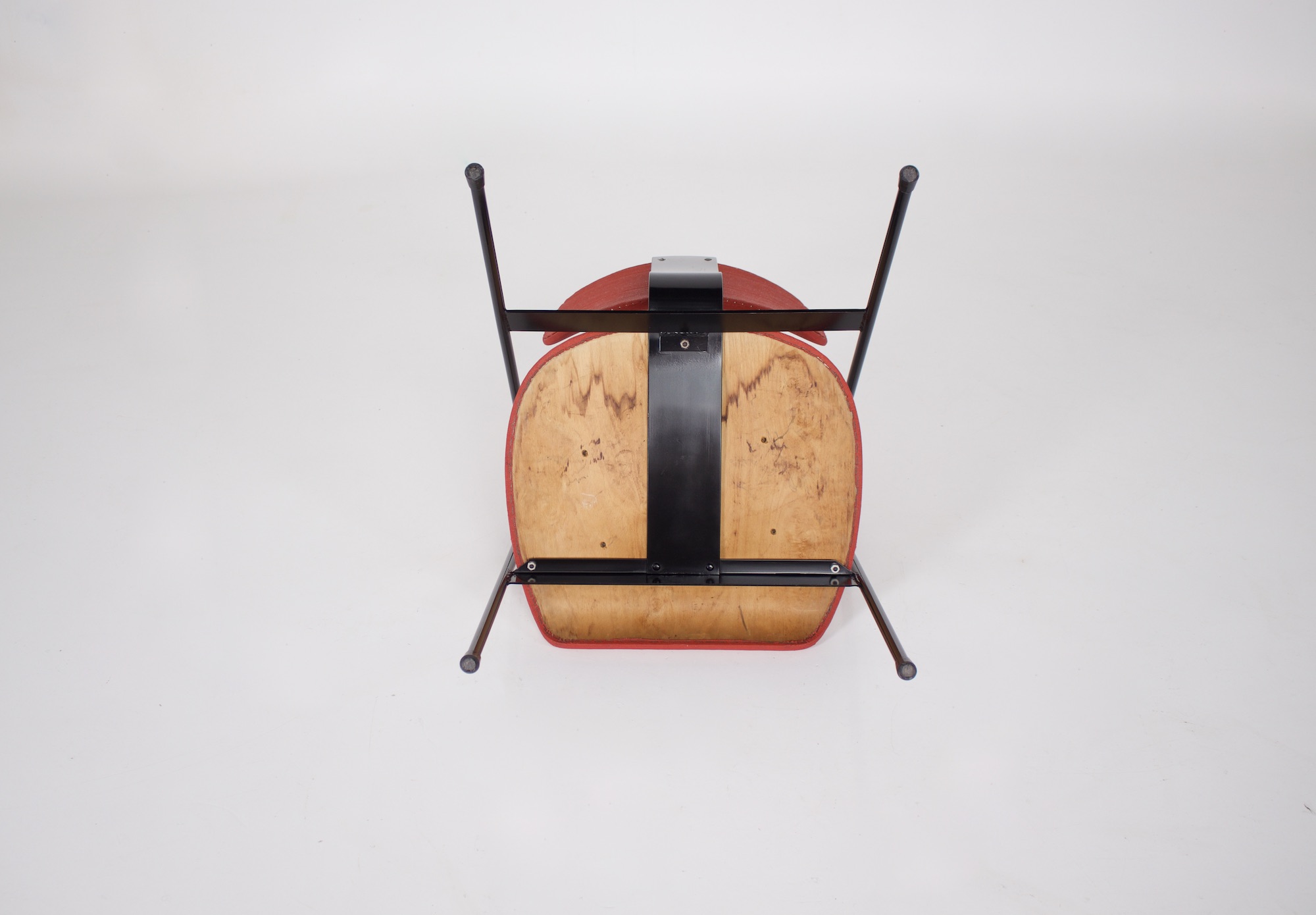
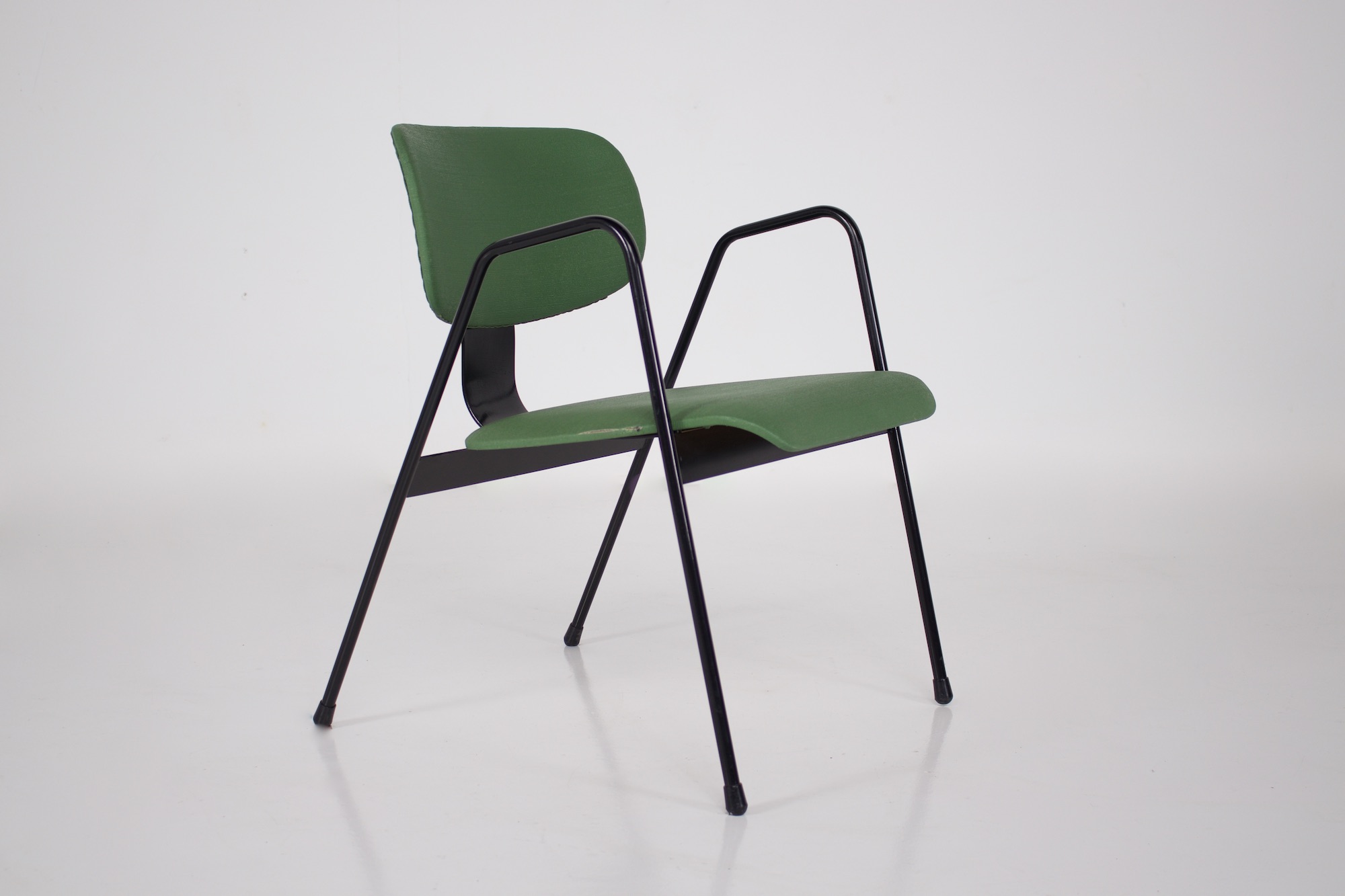
F1 armchair designed by Willy Van Der Meeren for Tubax, circa 1955.
- Black lacquered tubular steel frame, integrated armrests.
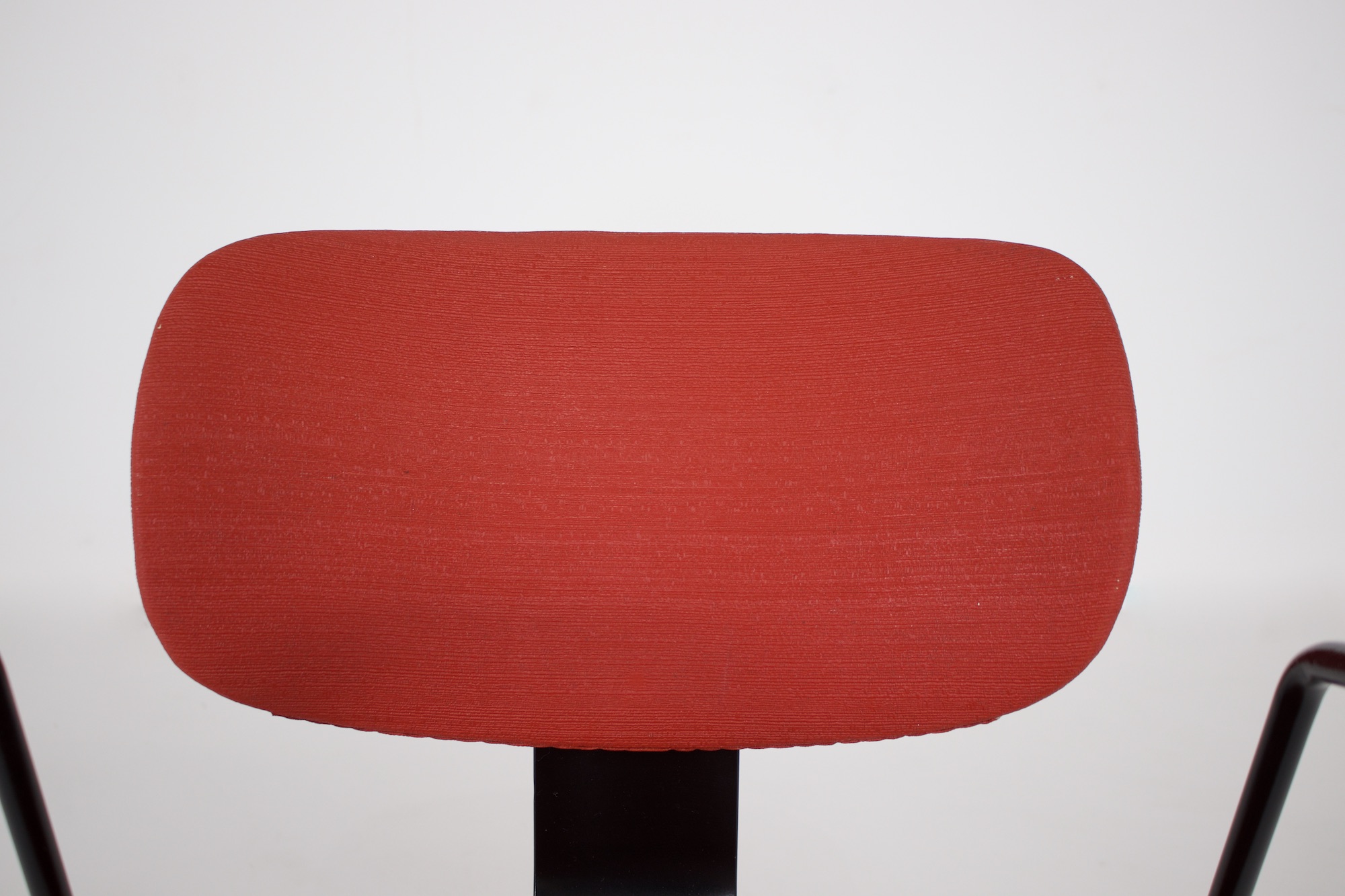
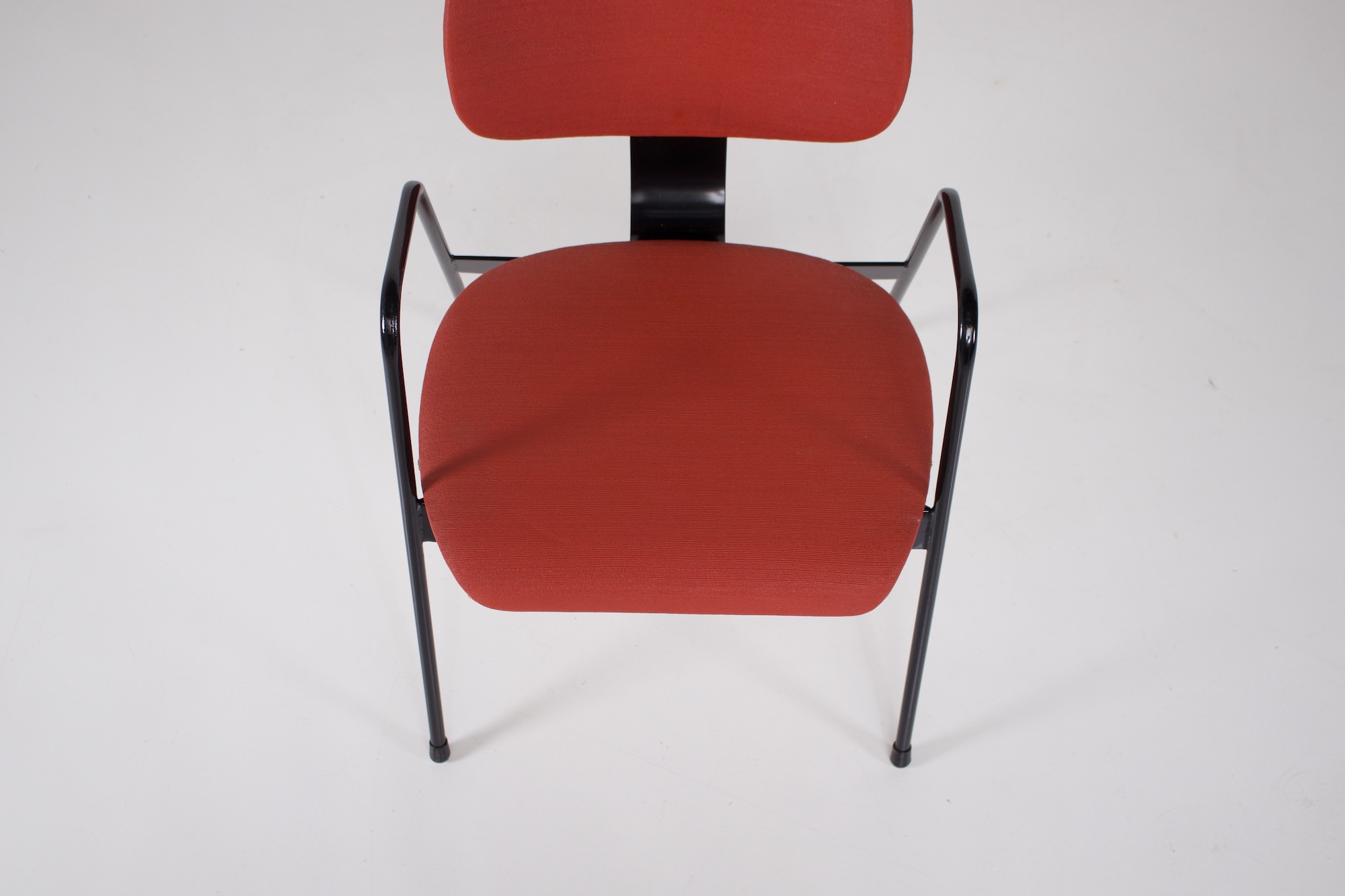
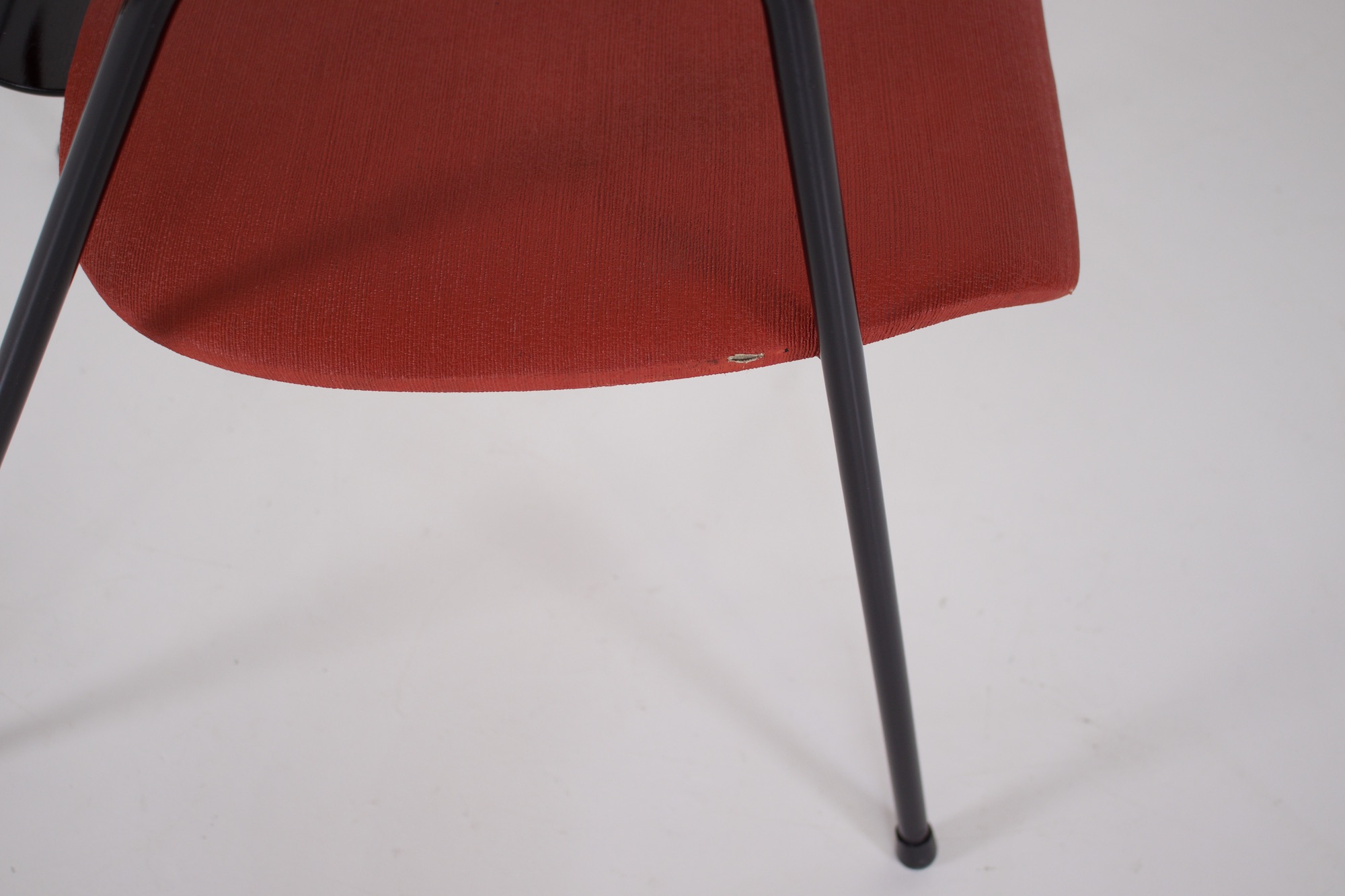
- Original red leatherette upholstery.
- W 49 × D 61 × H 68 cm – Seat height: 40 cm.
- Several examples available.
- Signs of use, primarily on the seat (see photos).
1 available in store

The F1 armchair by Willy Van Der Meeren, produced by Tubax in the early 1950s, is part of the post-war Belgian design revival, characterized by a commitment to producing modern, accessible, and rational furniture.
A social and functional design
Architect and designer, Willy Van Der Meeren developed an approach to furniture based on economy of means and mass production, in a context of reconstruction. His collaboration with Tubax gave rise to several models intended to furnish contemporary interiors, with particular attention paid to durability, cost, and simplicity of manufacture.
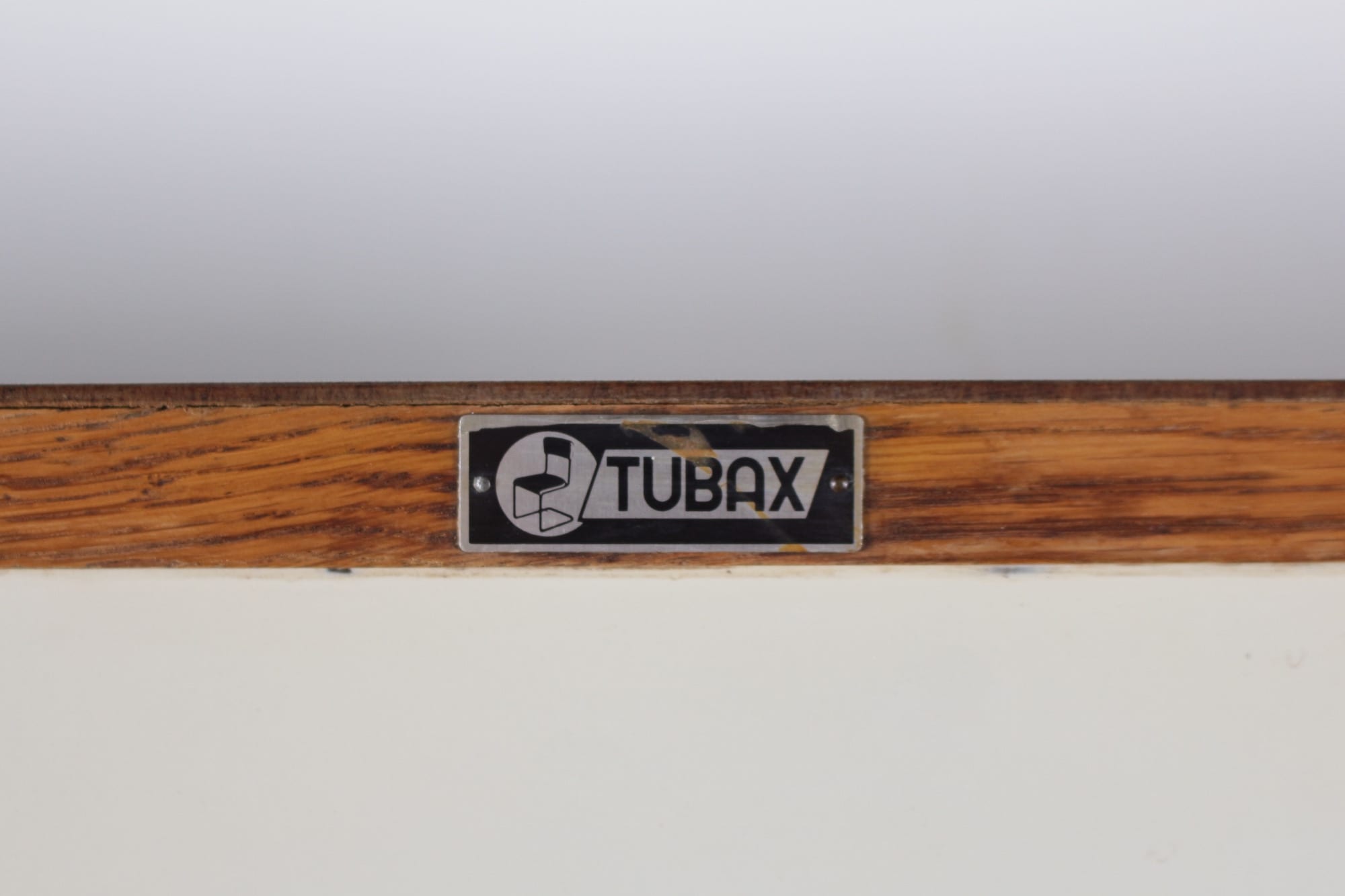
Metal label from the manufacturer Tubax.
The armchair F1 belongs to this collection of creations where the structure becomes legible. The tubular steel is left exposed, while the seat and backrest are treated independently. This constructive logic, inherited from international modernism, is here adapted to pragmatic production, without superfluous decorative effect.
Van Der Meeren favored taut lines and balanced proportions, combined with industrial materials. The result is a direct, almost austere aesthetic, but perfectly consistent with the social and economic issues of the period.
The F1 model is particularly distinguished by the integration of the armrests in continuity with the base, reinforcing both the stability and legibility of the whole. It illustrates a clear intention: to produce robust, functional, and reproducible furniture, without renouncing a certain formal rigor.
Today, these pieces bear witness to a key moment in European design, when the modernist ideal confronted the constraints of the post-war period. Willy Van Der Meeren’s work for Tubax constitutes in this respect one of the most coherent expressions of Belgian design from the 1950s.
In this example, the original upholstery and the patina of time extend this reading, inscribing the object in a continuity of use faithful to the spirit of its conception.
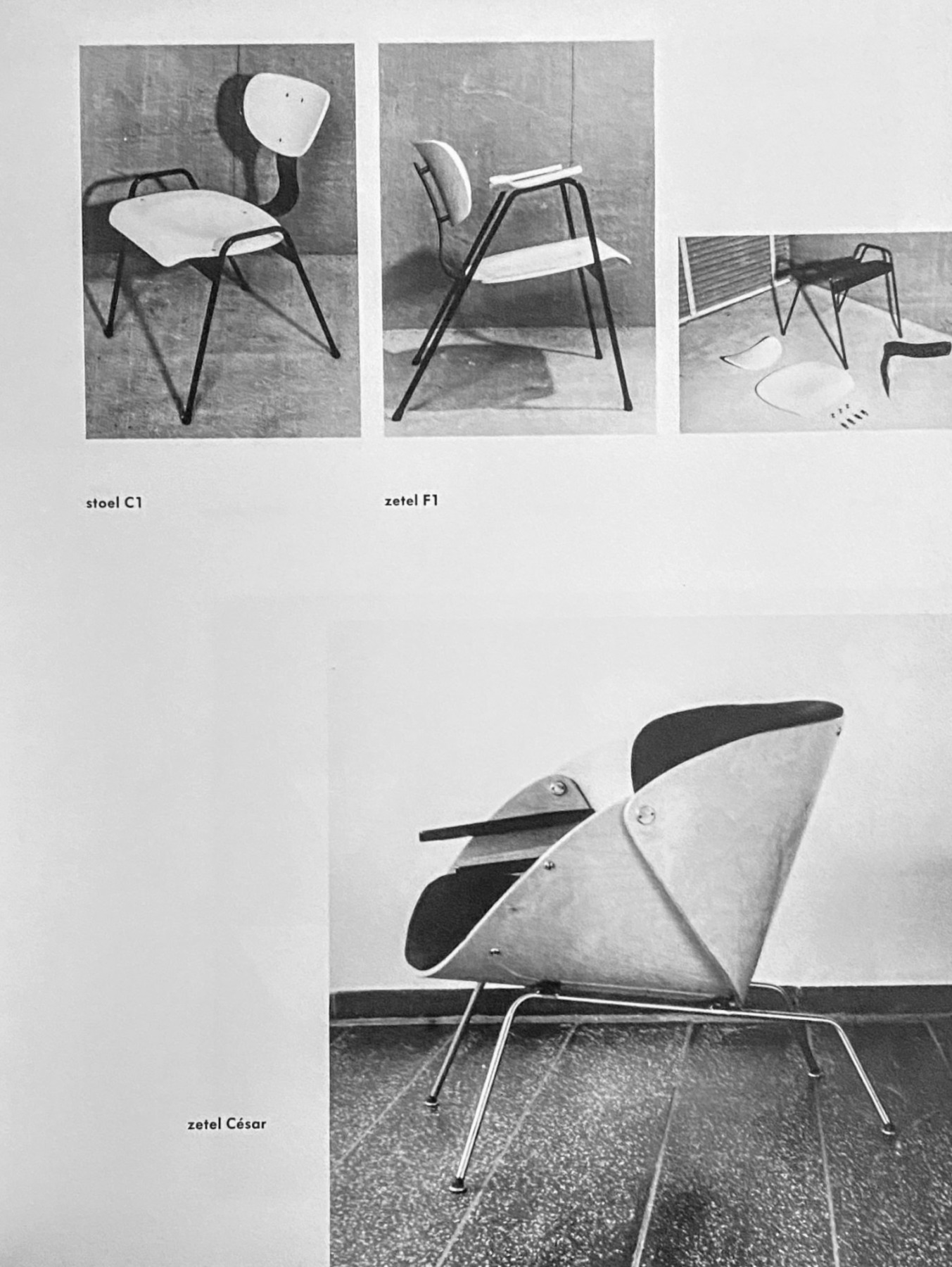
Bibliography:
– Mil De Kooning, Willy Van Der Meeren. Furniture Design , 2007.
– Mil De Kooning, Ghent University, research on Tubax and post-war Belgian design.
You might also like…

Discover also...


Delivery to Belgium

Delivery to France

Delivery to Luxembourg
