





Portfolio table by René Jean Caillette
€1500,00
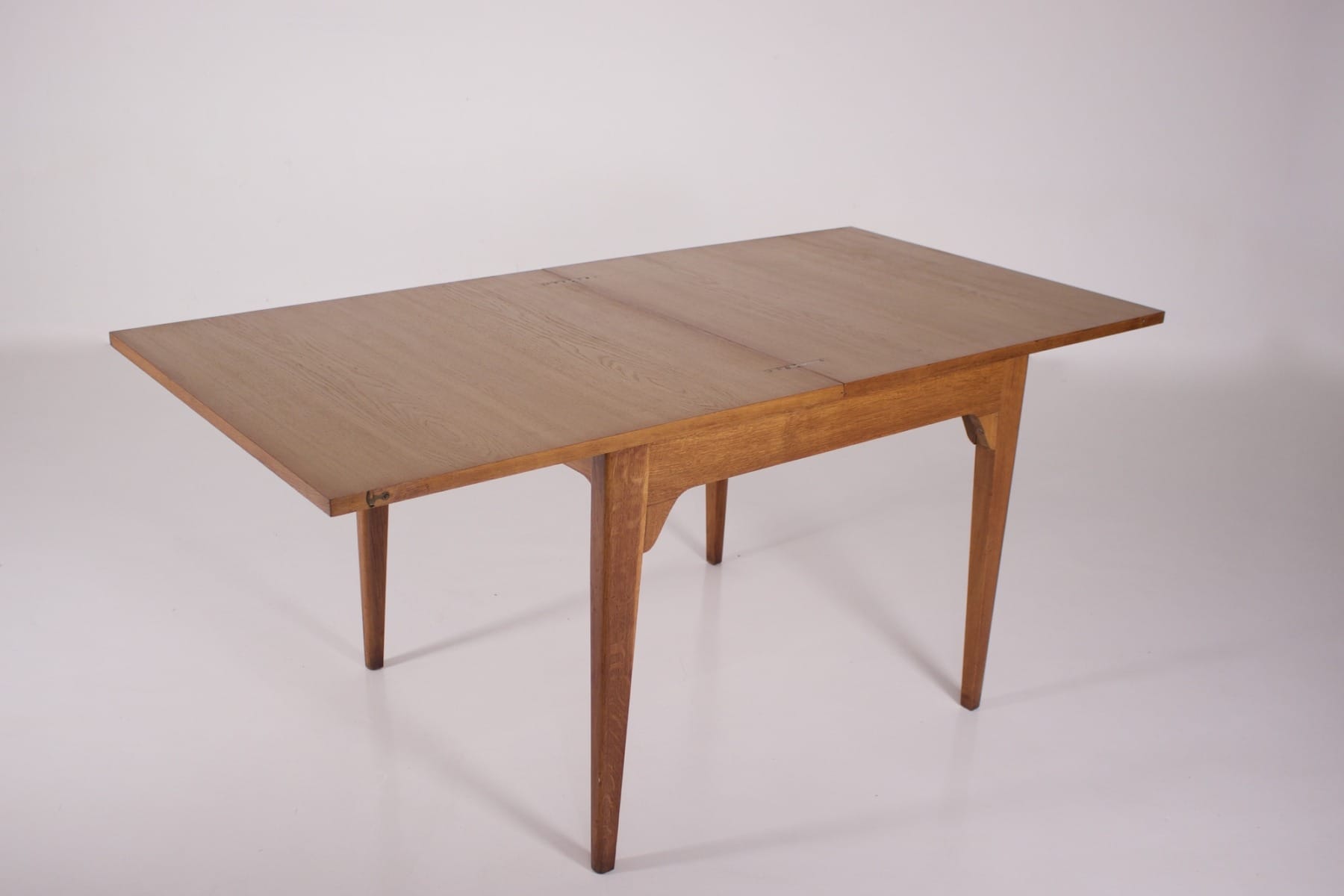
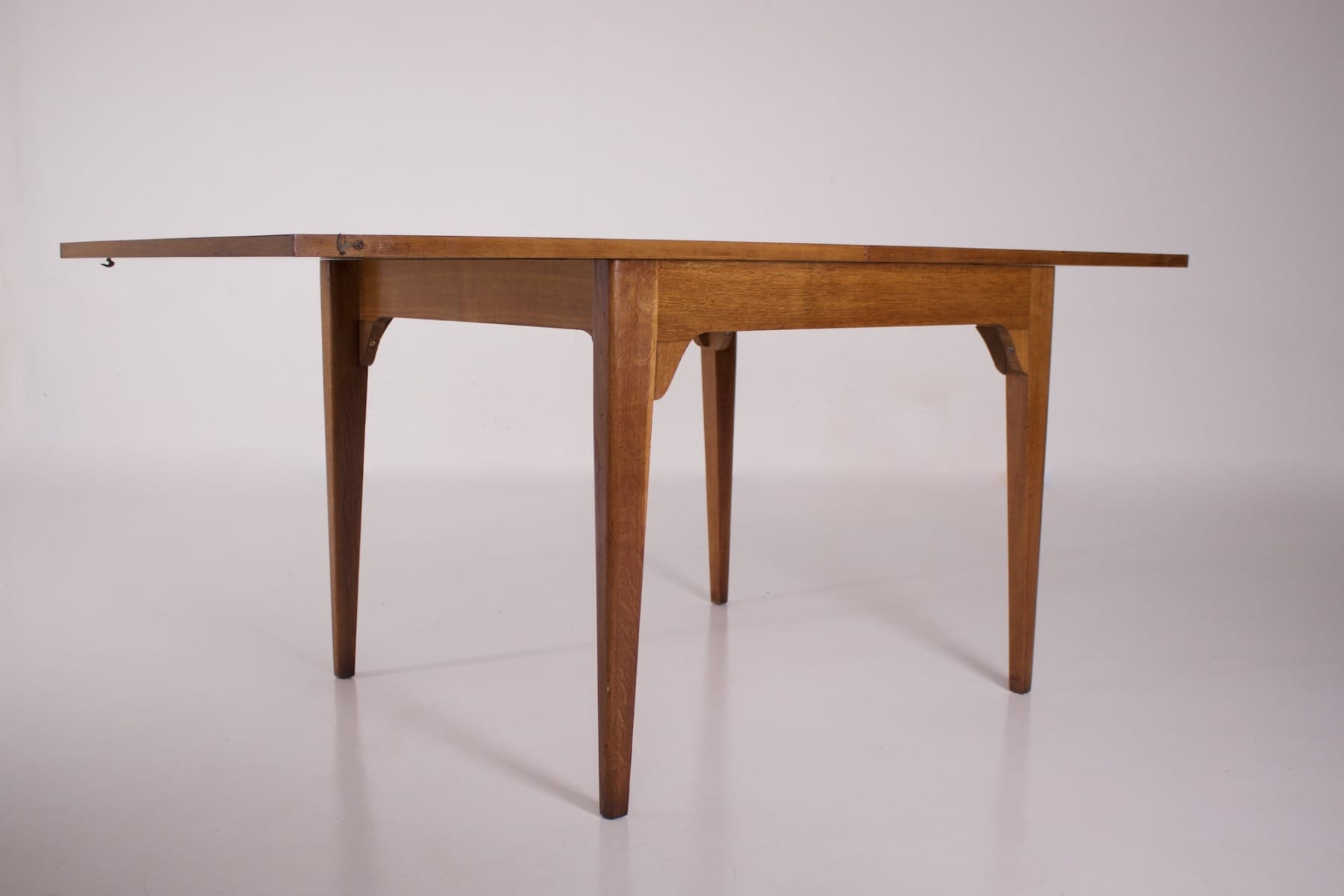
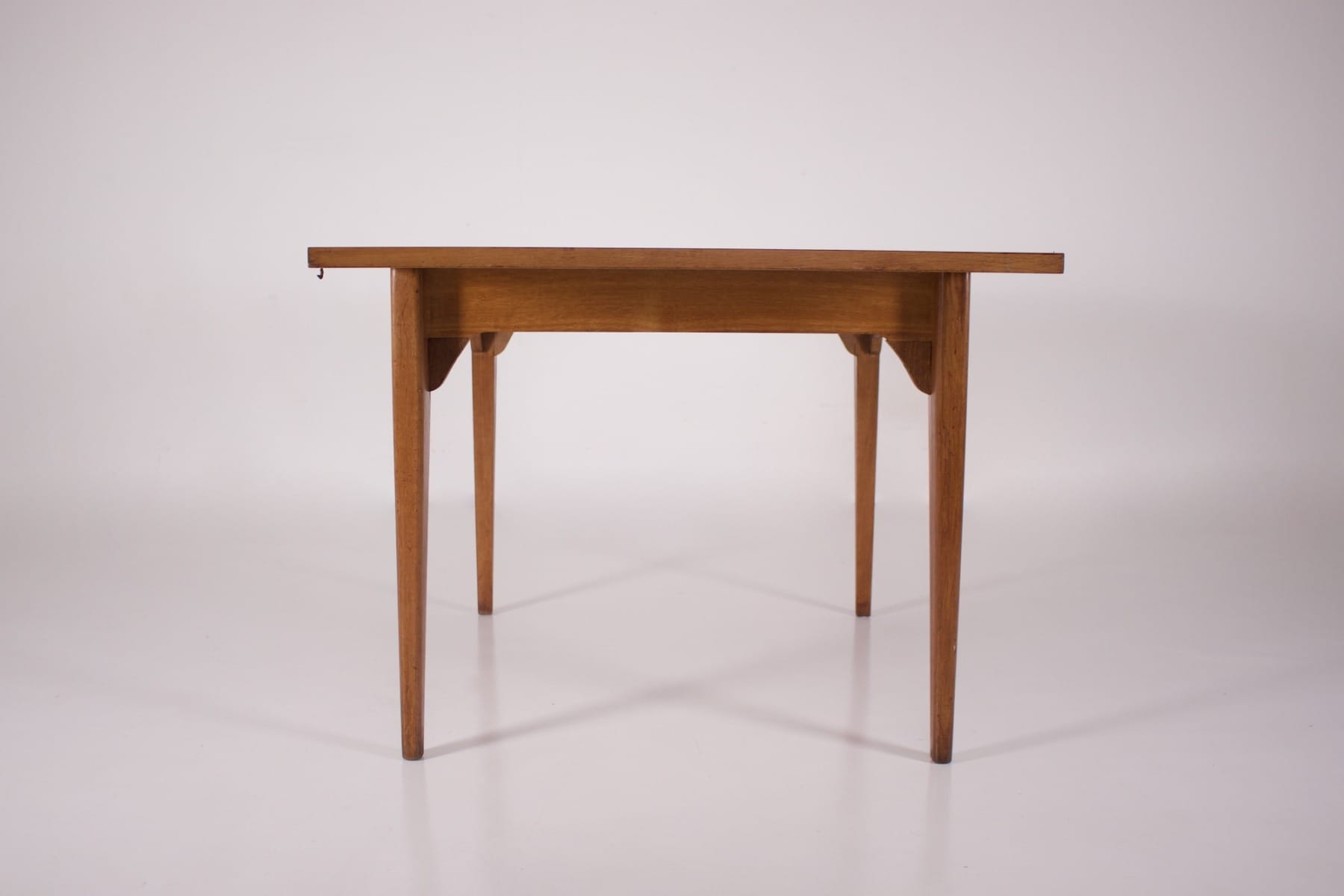
Drop-leaf dining table known as a “portfolio” table, in blond oak. Designed by René Jean Caillette, early 1950s.
The top slides sideways to reveal a space intended for storing tablecloths and napkins. This ingenious feature is one of the early expressions of the domestic utopia born of French Reconstruction, when the clean slate imposed by the destruction—sometimes total, as in Le Havre—of the Second World War led architects and designers to rethink the home and its uses from the ground up.
- The table was carefully restored by our restorer.
- W 83/166 CM X D 83 CM X H 73 CM.
- A faint ring mark remains on the shelf (see photo).
1 available in store

René-Jean Caillette and 1950s French furniture
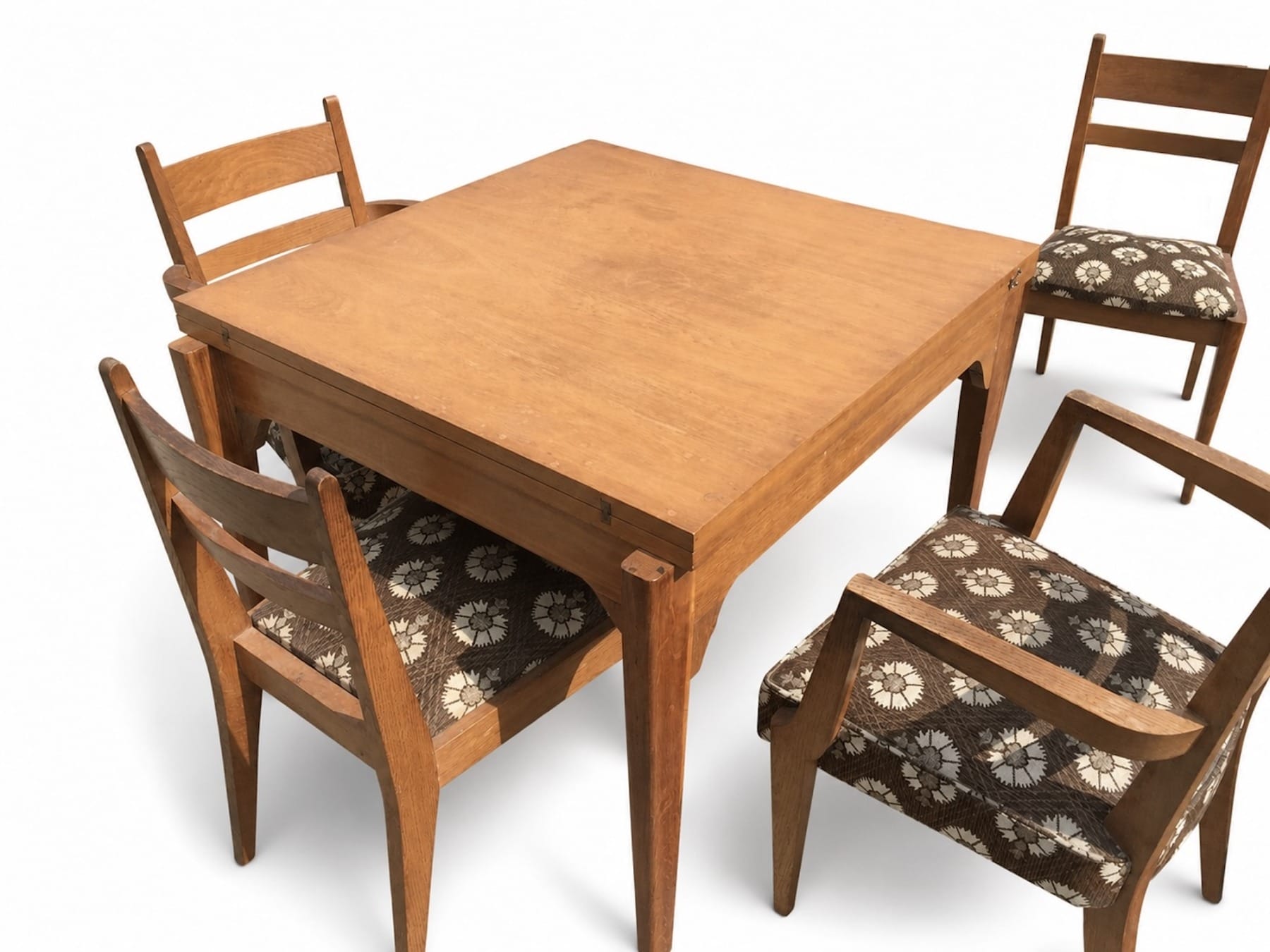
This dining set is part of the work of René-Jean Caillette, a leading figure in French 1950s design. The son of a cabinetmaker and attentive to the possibilities of mass production, the designer developed modernist furniture with clean lines, in which apparent simplicity rests on particular care given to proportions, joinery, and finishing details. This blond oak dining table, accompanied in this photo by its two chairs and two armchairs, reflects this pursuit of functional, elegant furniture made to stand the test of everyday life.”
A René-Jean Caillette set documented in the archives
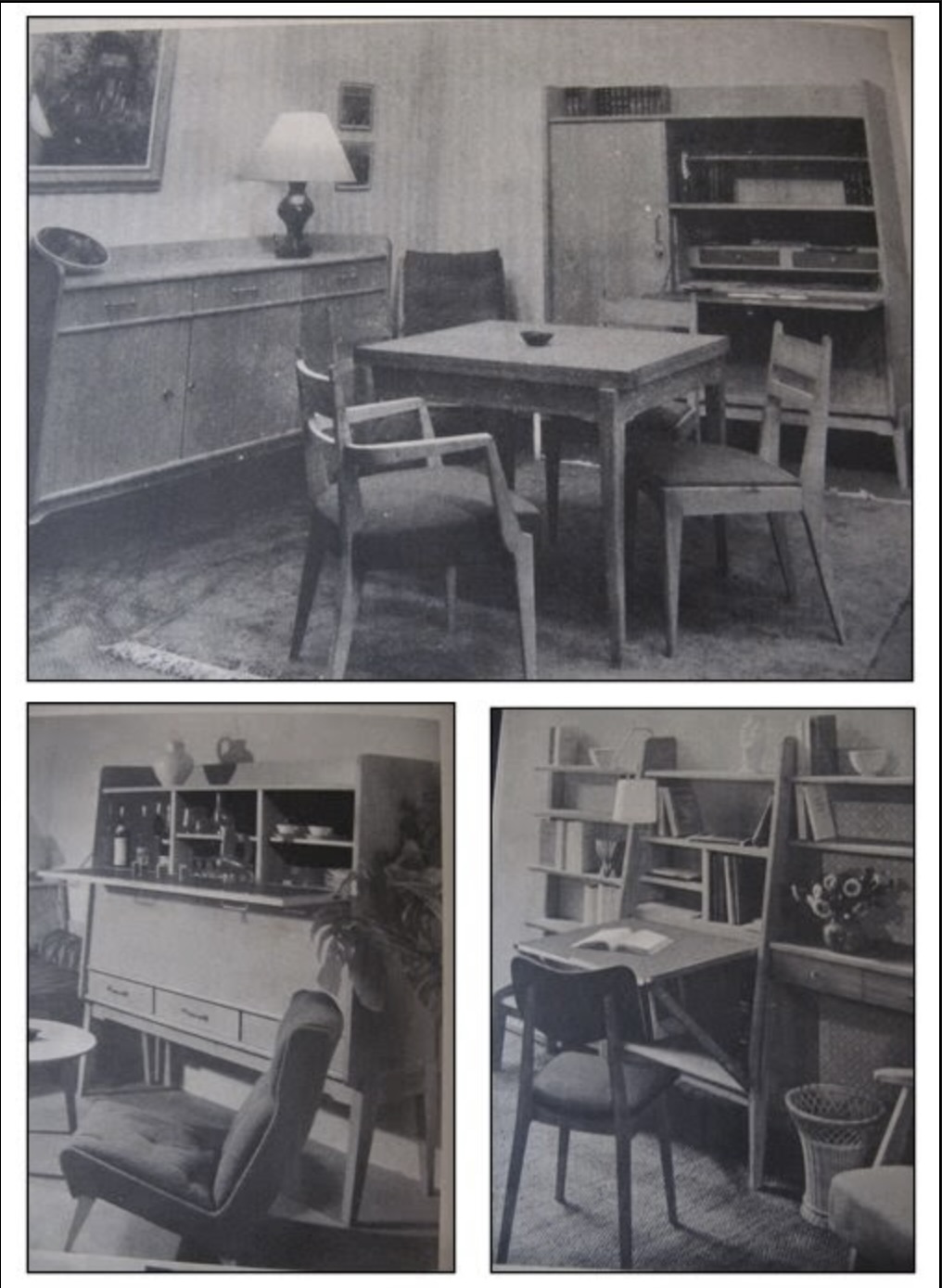
An old photograph published on the blog dedicated to French furniture, « Nouvel Habitat – Forme Nouvelle », shows this same René-Jean Caillette dining table accompanied by its wooden chairs and armchairs. Presented within a complete interior scheme, this set highlights the role the designer played in renewing French furniture in the 1950s. Its simple lines, the lightness of the legs, and the precision of the joinery illustrate his vision of functional modernist furniture designed for everyday life.
Only one difference can be noted: the table apron shows a continuous curve in the archive photograph, whereas on the model offered it ends, at the four corners, with ogee cut-outs. This feature may result from a later alteration, but could also be an adaptation originally commissioned by the first owner, for whom the initial design may have been considered too bold.
You might also like…
Discover also...



Delivery to Belgium

Delivery to France

Delivery to Luxembourg
