




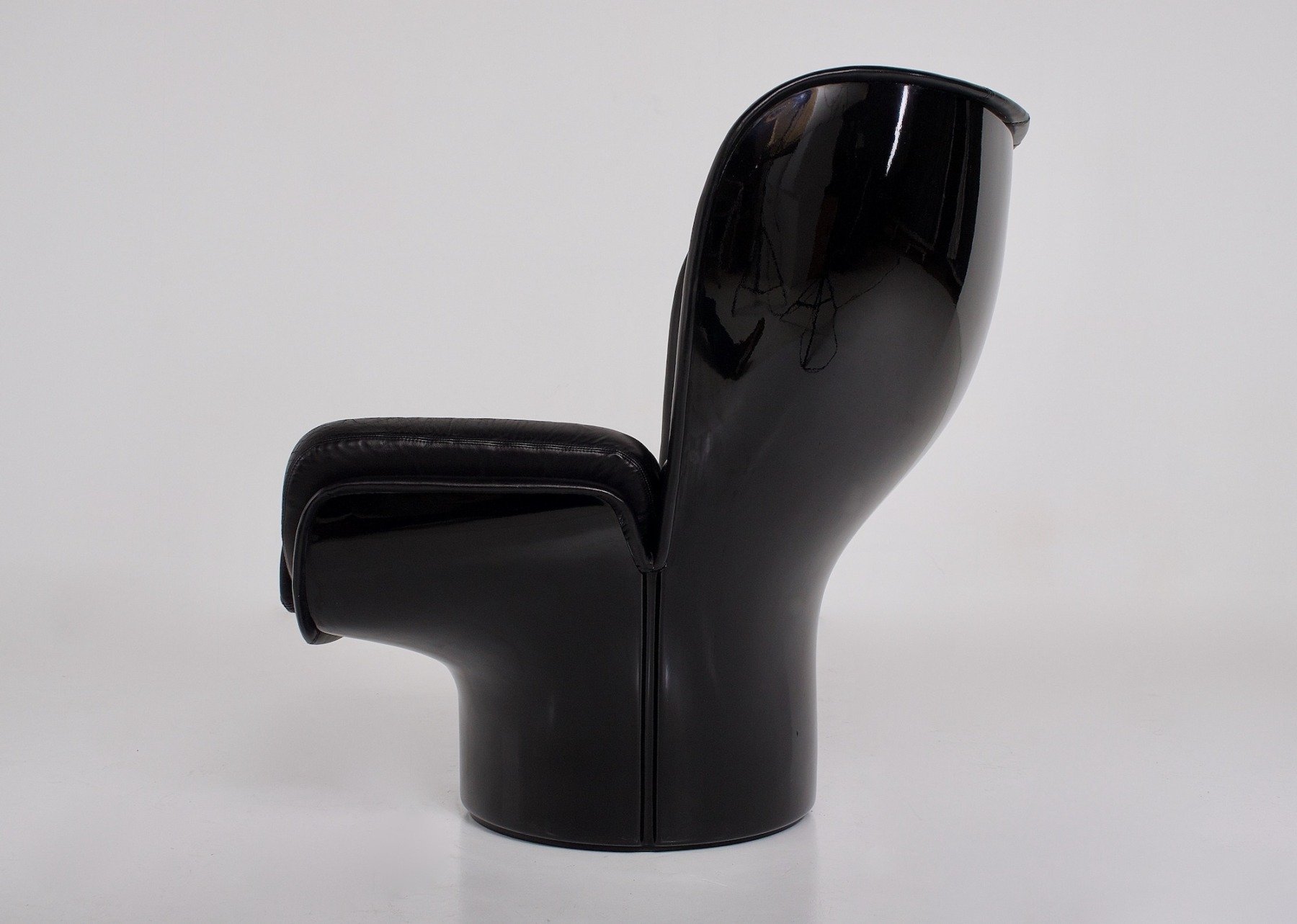
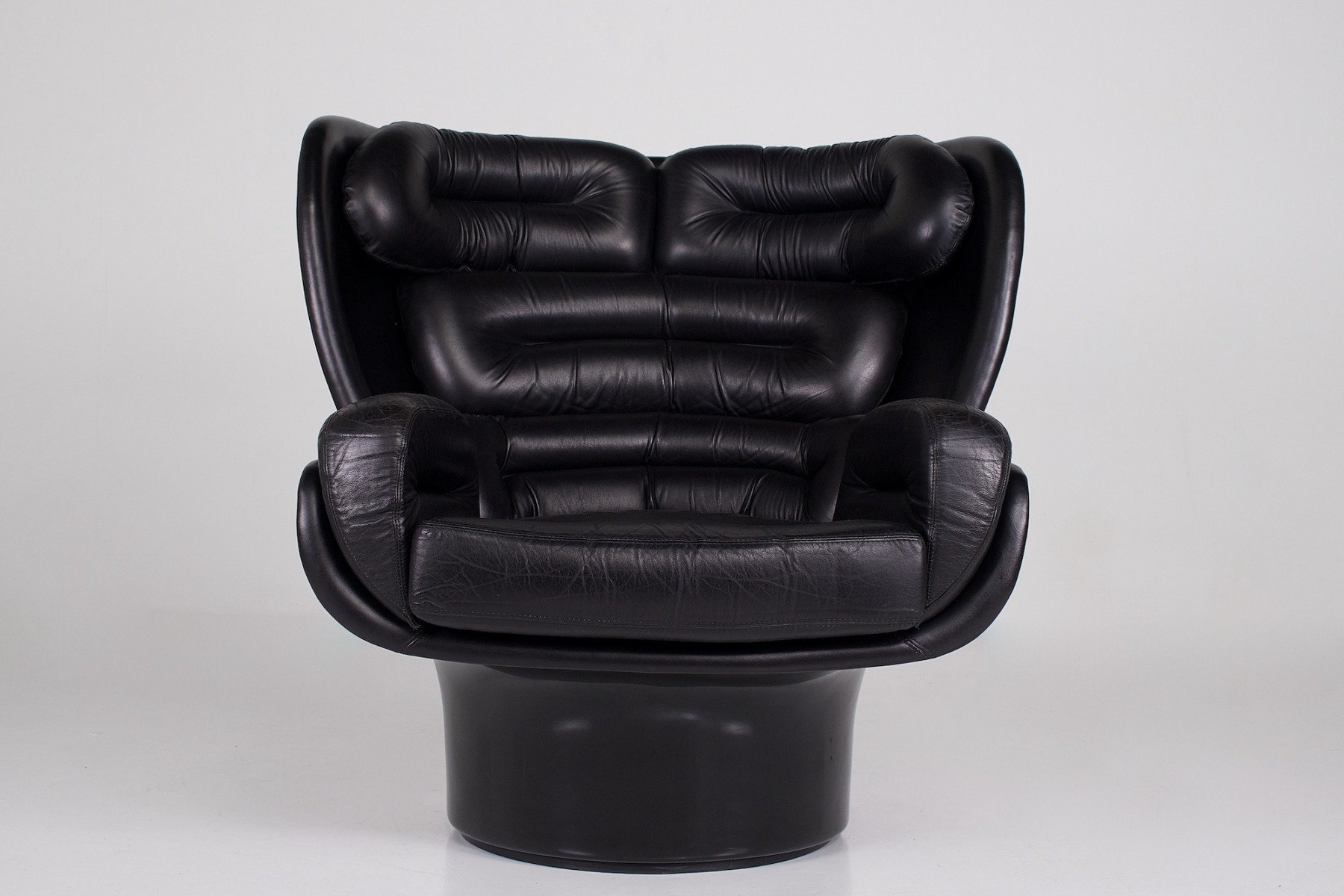
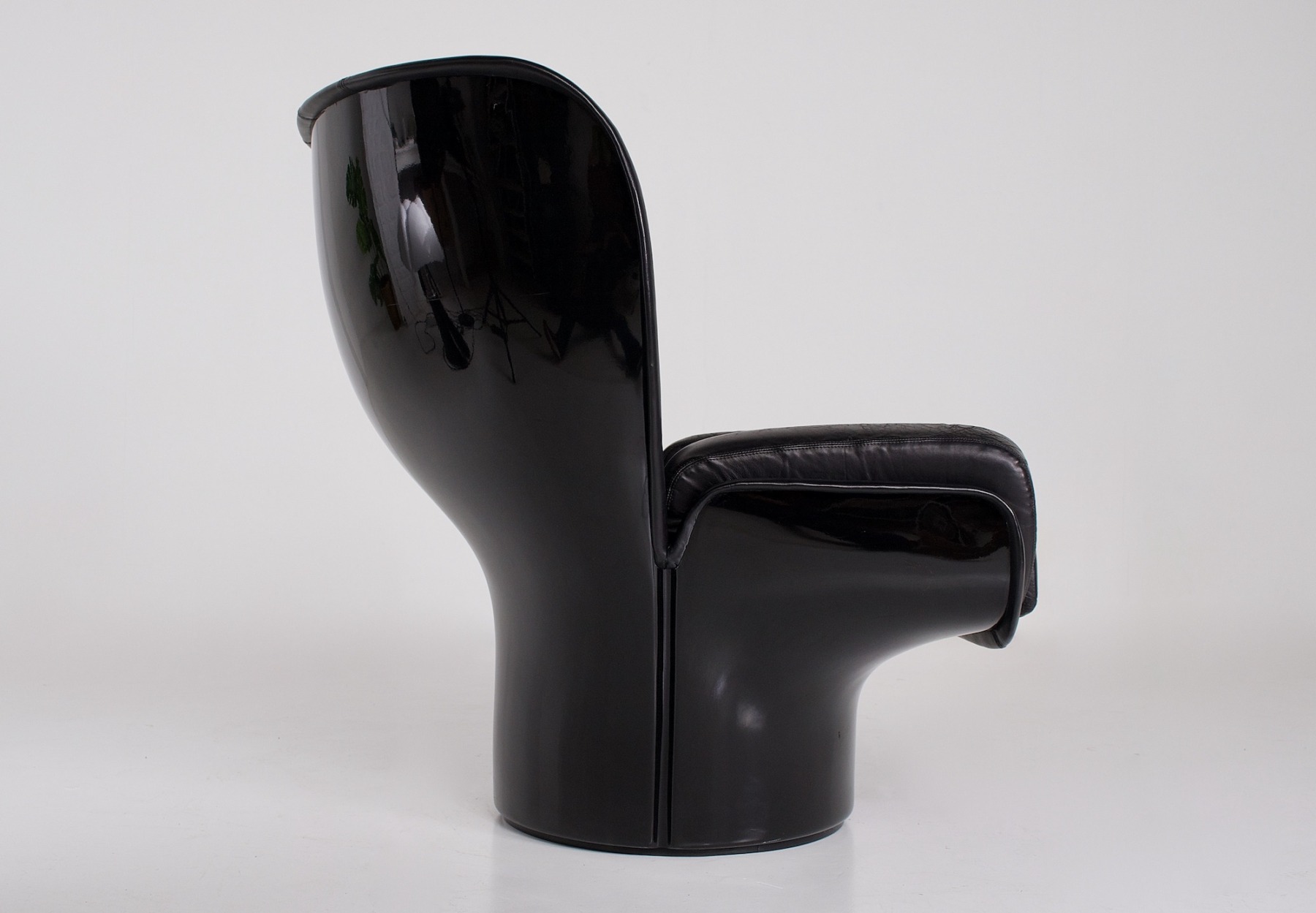
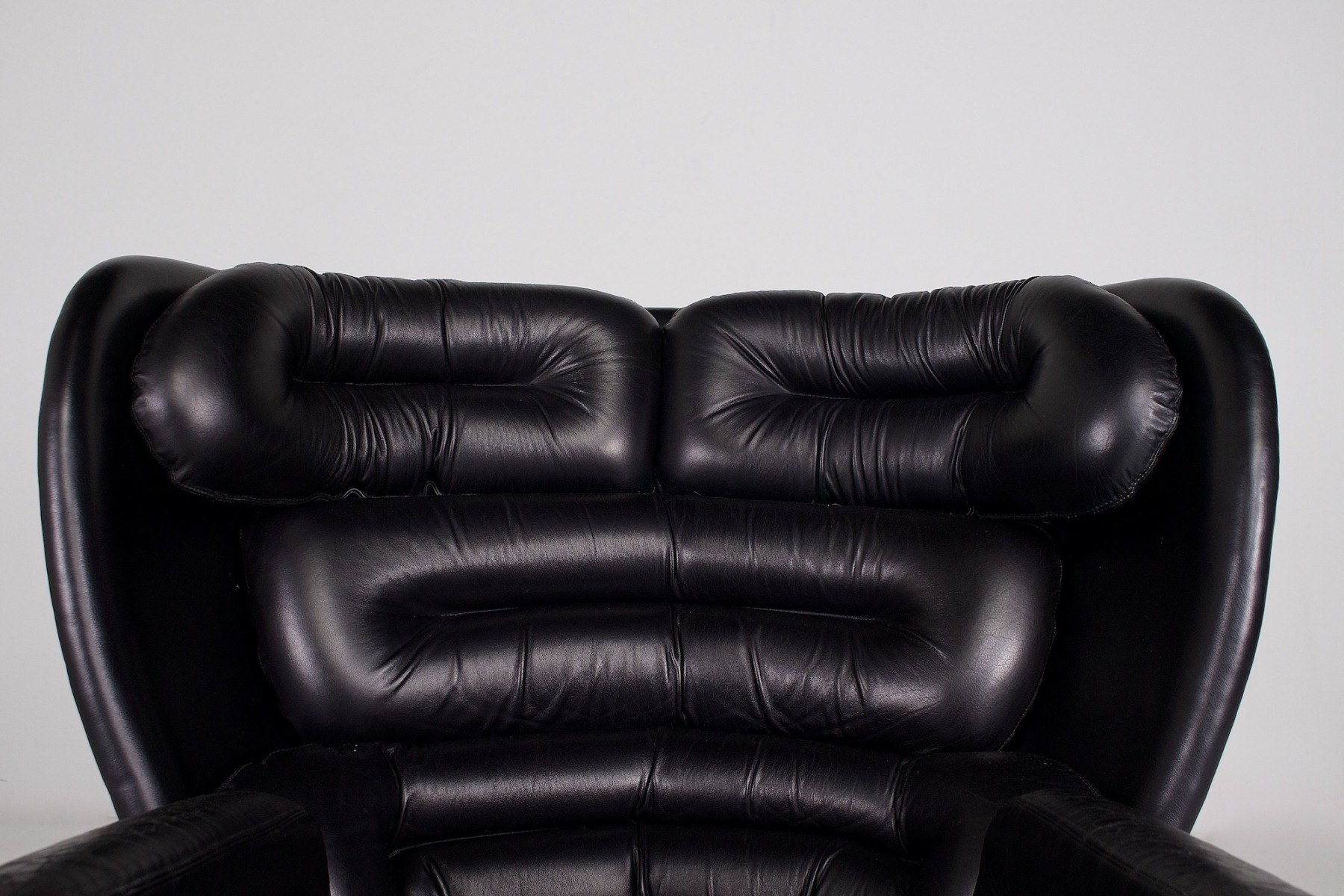

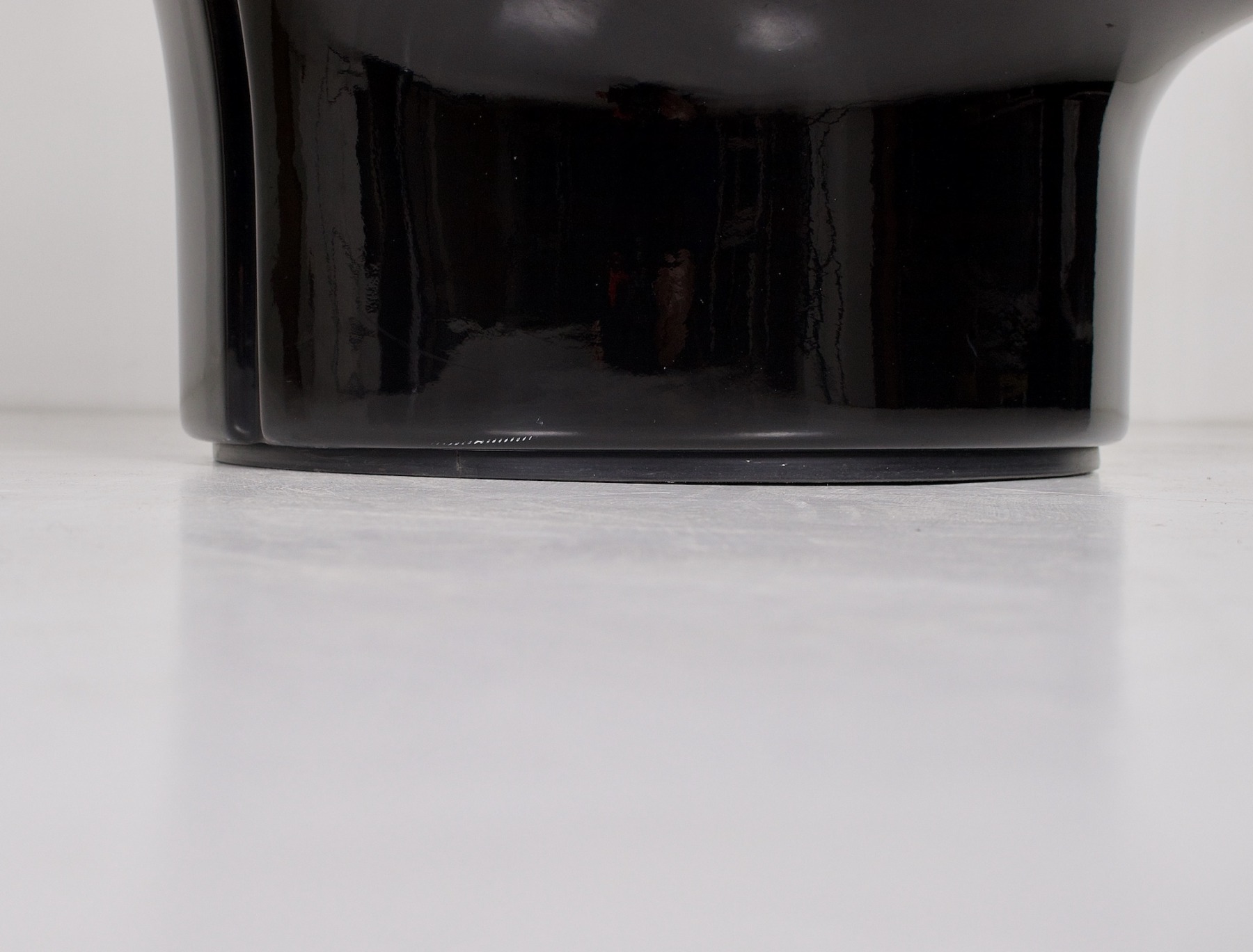

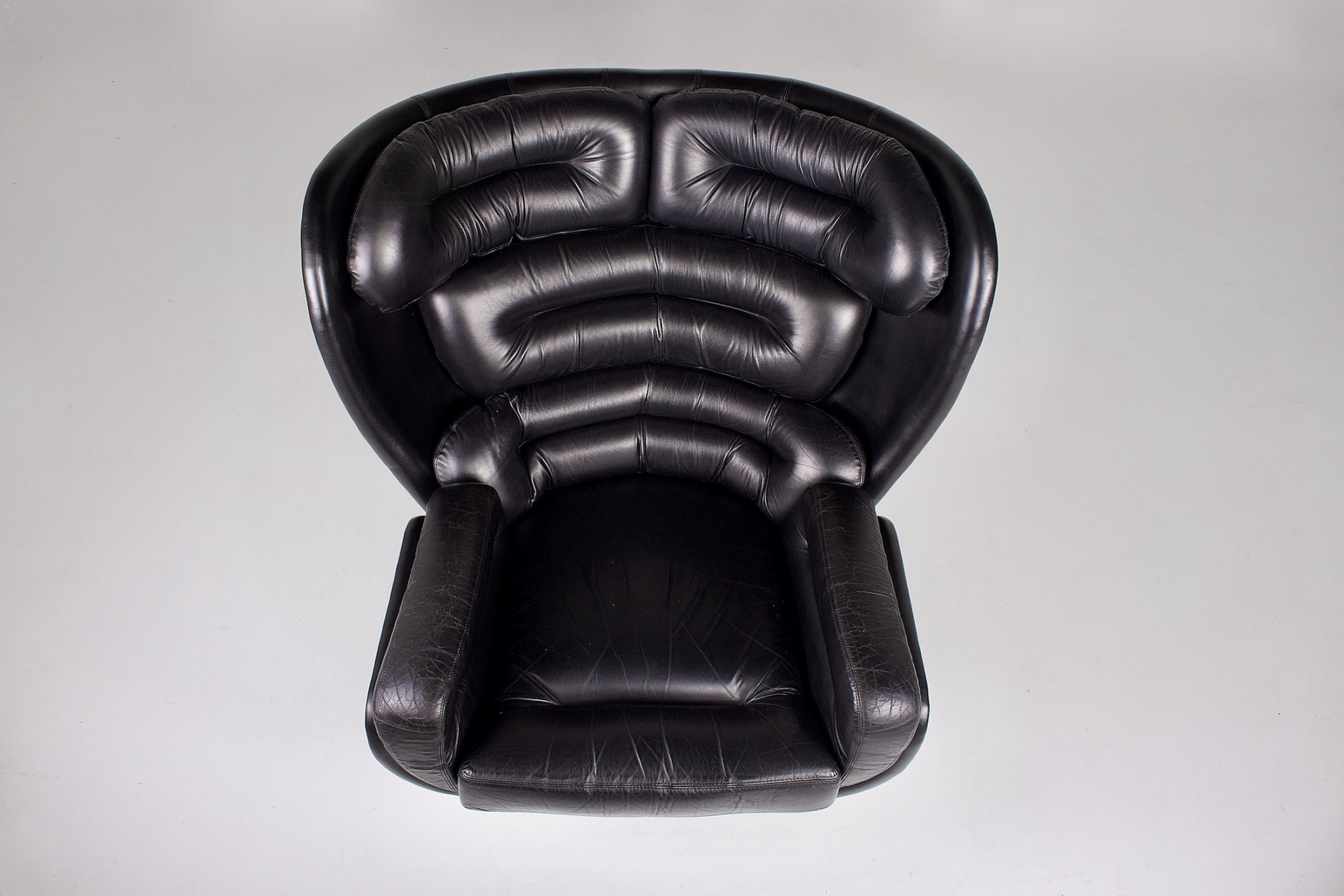
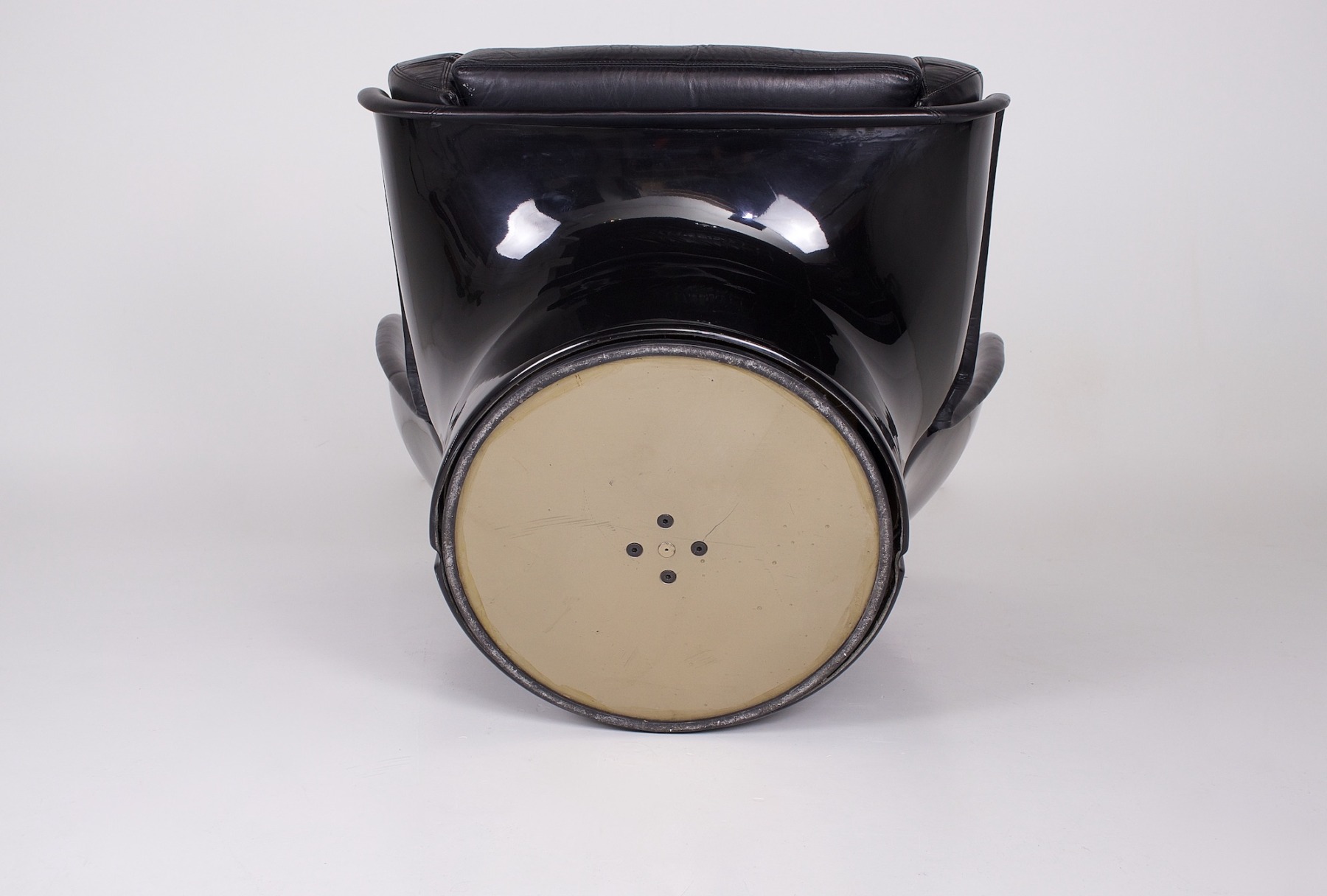
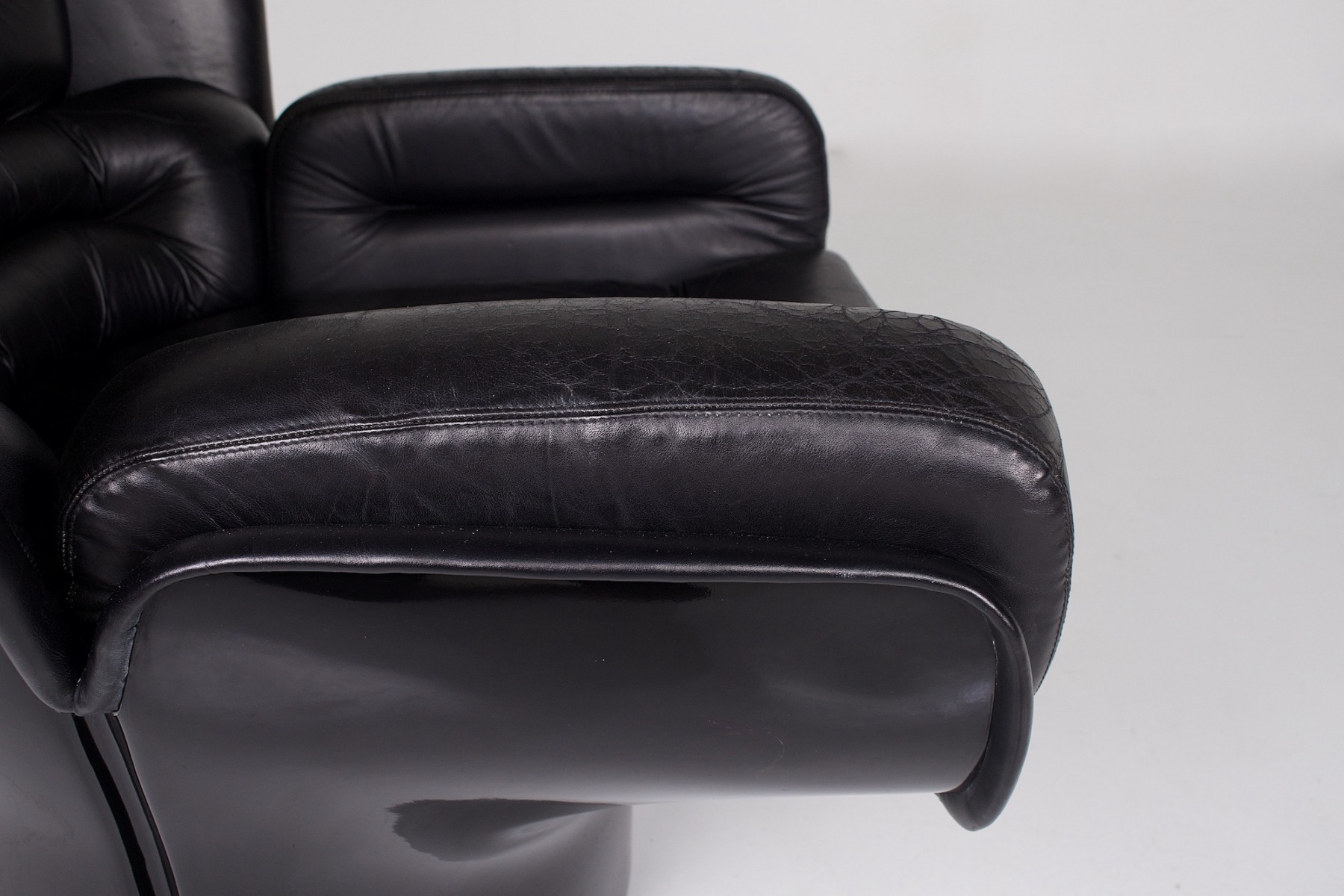

Joe Colombo’s Elda armchair is among his most iconic pieces. Designed in 1963, this armchair stands out for its spectacular use of fiberglass applied to a large, enveloping shell. It features a futuristic and ergonomic silhouette: a wide, pivoting shell housing seven leather cushions, which ensure immersive seating of rare comfort. This particular example is distinguished by its subtly patinated black leather, barely contrasting with the glossy fiberglass shell. The pivoting mechanism preserves its sculptural character while offering real ease of use.
A nod to history: the idea for the Elda armchair was born when Joe Colombo visited a shipyard where fiberglass boat hulls were molded; he then had the intuition to use the same technique to create a seat. The model, named “Elda” in homage to his wife, was presented in 1965 by the manufacturer Comfort at the Eurodomus 1 fair in Genoa, which launched its fame.
The Elda Armchair by Joe Colombo, from Comfort to Longhi
Designed in 1963 by Joe Colombo and put into production from 1965, the Elda armchair, model No. 1005, is among the major creations of Italian design of the 1960s. Its design breaks with the traditional structure of armchairs of the time: Colombo uses an enveloping fiberglass shell, inspired by techniques used for boat hulls, combined with a series of upholstered cushions that follow the interior of the seat.
The original edition is produced by Comfort Fratelli Longhi, an Italian company founded in 1959 and identified as the historical manufacturer of the model by the Art Institute of Chicago. Older examples are thus generally referred to as Comfort or Comfort Fratelli Longhi editions.
Elda’s production has continued, and the armchair is still featured today in the Longhi catalogue, heir to this historical production. The model is now referenced as X105. The manufacturer indicates that the pivoting fiberglass structure is still made in molds, by hand and in accordance with Joe Colombo’s original design. This continuity explains the very close visual similarity between old editions and contemporary examples.
Comfort Edition or Recent Longhi Production?
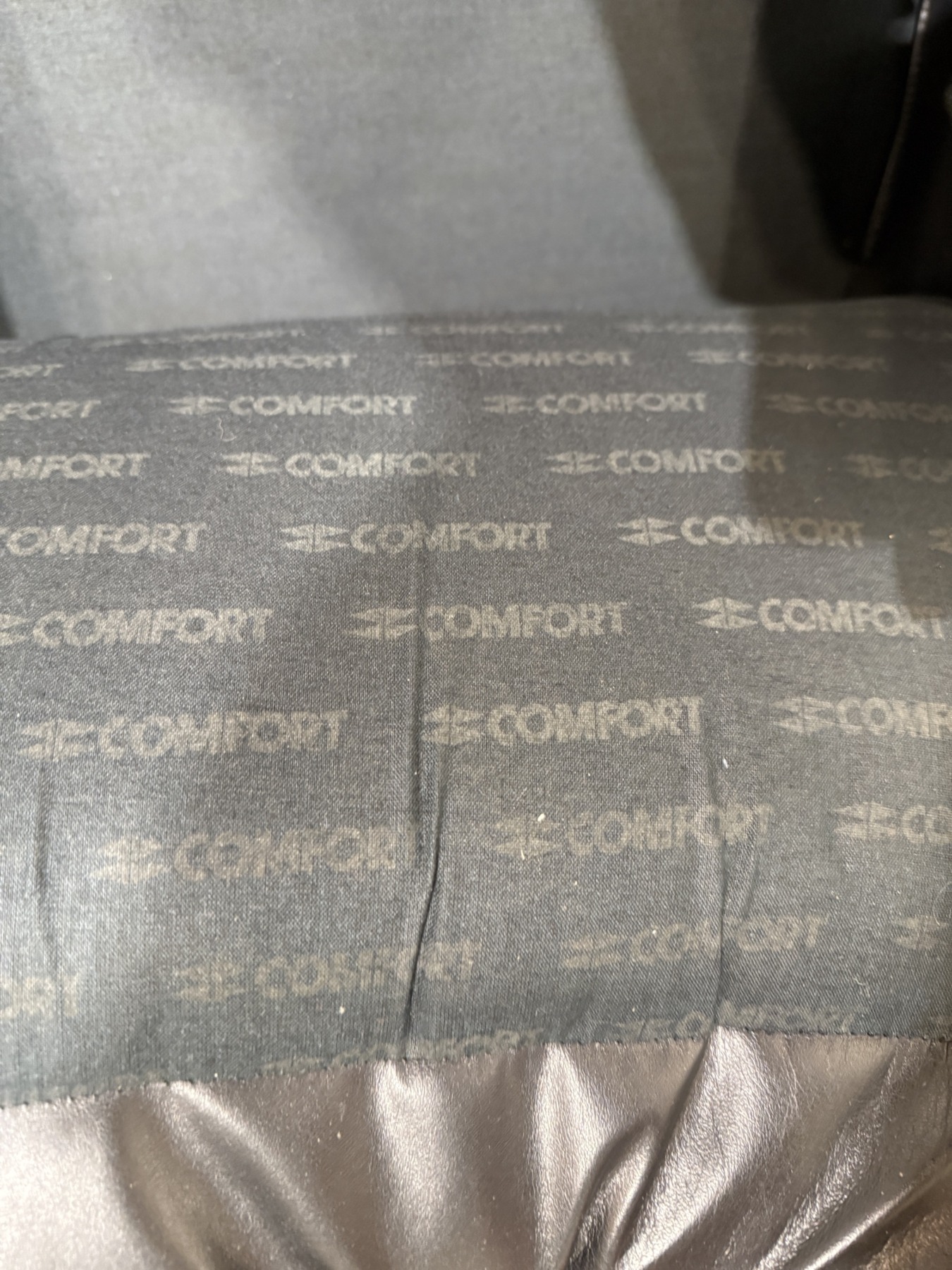
The distinction between an old edition and current production cannot be established solely from the armchair’s shape. Markings are a particularly important identification element. Historical editions may notably bear the mention COMFORT on the reverse of the cushions, while more recent productions are identified as LONGHI, this name potentially appearing on textile elements located under the cushions.

This armchair precisely retains the COMFORT marking under the seat cushion, which allows it to be identified as a Comfort Fratelli Longhi edition and distinguished from examples currently marketed under the Longhi brand.
The Comfort marking alone does not, however, provide a precise year of manufacture. The dating of an old example must also take into consideration its construction, materials, cushions, the condition of the fiberglass, and the general consistency of its aging. In the case of this armchair, we place its production in the 1970s.
You might also like…

Discover also...


Delivery to Belgium

Delivery to France

Delivery to Luxembourg
