







Burmese bronze Buddha – 19th Century
€1200,00
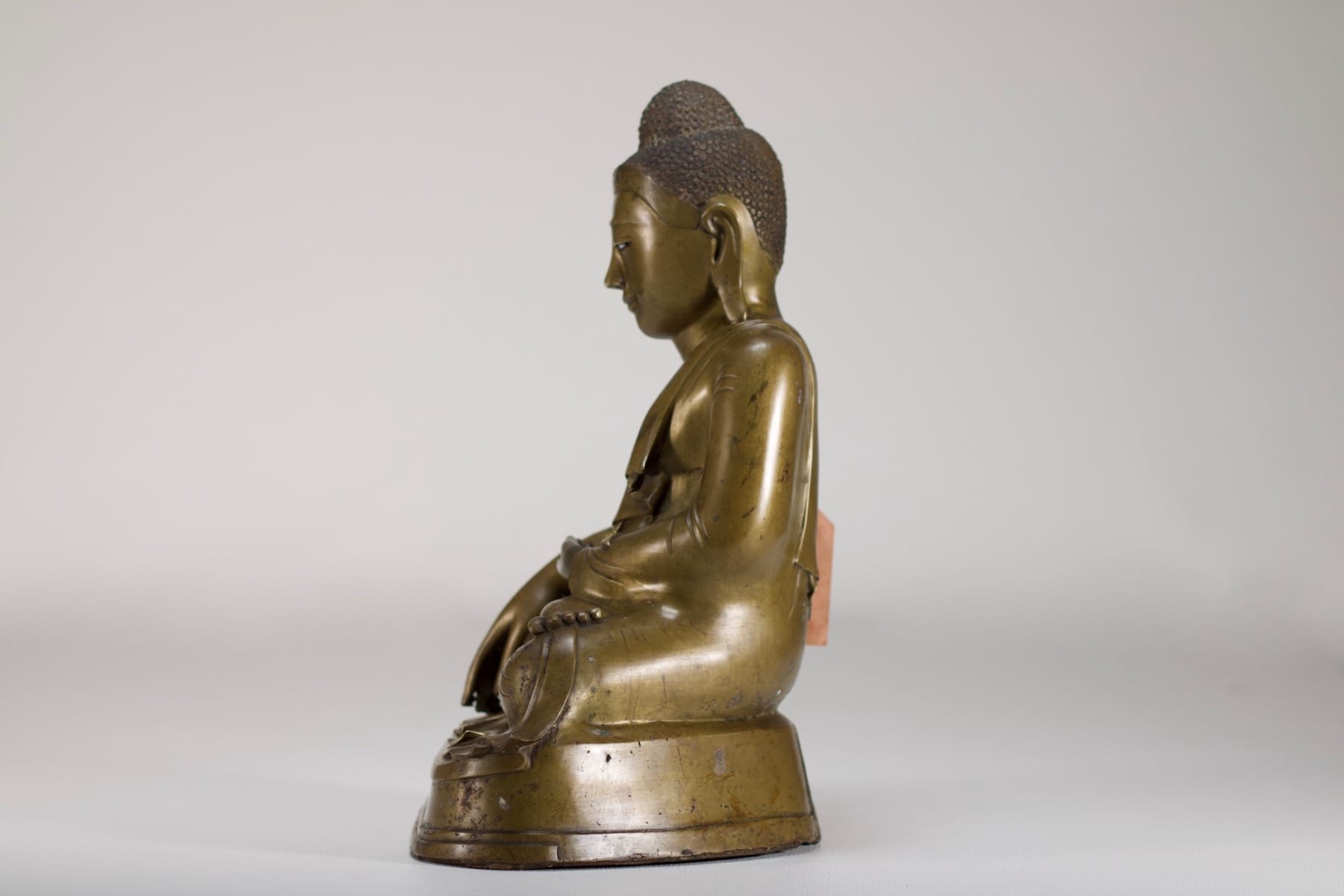
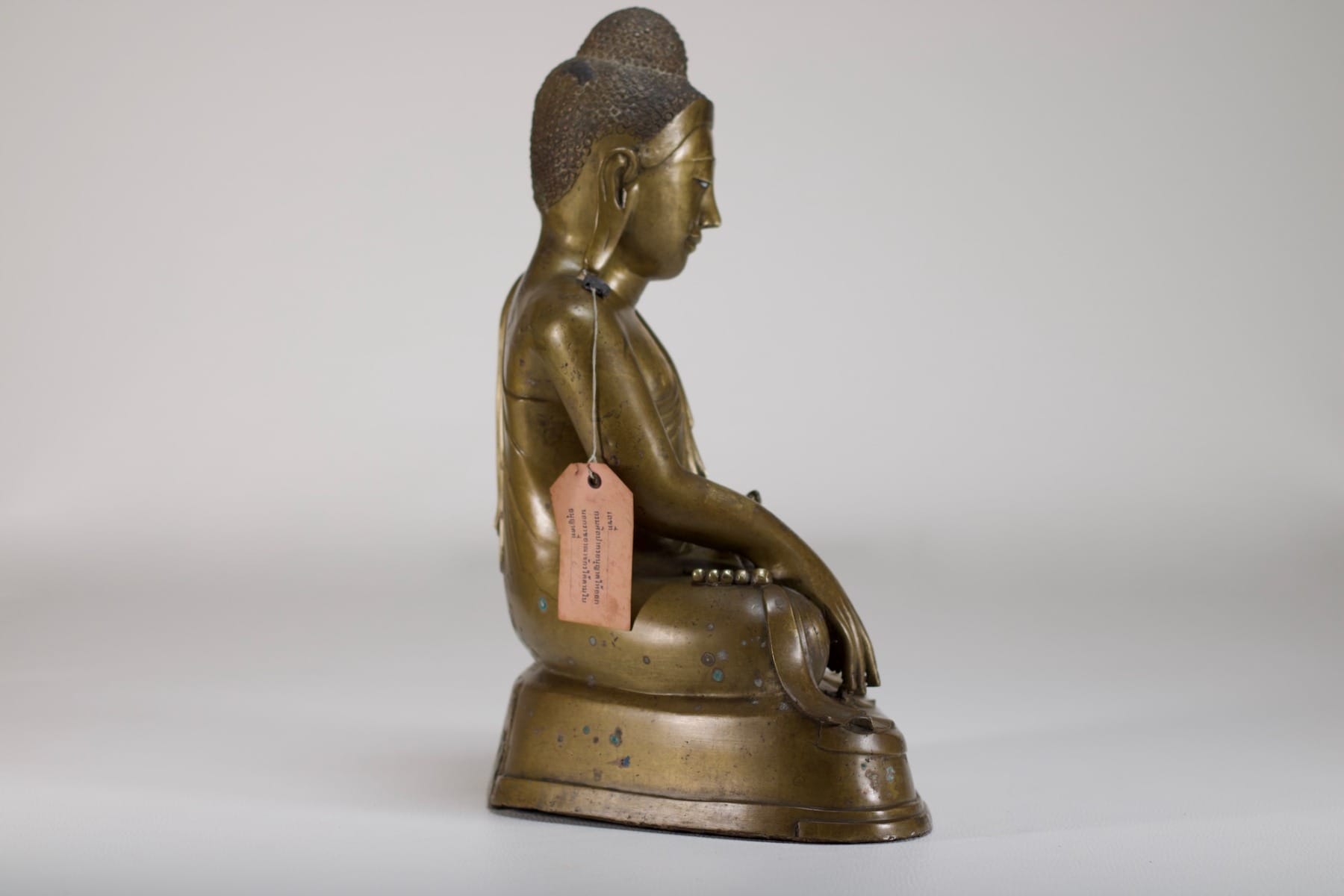
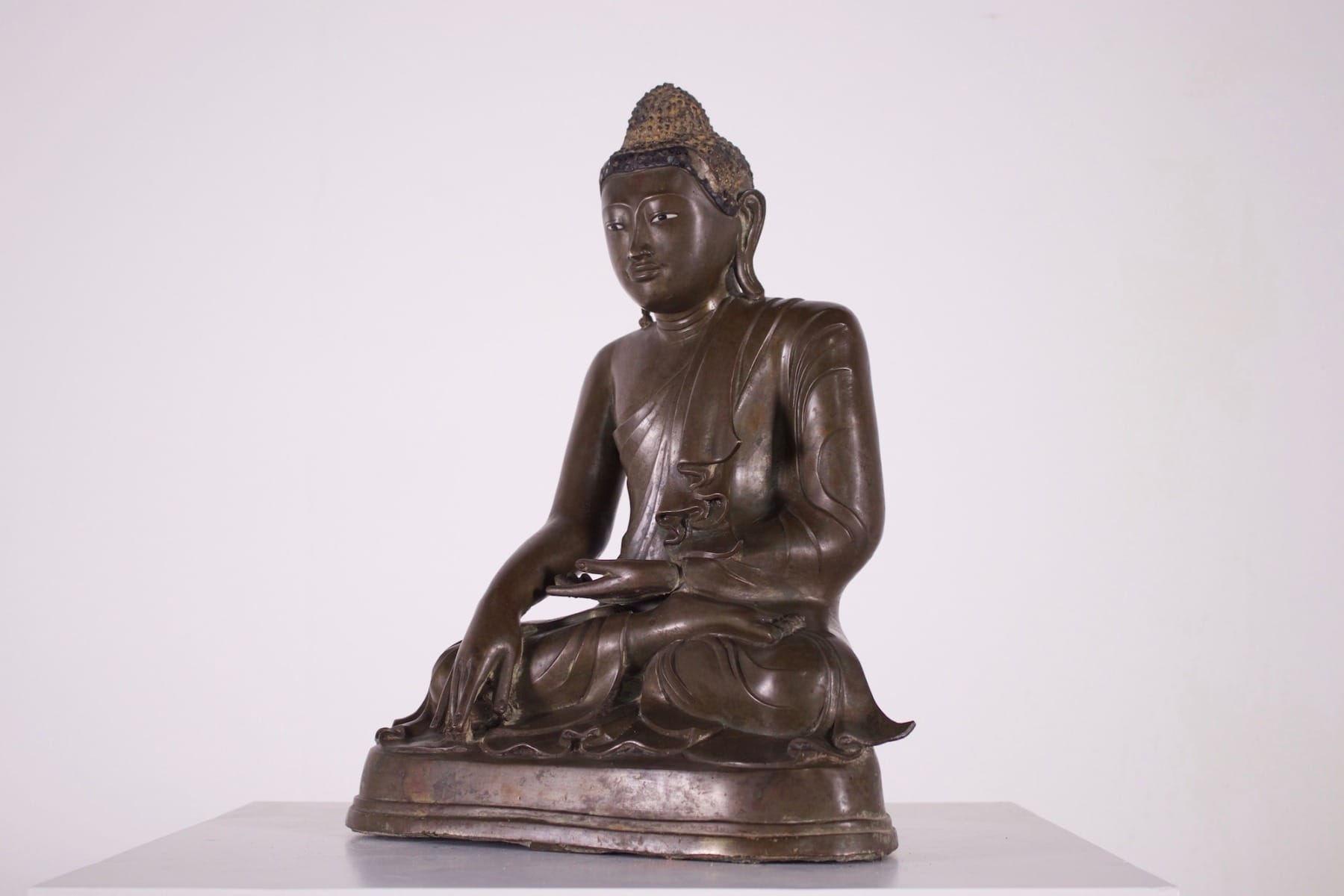
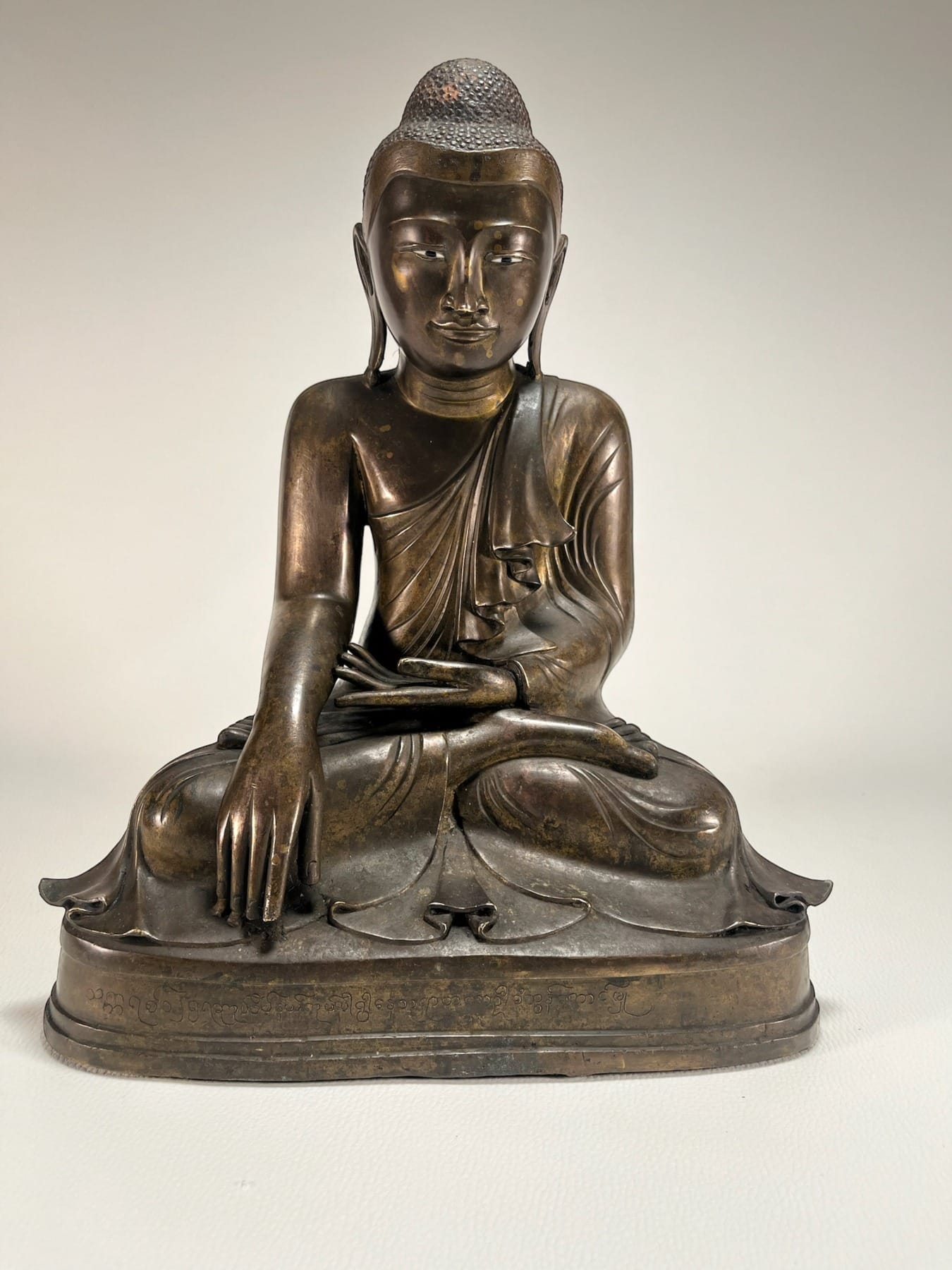
This Burmese image of the historical Buddha Shakyamuni performs the gesture known as bhumisparsha-mudra, or “calling the earth to witness.”
Cast in lost-wax bronze, the work dates from the mid-19th century, corresponding to the Mandalay period (1853-1948).
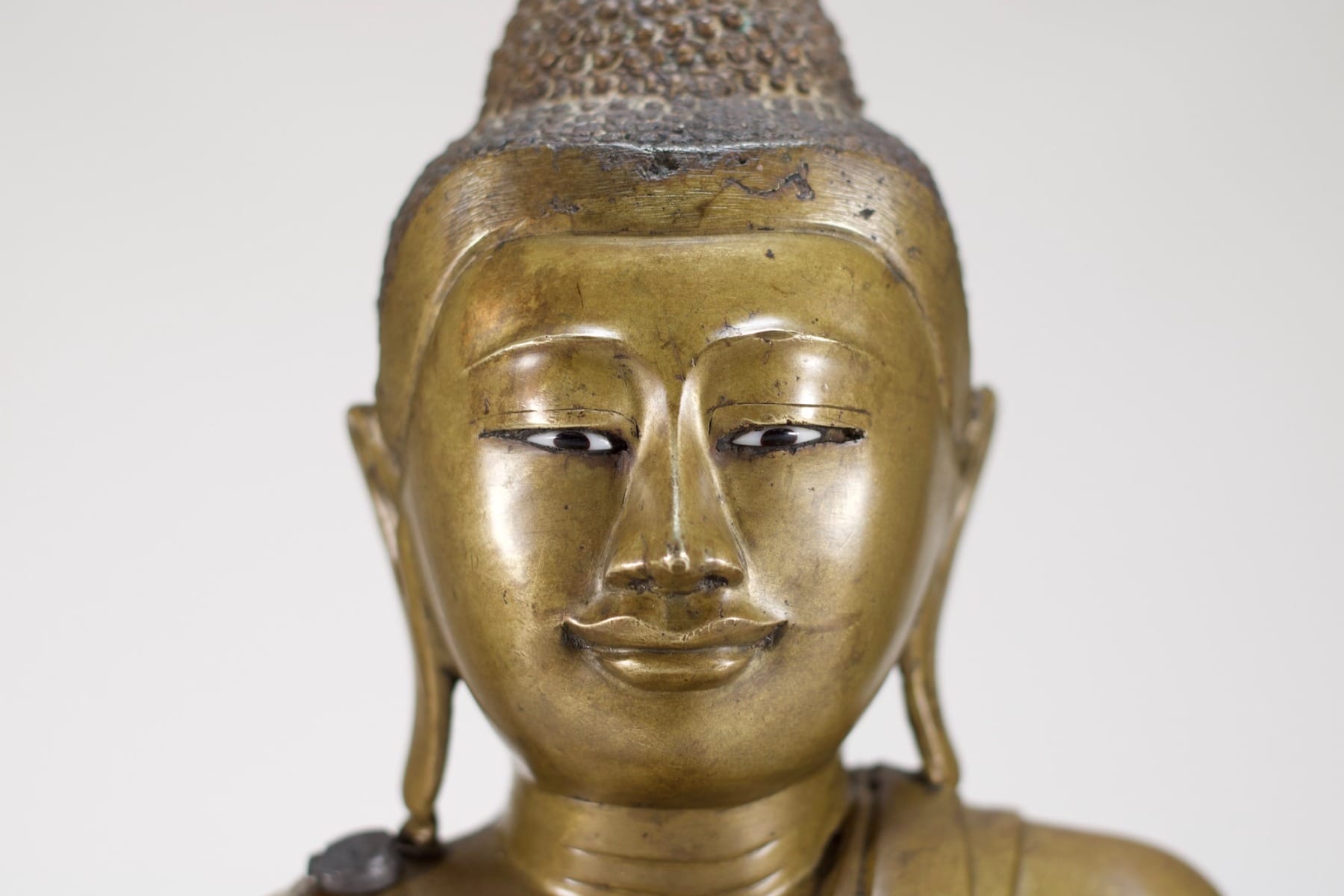
- The craftsman paid particular attention to the expression of serenity and compassion, notably through the use of shells (probably cowrie shells) for the eyes.
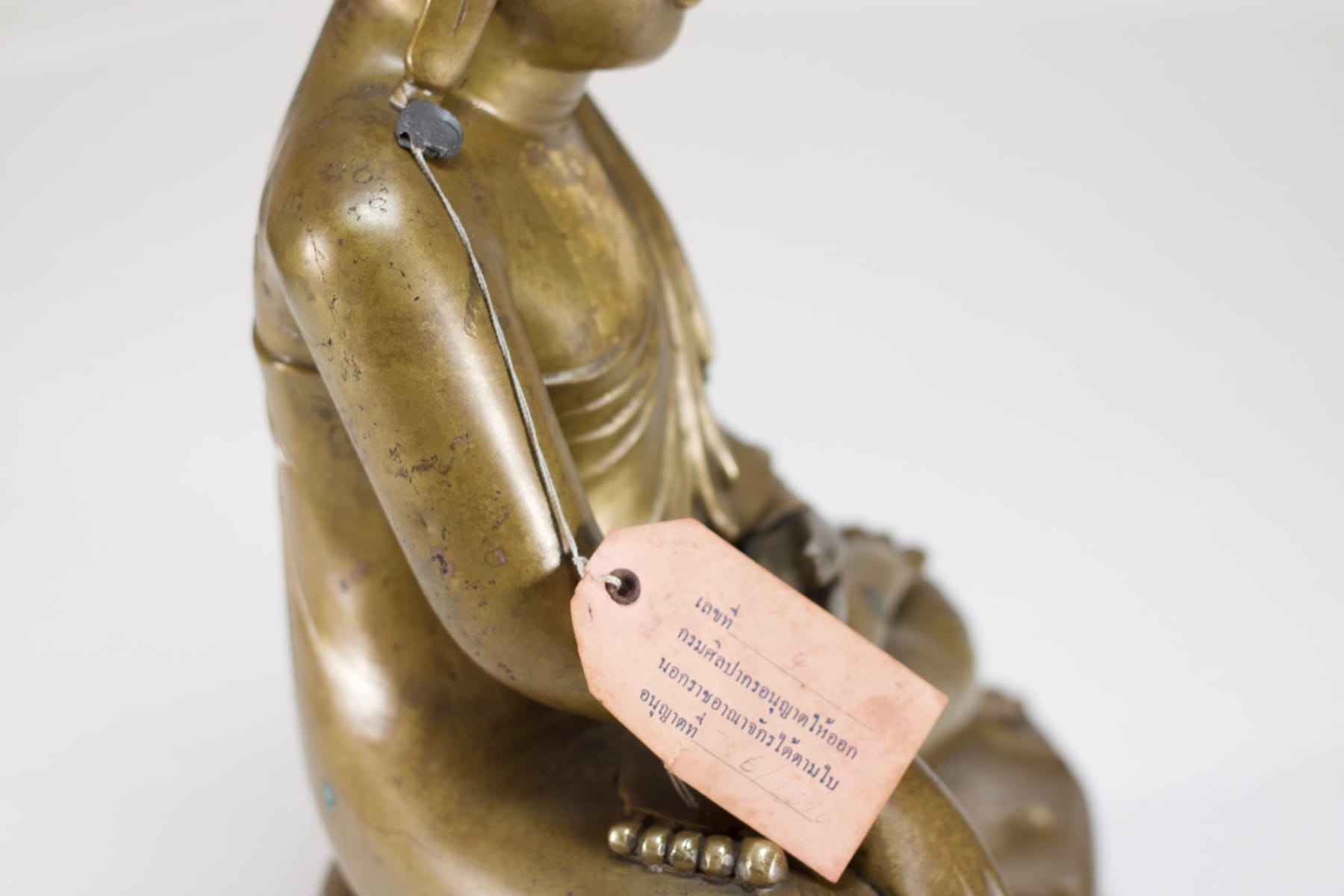
- This bronze remains sealed with its export license from the Fine Arts Department of Thailand (from where it was exported), which authorized its departure from the territory at the time (the Buddhist calendar date is equivalent to 1973).
- A very similar example is on display at the Asian Art Museum of San Fransisco (The Avery Brundage Collection) under inventory number B60B230
- From the estate of the collector and art dealer Claude de Marteau. Sold with certificate.
- Find out more about the life and works of Claude de Marteau? https://www.thecdmcollection.be
- H 42 cm x W 34 cm x D 19 cm
1 available in store

*The posture refers to an important event in the Buddha’s life. While he was meditating under the Bodhi tree and just before attaining enlightenment, Mara the demon arrived accompanied by his armies and his three beautiful daughters. Mara’s armies attacked the Buddha, while his beautiful daughters tried to distract and seduce the Buddha, preventing him from meditating and attaining enlightenment.
The future Buddha touched the Earth with his right hand (Bhumisparsha mudra), calling upon Mother Earth to witness his victory over lust, material wealth, and temptation (The 3 daughters of Mara) to achieve enlightenment. The term Maravijaya signifies the victory over Mara.
Mara the demon represents the opposite of Buddhist teachings. The demon tries to lure people into sin and temptation, to interest them in worldly and material things that last only a short time, as opposed to spiritual things that last forever.
You might also like…

Discover also...


Delivery to Belgium

Delivery to France

Delivery to Luxembourg
