










Burmese Jambupati Buddha – King of Kings
€3200,00
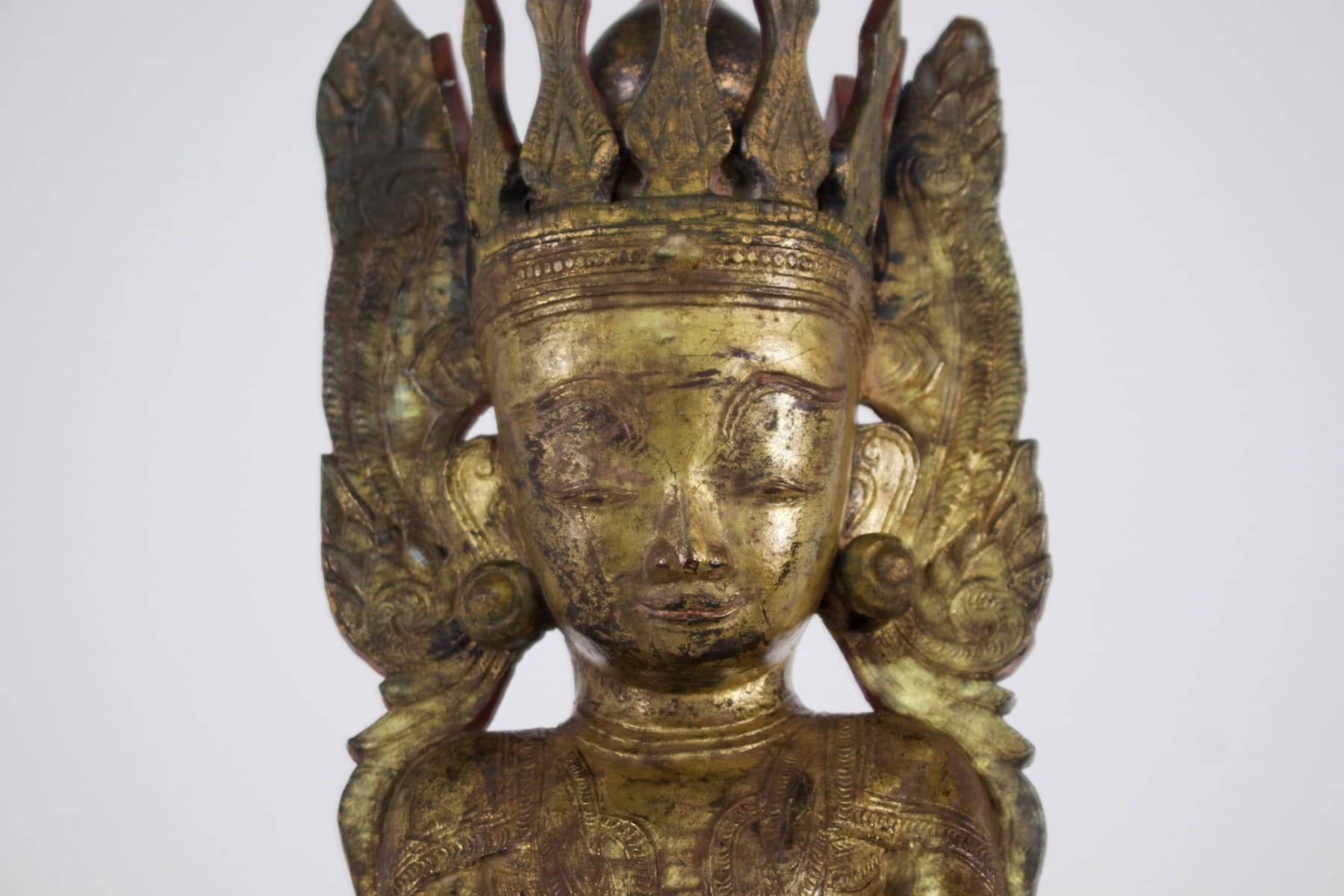
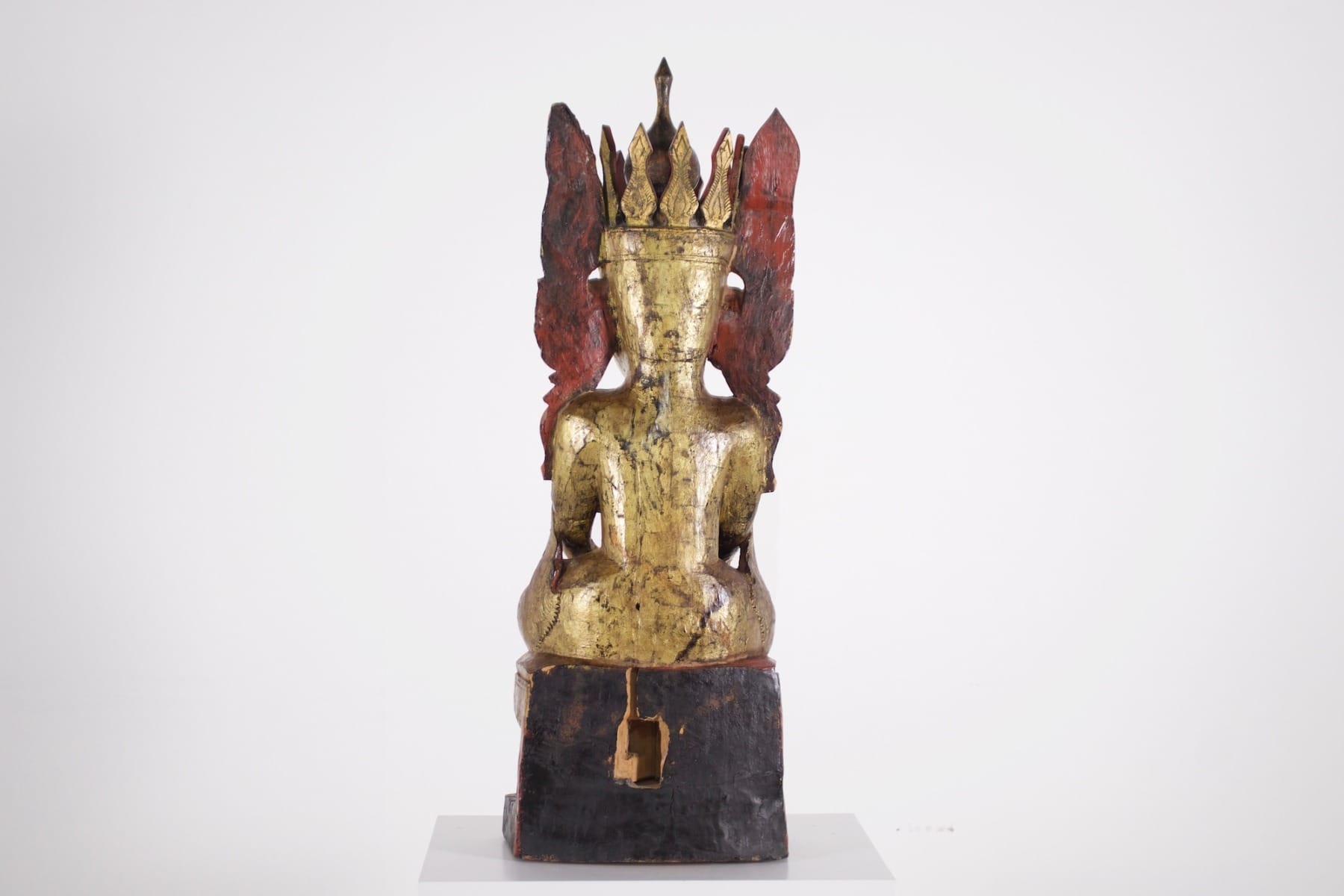
Ancient gilded wooden Buddha statue, represented in the Jambupati manifestation, dressed in royal attire and adorned with jewelry. The right hand in bhumisparśa mudrā, his face with a serene expression is surmounted by an elaborate crown and flanked by two flaming wings.
- Dimensions: H 80 × W 26 × D 19 cm.
1 available in store

Buddha Jambupati, King of Kings
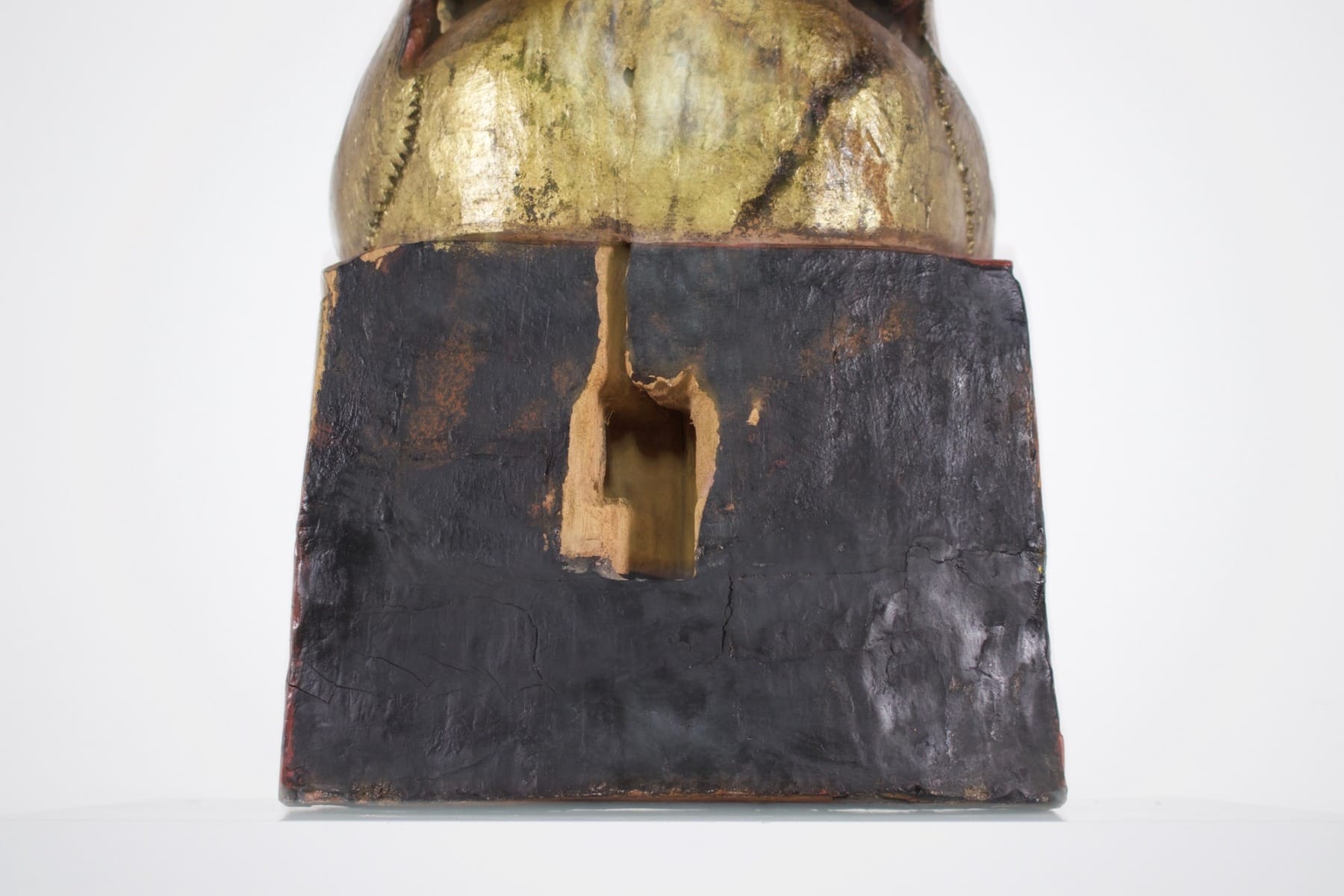
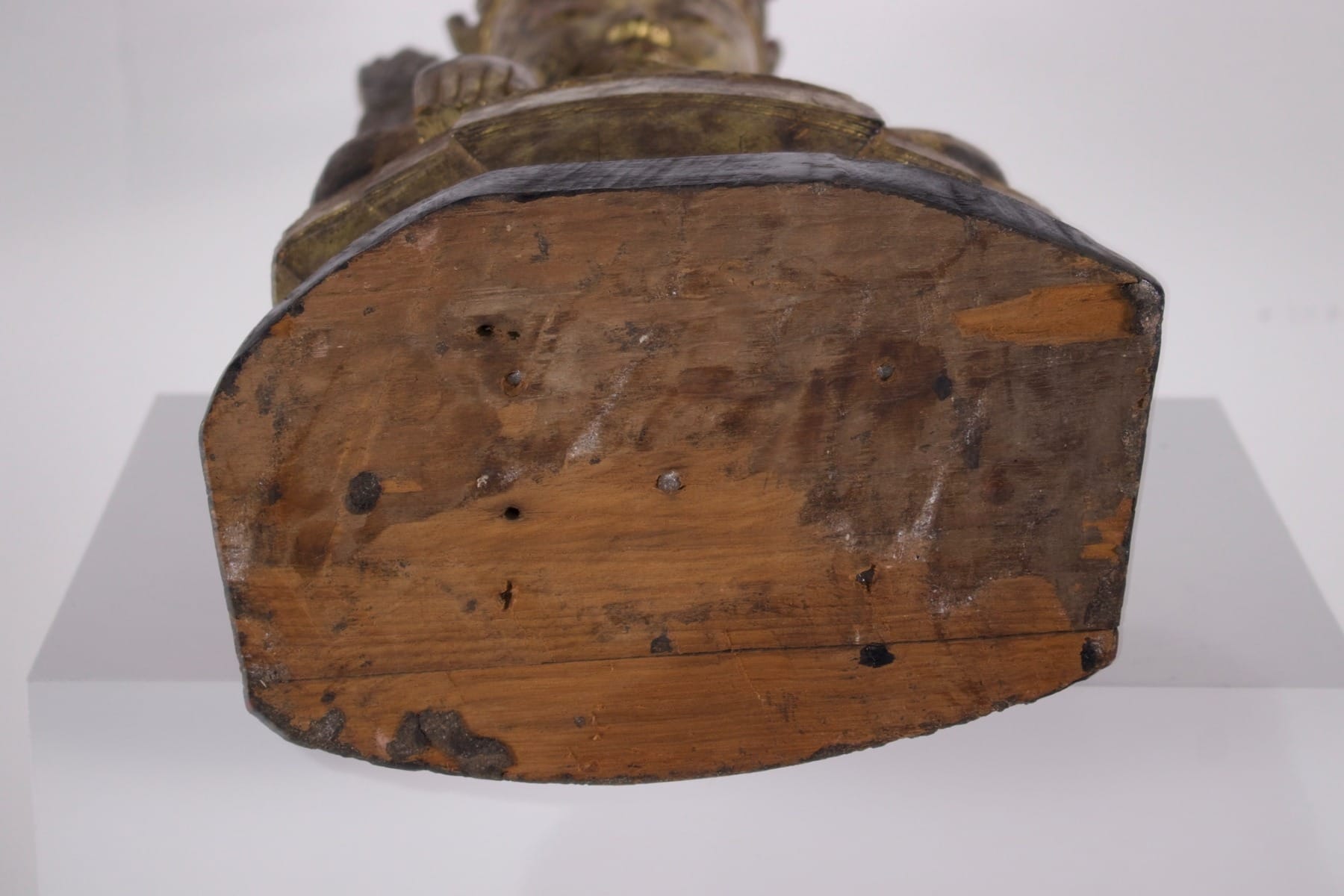
Ritual image, carved from a single piece of wood, except for the crown. Covered in black lacquer and gilding. Its black base is later than its creation and likely served to stabilize the piece.
Burma (Myanmar), Shan princely states, late Konbaung period (1752–1885).
Provenance: estate of merchant and collector Claude de Marteau.
Sold with certificate of provenance.
According to a tradition derived from extra-canonical Pāli texts, Jambupati was a powerful and proud king. The Buddha manifested before him in the form of a “king of kings,” surpassing all earthly authority. Confronted with this spiritual superiority, Jambupati renounced his power and became a monk. This narrative illustrates the submission of worldly power to wisdom.
This iconography introduces a paradox: the Buddha, usually depicted as a renunciant, appears here adorned with royal attributes. This richness does not evoke attachment, but rather the symbolic domination of passions and spiritual superiority.
As analyzed by Paul Mus in the Bulletin de l’École française d’Extrême-Orient (1928), certain Southeast Asian traditions describe the Buddha appearing to Jambupati “clothed in luminous garments” in all his majesty. In Burma, adorned Buddha statues are thus commonly identified as Jambupati, although this interpretation is not directly based on the Pāli canon and belongs to a local interpretative tradition.
This ambivalence, between Buddha and a figure close to the bodhisattva, has not challenged its devotional use, and on the contrary contributes to the iconographic richness specific to Burmese traditions.

A photograph from Claude de Marteau’s archives, featuring Jambupati Buddha, left.
This archival document attests to the presence of this sculpture in the antique dealer’s collection and contributes to the documentation of its provenance.
You might also like…
Discover also...


Delivery to Belgium

Delivery to France

Delivery to Luxembourg
