







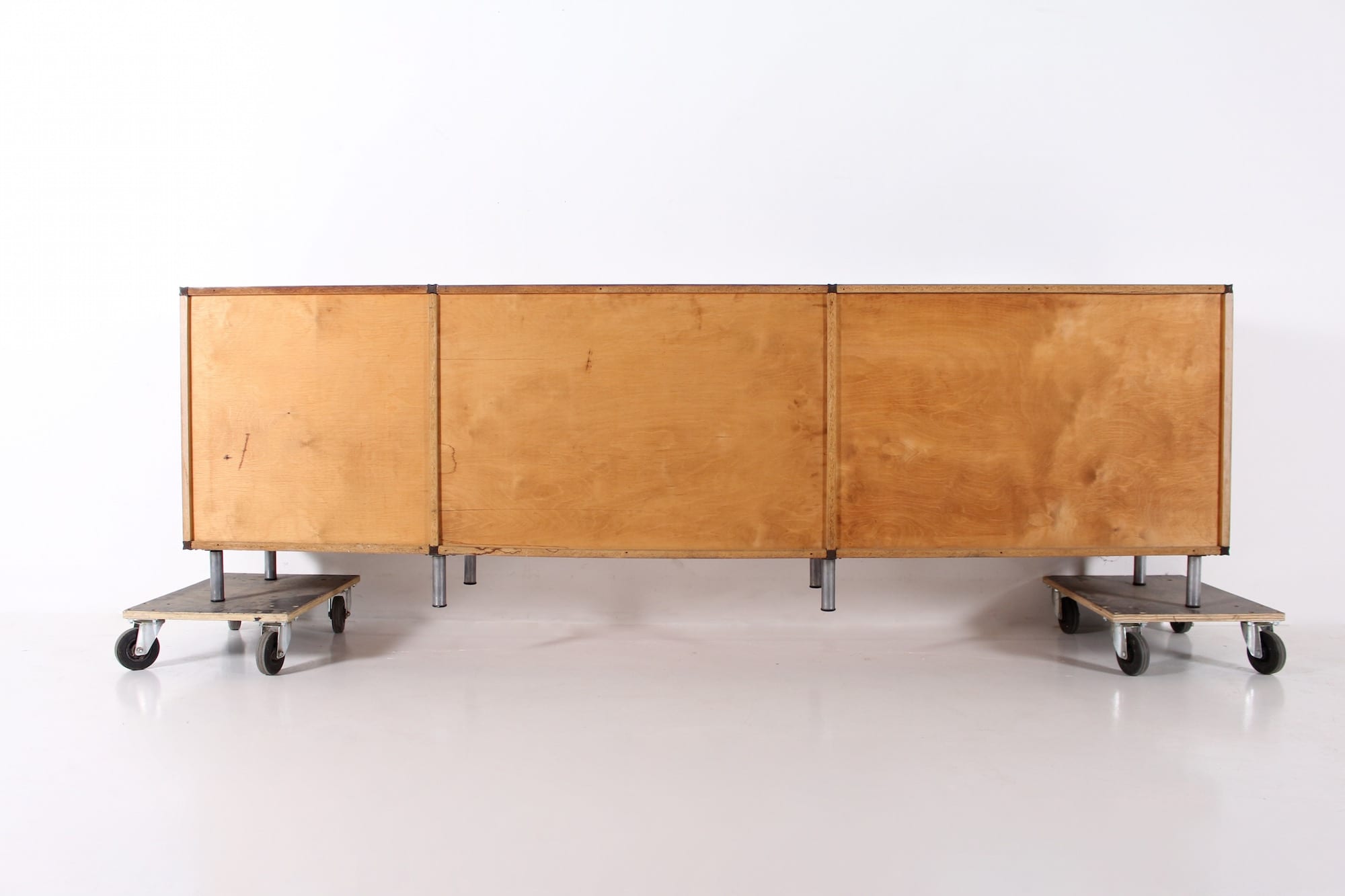
Cees Braakman & Pastoe sideboard
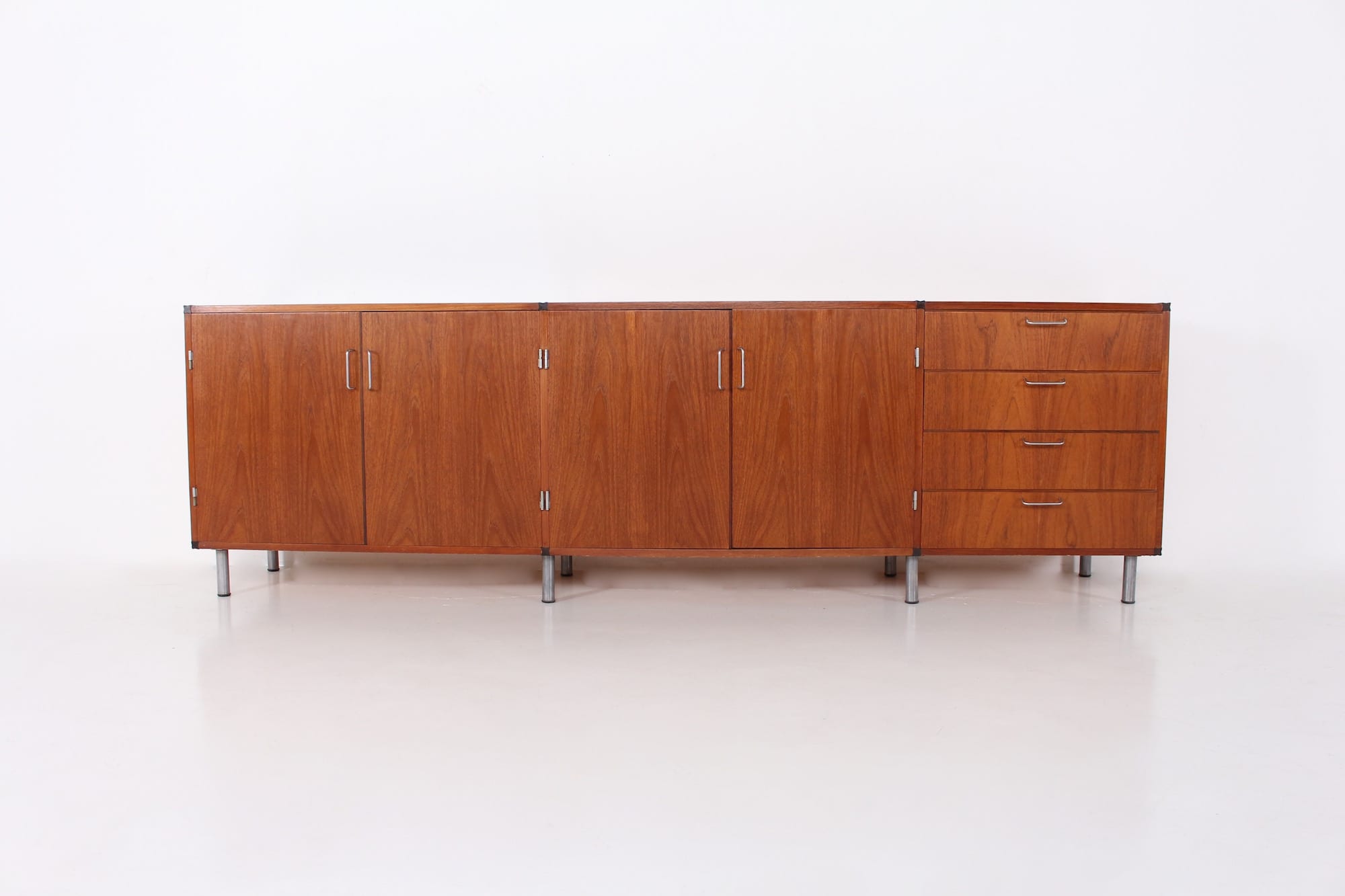
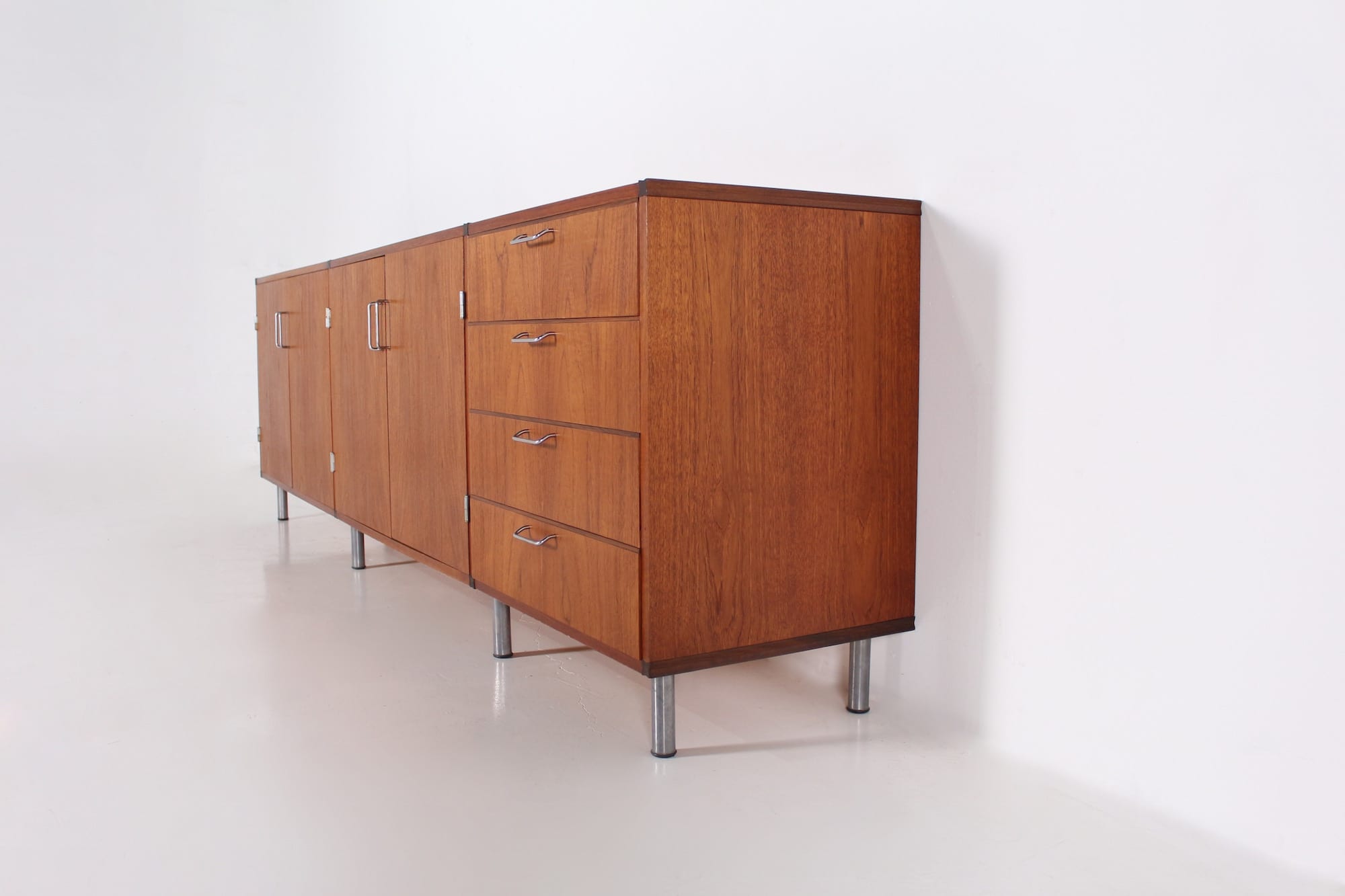
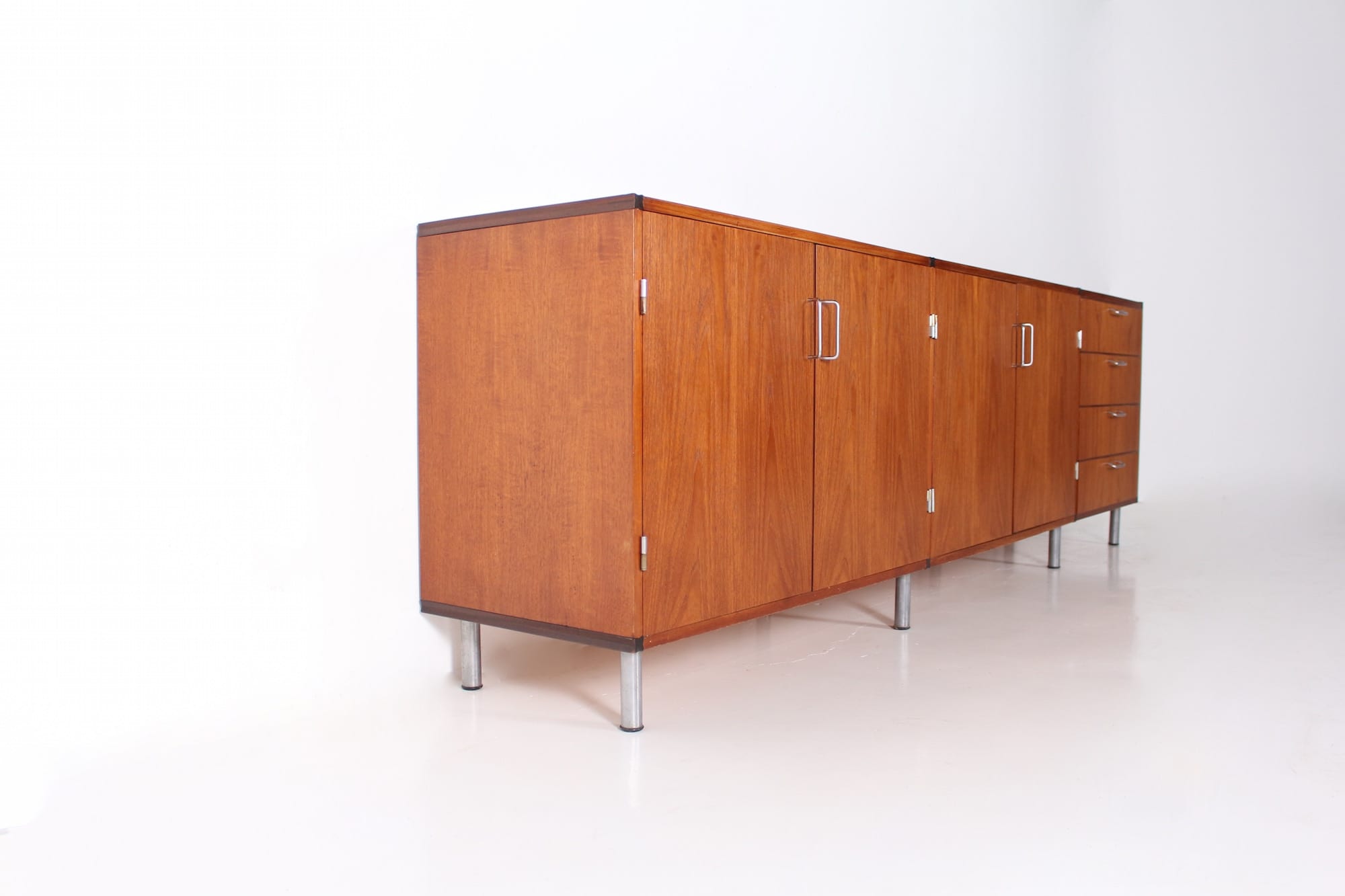
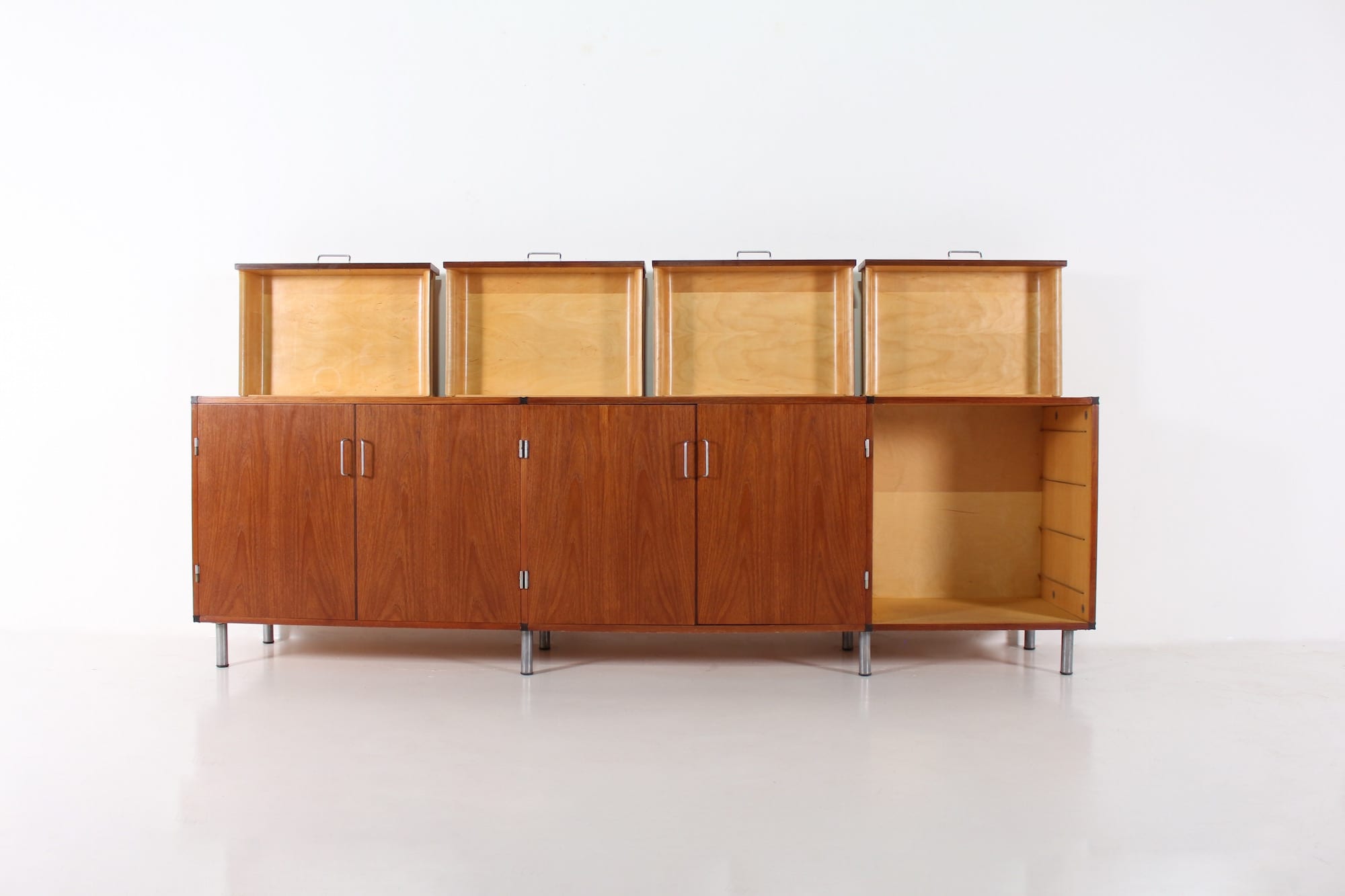
Cees Braakman for Pastoe, large sideboard from the “Made to Measure” series, produced circa 1960, featured in the brand’s catalogues as early as 1956.
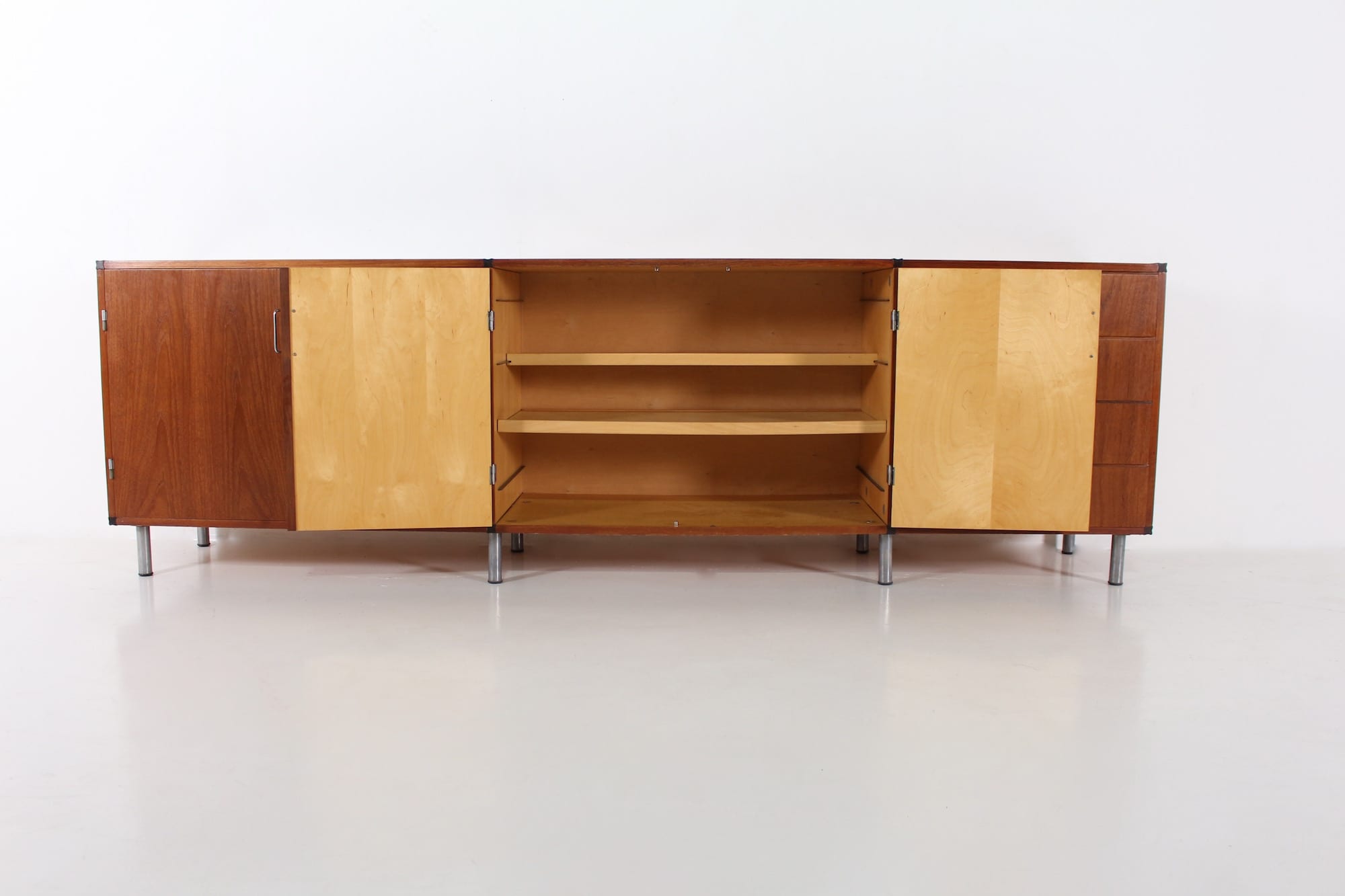
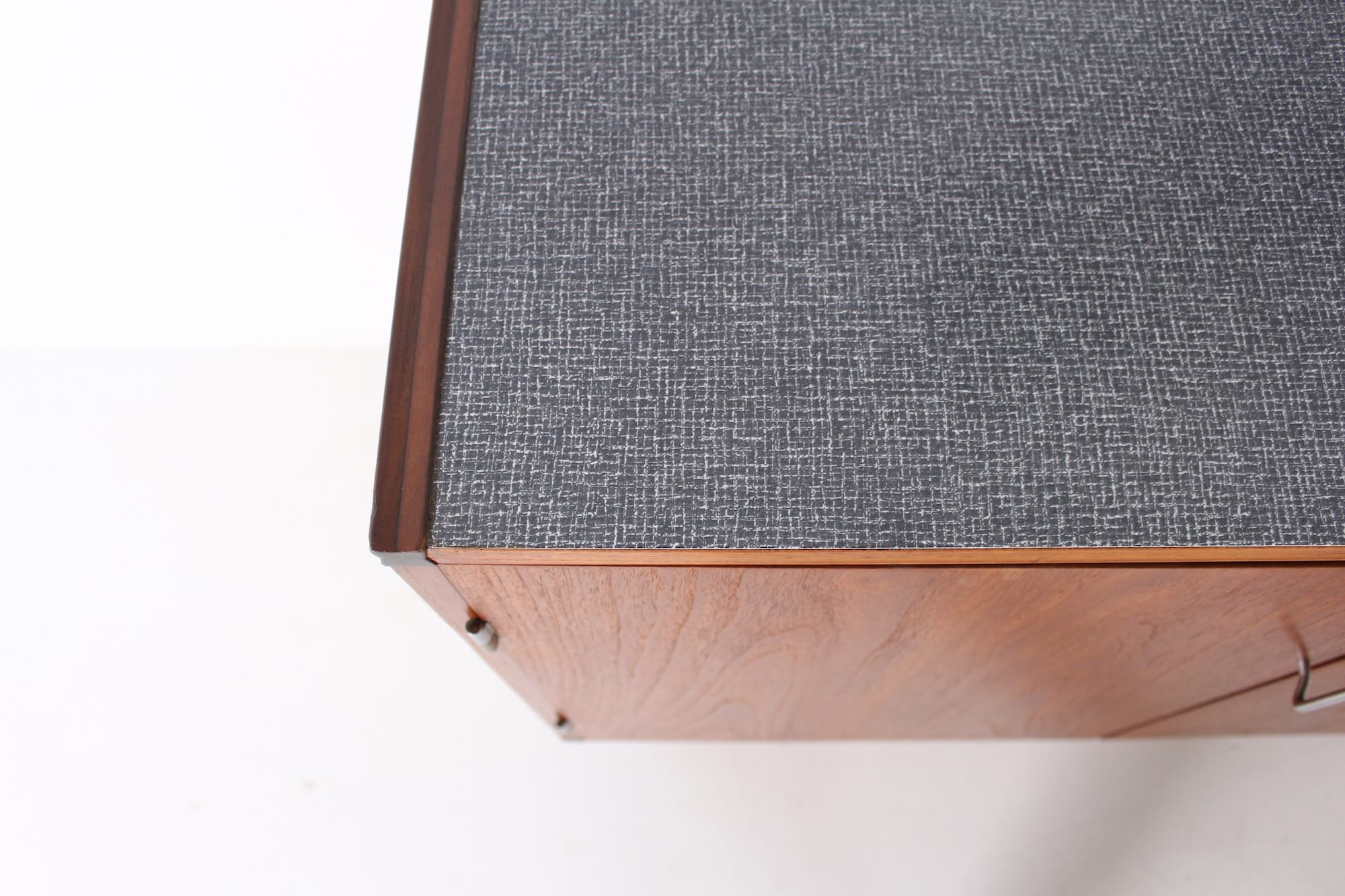
- A segment of grey formica tray, faux-unis.
- The piece has been fully restored by our restorer.
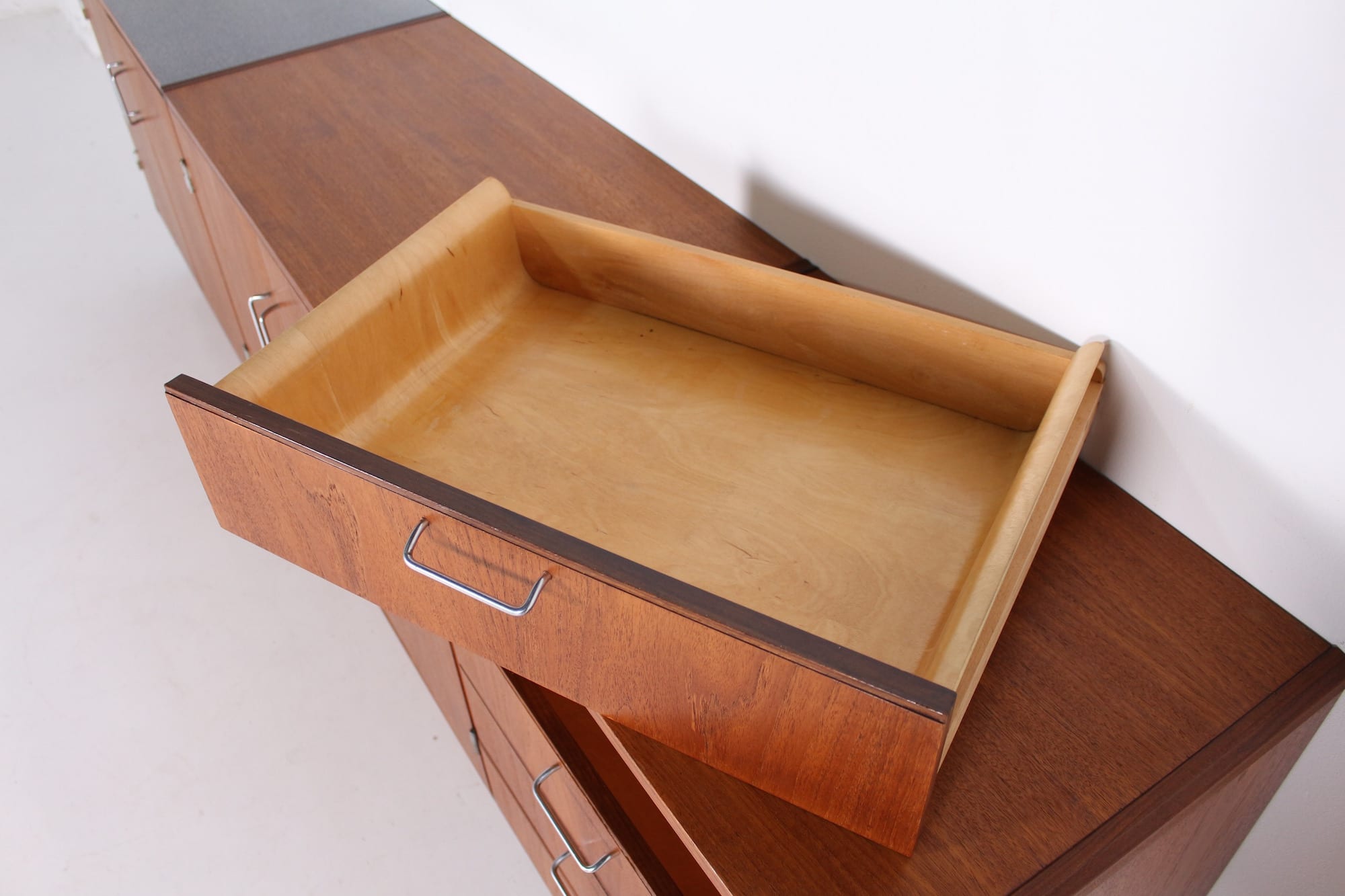
- Curved drawer interior, typical of Pastoe furniture.
- W 245 CM X D 45 CM X H 76 CM.
- Drawers H useful 10 CM.
Sold

Made to Measure – Cees Braakman for Pastoe from 1955
In 1955, Dutch designer Cees Braakman (1917-1995) developed the Made to Measure collection for Pastoe, also known as Pastoe naar Maat. This series marked a significant milestone in the evolution of storage furniture in the 50s, offering a modular system rather than a set of furniture with fixed dimensions and configurations.
Appointed as artistic director of Pastoe in 1948, Cees Braakman sought to design functional furniture adapted to contemporary interiors and new lifestyles. With Made to Measure, the customer could compose their own piece from standardized elements: doors, drawers, shelves, and compartments of various sizes. A sideboard, a bookcase, or a wall unit could thus be created according to needs, then supplemented or modified later.
Pastoe teak Naar Maat sideboard
The true innovation of the series lies in its assembly system. The panels are joined using connection profiles placed at the corners, allowing the various elements to be fixed in four directions. This device, developed from the research of Dutch inventor Johan Bus, made the industrial production of demountable and combinable furniture possible. Elements could be transported separately, assembled on-site, and reorganized without requiring entirely new manufacturing.

A connection profile which, placed at the corners, allows the various elements to be fixed in four directions.
The first designs were mainly offered in teak, sometimes combined with white or black lacquered elements. The compositions are characterized by geometric volumes, flat fronts, and an absence of superfluous ornamentation. Braakman placed great importance on proportions, surface continuity, and storage functionality. Throughout the 60s, the collection was enriched with new finishes in rosewood and Oregon pine, while maintaining its initial constructive principle.

Made to Measure rosewood sideboard by Pastoe, 60s.
The collection met with significant commercial and critical success, both in the Netherlands and abroad. In 1957, it was awarded a silver medal at the XIth Milan Triennial and also received the Signe d’Or in Belgium. These distinctions honored a furniture design that combined simplicity of form, industrial production, and freedom of composition for the user.
Made to Measure remained on the market until 1966. The 125M series succeeded it, adopting the principles of modularity and assembly developed during the previous decade. This new system notably allowed for the creation of storage units occupying the full height of a wall. It thus extended Braakman’s research into furniture capable of adapting to the dimensions of the home and evolving with the needs of its occupants.
Contrary to what its name might suggest, Made to Measure does not refer to entirely custom-made artisanal production. It is a customizable industrial system based on a limited number of standardized components. This approach allows for a wide variety of configurations while maintaining great aesthetic and constructive coherence.
Discover our selection of sideboards as well as our other storage furniture from the 50s and 60s, including several designs by Cees Braakman for Pastoe.
Do you own a Pastoe piece, a Cees Braakman sideboard, or a set of Dutch furniture you wish to sell? Vintage Addict buys your design furniture directly, individually or as a set.
You might also like…
Discover also...

Delivery to Belgium

Delivery to France

Delivery to Luxembourg
