




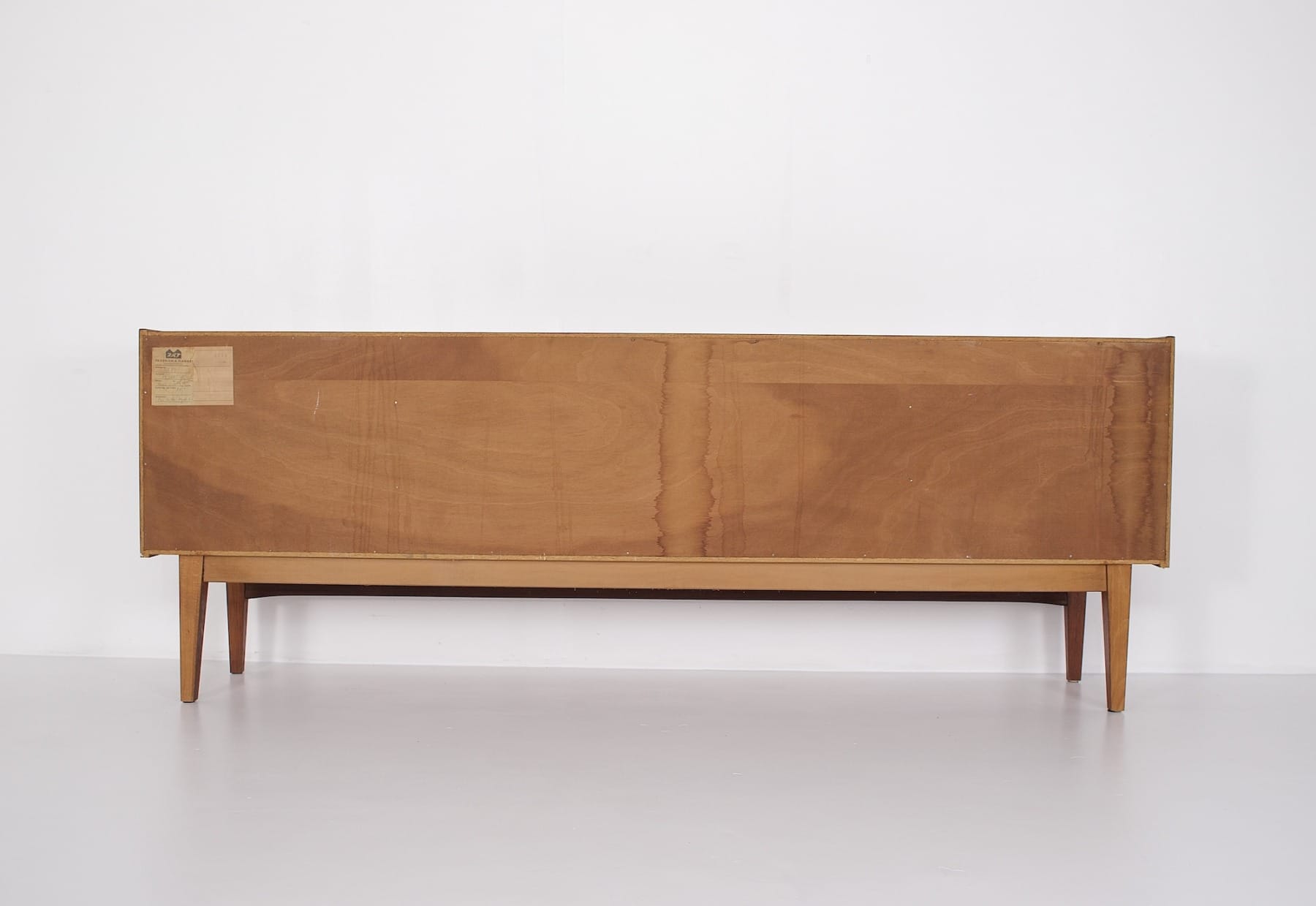
1960s Scandinavian teak sideboard
€2600,00
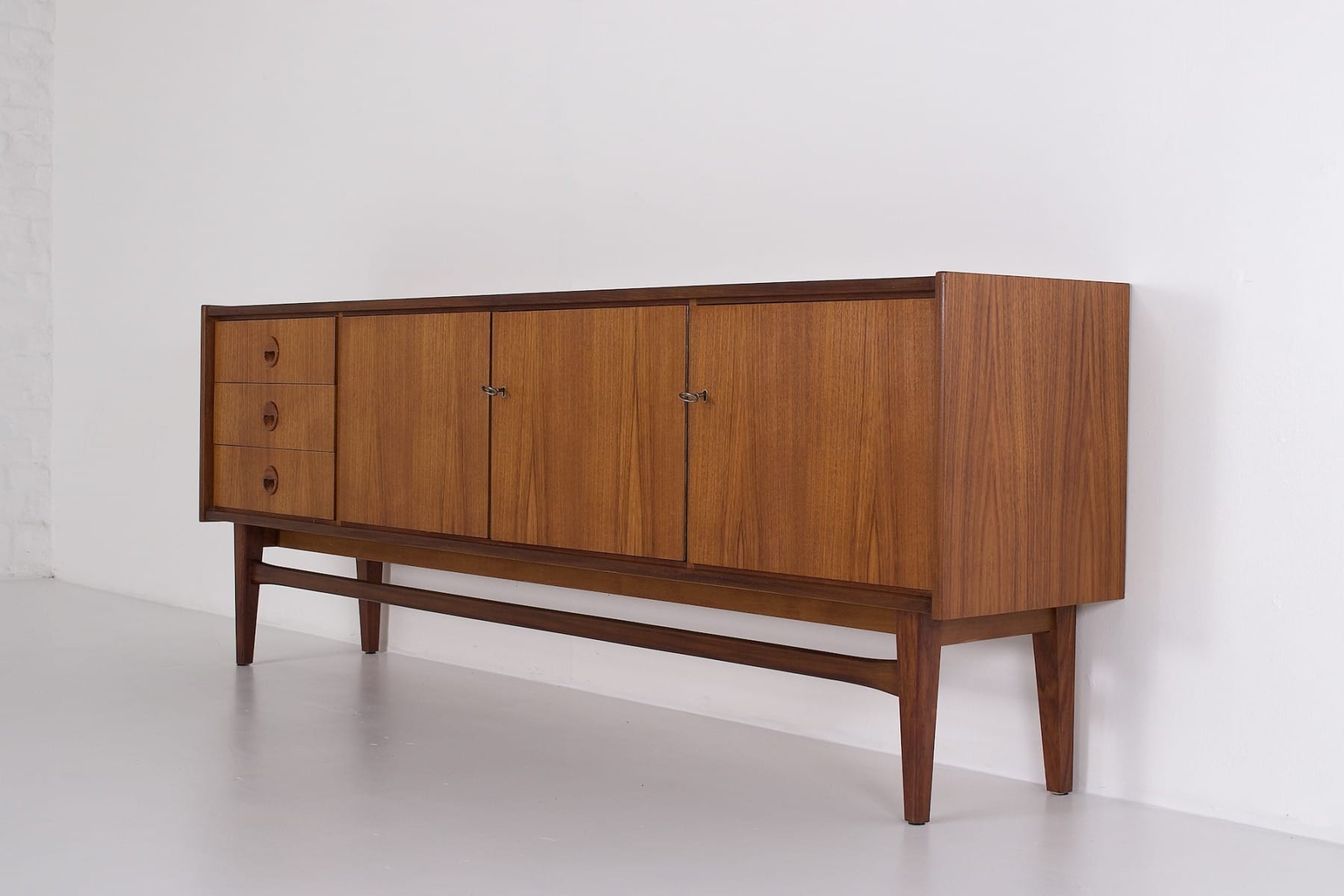
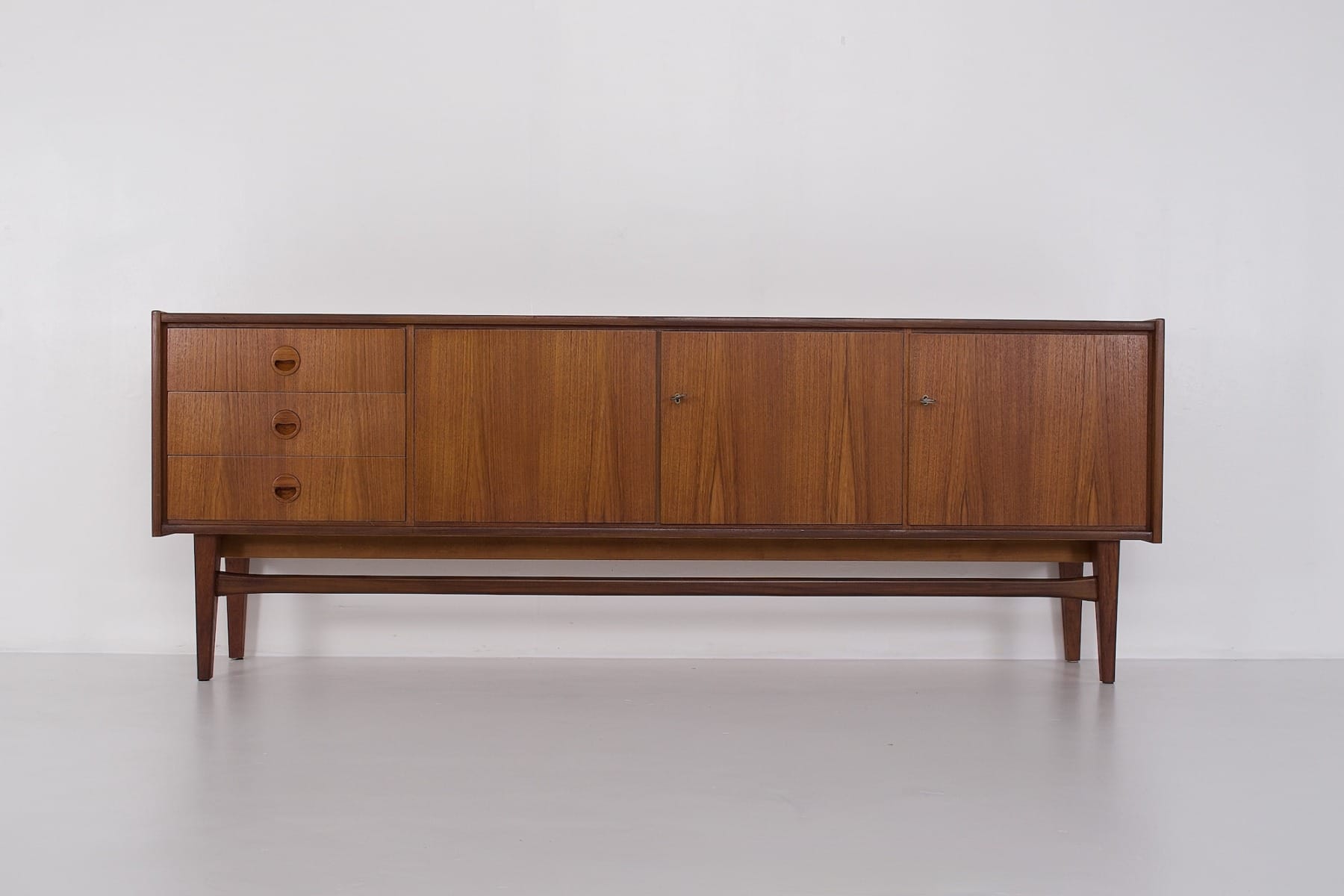
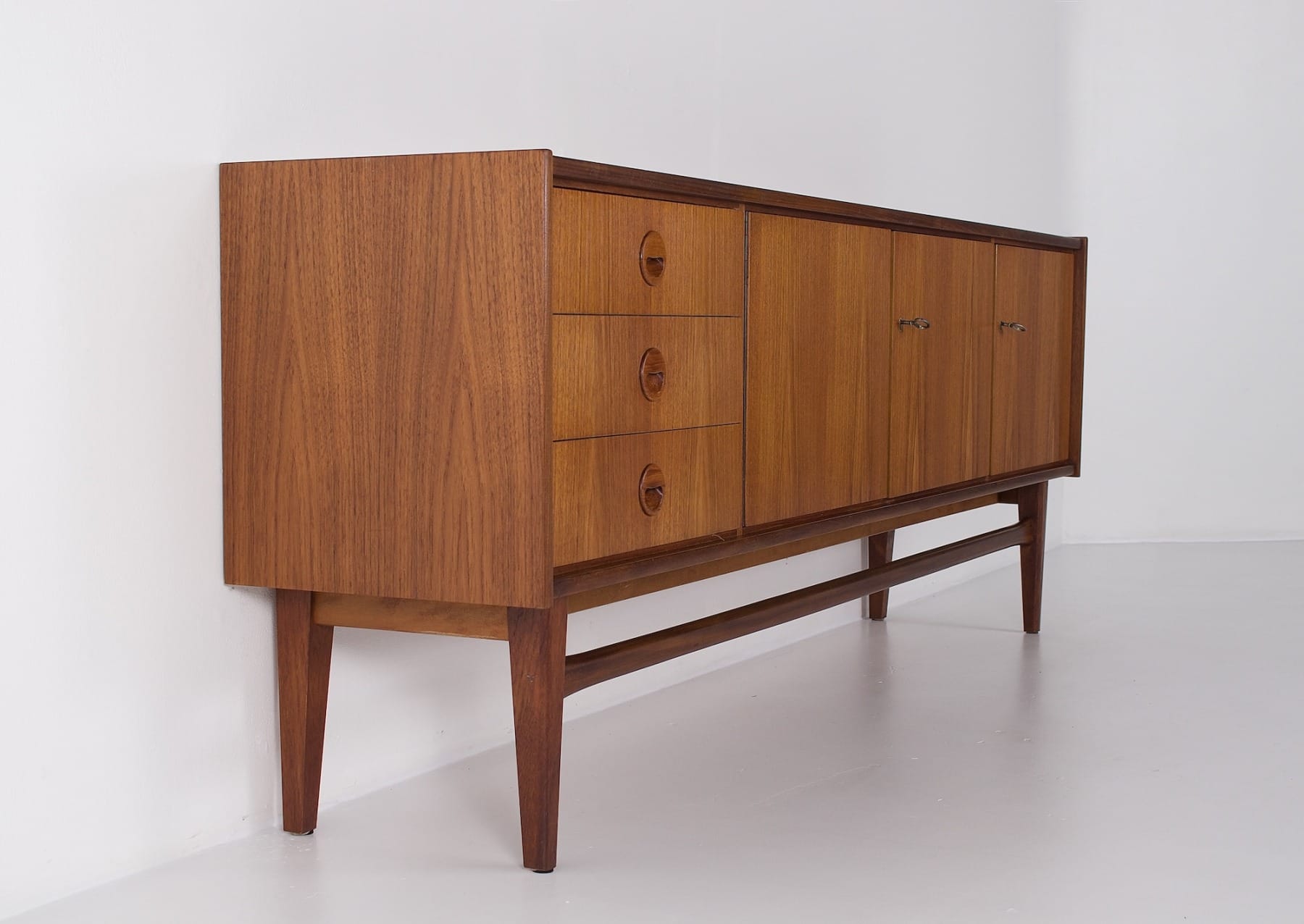
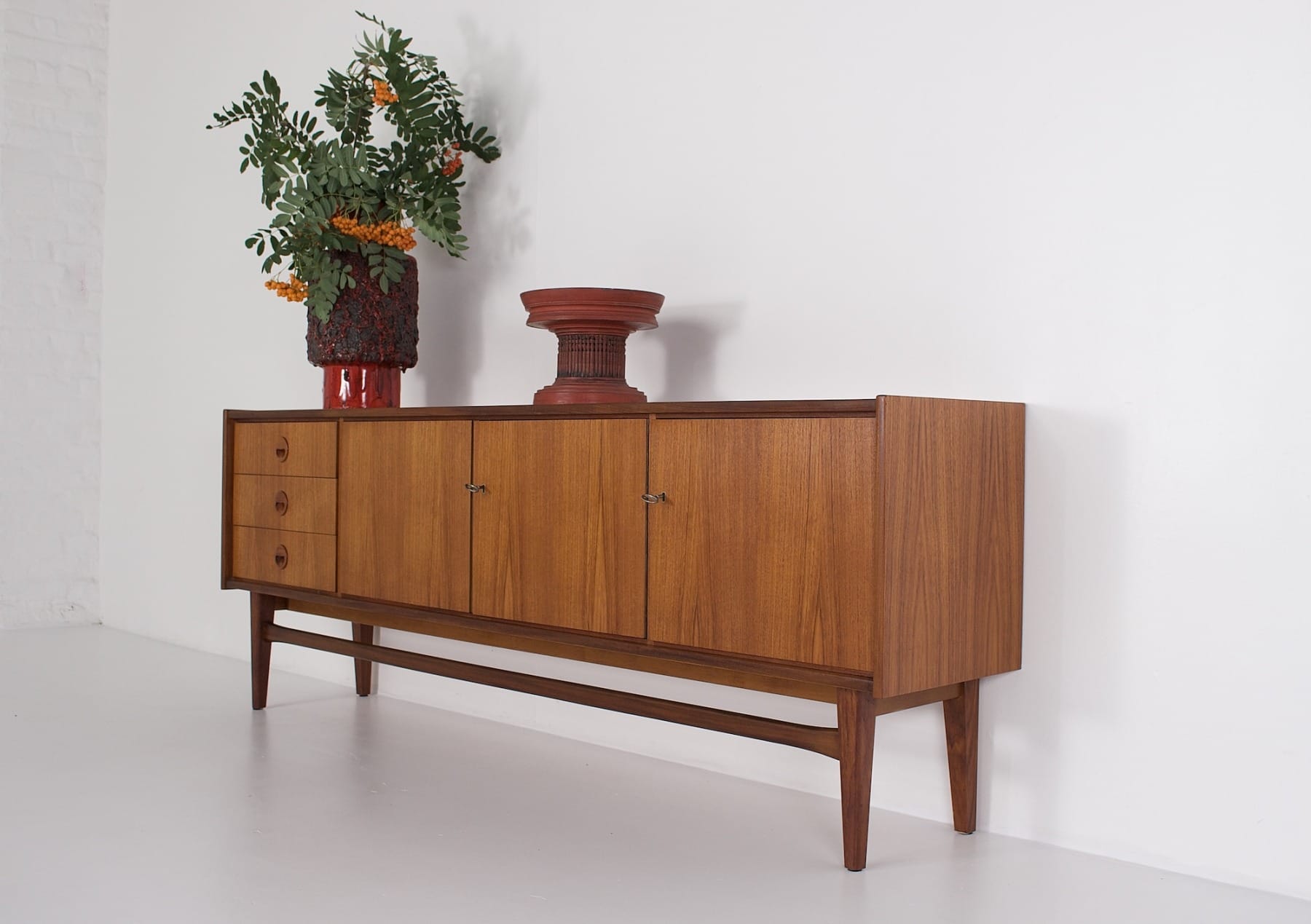
Teak sideboard in Scandinavian style, 3 doors and 3 drawers, 1960s work. The piece is equipped with its two functional locks and keys.
- This vintage sideboard is in very beautiful condition; it has been entirely renovated by our restorer.
- W 205 CM x D 40.5 CM x H 75 CM.
- P useful 34 CM.
- Drawers D 30 CM x H 10 CM.
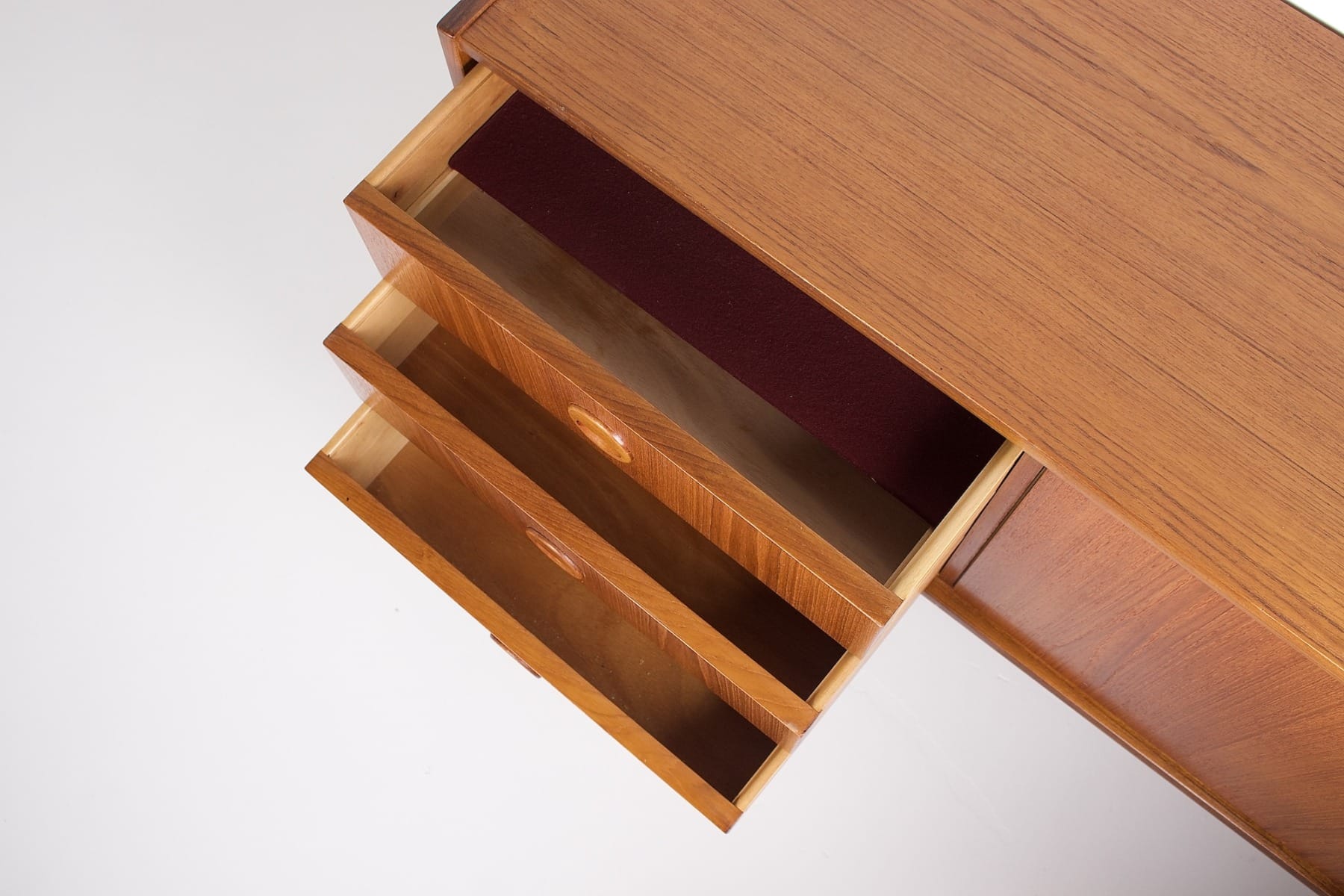
- The top drawer has a small board covered in burgundy velvet, a sort of false bottom. It is removable (see photo).
1 available in store

A 1960s sideboard with Scandinavian influence
During the post-war boom, Denmark gradually introduced a new way of thinking about furniture to Europe. Cleaner lines, organic shapes, a particular focus on ergonomics, and proportions adapted to new interiors helped profoundly redefine the rules of post-war furnishing. This spread of Scandinavian style followed in the footsteps of major Danish designers such as Børge Mogensen or Arne Vodder, to name but a few, whose furniture also combined understated lines, quality proportions, and the highlighting of wood species.
Many European manufacturers followed suit, either by collaborating with Danish designers or by drawing direct inspiration from their creations. This influence is reflected in the design of the furniture, its finishes, and its proportions, but also in the choice of species: teak and rosewood occupy a prominent place alongside oak.
This is precisely the case with this large sideboard of the 1960s. Produced by a German manufacturer, it nevertheless fully displays the codes of Scandinavian furniture of the period: a long, low cabinet body, a facade devoid of superfluous ornament, a widely cleared base, and a use of wood that makes the material itself one of the main decorative elements.
A light architecture despite generous dimensions
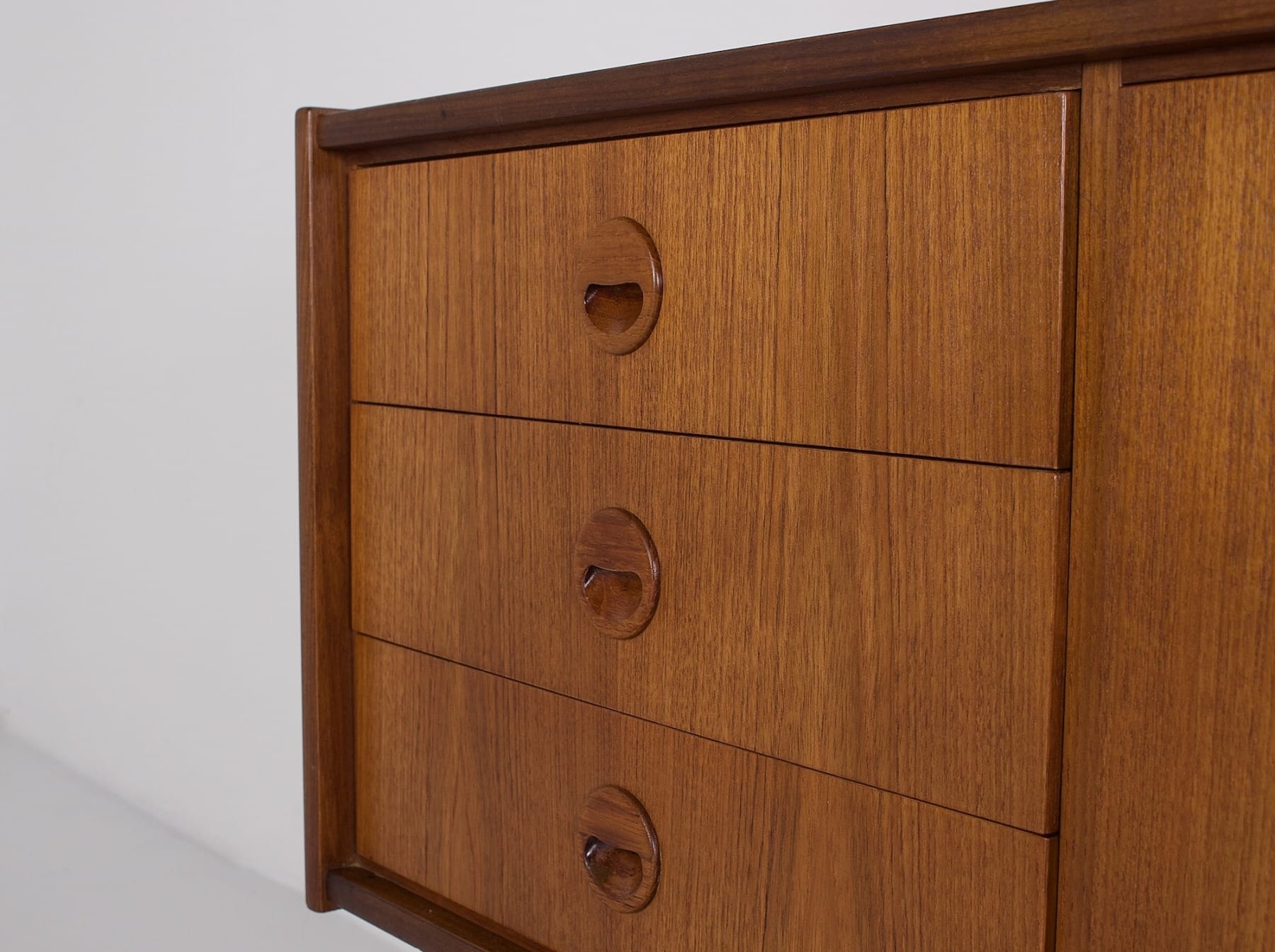
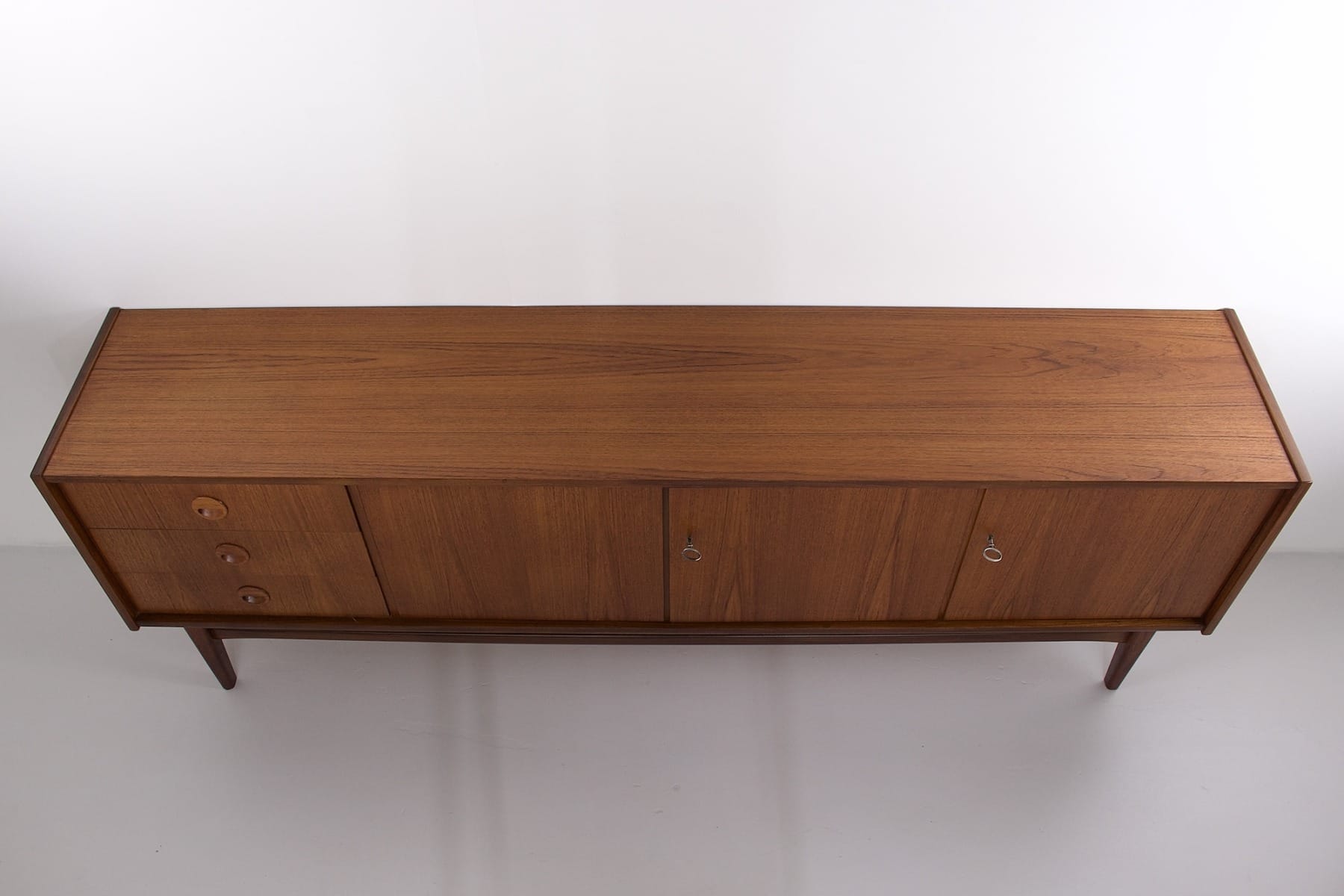
The facade is organized with great restraint. Three drawers are positioned on the left, their recessed circular handles constituting practically the only graphic element of the piece. They are extended by several large closed compartments offering significant storage capacity.

Scandinavian-style teak sideboard from the 1960s: the wood grain as the main decorative element.
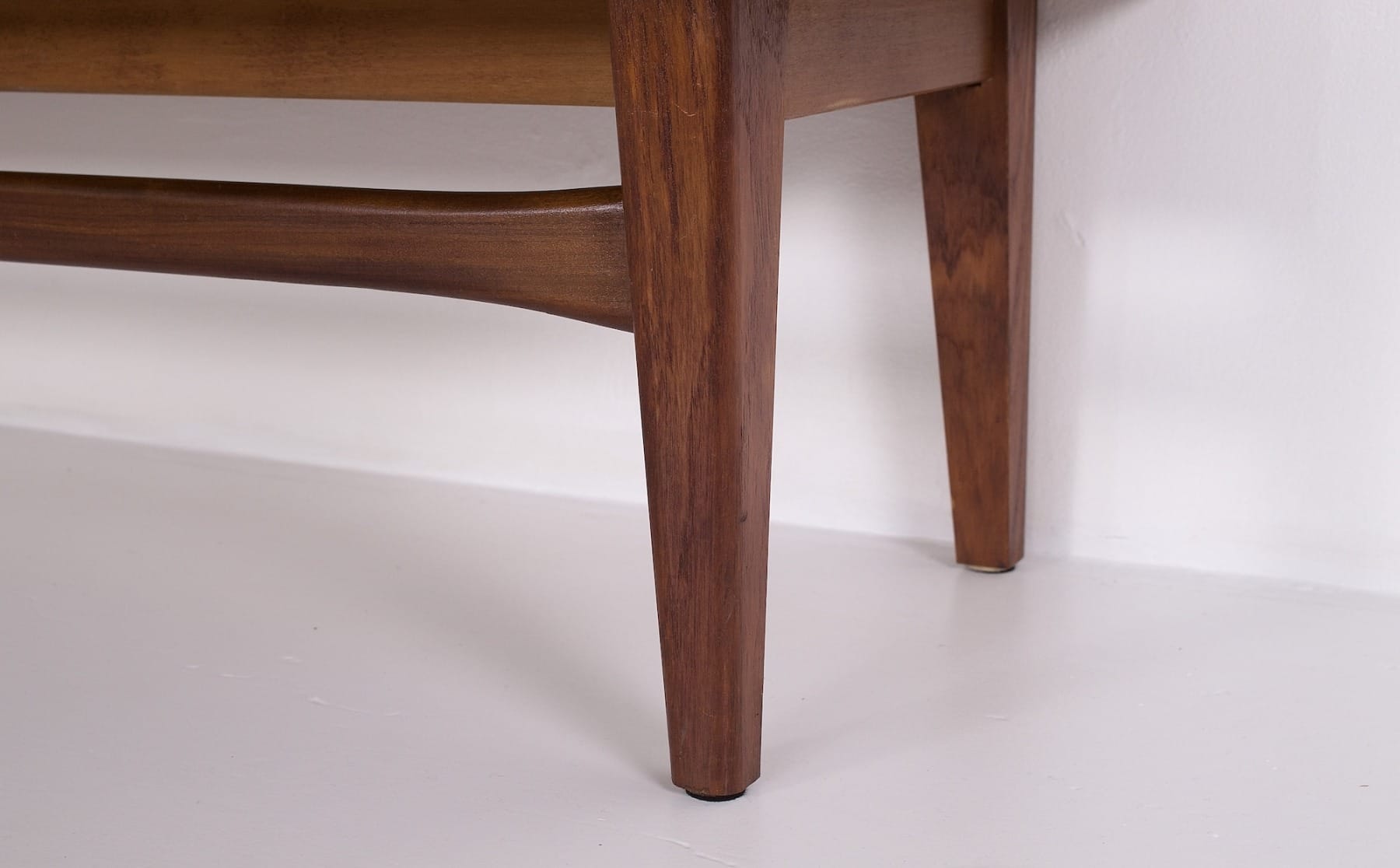
The long base plays an essential role in the balance of the whole. The cabinet body is significantly raised from the ground while the horizontal stretchers further accentuate the length of the piece. Despite its generous proportions, the sideboard thus maintains a surprisingly light silhouette.
This search for balance between functionality and visual discretion is probably one of the most lasting legacies of Scandinavian furniture from the 50s and 60s: creating furniture capable of fully fulfilling its function without ever dominating the space in which it is placed.
The richness of the teak grain rediscovered in our restoration workshop
When this sideboard arrived in Paul’s workshop, its top still bore the traces of several decades of use. The old finish had aged and partially masked the nuances as well as the natural depth of the wood.
The restoration began with the removal of this old finish. The top was then carefully sanded to regain a homogeneous surface, while ensuring the original veneer was preserved. This stage gradually reveals what time had faded: the very lively grain of the teak, its long dark fibers, and the variations in tone specific to each sheet of veneer.

After cleaning the sideboard, its old layers of varnish are removed.

Fine sanding allows for a homogeneous surface that is silky to the touch.
A new oil finish was then applied. It nourishes the wood and reveals its grain without giving it the overly uniform appearance of a contemporary industrial finish. Depending on the light, the top thus shifts from golden brown nuances to much deeper tones.

Application in several coats of an A+ rated finishing oil.
Our intervention does not seek to transform a 1960s piece of furniture into a new one. The objective is, on the contrary, to preserve its materials and identity as much as possible while restoring the surface quality and presence it had gradually lost.
Nearly seven decades of history
Nearly 70 years after their creation, these pieces of furniture naturally tend to become rarer. The 1960s furniture market has been in motion for several decades: many pieces have disappeared, been transformed, or have degraded, while others still remain scattered in family interiors before reappearing through successions.
Each example also possesses its own identity. Even when two pieces belong to an identical model, the choice of veneer sheets, their grain, their color, the nuances of the finish, and the decades of aging are never strictly the same. This is what gives a restored period piece a presence today that contemporary production struggles to reproduce exactly.
Restore rather than replace
Preserving an antique piece of furniture is also a very concrete form of sustainability. The wood was already harvested, dried, transported, and processed decades ago. Restoring this piece allows this cycle to be extended rather than mobilizing new raw materials, energy, and transport to produce its new equivalent.
This sideboard has therefore not only regained its appearance. It is now ready to continue the use for which it was designed nearly seven decades ago: to store, to accompany daily life, and to move through interiors without depending on trends.
In a dining room, a living room, or a large office, it retains all the relevance of its original design today: a large storage capacity, a generous top, and an architecture sober enough to accommodate lamps, ceramics, artworks, or simply a few chosen objects.
You might also like…


Discover also...


Delivery to Belgium

Delivery to France

Delivery to Luxembourg
