




Danish Armchair JH 501 “The Chair” – Hans Wegner, Johannes Hansen, 1950
€5500,00
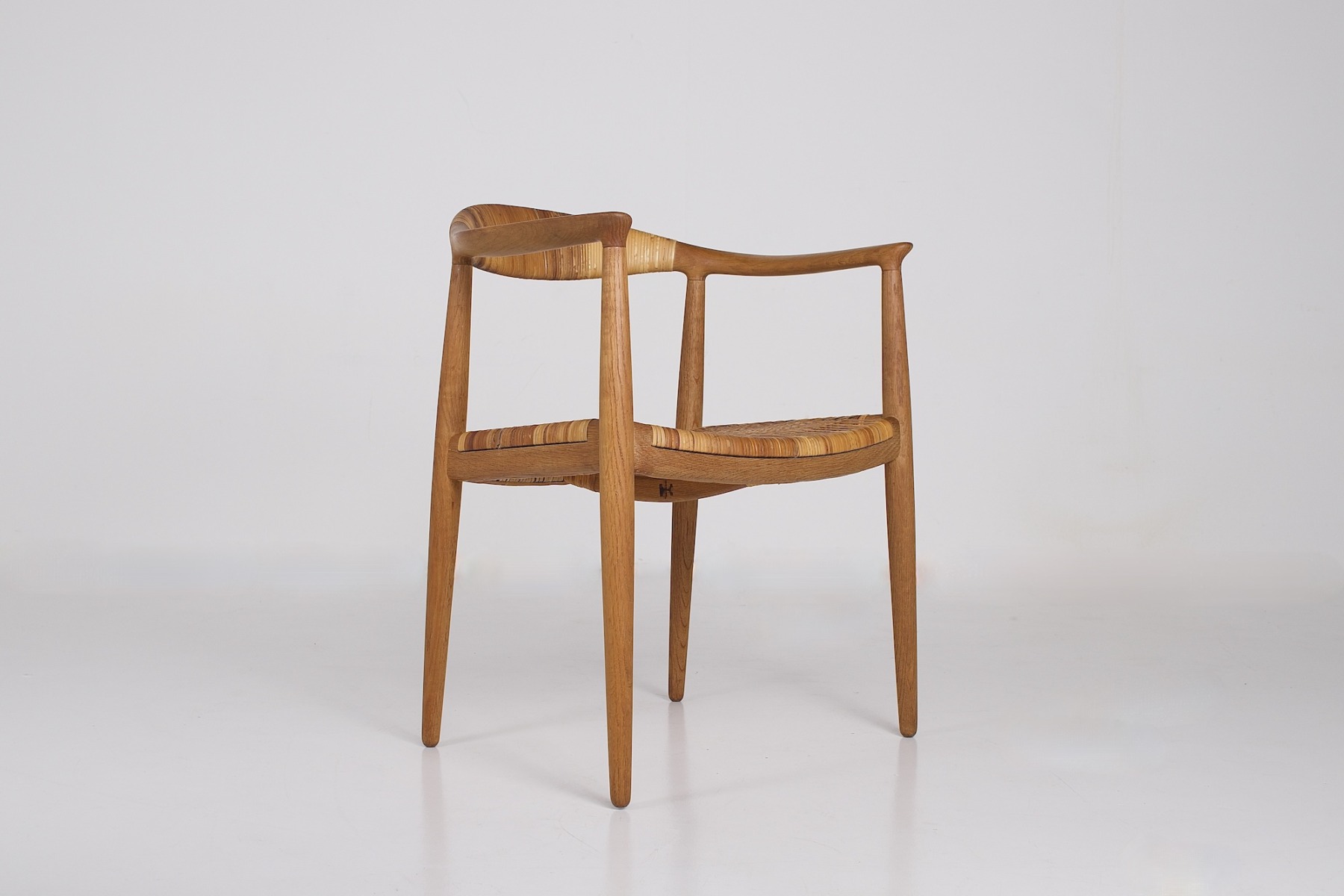
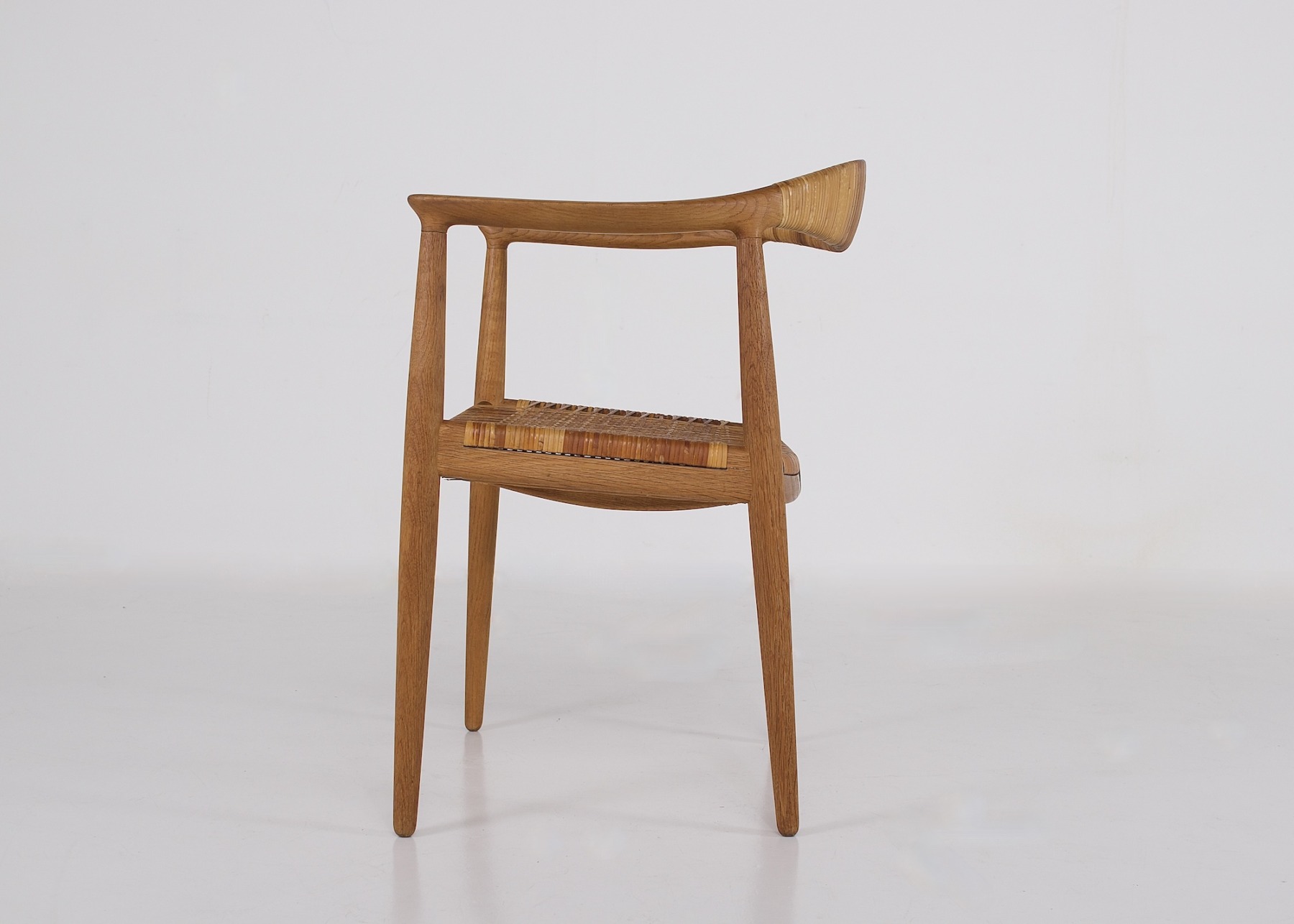
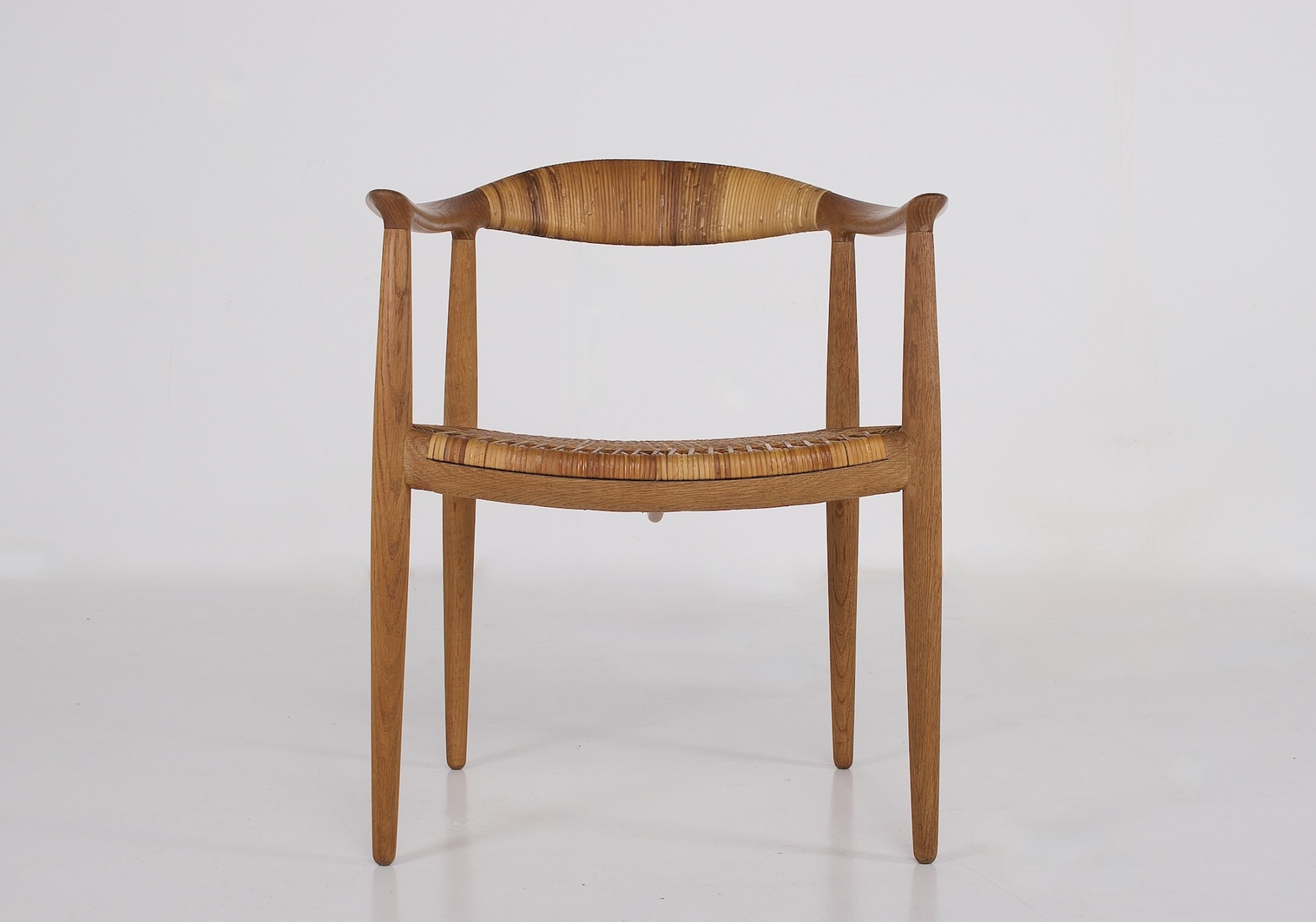
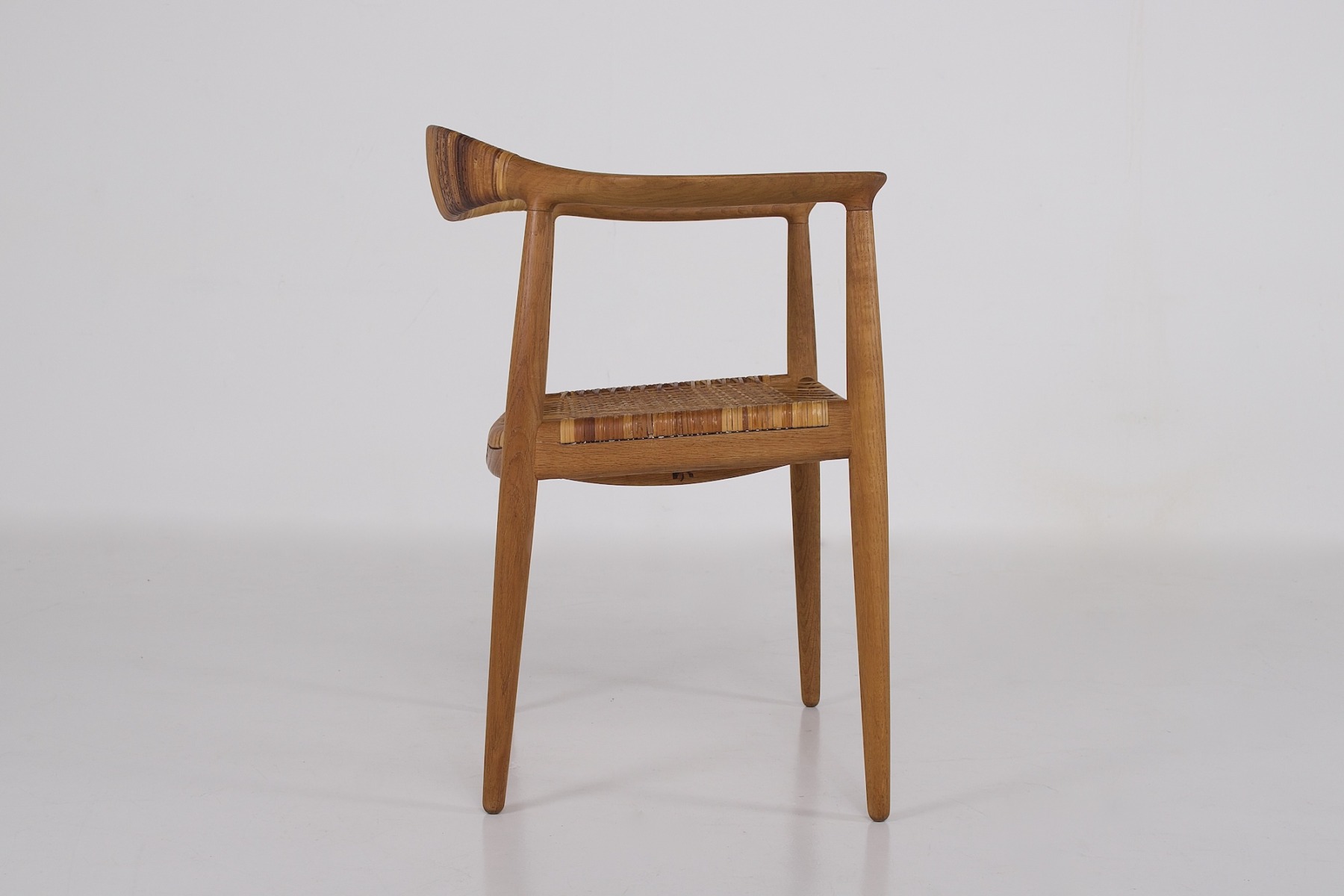
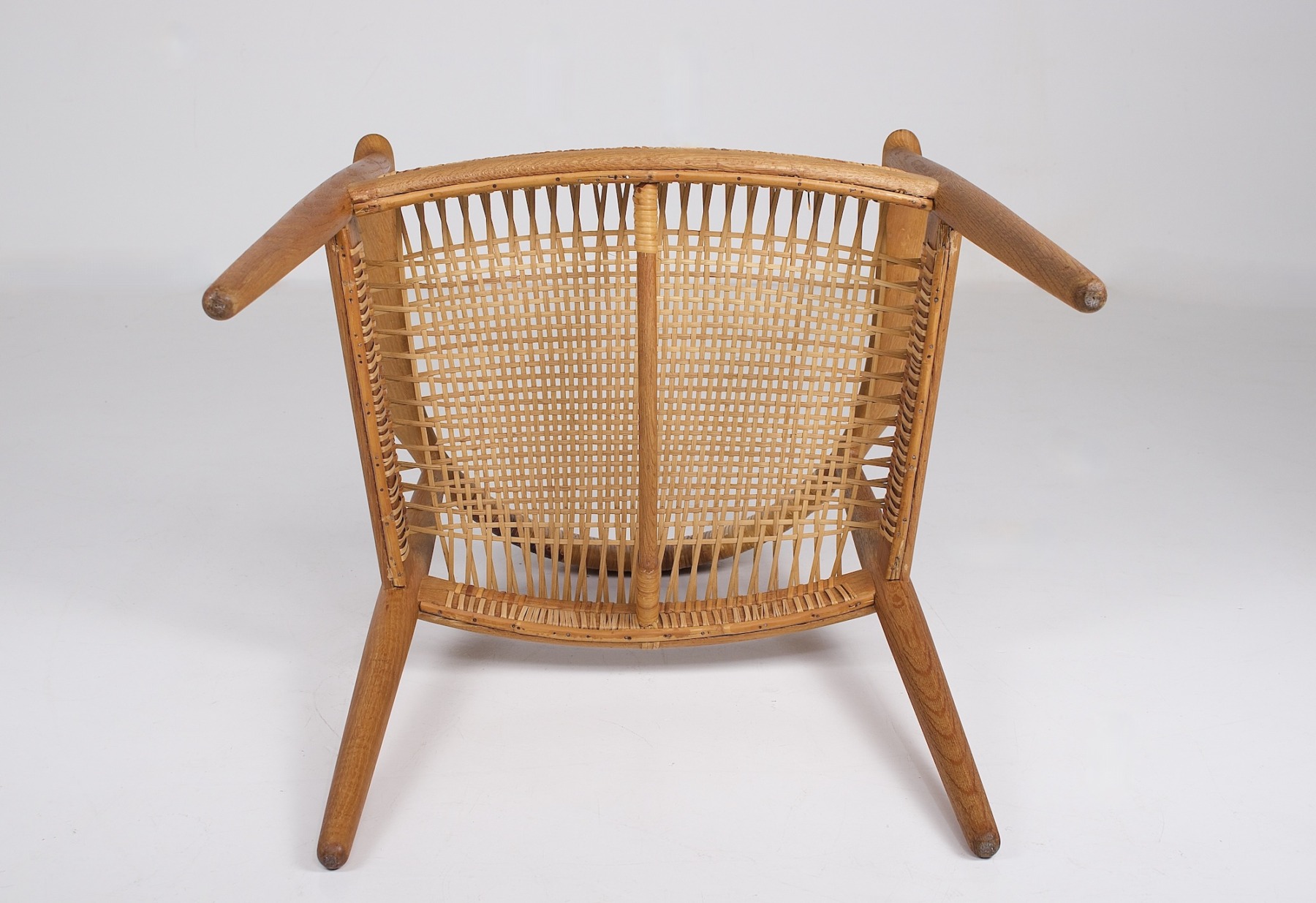
Chair known as “Round Chair” by Hans Wegner for Johannes Hansen, Denmark, original edition, 1950. (Identical to the one published and reviewed in the American magazine Interiors in 1950)
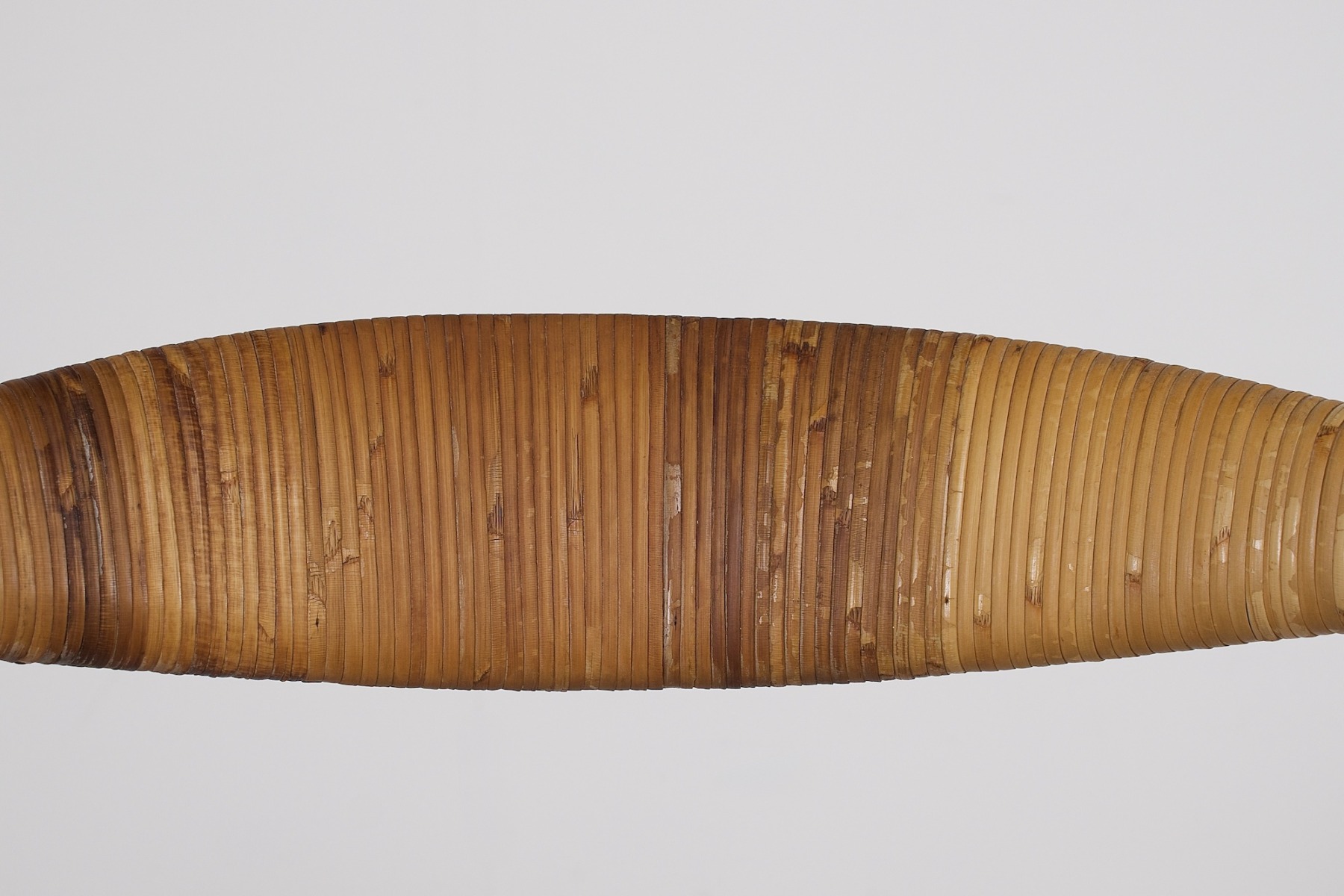
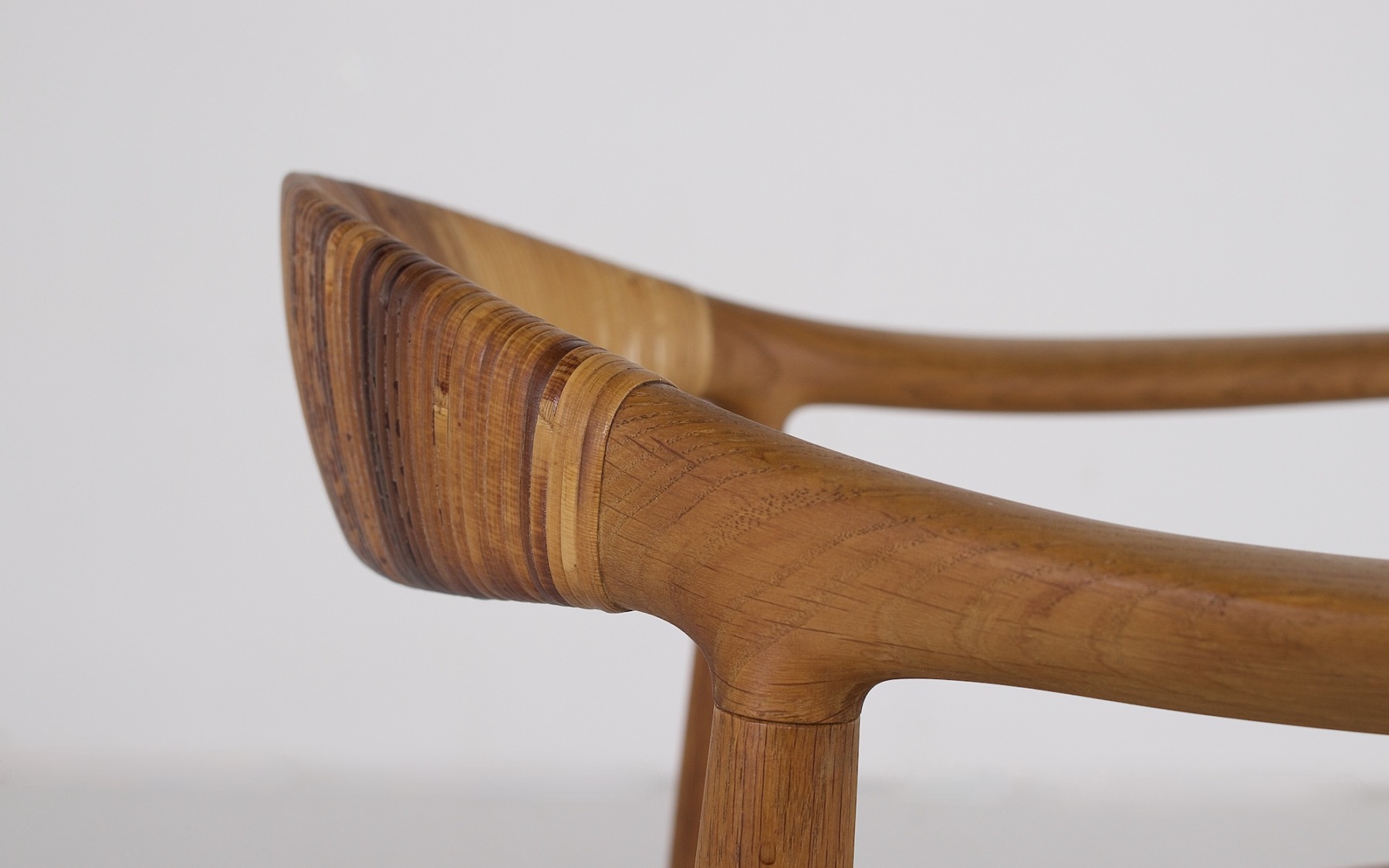
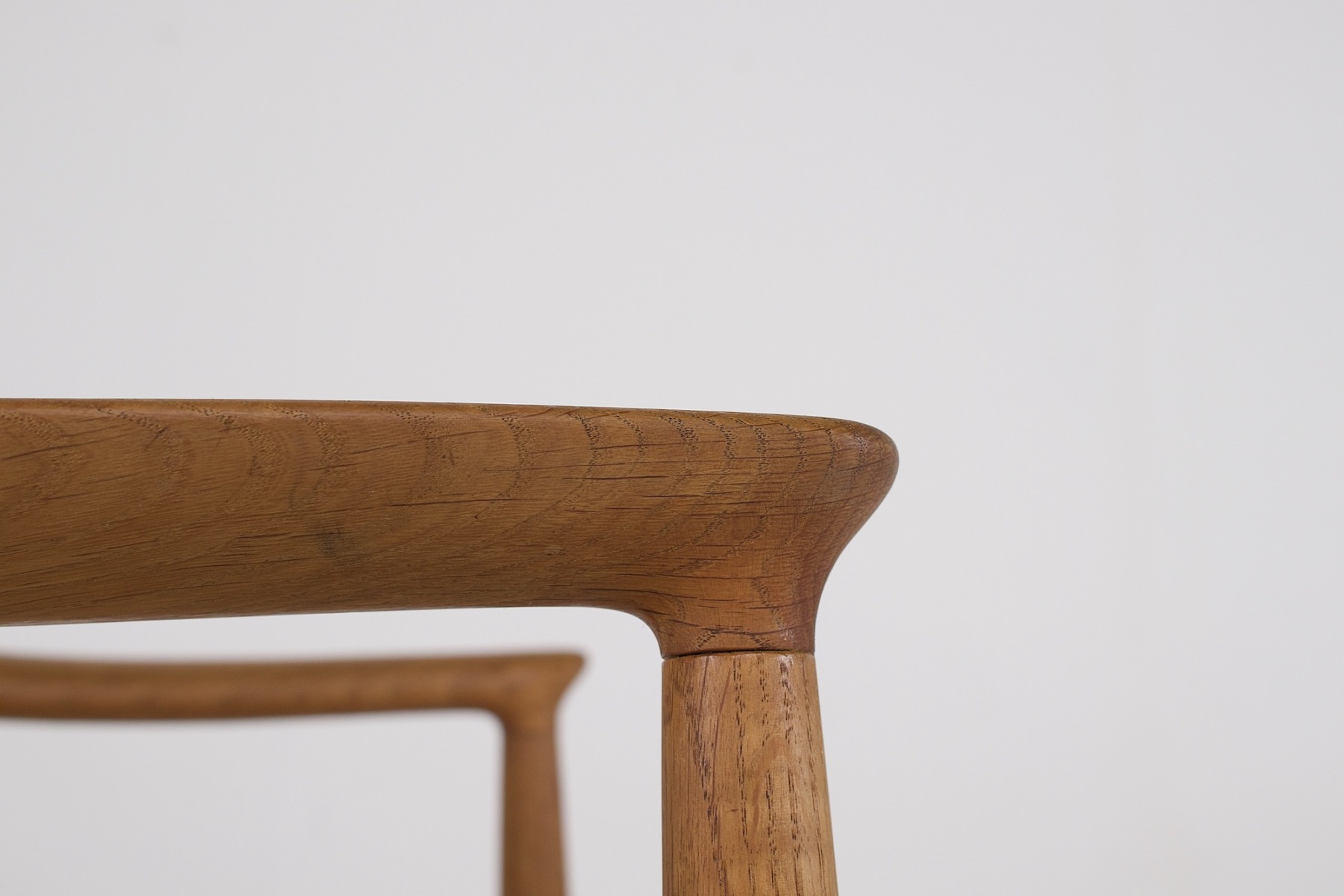
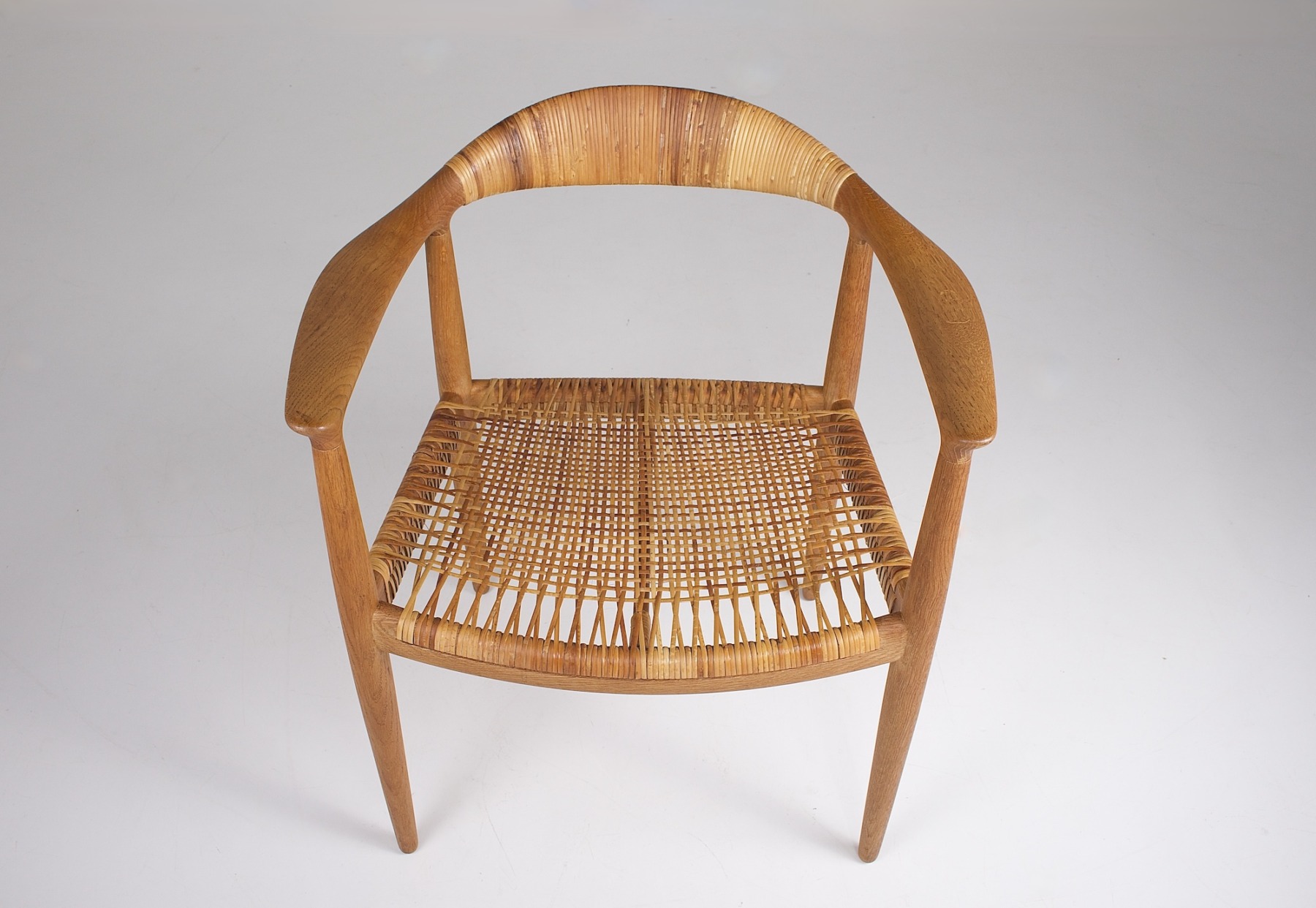
- Solid oak frame, seat and back in rattan cane strips.
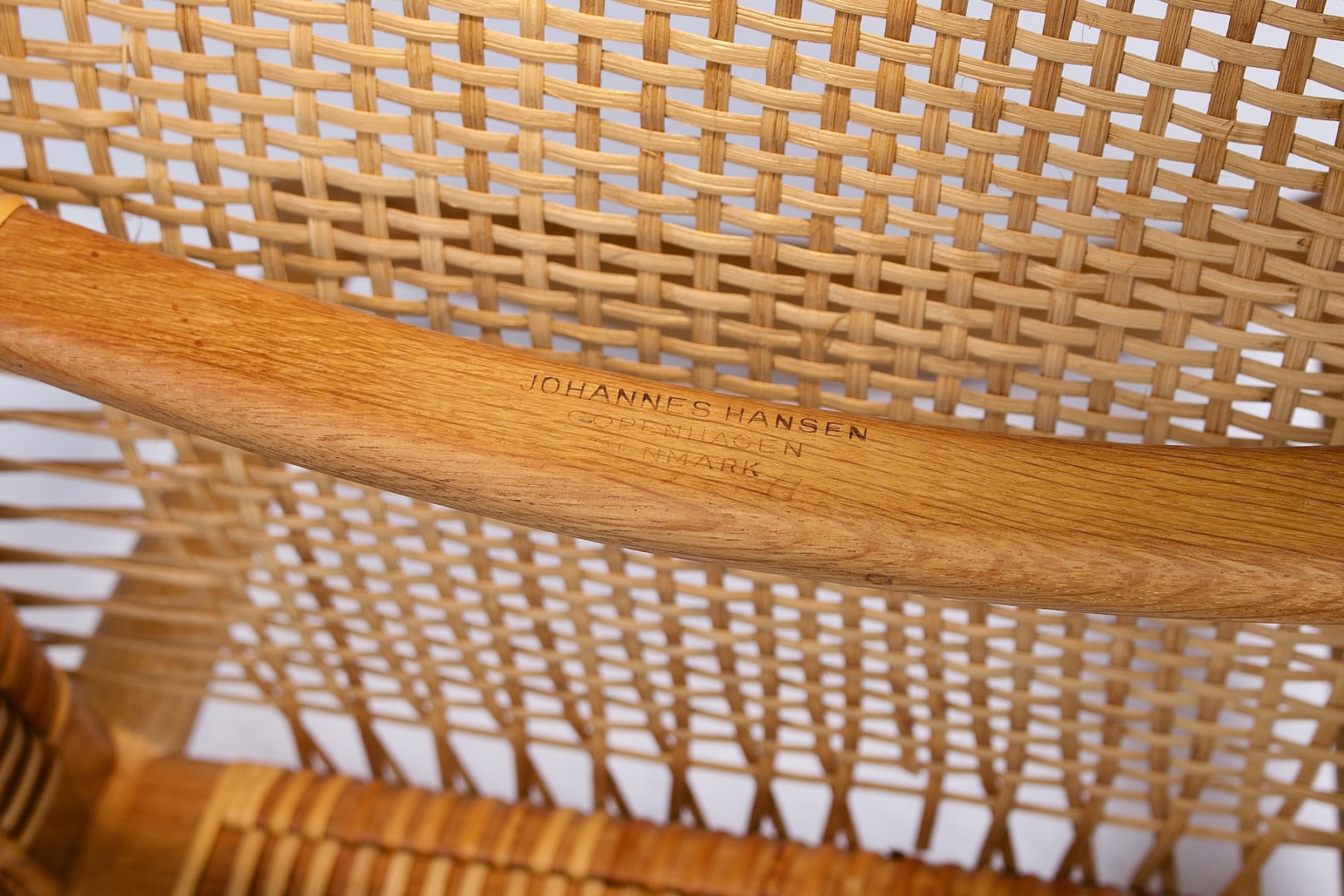
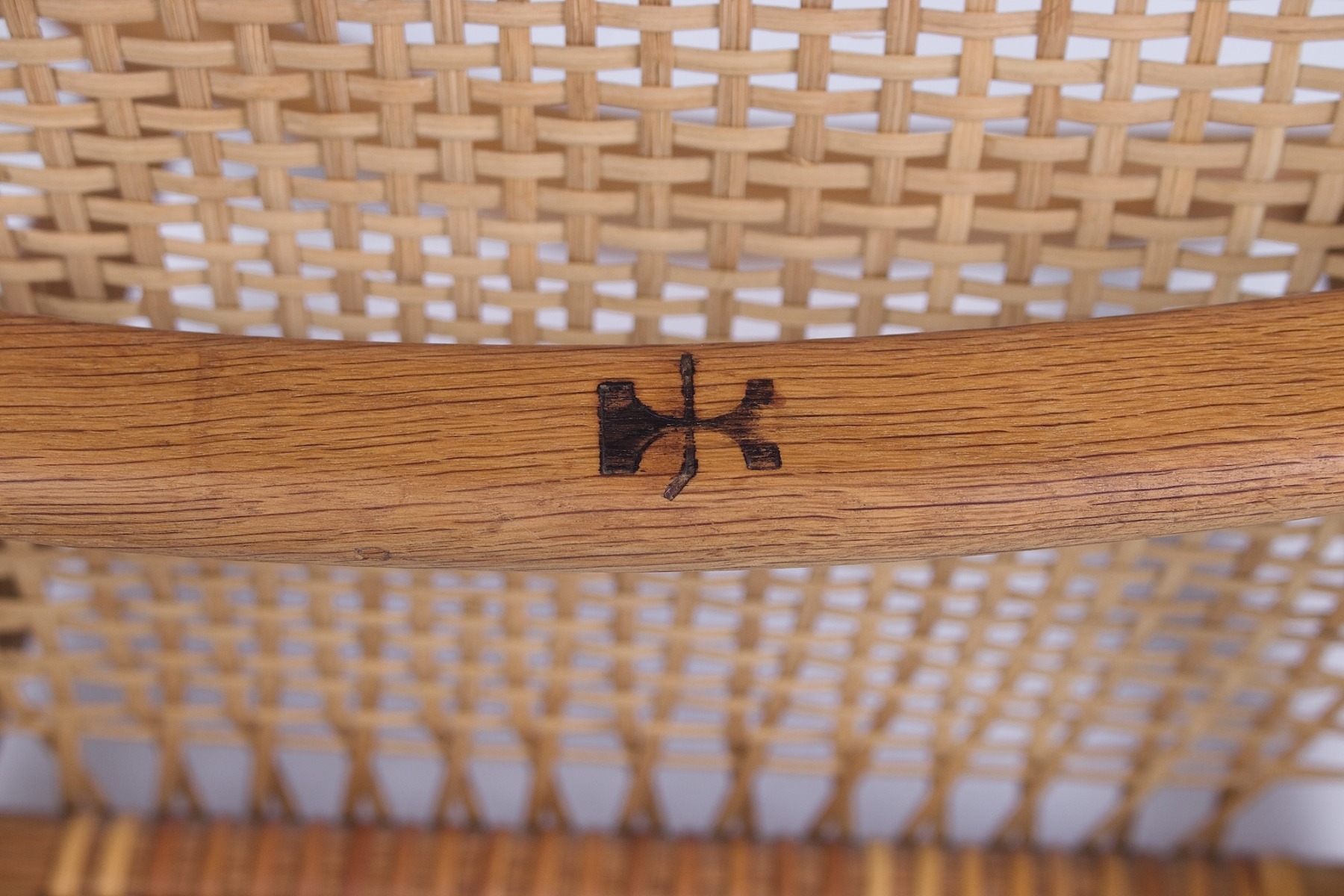
- Johannes Hansen hot-brand mark.
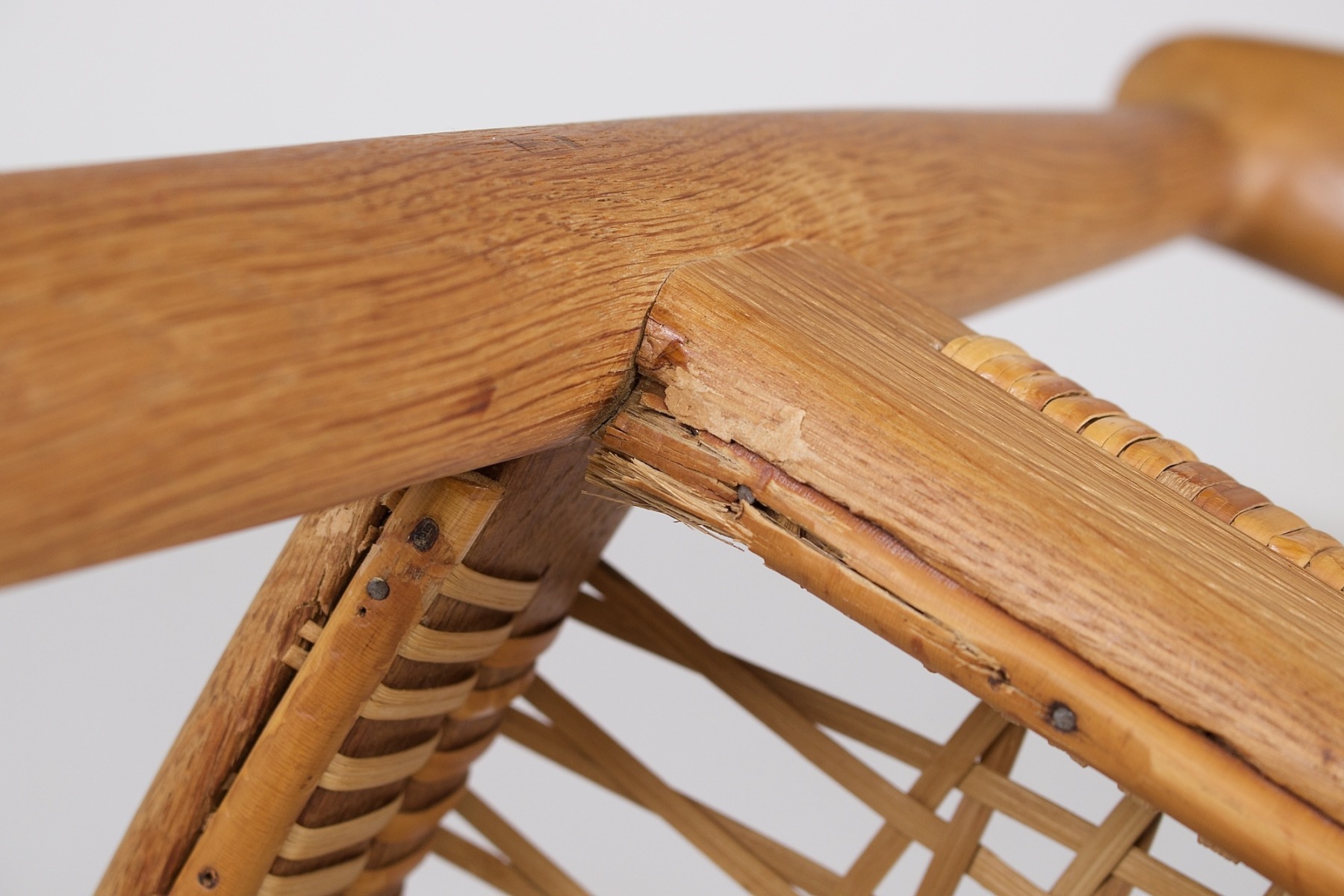
- Good structural condition.
- The seat feels firm to the touch. As a precaution, the chair has not been tested in order to preserve its condition.
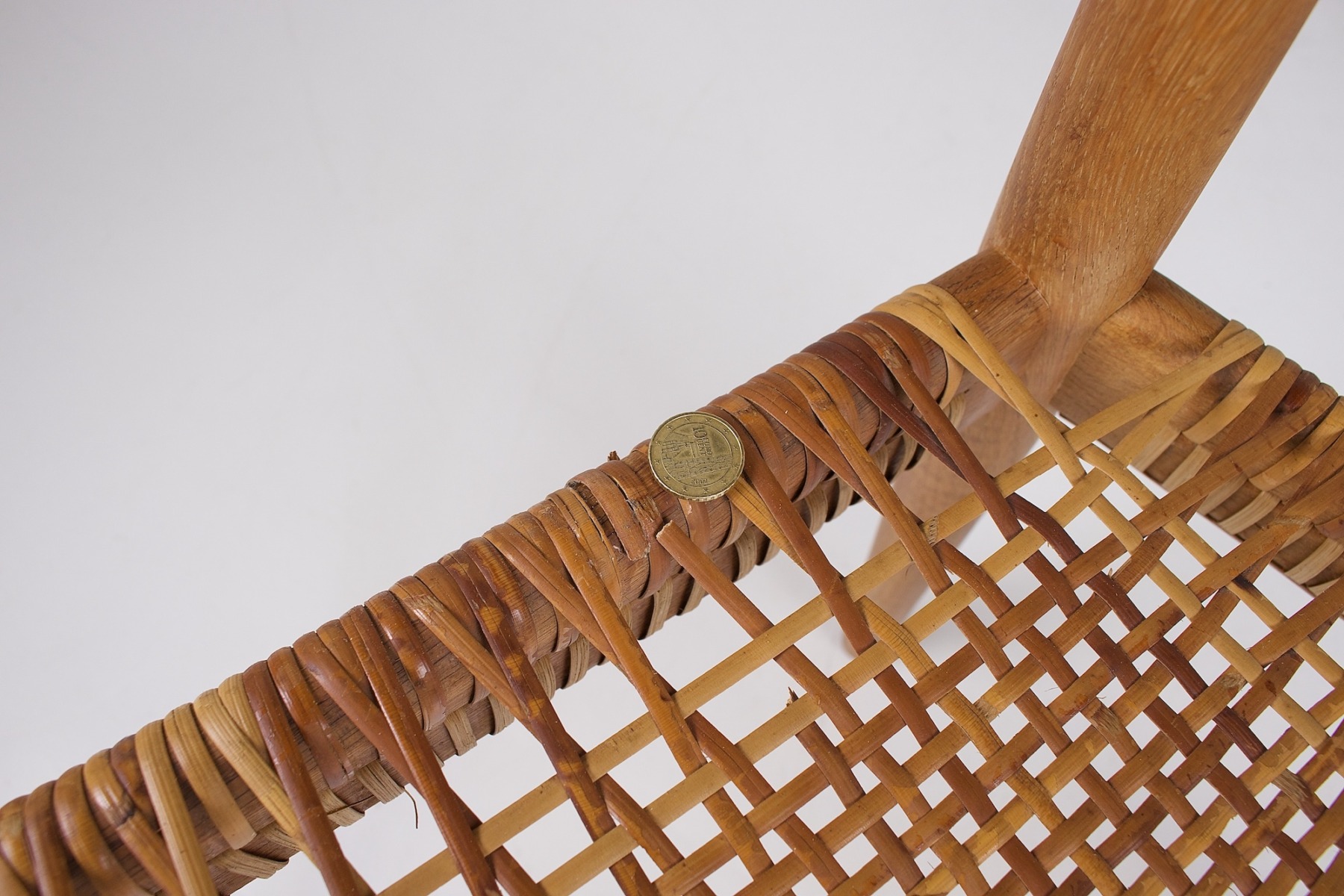
- On the seat, one rattan splint is broken (visible in the photo, compared to a coin).
- Under the seat, one end of the rattan finishing ribbon is crushed, with no other impact.
- Collector’s chair; use is not recommended in order to preserve its condition.
- Dimensions: H 76 cm × D 51 cm × W 63 cm.
- Seat height: 40 cm.
1 available in store

The Round Chair (Danish: Den Runde Stol), also known as The Chair in the United States, The Classic Chair in Great Britain, or under the references PP501, PP503, JH501 and JH503, is a model designed by Hans J. Wegner in 1949.
Born of a collaboration with Danish cabinetmaker Johannes Hansen—now deceased—this armchair is now produced by the PP Møbler workshop.
The model comes with an upholstered seat (PP503) or, as here, a caned seat (PP501).
Hans J. Wegner’s Round Chair, an icon of Danish design
Designed in 1949 by Hans J. Wegner, the Round Chair was created almost out of necessity. While he planned to present plywood models at the Copenhagen Cabinetmakers’ Guild Exhibition, Johannes Hansen encouraged him to offer a more traditional alternative. Wegner then made this chair in just two days.
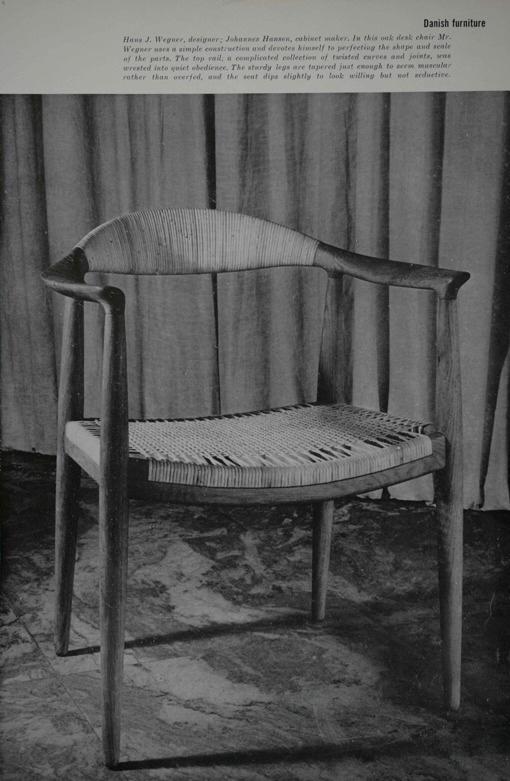
While the Danish press initially focused more on plywood experiments, American journalists present immediately noted the formal purity of the Round Chair. Relayed to the United States, it quickly generated significant interest and helped introduce modern Danish design internationally.
Unlike other Wegner creations, this model was not designed for industrial production. Its demanding, largely handcrafted manufacture severely limits output and reinforces its status as an exceptional object. Its design is based on a backrest and armrests formed from a single bent piece with semi-circular lines. The mortise-and-tenon joints are designed to follow the grain of the wood, while the back rail naturally follows the body’s curve, ensuring both comfort and structural strength.
The design evolved in the early 1950s, with the caned backrest abandoned in favor of more sophisticated joinery, improving both strength and the structure’s visual continuity. An upholstered version was later offered, notably to meet usage constraints on the American market.
Presented at the Museum of Modern Art in New York – MoMA – in the early 1950s, the chair quickly entered the museum’s collections. Its renown further increased in 1960 when it was used during the first televised debate between Kennedy and Nixon, contributing to making it one of the great design icons of the 20th century.

The first presidential debate between Kennedy and Nixon, September 26, 1960, at CBS studios in Chicago. Each seated on Hans Wegner’s JH 501 chair.
Source: Wikipedia
Bibliography:
G. Jalk, 40 Years of Danish Furniture Design, vol. 3: 1947-1956, Danish Technological Institute Publishing, Copenhagen, 1987. pp. 98-101
N. Oda, Danish Chairs, Chronicle Books, San Francisco, 1999. See pp. 108-109
C. H. Olesen, Wegner, just one good chair, Hatje Cantz Verlag, 2014, pp. 52, 55
You might also like…
Discover also...


Delivery to Belgium

Delivery to France

Delivery to Luxembourg
