



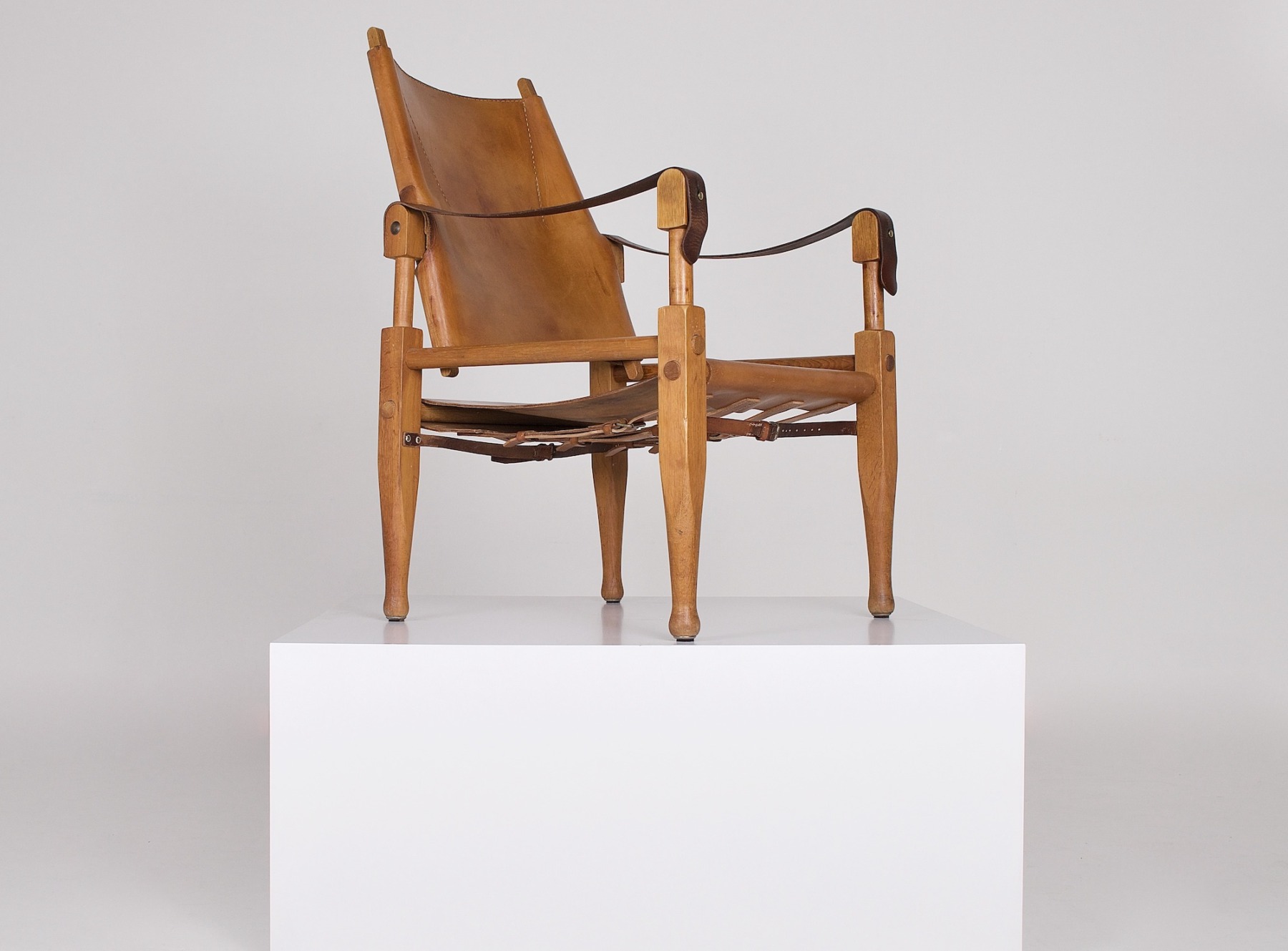



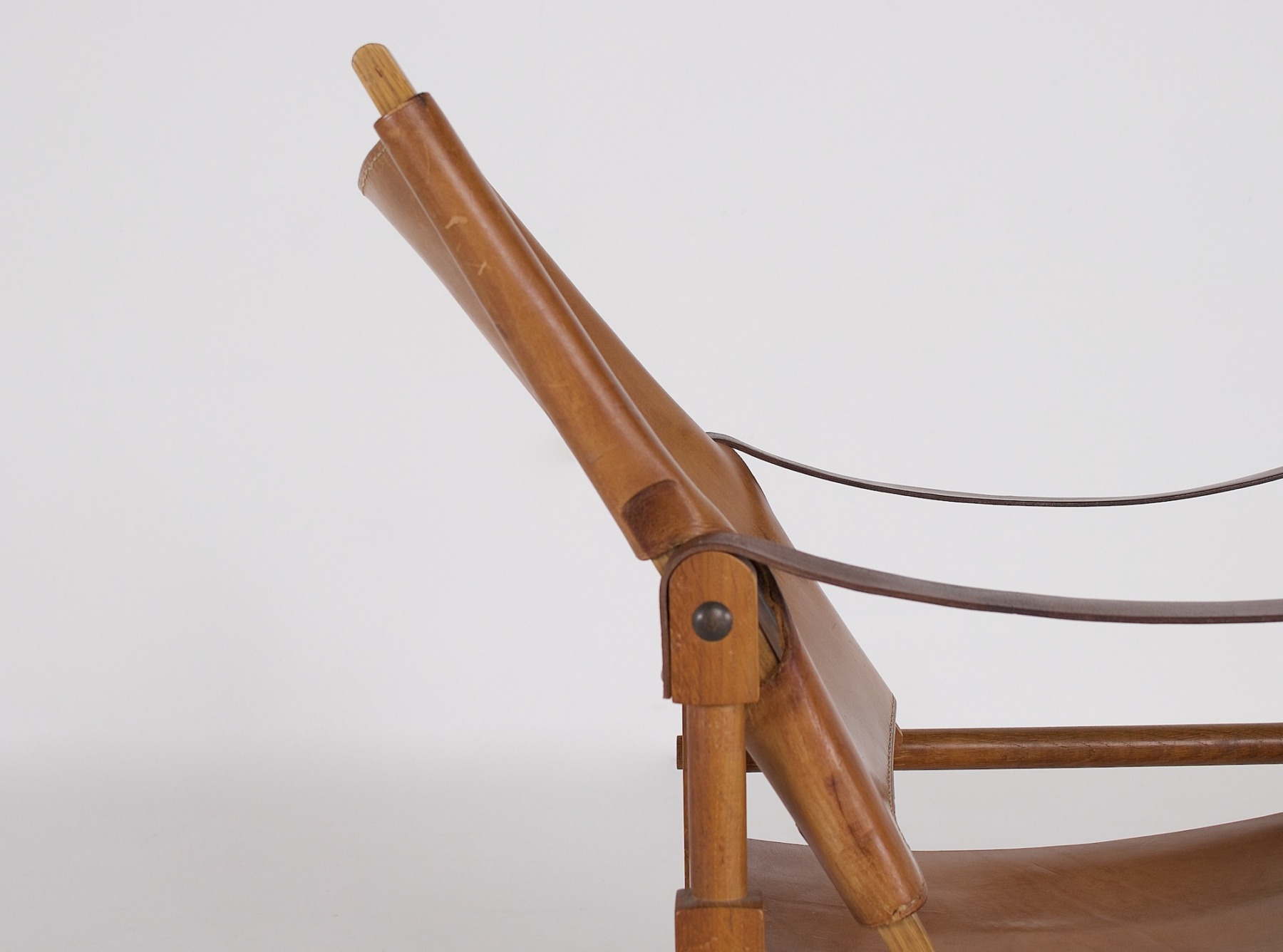
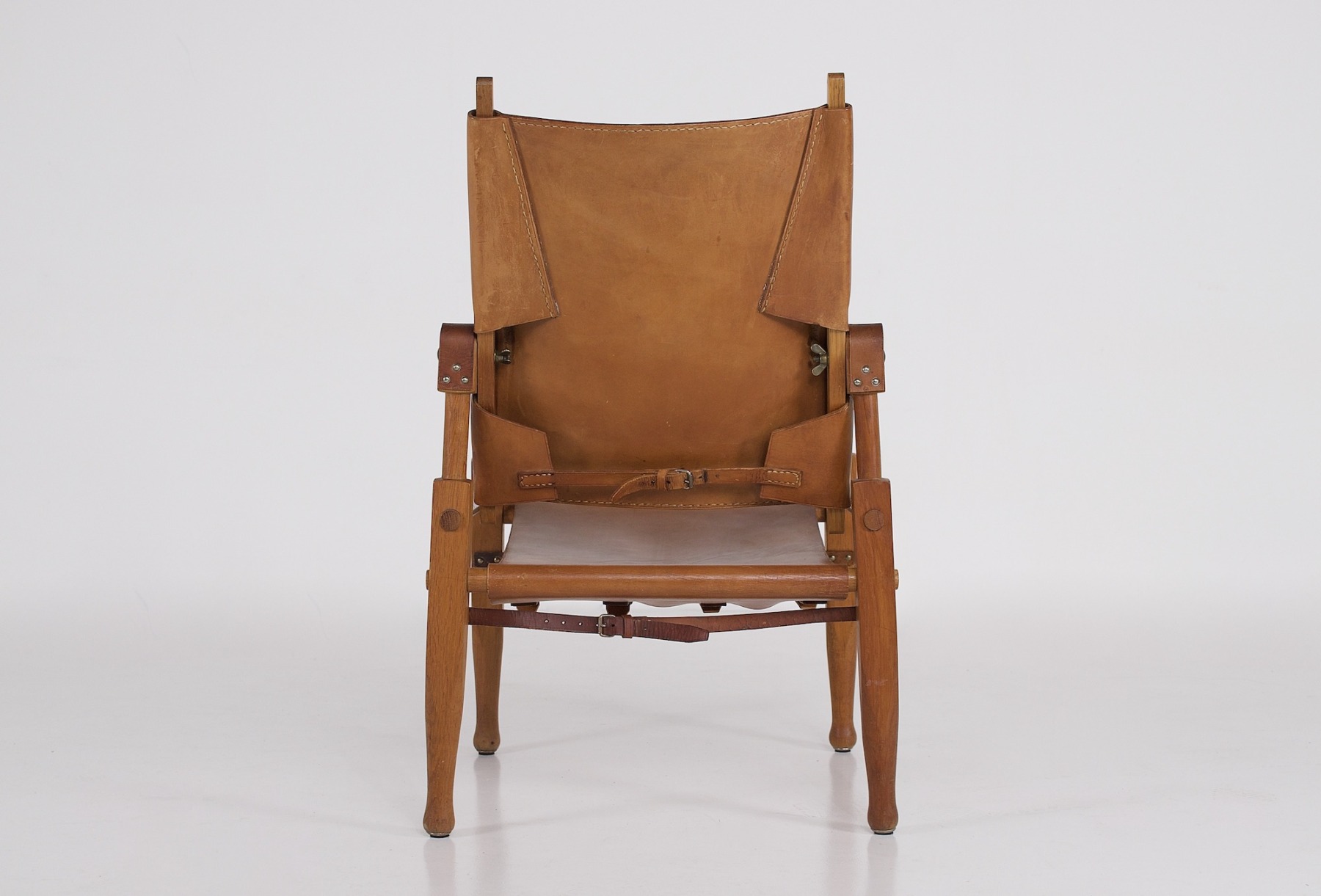

Safari Armchair in Cognac Leather by Wilhelm Kienzle
Safari armchair by Wilhelm Kienzle, Swiss edition Wohnbedarf, early 1950s.
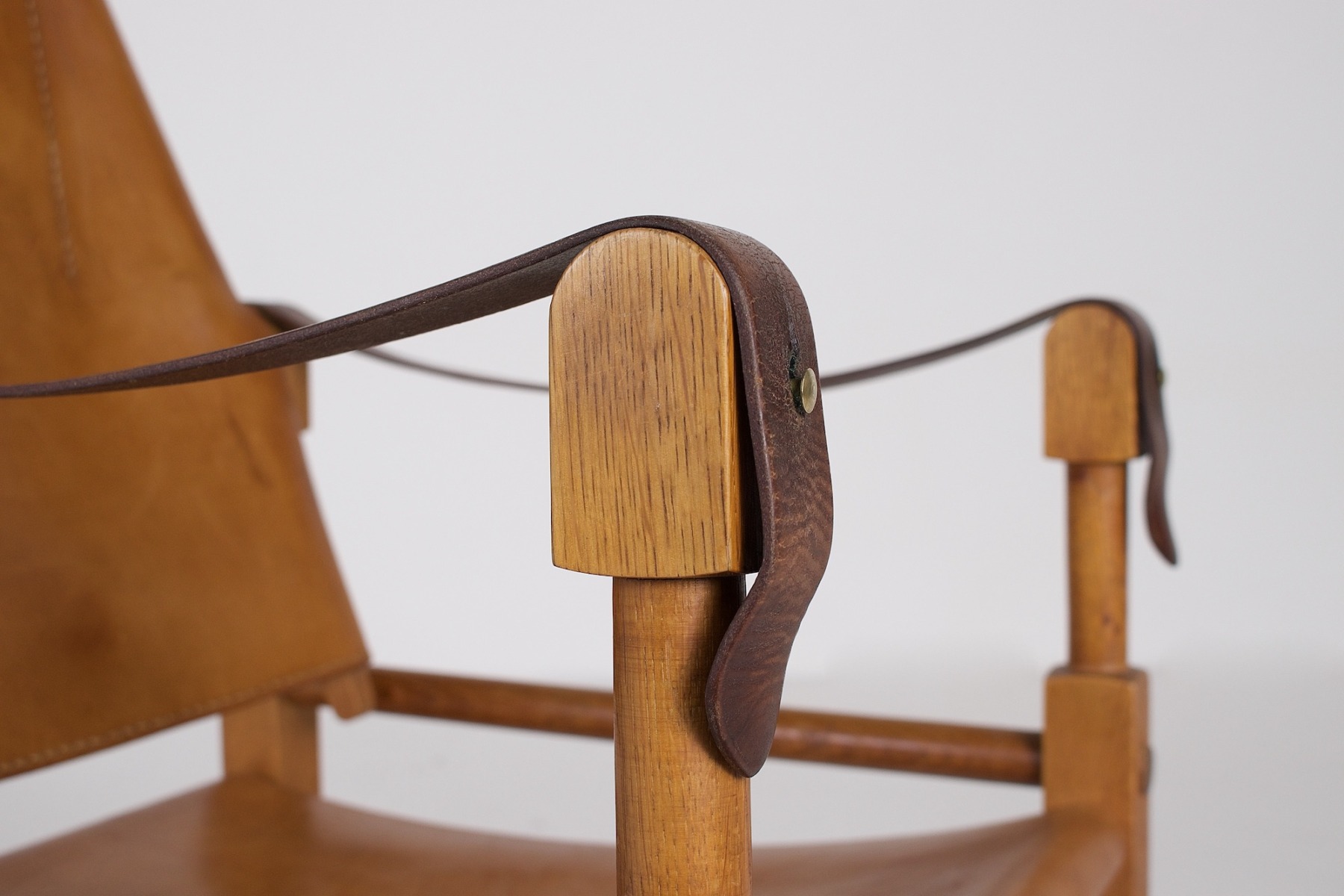
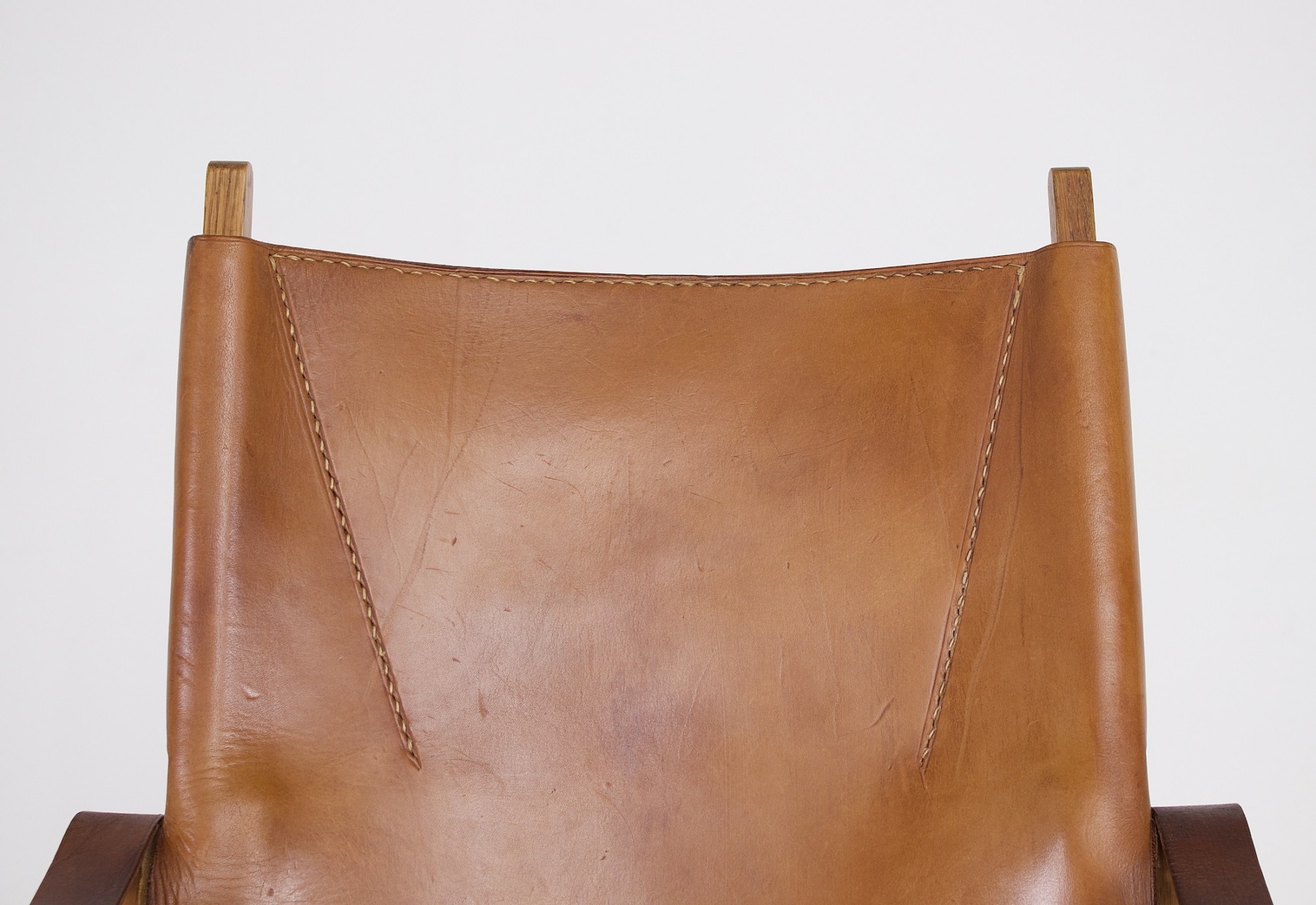
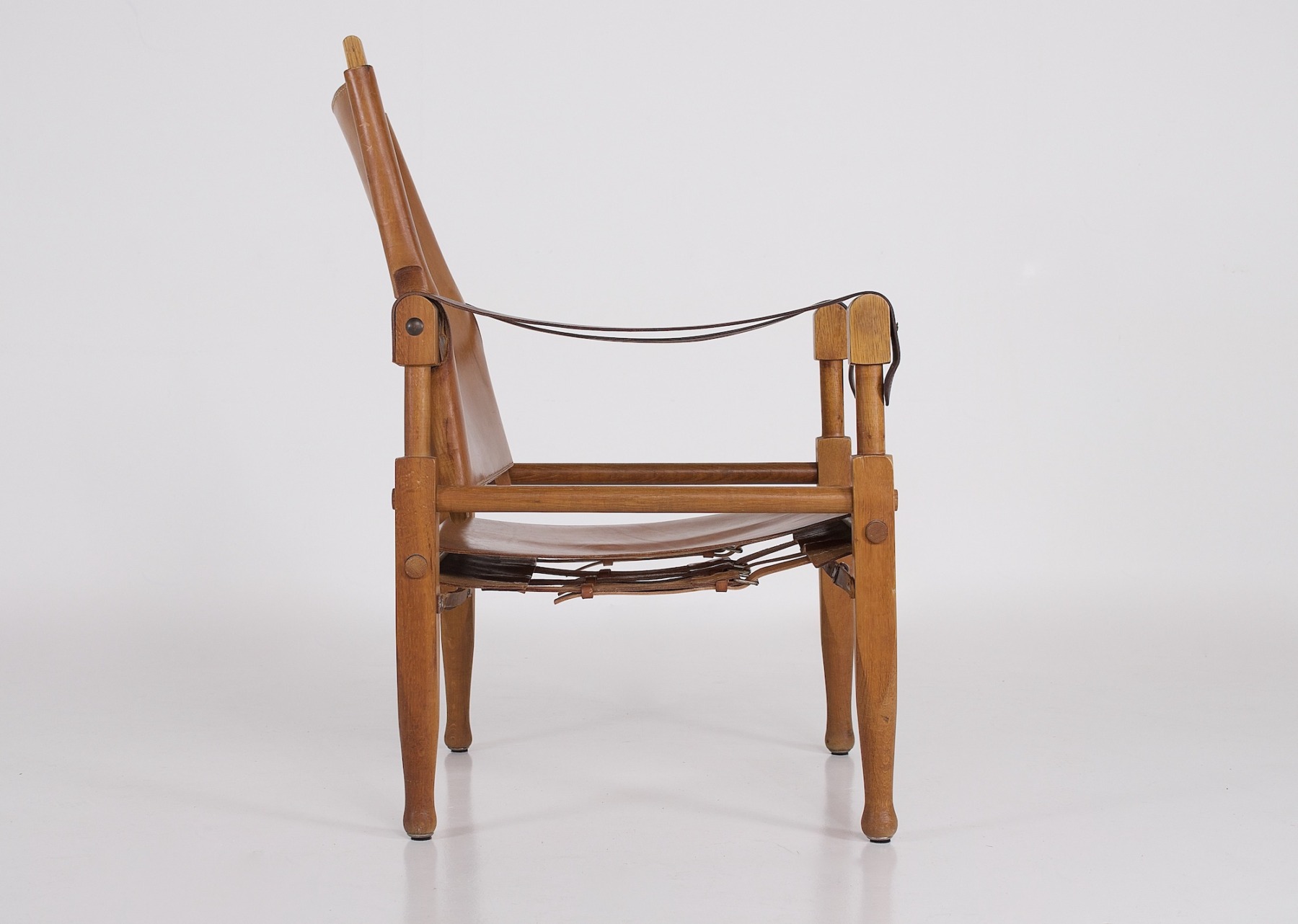
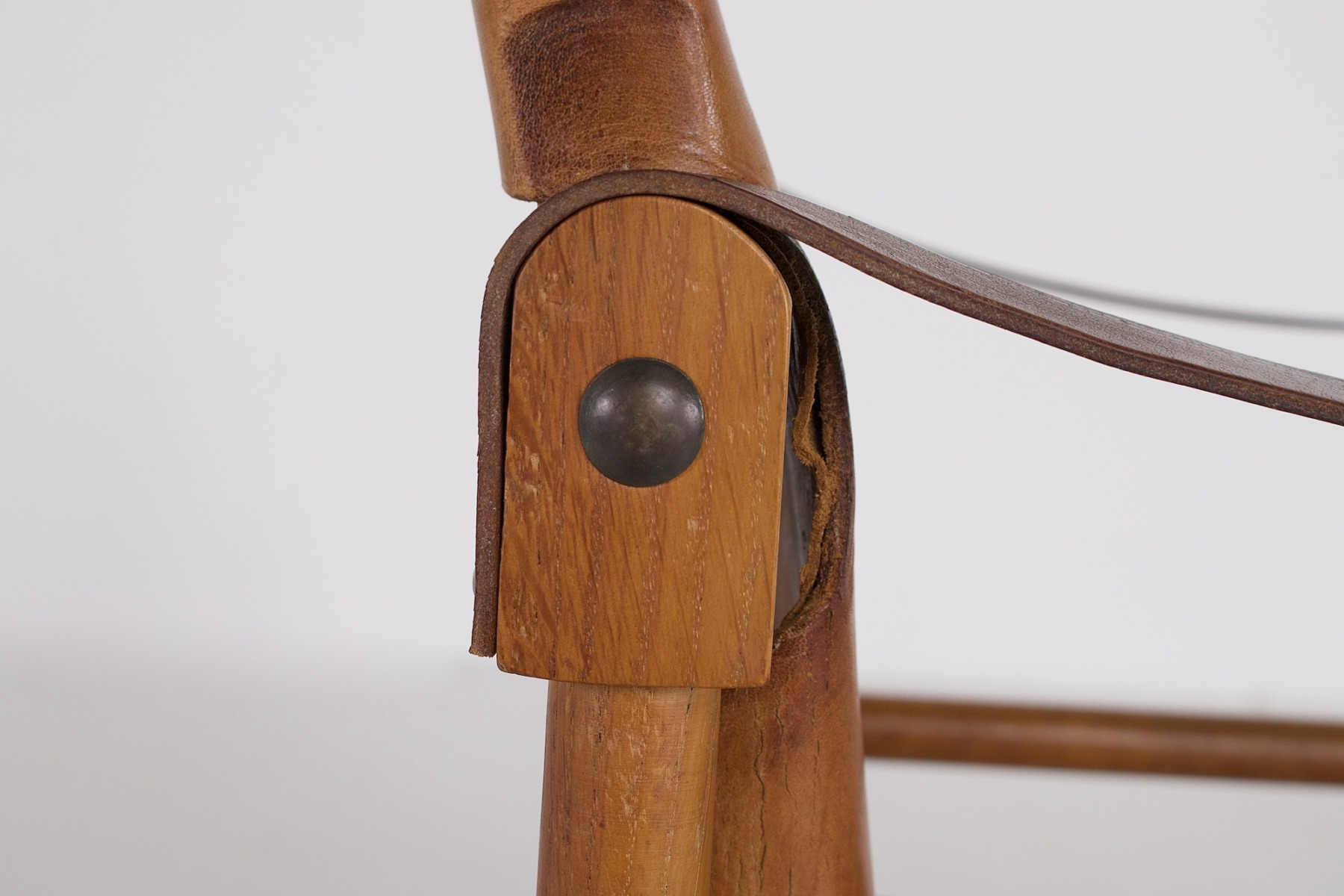
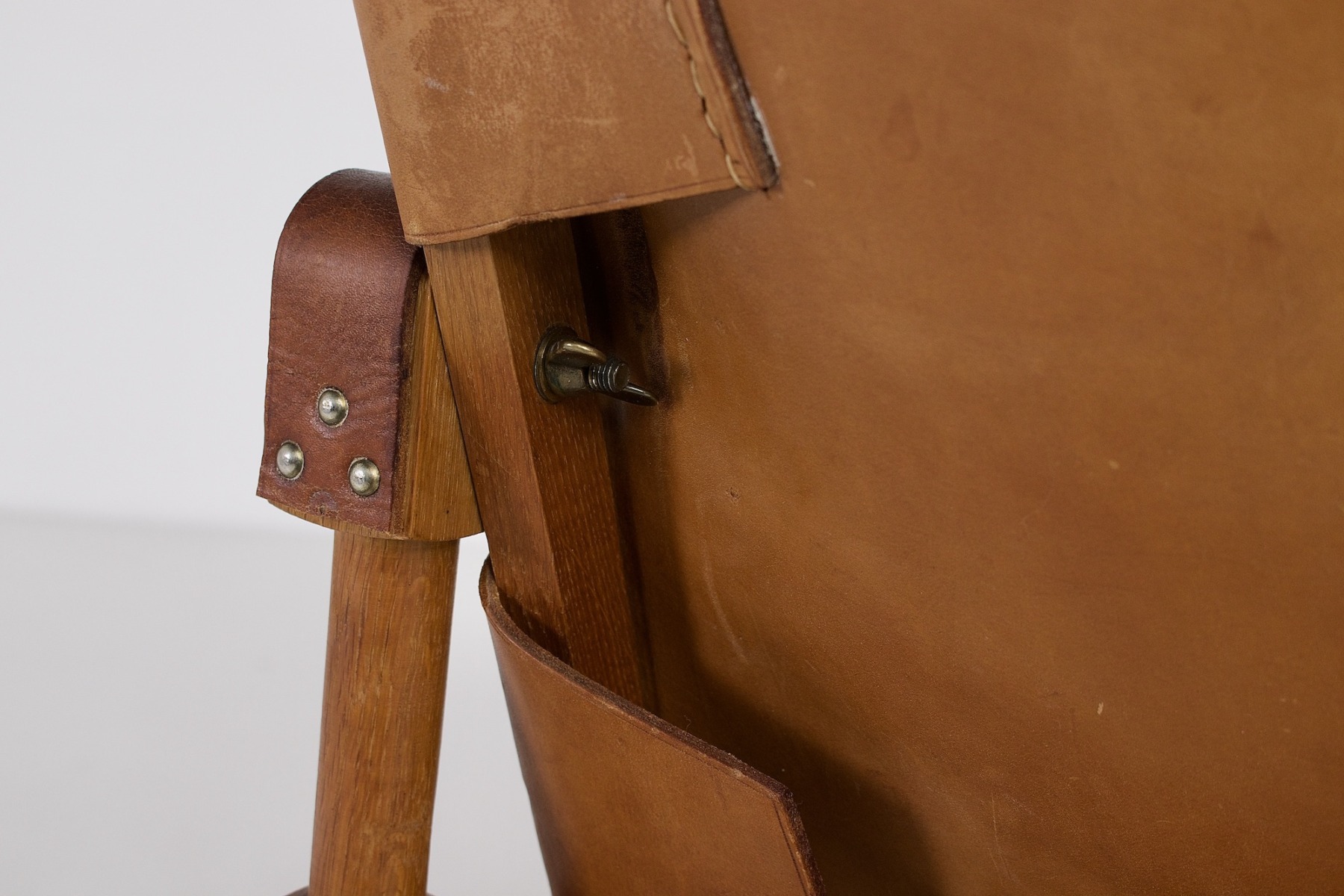
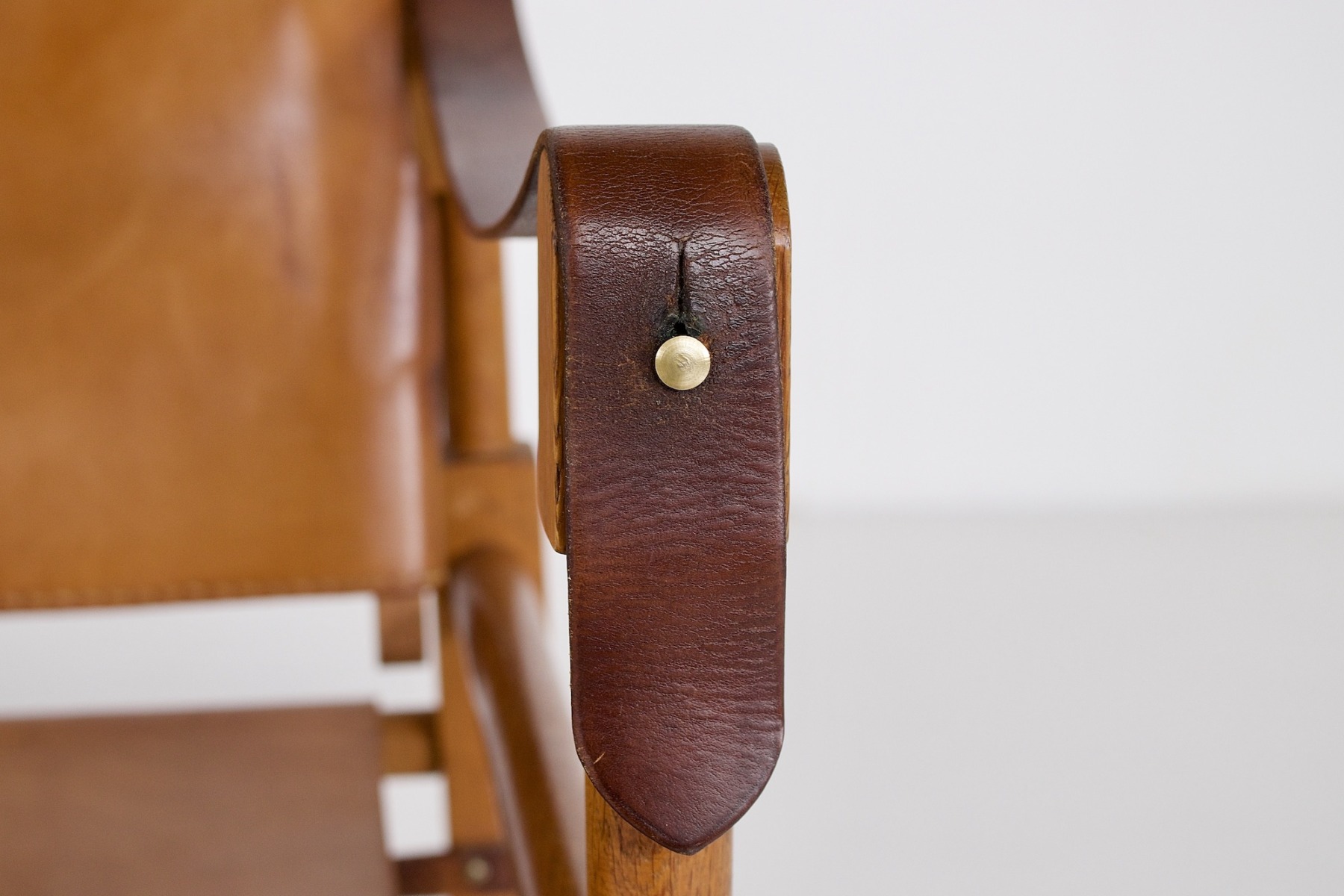
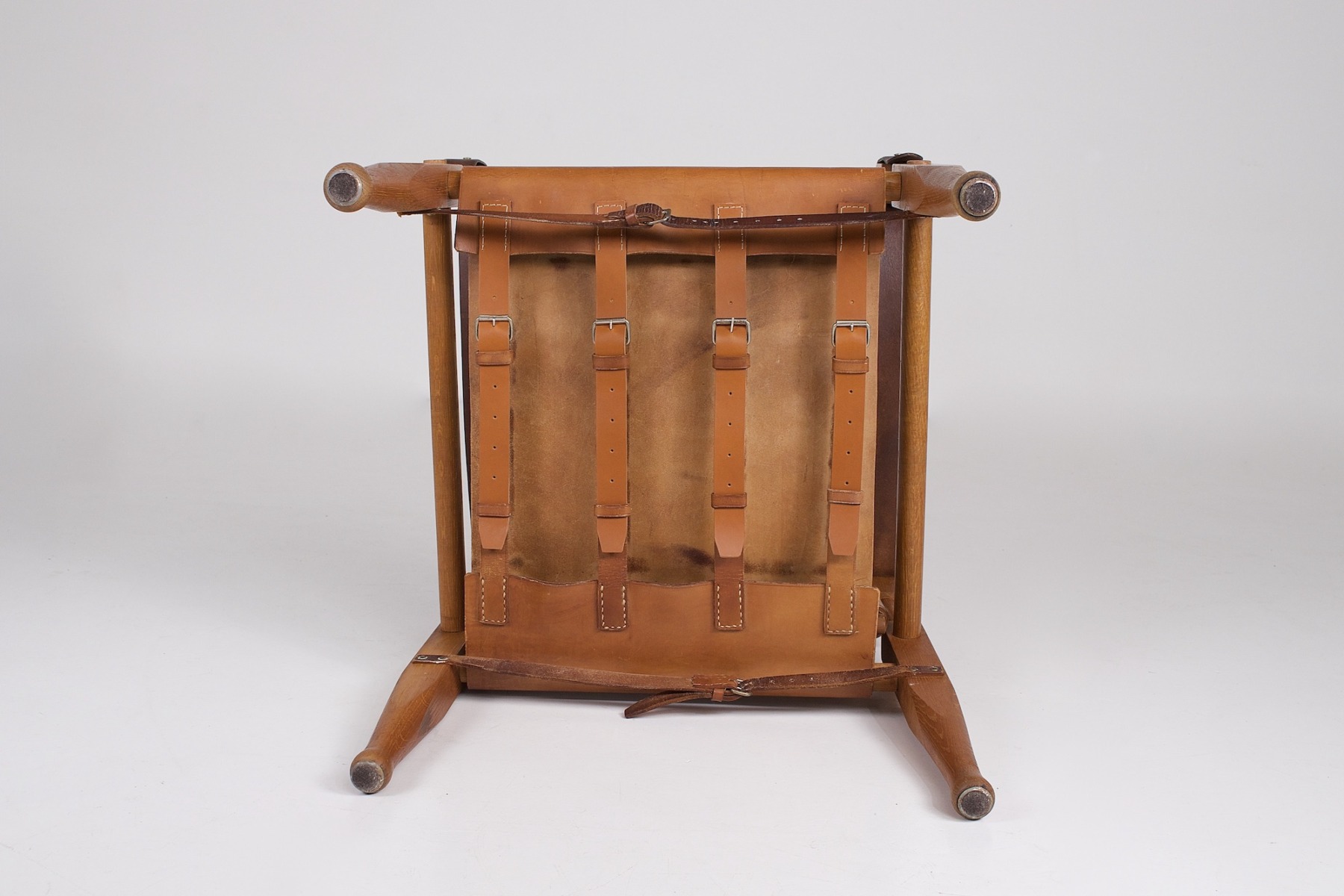
- Structure in light oak, seat, backrest, and armrests in thick saddle-stitched leather. Reclining backrest with a butterfly screw.
- Work carried out by our restorer: The woodwork was cleaned, sanded, then varnished. The leather was cleaned and conditioned in several stages, revealing a deep, even cognac patina.
- Dimensions: H 82 cm × W 54 cm × D 65 cm.
- Seat height: 36 cm.
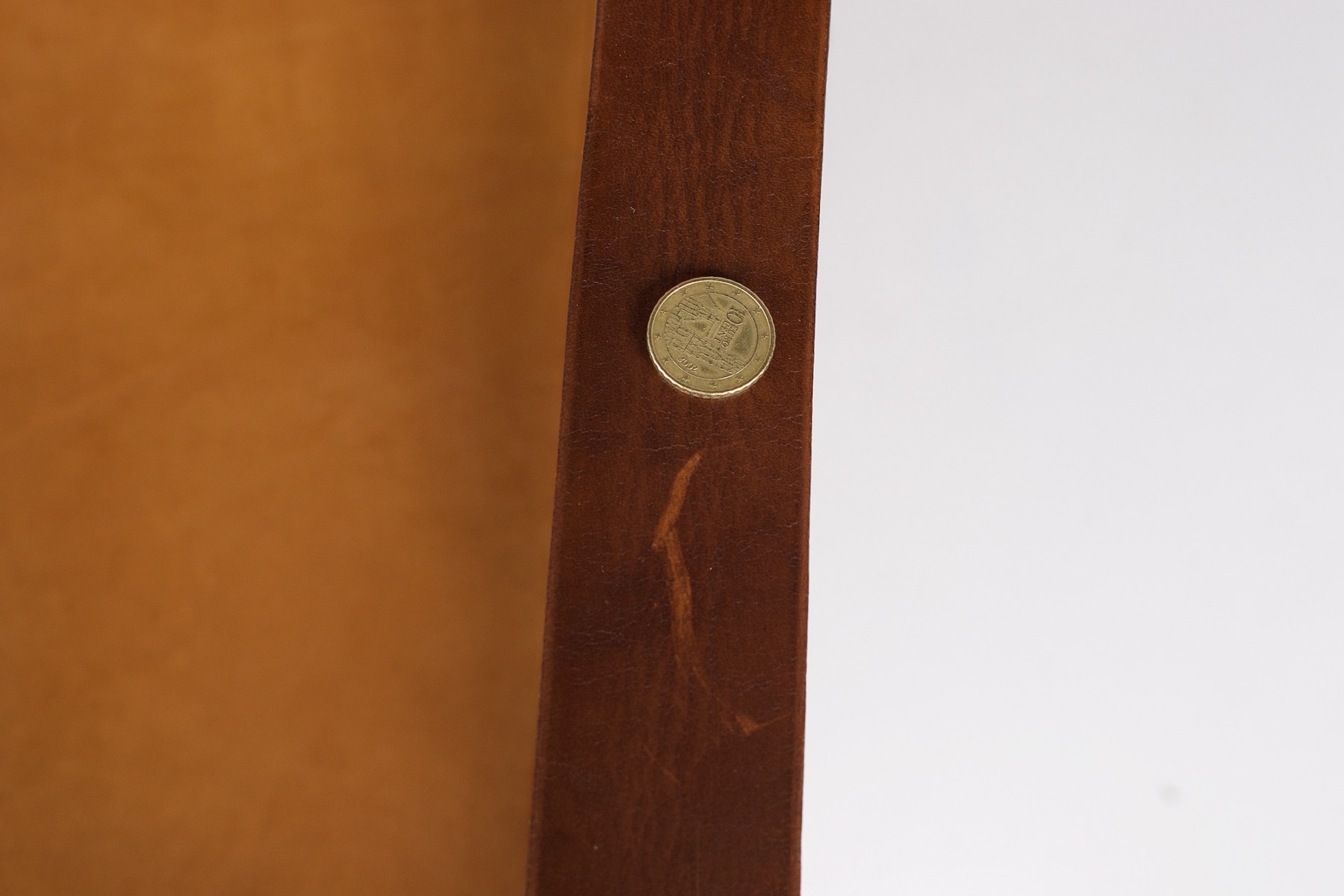
- To note: slight scratch on the leather strap of the right armrest (see photos).
Sold

Wilhelm Kienzle’s Safari Armchair: A Demountable Structure with an Ingenious Principle
Designed in 1928 by Wilhelm Kienzle, the Safari armchair embodies a functional approach to modernist furniture. An example is preserved in the collections of the Vitra Design Museum in Weil am Rhein, attesting to the model’s significance in 20th-century design history. Its principle relies on a solid wood structure combined with leather elements, where each component directly contributes to the overall stability.

So-called “Kolonialsessel” armchair, leather and blond oak, KIENZLE Wilhelm (1886–1958) & published by WOHNBEDARF in 1928.
The armchair is distinguished by its demountable construction system. Unlike a traditional rigid structure, the wooden elements are held in place by the tension exerted by the leather. The seat and backrest, made of thick stitched leather, accommodate the crossbars that ensure stability, while side straps absorb stress. The backrest is articulated, and the leather armrests are secured by metal fasteners, combining flexibility and support.

This principle is inspired by 19th-century campaign chairs, particularly those used in the British colonial context, which Kienzle observed in London. Lightweight, demountable, and easily transportable, the armchair meets specific usage constraints while developing a clear and uncluttered formal language.
From the fifties, this type of chair experienced renewed interest, notably through Swiss productions. It then embodied a freer, less formal way of living, where furniture prioritized utility, mobility, and constructive simplicity.
“`
You might also like…


Discover also...


Delivery to Belgium

Delivery to France

Delivery to Luxembourg
