





George Nelson Pretzel chair
€3500,00
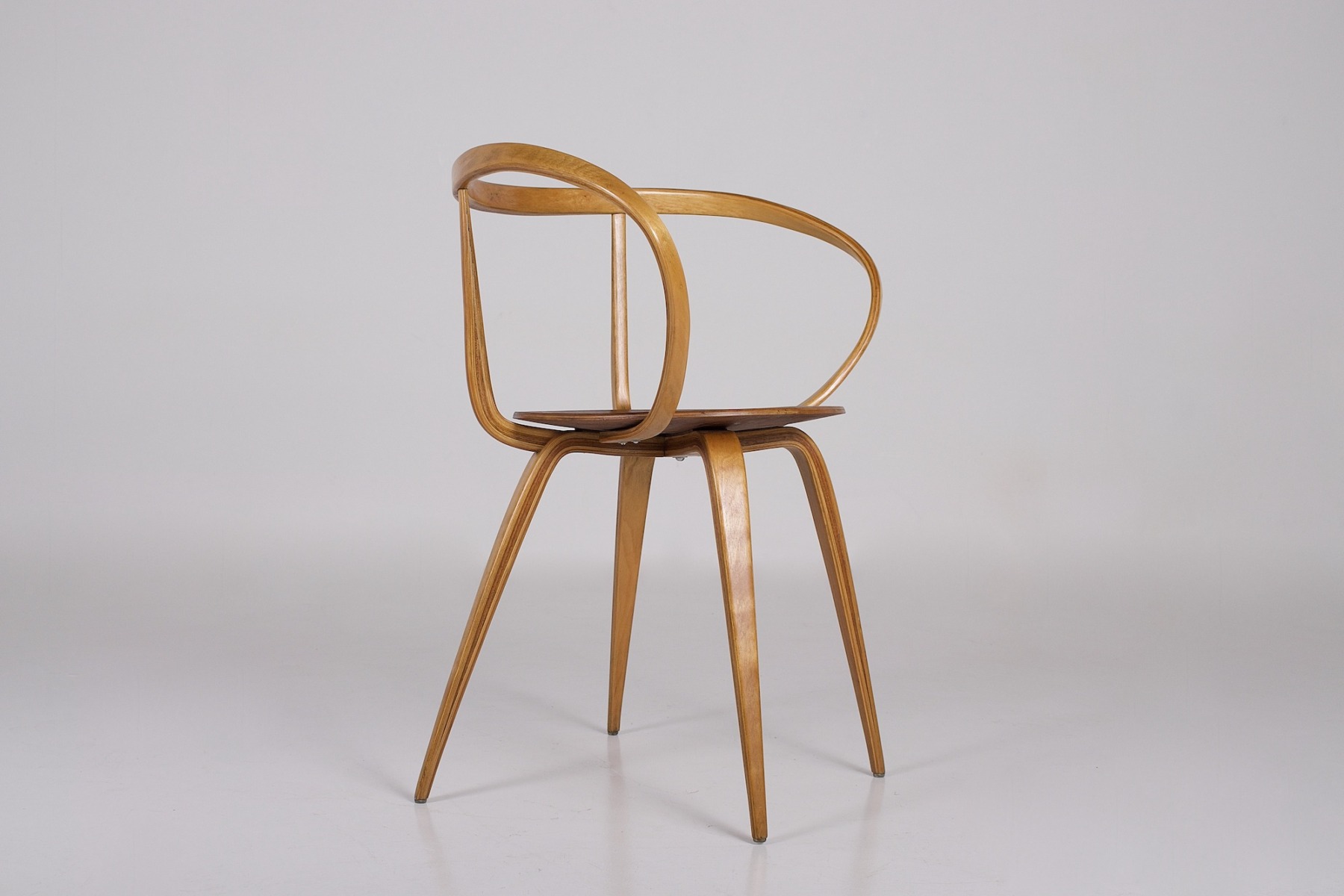
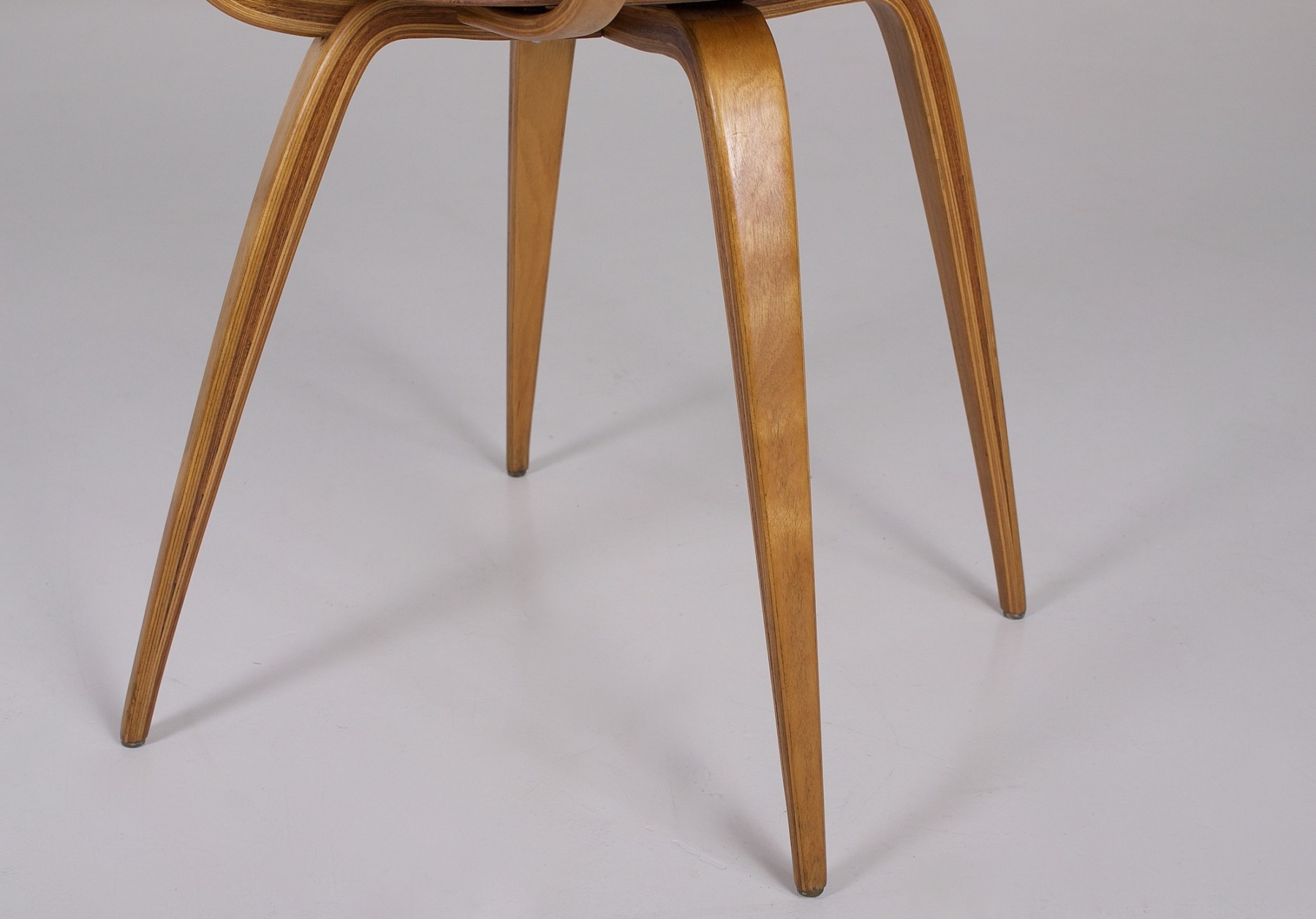
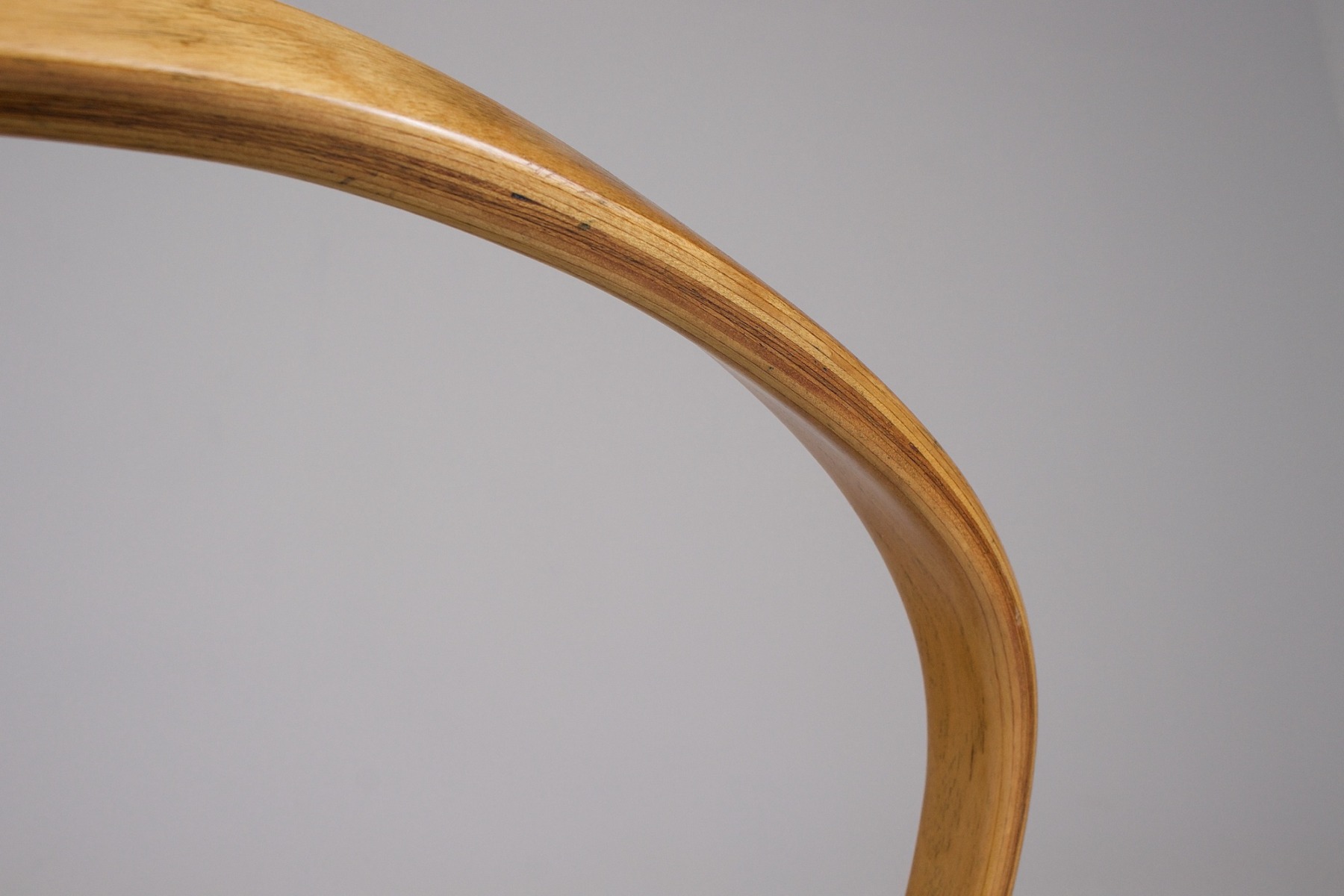
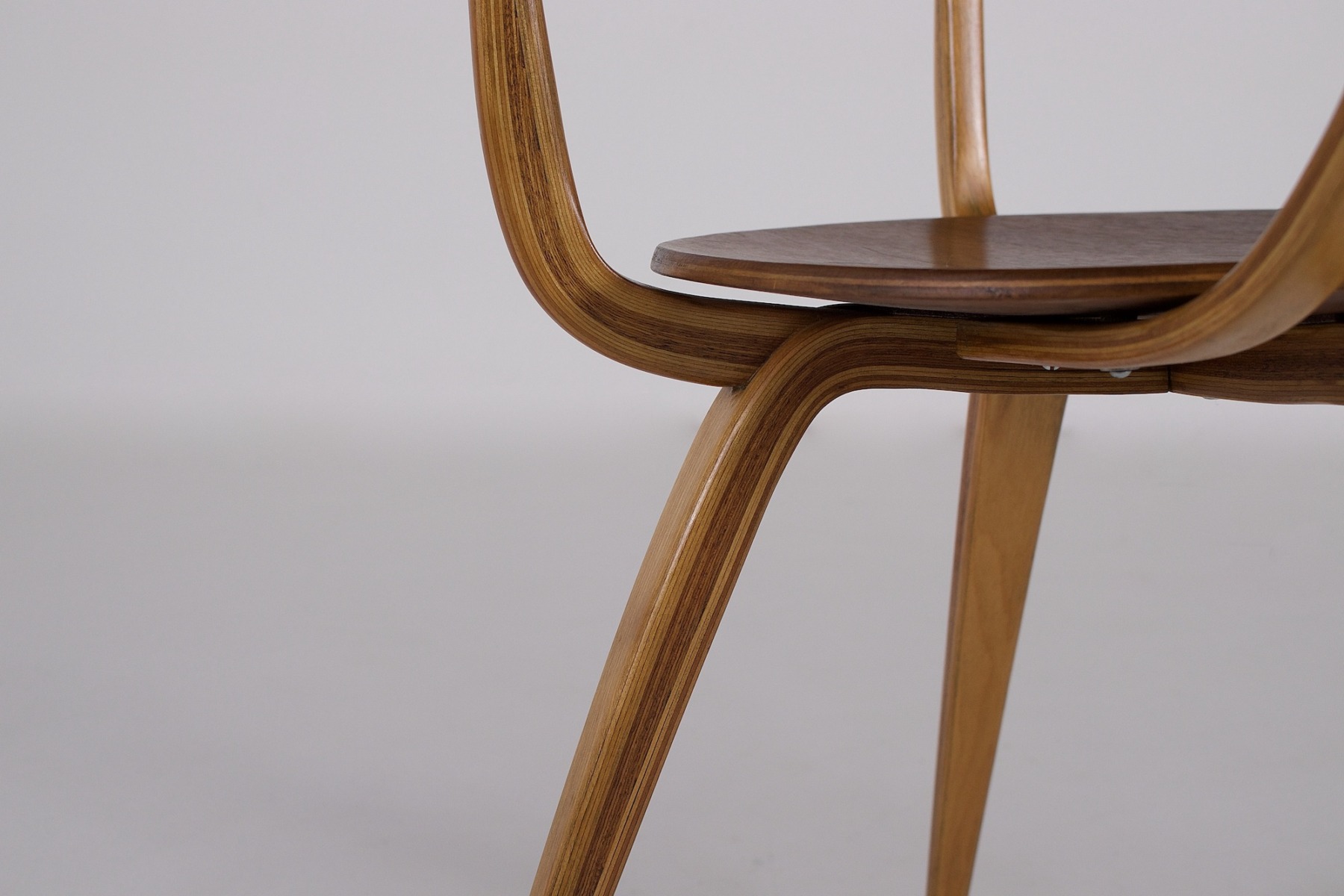
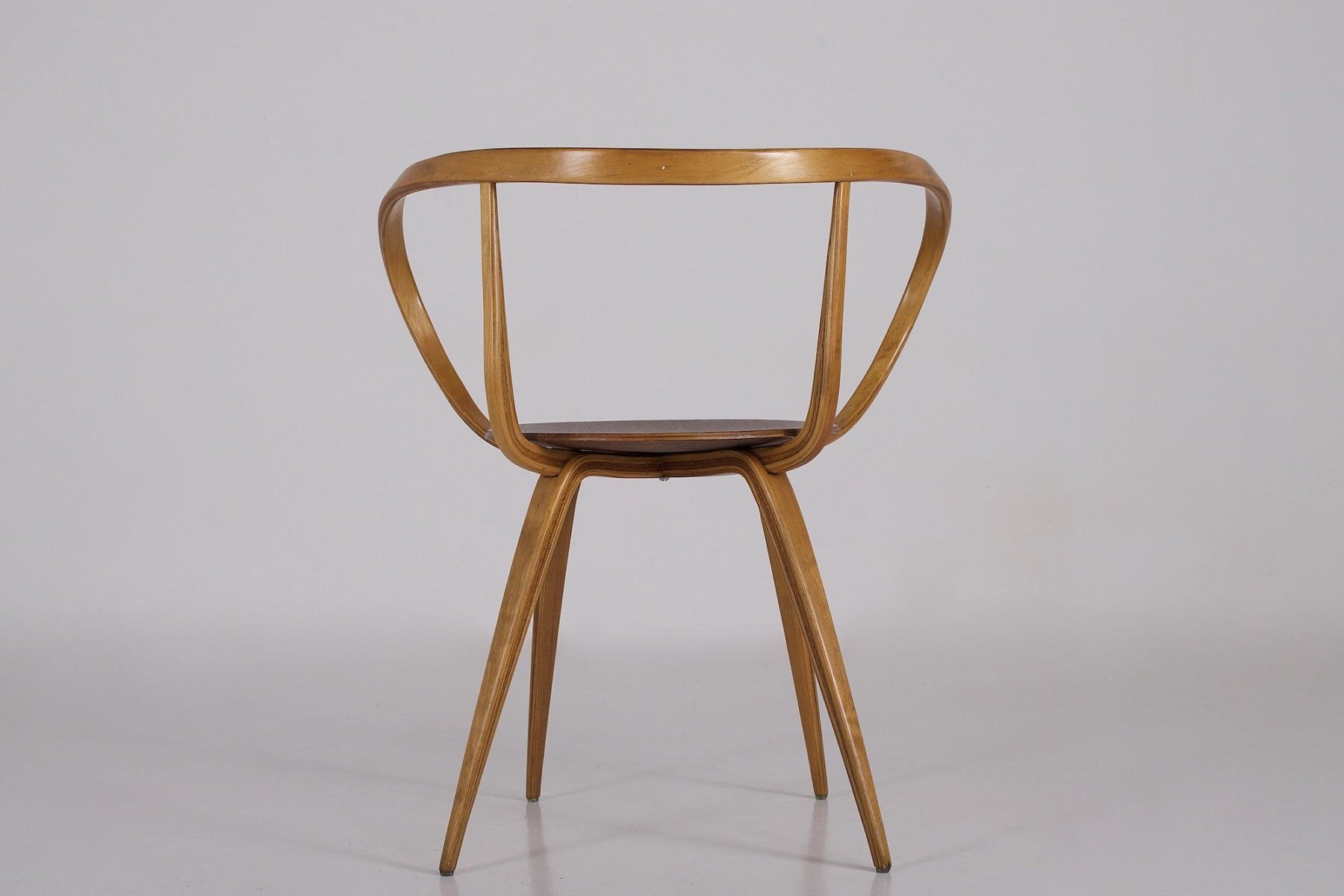
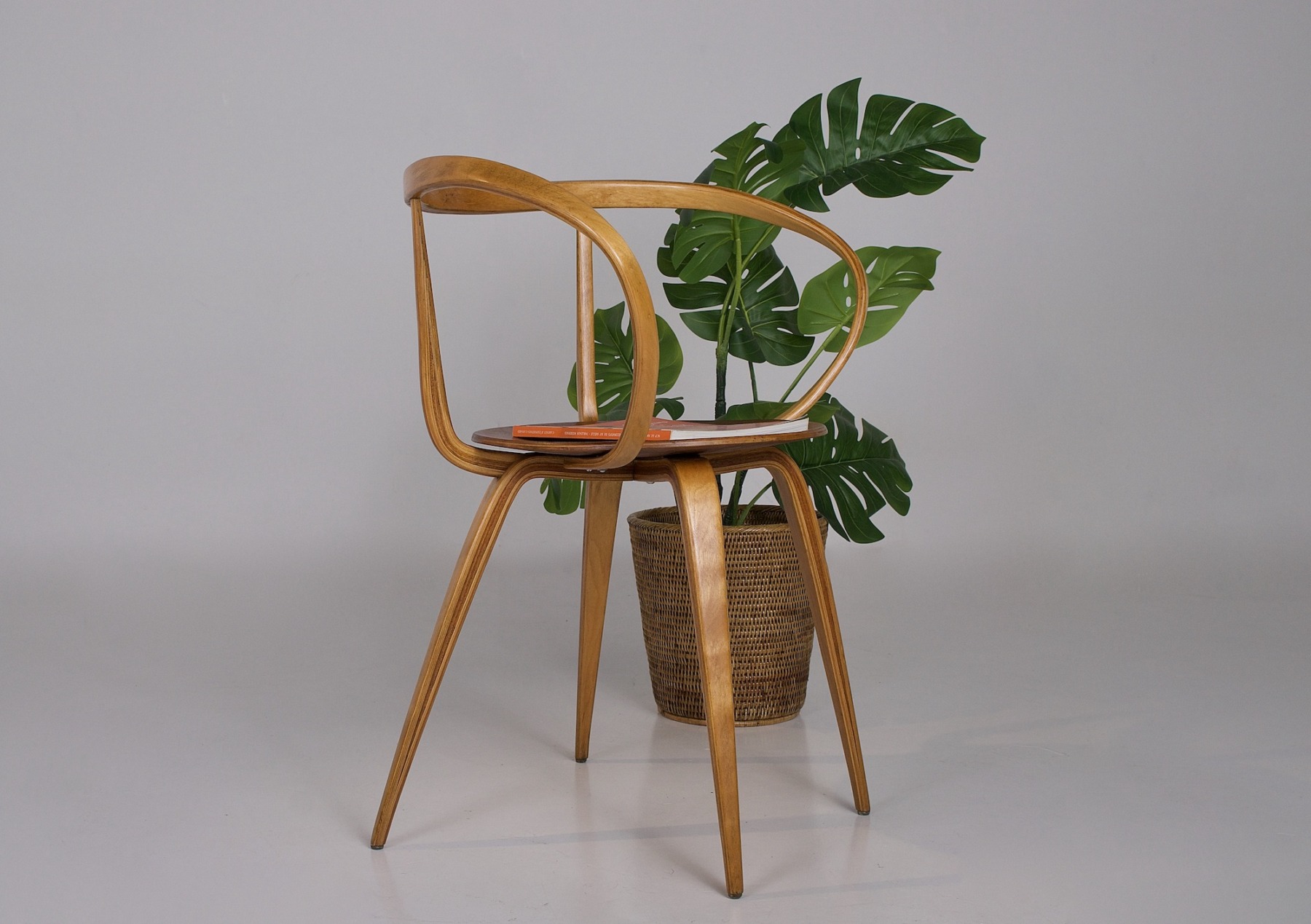
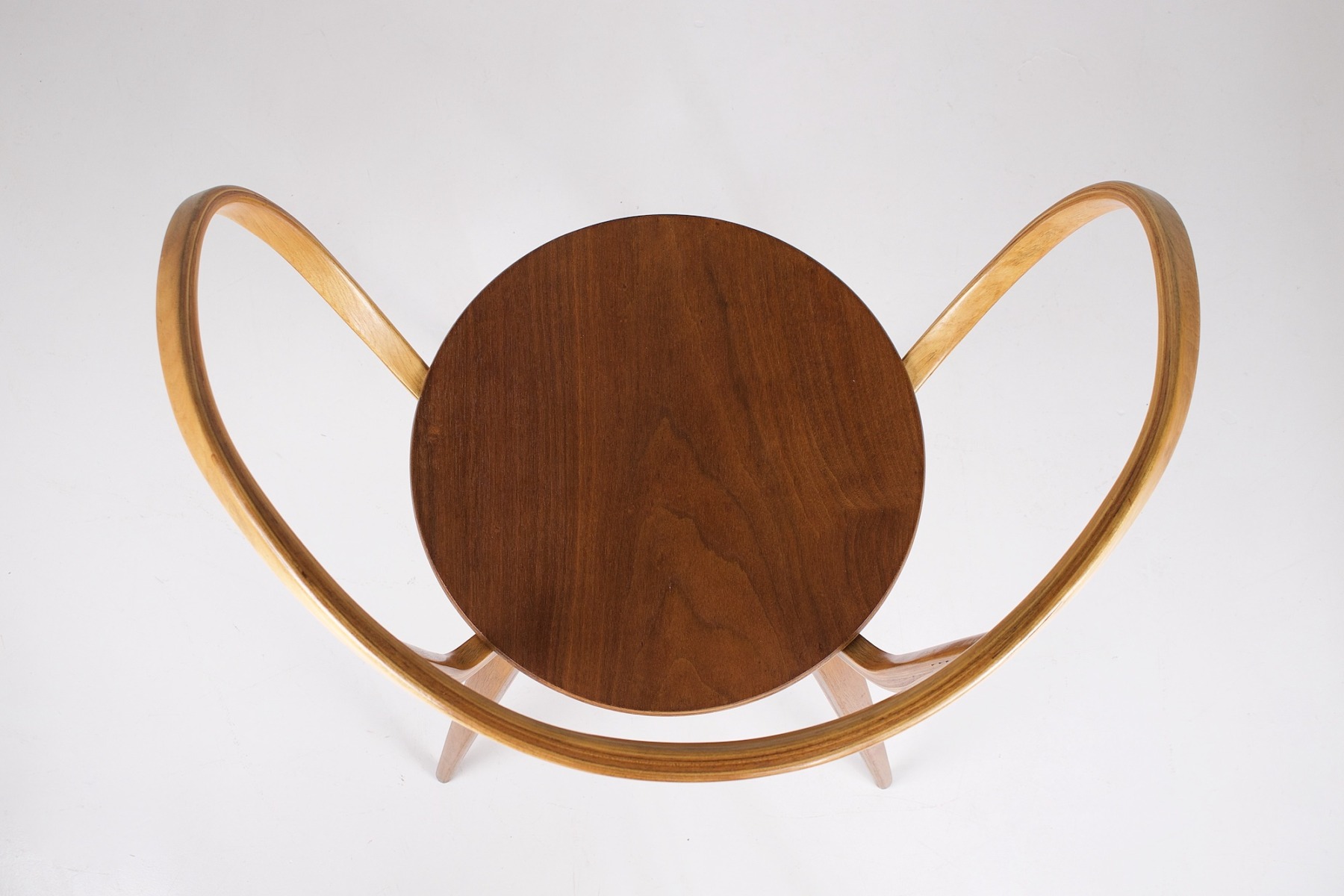
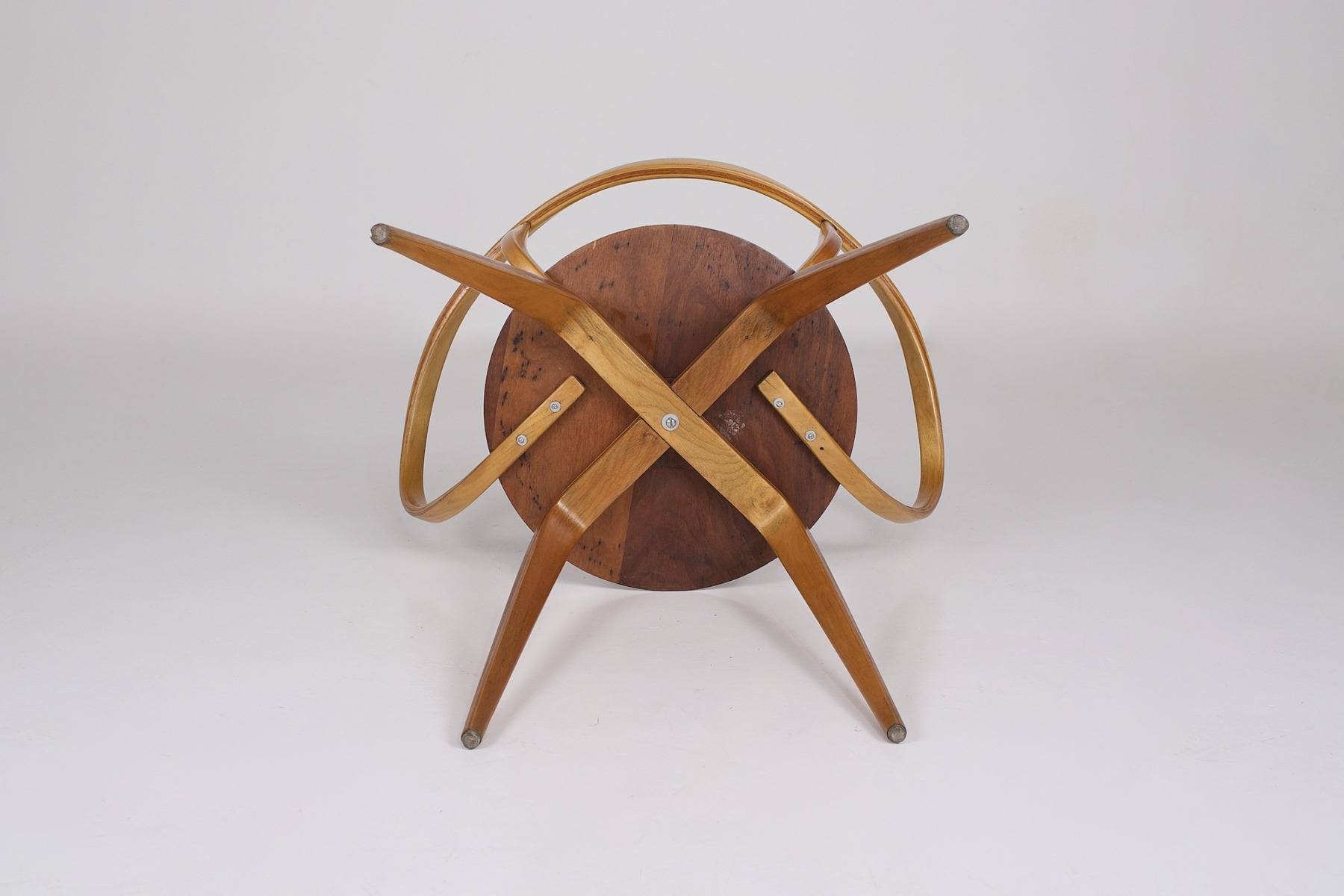
Pretzel chair by George Nelson, manufactured by Herman Miller circa 1955. Back and legs in heat-bent birch plywood. Unlike many models, this seat has no factory-drilled ventilation holes.
- H 76 CM X D 46 CM X W 67 CM X Seat height 47 CM.
- The underside of the seat shows old staple marks.
- Bibliography: George Nelson: Architect, Writer, Designer, Teacher, von Vegesack and Eisenbrand, pg. 248 George Nelson: The Design of Modern Design, Abercrombie, pg. 203
1 available in store

Pretzel chair or model 5890 by George Nelson
The Pretzel chair designed by George Nelson around 1952, is one of the most daring creations of modern American design. Conceived at a time when experimental furniture was seeking to push the technical limits of molded wood, this chair perfectly illustrates Nelson’s desire to create a seat that was both extremely light and structurally and visually innovative. Its nickname Pretzel derives from the continuous, intertwined shape of its structure, evoking a knot or pretzel, in which back, armrests and base seem to be drawn in a single gesture. As mentioned in the book “1000 Chairs”, Nelson’s aim was to make this chair liftable with two fingers (Charlotte & Peter Fiell, Taschen, pp 317).
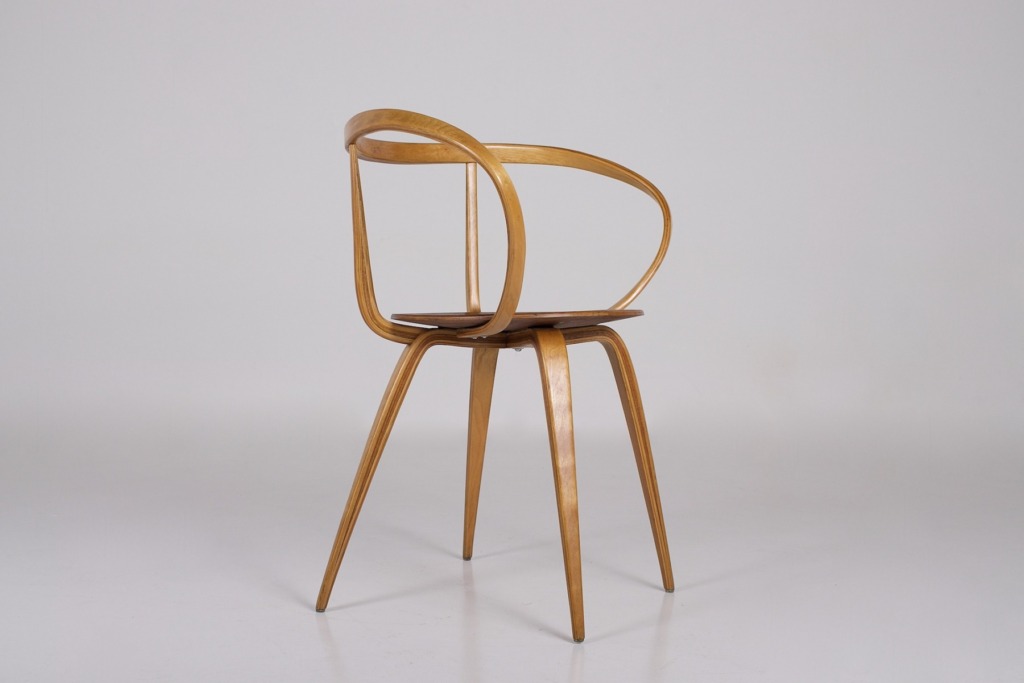
Pretzel chair or model 5890 by George Nelson, original edition.
Made from molded plywood, often birch, the chair is distinguished by the complexity of its curves and the thinness of its profile. This technical feat, remarkable for its time, was nevertheless the source of major production difficulties. Shaping the wood required extreme precision, making large-scale production costly and fragile. For this reason, after just one year, the original production was quickly halted around 1957, which explains the great rarity of period examples today.
The Pretzel Chair does not follow a strictly functional approach: it is part of a vision of furniture as a sculptural object, where the structure becomes the main decorative element. Despite its apparent lightness, the seat offers surprising comfort, the curvature of the backrest naturally hugging the body. Some models were accompanied by a discreet seat cushion, enhancing ergonomics without altering the legibility of the shape.
Produced in very small series in the 1950s, this chair is today considered a major piece of George Nelson’s design, alongside his better-known creations for Herman Miller. The original editions from the 1950s are clearly distinguished from later reissues by their workmanship, proportions and historical value. Today, they are highly sought-after by collectors and regularly appear in reference private collections as well as in exhibitions devoted to 20th-century design.
The radical Pretzel chair embodies a period of intense experimentation in modern design, when aesthetics, technique and industrial innovation were inseparable.
You might also like…

Discover also...

Delivery to Belgium

Delivery to France

Delivery to Luxembourg
