




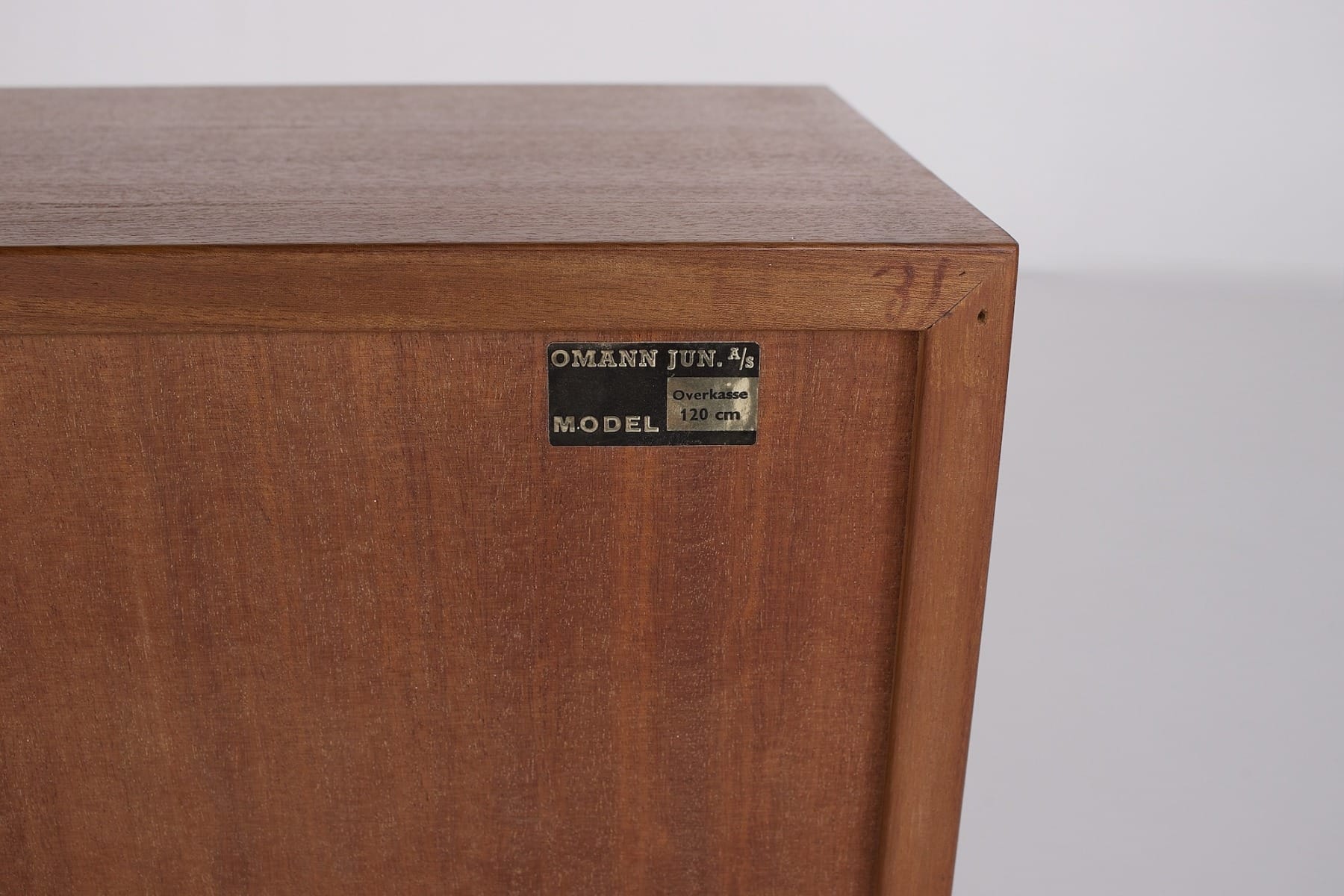
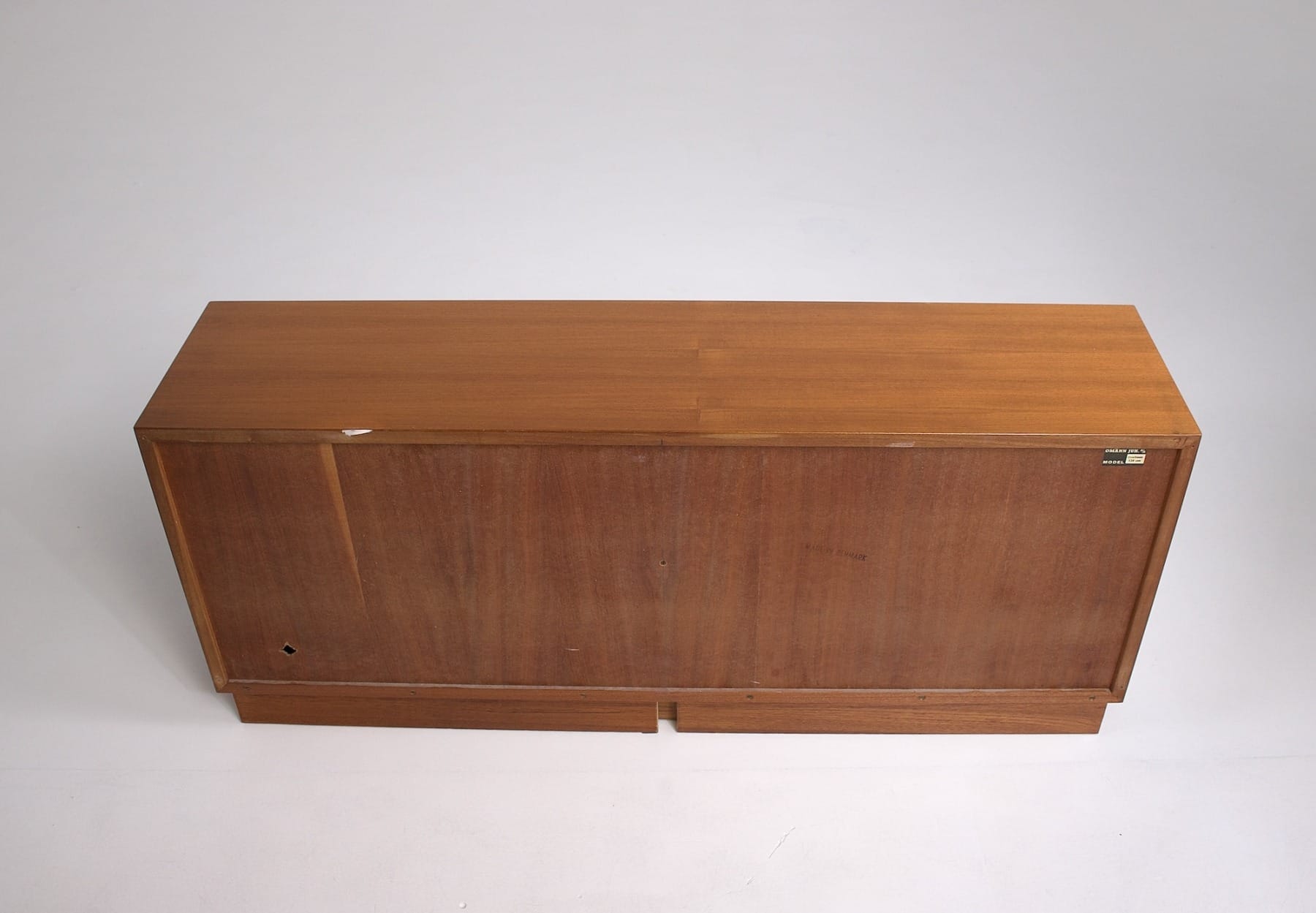
Omann Jun low teak sideboard – Danish design (D 30 cm)
€1480,00
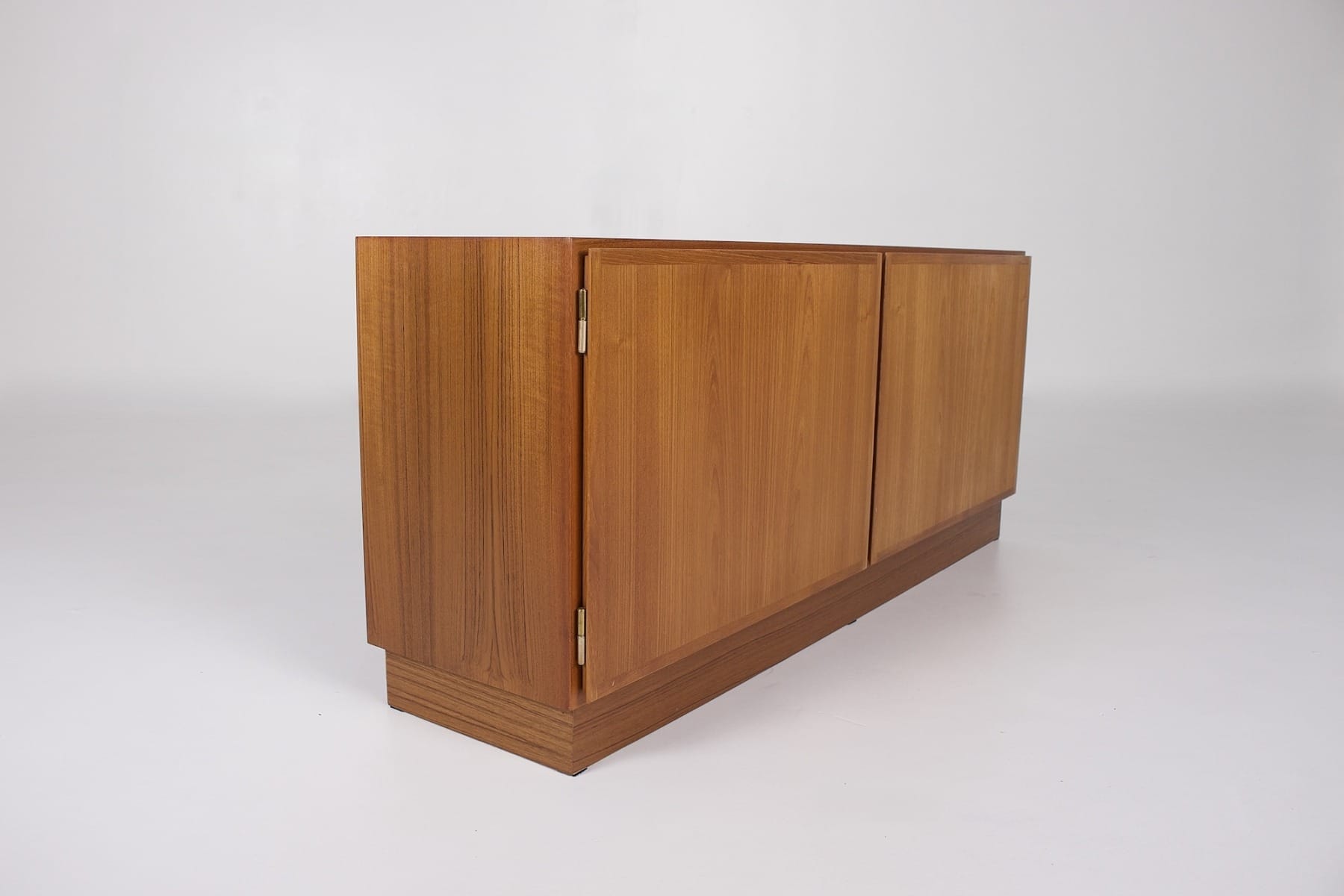
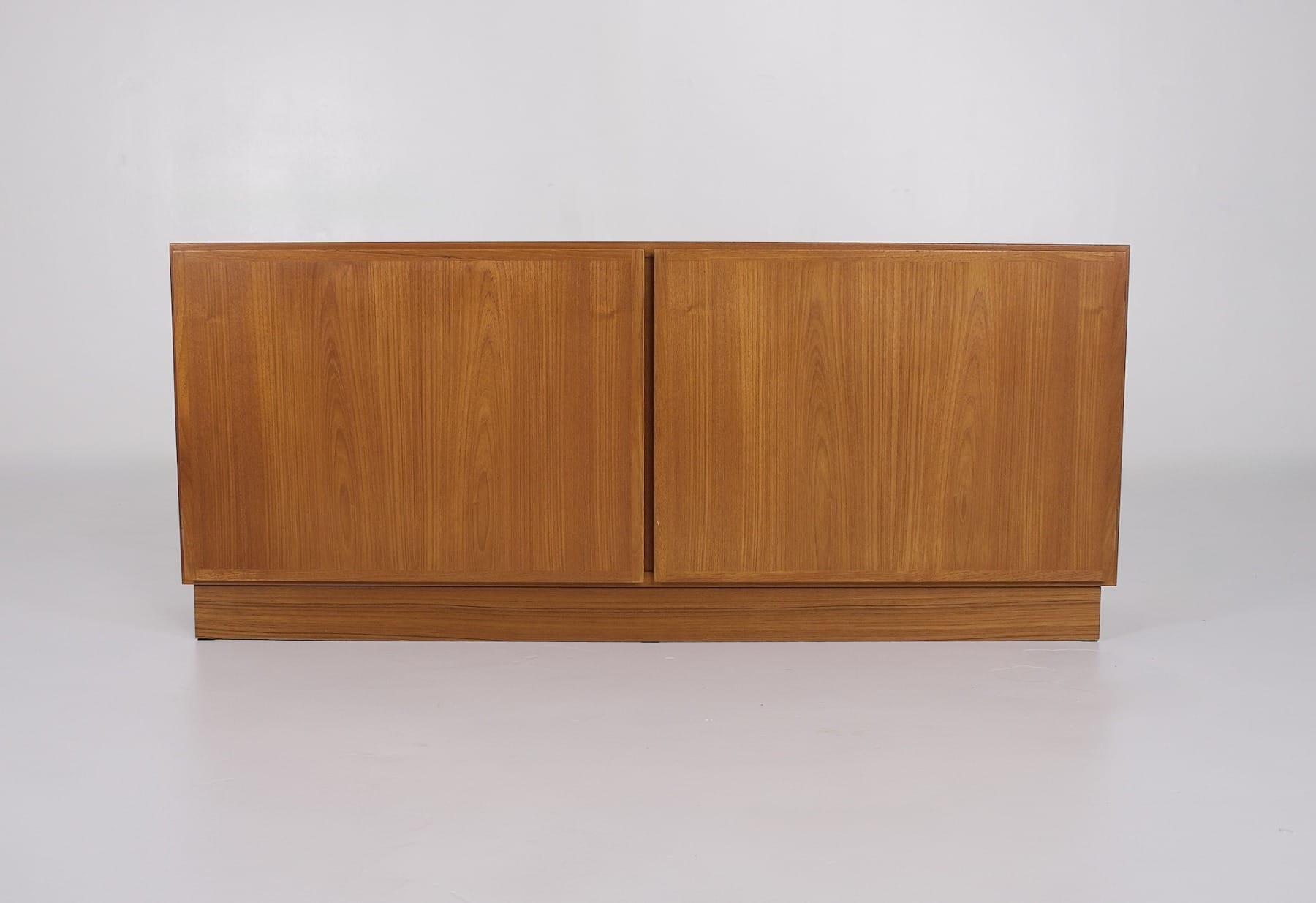
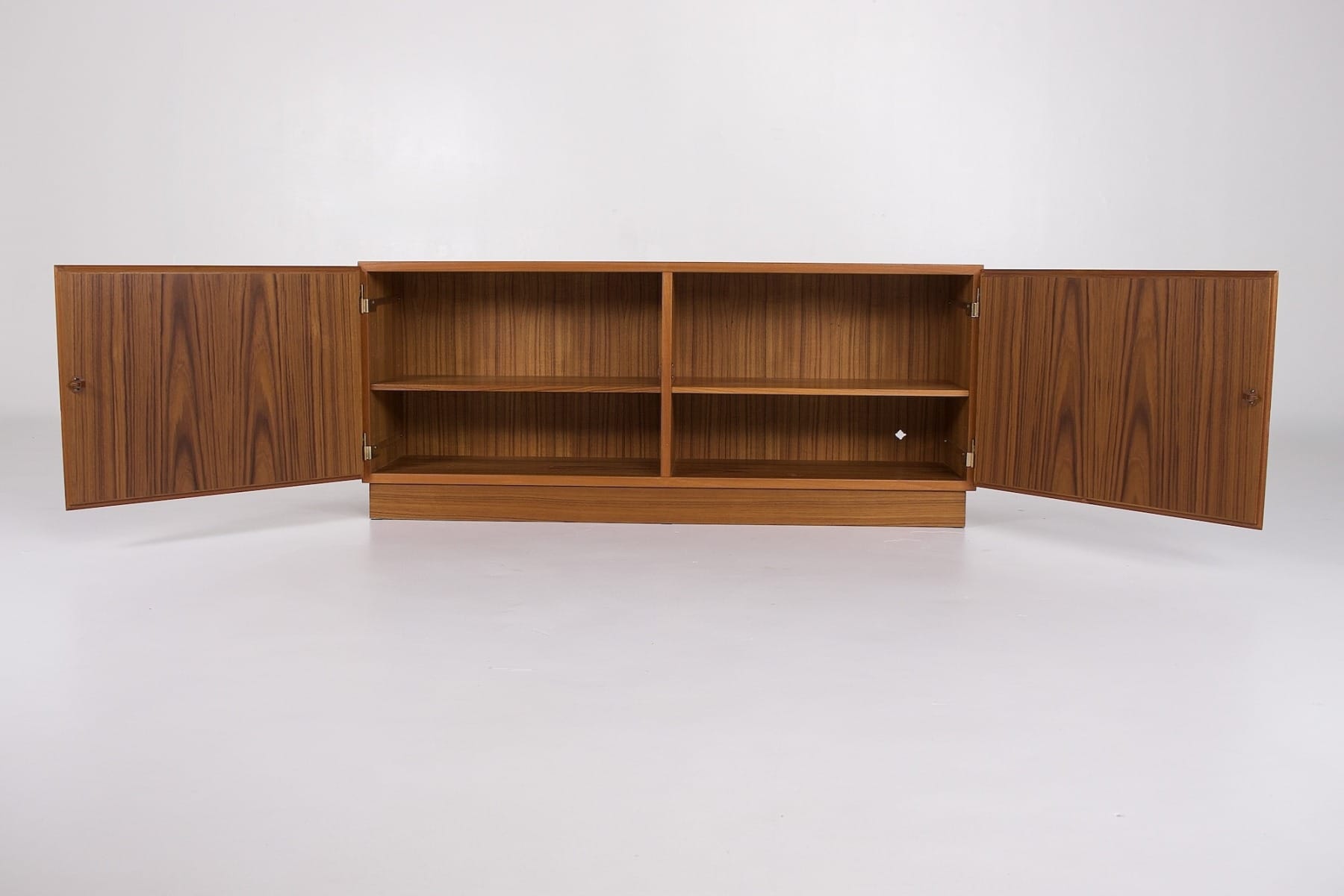
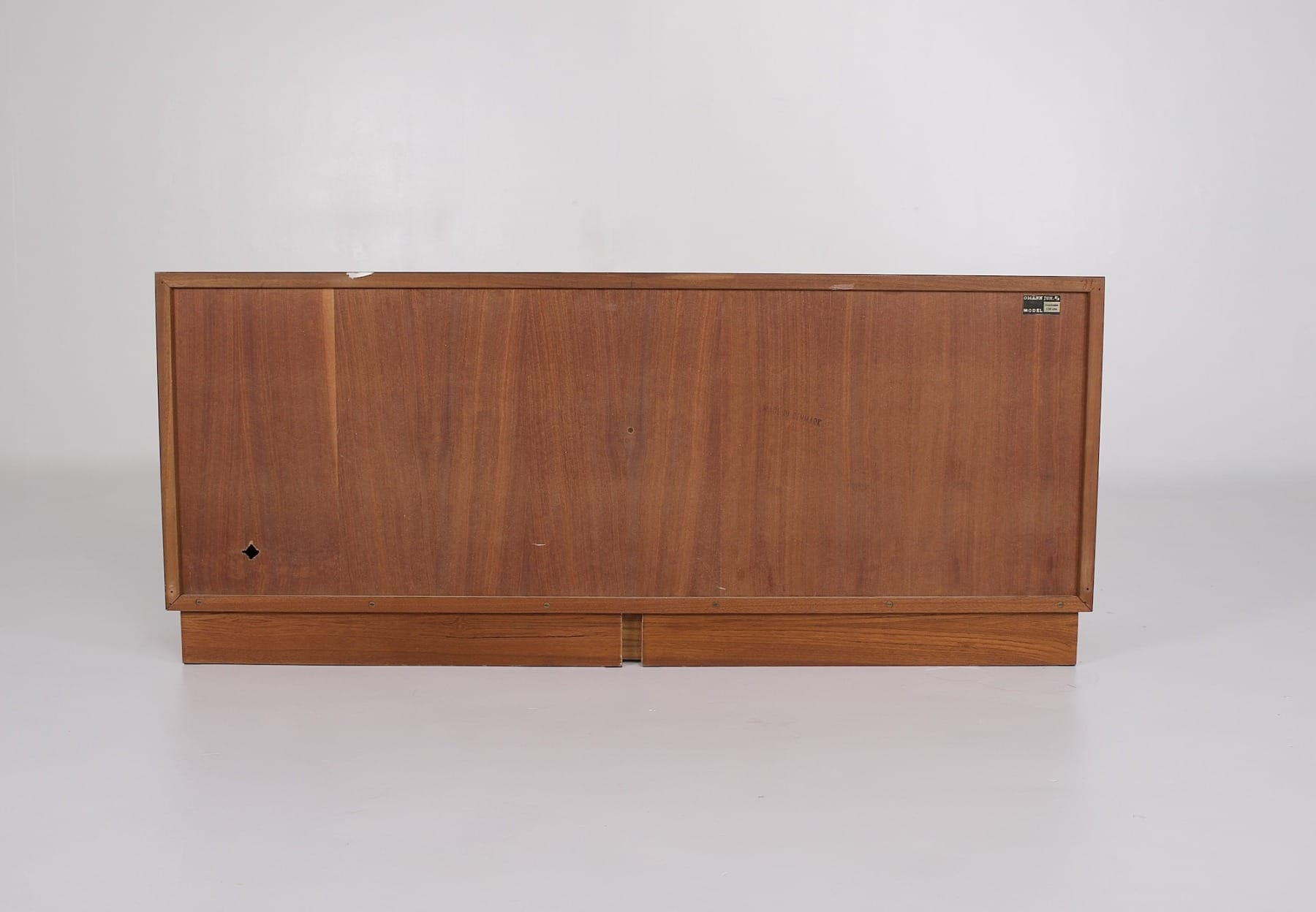
Teak low cabinet with two doors, produced in Denmark by Omann Jun in the 1960s-70s. Its interior is organized into two independent compartments, each fitted with a removable shelf adjustable in height at intervals of approximately 5 cm. Its very compact depth of only 30 cm allows it to easily find its place in spaces where a traditional sideboard would be too bulky.
- Excellent condition, restored in our workshop.
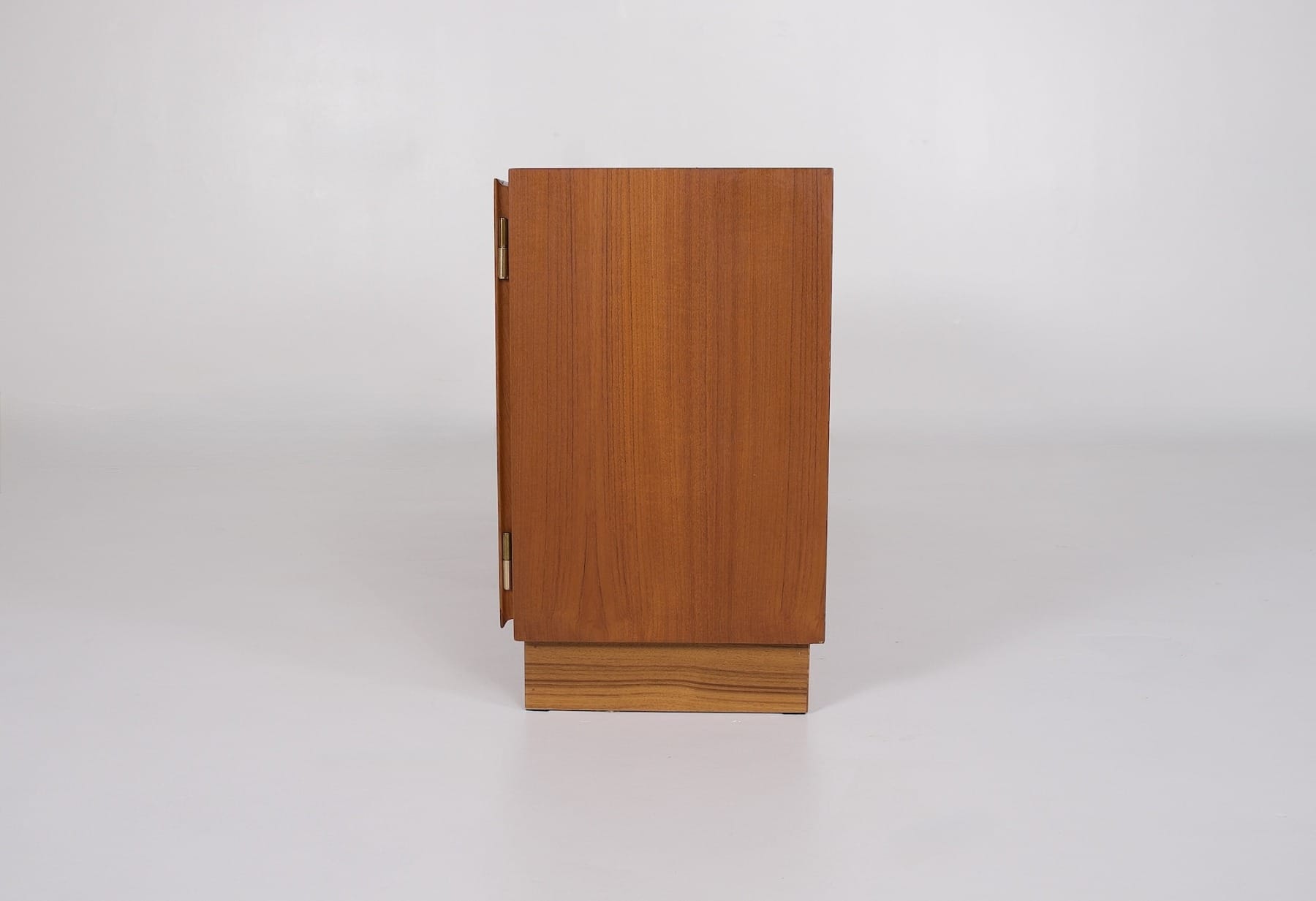
- W 120 cm x D 30 cm x H 52 cm.
- Usable (Interior) depth: 26 CM.
- Three examples identical in their dimensions and finish are available; only the natural grain of the teak varies from one piece to another.
1 available in store

A compact and functional Danish low sideboard
Produced by Omann Jun in the 1960s and 1970s, this teak low sideboard stands out for its particularly compact proportions. Its depth of only 30 cm makes it easy to install in spaces where a traditional storage unit would be too bulky.
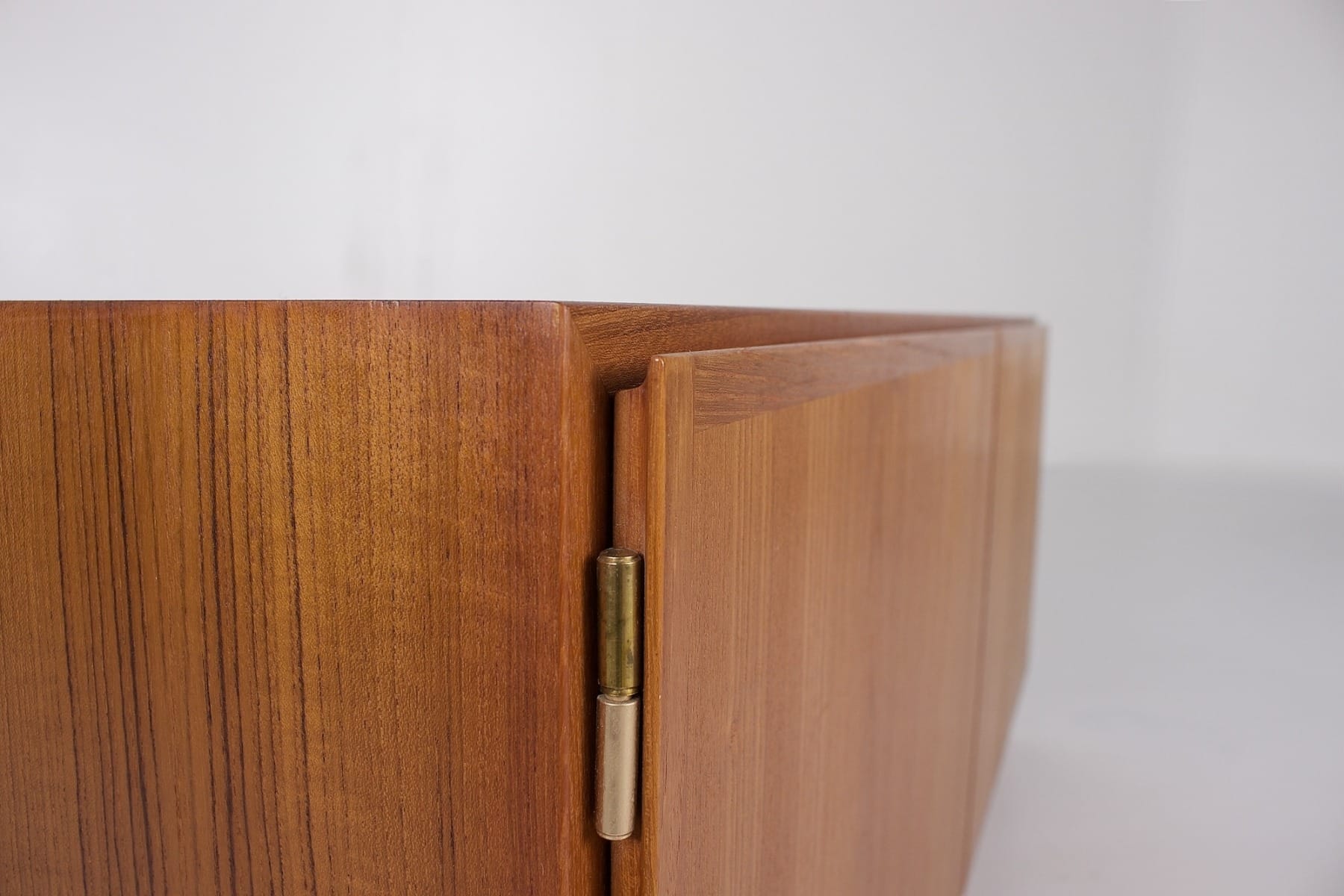
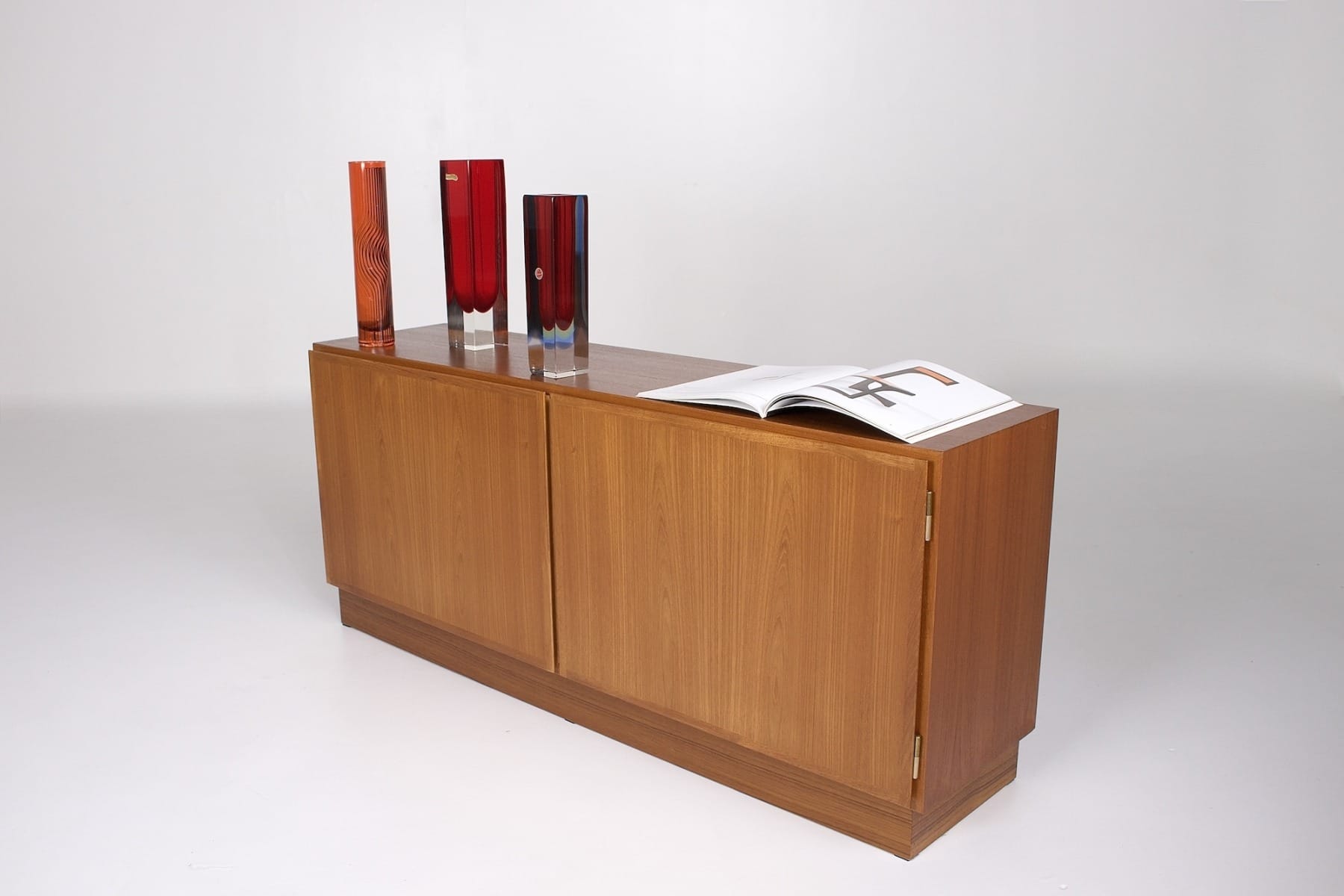
This example features regular, uniform teak grain that reinforces the simplicity of its facade. The two doors have no visible handles. Their edge is slightly profiled to allow easy opening while maintaining a very clean line.
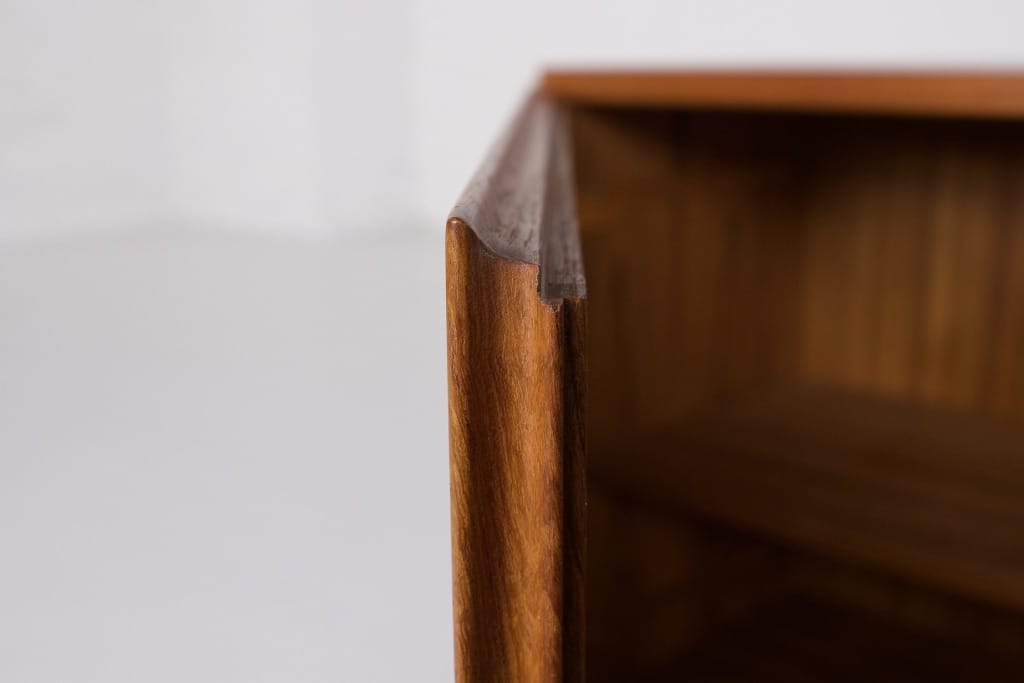
The door edges feature a slight ogee profile, which facilitates grip without breaking the continuity of the facade.
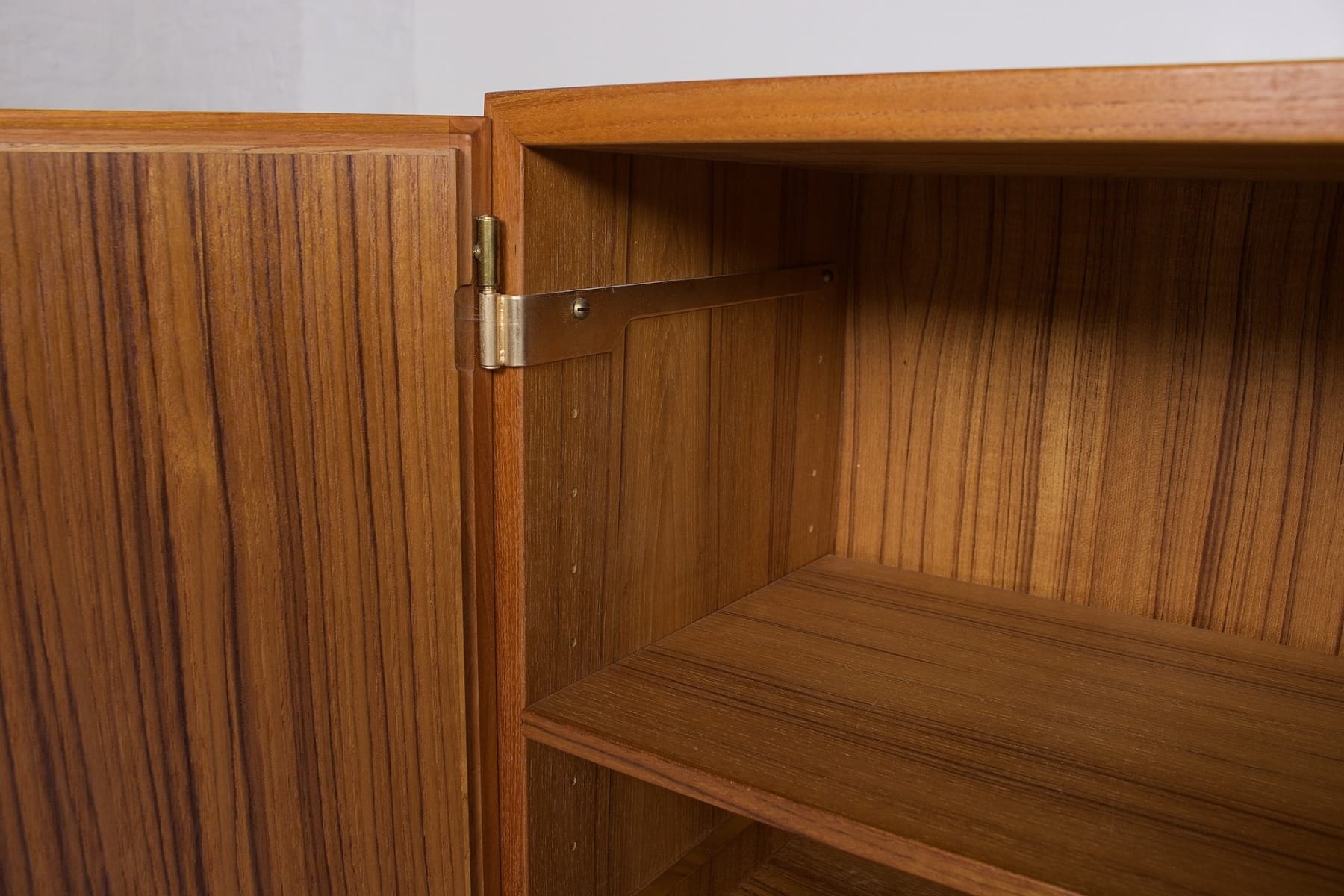
The interior is organized into two independent compartments. Each receives a removable shelf whose height can be adjusted in increments of approximately 5 cm. This arrangement allows storage volume to be adapted to books, files, tableware or decorative objects.
A modular piece to use alone or in multiples
Three examples of this model are available. Identical in their dimensions and finishes, they differ only in the natural grain of the teak. They can be distributed in different rooms or placed side by side to create a long low credenza.
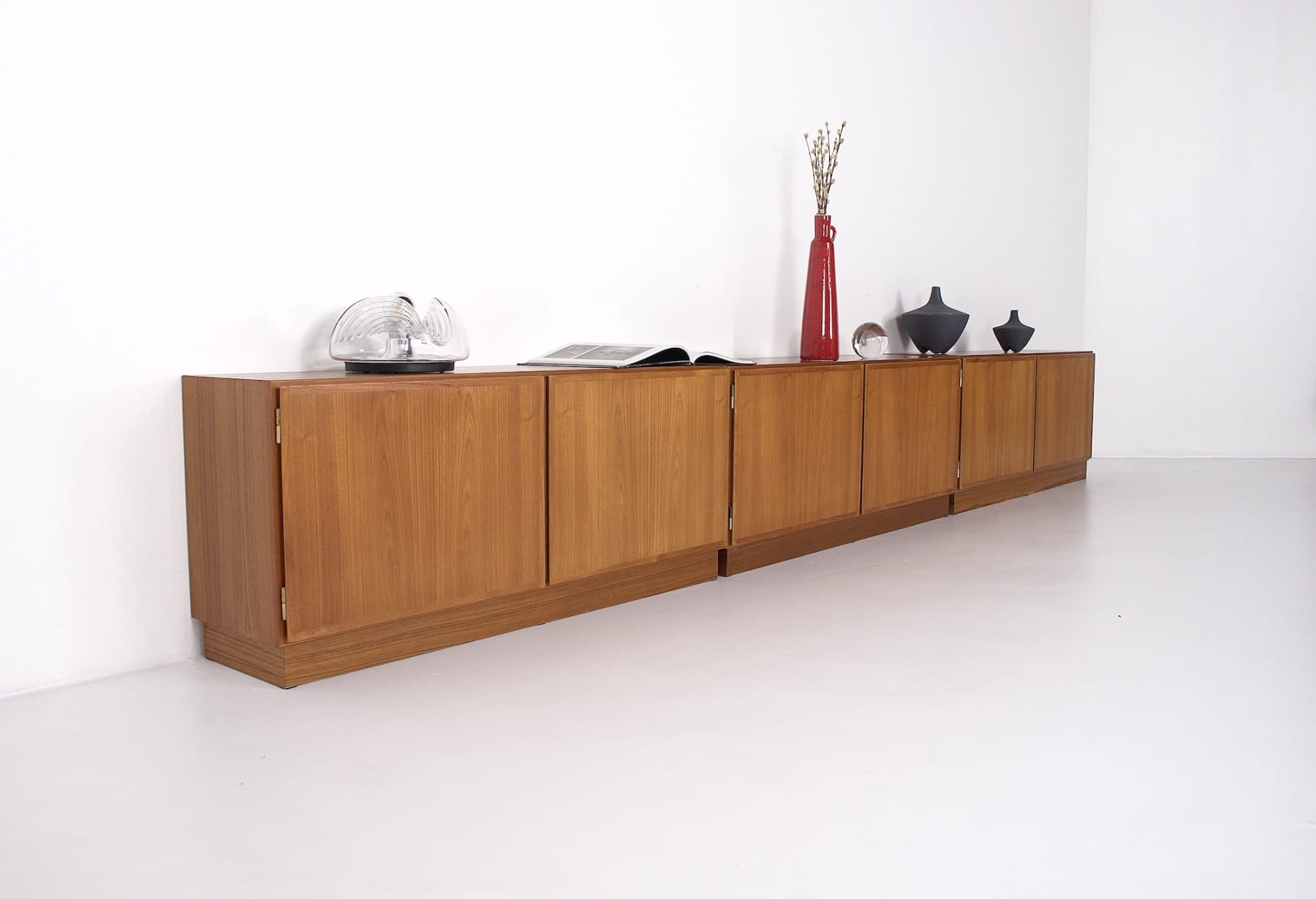
Thanks to their shallow depth, these pieces easily find their place in an office, a bedroom or a living room. Their format also allows them to be installed in a hallway, against a narrow wall or under a window.
Mounted on a solid, stable plinth, they can also occasionally accommodate cushions and serve as a low bench. Used alone or together, they retain their storage function while offering great flexibility in layout.
Discover also...


Delivery to Belgium

Delivery to France

Delivery to Luxembourg
