





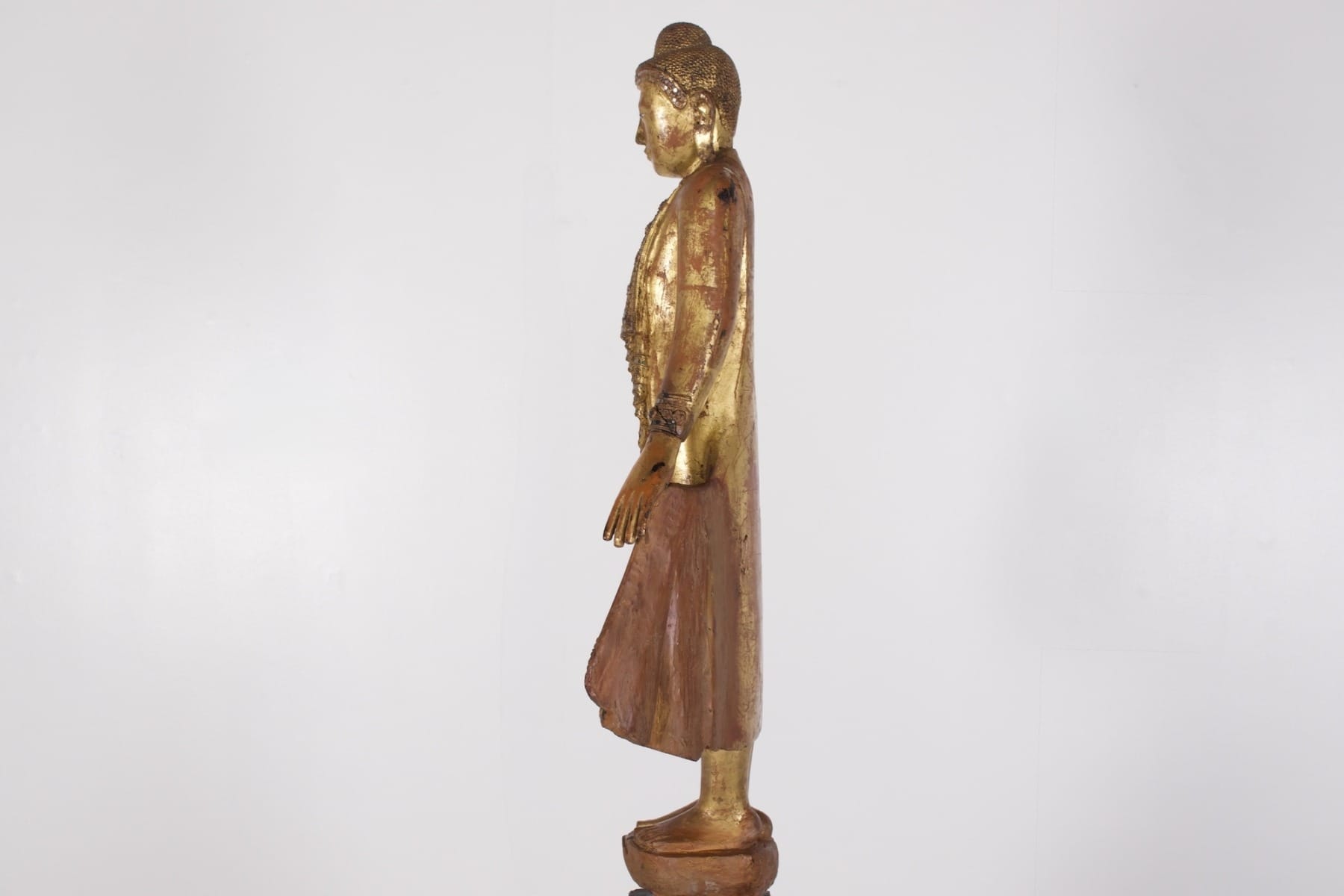
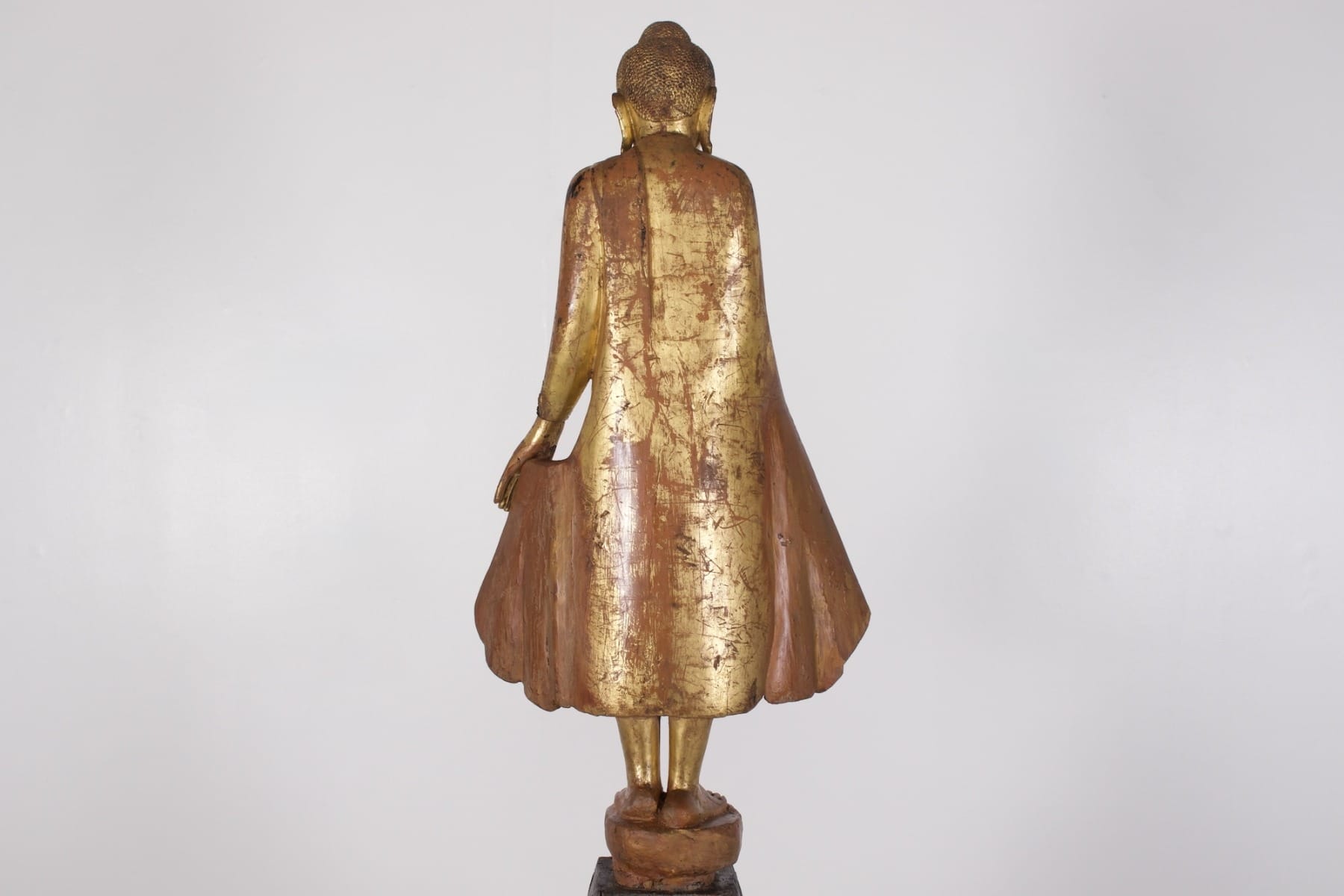
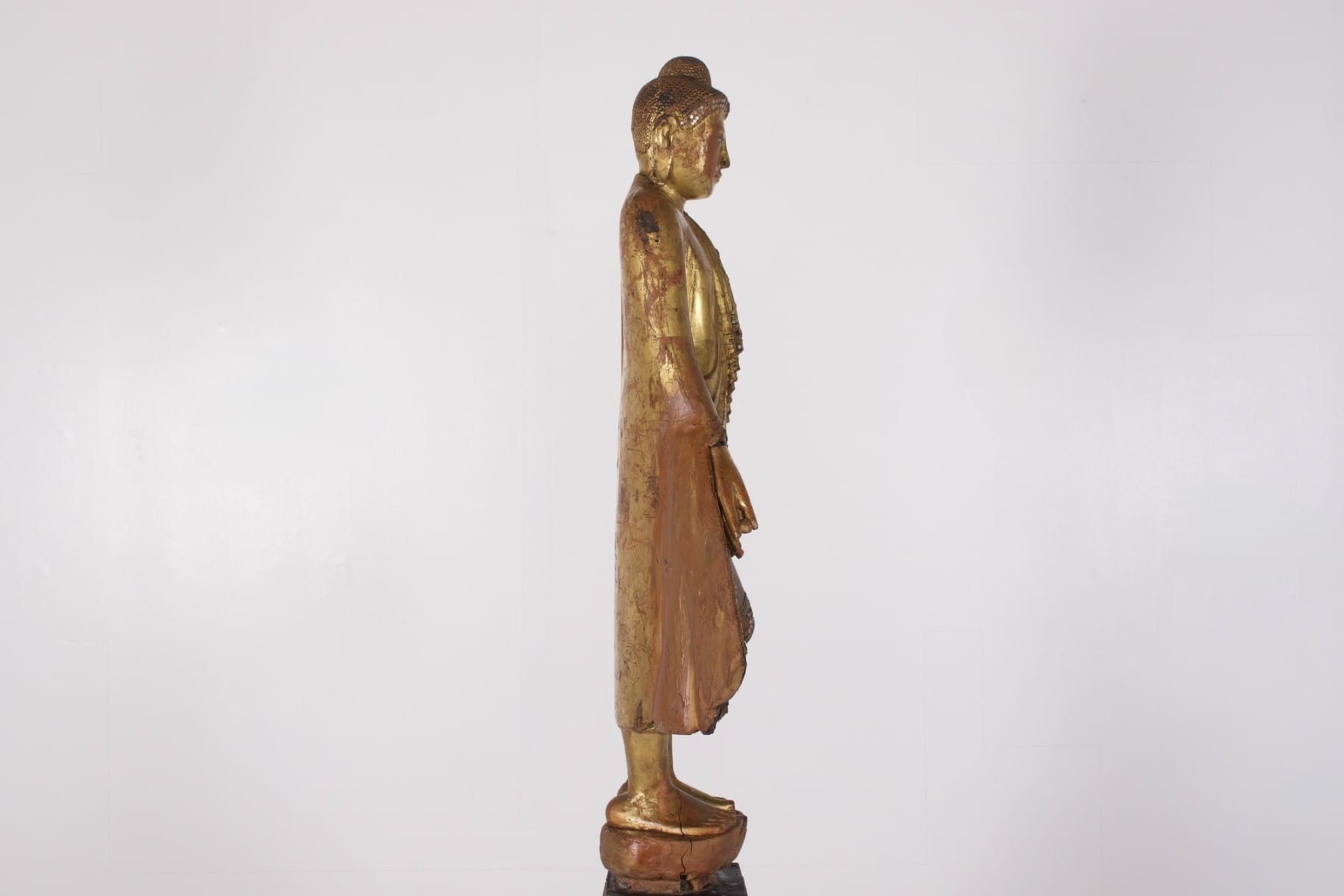
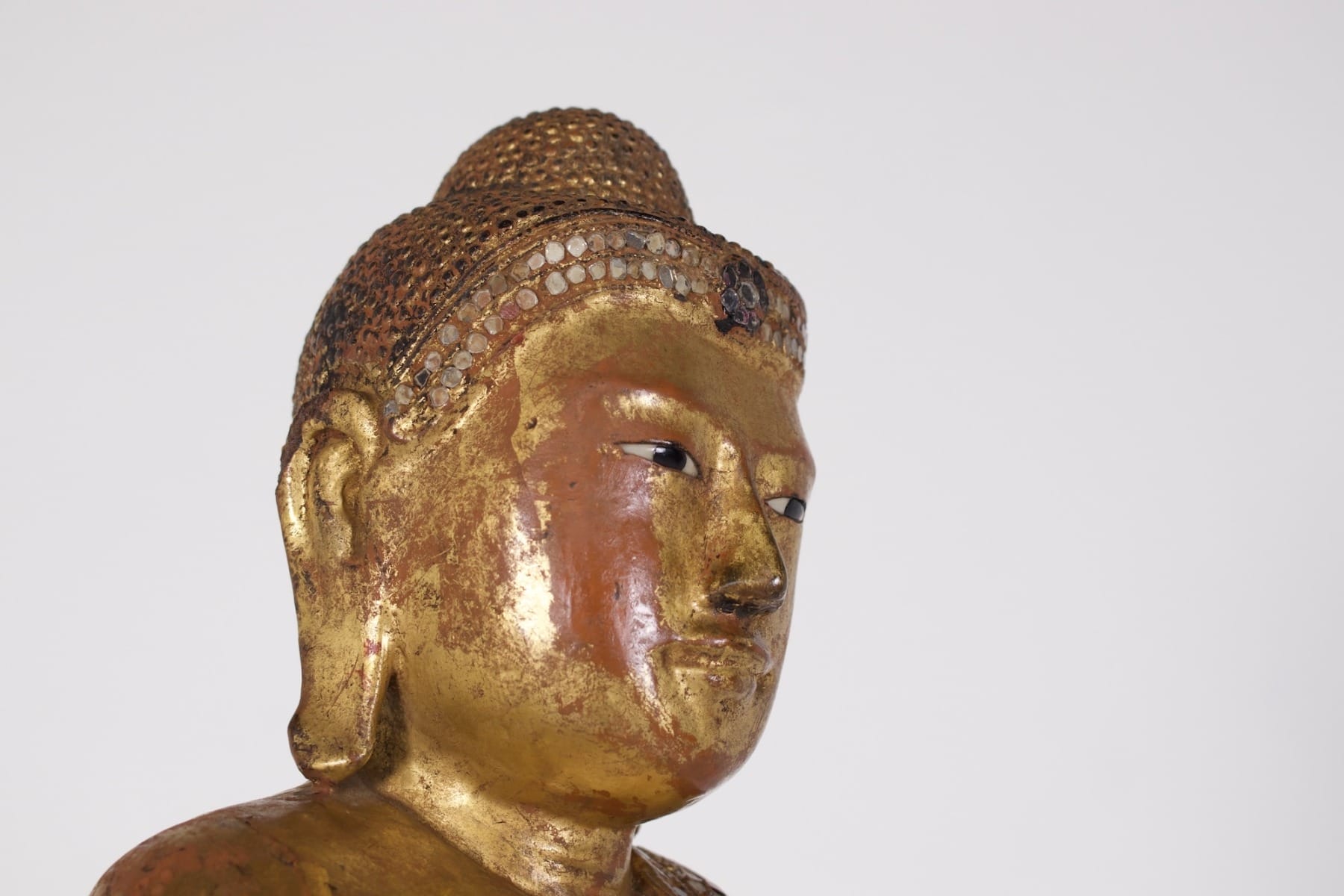
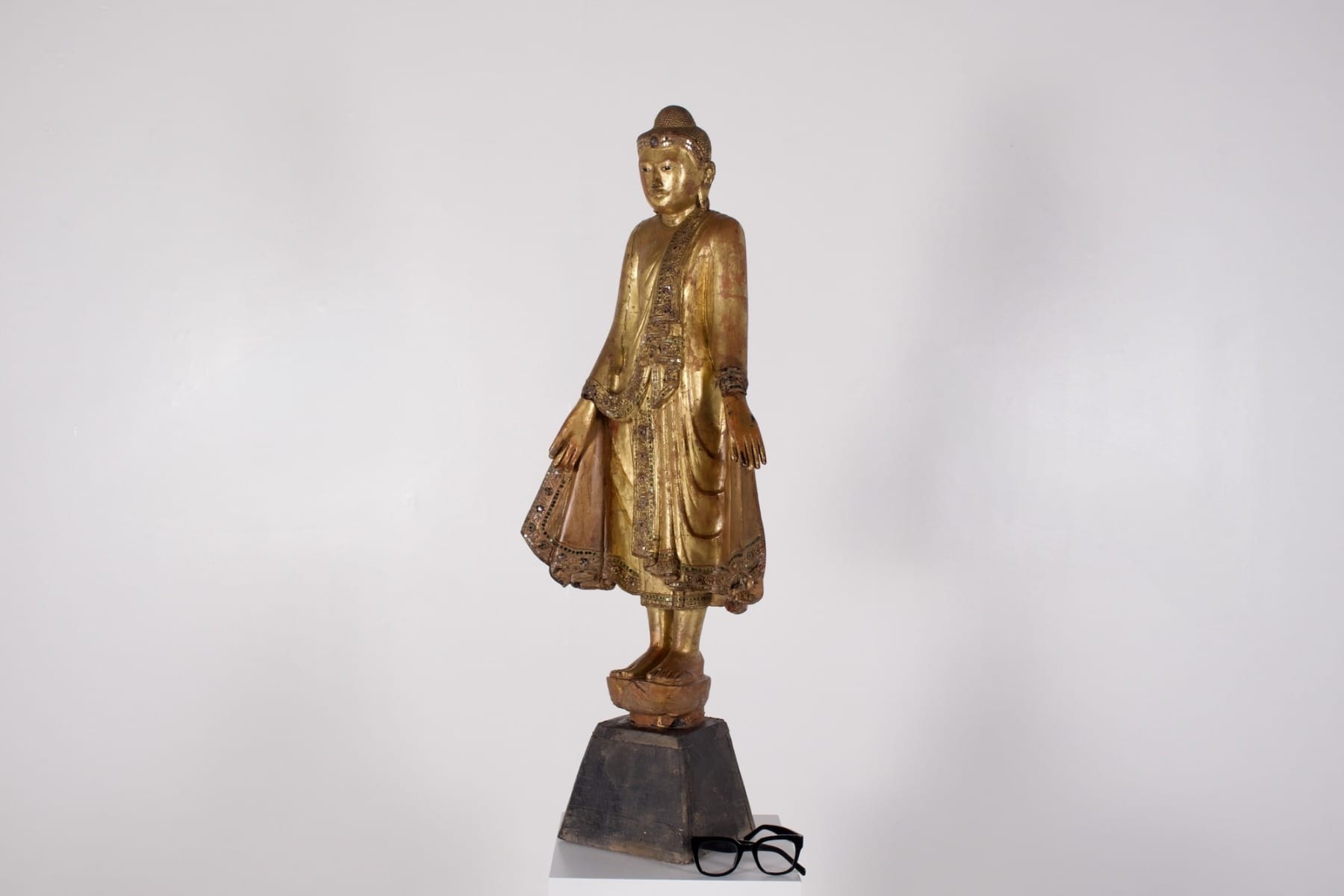
Standing Shakyamuni Statue – Burma
€1950,00
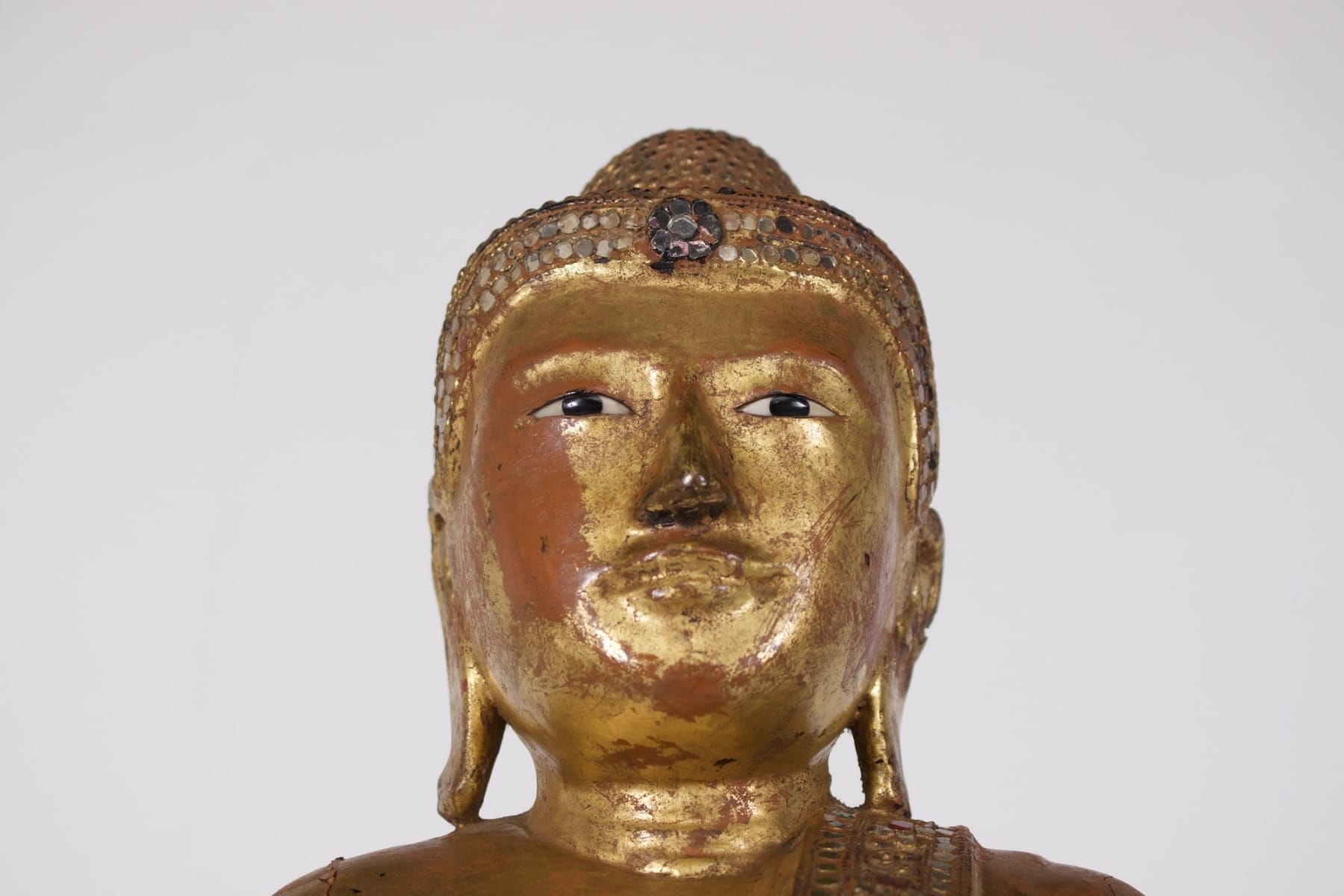
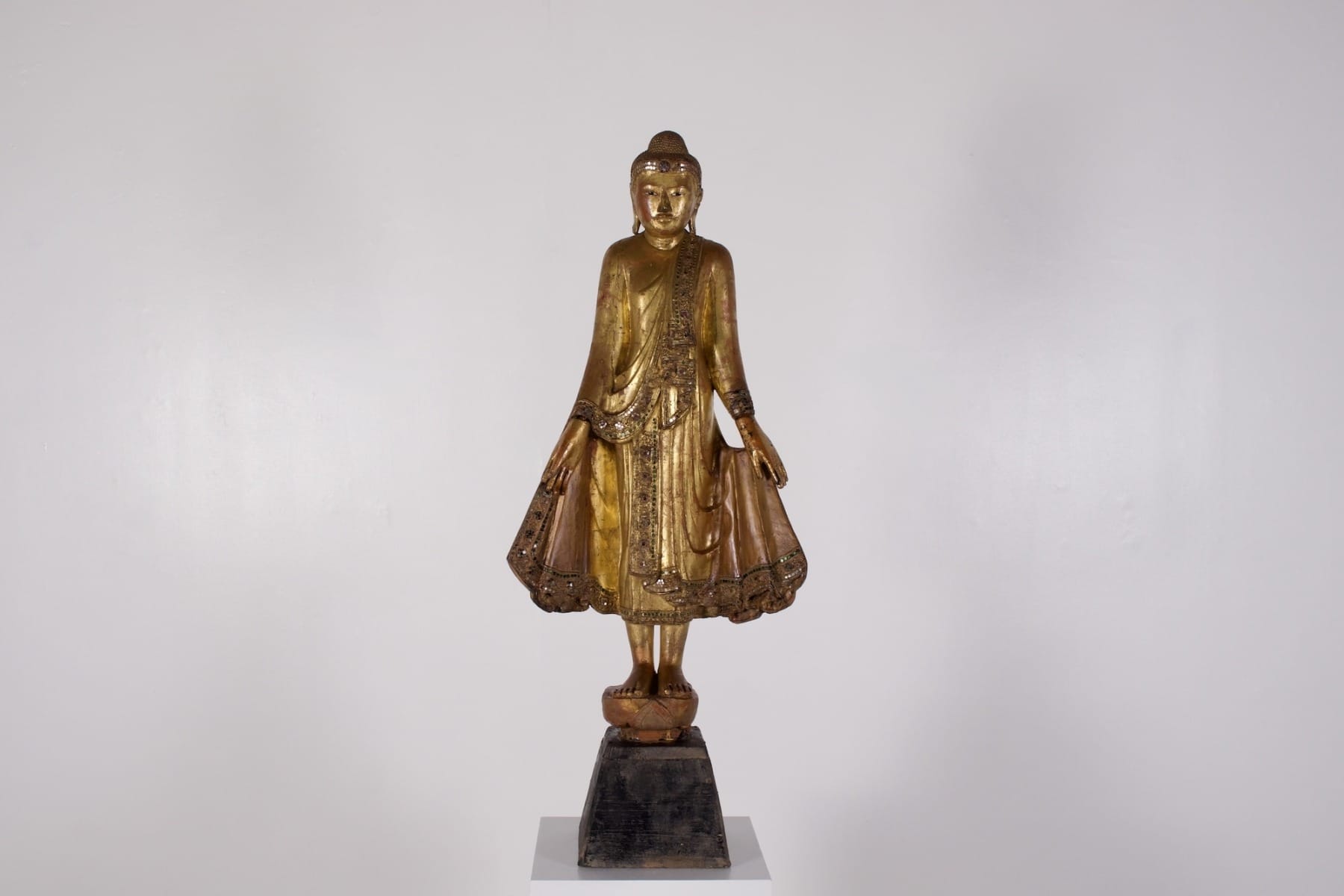
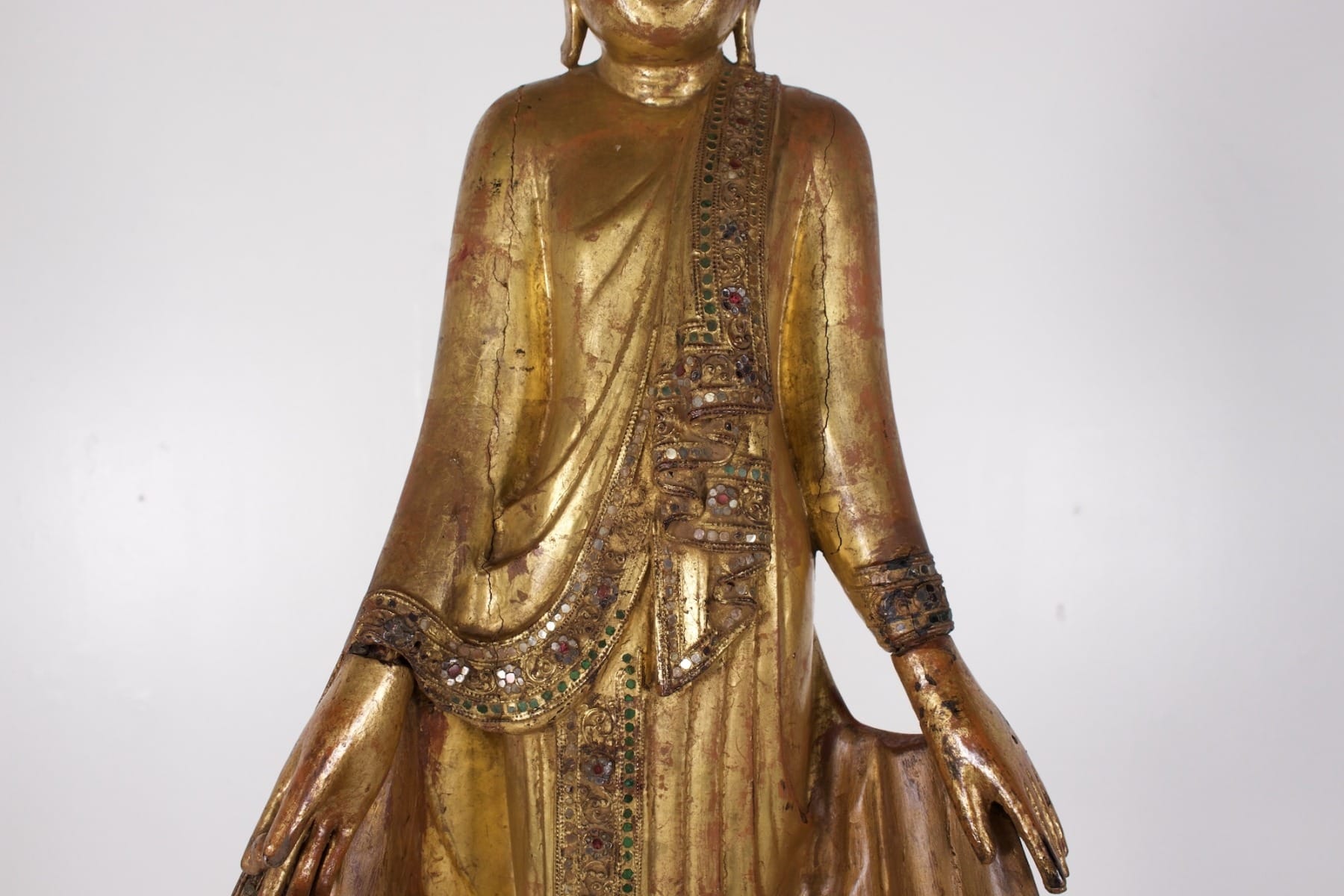
Antique standing carved wooden Buddha statue, lacquered and gilded, from Burma (Myanmar), Mandalay style, 19th/20th century. His serene face, expressive eyes, and the richly ornamented draping of his uttarasanga illustrate the refinement of Burmese religious sculpture. In the tradition of Theravāda Buddhism, the myrobalan fruit evokes physical healing, while the Buddha’s teaching symbolizes spiritual healing and liberation from suffering.
- Provenance: Claude de Marteau collection. Sold with certificate.
- Total height 95 cm × W 38 cm × D 13 cm
- Attached black base: 18 cm × 18 cm × H 16 cm
Also discover our antique sculptures from Burma.
1 available in store

Standing Gilded Wooden Buddha – Theravāda Tradition of Burma
This antique carved wooden statue, lacquered and gilded, represents the standing Buddha Shakyamuni, following an iconographic tradition characteristic of Burma (Myanmar).
His serene face, with slightly lowered eyes and a discreet smile, expresses the benevolence and serenity of the Awakened One. The slender silhouette and the richness of the treatment of the garments evoke Buddhist representations from the mid-Mandalay period (1853–1948).

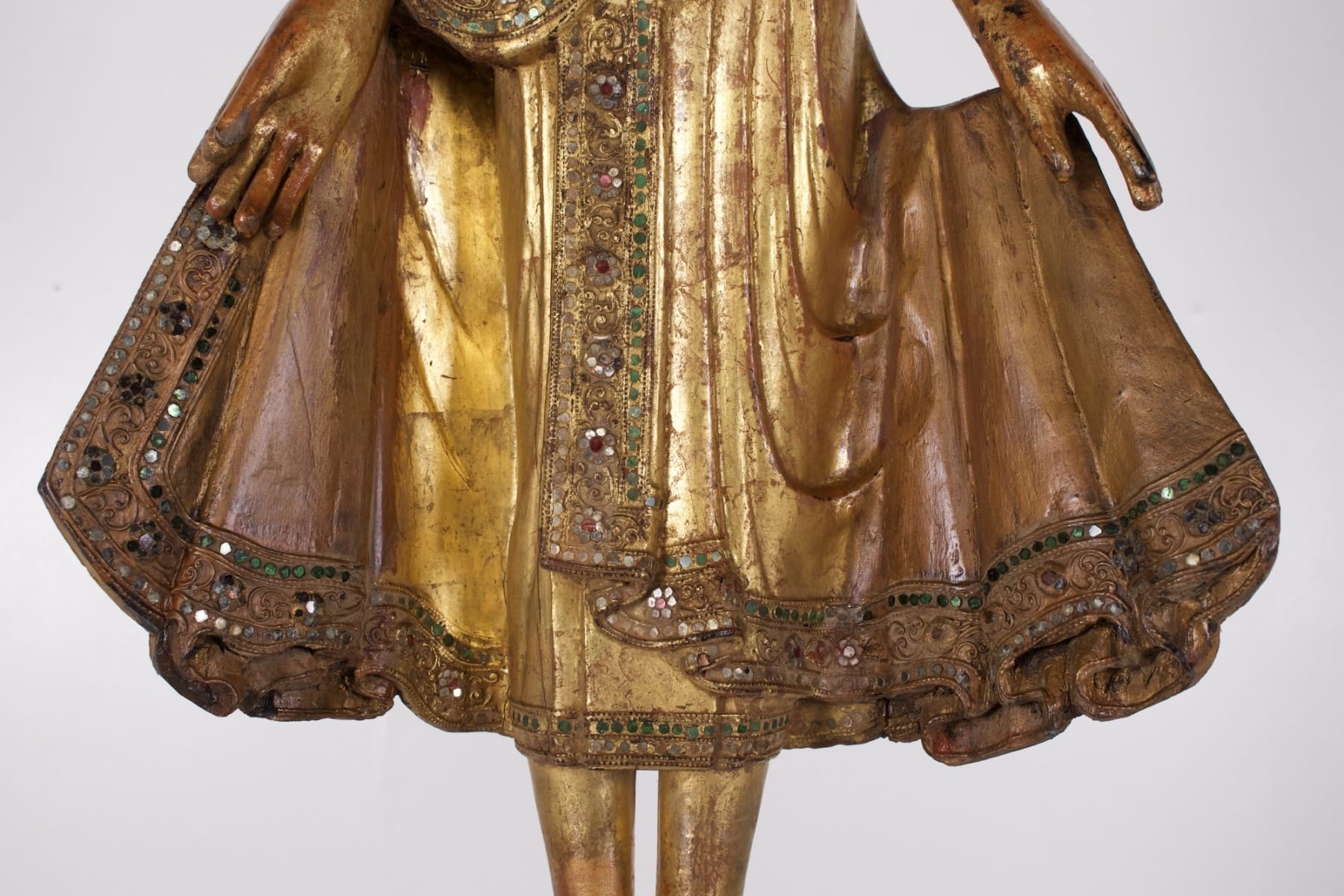
The Buddha is clad in the uttarāsaṅga, the outer monastic robe, whose deeply carved folds unfold down to the feet. A long band of fabric, the saṅghāṭi, descends from his left shoulder. The borders are adorned with floral and geometric motifs in relief, punctuated by small inlays of colored glass. The gilding, combined with the richness of these ornaments, testifies to the importance accorded to the representation of the Buddha in Burmese artistic traditions.
The Healing Buddha in Theravāda Buddhism
In the Buddhist tradition of Burma, certain representations of the standing Buddha evoke his power of physical and spiritual healing. This iconography is notably associated with the myrobalan, a medicinal fruit traditionally used in Asia. When represented in the Buddha’s hand, it symbolizes healing and deliverance from suffering.
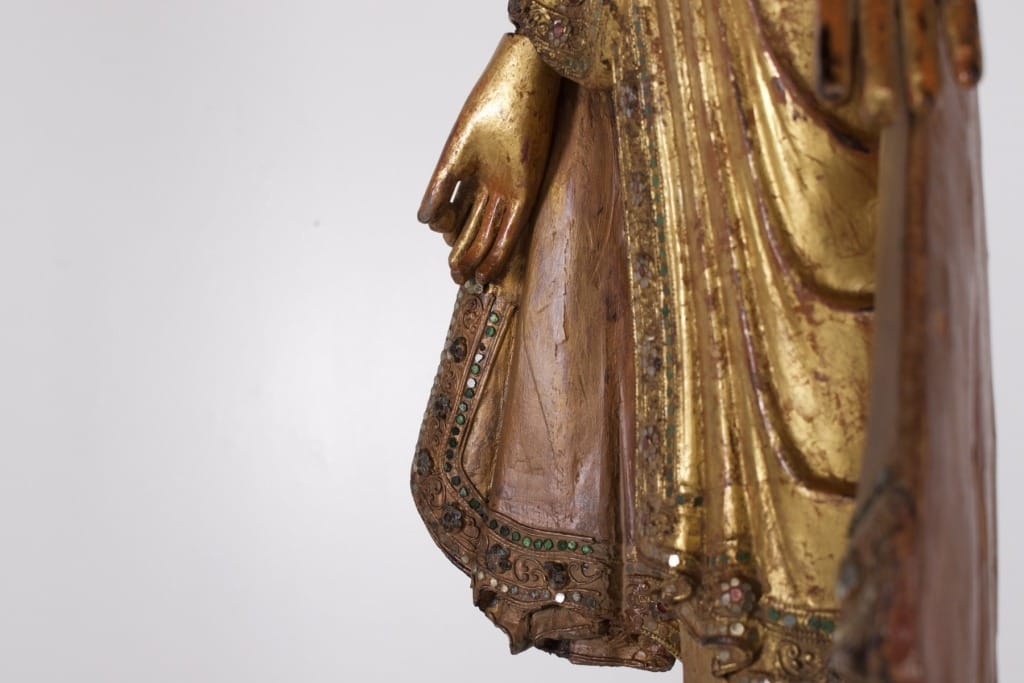
In the right hand of the Enlightened One, the myrobalan fruit, symbol of physical and spiritual healing
This therapeutic dimension finds an echo in the teachings of Theravāda Buddhism, where the Buddha appears as a guide capable of relieving human suffering through wisdom, compassion, and knowledge. Although the medicinal fruit is also associated with Bhaiṣajyaguru, the Medicine Buddha of Mahāyāna Buddhism, this iconography has been assimilated and reinterpreted in the Theravāda tradition of Burma.
Healing thus takes on both a physical and spiritual dimension, recalling that the Buddha’s teaching aims above all to liberate beings from suffering.
Thai Export Authorization Dating from 1972
Before its cleaning, this sculpture retained an old administrative label from the Department of Fine Arts of Thailand, attached to its base, the country from which Claude de Marteau imported it. This lead-sealed document mentions a reference to an exit authorization from the territory, under number 585/2515. The year 2515 of the Buddhist calendar corresponds to 1972 in the Western calendar. The base of the statue bore a label “29” corresponding to that transcribed on the pink document.


This label constitutes an interesting documentary element for tracing the circulation of the work. It attests that an export authorization had been granted by the Thai authorities in the early 1970s. The presence of these old Buddha statues imported in the 1970s is also found in Claude de Marteau’s personal photographic inventories.

Period photographs of Buddhas from Burma – Asie-Afrique sprl / Claude de Marteau archives
You might also like…


Discover also...


Delivery to Belgium

Delivery to France

Delivery to Luxembourg
