



Dayak ancestral hampatong figure – Borneo, Indonesia
€4500,00
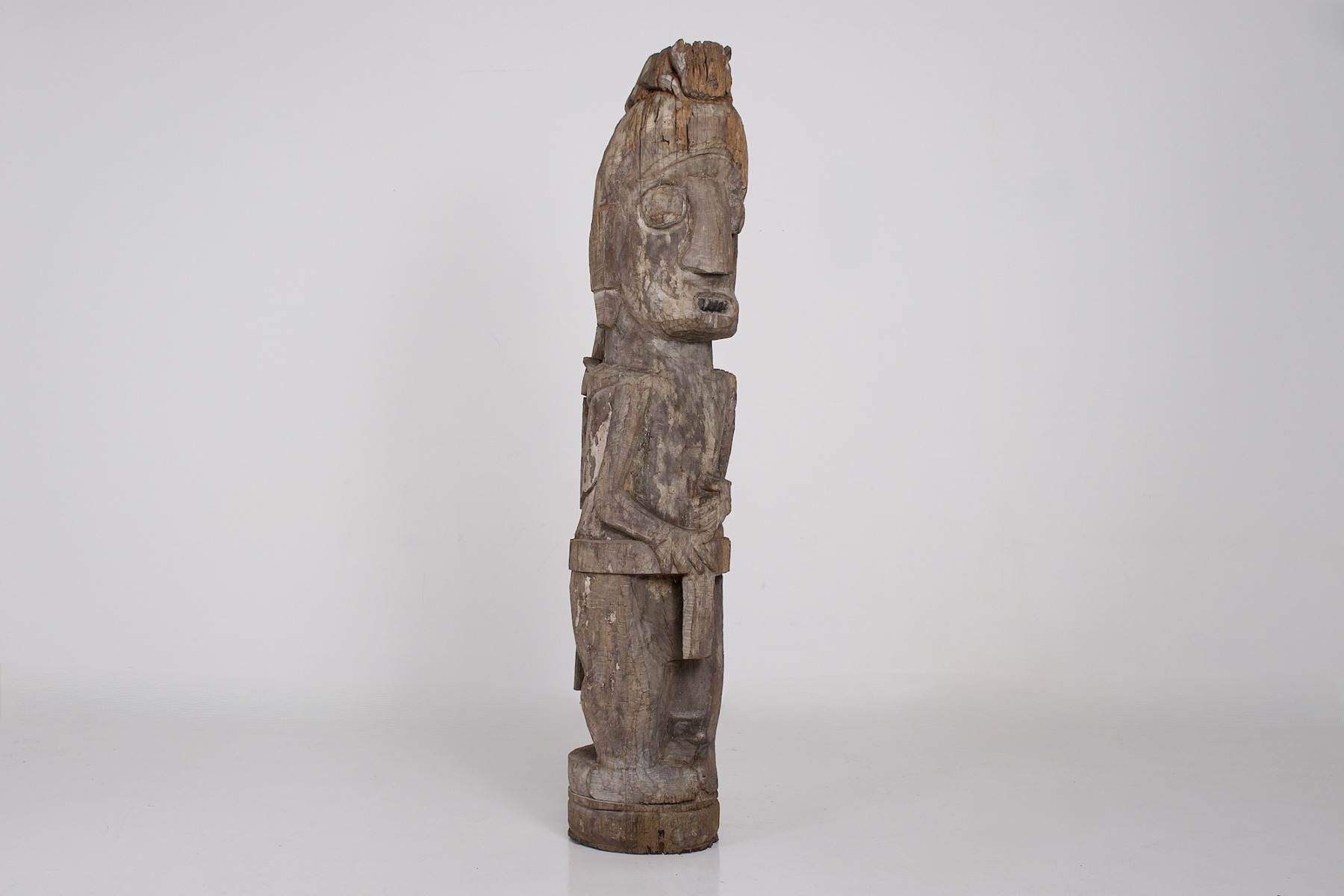
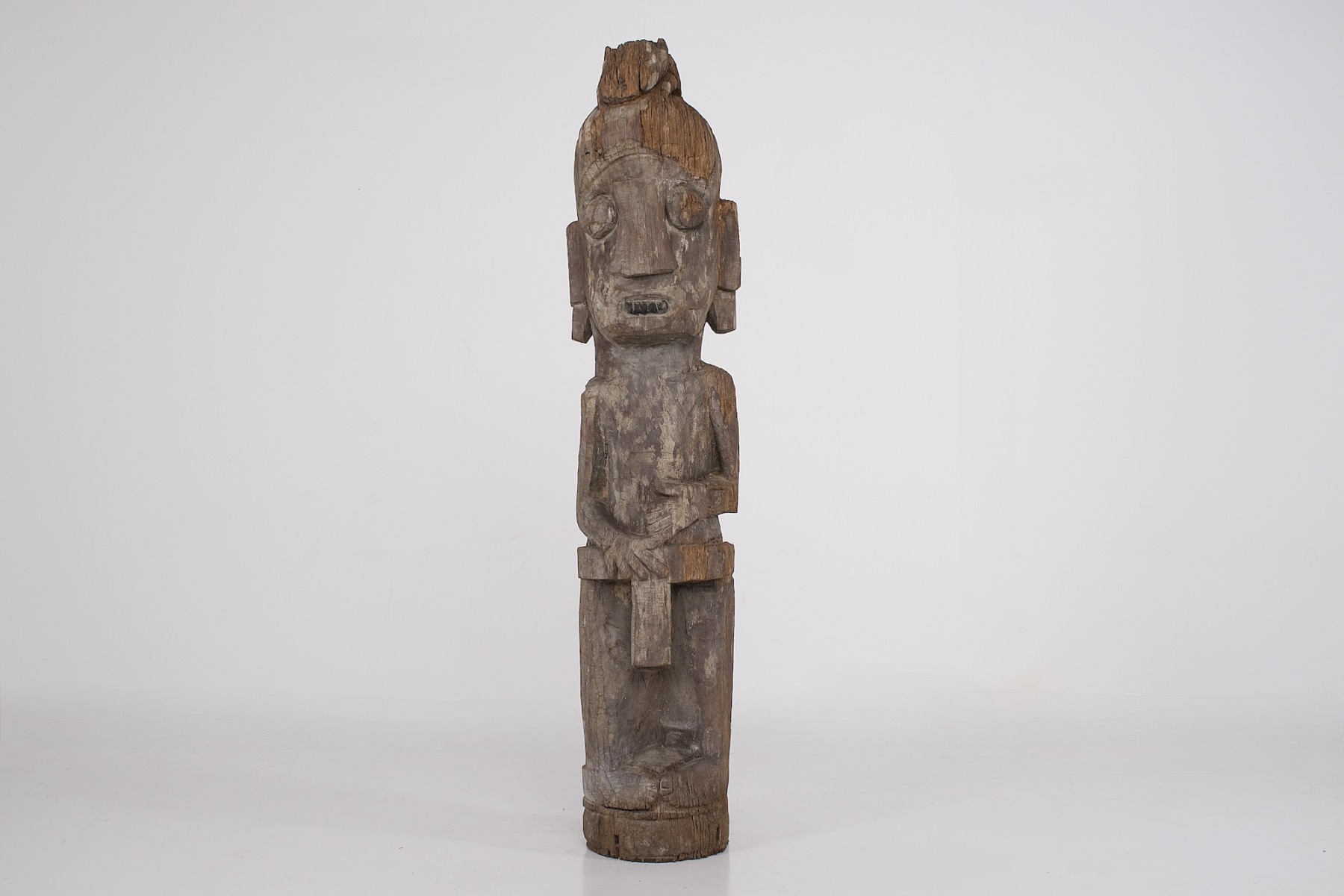
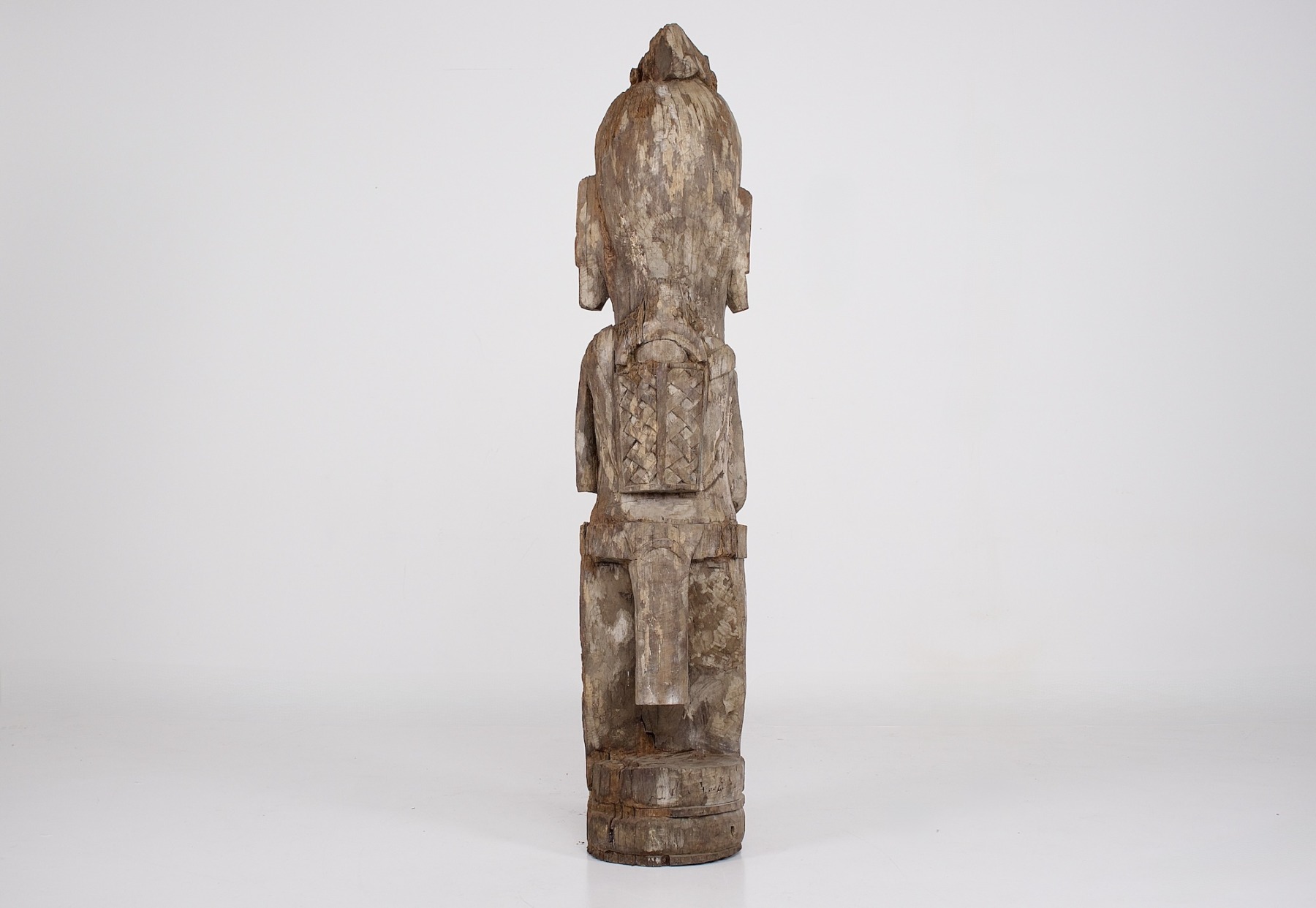
Protective ancestral figure of hampatong type from the Dayak people in carved ironwood, represented standing on a massive base.
- Greyish patina with possible traces of kaolin, likely related to ritual practices associated with fertility.
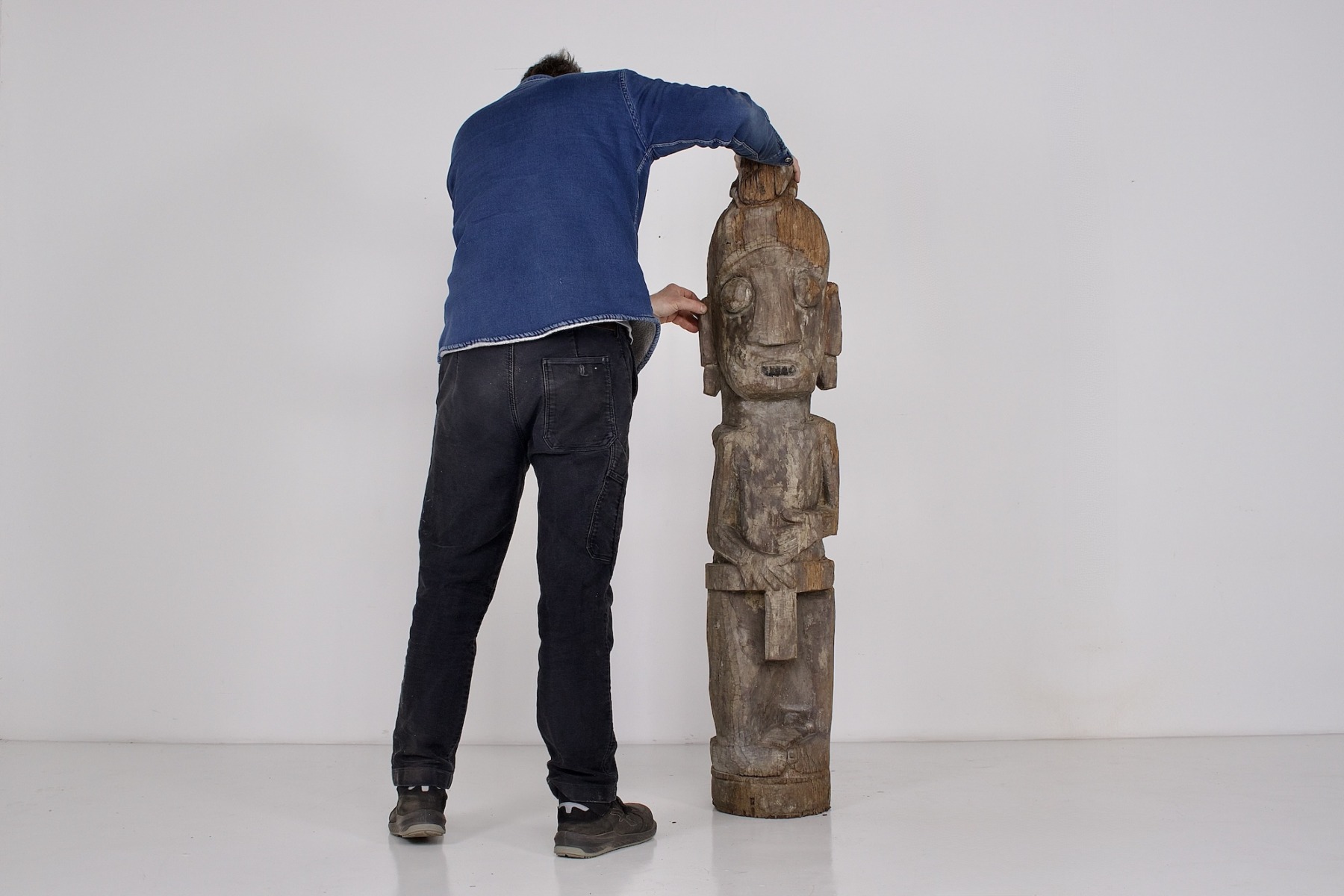
- Dimensions: H. 151 cm × W. 30 cm × D. 36 cm (approx. 1.90 m for the person in comparison).
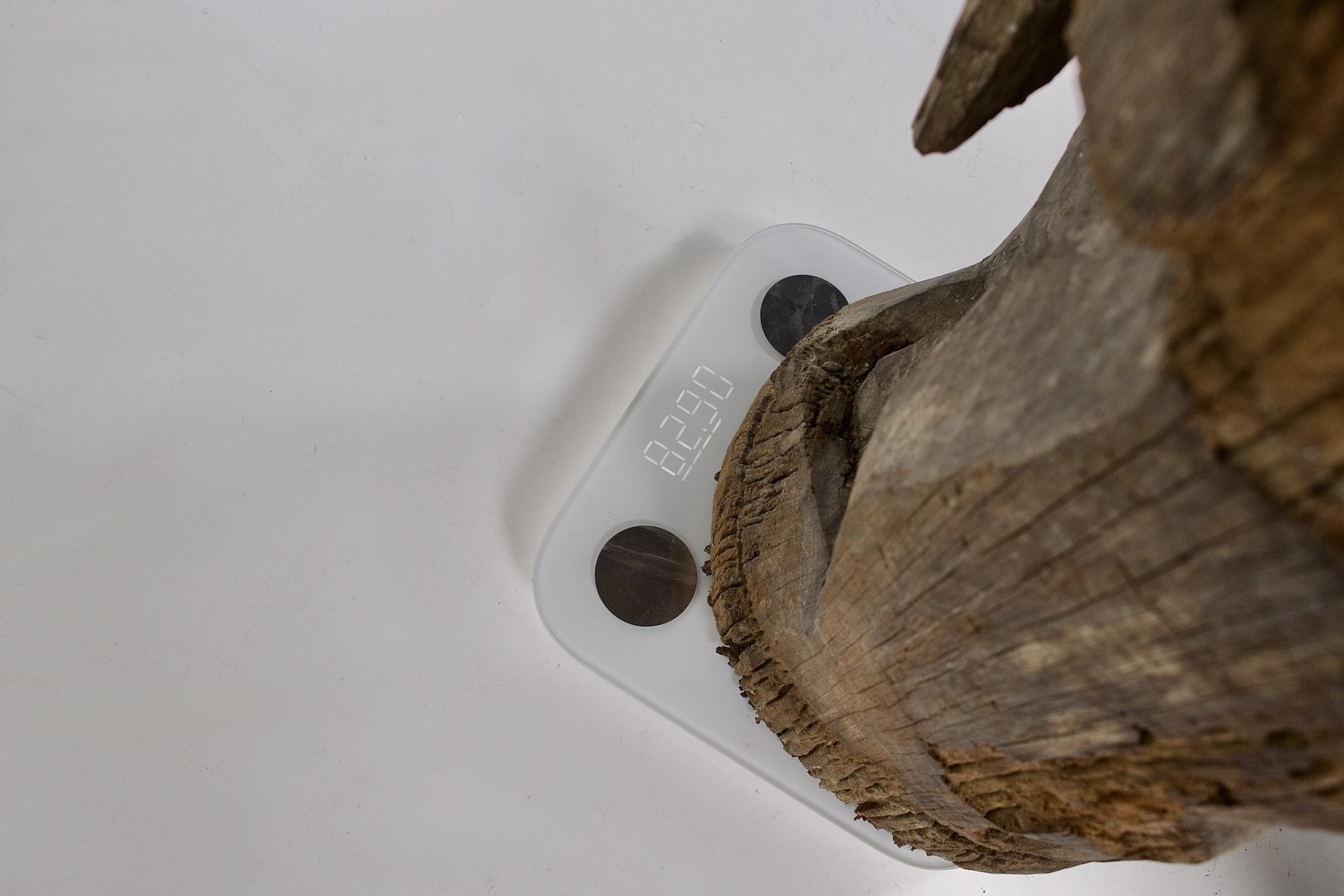
- Weight: approximately 83 kg.
- Former collection of Claude de Marteau.
- Sold with certificate of origin.
1 available in store

Hampatong ancestral figure, Borneo, Indonesia
Southeast Asia, Indonesia, Borneo, Kalimantan region. Dayak people, Ngadju or Ot Danum group, 19th century.
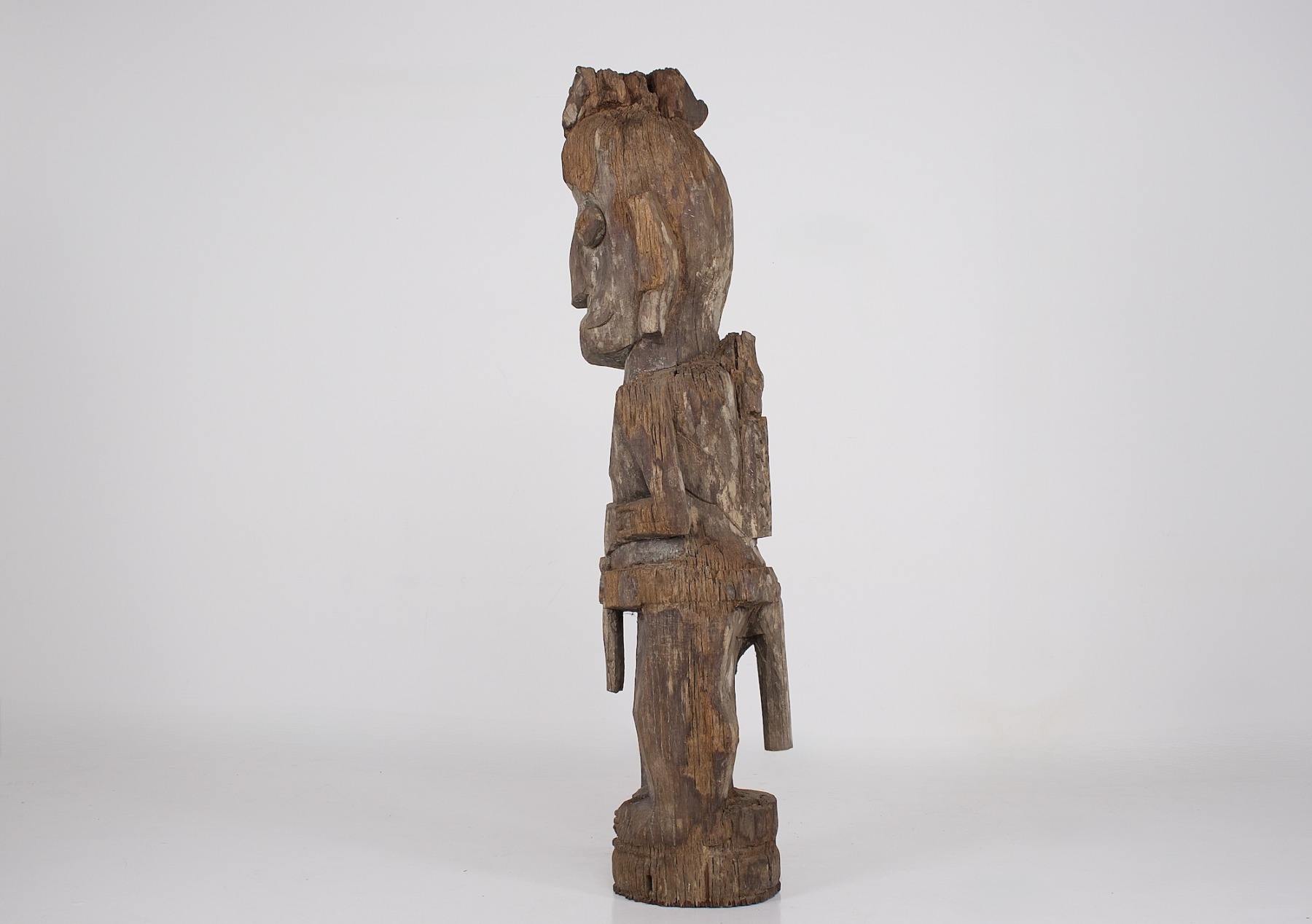
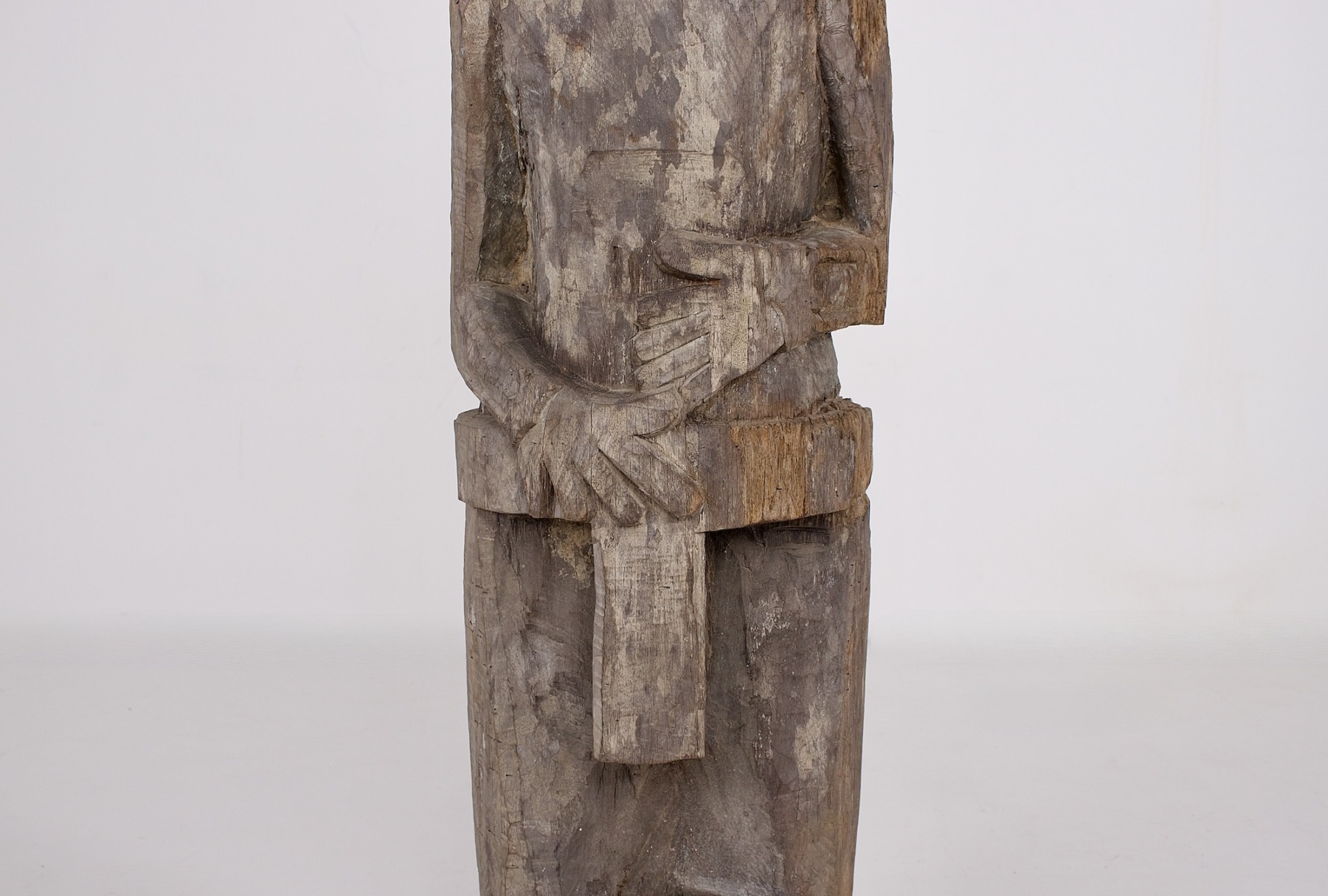
Protective ancestral figure of hampatong type in carved wood, represented standing on a massive base. The hands rest at the waist, at the level of a loincloth, while a basket with woven motifs—characteristic of the Dayak decorative repertoire—is carried on the back.

Protective ancestral figure of the Dayak people in belian wood
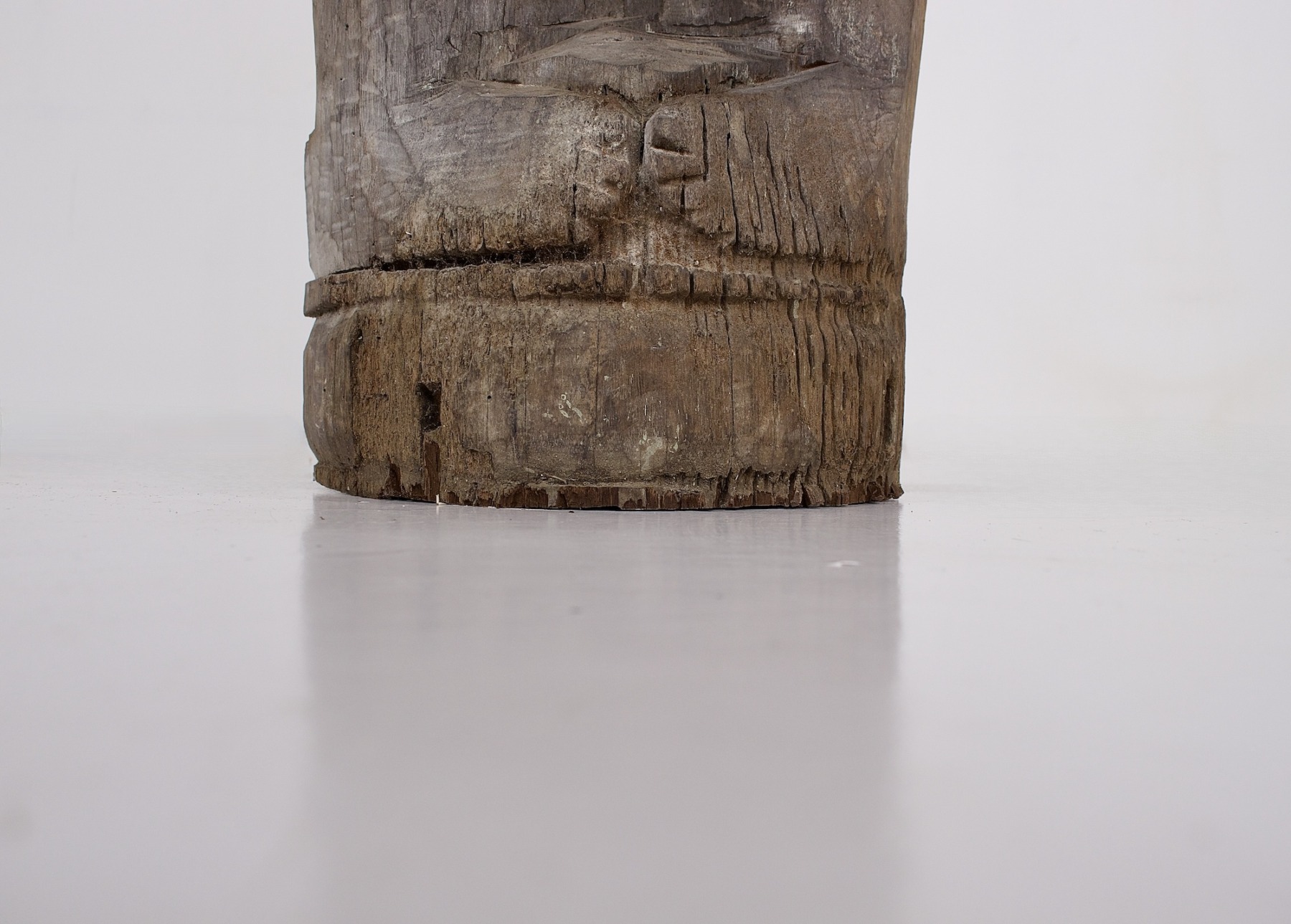
The term hampatong, derived from the Malay “patong” designating a statue or carved figure, refers to these effigies carved from particularly dense local woods, most often belian wood (ironwood). Exposed for many years to the extreme climatic conditions of the jungle, these sculptures develop a profoundly altered appearance: the wood hollows out in vertical strata, the surface becomes furrowed and takes on a characteristic greyish hue. After a century of exposure, these figures may present a patina evoking much older works.

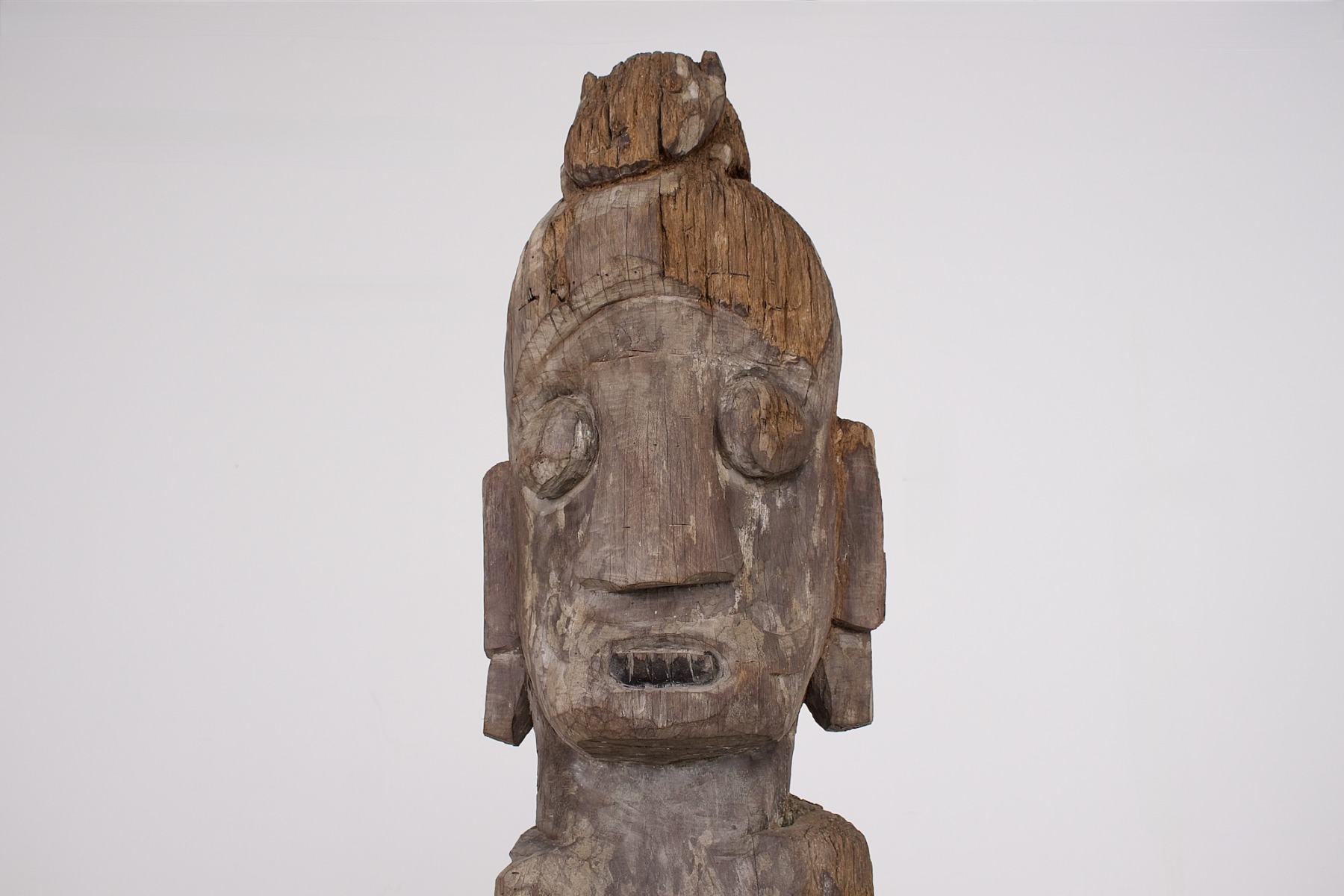
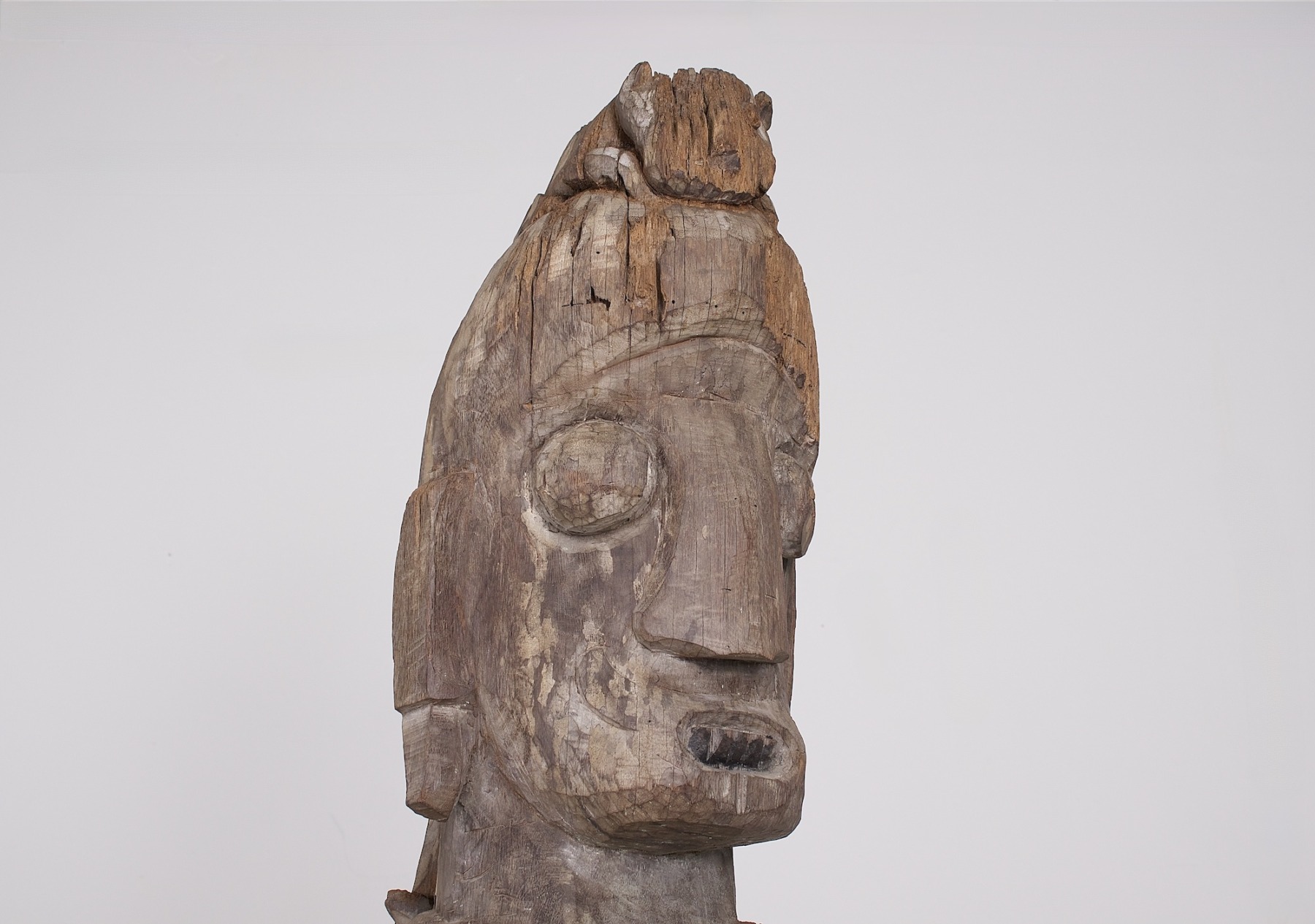
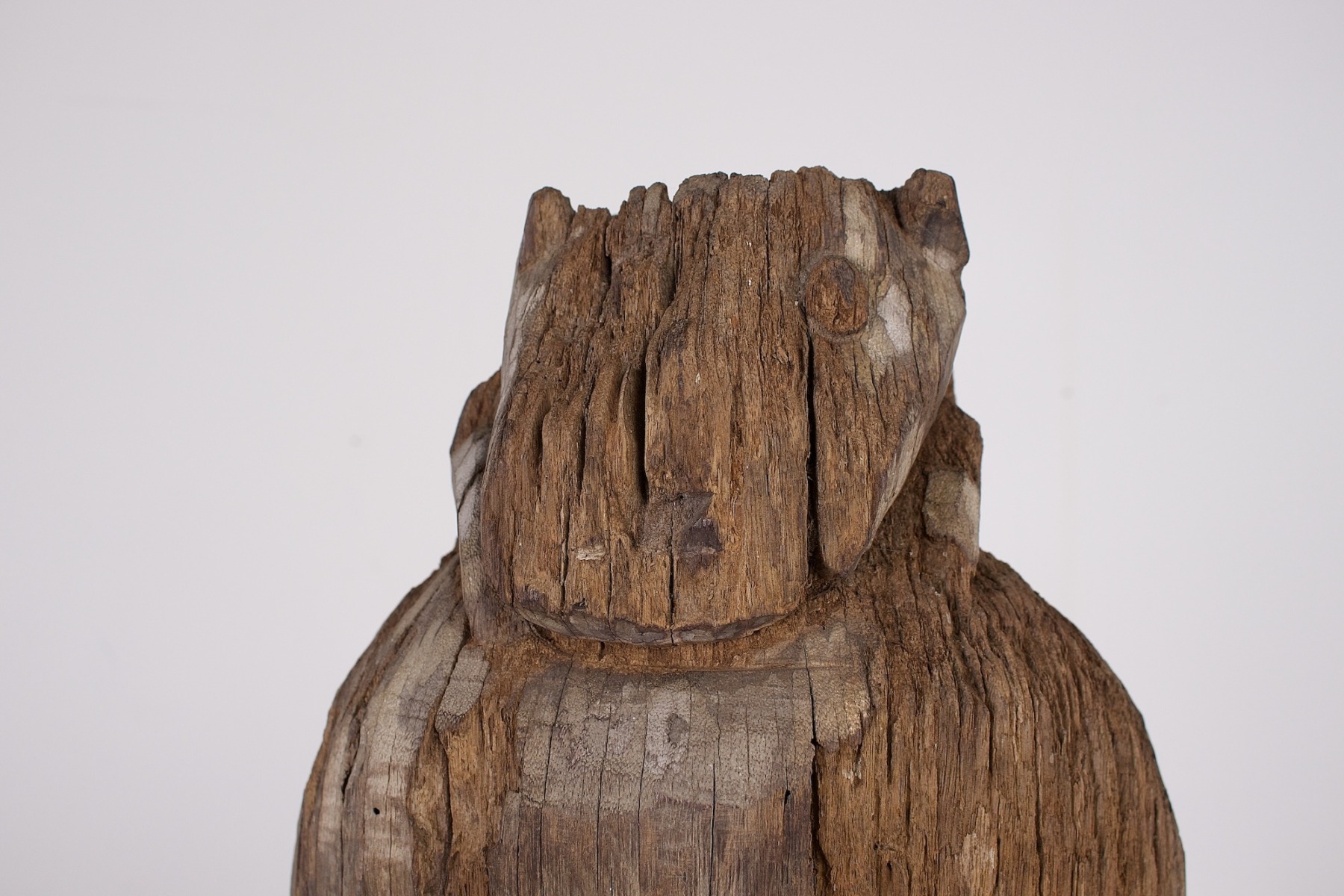
The head of the Dayak statue is surmounted by a secondary face, partially weathered.
The head, tall and elongated, is distinguished by large vigilant eyes, protruding ears and a headdress surmounted by a secondary face now partially altered, possibly evoking an aso head, a zoomorphic motif associated with the dog in Dayak iconography. Its elevated position offered a privileged vantage point for surveying the surroundings.
The appearance of the wood varies significantly according to the original location: hampatong placed outdoors show marked erosion, while those preserved inside longhouses or in protected spaces, such as certain cavities or sanctuaries, retain more intact surfaces. Traces of kaolin or lime may remain, particularly on the faces, in connection with ritual practices associated with fertility. The rare painted examples are generally linked to funerary contexts.
Beyond their protective function within villages, certain hampatong could also be used as guardians of crops, particularly among the Iban or Bidayuh groups, where they were installed in recently cleared areas to protect harvests. Bidayuh productions, often more anthropomorphic, sometimes present expressions reminiscent of those of the Tau-tau figures of Sulawesi.
These sculptures also play a central role in the Tiwah ceremony, a secondary funerary rite specific to the Dayak Ngaju. On this occasion, the hampatong, assimilated to ancestral spirits or protective entities, are placed near funerary structures to temporarily receive the soul of the deceased and accompany its transition to the afterlife.
You might also like…

Discover also...


Delivery to Belgium

Delivery to France

Delivery to Luxembourg
