



60s Designer Furniture and Vintage Lighting
The 1960s upended habits and interiors. Driven by the post-war boom years, a new generation aspired to greater freedom, comfort and modernity. Our selection of 1960s designer furniture and vintage lighting bears witness to this inventive era, where the restrained lines of Scandinavian furniture sit alongside organic forms, vivid colours and new materials.

Promo
Small brass and crystal ceiling light by Palwa

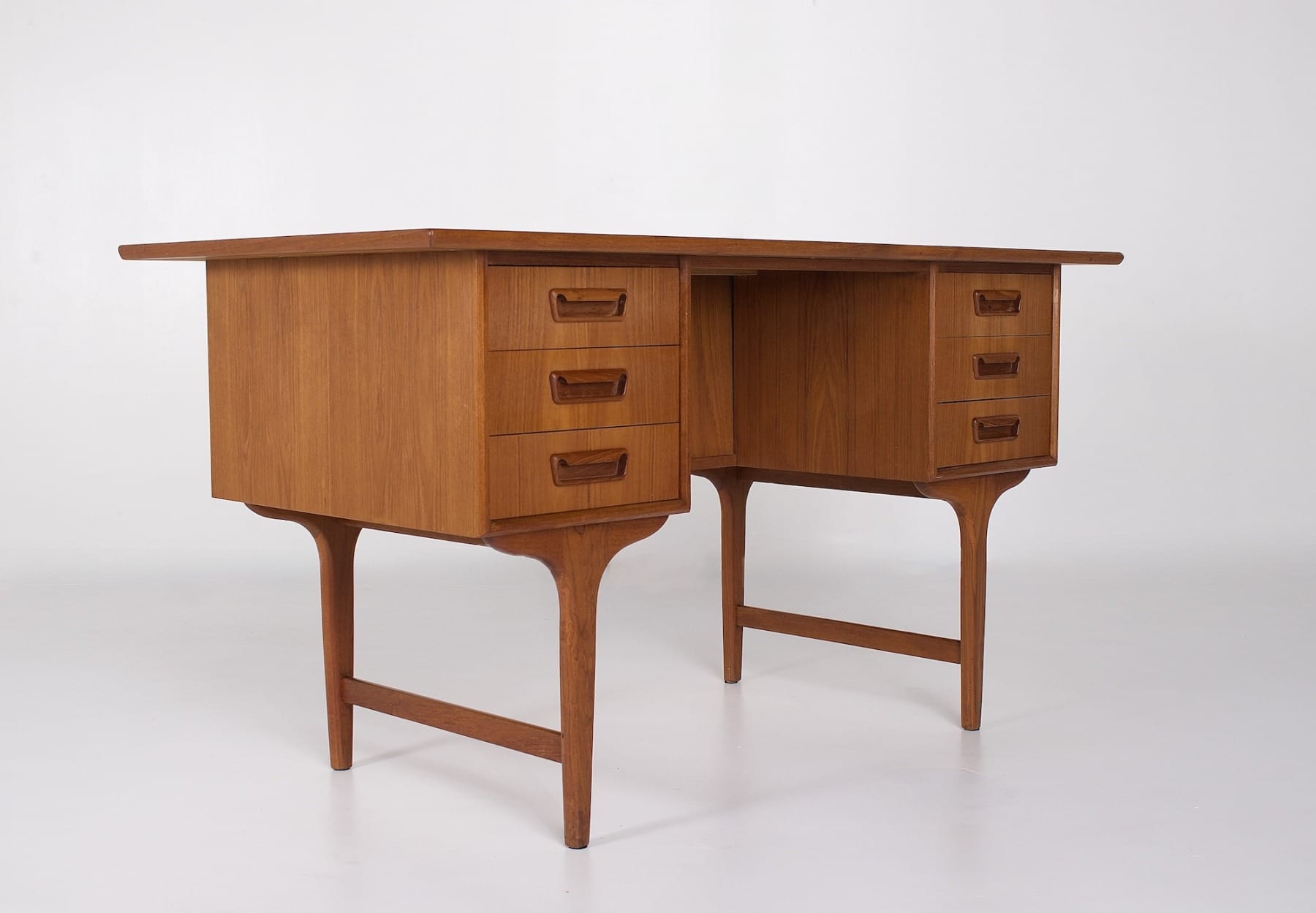
Danish mid-century teak desk
€1650,00


The 1960s: a decade of freedom and innovation
From the miniskirt to May ’68, through to the first steps on the Moon in 1969, the 1960s were marked by profound social and cultural change. Television became widespread, consumer society expanded, and industrial progress opened new possibilities for designers.
Molded plastic, fiberglass, and acrylic allowed for the creation of furniture with unprecedented forms. Verner Panton explored the possibilities of color and synthetic materials, while Charles and Ray Eames continued their research into modern seating in fiberglass and plywood. In Italy, Joe Colombo conceived the Elda armchair, whose enveloping fiberglass shell broke with traditional forms while sublimating leatherwork.
This quest for freedom found spectacular expression in the Djinn chaise longue by Olivier Mourgue, created for Airborne. Its supple curves and futuristic silhouette earned it an appearance in Stanley Kubrick’s film 2001: A Space Odyssey, released in 1968—an emblematic encounter between design, cinema, and the space-age imagination.
1960s furniture: functionality and new ways of living
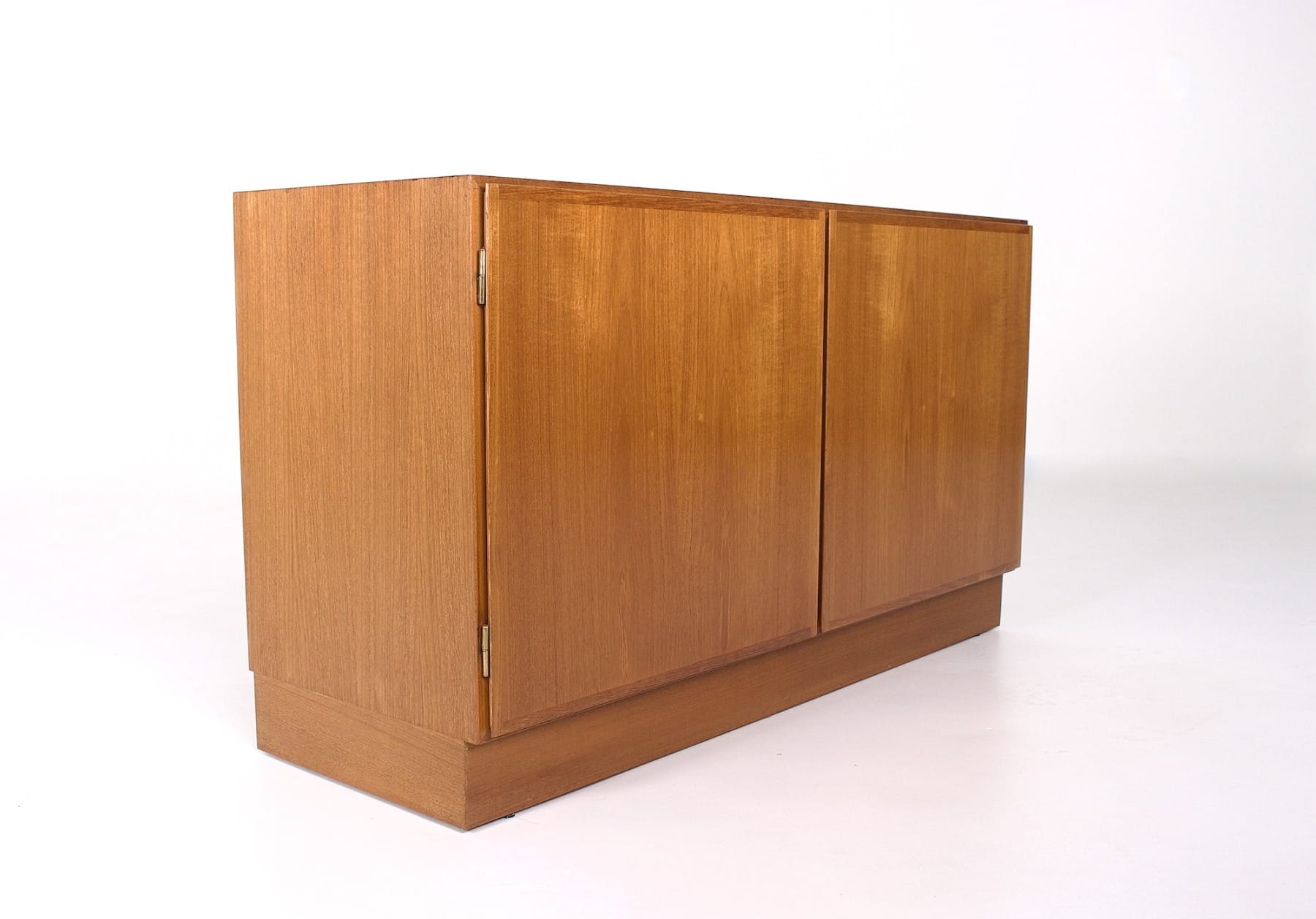
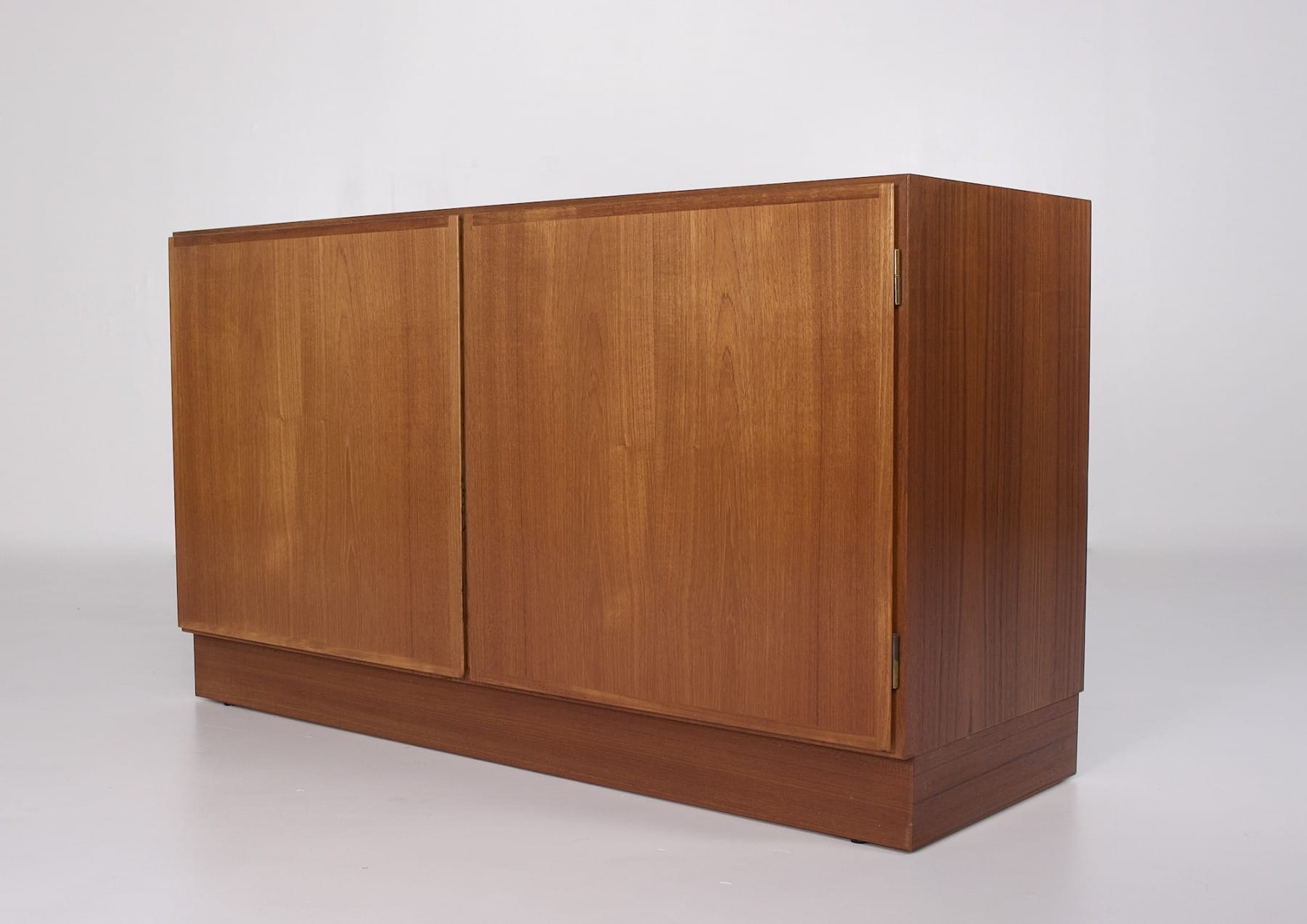
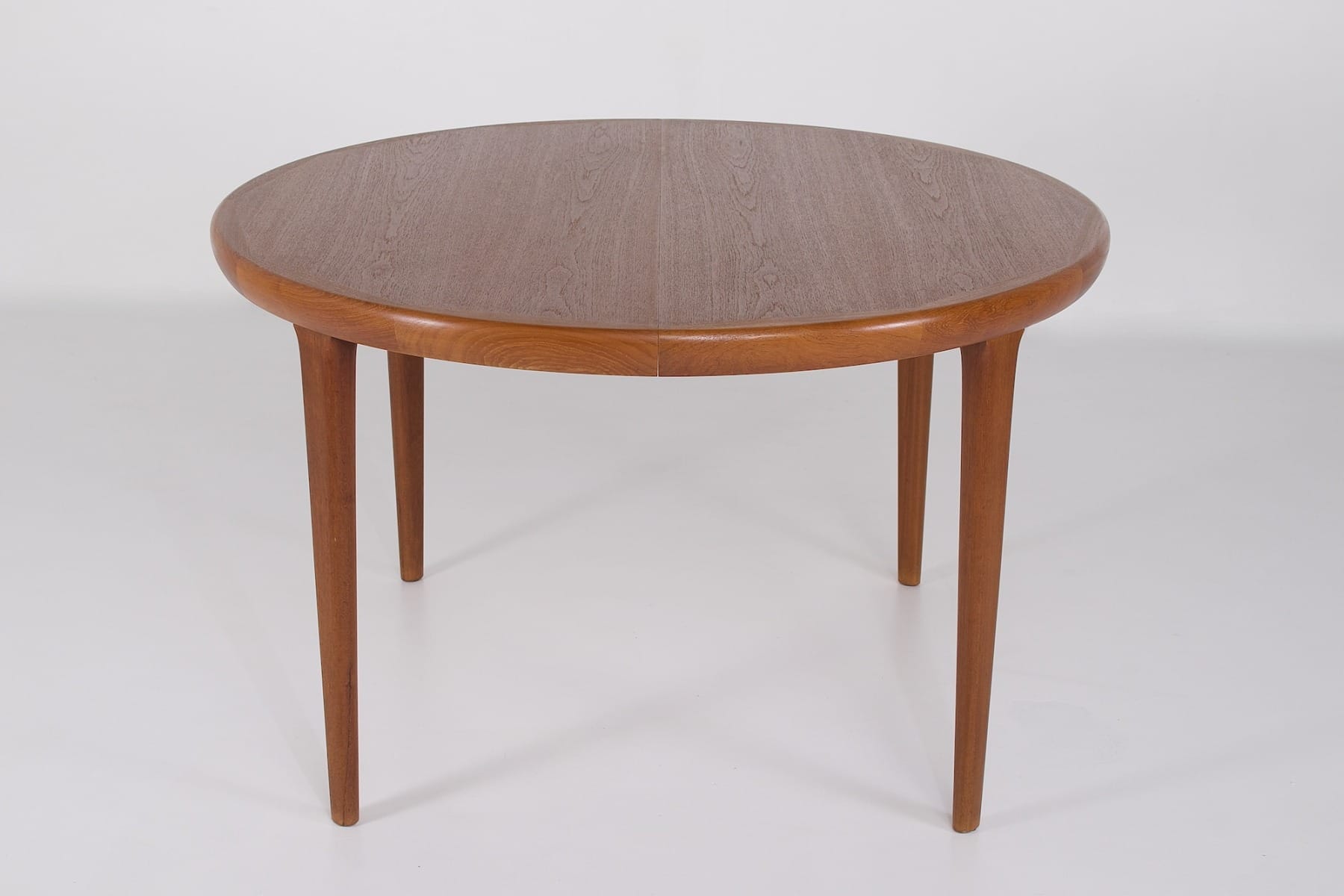
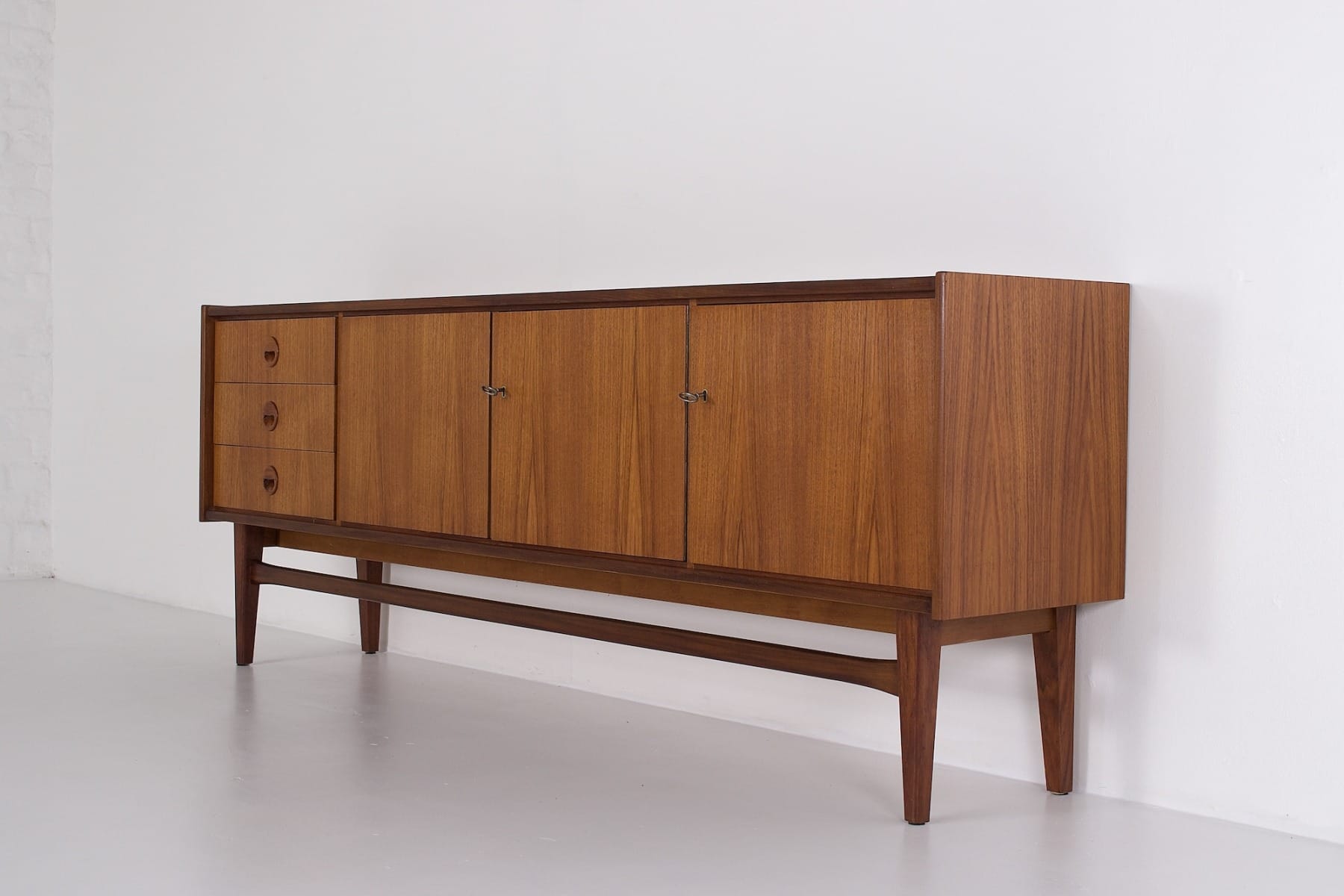
Yet modernity did not erase the appeal of traditional materials. Scandinavian sideboards in teak or rosewood favored horizontal lines and functional storage. Modular wall-mounted bookcases, meanwhile, made it possible to create evolving arrangements combining shelves, hanging cabinets and work spaces, while desks established themselves as furniture pieces in their own right, with clean lines that were nonetheless full of elegance and character.
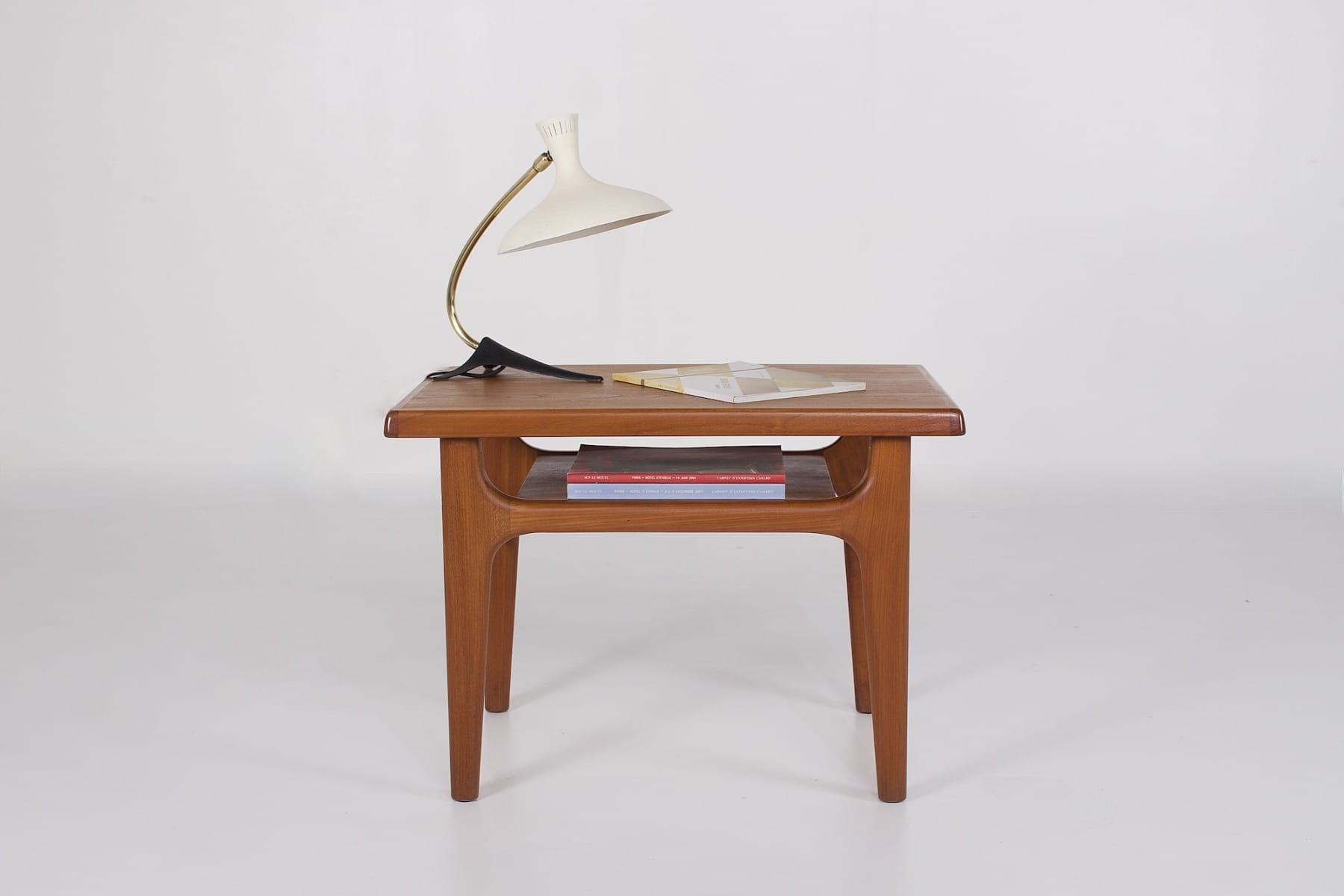
In the dining room, vintage chairs combined the tradition of woodwork with new manufacturing techniques. In the living room, coffee tables adopted lighter lines, sometimes in glass or chromed metal, while armchairs became more enveloping. Furniture accompanied a freer way of living, where comfort and modularity gained increasing importance.
1960s lighting: from modernism to the Space Age
The space race fed a futuristic imagination that influenced the design of vintage lighting. Spheres, domes and mushroom-like silhouettes sat alongside more understated geometric compositions. Plastic and acrylic offered new possibilities for shaping forms and diffusing light.
Vintage table lamps became true decorative objects. Rounded forms and translucent acrylic reflectors illustrate the Space Age aesthetic, while brightly lacquered aluminum and blown Murano glass testify to the diversity of materials and craftsmanship. Light itself became a design element, sometimes soft and diffused, sometimes bright and colorful, playing with transparency, reflections, and volumes.
Lighting was no longer limited to a central pendant. Wall sconces punctuated walls, while designer ceiling lights and pendant lamps of the 1960s multiplied light sources and explored new compositions in glass, brass or aluminum. Alongside the most futuristic creations, Scandinavian and modernist lighting retained its taste for durable materials and clean lines.
Between the functional modernism of the 1950s and the non-conformism, decorative audacity, and technological progress characterizing 1970s design, the 1960s left a surprisingly diverse legacy. They extended post-war research while paving the way for a new freedom in forms, materials, and uses.
At Vintage Addict, this diversity is reflected in our selection of authentic 1960s furniture and lighting, chosen for the quality of their manufacture, their character, and their ability to integrate into today’s interiors.