




Brutalist Fat Lava red ceramic vase, Otto Gerharz
€450,00
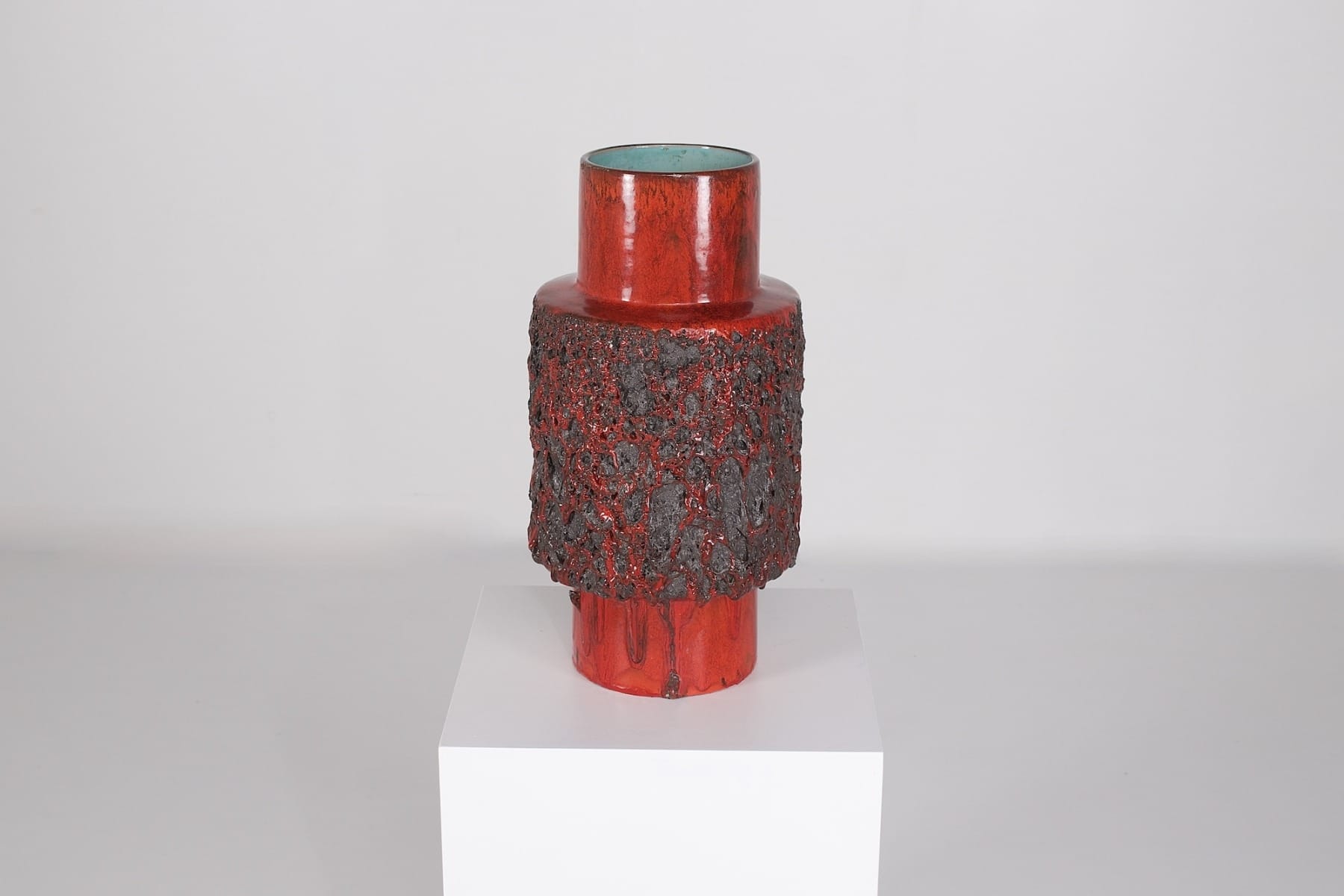
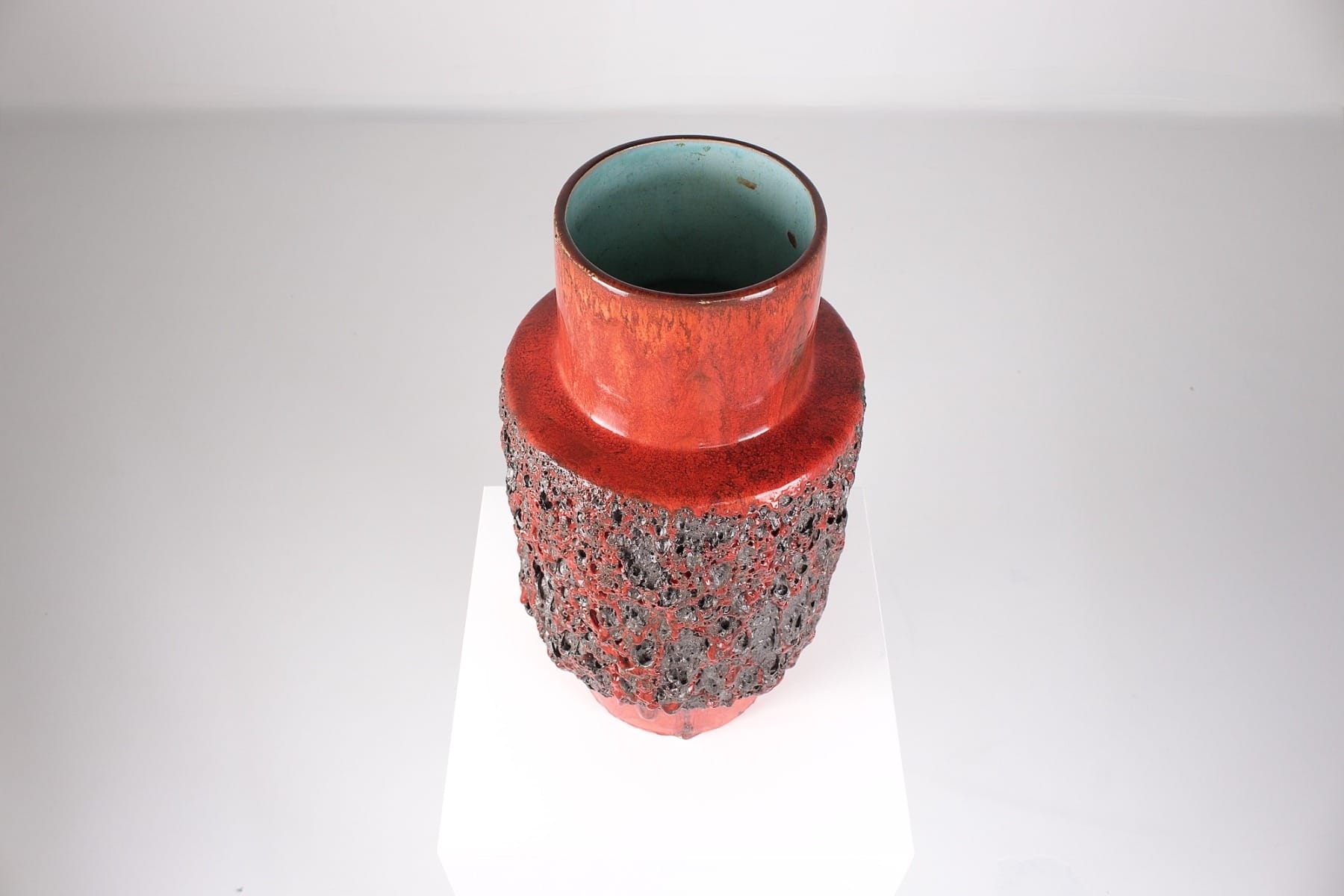
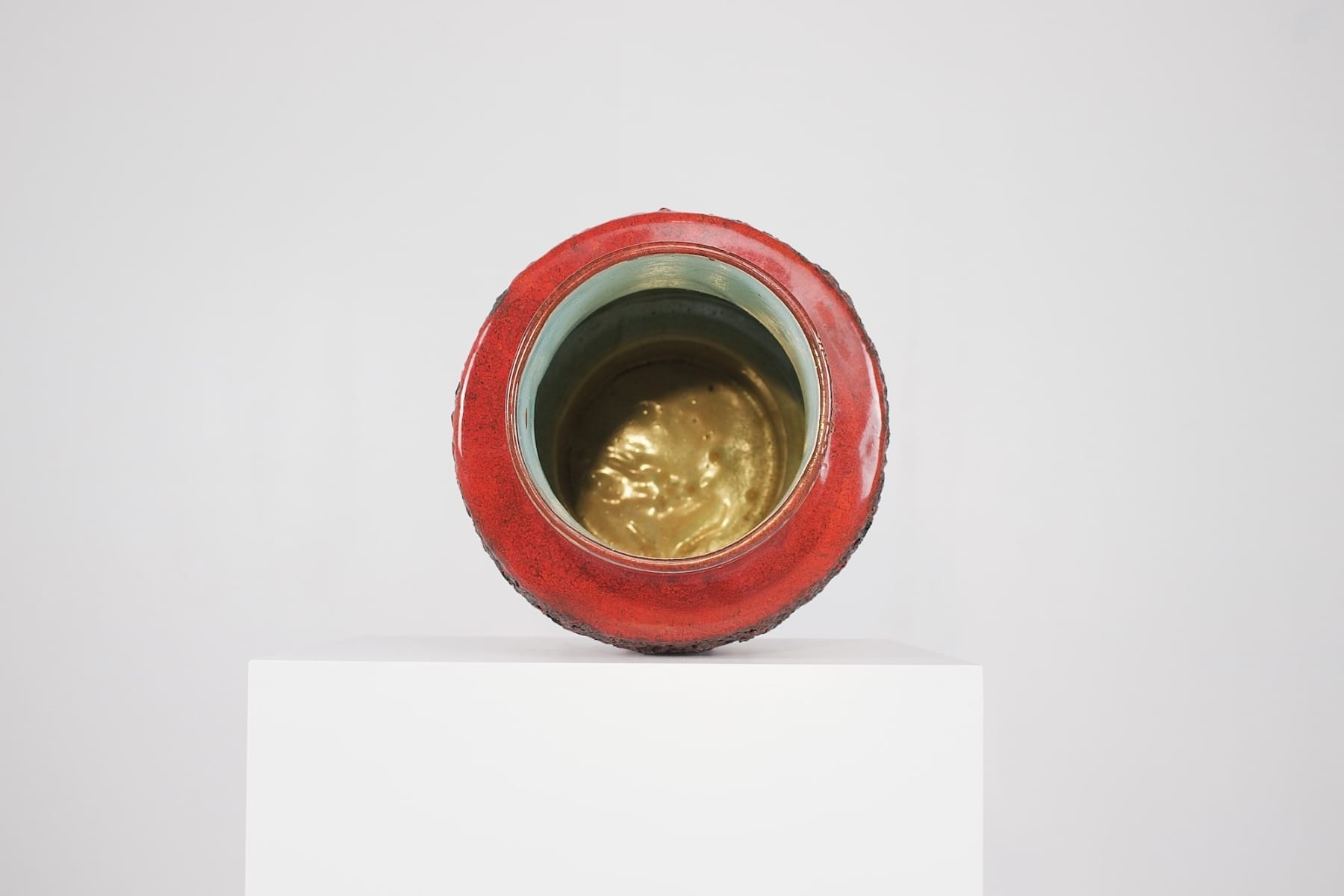
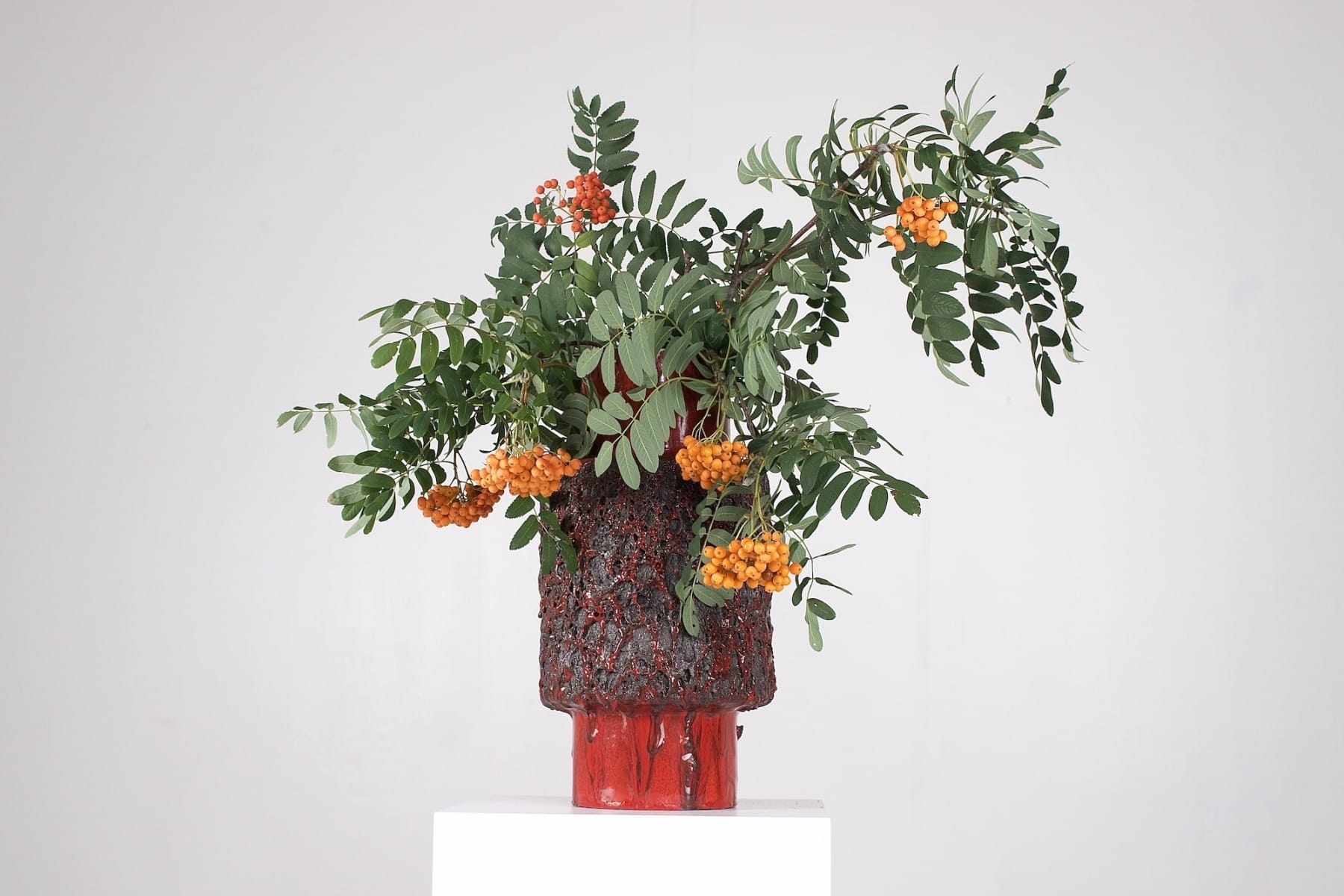
Brutalist red ceramic “Fat Lava” vase by ceramist Otto Gerharz, 1970s. The interior of the neck is glazed in a soft turquoise, creating an unexpected contrast with the glossy red exterior and the volcanic black glaze. This touch of fresher color brings depth to the vase and recalls the taste of German ceramists of the 1960s–70s for bold chromatic associations, revealed especially when viewing the piece from above.
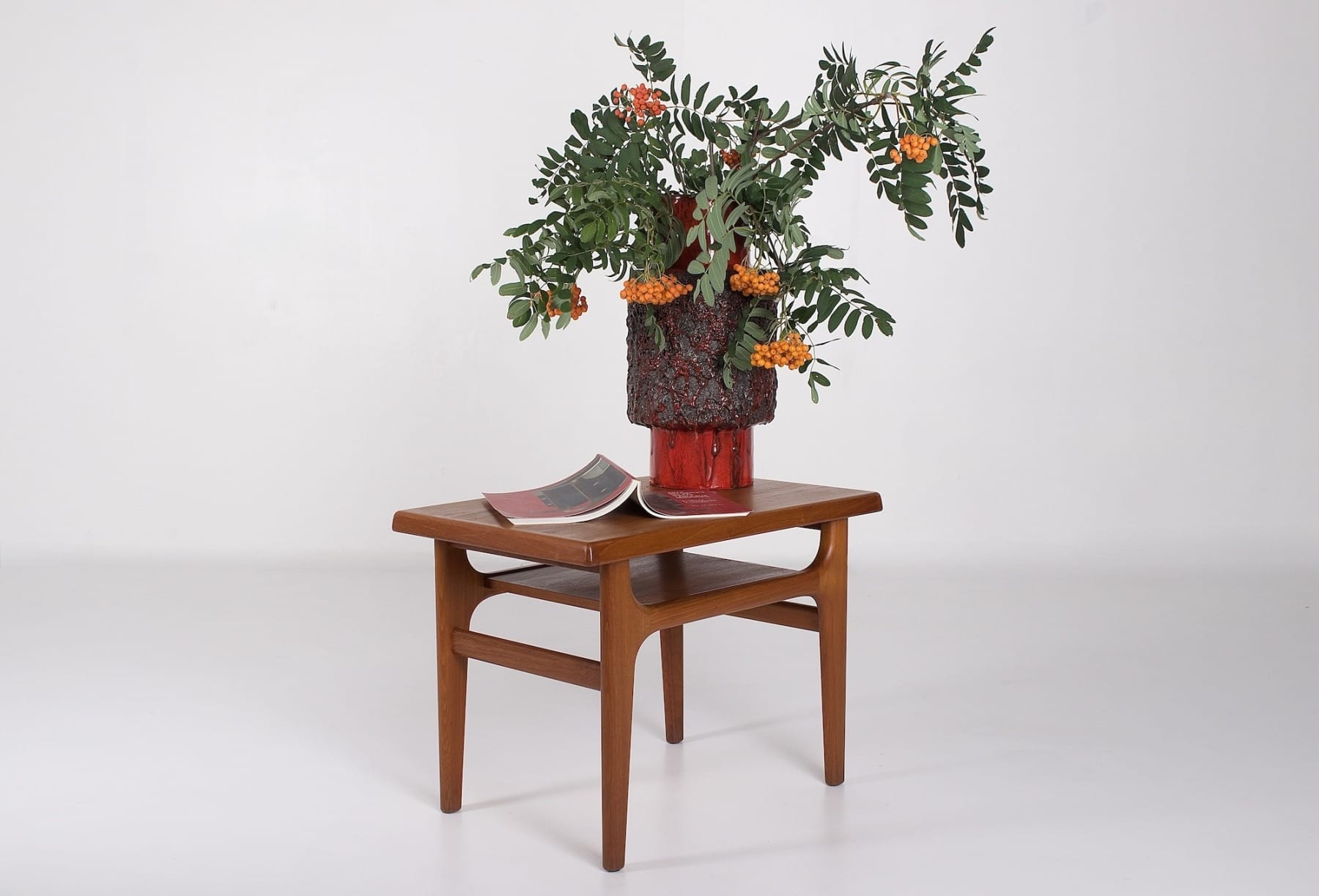
- H 50 CM X Diameter 25 CM.
- Neck diameter 17 CM.
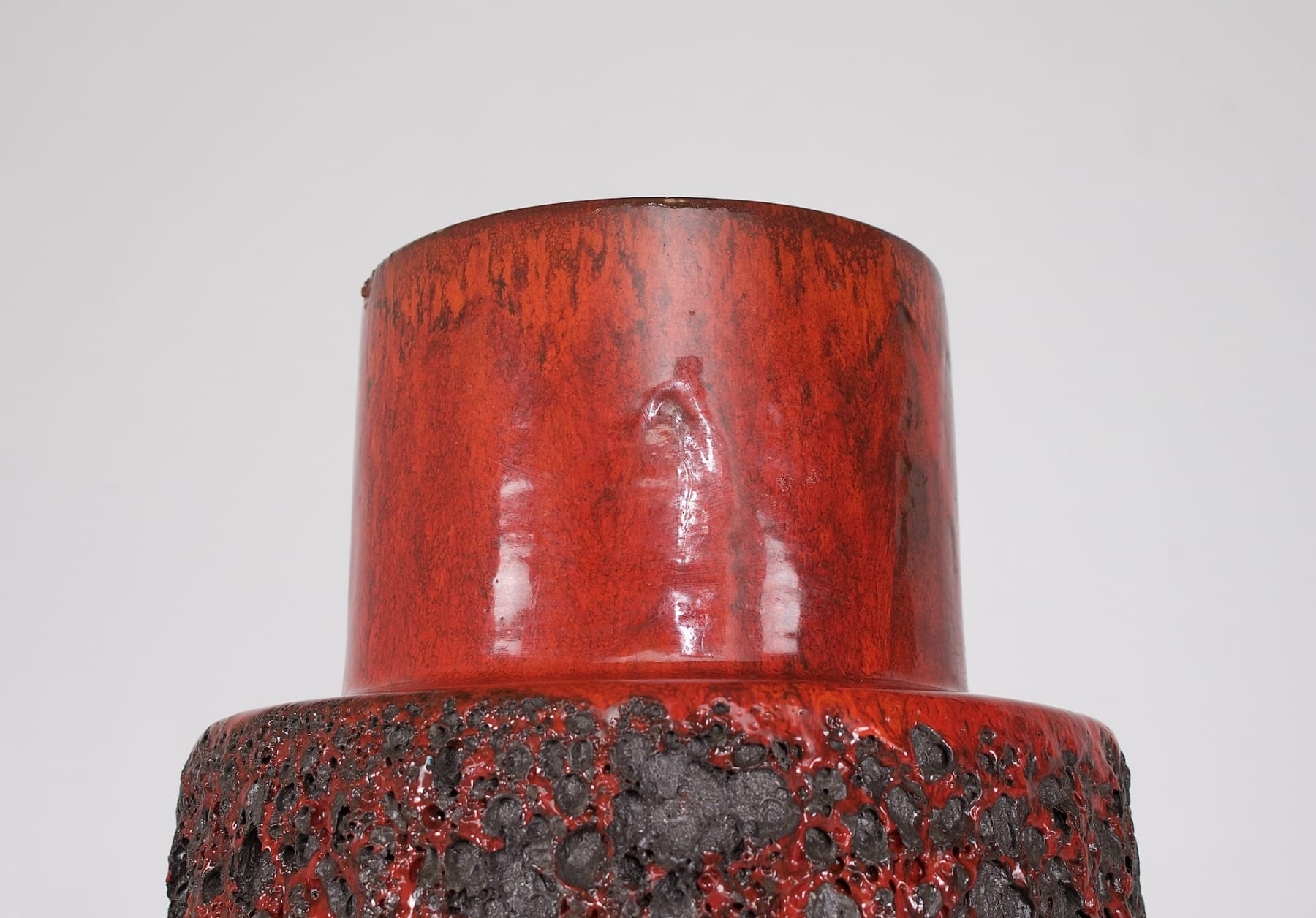
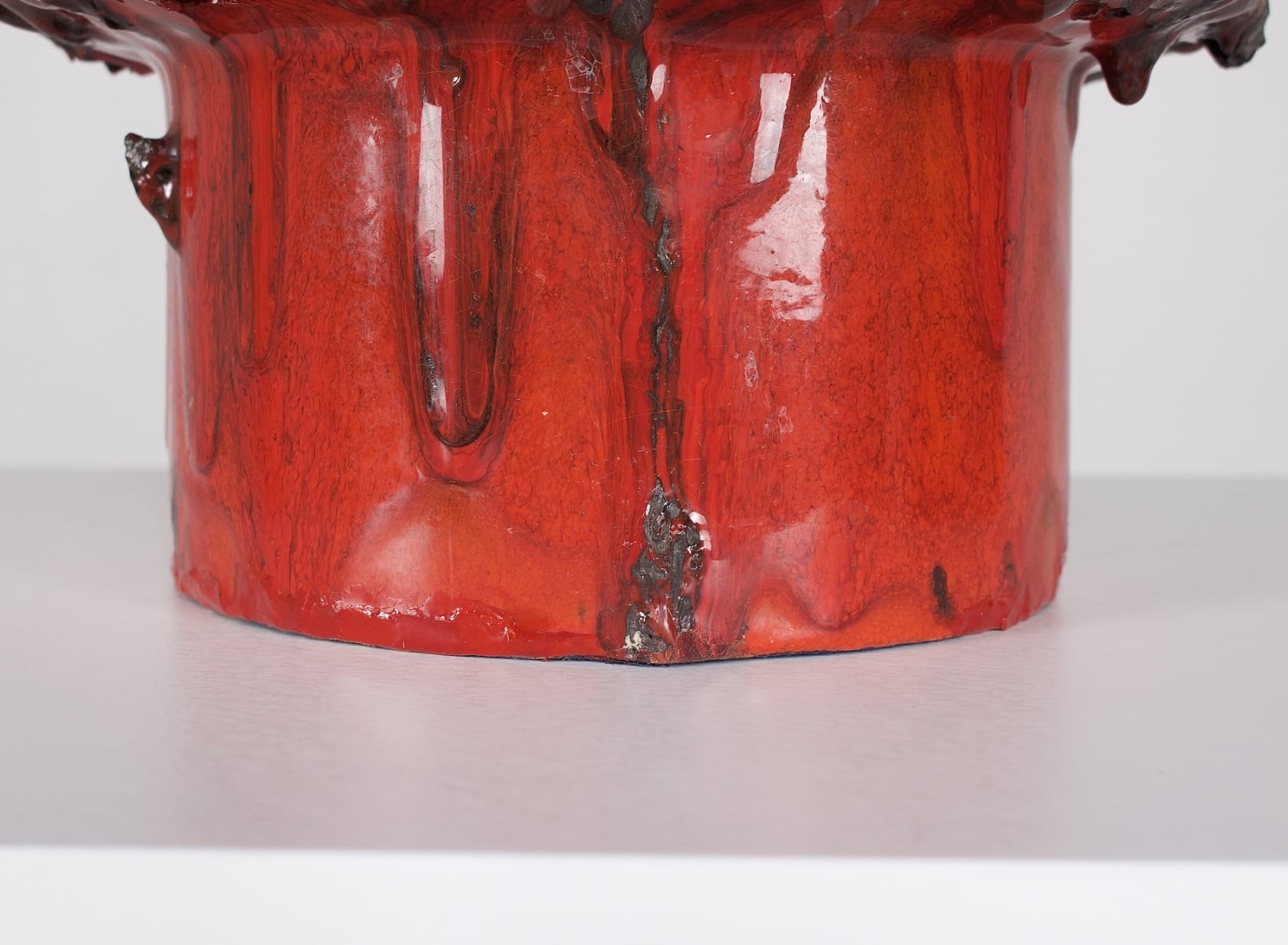
- Presence of small old restorations on a few minor chips and glaze flakes, touched up in a matching red shade. These interventions remain discreet and are mainly visible upon close examination of the base.
1 available in store

Red and black Fat Lava vase – Otto Keramik, Germany, 1970s
This large German ceramic vase from the 1970s is a production of Otto Keramik, a manufacture founded in Rheinbach by the ceramist Otto Gerharz. Its highly graphic construction contrasts two radically different surfaces: a deep red enamel, smooth and glossy, and a significant central band covered in a thick, irregular, and heavily textured black and red glaze.
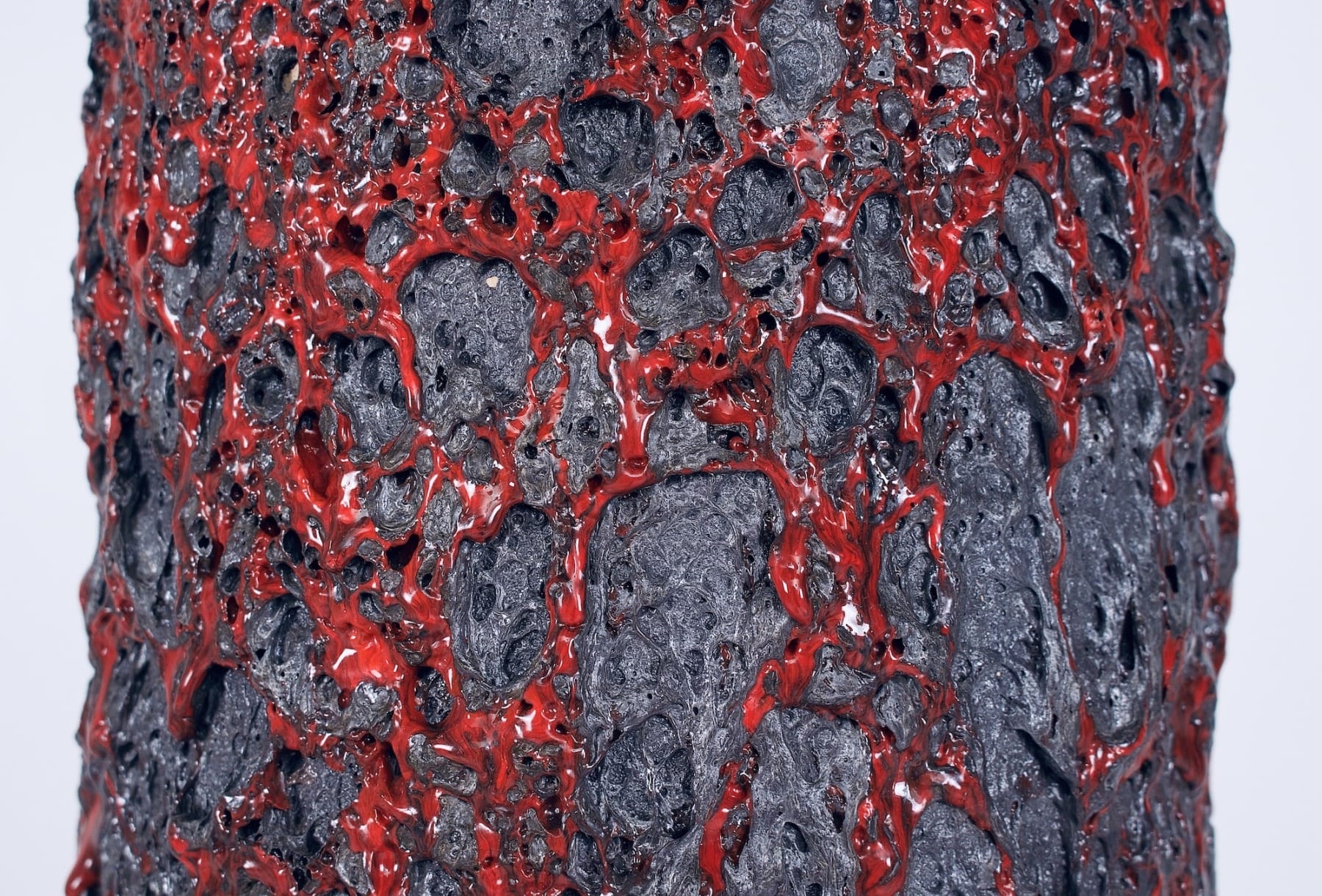
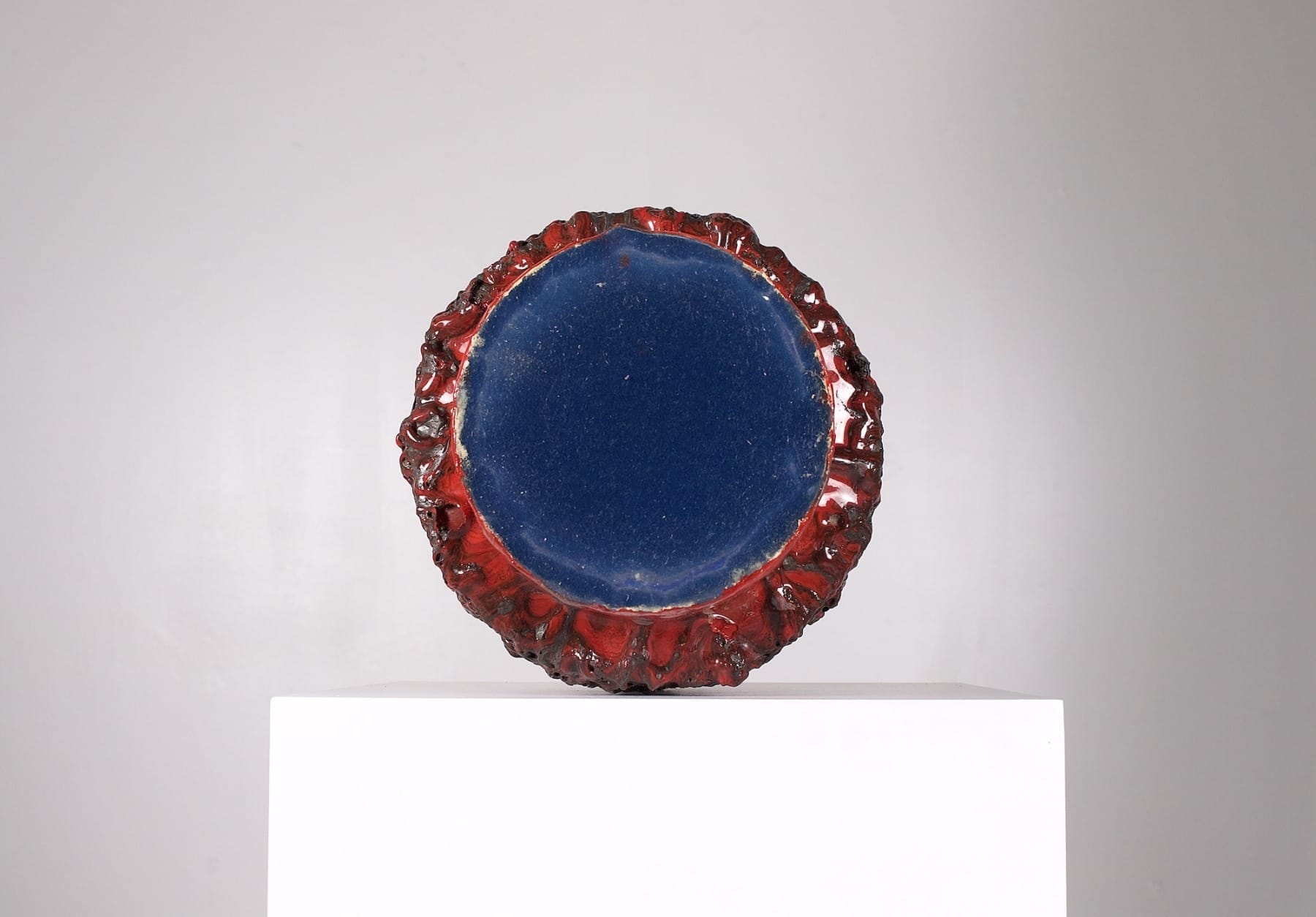
This volcanic band constitutes the full strength of the vase. The glaze develops in relief, forming craters, accumulations, and drips that deliberately break with the regularity of the cylindrical body. Depending on the lighting, the black parts absorb light while the glazed red areas reflect it, further accentuating the contrast between raw matter and glossy surface.
Otto Gerharz, specialist in glaze chemistry
Otto Keramik was founded in 1964 in Rheinbach by Otto Gerharz, whose background largely explains the manufacture’s very particular identity. Gerharz specialized early on in the chemistry of ceramic glazes: his 1948 degree already focused on this subject. After several years dedicated to developing industrial enamels, he joined the Ruscha manufacture in 1951, also located in Rheinbach, where he took over production management and developed numerous new glazes.

Ruscha then became one of the most important manufactures of post-war German decorative ceramics. This experience gave Gerharz a particularly advanced knowledge of the chemical reactions caused by firing, the layering of enamels, and the effects obtained through variations in thickness.
When he left Ruscha to create Otto Keramik, he pursued precisely this research. The designer Kurt Tschörner, also a former Ruscha collaborator, joined him and participated in developing the forms for the new manufacture. The principle is particularly interesting: deliberately simple silhouettes serve as a support for much more experimental and expressive glazes.
A true Fat Lava glaze
The central part of this vase perfectly illustrates what collectors later called Fat Lava. The term refers to the thick, bubbled, crackled, or volcanic glazes that characterize certain West German ceramic productions of the 1960s and especially the 1970s.

At Otto Keramik, this effect was not a simple decoration applied to the surface. Otto Gerharz worked directly on the chemical composition of the glazes so that they would react during firing. Layering, drips, and relief formations thus produce a surface whose final appearance cannot be entirely controlled before leaving the kiln.
The manufacture still explains today that this element of unpredictability was an integral part of Gerharz’s research: each firing generates small differences in texture and reaction. Two pieces made with the same mold and the same glaze can therefore present significantly different surfaces.
Glossy red and volcanic matter
On this example, the opposition between the glazed red and the particularly rough black central zone is spectacular. The upper part forms a wide, perfectly smooth cylinder, mirrored below the textured zone by an equally red base. This very simple geometry concentrates all attention on the material.
The black glaze appears as a true mineral crust pierced by brighter red zones. It evokes molten matter that has cooled directly on the surface of the vase, hence the particularly natural association with the term Fat Lava.
This combination of an elementary form and an extremely expressive surface treatment also brings the vase closer to the Brutalist vocabulary of the 1970s. However, it is not rustic pottery: the red parts are, on the contrary, extremely smooth and luminous. It is precisely this confrontation between sophisticated finishing and a deliberately rugged surface that gives the vase its presence.
Otto Keramik, a deliberately limited production
Unlike several large West German Pottery manufactures, Otto Keramik remains a workshop of relatively modest dimensions. The production thus retains a significant amount of manual work, particularly in the application of glazes. This organization also explains the variations encountered between different examples of the same form.
The manufacture continues its activity in Rheinbach and remains today one of the few German art potteries from this generation still in production. Otto Gerharz Jr. took over the family business in the 1990s, extending the glaze research initiated by his father.
This 1970s vase naturally pairs with Brutalist furniture, but its very simple design also allows it to create an interesting contrast in a contemporary or Scandinavian environment. Its silhouette remains immediately legible from a distance, while the complexity of the glaze reveals itself primarily upon closer inspection.
You might also like…


Discover also...


Delivery to Belgium

Delivery to France

Delivery to Luxembourg
