





Scandinavian 2-Door Sideboard Omann Jun
€1280,00
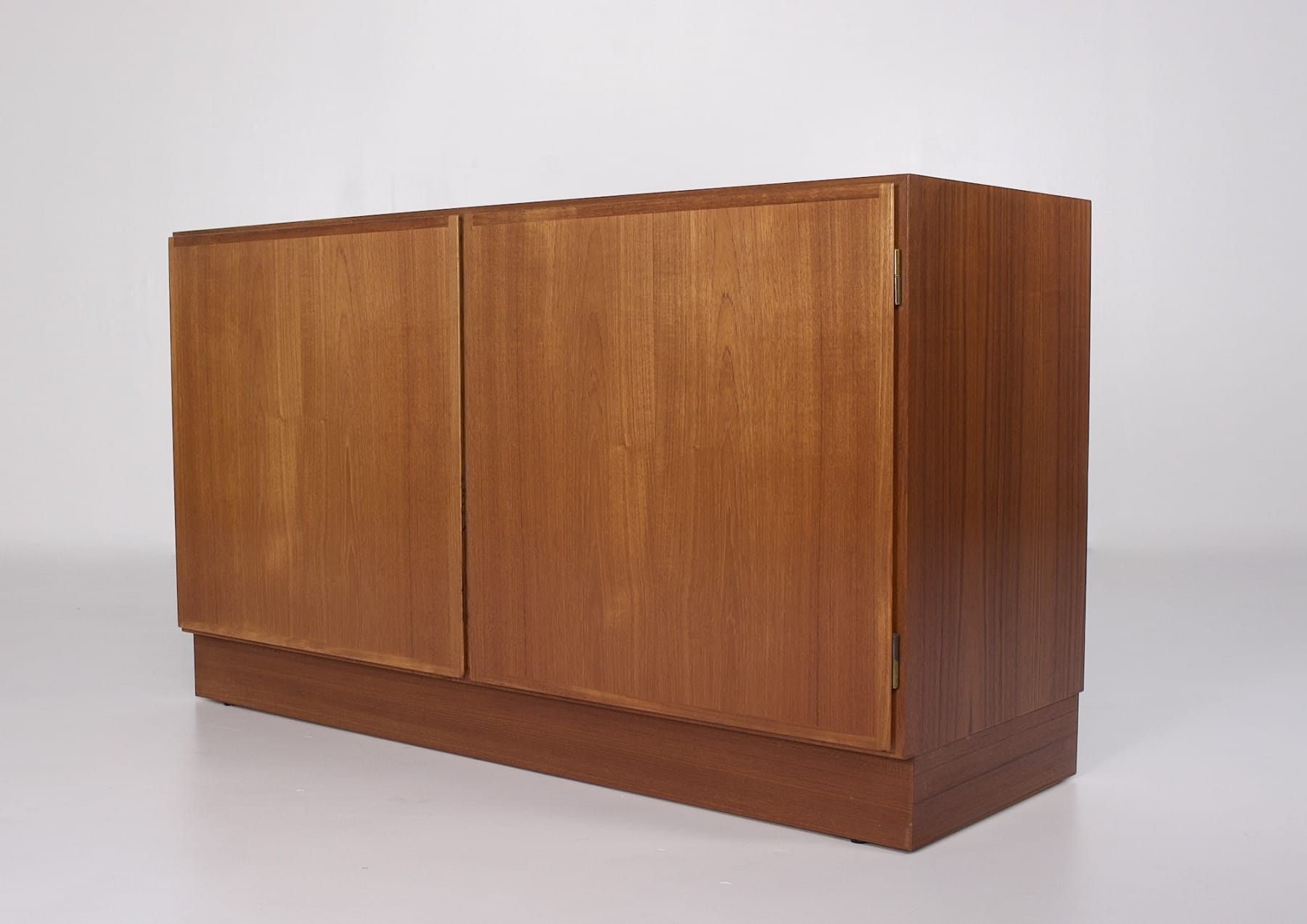
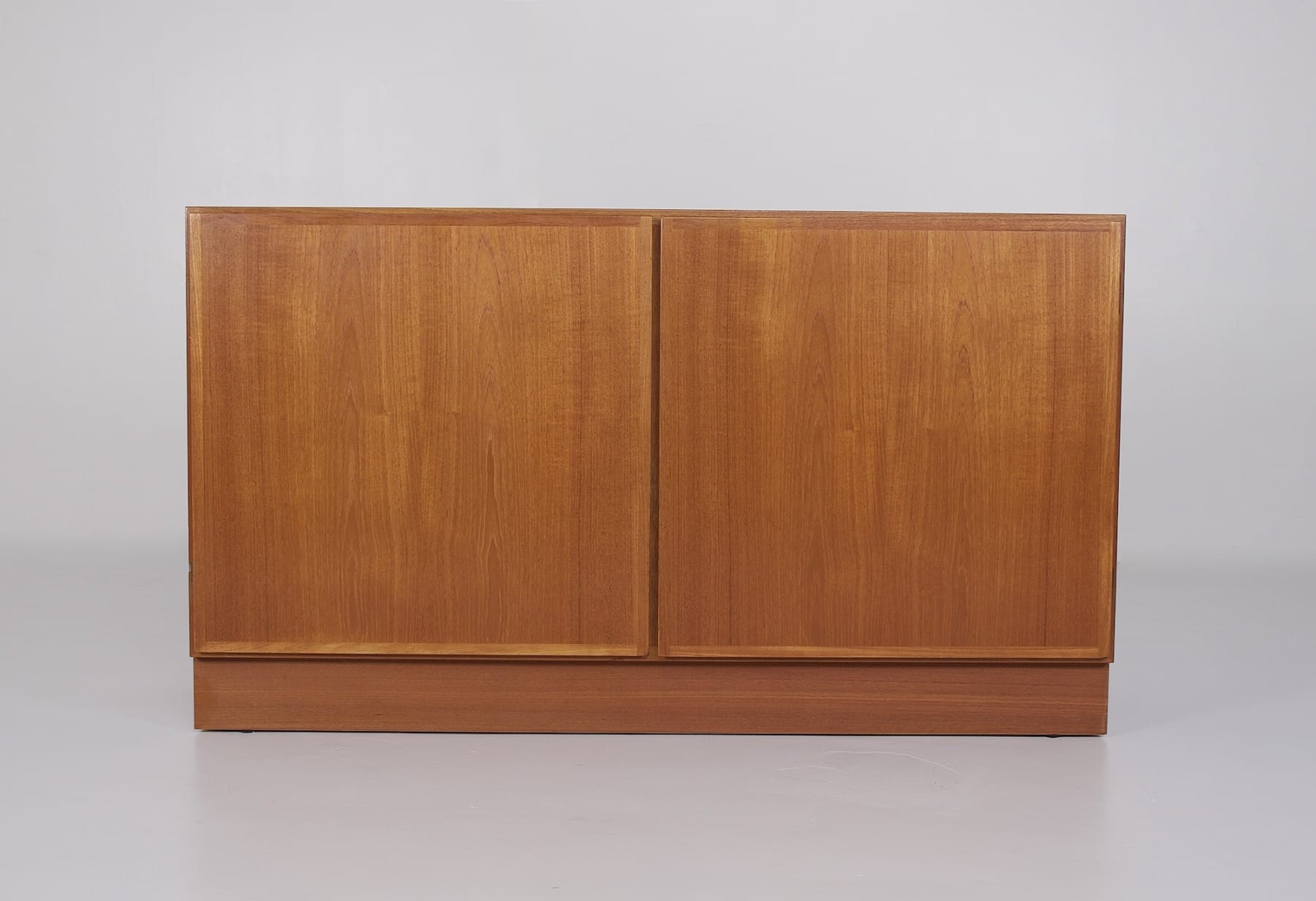
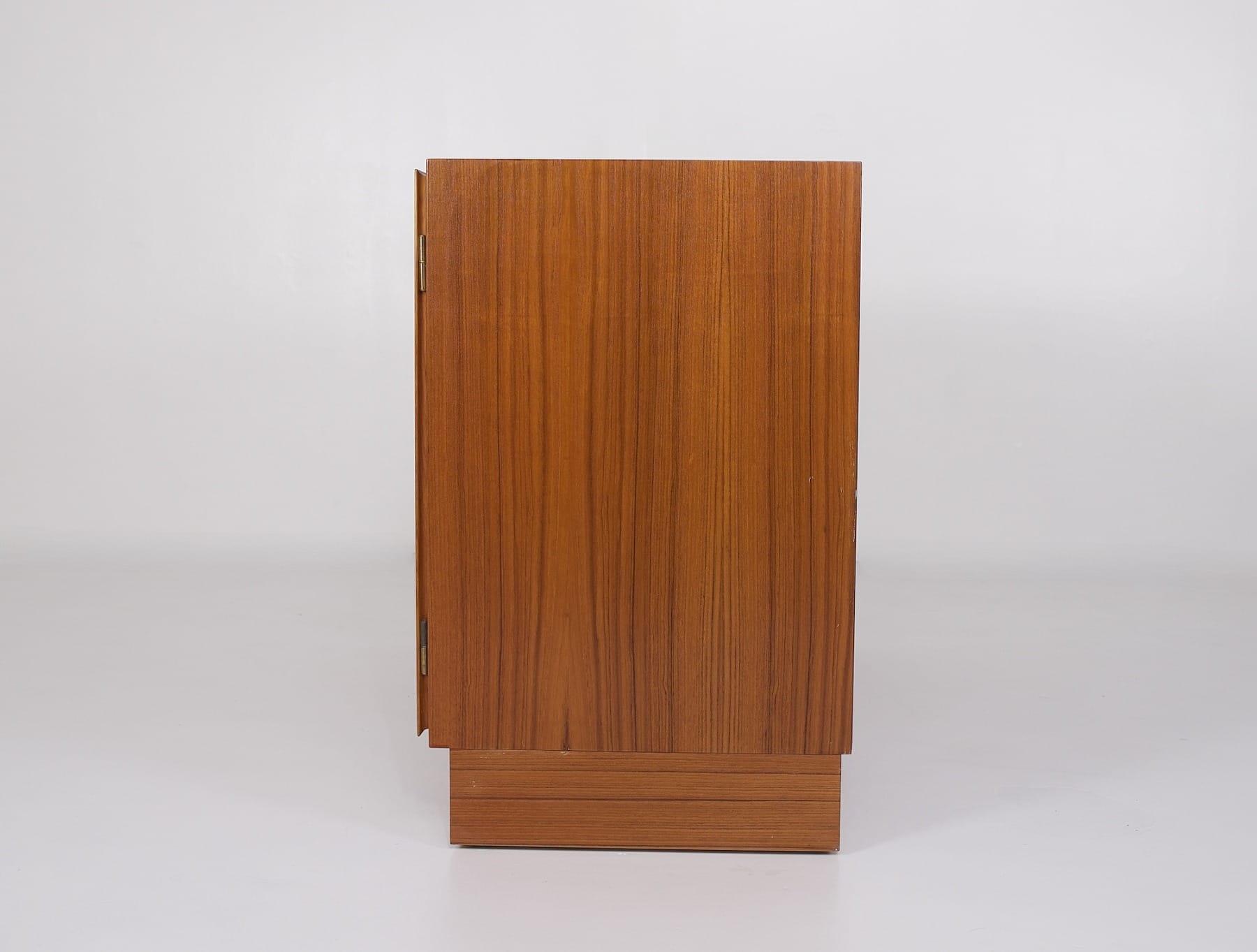
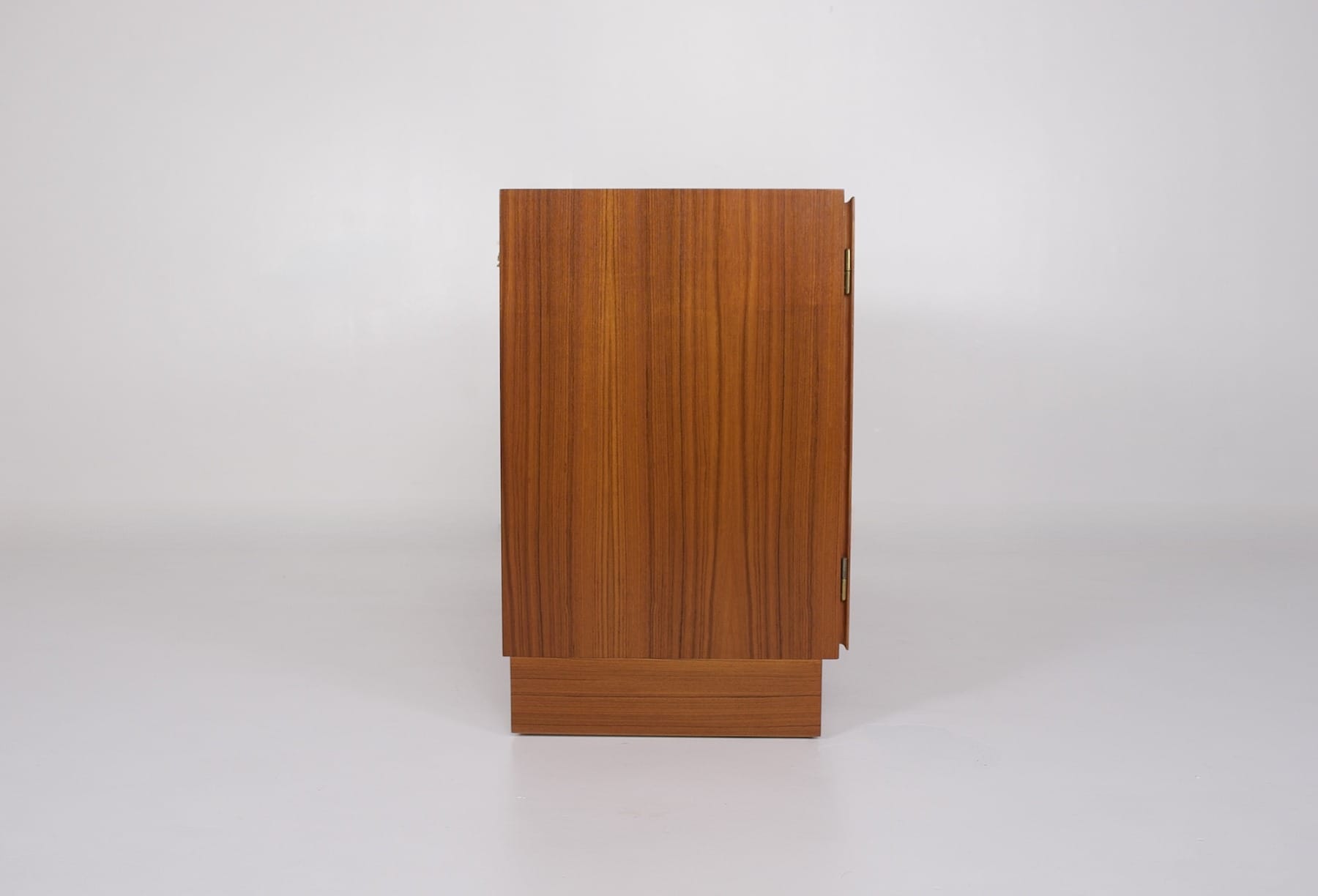
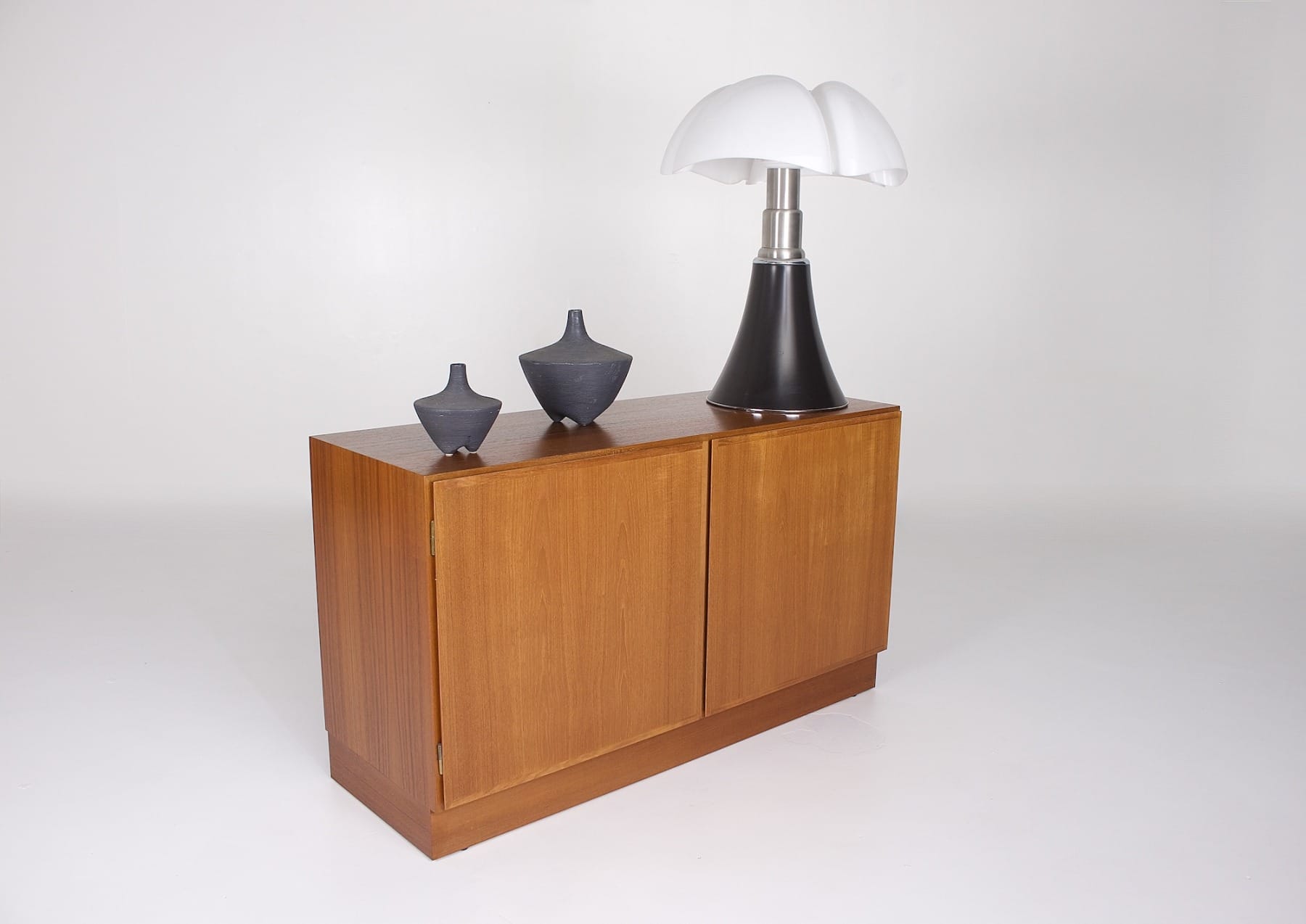
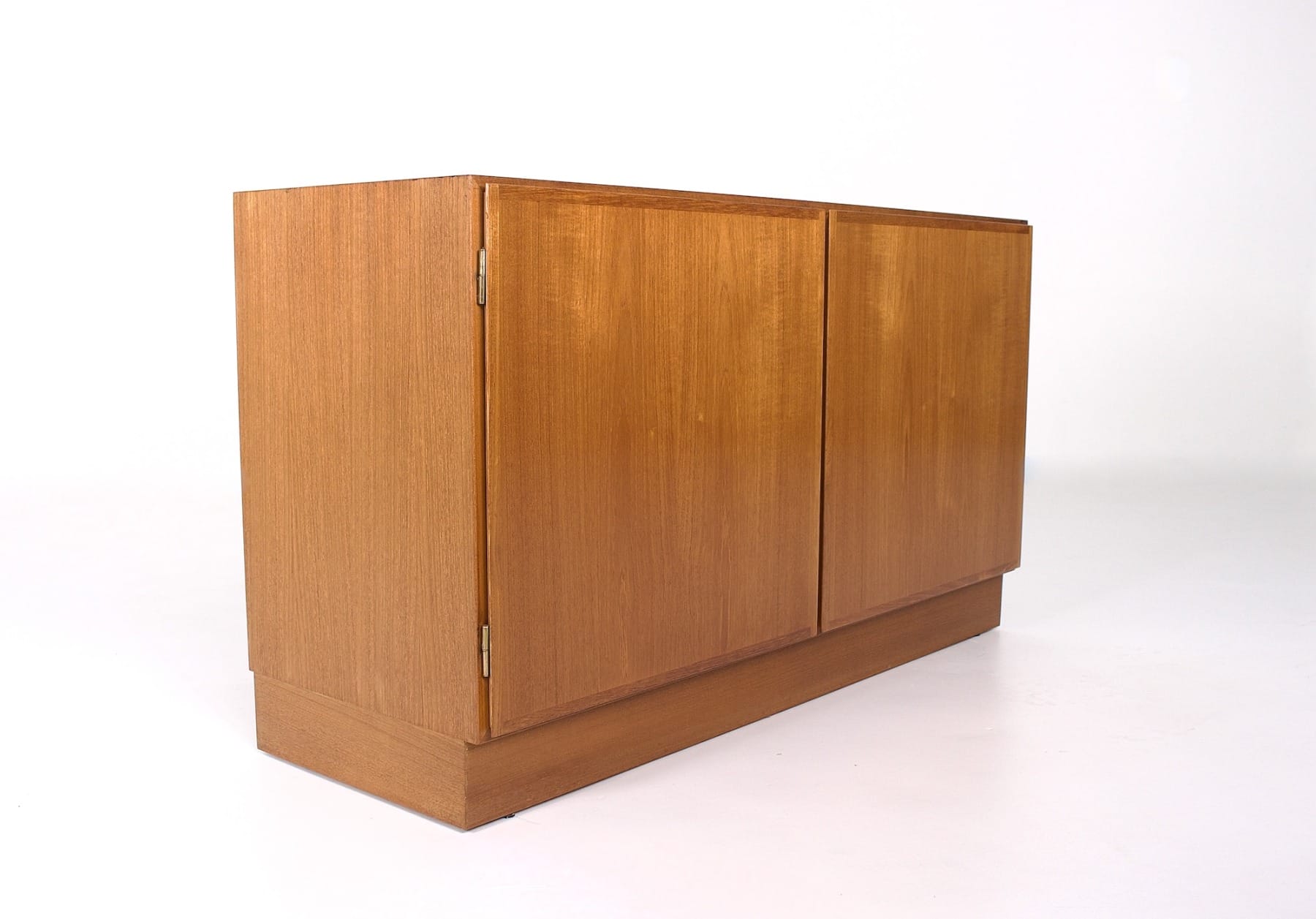
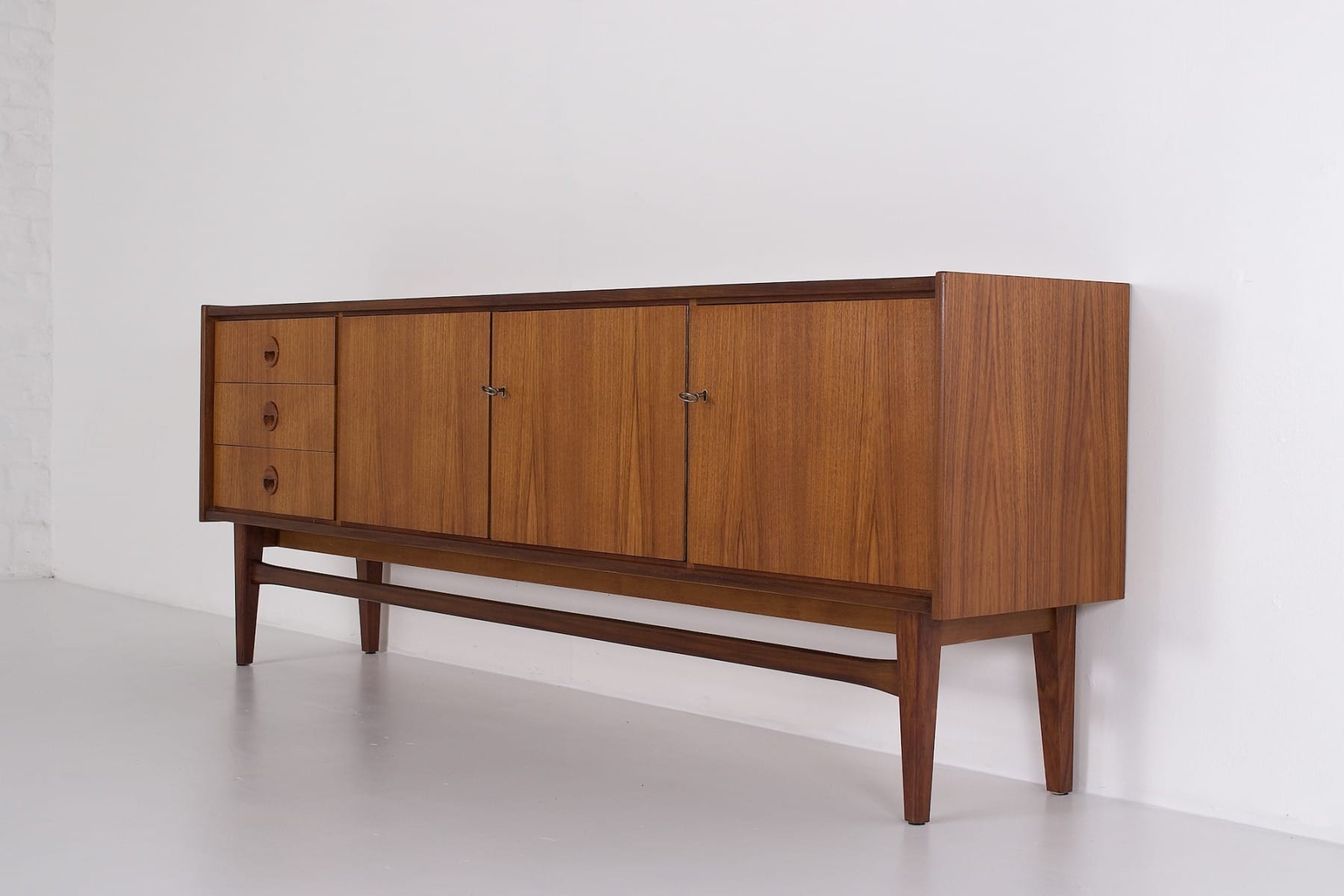
Danish teak sideboard with 2 hinged doors in brass, produced by Omann Jun in Denmark, late 1960s / early 1970s.
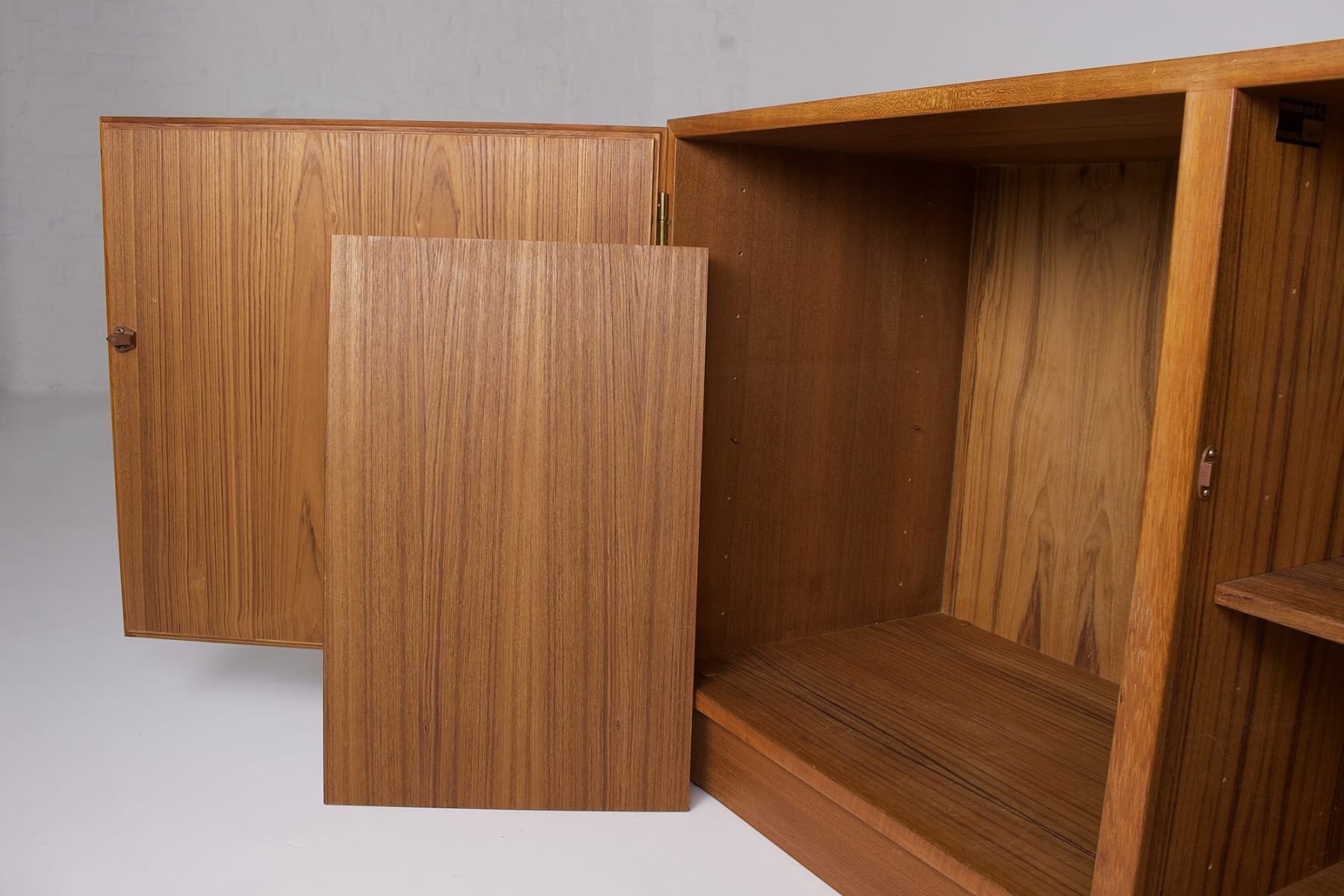
Thanks to its compact dimensions and small footprint, this Danish sideboard easily fits into an apartment, an entryway, or a living room. Its height-adjustable shelves offer flexible storage space, suitable for crockery, books, or everyday objects.
- The interior shelves of the unit are removable and height-adjustable (approximately every 5 cm)
- The unit has been restored by our conservator; rare small marks of normal wear persist.
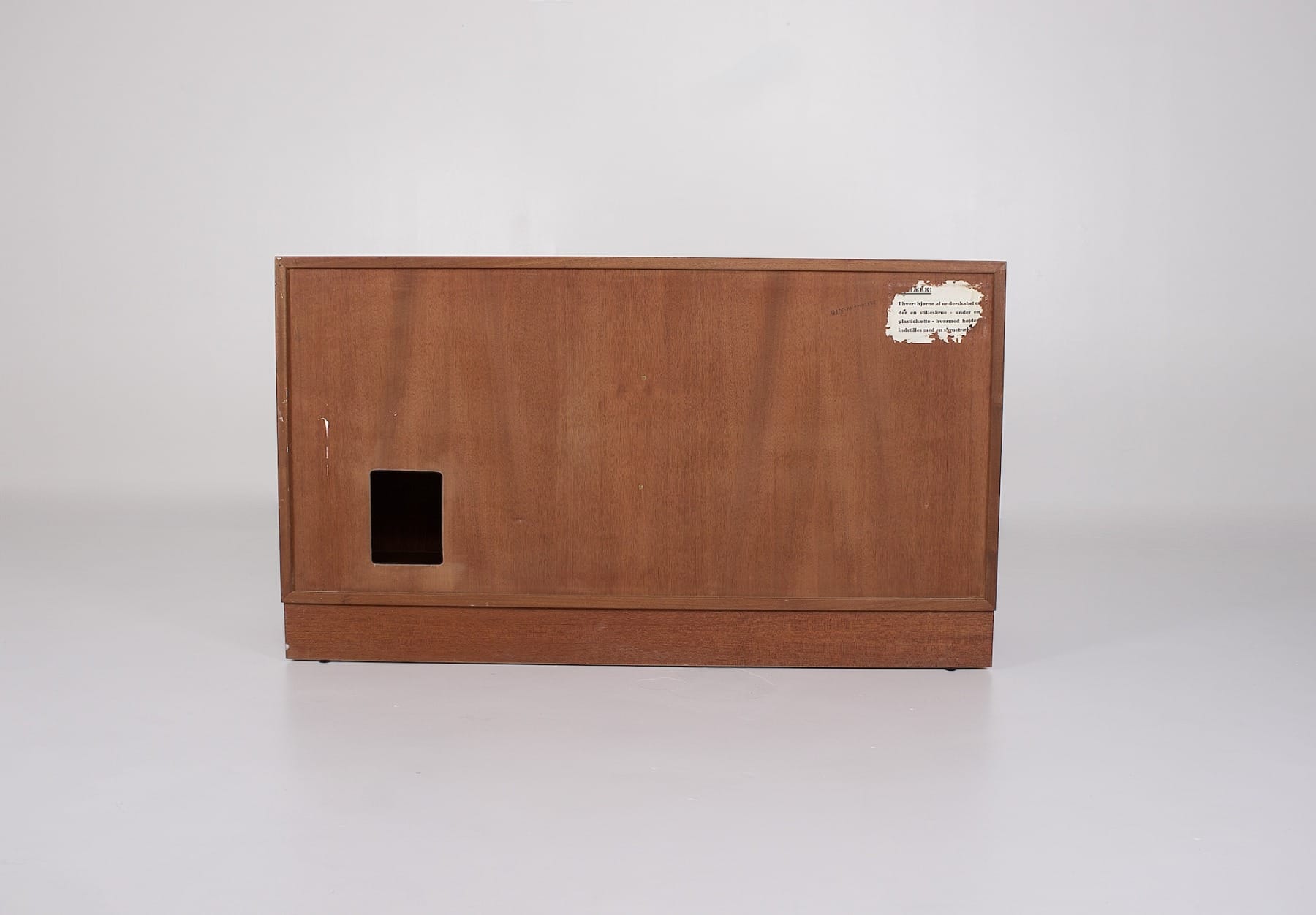
- An opening in the back panel was made by the first owner for cable passage; it was intentionally not replaced (see photo)
- W 120 CM x D 43 CM x H 69 CM.
- P useful 36 CM.
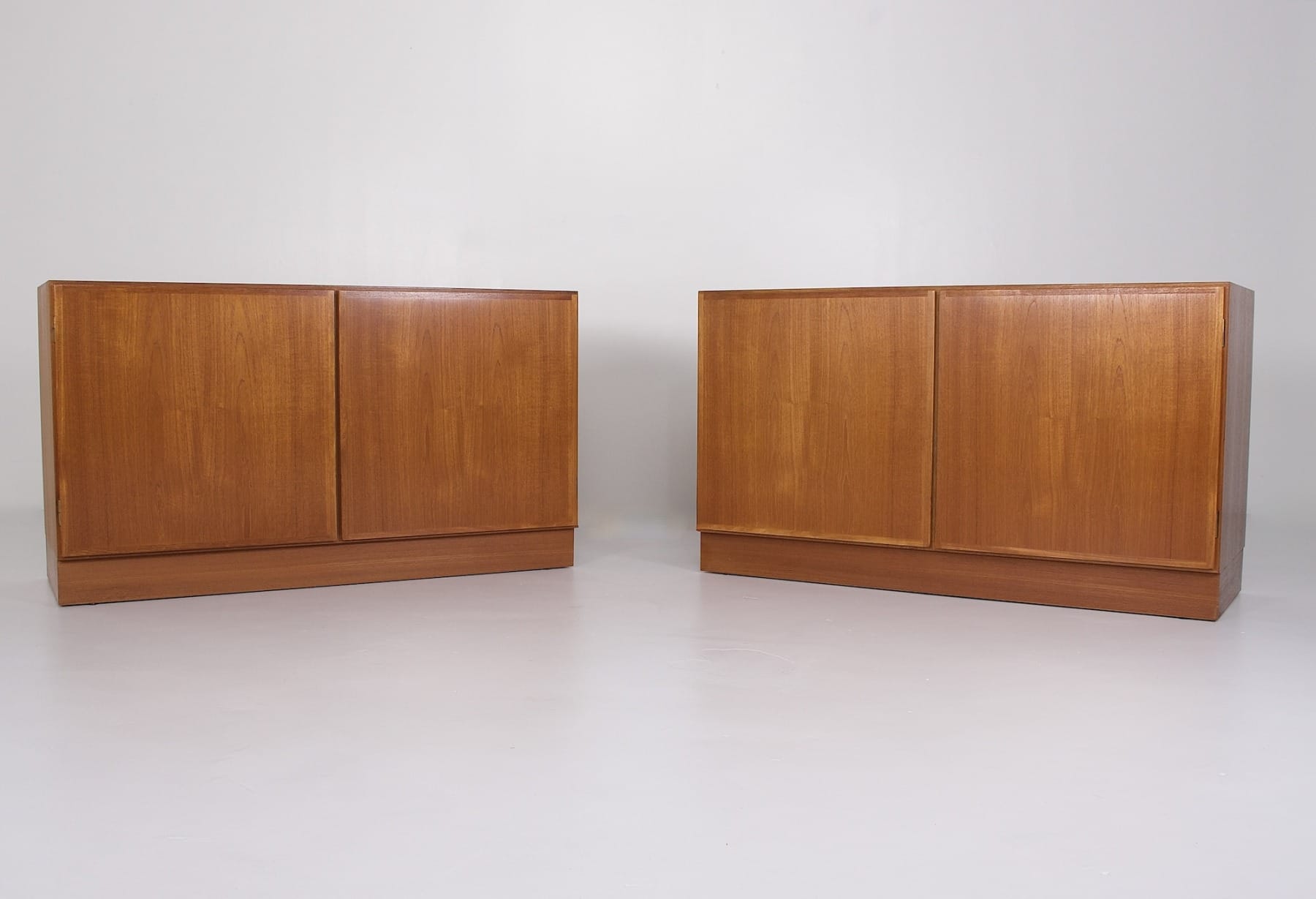
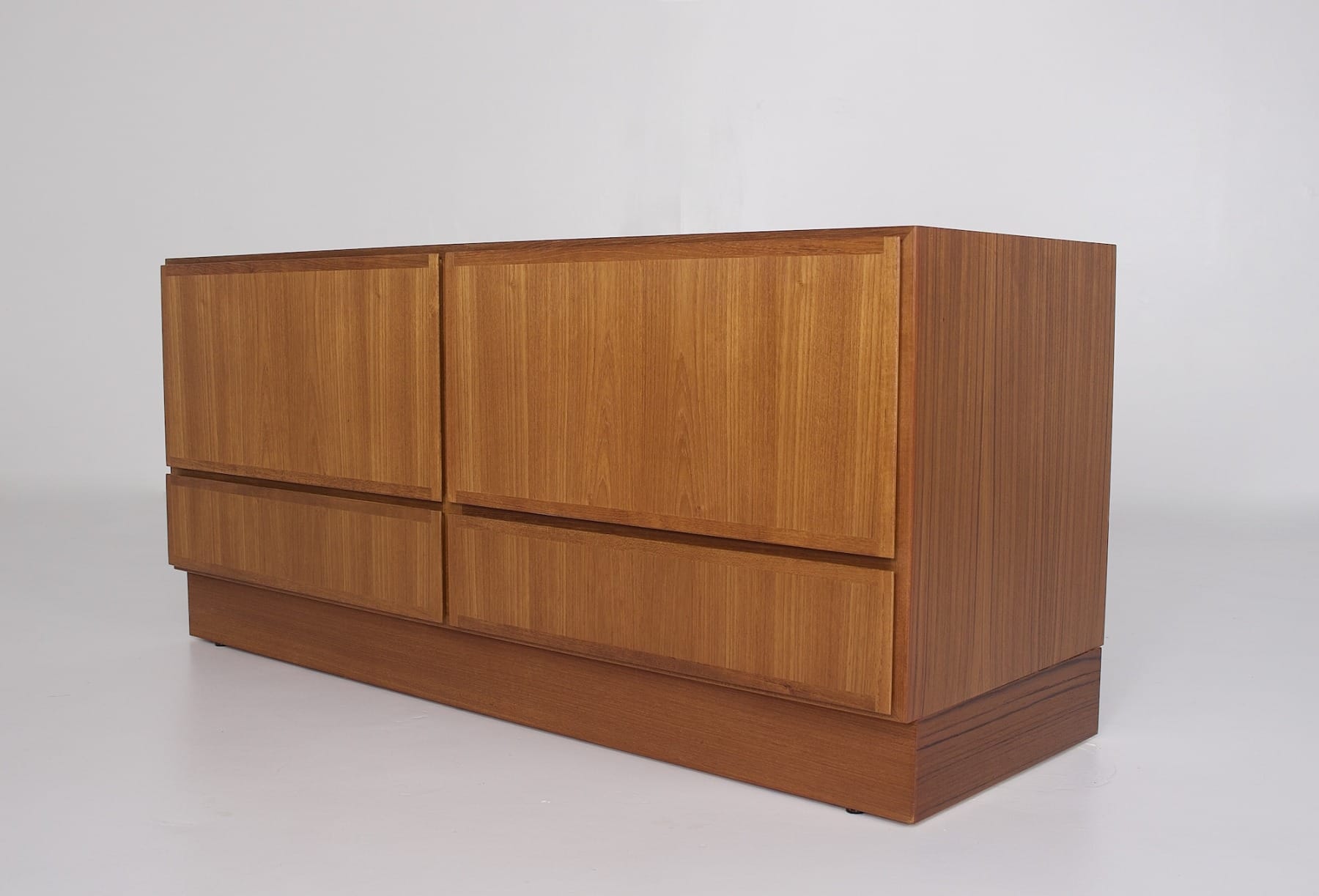
- Another 2-door, 6-drawer sideboard from the same manufacturer is also available (see photo)
1 available in store

Omann Jun: Danish Teak Furniture Expertise
Founded in 1933 by Andreas Omann, the Danish manufacturer Omann Jun continues a family cabinet-making tradition initiated by his father, Niels Nielsen, founder of Ølholm Møbelfabrik in 1919.
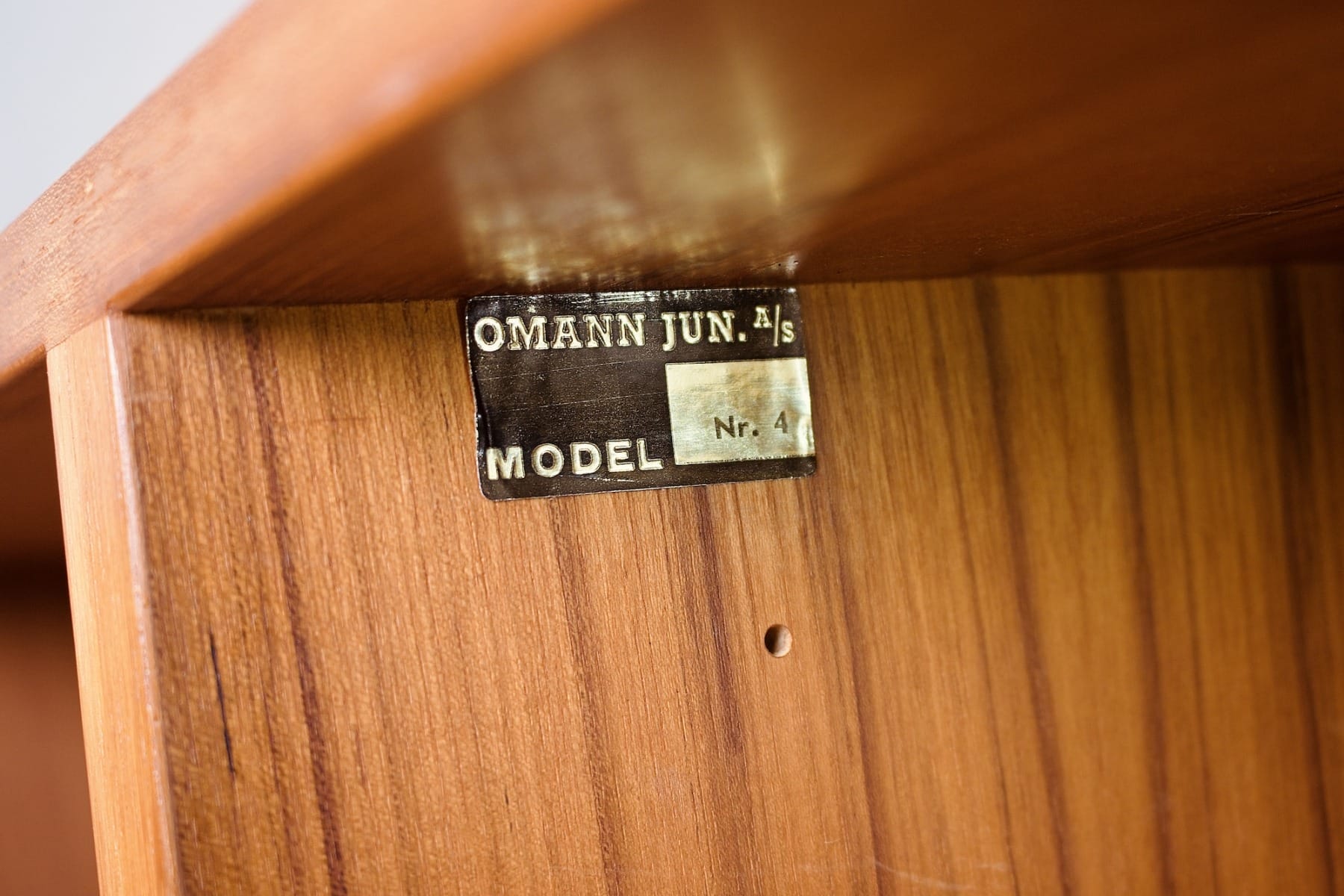
During the 1950s, 1960s, and 1970s, Omann Jun developed a production of quality furniture, notably desks, sideboards and credenzas in teak, oak, and rosewood. Exported worldwide, these pieces are distinguished by the care taken in their manufacture and finishes.
The design of Omann Jun furniture is the result of a family collaboration between Andreas Omann and his sons Gunni and Bjarne. Their production emphasizes clean lines, balanced proportions, and a meticulous use of wood species.
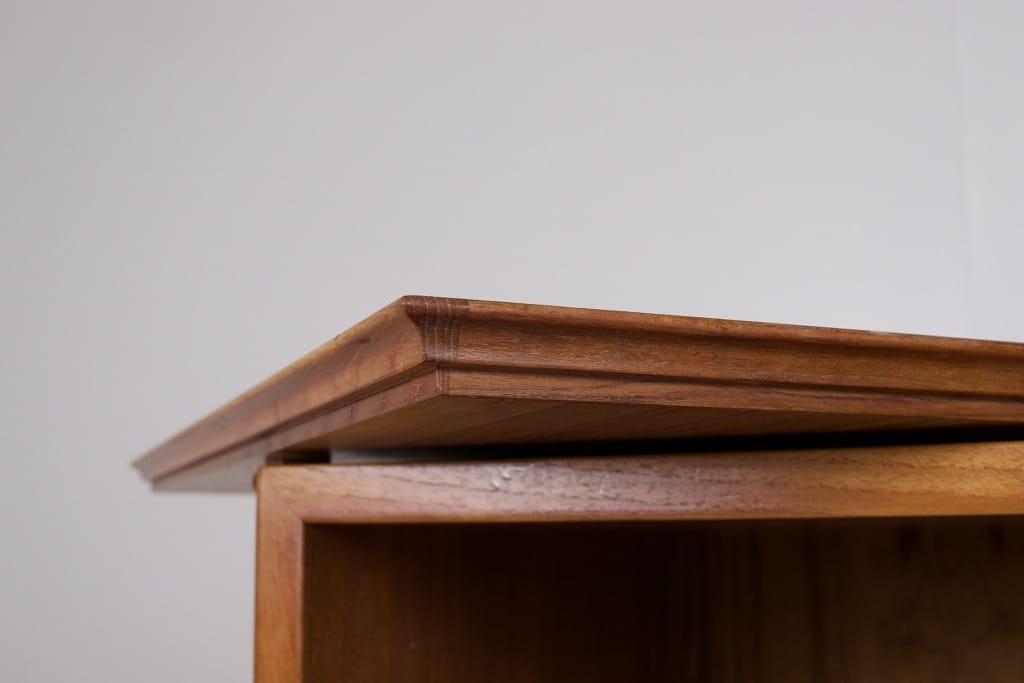
The recessed design of the facades eliminates the need for visible handles: the doors can be grasped and opened across their entire width, maintaining the structural clarity and purity of the piece’s lines.
This two-door low cabinet exemplifies the Danish furniture approach of the 1960s. Its geometric design is based on an extremely minimalist composition, where the vertical grain of the teak contrasts with the horizontal lines of the plinth. The absence of visible handles enhances the overall simplicity and highlights the quality of the wood.
The Omann Jun factory is still active today, perpetuating the family’s expertise across three generations.
You might also like…
Discover also...


Delivery to Belgium

Delivery to France

Delivery to Luxembourg
