







LCW Eames Première Edition Evans Medal Strip Chair
€7800,00
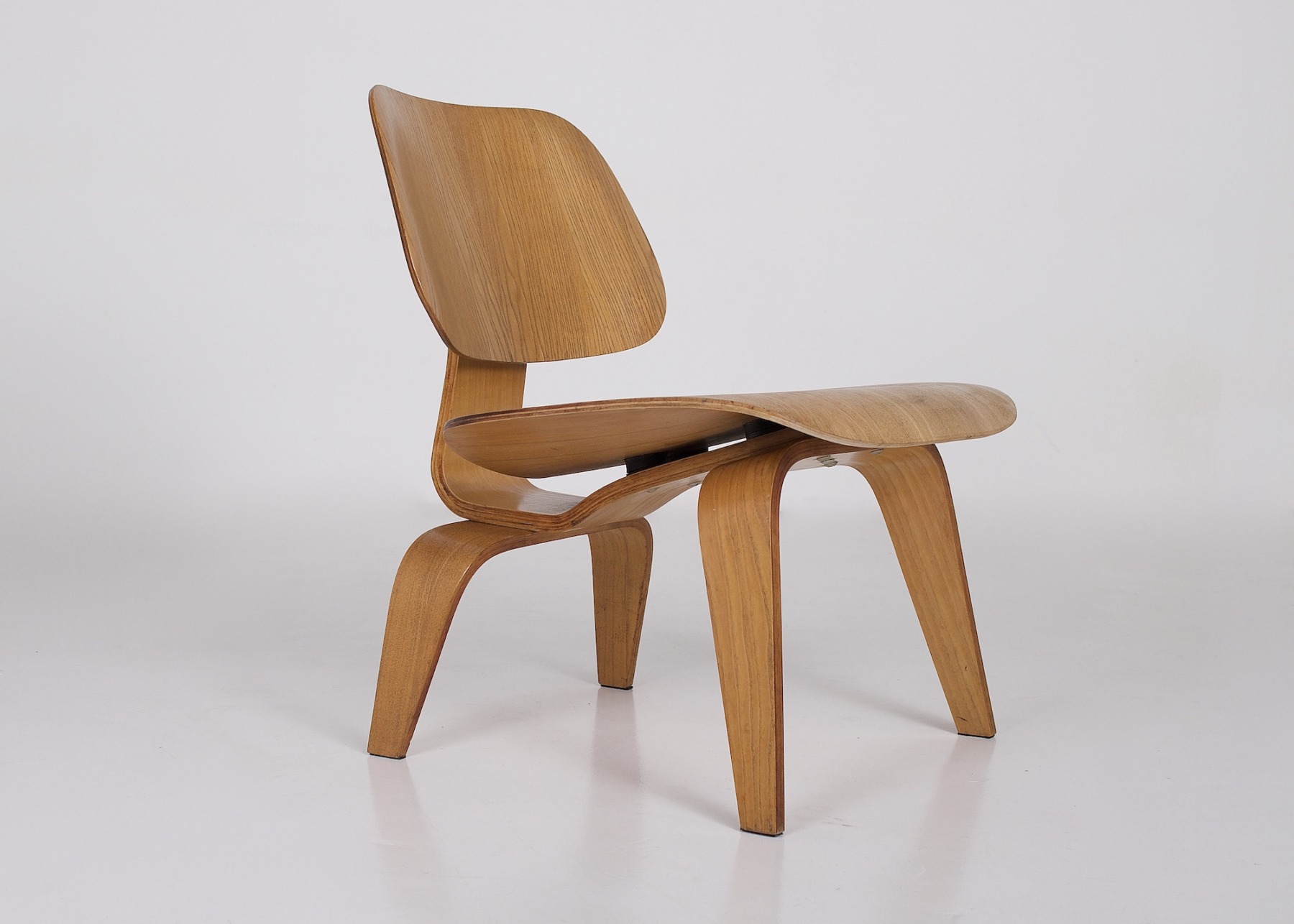
LCW chair (Low Chair Wood) in ash, Charles & Ray Eames, first edition Evans Products – Molded Plywood Division-
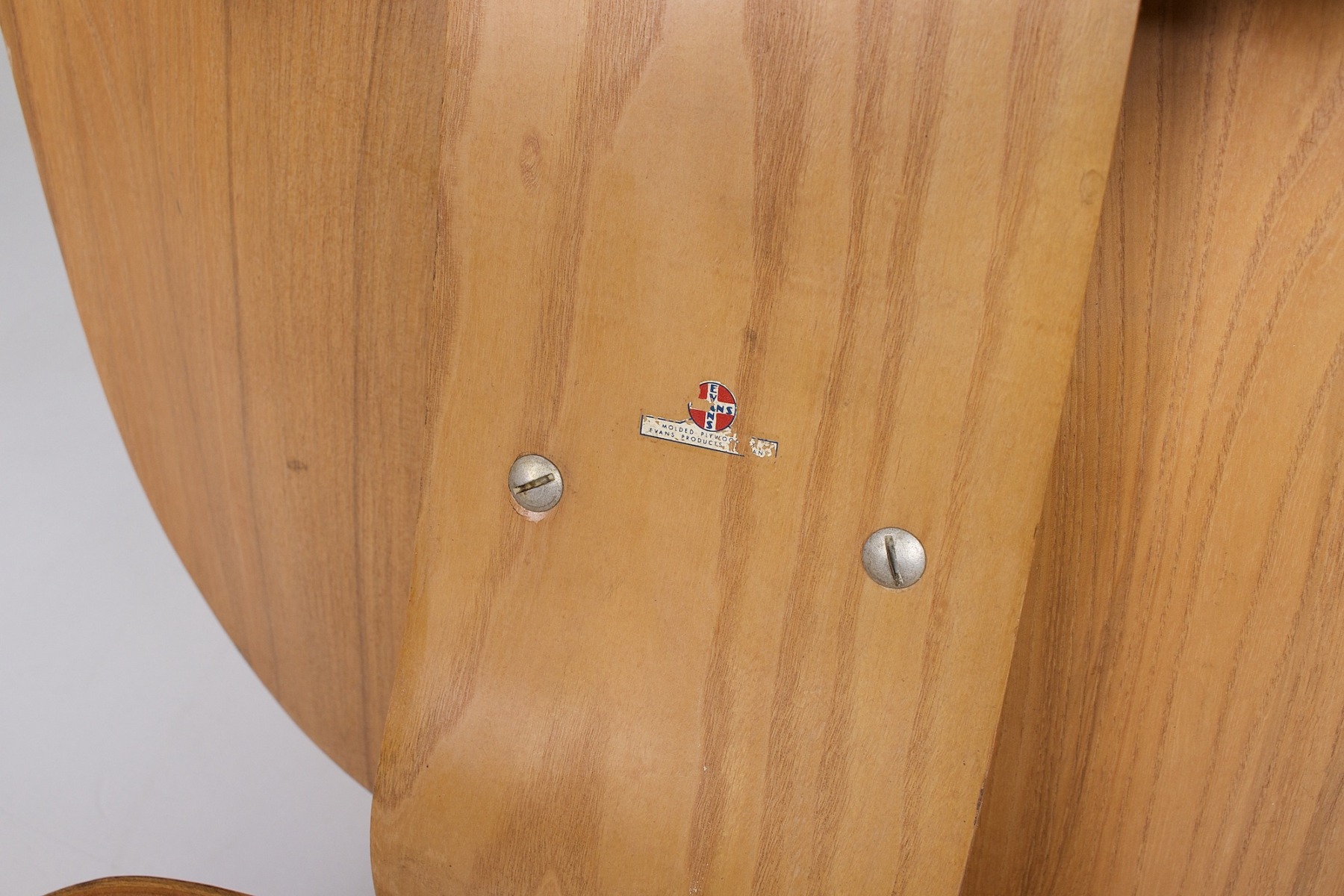
- Original publisher’s label for the American market, well preserved under the seat, one of the rarest: the Evans Medal Strip indicating production between 1945 and 1946.
- The only label that predates it is the Evans Disc Label, which was affixed to models from 1944 to 1945, but only for prototypes.
- 5-2-5 screw layout, versus 5-2-4 under Herman Miller.
- H 68 CM X D 61 CM X W 56 CM.
- Seat height 36 CM.
1 available in store

History of the LCW Eames & Evans Molded Plywood Chair
The first model in the molded plywood series, the Eames LCW — Lounge Chair Wood — is distinguished by its lounge height (L) and all-wood base (W). Designed by Charles & Ray Eames, it was initially manufactured by the Evans Molded Plywood division, before establishing itself as one of the great classics of twentieth-century design.

Under the seat of the Charles & Ray Eames LCW chair, the “Evans Medal Strip” logo places this edition between 1945 and 1946.
The techniques used in its manufacture have their origins in research carried out during the Second World War. At the time, Charles Eames had developed innovative plywood molding processes, notably used for the famous medical splint designed for the US Navy. The LCW is made up of five layers of plywood, glued together and then heated in a special press to bend the wood with great precision and give it its final shape.
As early as 1946, four plywood chair models for adults were developed for the market, plus a nesting chair for children. The LCW had a higher-seated version, the DCW, and these two models were also offered with metal frames, giving rise to the LCM and DCM. The collection was soon grouped together under the generic name of “Eames Chairs,” under which it was marketed until the early 1950s.
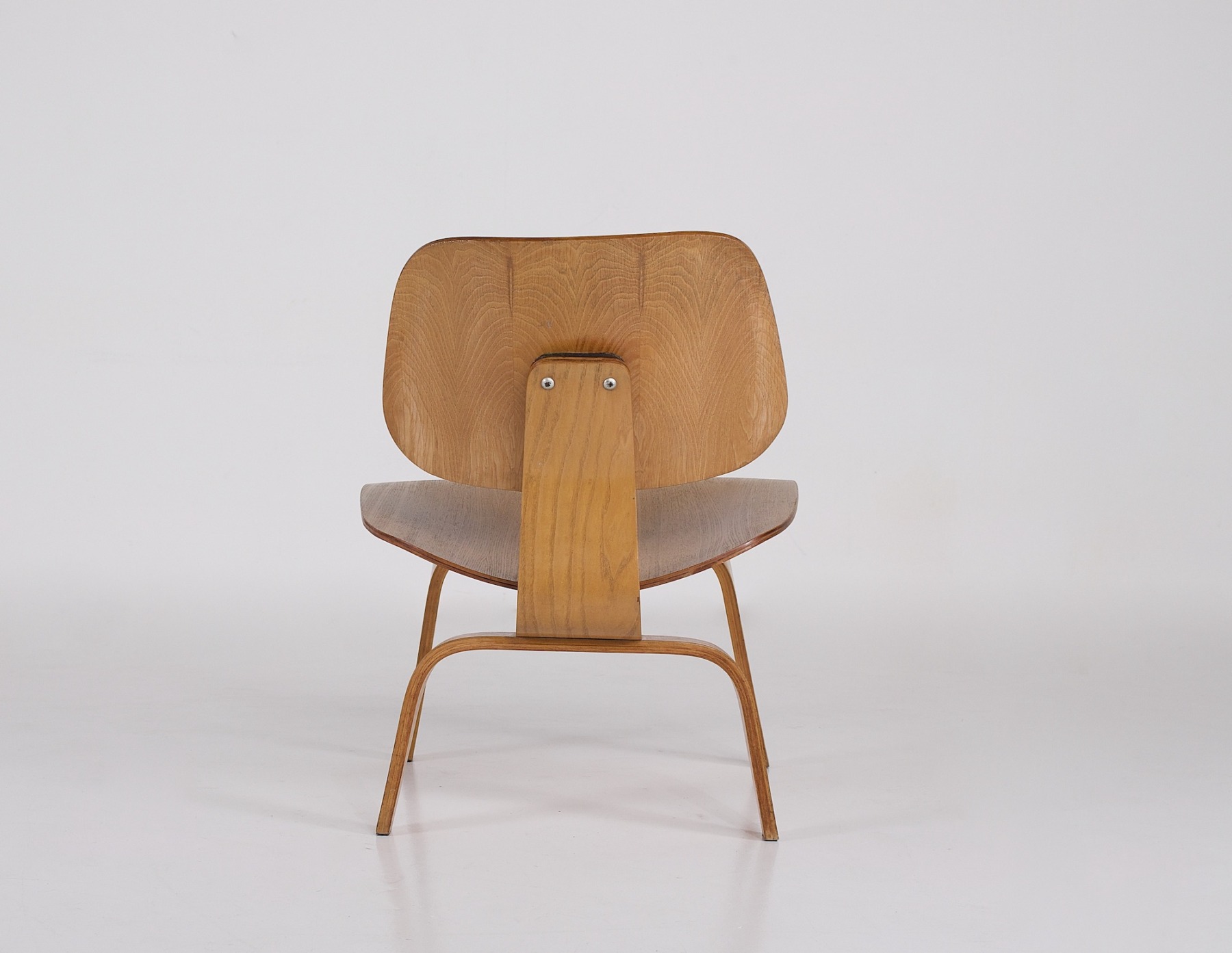
The LCW features a bold construction combining five separate molded plywood elements. The base is composed of two curved legs of different sizes, linked by a profiled central piece that acts as a spine. The seat and backrest are attached to this structure by cleverly concealed rubber shock absorbers, ensuring both flexibility and comfort. This radically new approach produced a chair that was both sculptural and functional, emblematic of post-war aesthetics.
The LCW concept was developed jointly by Charles Eames and Evans Molded Plywood. Herman Miller was asked to distribute the furniture from 1947, before acquiring the rights to the entire catalog in 1949. This marked the beginning of a decisive partnership in the history of modern design.
The LCW chair was offered in a variety of wood veneers and finishes. The first versions, deliberately sober, were progressively enriched under the impetus of Herman Miller, notably thanks to the chromatic and textile research of Alexander Girard.
During the 1950s, the emergence of new materials and designs led to a slowdown in demand for plywood furniture. While Herman Miller continued to produce the DCM and LCM models, the LCW was withdrawn from the catalog in 1957. It was finally reissued in 1994 and remains in production today, testifying to the permanence and modernity of its design.
Bibliography :
100 Masterpieces from the Vitra Design Museum Collection, exhibition catalog, Vitra Design Museum, July 10, 1995 – January 21, 1996, p. 57
Collective, “Chairs: Catalogue of the Delft Faculty of Architecture Collection”, o/o Publishers, Rotterdam, 2008, pp. 122-228.
You might also like…

Discover also...


Delivery to Belgium

Delivery to France

Delivery to Luxembourg
