



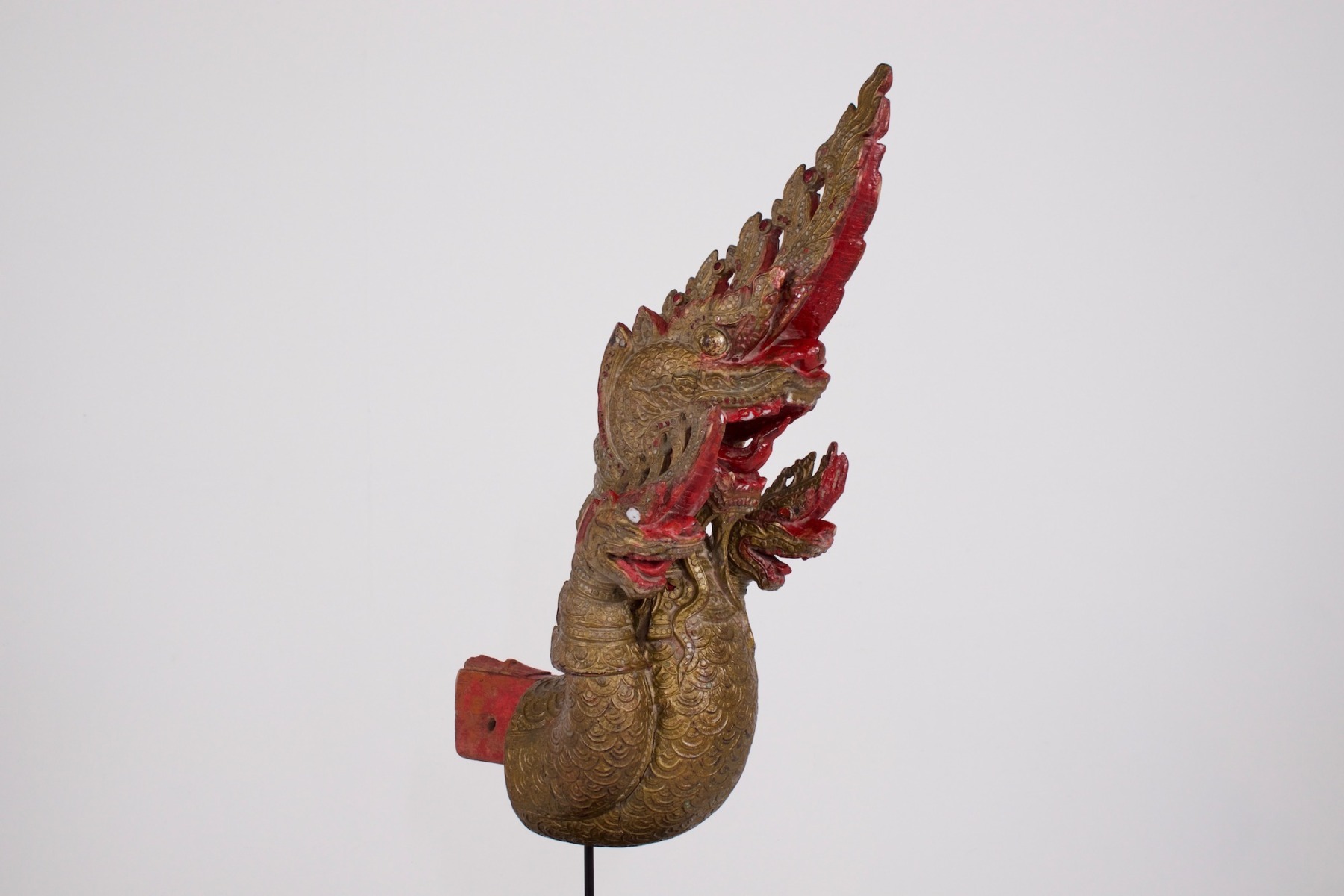
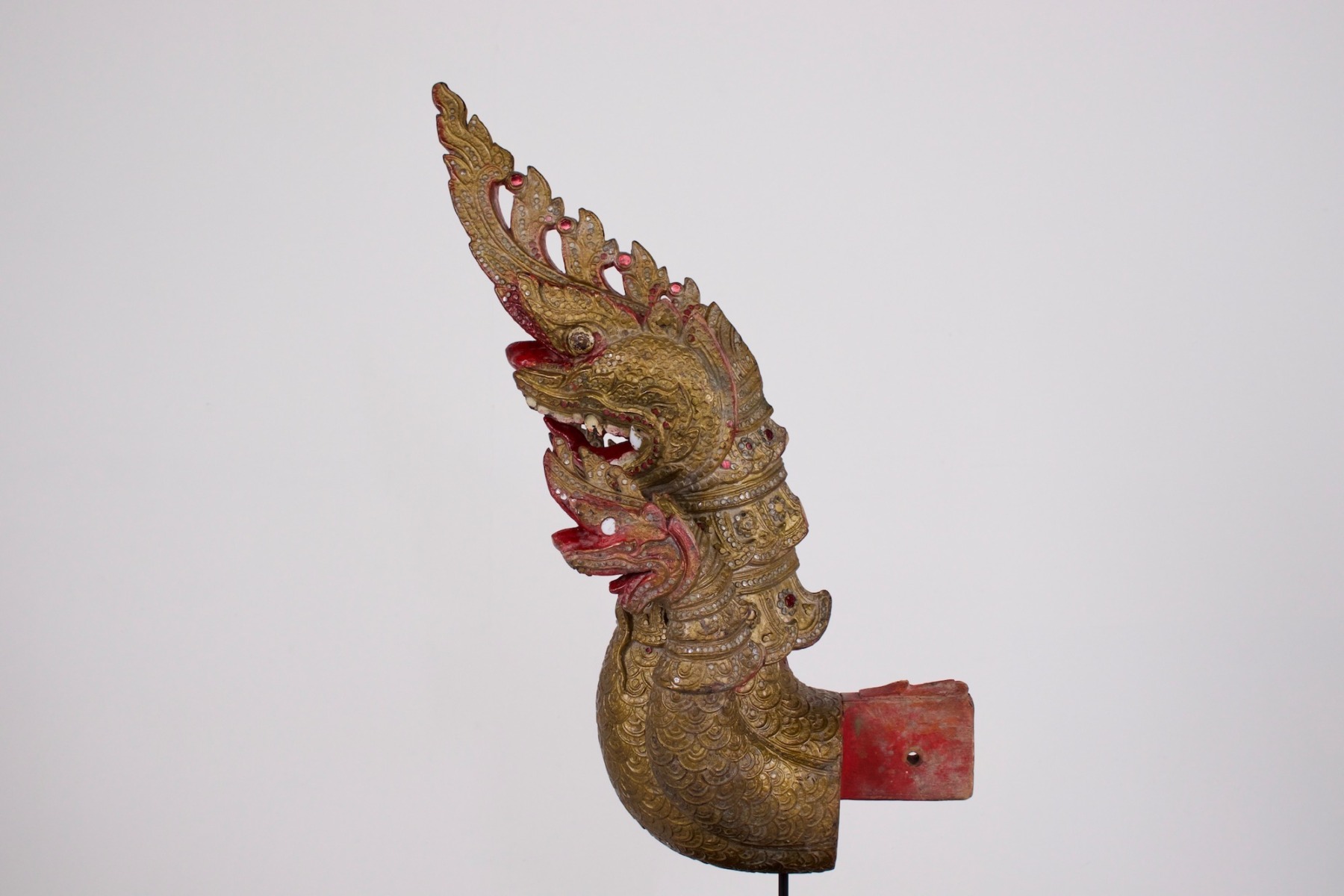
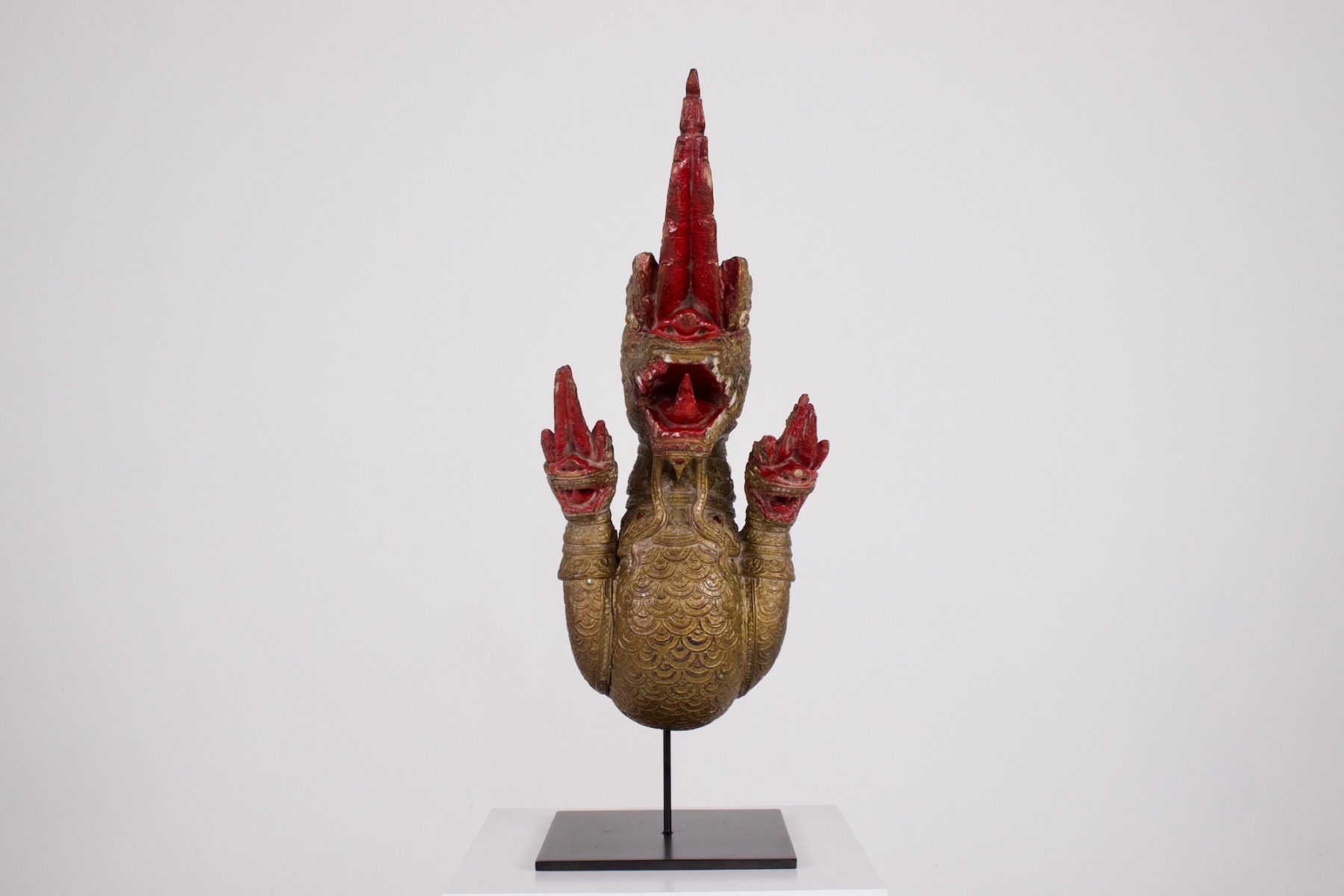
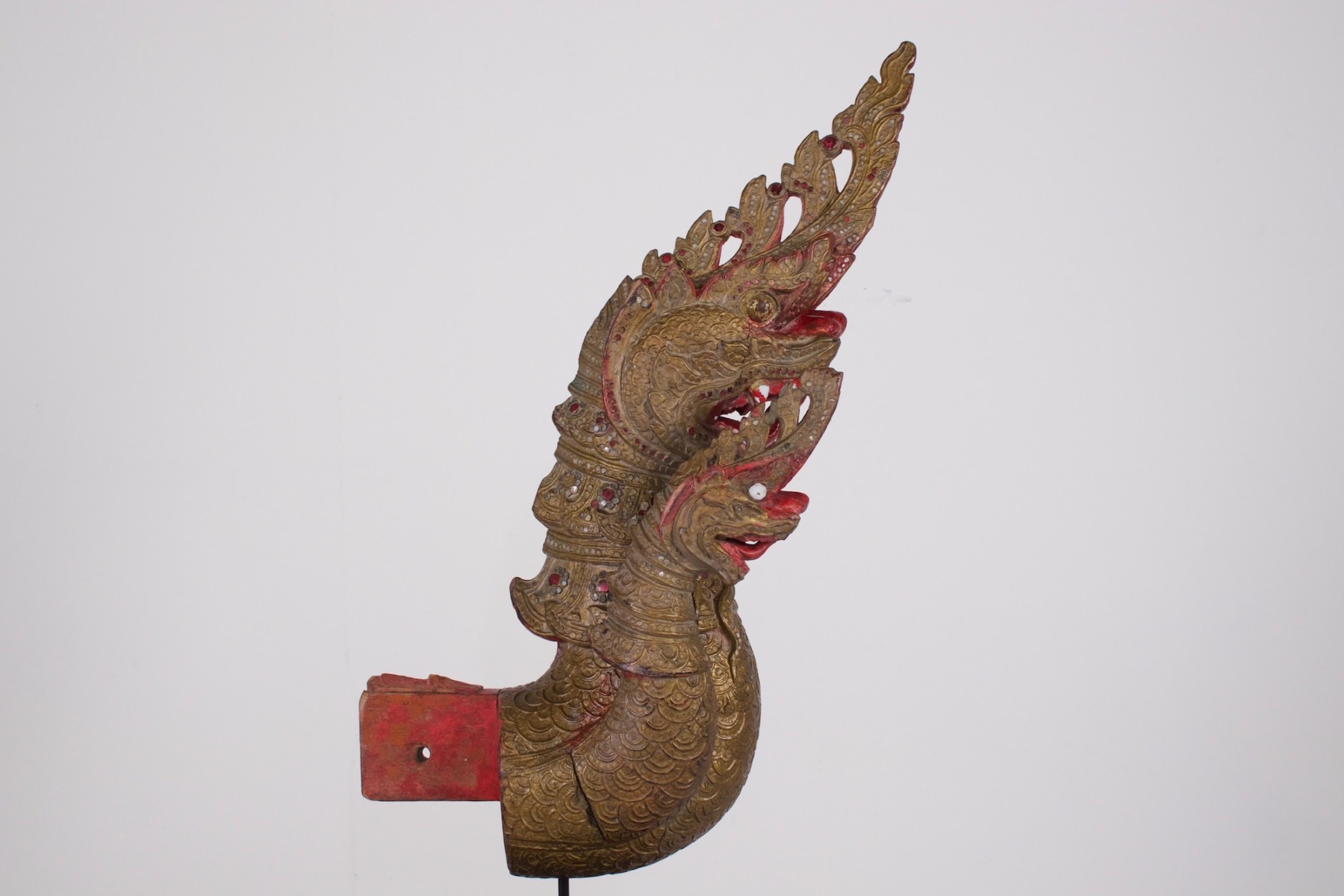
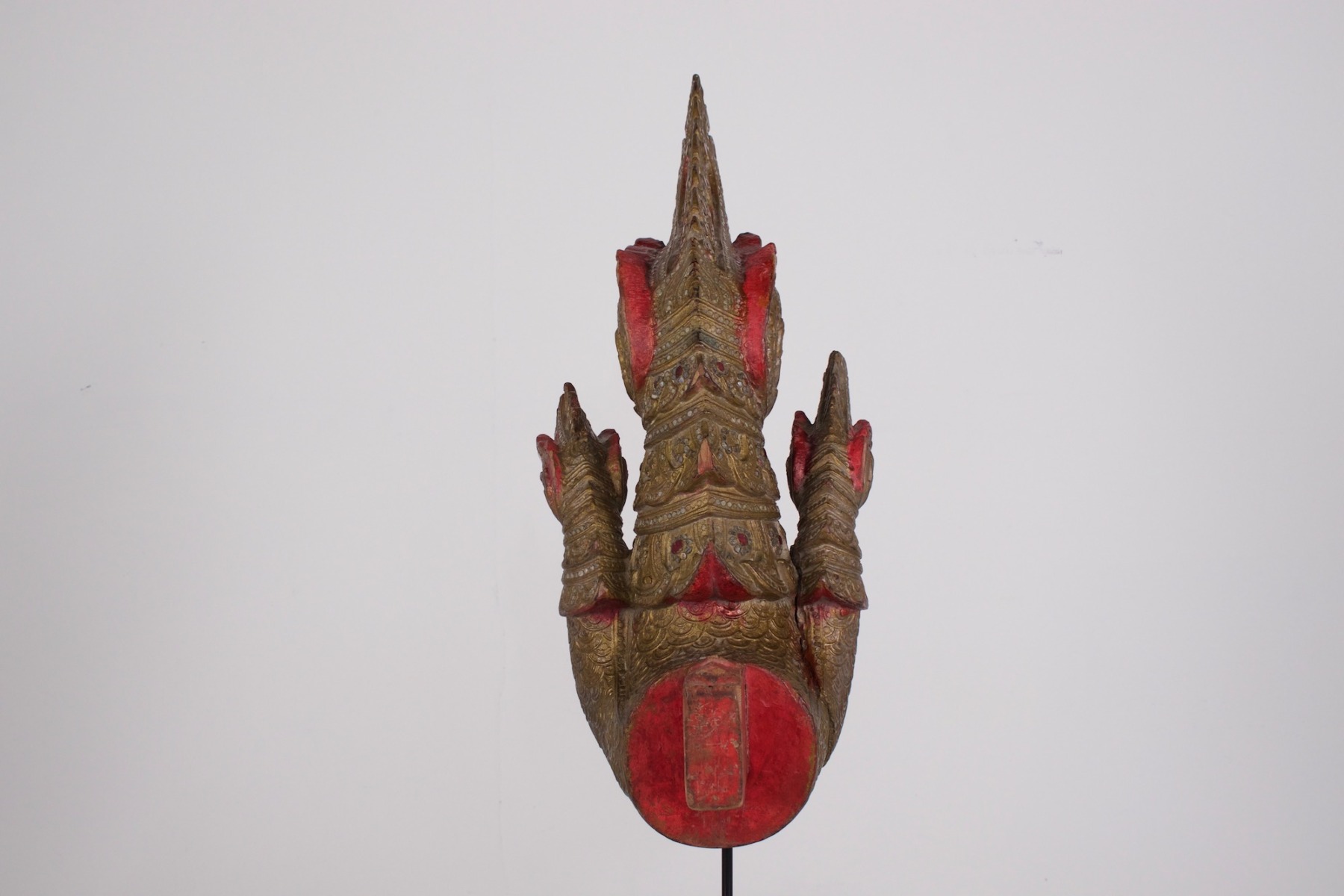

Naga Makara head
€2400,00
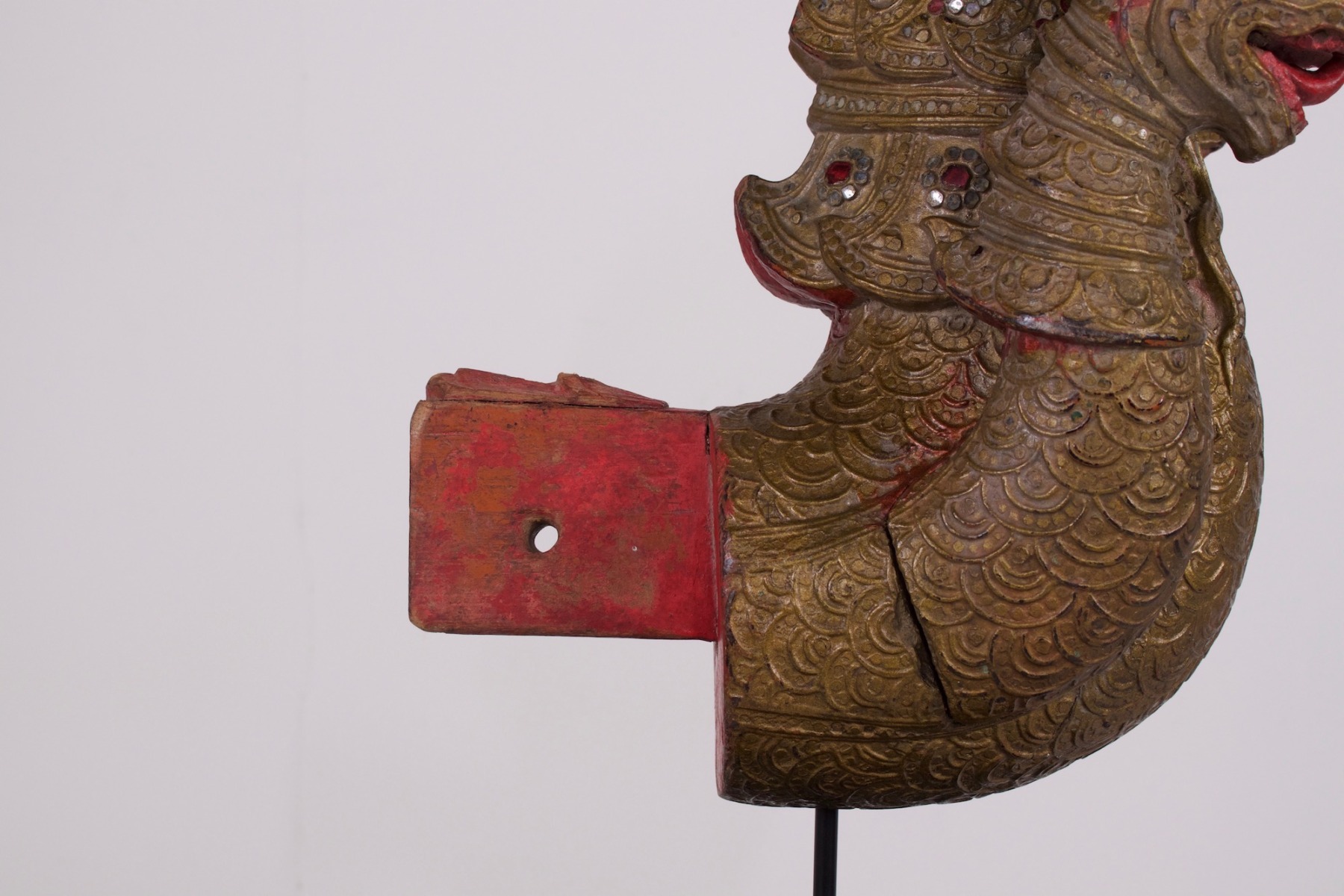
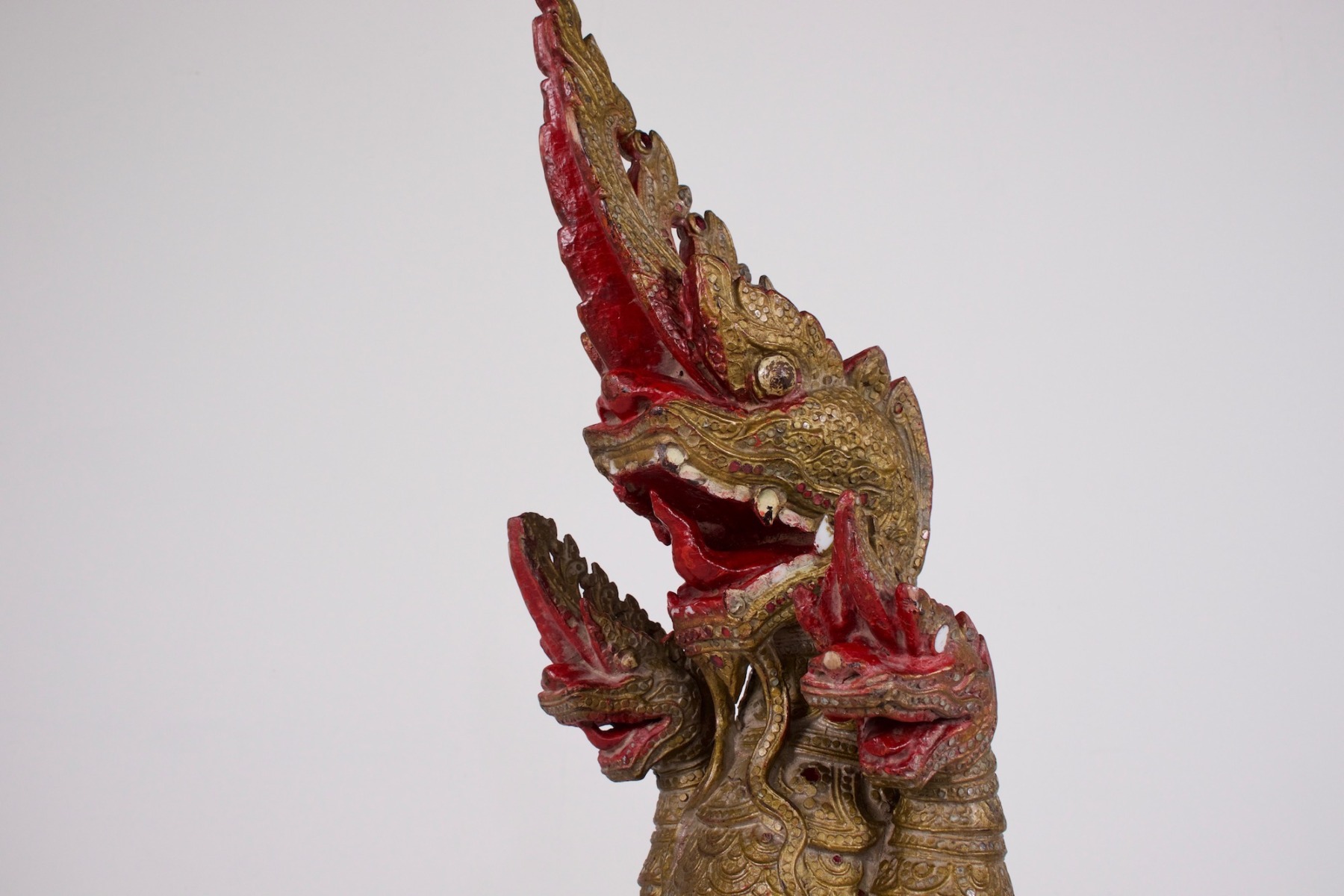
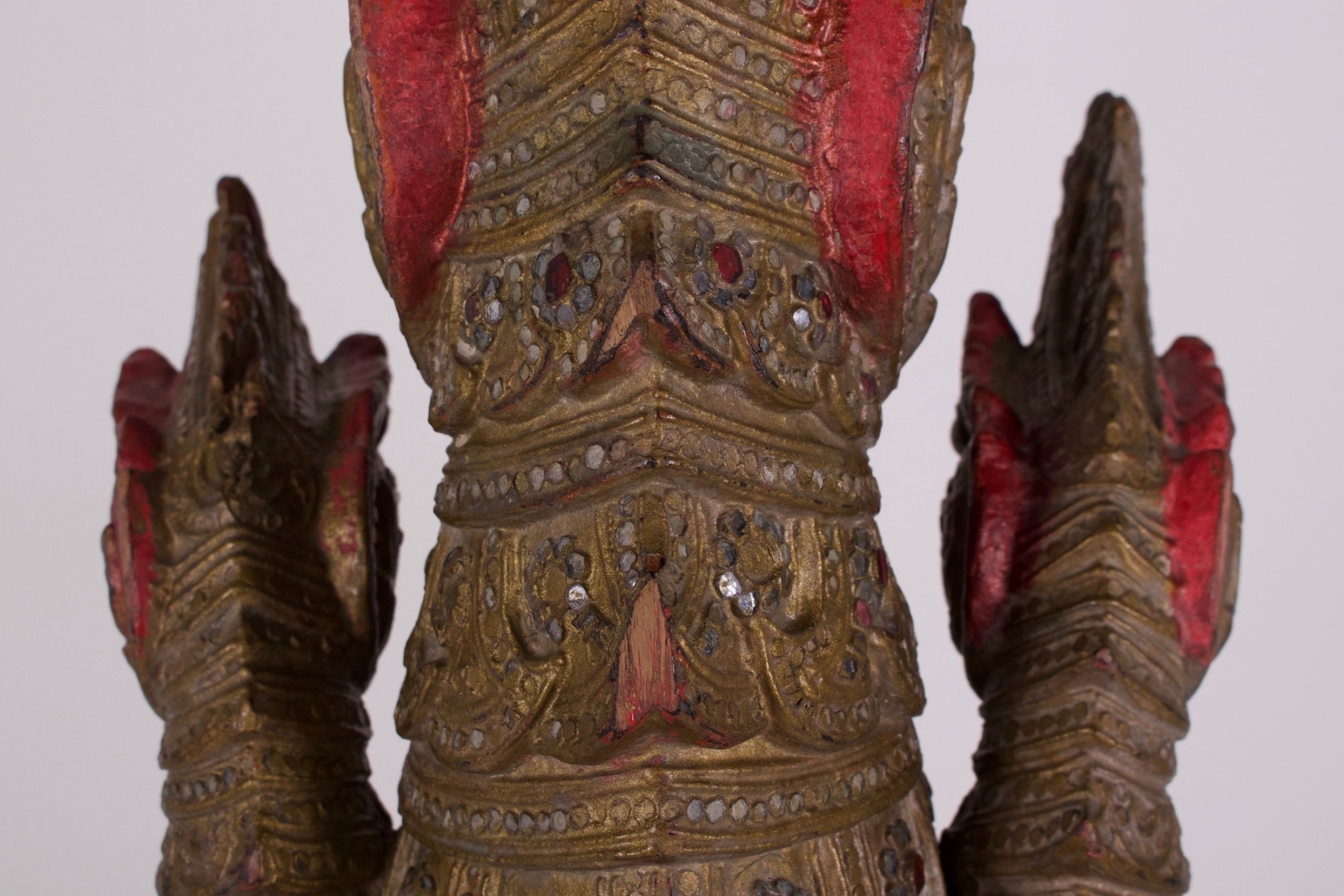
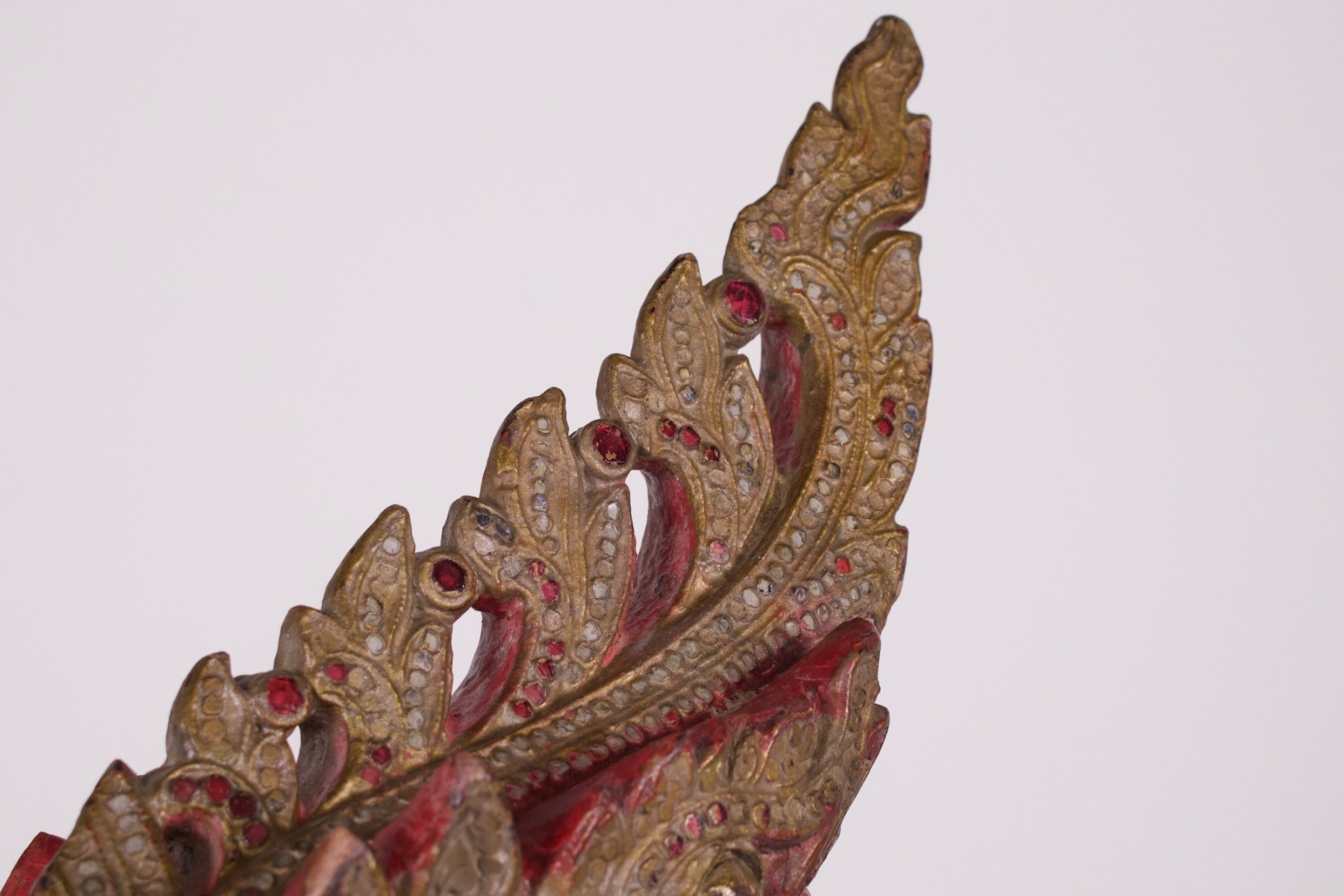
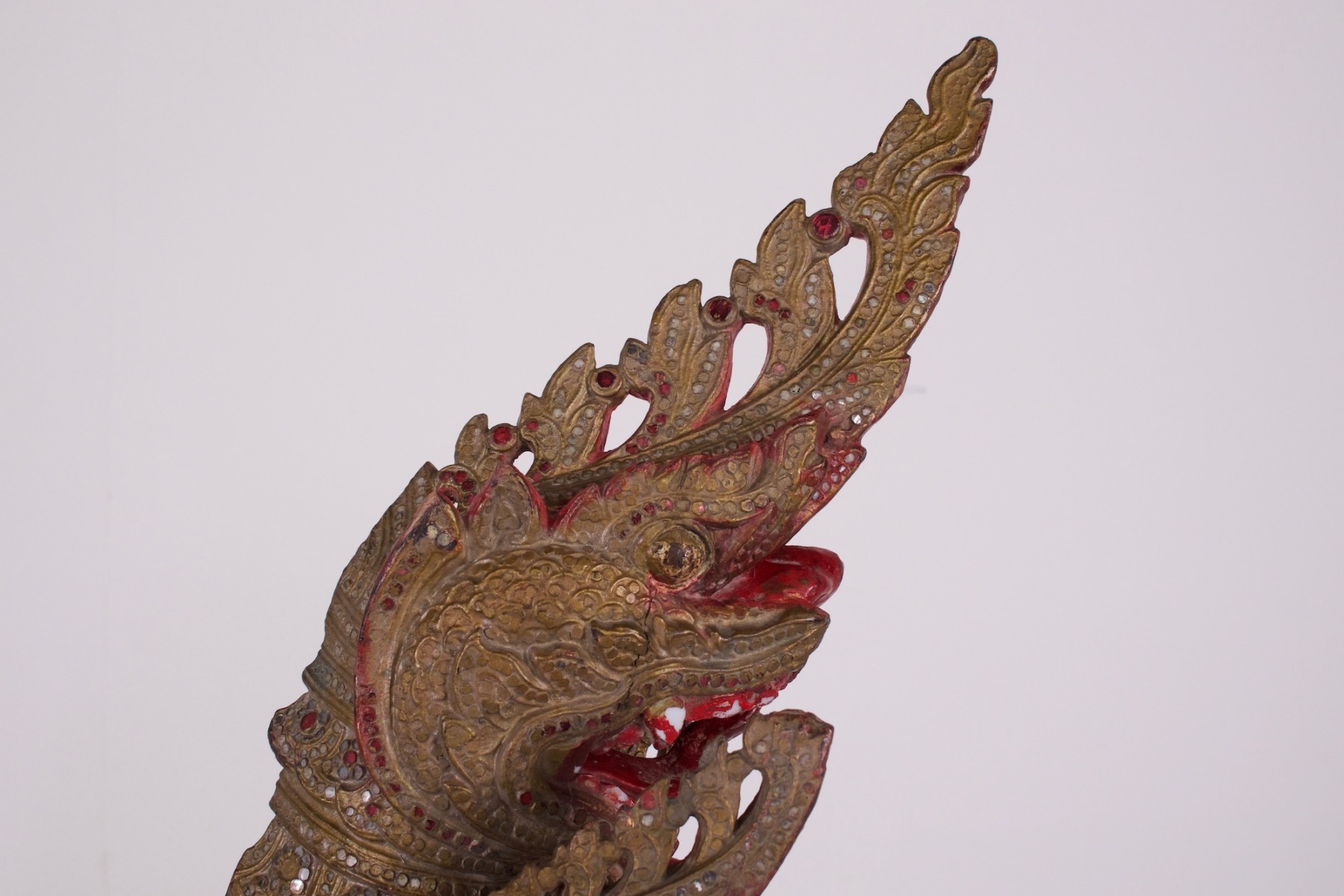
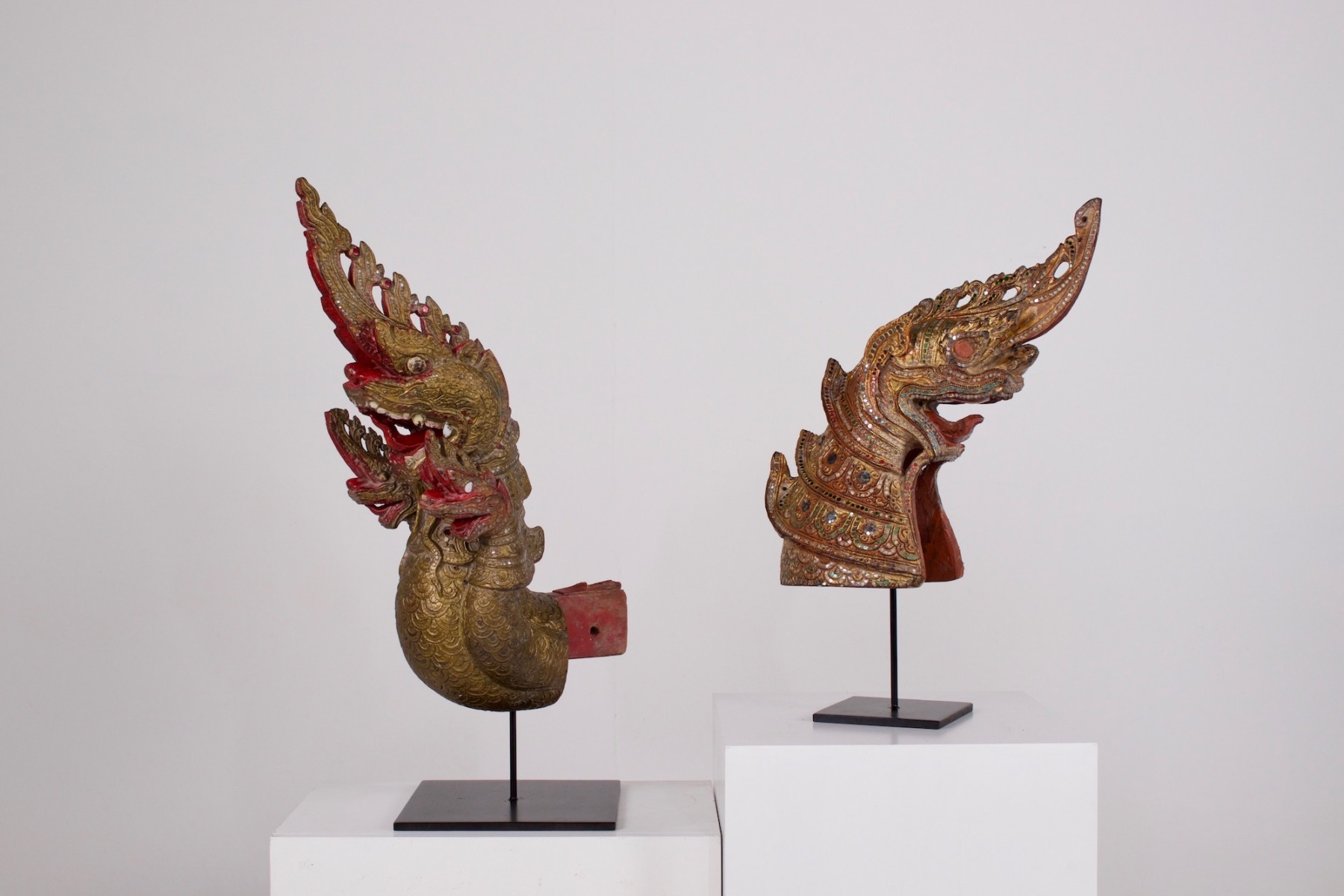
- Naga Makara head, Burma, early 20th century. Ornamental wood sculpture from the Buddhist and Hindu mythological bestiary.
- Probable element of a Burmese xylophone depicting a triple-headed Makara dragon, in gilded solid wood, with glass bead inlays.
- Provenance: Claude de Marteau Collection.
- Sold with certificate of origin.
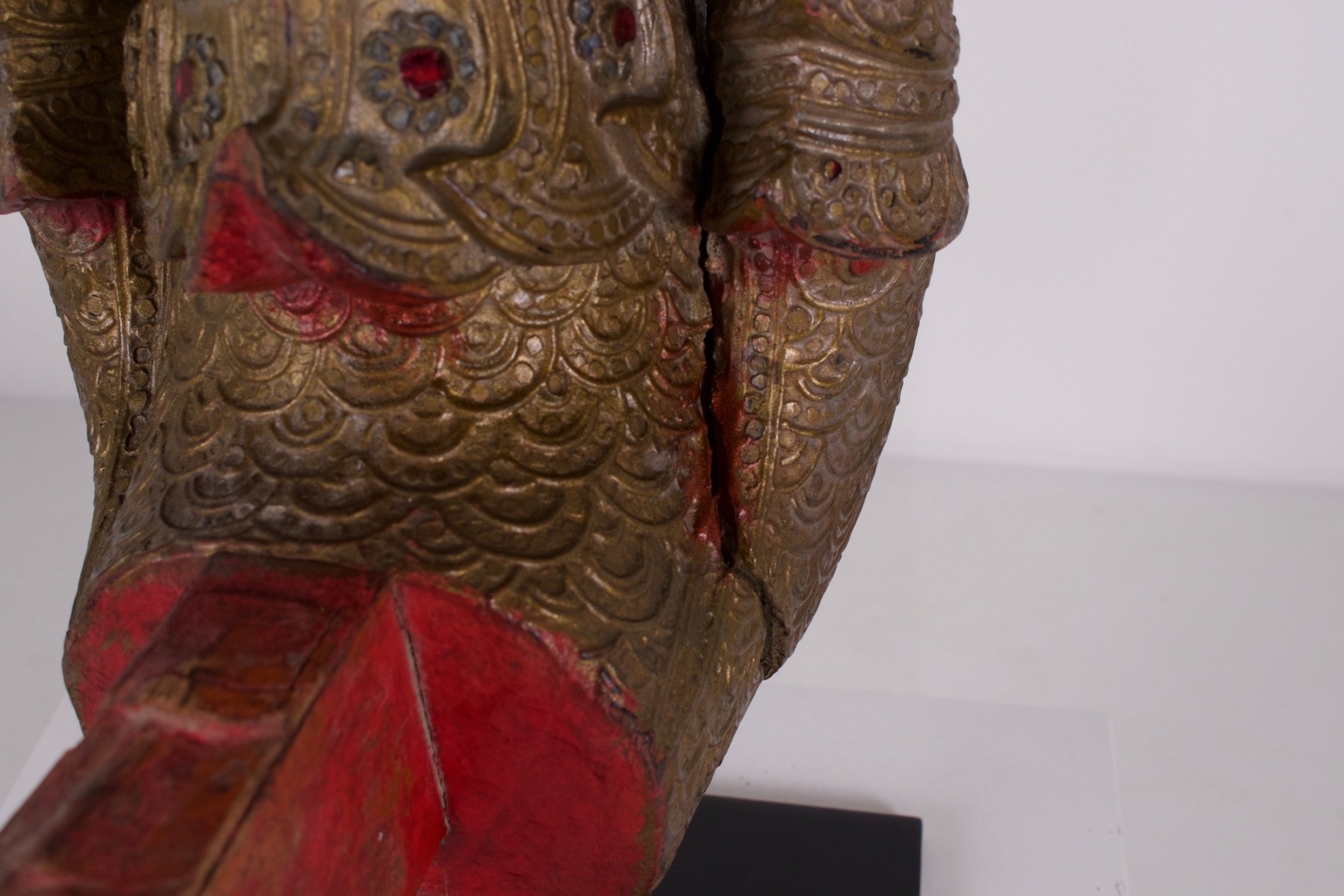
- Small losses and a visible crack at the back of the right side head, without affecting the overall solidity (see photos).
- H 73 cm (with base) x W 27 cm x D 30 cm.
- H without base: 64 cm.
1 available in store

A hybrid motif from the Asian mythological bestiary
This Naga Makara head is part of the ornamental repertoire derived from Hindu and Buddhist traditions, widely disseminated throughout Southeast Asia. The Makara, a composite aquatic creature, combines elements borrowed from several animals: a trunk reminiscent of an elephant, crocodile dentition, and a fish tail. It embodies a hybrid form linked to the primordial forces of water and fertility.
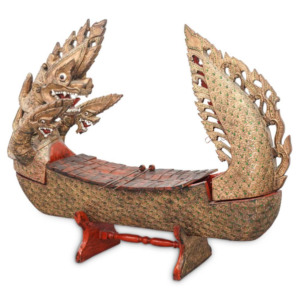
Example of a Makara motif in Burmese art.
Over time, its representation gradually became stylized, abandoning certain naturalistic features in favor of more decorative forms. Anatomical elements then transformed into volutes and fluid lines, integrated into an ornamental vocabulary specific to the architectural and furniture arts of the region.

Period photograph from the archives of the Claude de Marteau collection.
Often associated with the Naga, a mythical protective serpent, the Makara frequently appears at the ends of lintels or pediments in religious architecture. This carved head testifies to this tradition, where symbolic power is translated into a structuring decorative form, both protective and ornamental.
You might also like…


Discover also...


Delivery to Belgium

Delivery to France

Delivery to Luxembourg
