





Thai silver-plated metal stūpa reliquary – 19th century
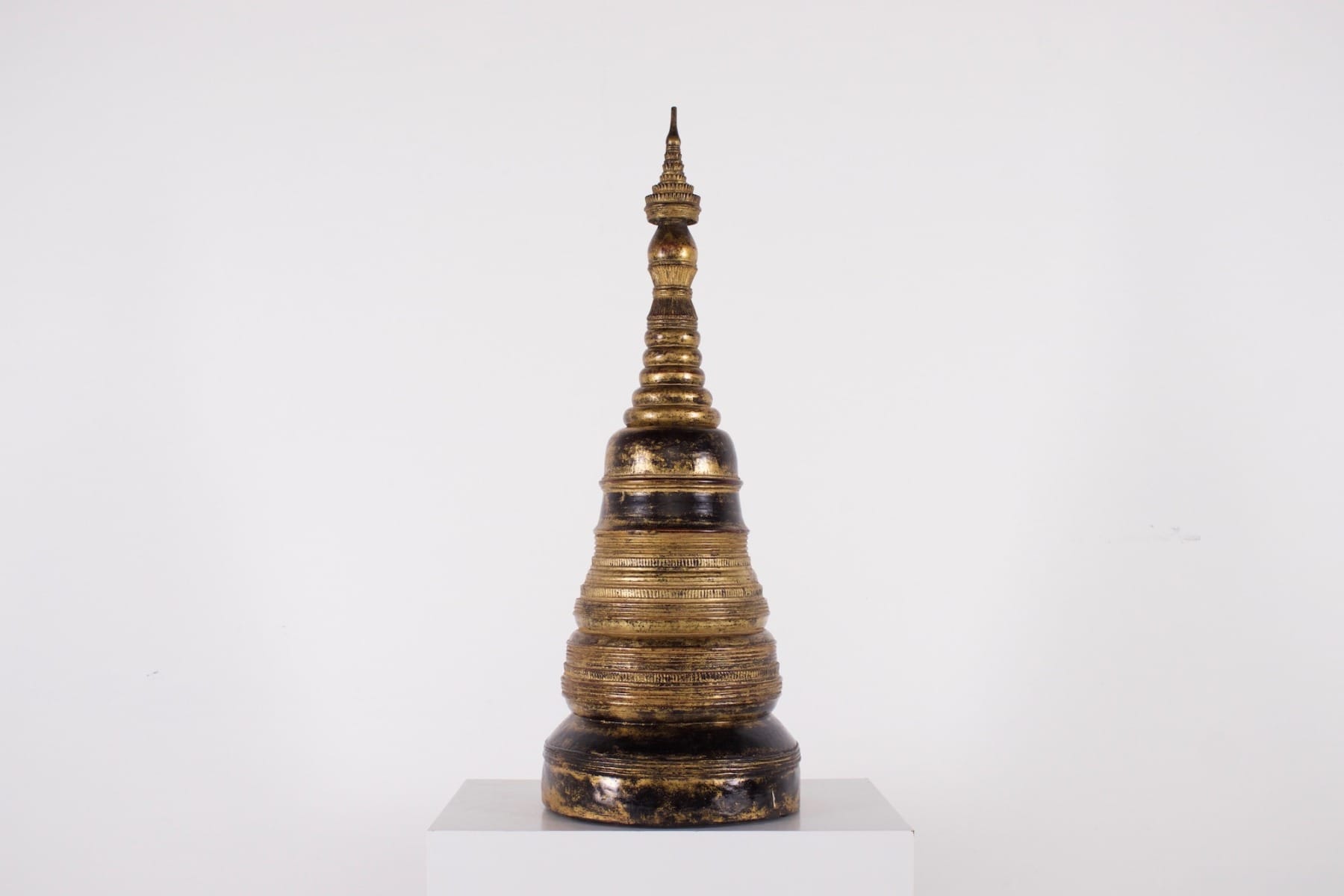
Thai stūpa reliquary in silver-plated metal, probably 19th century. Its slender silhouette reprises a form inherited from the bell chedis developed at Sukhothai and Ayutthaya, with a ringed base and tall spire. The object opens to reveal a cavity intended to receive a consecrated deposit or small relics.
Its base bears two illegible hallmarks; an acid test confirms the presence of silver.
- Provenance: Former Claude de Marteau collection
- H 20.5 cm – Diameter 8 cm
- Weight 274 g
Sold

Thai stūpa reliquary: form and function
This Thai stūpa reliquary, probably made in the 19th century, reproduces on a small scale the architecture of a Buddhist monument. In Thailand, the stūpa is commonly called a chedi: one of the country’s most characteristic forms of religious architecture, it may enshrine relics or various consecrated deposits.
The silhouette of this reliquary is particularly elegant. A broad circular base develops into a succession of concentric mouldings of decreasing diameter before meeting a bell-shaped body. Above sits a small square element topped by an openwork structure, then a tall ringed spire ending in a point. This construction gives this true miniature pagoda architecture very slender proportions despite its small size.
The object is made of several assembled elements and can be opened. The lower part forms an inner cavity, characteristic of its function as a Buddhist reliquary. It could hold small relics, ashes, consecrated fragments, or other offerings of a religious nature. The simplicity of its decoration leaves full emphasis on the architectural design of the stūpa, paced by the successive rings of its base and spire.
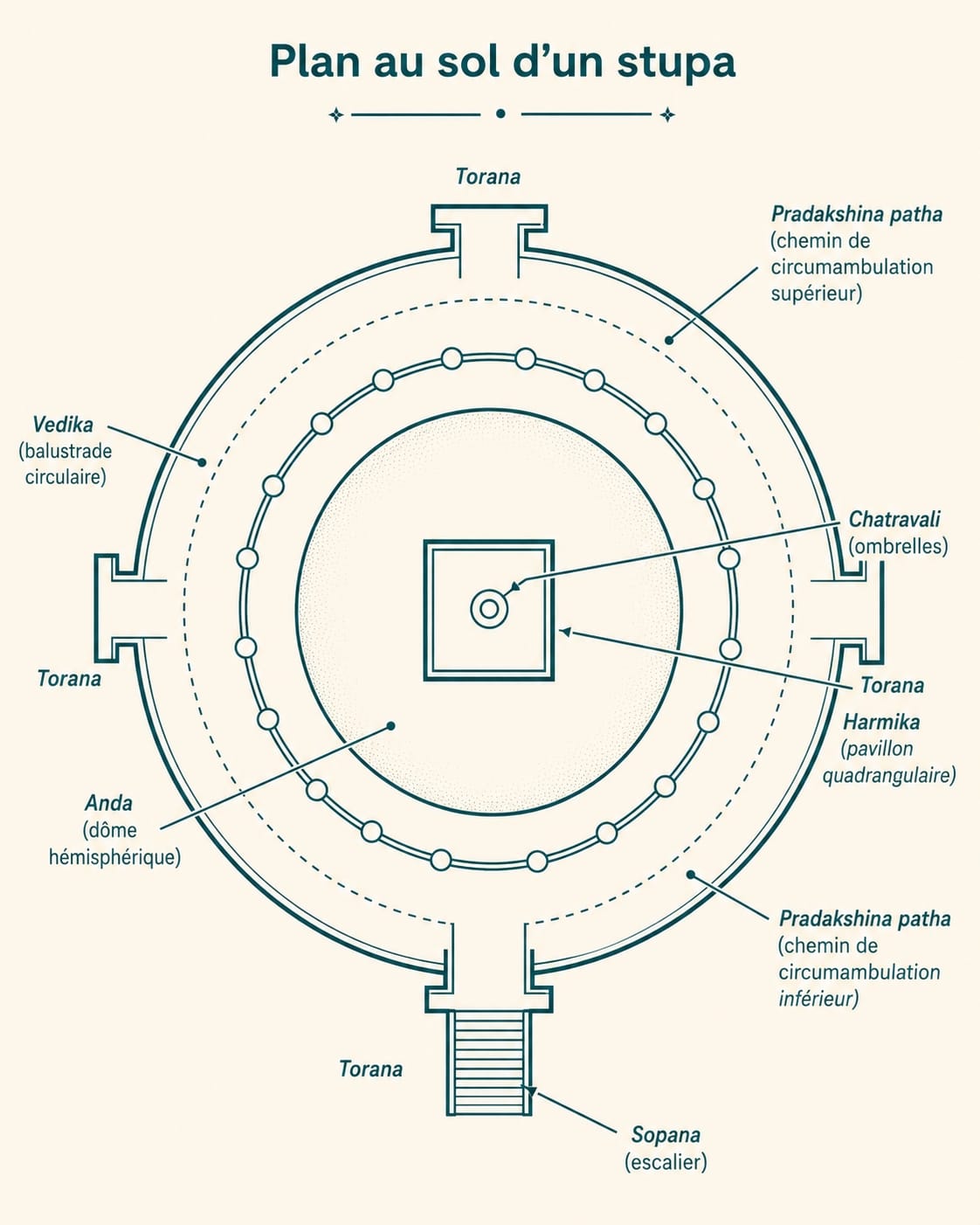
Ground plan of a Buddhist stūpa, organized around the central anda and the harmikā, a quadrangular pavilion supporting the spire and sometimes the chatrāvalī.
A particularly interesting parallel is held at the British Museum under number 1957,1014.1.a-b. The museum describes this Thai stūpa as a circular model with a bell-shaped body, also featuring small columns between the harmikā and the swollen rings of the spire. This rather distinctive arrangement is very clearly found on the present example and provides a strong point of comparison for its Thai origin.
This miniature stūpa comes from the former collection of Claude de Marteau; it translates the monumental forms of Thai Buddhist architecture into an intimate format. Its demountable construction is a reminder that it is not simply a decorative representation: the space left inside preserved a genuine religious function.
You might also like…

Discover also...



Delivery to Belgium

Delivery to France

Delivery to Luxembourg
