




Buddhist Manuscript Burma
€1800,00
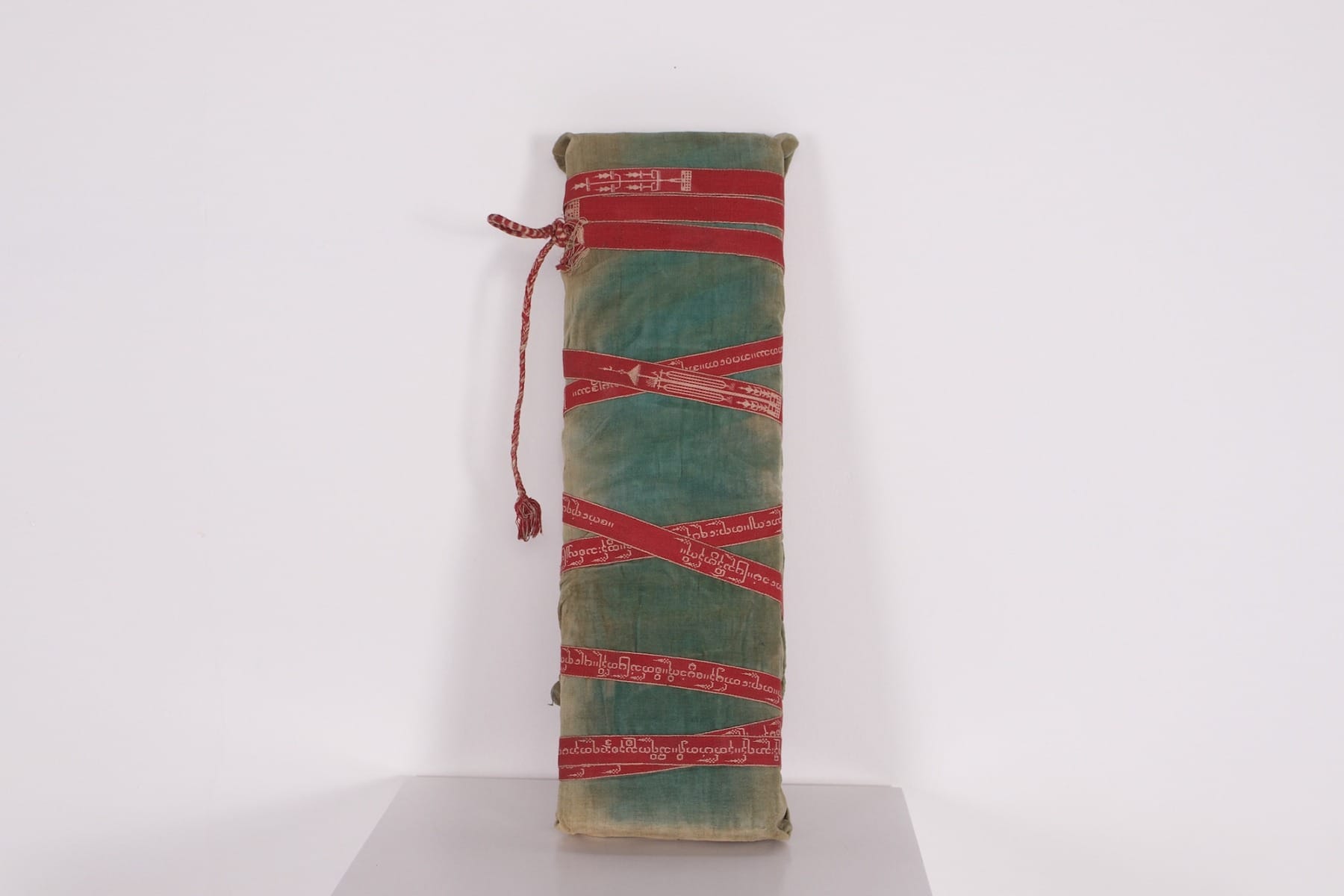
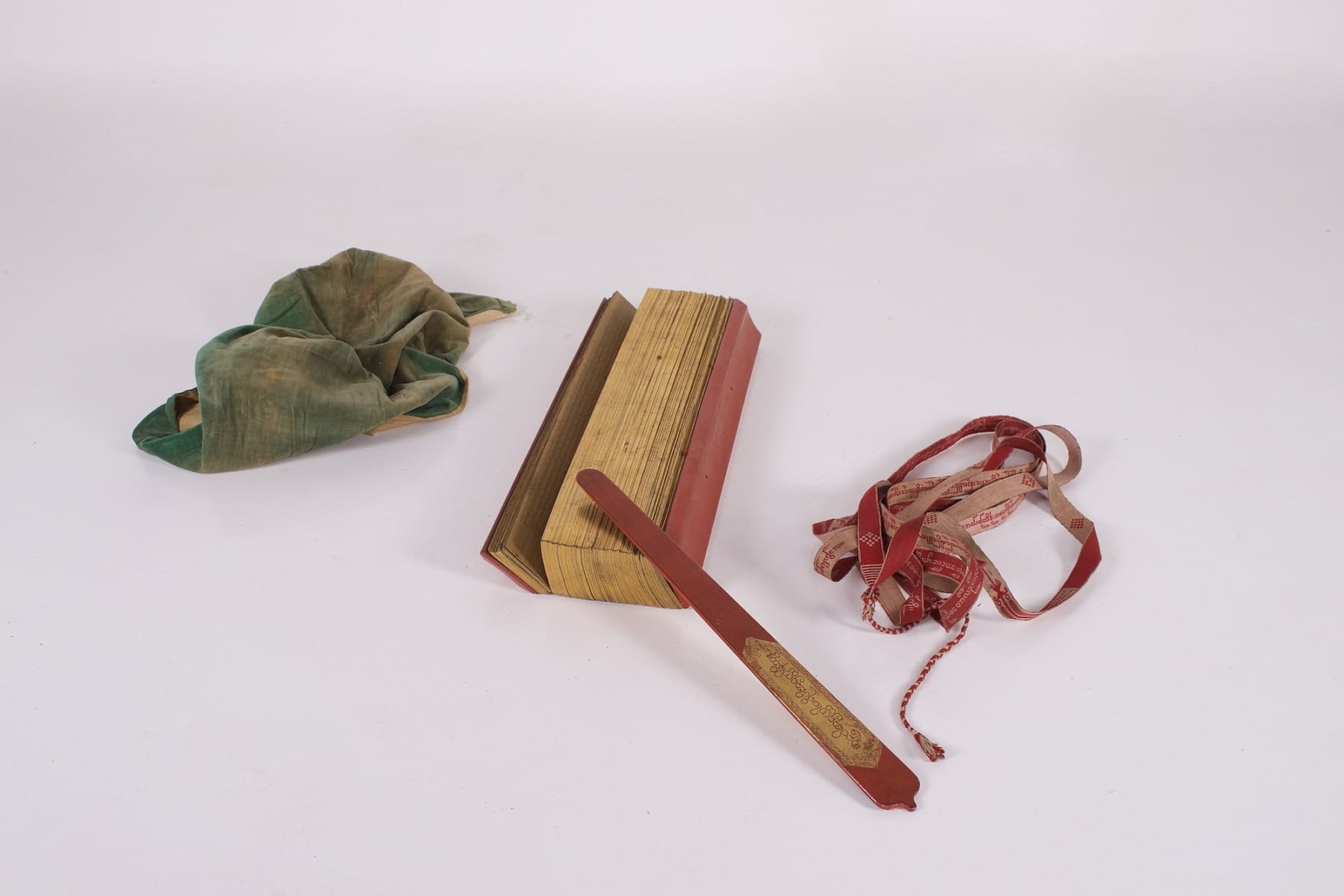
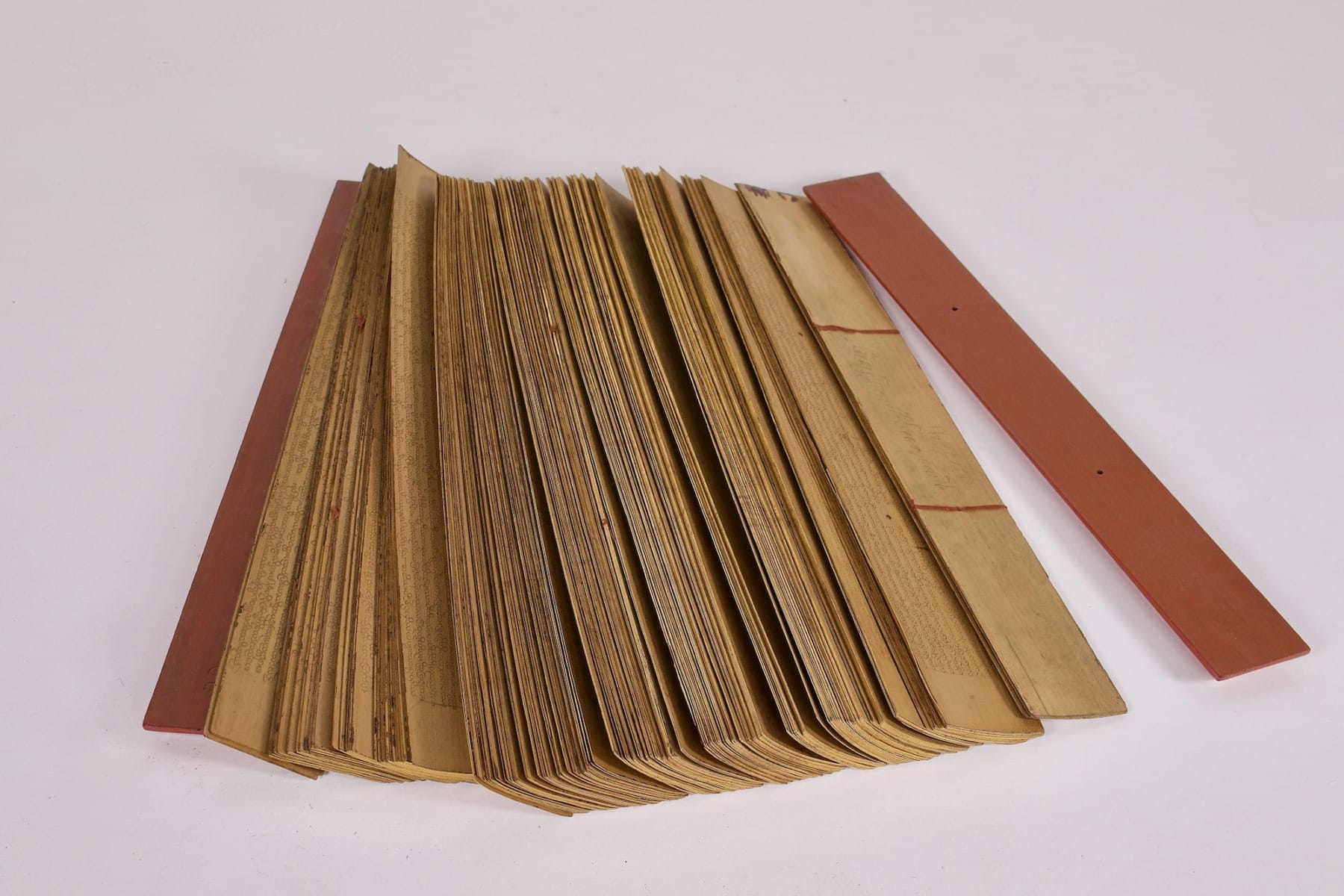
Burmese manuscript from the late 19th or early 20th century, complete with its lacquered boards, silk velvet cover, and reading stylus. A highly coherent ritual ensemble, illustrating monastic offering practices in Theravada Buddhism.
- Provenance: Claude de Marteau collection.
- Sold with certificate.
- Dimensions: H 53 × W 14 × D 7 cm.
- Only a few pieces available.
3 available in store

Burmese Buddhist manuscript on palm leaves – sapa-lwe and sazigyo
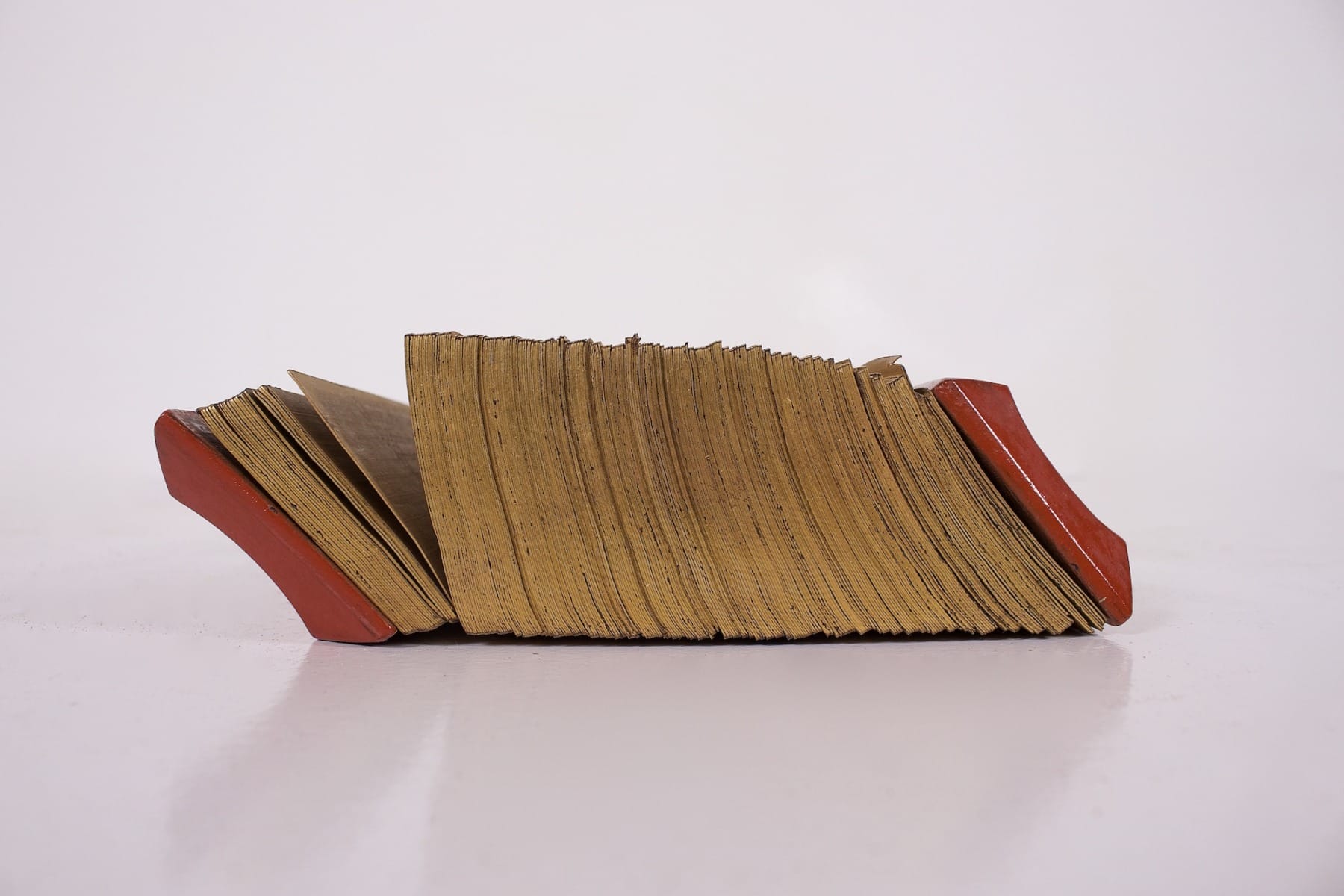
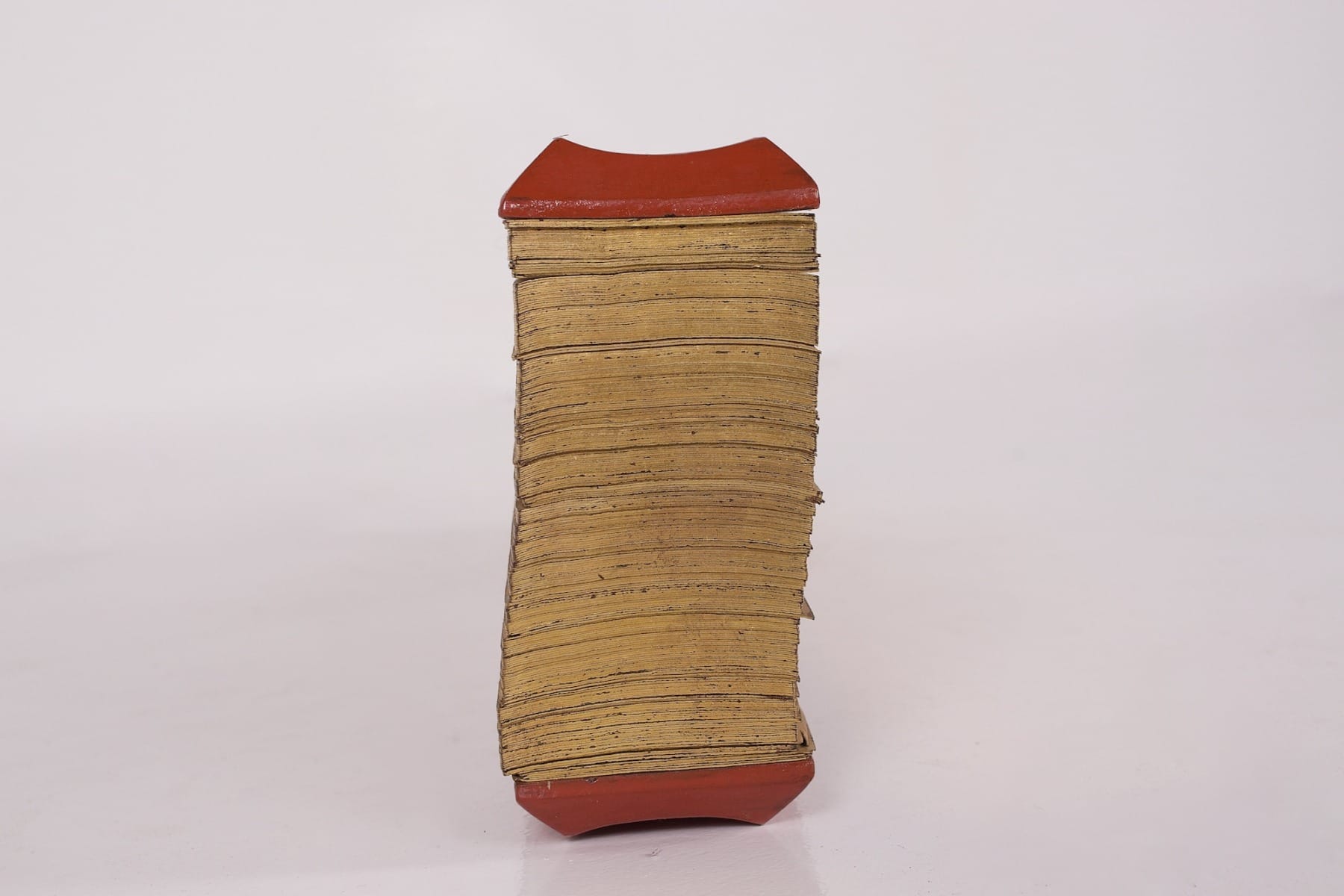
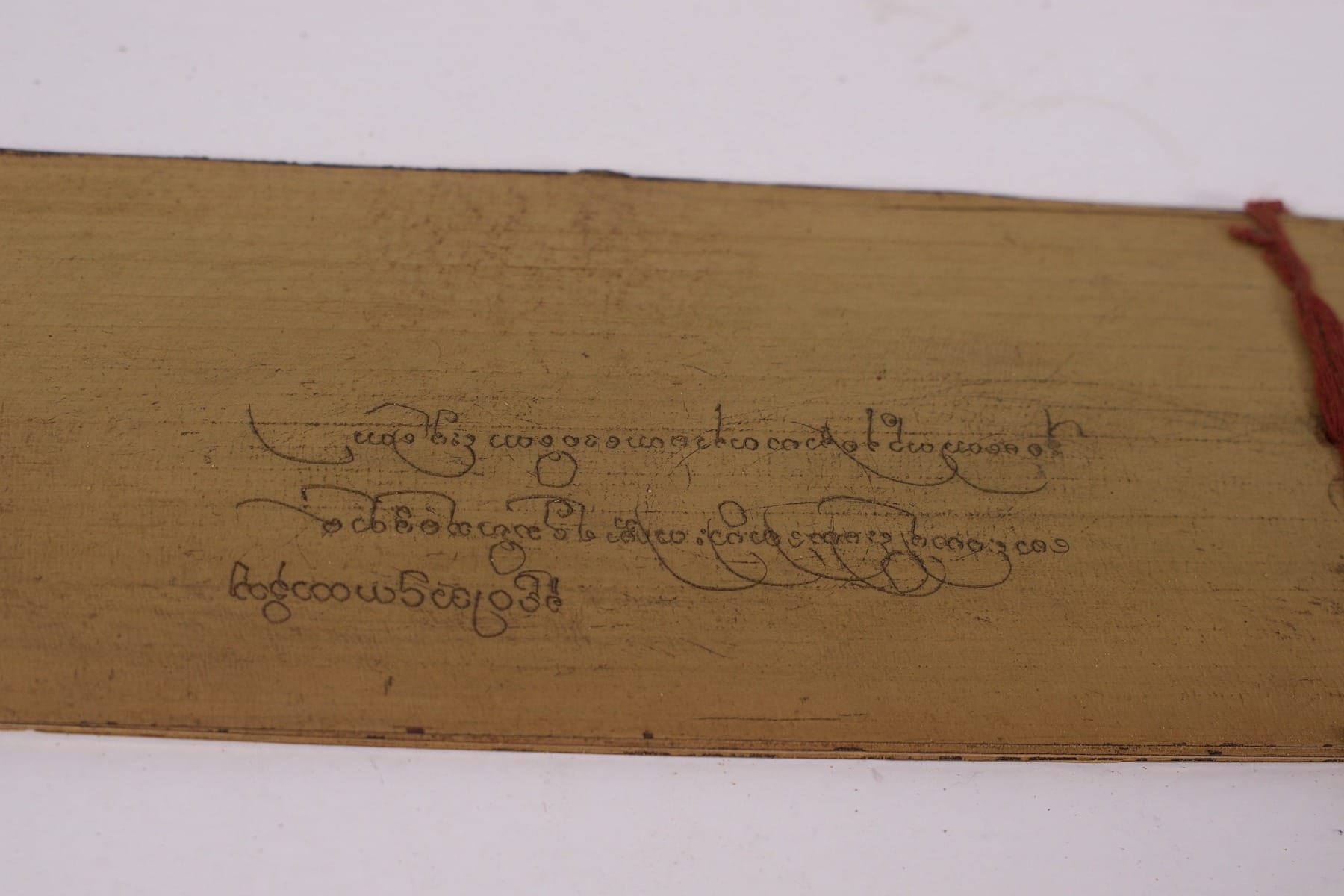
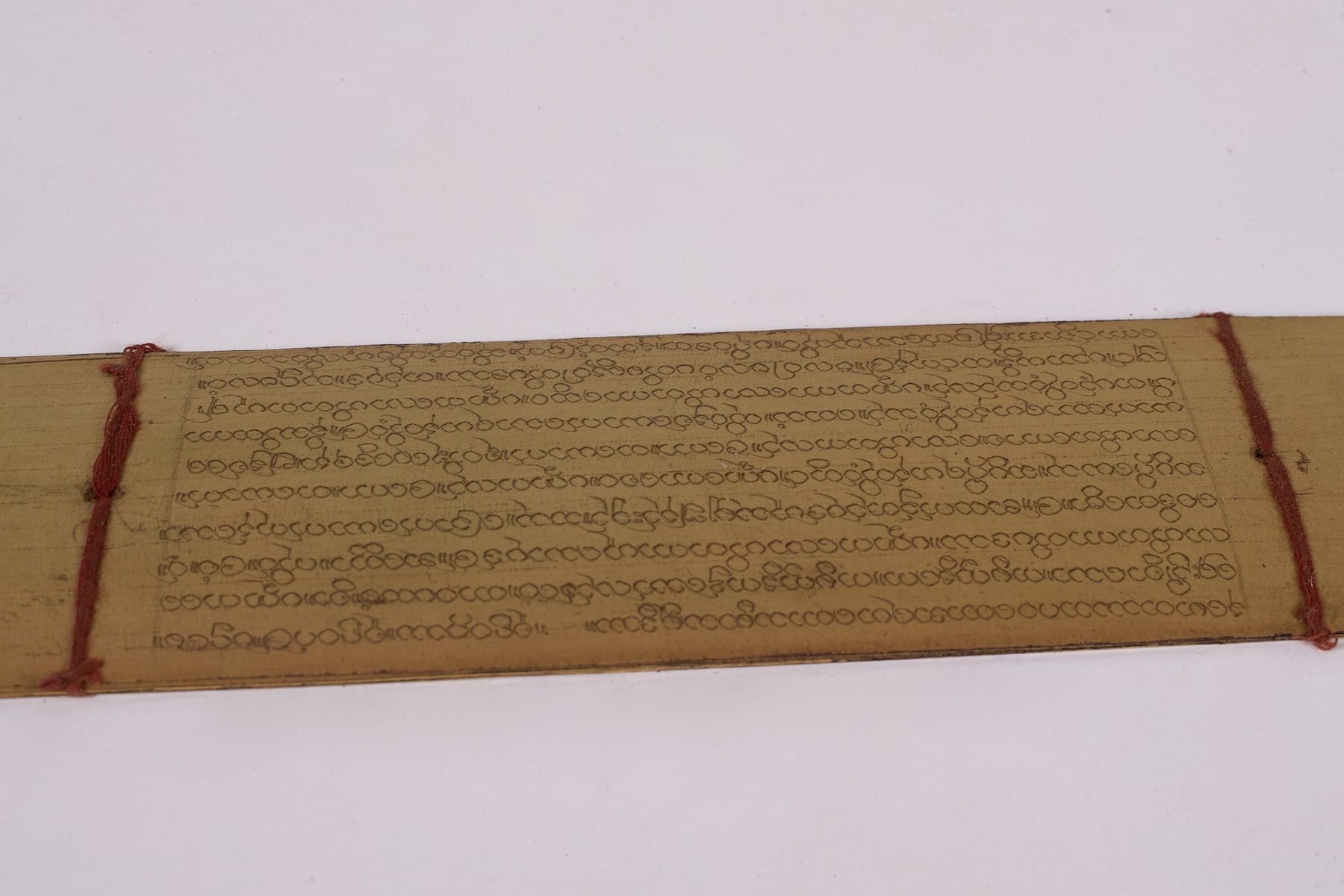
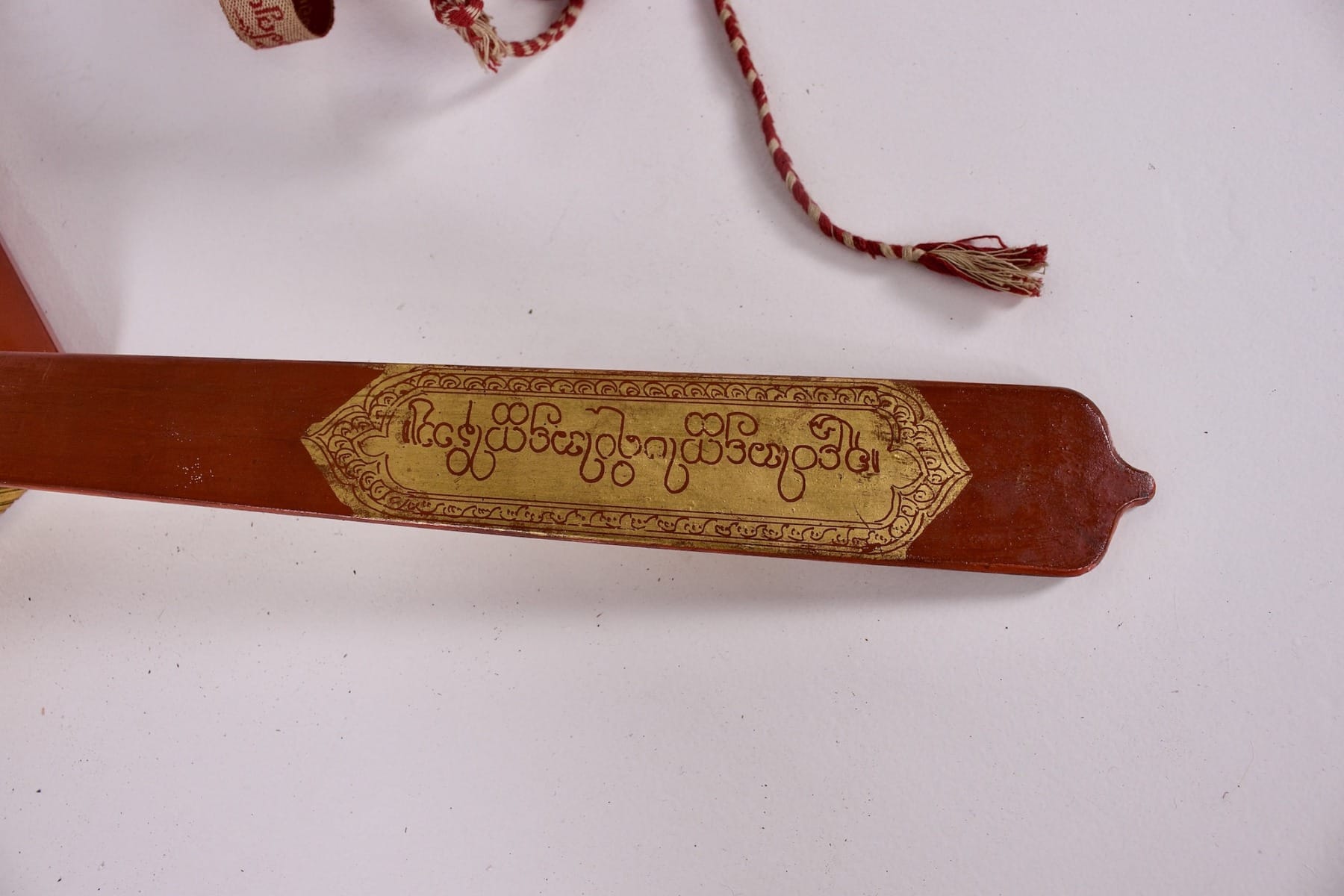
This Burmese Buddhist manuscript consists of a substantial collection of long palm leaves, covered with several lines of Burmese script and preserved between two red lacquered wooden boards. One of the covers bears an inscribed gilt cartouche. By its number of folios, presentation, and writing method, this work belongs to the tradition of Burmese palm-leaf manuscripts and should not be confused with a Kammavaca, whose structure and presentation correspond to a particular type of ritual manuscript. Nor is it a parabaik, a Burmese manuscript composed of folding paper leaves, with which it can easily be confused.
The Three Baskets (the Tipiṭaka) constitute the Pāli-language Buddhist canon of Theravada. It is divided into three collections: Vinaya Piṭaka (monastic discipline), Sutta (Sutra) Piṭaka (discourses and teachings), and Abhidhamma Piṭaka (doctrinal and philosophical analysis). This antique manuscript likely refers to one of these three elements.
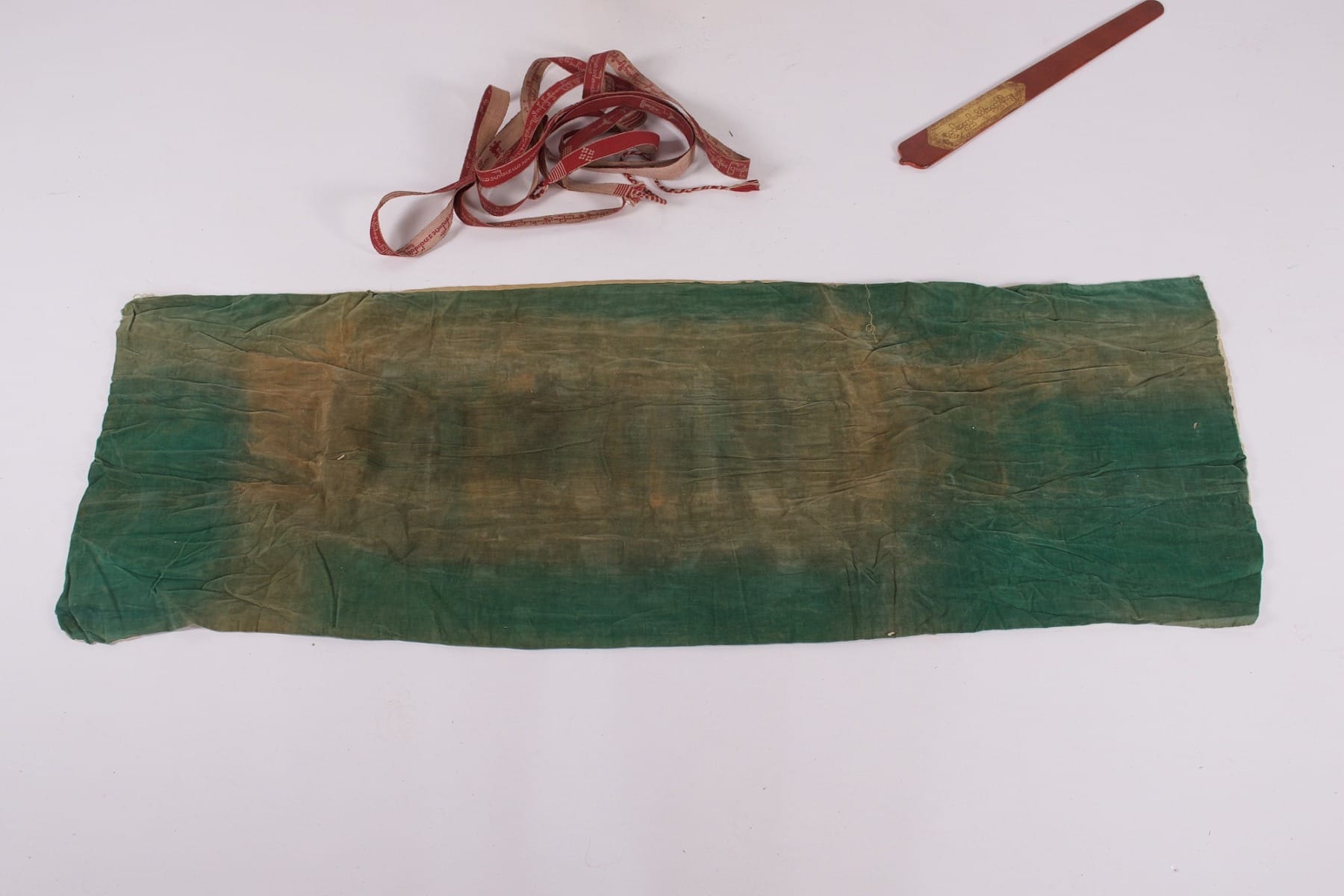
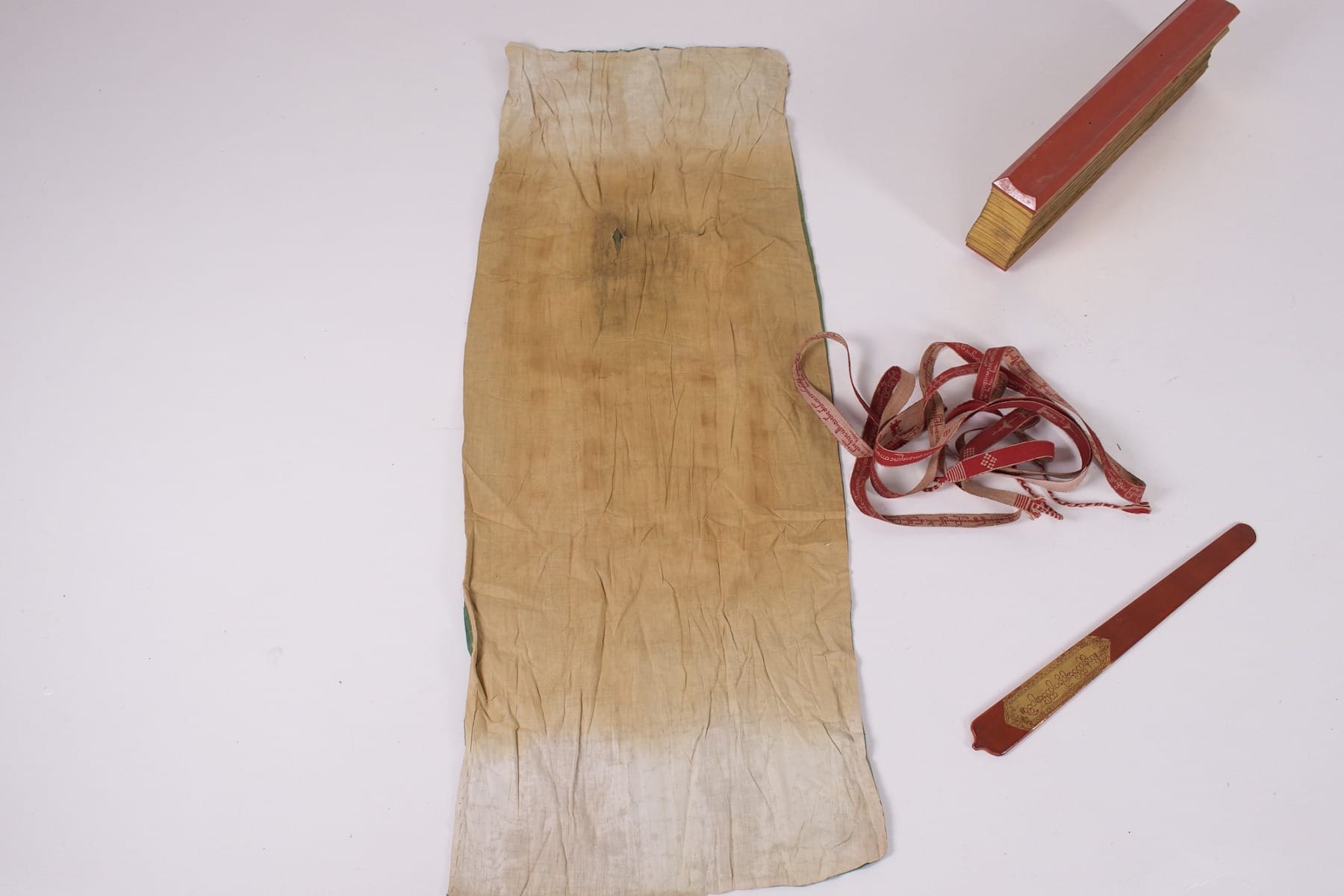
The ensemble has retained a remarkable portion of its traditional protective system. The manuscript is wrapped in a manuscript cover called sapa-lwe. In Burma, these wrappers protected the precious folios against dust, insects, and humidity. They could combine textile, fine bamboo strips, and threads of different colors, forming a flexible envelope around the manuscript.
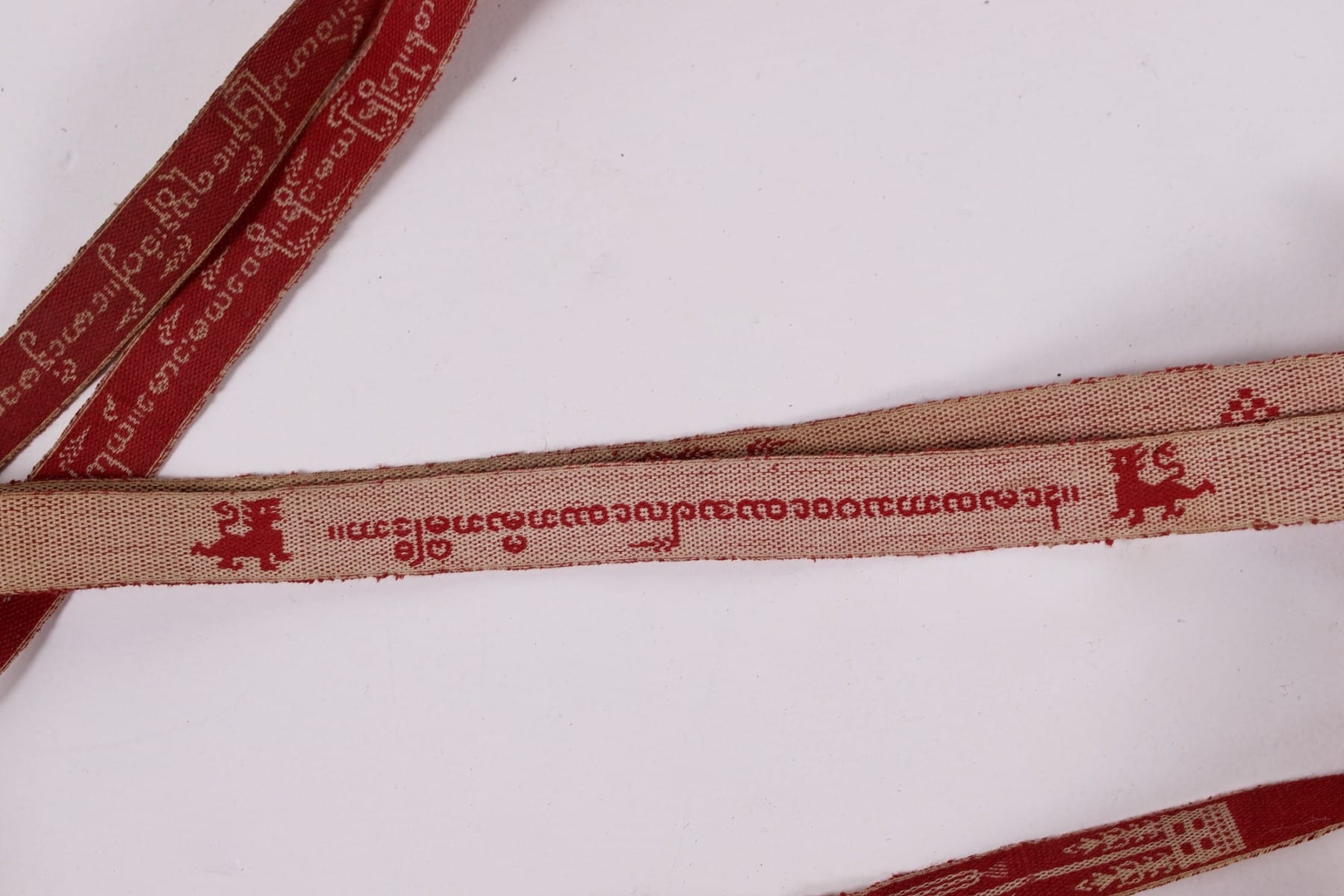
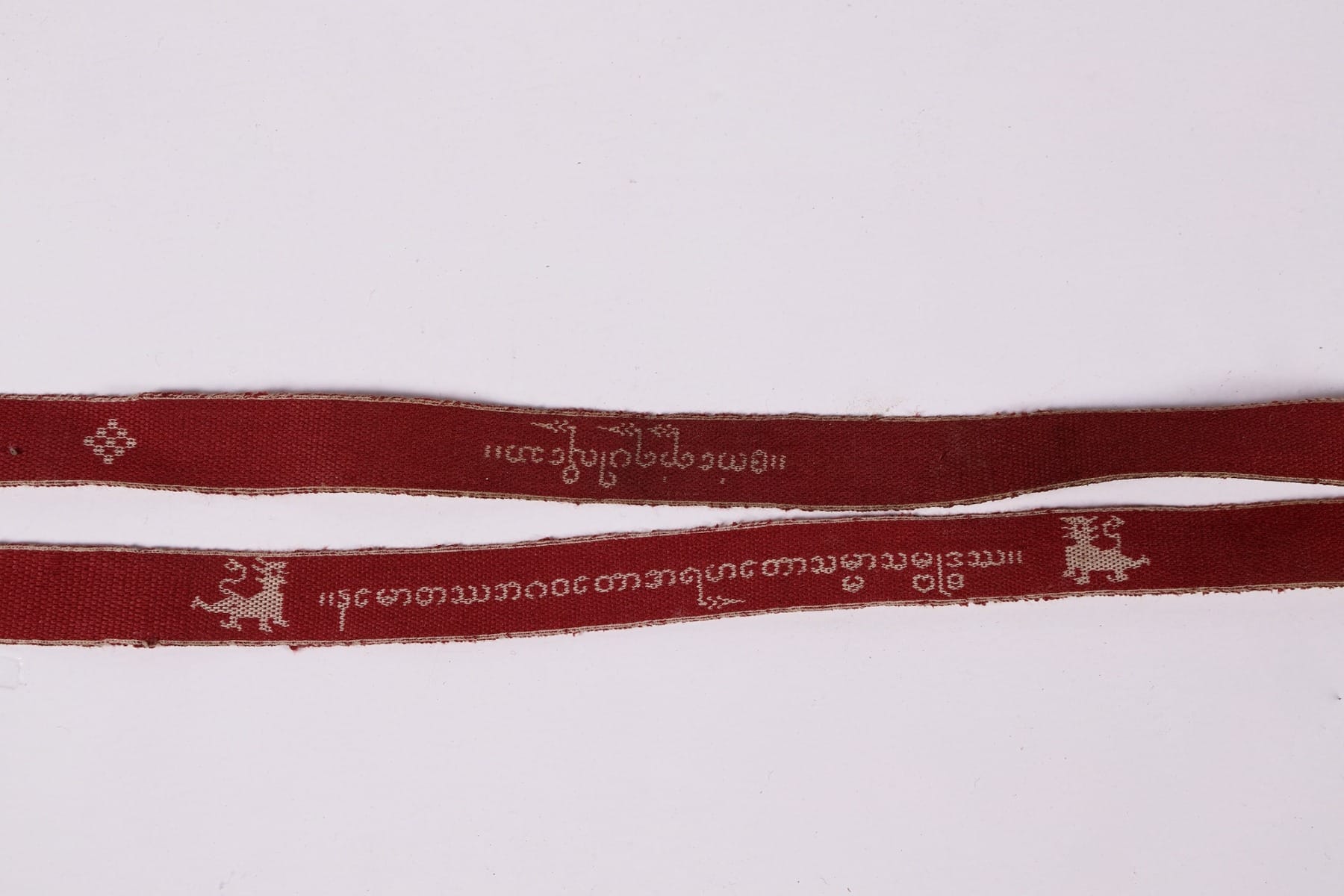
Around this protection is tied a long woven red ribbon bearing inscriptions and white motifs, with numerous emphatic verses praising the donor’s generosity. This is a sazigyo, also transcribed sa-si-gyo, a ribbon specifically used to secure palm-leaf manuscripts. These pieces were traditionally made on a loom using a complex weaving technique. The woven inscriptions could mention the donors, the date of the offering, pious formulas, or the wish to share the merit acquired by the gift of the manuscript.
The sapa-lwe, the sazigyo, and the reading stylus alongside the Burmese manuscript. The alternating discolorations on the silk velvet indicate antique storage.
The combined presence of the manuscript, its lacquered boards, its sapa-lwe, and especially its inscribed sazigyo thus preserves not only the text itself, but a significant part of the way religious works were once protected, handled, and offered in Burmese monasteries.
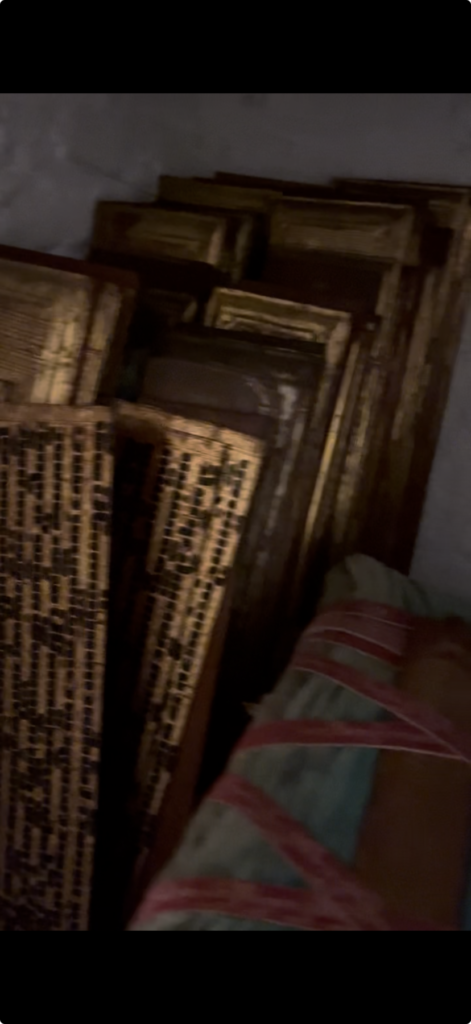
Several Burmese manuscripts were found alongside Kammavaca in Claude de Marteau’s house (archival inventory photograph)
The precise content of the text remains to be identified, but it is possible that it is also a prayer book whose transcription constitutes a major meritorious act.
Late 19th – early 20th century.
You might also like…
Discover also...


Delivery to Belgium

Delivery to France

Delivery to Luxembourg
