Buddhist Manuscript Burma
€1800,00

€1200,00
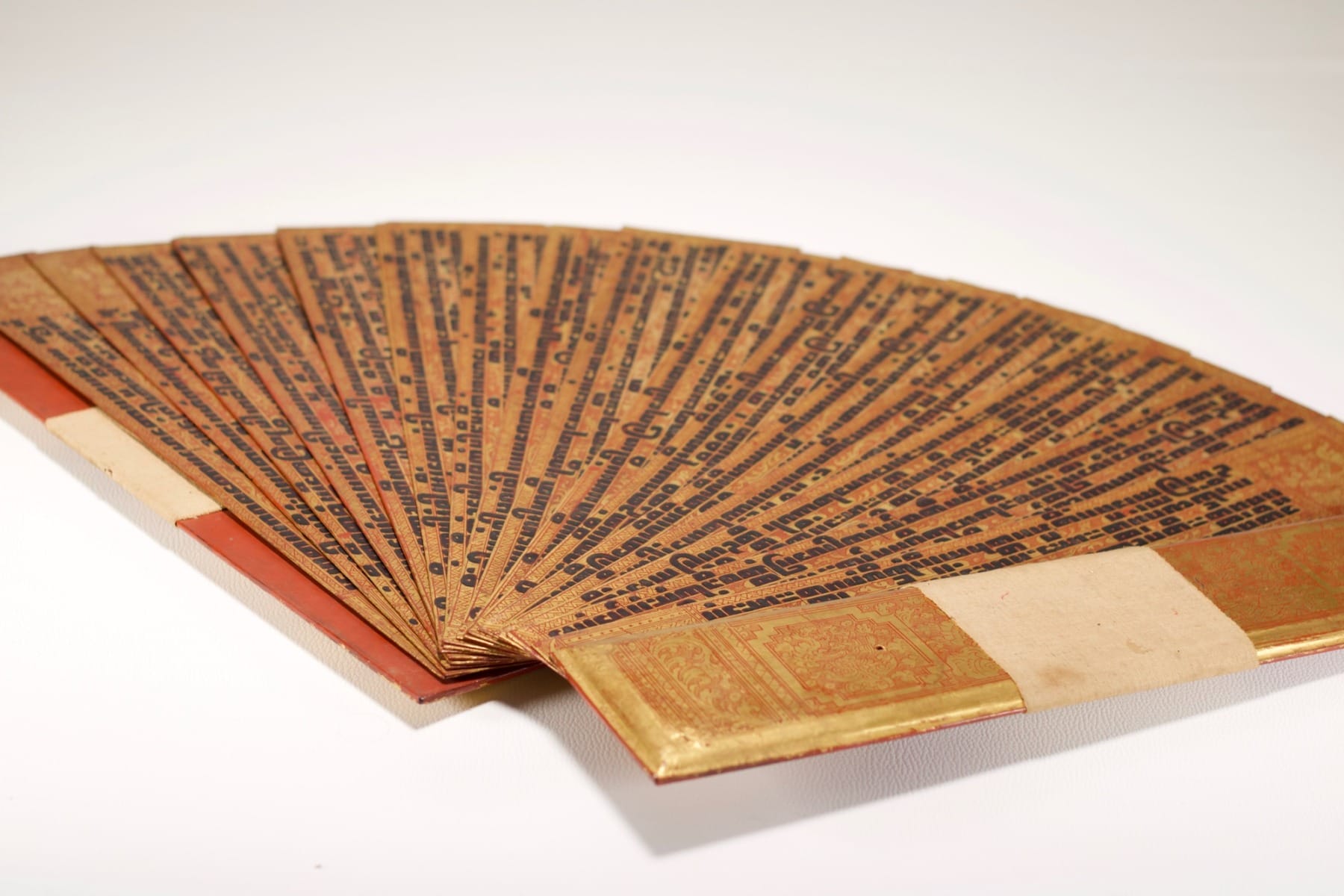
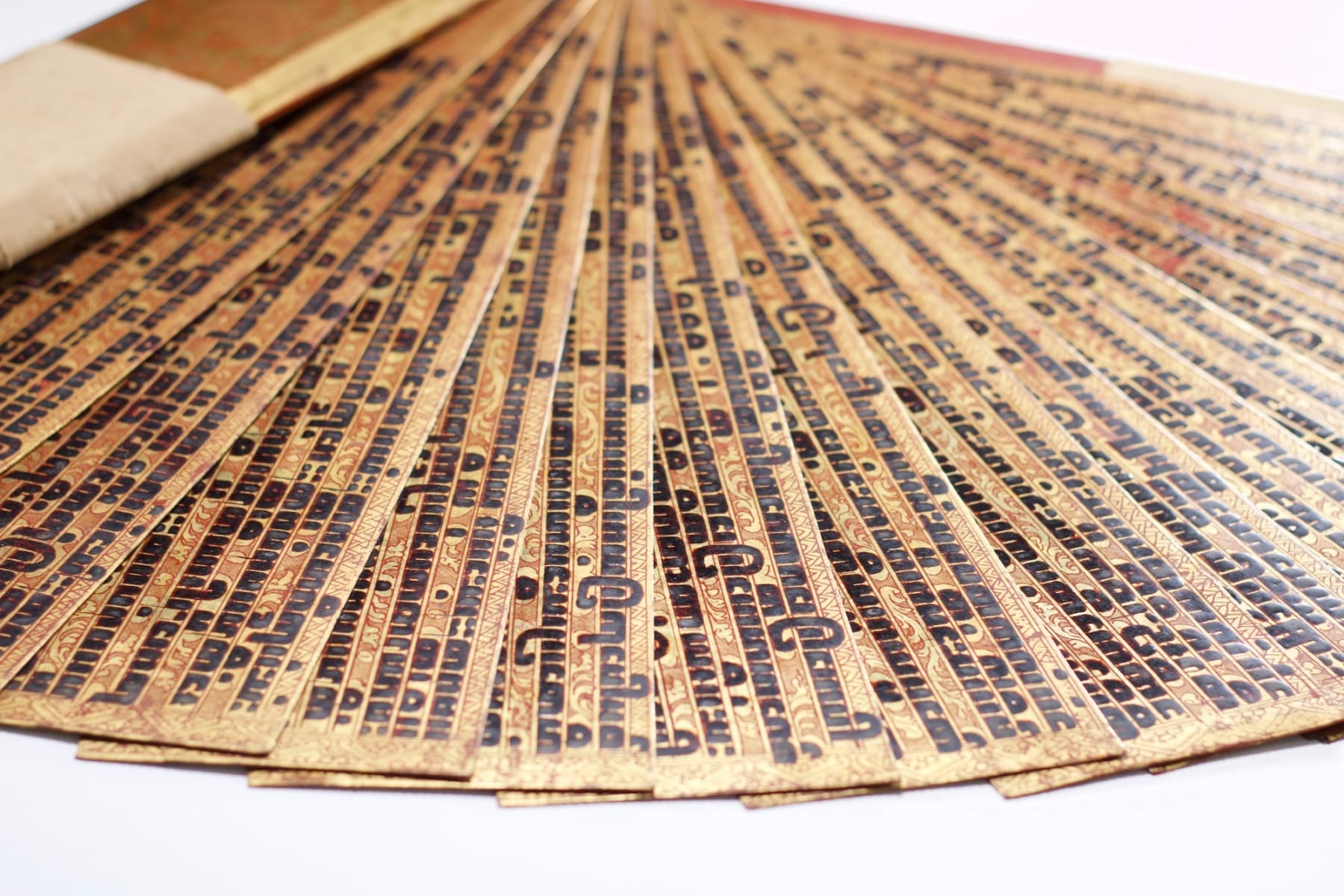
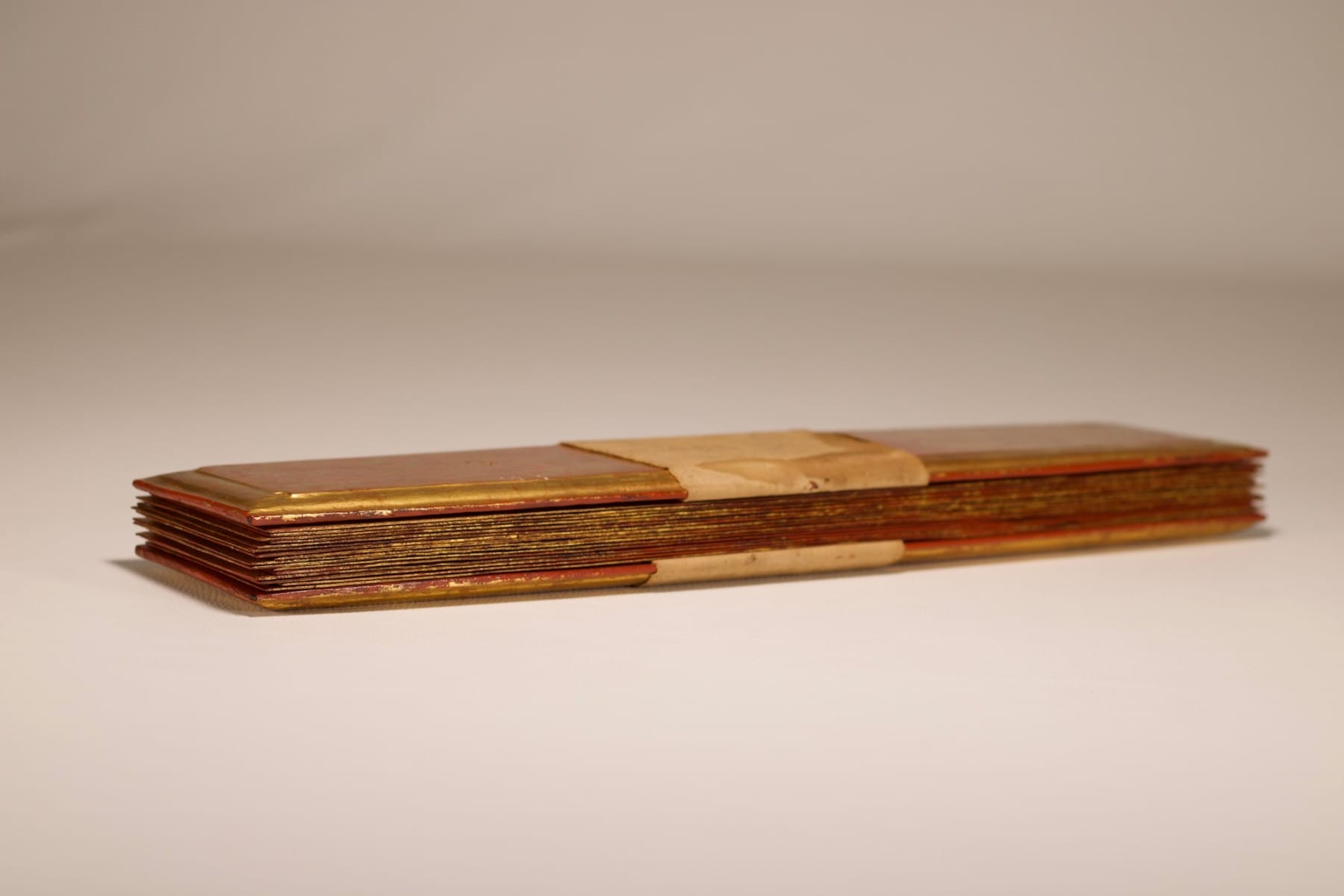
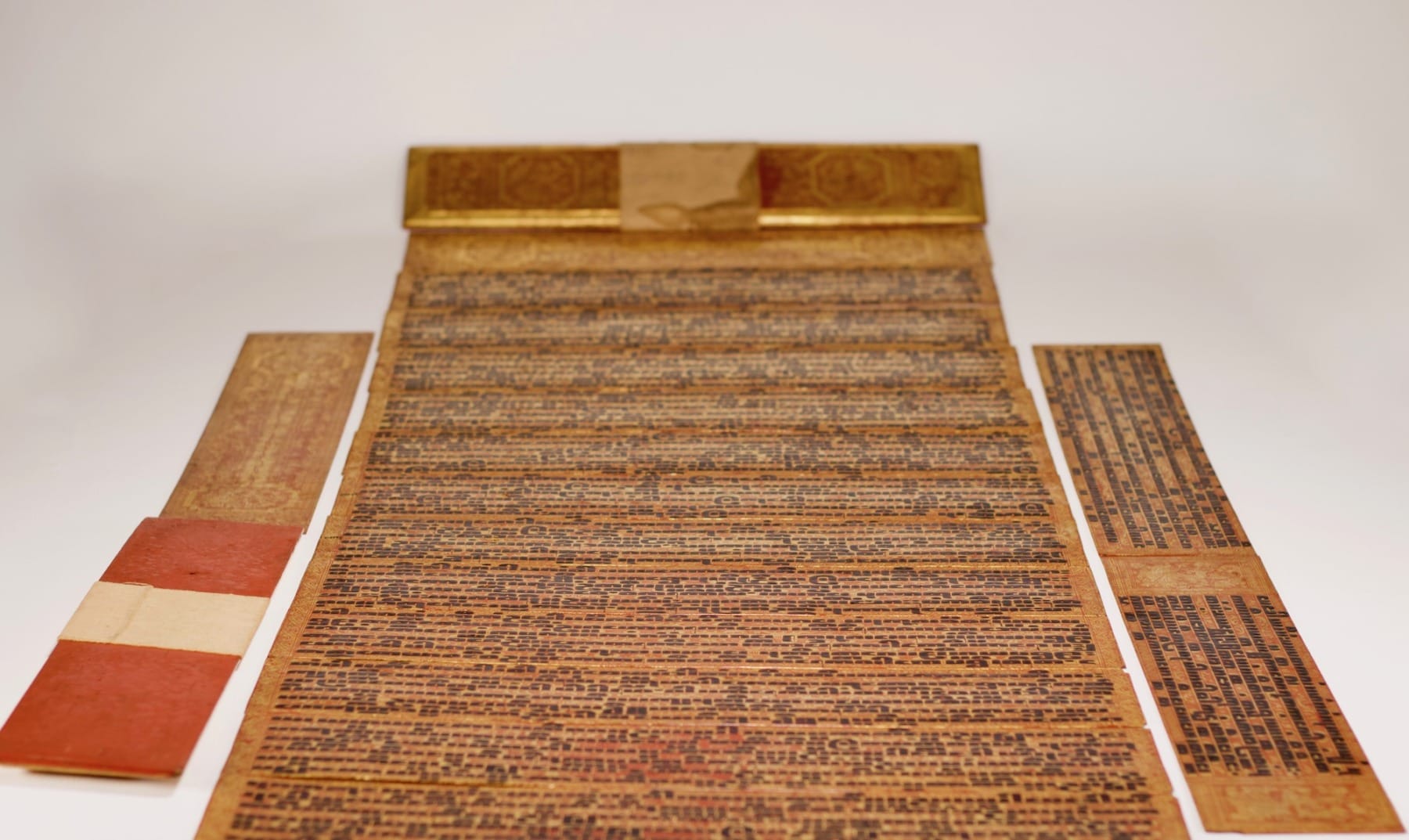
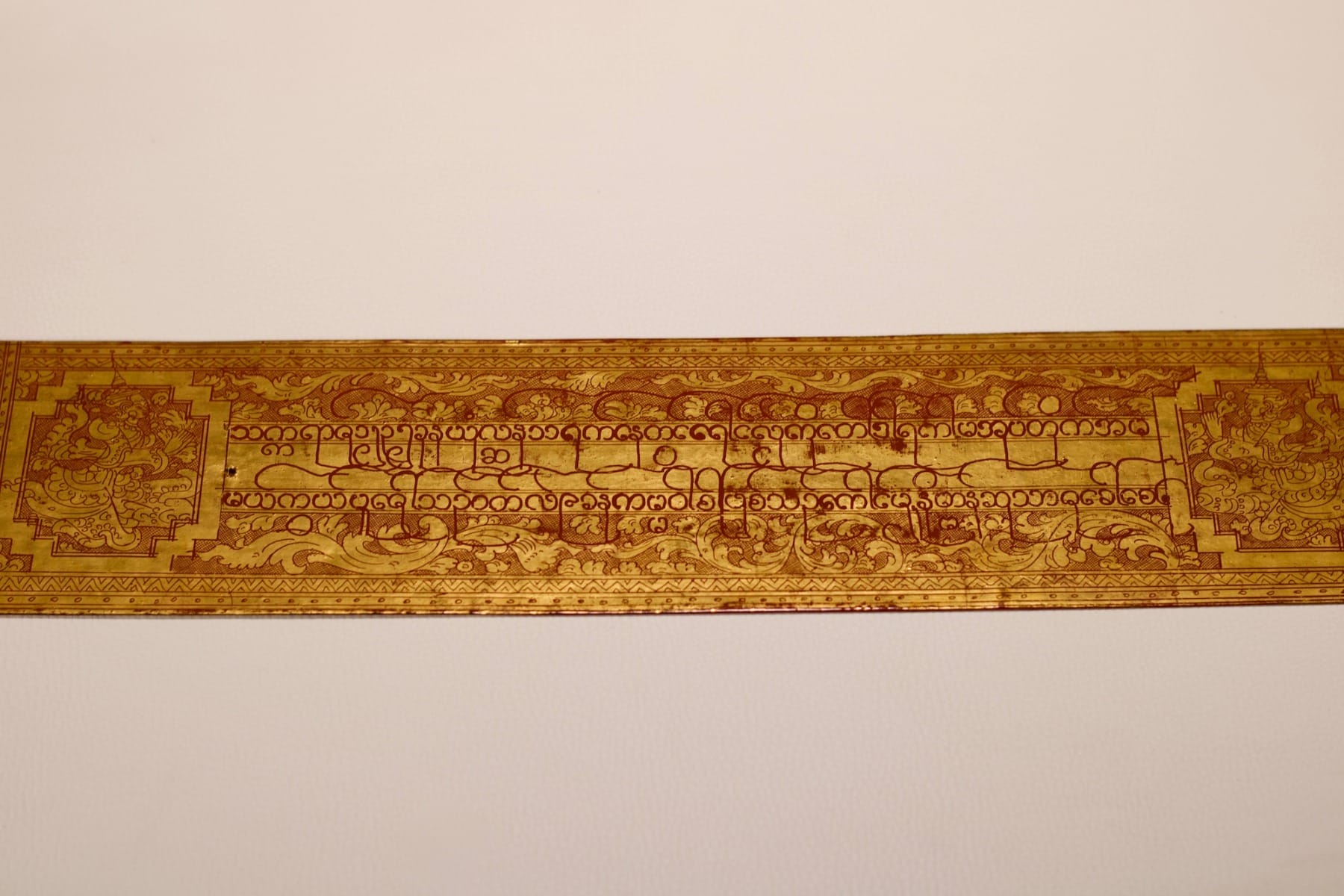
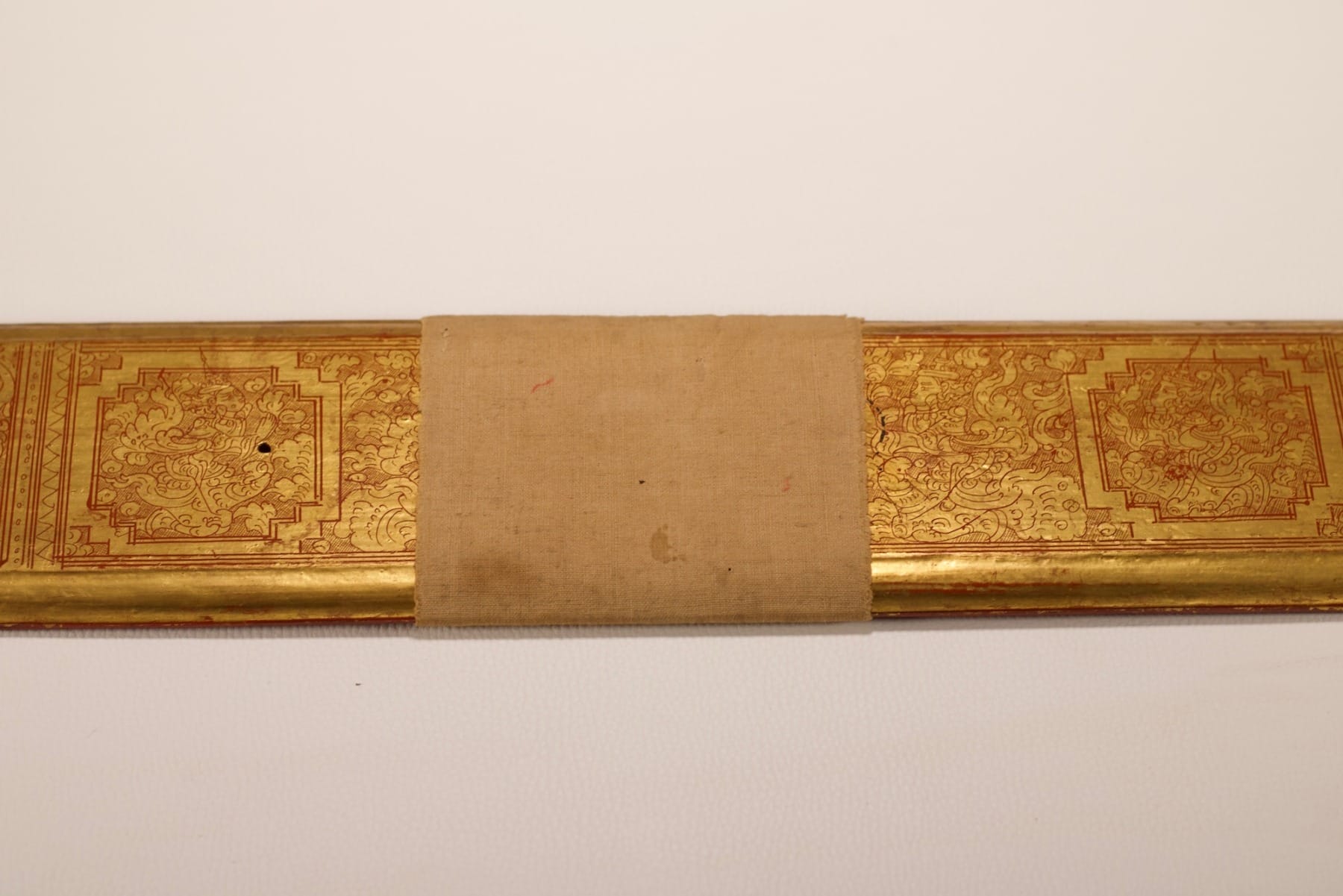
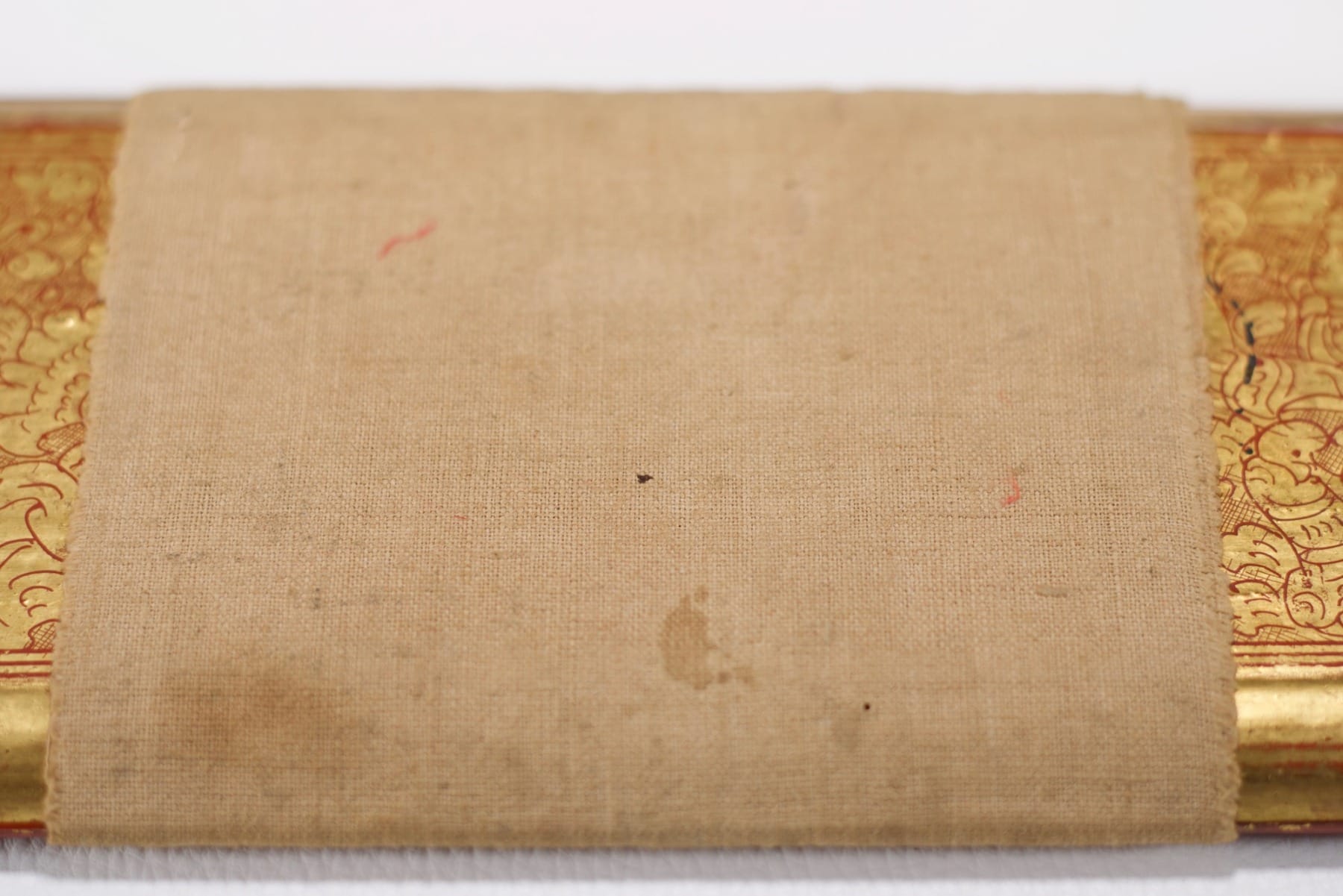
19th-century Burmese Kammavaca ordination book, complete, with its 16 “olles” (talipot or palmyra palm leaves) and 2 covers (boards).
4 available in store

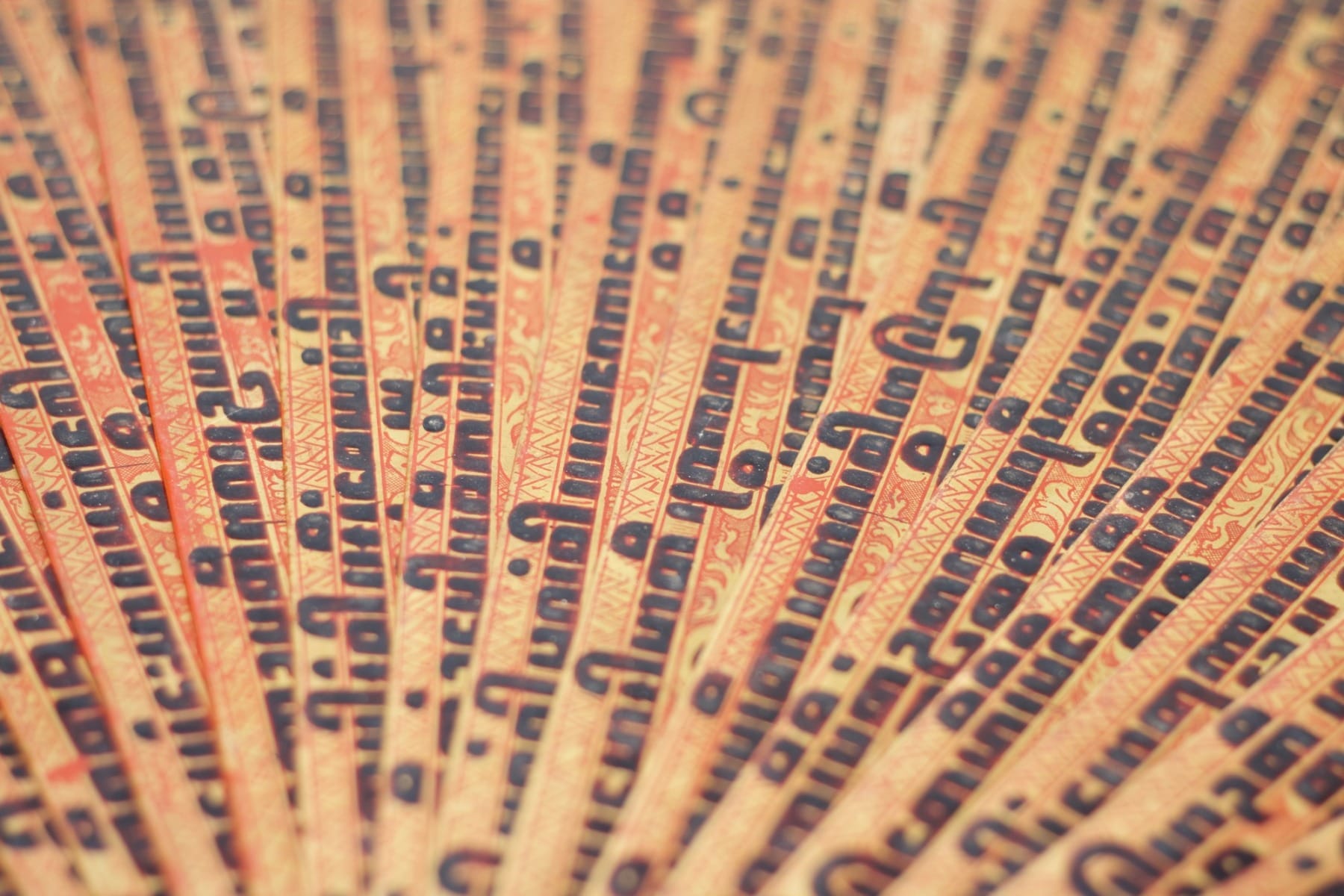
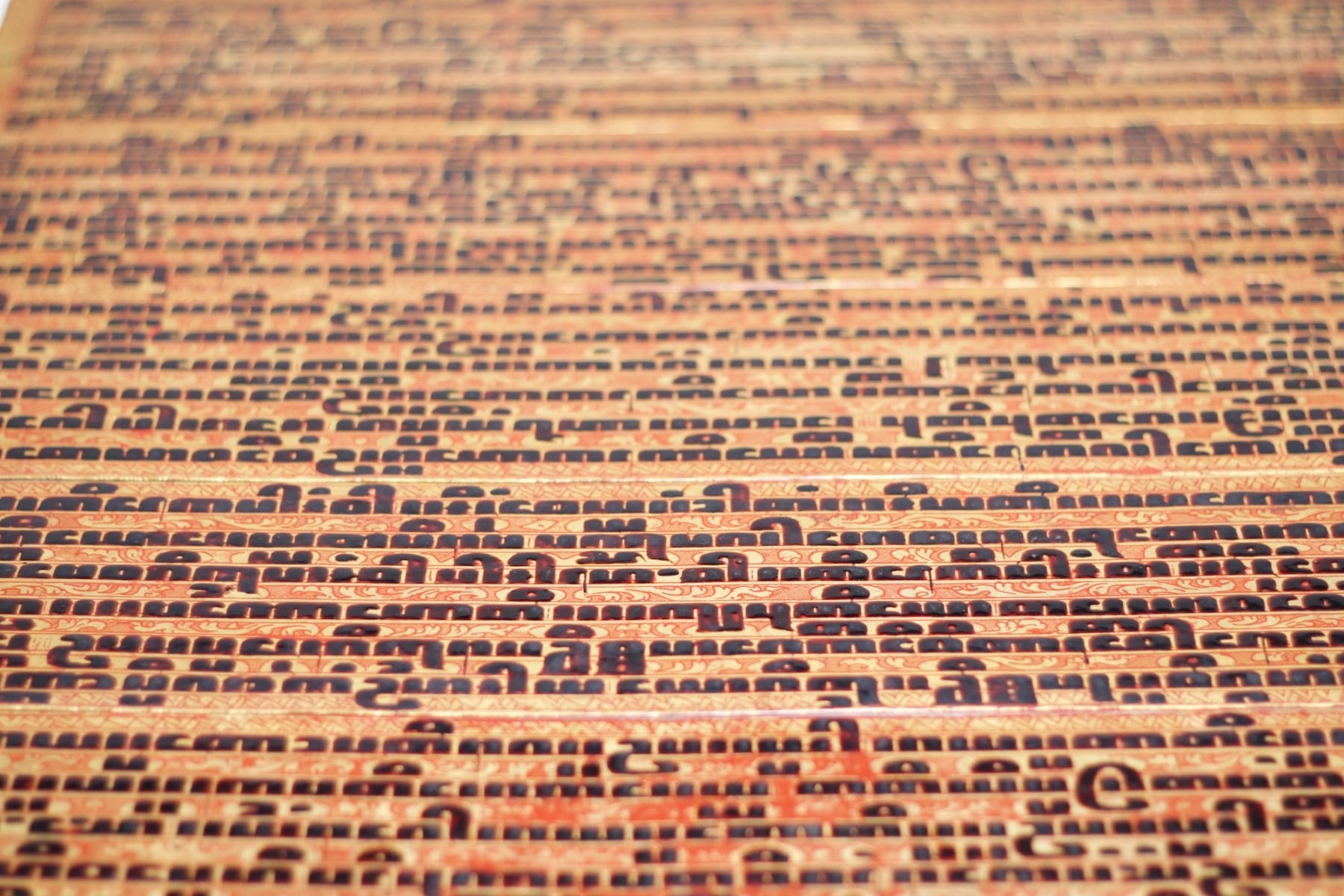
This Theravada Buddhist Kammavaca manuscript brings together ritual texts from the Vinaya Pitaka, used notably during monastic ordination ceremonies. The text is handwritten in Pali, in a square Burmese script known as “tamarind seed”, traced in black lacquer on palm leaves. The leaves are gilded with gold leaf and held between two lacquered wooden boards.
The text in Pali, in square Burmese “tamarind seed” script, traced in black lacquer
In the Burmese Buddhist tradition, the copying and donation of religious texts also constitute meritorious acts. The richness of a Kammavaca’s decoration is therefore not solely ornamental: the lacquer, gilding, and the care taken in its creation contribute to the spiritual value of the offering. These manuscripts were notably offered to a monastery on the occasion of a boy’s entry into monastic life as a novice, and then during his ordination into the sangha, the community of monks. The initiation of the novice, during which the child symbolically abandons his secular status, is traditionally an important moment for the family and an opportunity to accumulate merit. One may read that the donors invite the protective Nat spirits and humans to approve their meritorious acts.
Burma, early 20th century. A comparable example, made on ivory, is held at the Musée Guimet ( inv. BG83700 ) and another strictly identical one dated 1929 is held at the British Museum.
See also our selection of sculptures and objects from Theravada worship.