








Polychrome Wooden Ritual Goat, India
€1280,00
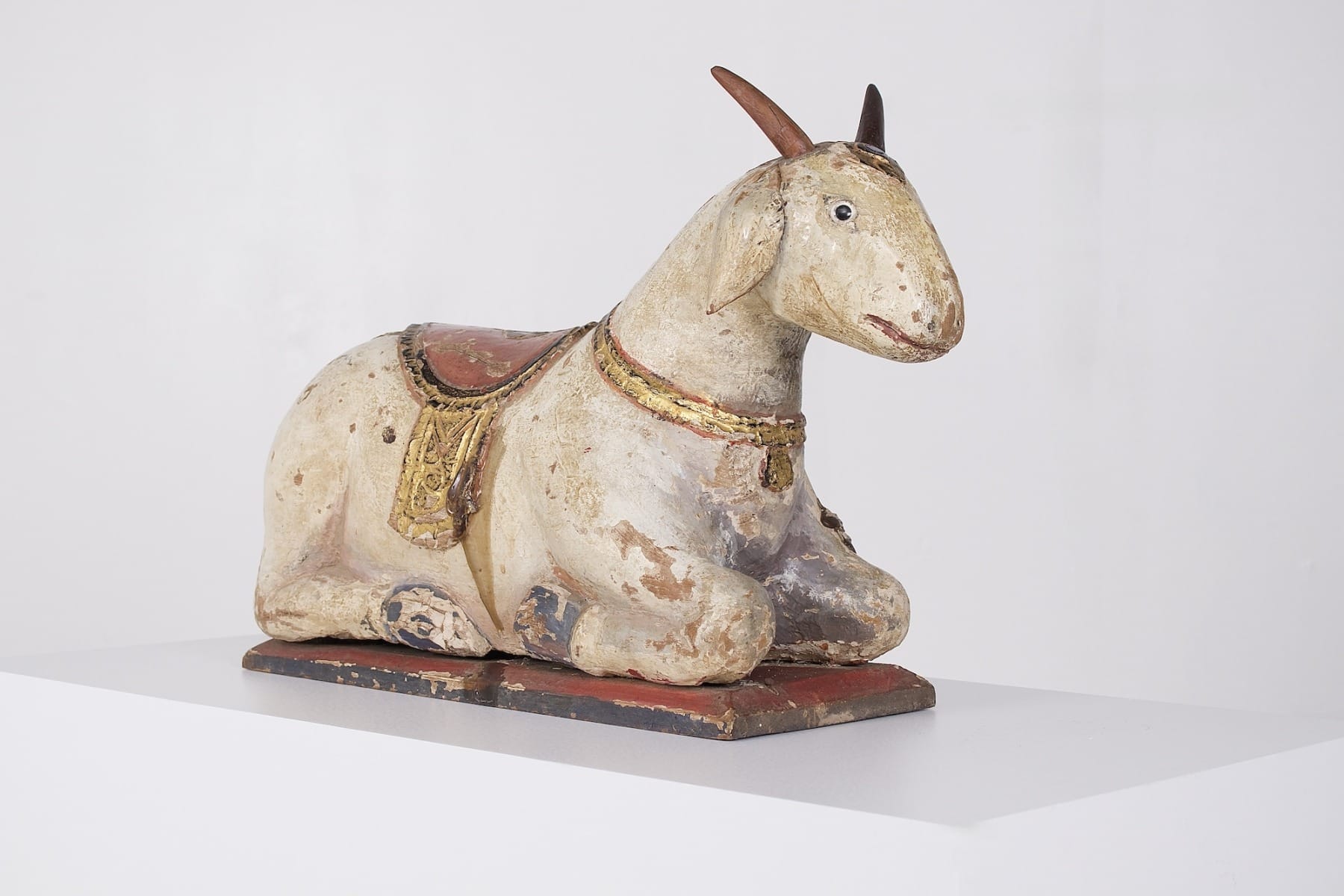
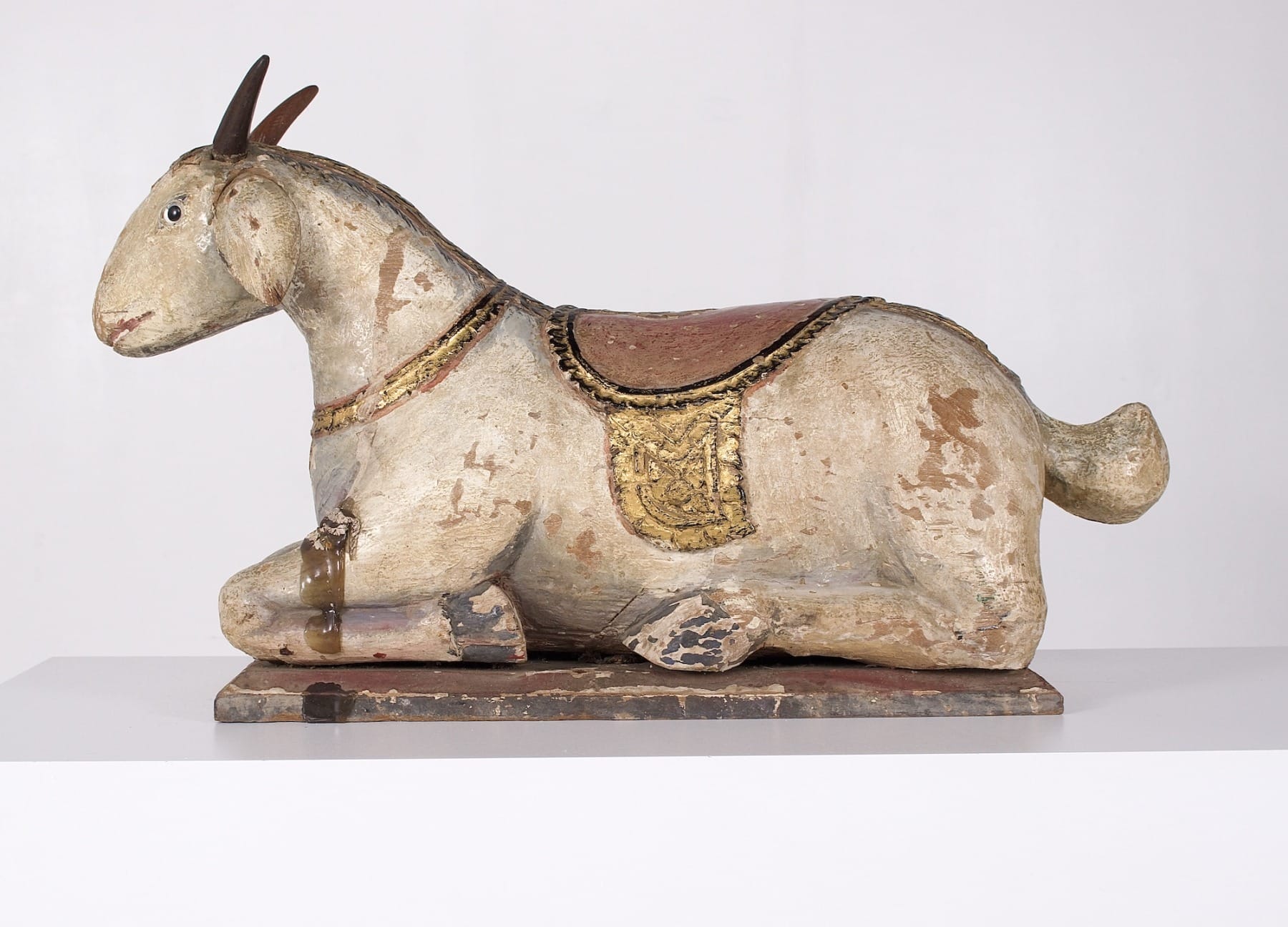
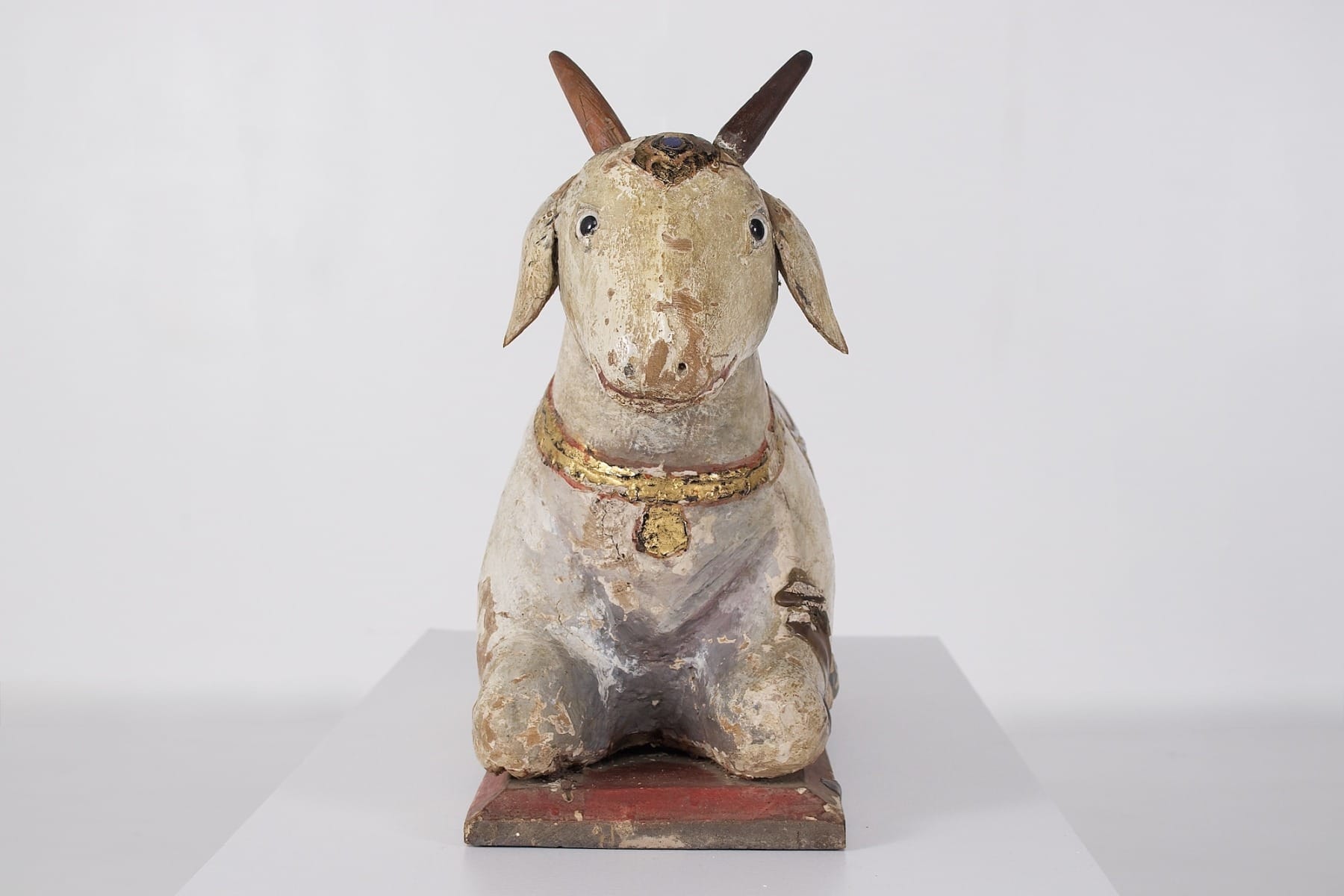
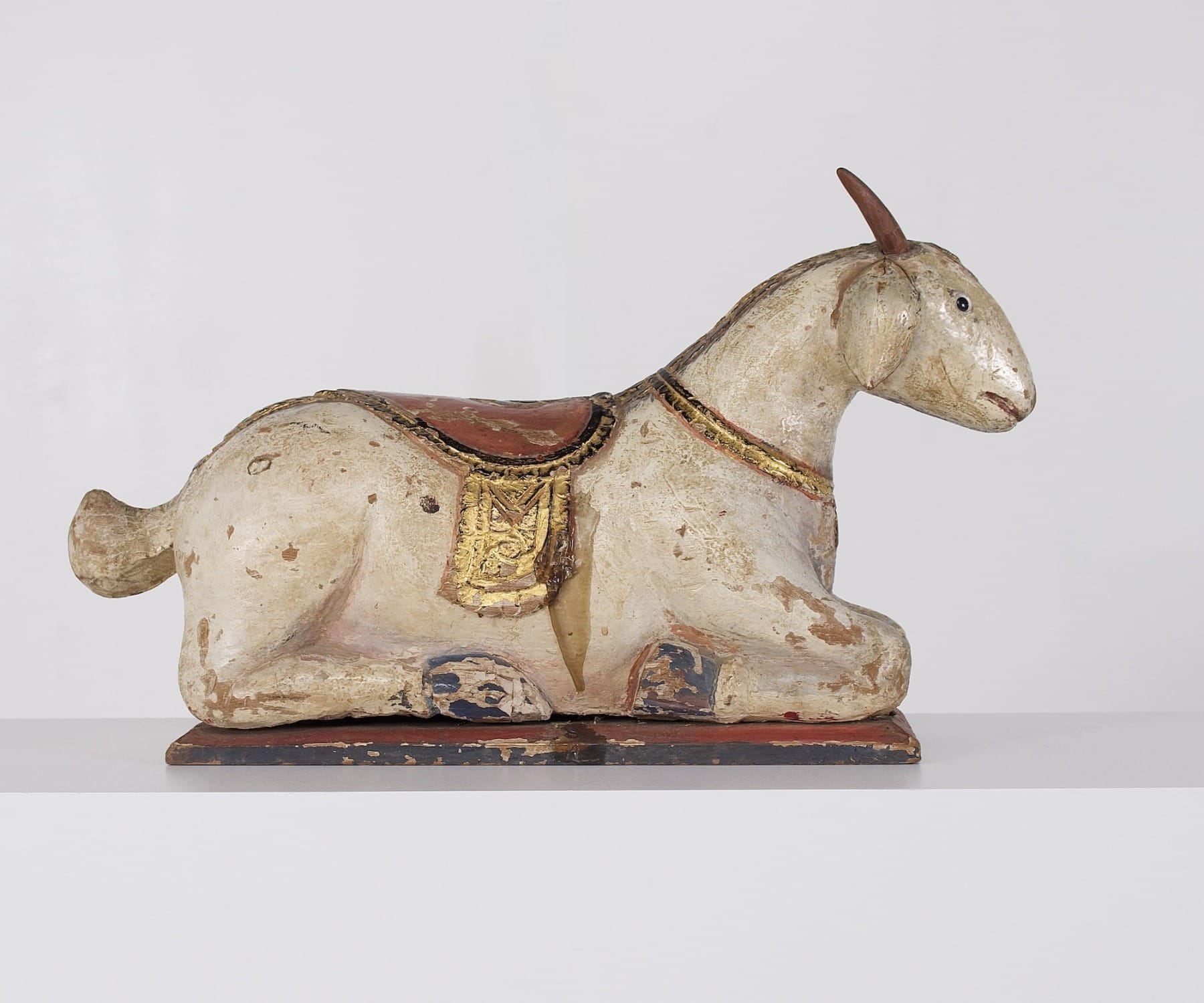
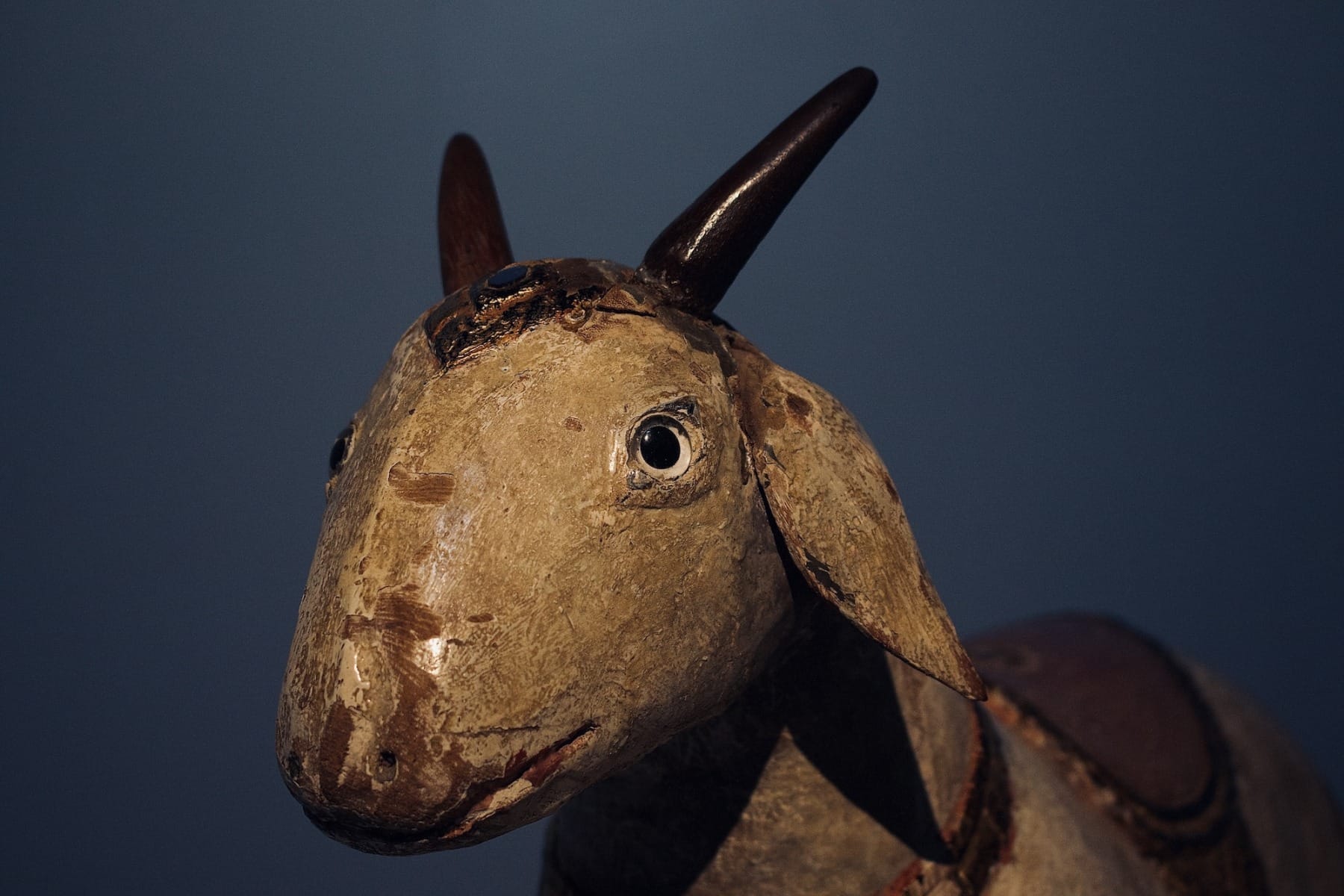
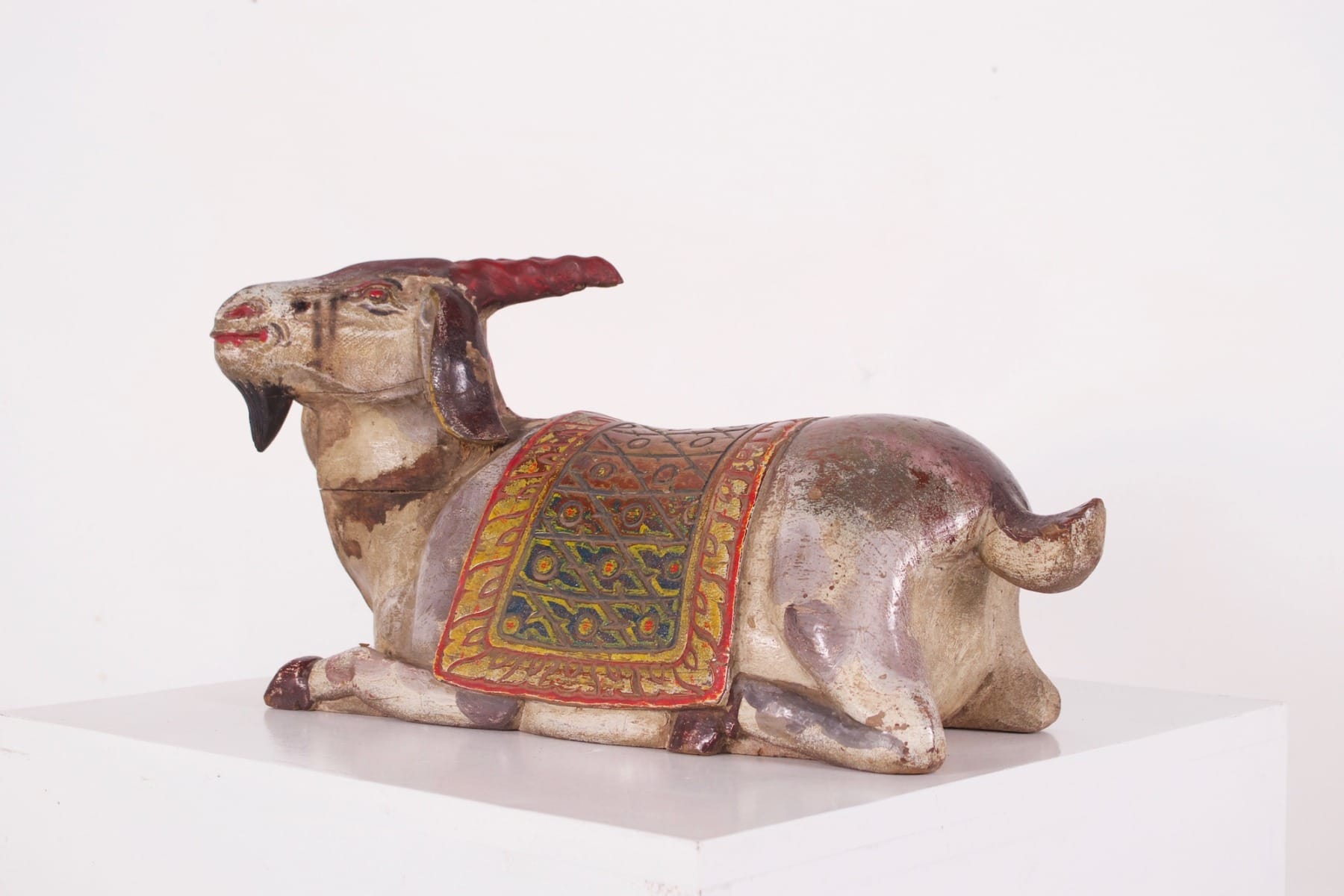
Polychrome wooden ritual goat sculpture represented harnessed, vehicle or vahana of Agni, god of fire. India, late 19th century.
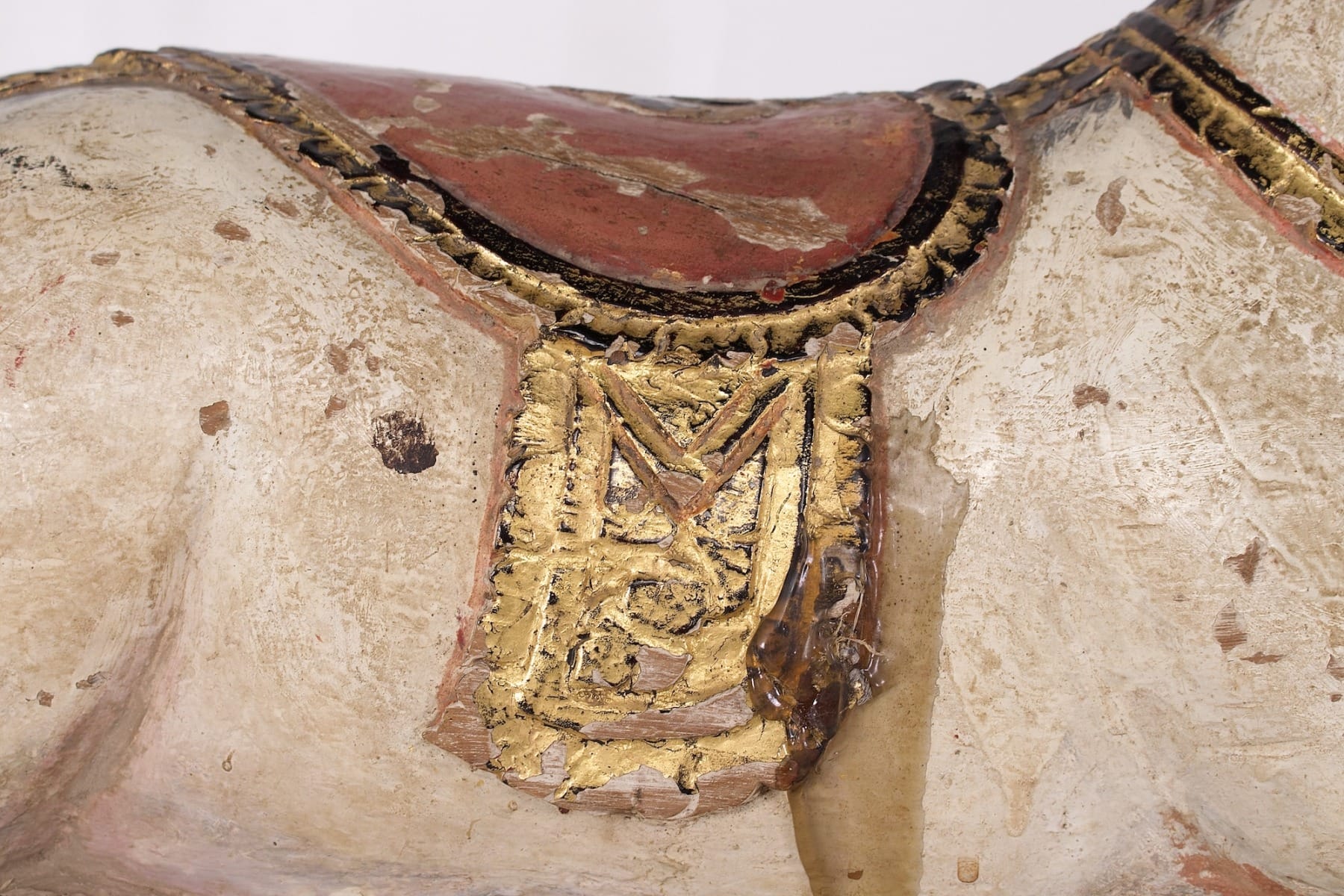
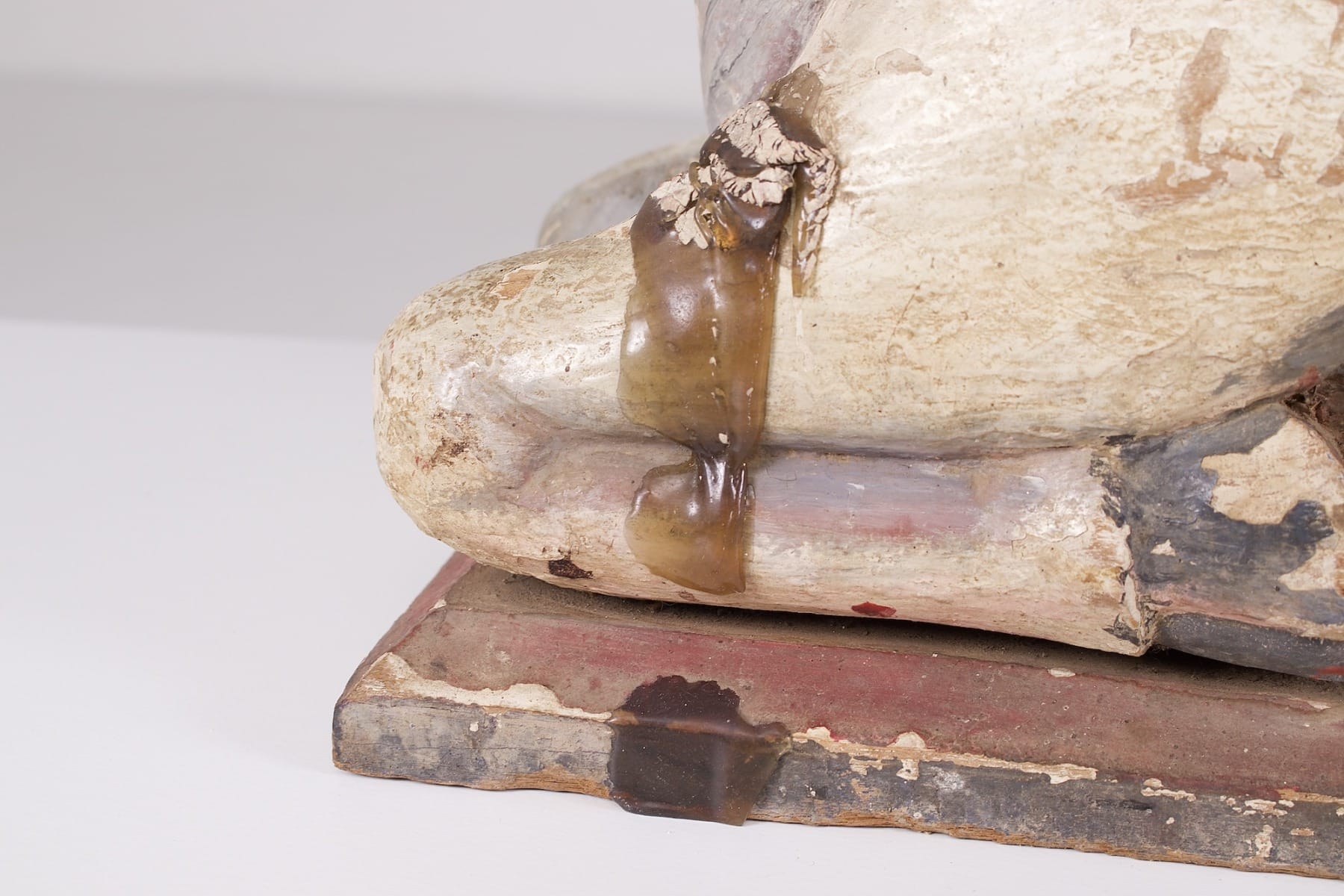
- Normal wear marks related to age and function, flaking paint (see photos)
- L 74 CM x D 20 CM x H 42 CM
- Former Claude de Marteau collection
1 available in store

The presence of an ornamented saddle and harness on the back of this goat can be explained by its function within Indian religious beliefs, as well as by the artistic codes specific to the representation of sacred animals.
The Status of Vahana (Divine Vehicle)
In Indian sacred art, when an animal is represented with a richly decorated saddle and head or neck adornments, this may indicate its status as a Vahana, that is, a mount or vehicle associated with a deity. The goat and the ram are notably associated with Agni, the god of Fire.
The saddle materially indicates that the animal is “ready to be mounted” by the deity during rituals. It thus contributes to transforming the ordinary animal into a sacred being capable of carrying or manifesting divine power.

In the popular art of northern regions, notably in Rajasthan, artisans transposed certain codes of nobility and human royalty to sacred animals. Dressing a goat sculpture with a richly decorated saddle and a collar of bells constituted a way of expressing respect, devotion, and honoring the ritualized animal.
This is a stylistic treatment also found on ritual horses, elephants, or sacred bulls.
Use During Processions (Utsava)
These statues could be used during religious festivals and village processions. The saddle could also constitute a symbolic support for depositing small offerings, sacred pigments such as kumkum or chandan, or garlands of flowers during prayers.

Traces can be seen on this piece that could correspond to wax or ghee in certain places.
In certain folkloric and regional cults, notably in Gujarat or Rajasthan, several local protective goddesses are associated with a black or white goat. The saddle can then symbolically welcome or evoke the divine presence.
The Goat in Indian Mythology and Thought
In the ancient Indian philosophy of Sāmkhya, the female goat, called Aja, can be understood as a metaphor for Prakriti: primordial Nature, the universal matter at the origin of the manifested world. The representation of an adorned and harnessed animal can thus participate in its sacralization and evoke abundance, the fertility of the earth, and prosperity.

The sculpture is equipped with a saddle and ceremonial harness to signal its sacred character and its role as a vehicle to the divine.
Another mythological reference is found in the figure of the Vedic god Pushan, protector of herds, travelers, and paths. His chariot is traditionally drawn by goats. In popular art, an animal belonging to the retinue or vehicle of a deity may be equipped with a saddle and ceremonial harness to signal its sacred character and its role in service of the divine.
You might also like…

Discover also...



Delivery to Belgium

Delivery to France

Delivery to Luxembourg
