



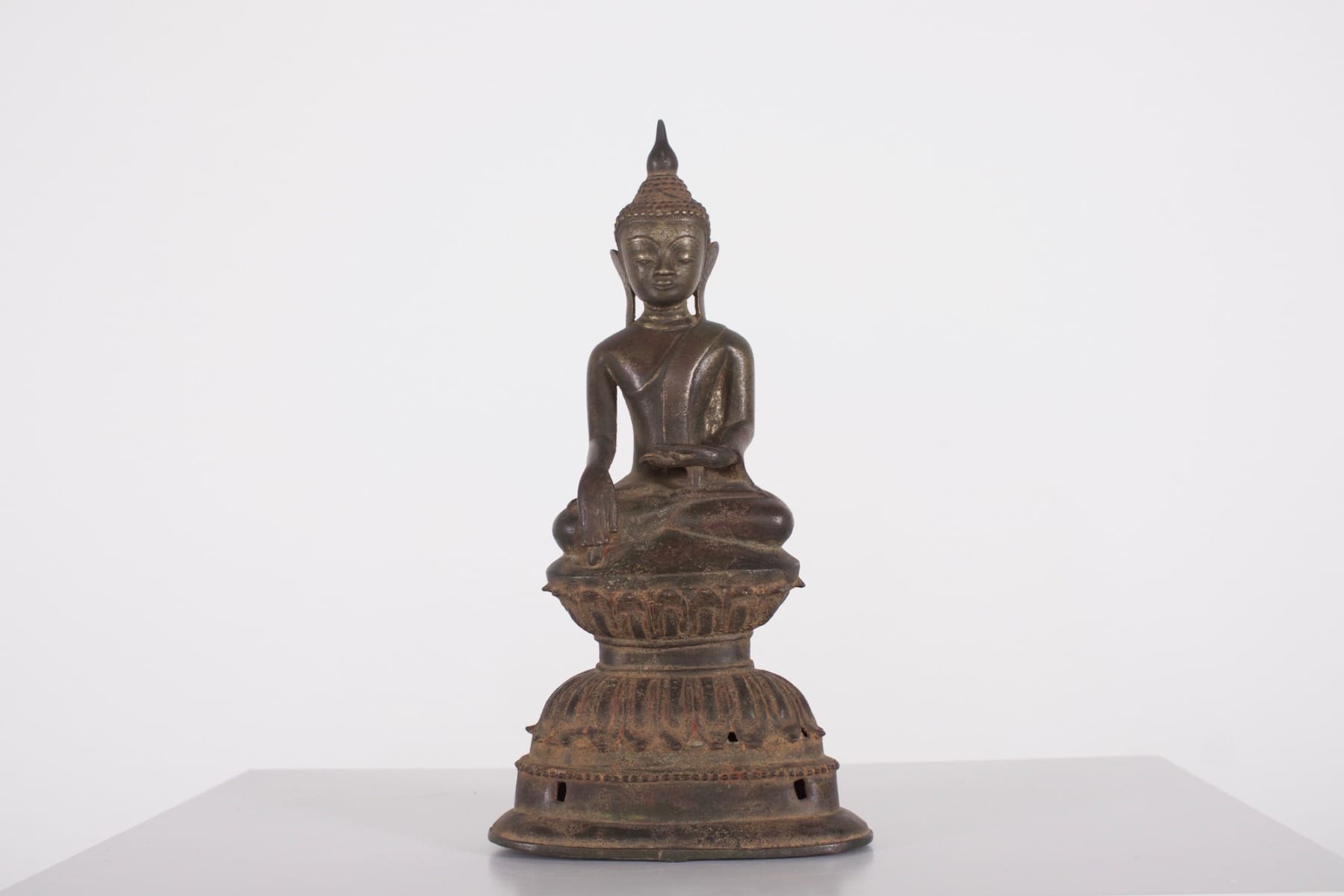


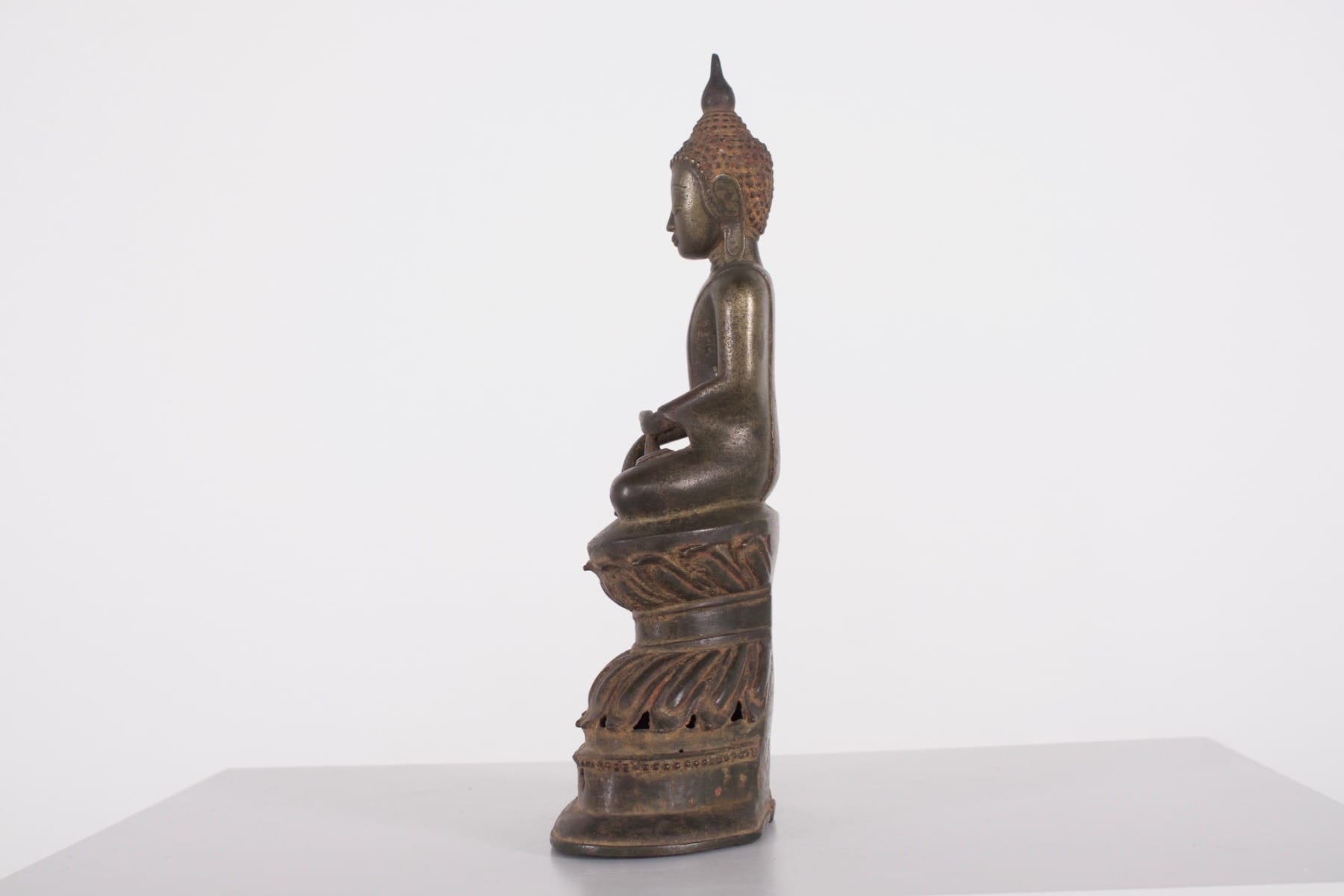



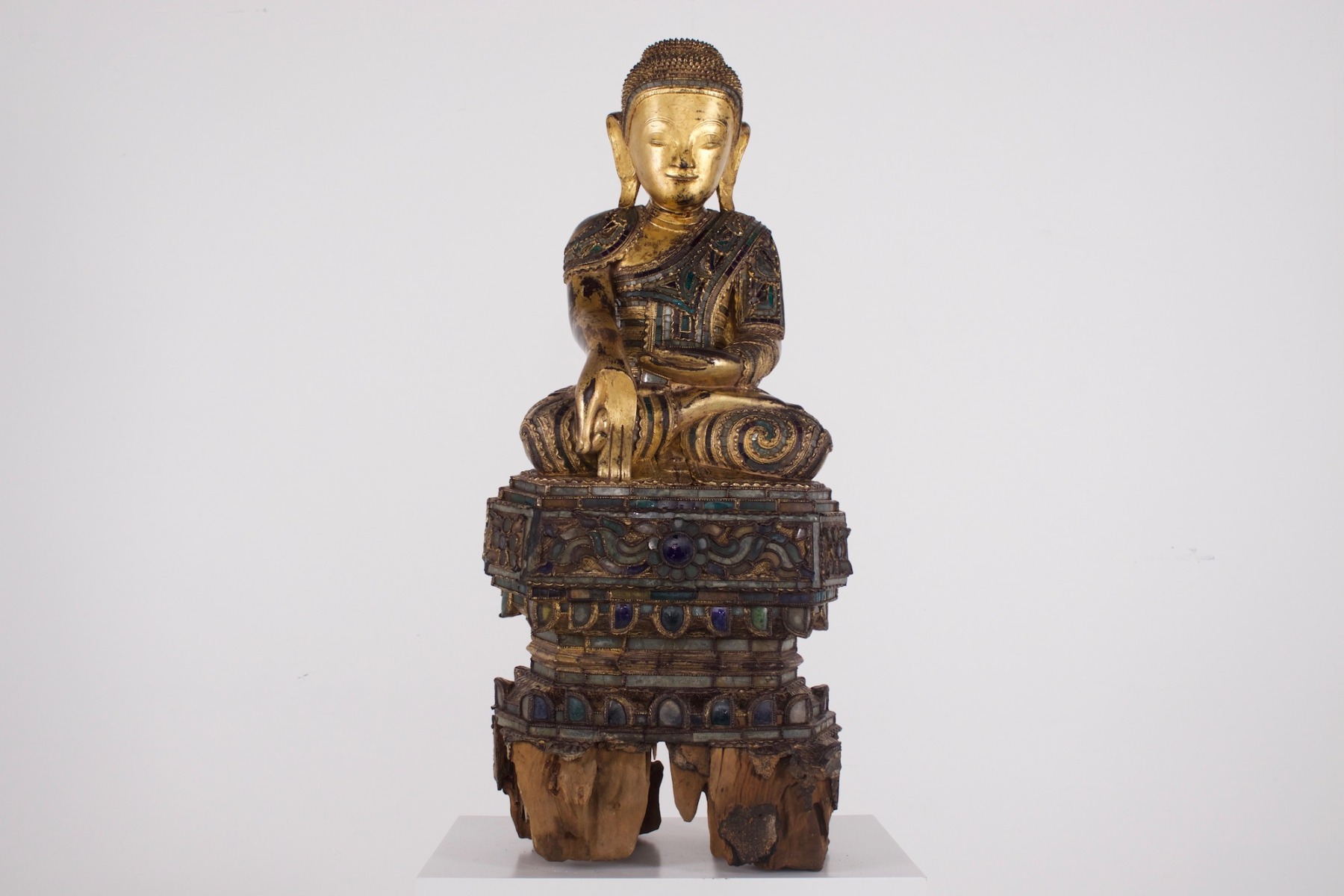
Bronze Buddha, Burma (Myanmar), XIXᵉ century
€2500,00
This copper alloy Buddha statue from the early 19th century exhibits stylistic characteristics that evoke certain Burmese and Siamese influences.
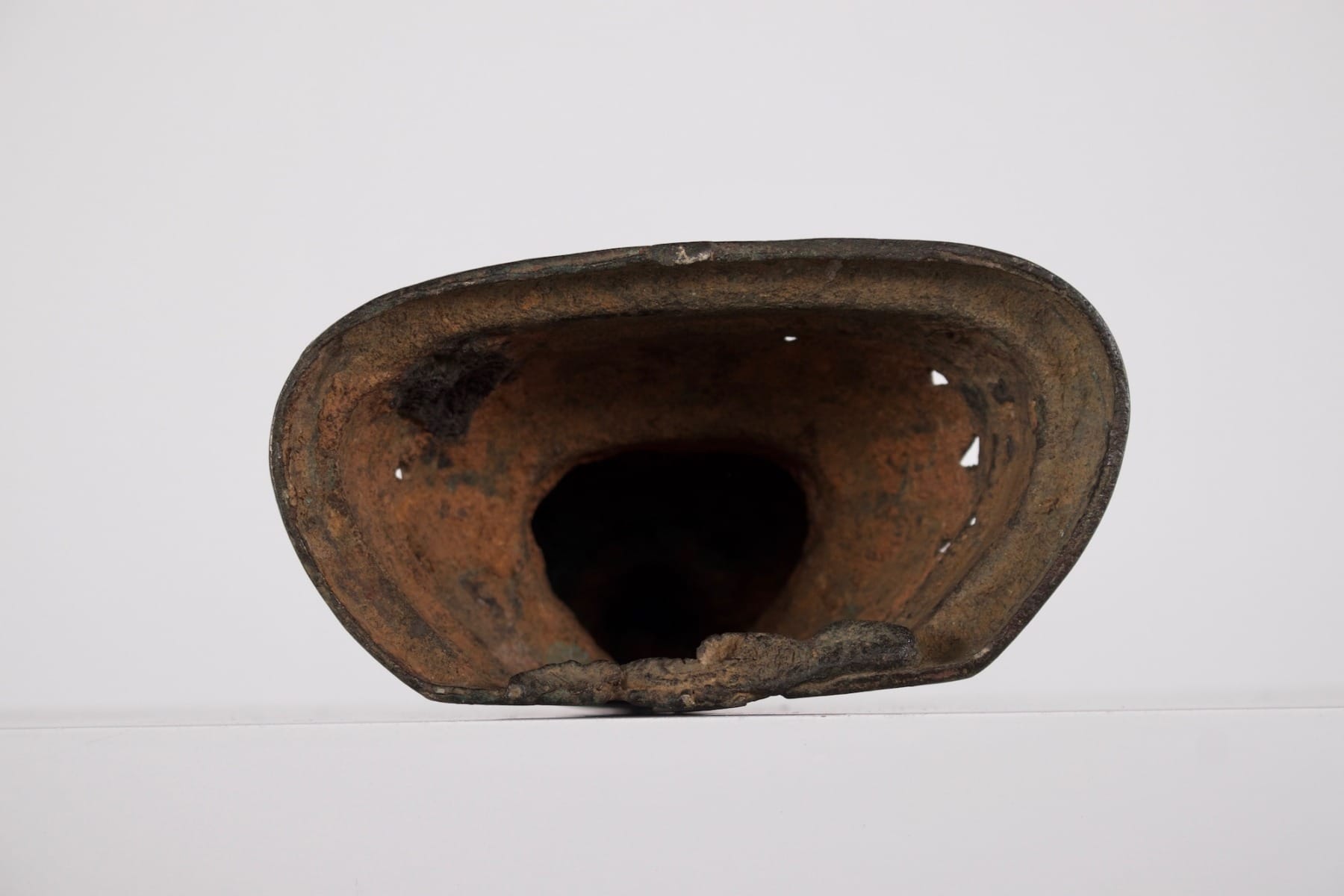
- Its elaborate double lotus base, with its lateral perforations, is an atypical element that may testify to a specific commission or to regional craftsmanship influenced by the cultural exchanges of the period.
- The sanghati’s rim is discreetly ornamented with scrolls, a detail sometimes found on statues from southern Laos ( Savannaketh, Champassak…). The base itself follows a little-documented model, reminiscent of Ava or Lan Na influences.
- The two perforations on the left and right of the base suggest a stowing or embedding function, possibly to be attached to a larger pedestal, altar or wooden structure, thus reinforcing its ritual vocation.
-
In Theravada Buddhist practices in Laos, it is customary for red pigments to be applied not only to the ushnisha but also to other parts of the statue associated with purity and enlightenment. Given that the lotus symbolizes spiritual purity and the transcendence of suffering, it is logical that this element would also be enhanced with pigments during a consecration.
- H 28 cm x W 14 cm x D 7 cm
- Weight: 1095 grams
- Provenance: Estate of collector Claude de Marteau, sold with certificate of authenticity.
1 available in store

You might also like…

Discover also...



Delivery to Belgium

Delivery to France

Delivery to Luxembourg
