



Roger Landault
1954 marked the first turning point: his “Junior” set, published by ABC and sold at affordable prices, won second prize in the MRL competition Rather than defending a single idea to the bitter end, he embraced the rapid evolution of post-war design and lifestyle
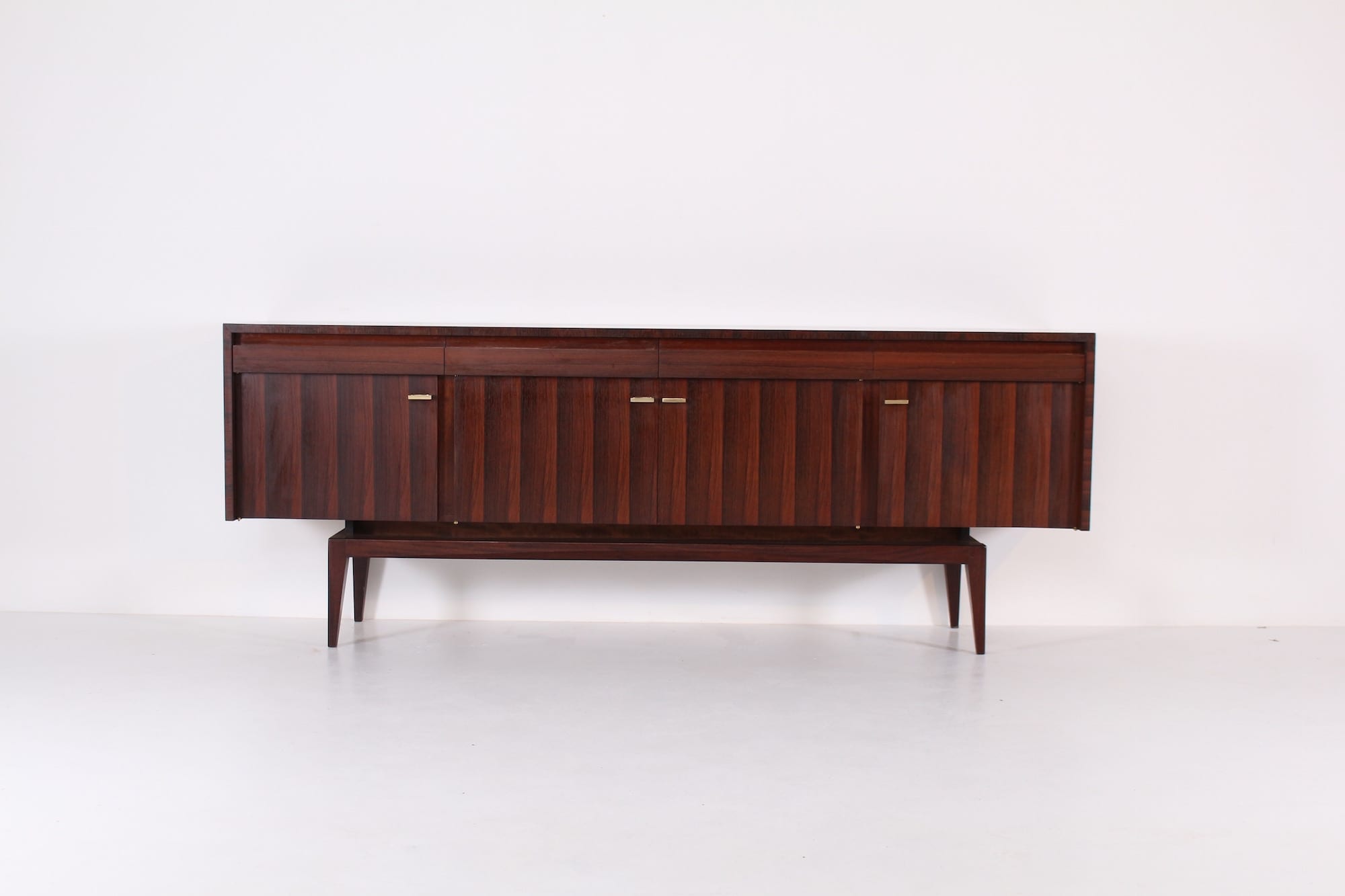
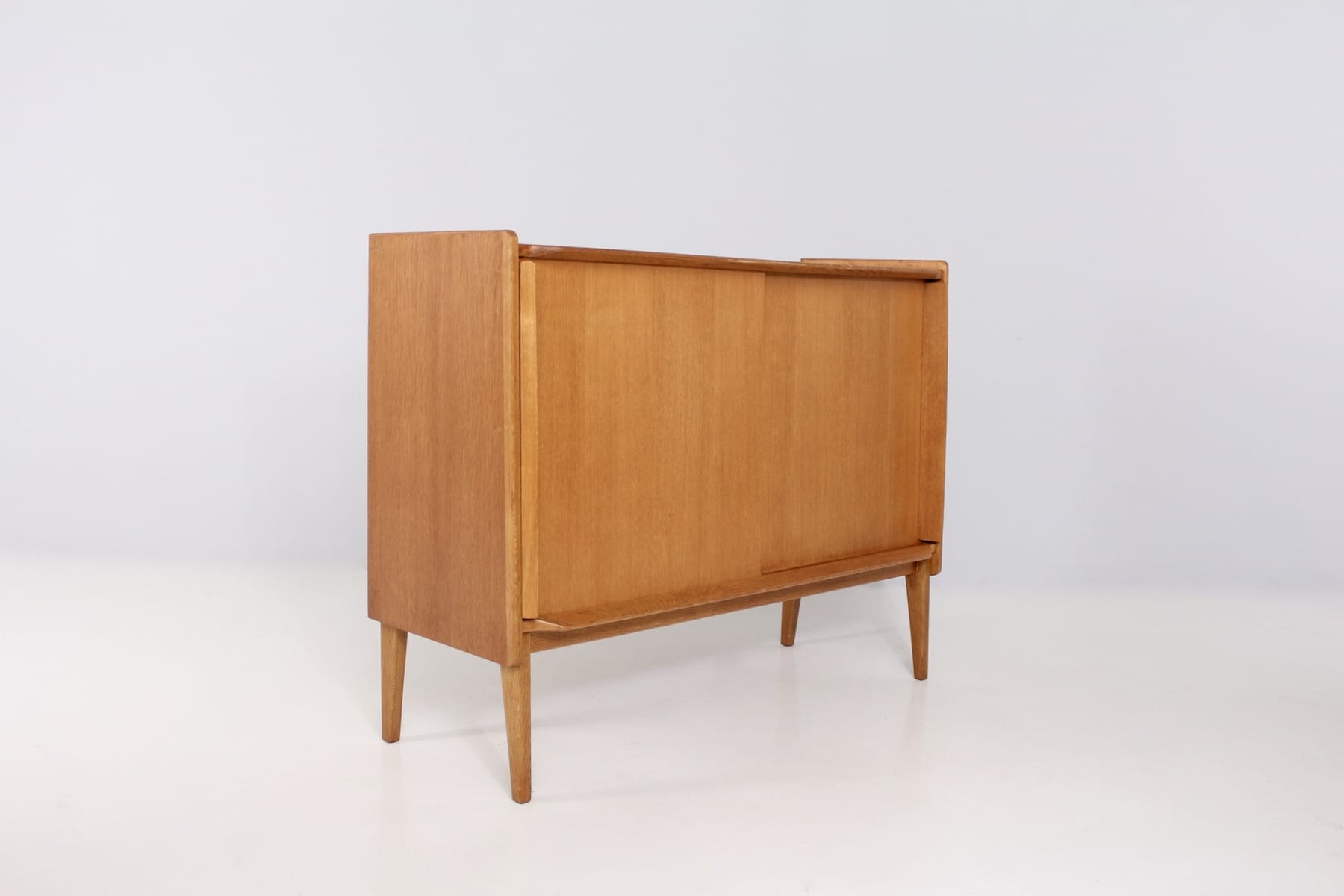

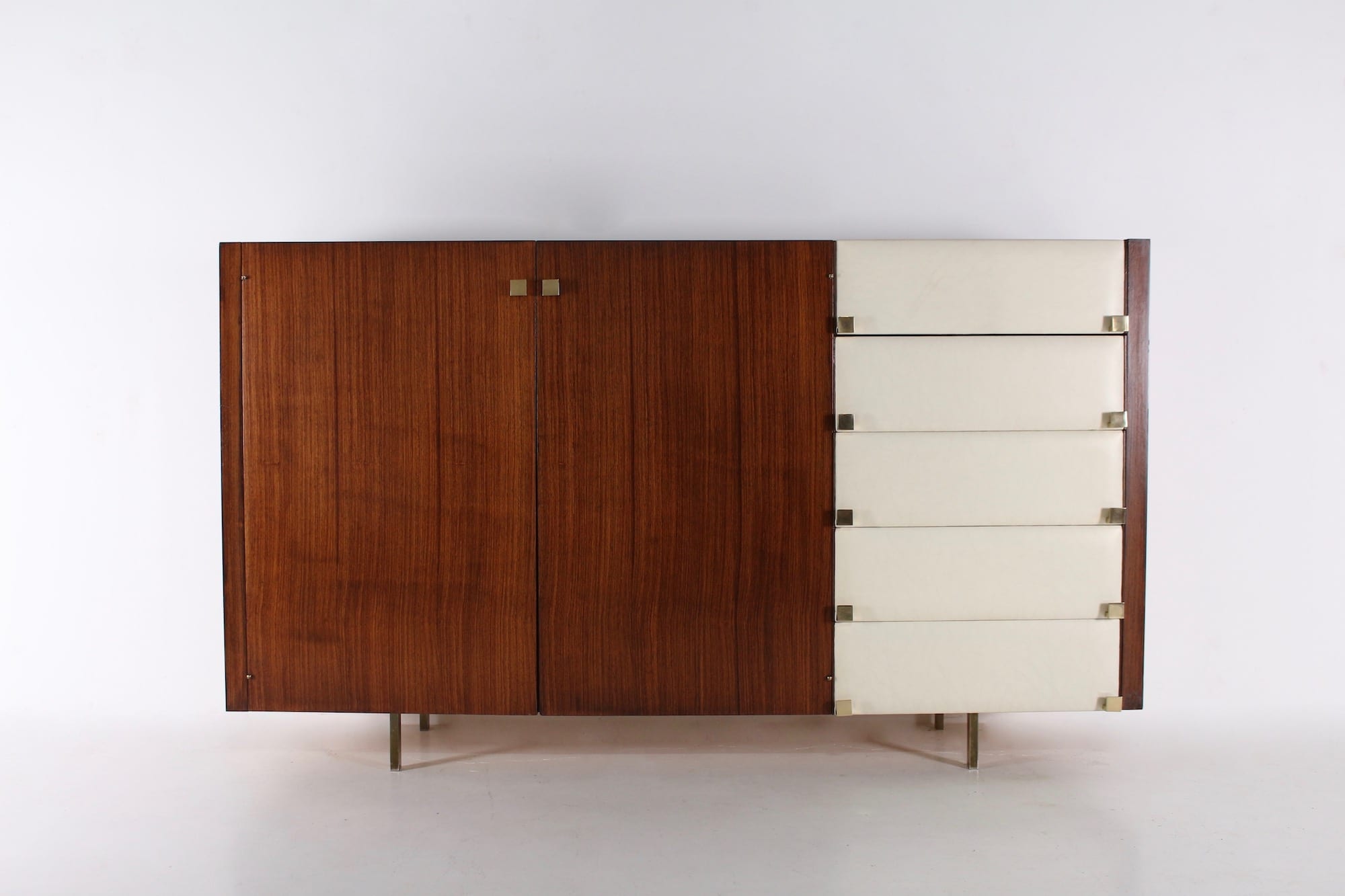


Roger Landault belongs to the younger generation of modernists, whose less dogmatic approach sets them apart from their elders. Rather than defending a single idea to the bitter end, he embraced the rapid evolution of post-war design and lifestyle.
He got his start in the “1940s” style at the Studium du Louvre, before fully finding his way into mass production with the ABC company. Very comfortable with different materials, he switches from wood to metal with equal ease.
In 1945, his work became part of the spirit of reconstruction (Commission du meuble de France), but it was in 1953 that his social dimension really took shape: he designed a set of furniture for a low-income housing project in Le Pecq, published in Le Décor d’Aujourd’hui. He then sought his own language, not hesitating to draw inspiration from other designers – Gascoin, Robin Day, Hauville… – to develop his own modern vocabulary.
1954 marked the first turning point: his “Junior” set, published by ABC and sold at affordable prices, won second prize in the MRL competition. It already featured one of his first signatures: an arched cornice that immediately identifies his furniture.
In 1955, he developed a new standardized range – later named “Dakar” – this time featuring an overhanging cornice with notches, designed for easy assembly with the side jambs. This “ABC furniture” was awarded the Prix René Gabriel, and was used to furnish a typical five-room low-income housing unit in the “Green Belt” built by Jean Dubuisson.
Landault soon realized the limits of a rationalism that had become a formula rather than a project. While standardization impoverished formal possibilities, he chose to embrace the idea of a “signature line”, a personal graphic touch that distinguishes his furniture while remaining economical.
This gesture echoes the architects of low-cost housing projects of the same period, who also sought to individualize buildings with identical structures through subtle variations in volumes and facades. In this way, Landault’s design dialogues with the architecture of his time: a pragmatic modernism, where the stylistic sign becomes the possible space of expression at the heart of constraints.