





Large “Dakar” wardrobe by Roger Landault, 1950s
Roger Landault (1919-1983), 3-door wardrobe in blond oak and lacquered beech. “Dakar” series, ABC publisher, France mid-1950s.
- This modernist furniture piece has been carefully restored by our conservator: Sanding, cleaning, and new varnish.
- New turned key heads in solid brass.
- Cabinet can be disassembled if required.
- W 183.5 CM X D 61 CM X H 178.5 CM.
- P useful 48 CM.
Sold

The Dakar line, a turning point in Roger Landault’s work
With the Dakar collection, developed between 1955 and 1959 for A.B.C. establishments, Roger Landault definitively moved away from Reconstruction-era furniture. Volumes became lighter, compositions gained flexibility, and the furniture design heralded a new generation of modern French furniture.

The name Dakar refers to the solid wood profiles designed by Roger Landault: their expressive forms evoke the sculptures of Primitive Arts
This evolution was quickly praised by professional institutions. In the mid-1950s, Roger Landault and A.B.C. establishments won second prize in the competition organized by the Centre Technique du Bois, which then encouraged the most innovative approaches in furniture design. Presented the same year at the Salon des Arts Ménagers, this new direction was also awarded the Prix René Gabriel, one of the most prestigious distinctions in French design of the era.
The same year also saw the appearance of the Rotterdam line, which introduced a principle of juxtaposed furniture that would become one of Roger Landault’s signatures. This reflection on modularity was extensively developed within the Dakar collection, with several pieces incorporating elements conceived for Rotterdam. The culmination of this evolution was reached in the early 1960s with the Rio line. Roger Landault’s full maturity is embodied by his sideboards and enfilades, which are among the most accomplished expressions of French modernism, reconciling clean lines, functionality, quality of execution, and elegance of proportions.
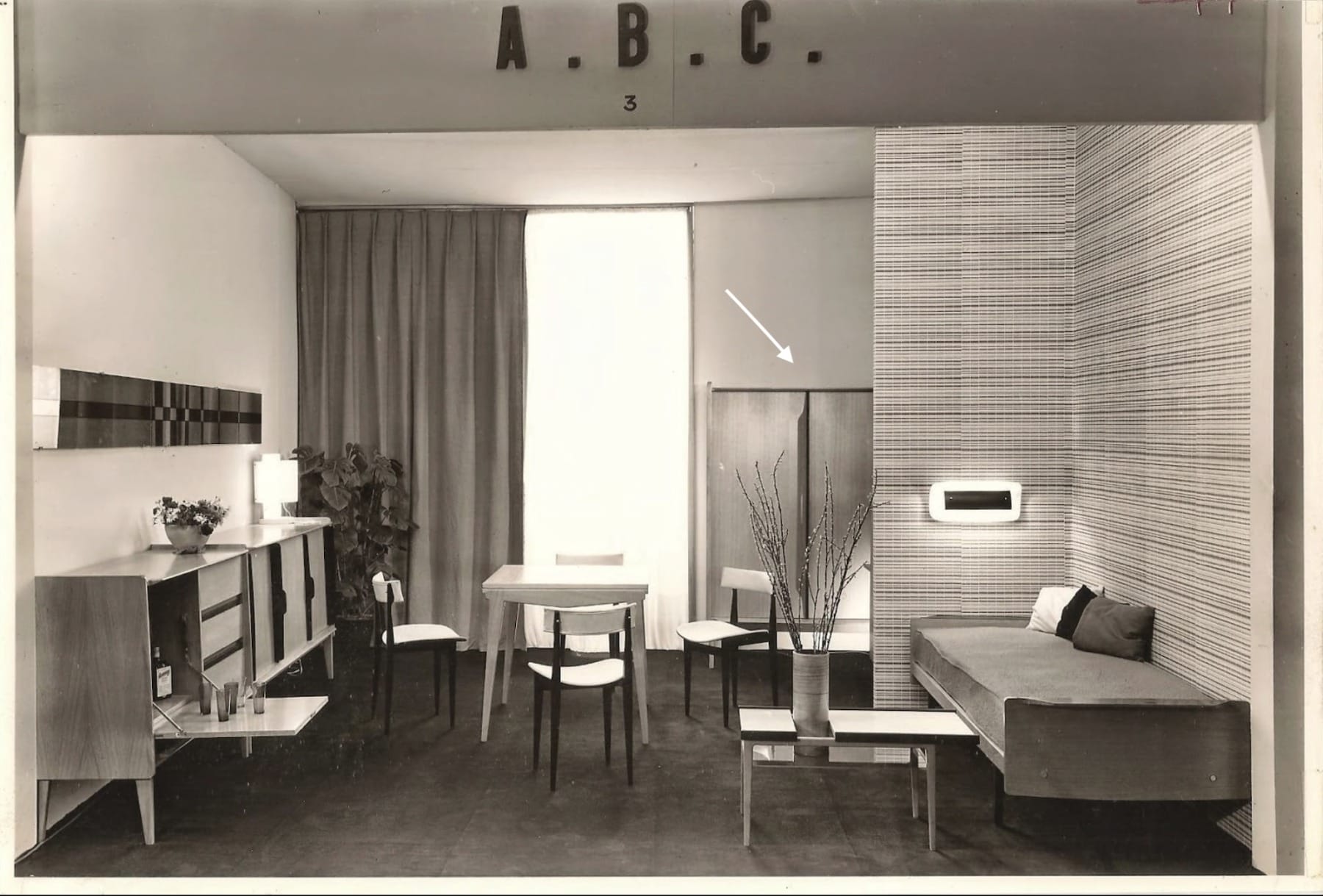
The Dakar series furniture on the Meubles A.B.C stand around 1955.
The name Dakar refers to the solid wood profiles designed by Roger Landault. Their expressive forms evoke African sculptures, long before the term “primitive arts” became established in art history vocabulary. This inspiration gives the collection a unique personality, where the warmth of wood dialogues with a resolutely modern furniture concept.
Source: ABC Roger Landault
You might also like…

Discover also...

Delivery to Belgium

Delivery to France

Delivery to Luxembourg
