



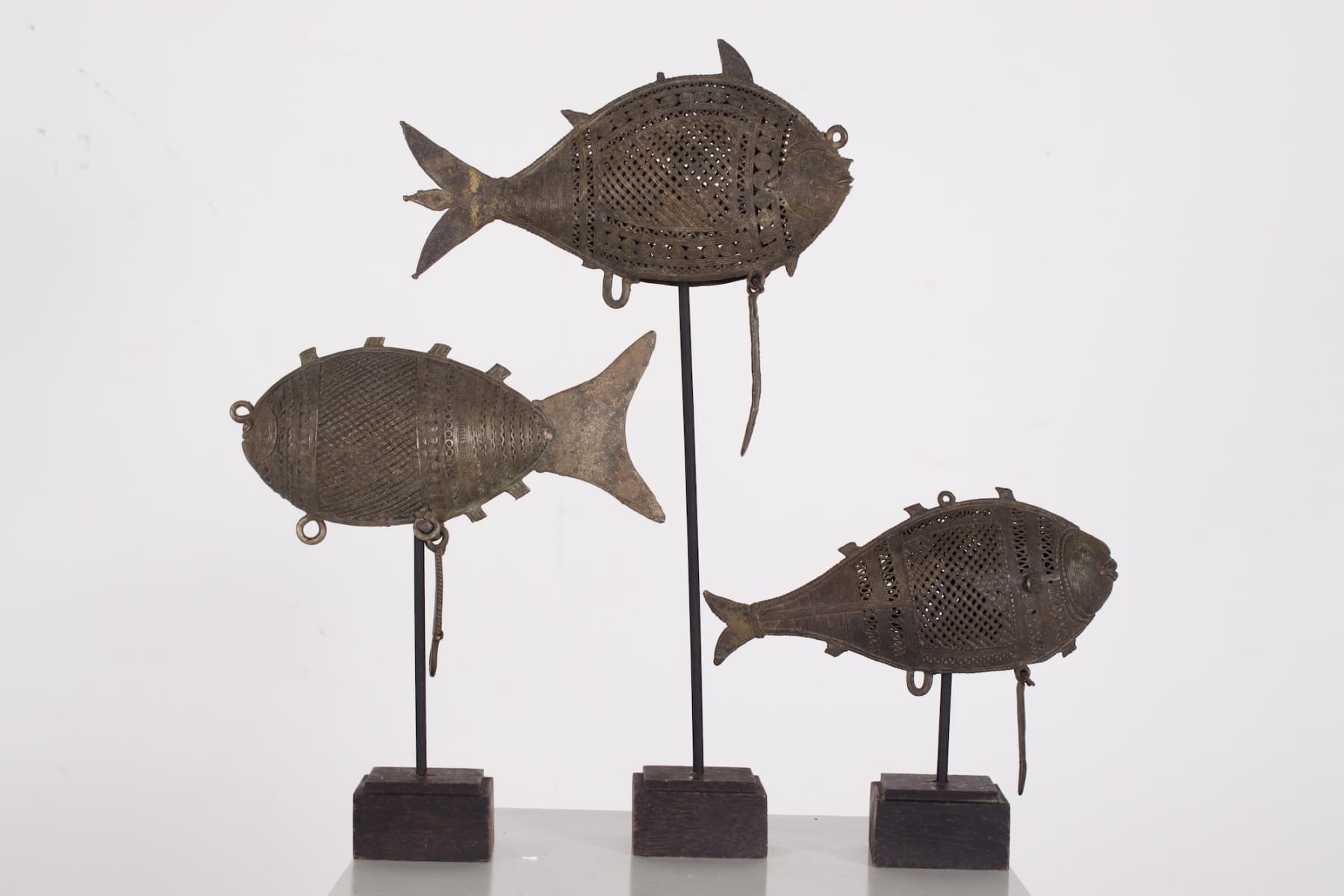
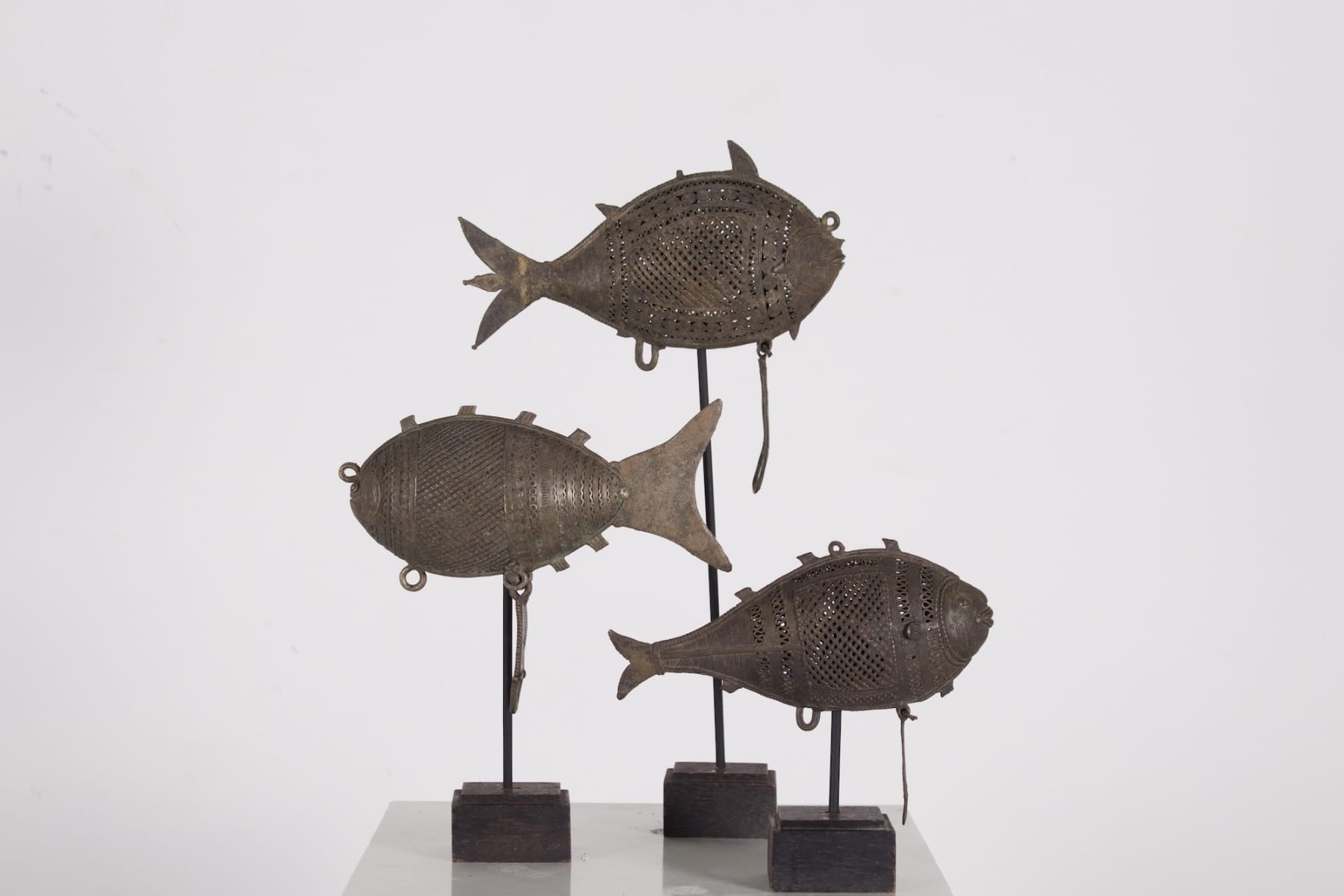
Dhokra fish-shaped coin boxes – India, c. 1900
€750,00
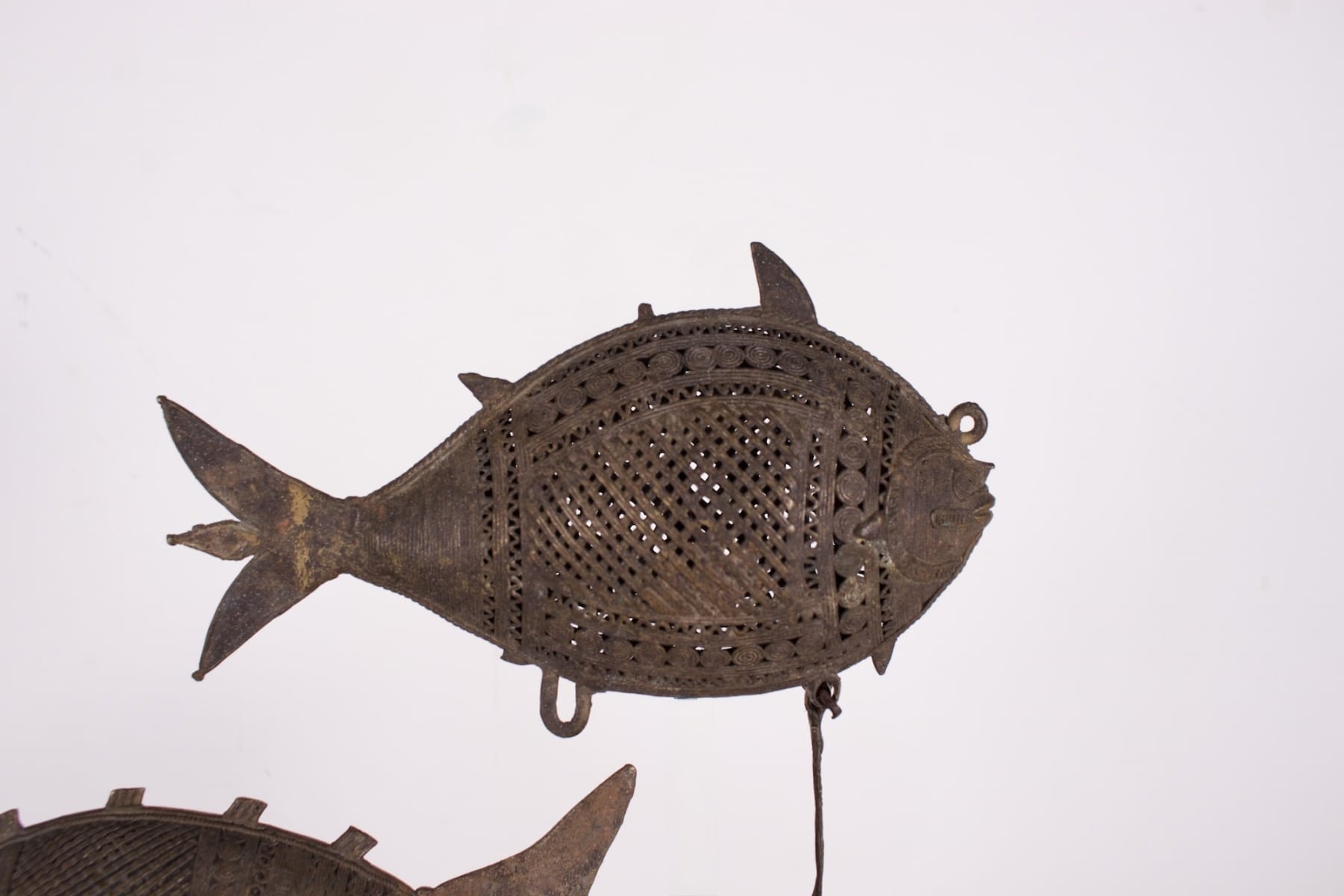
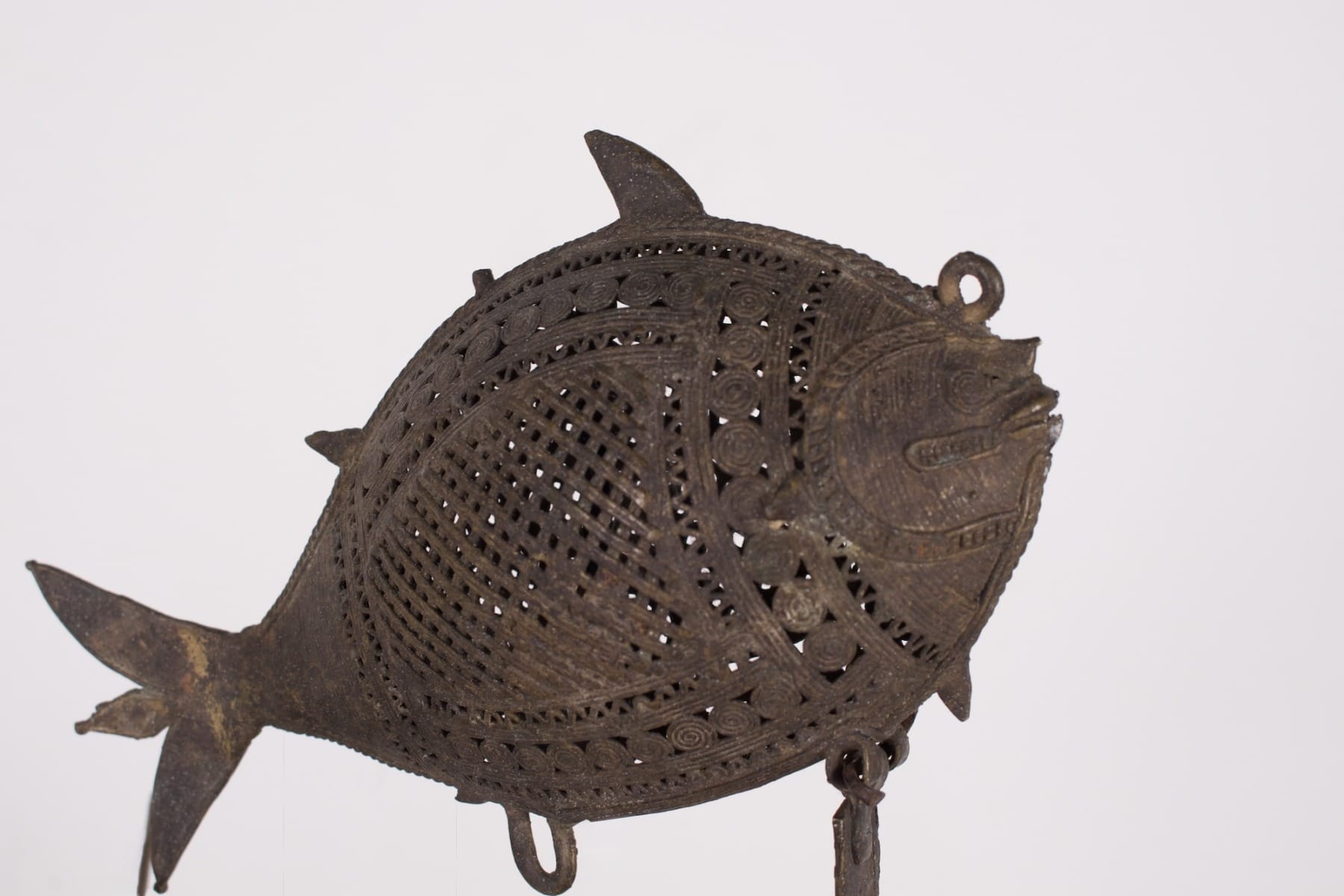
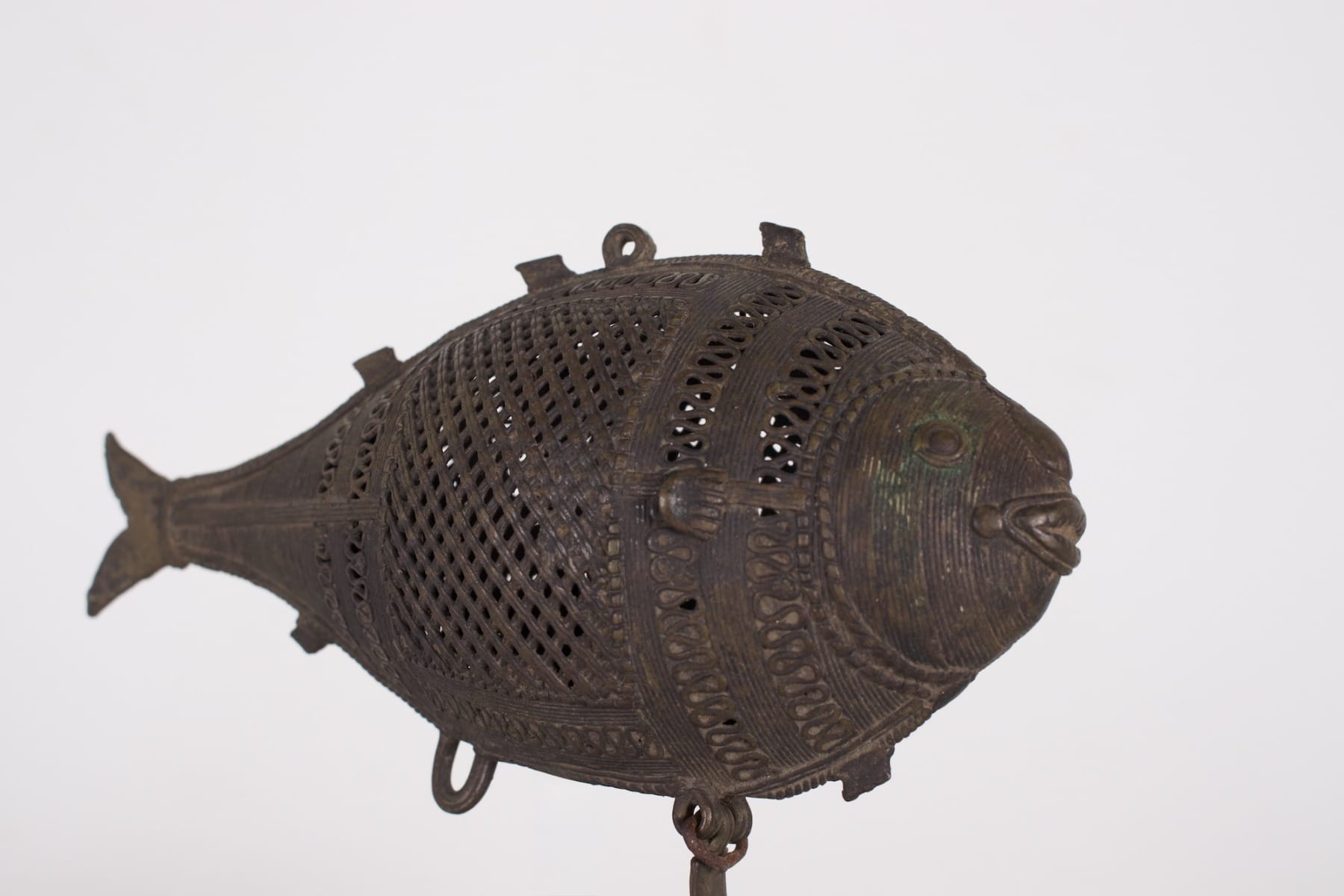
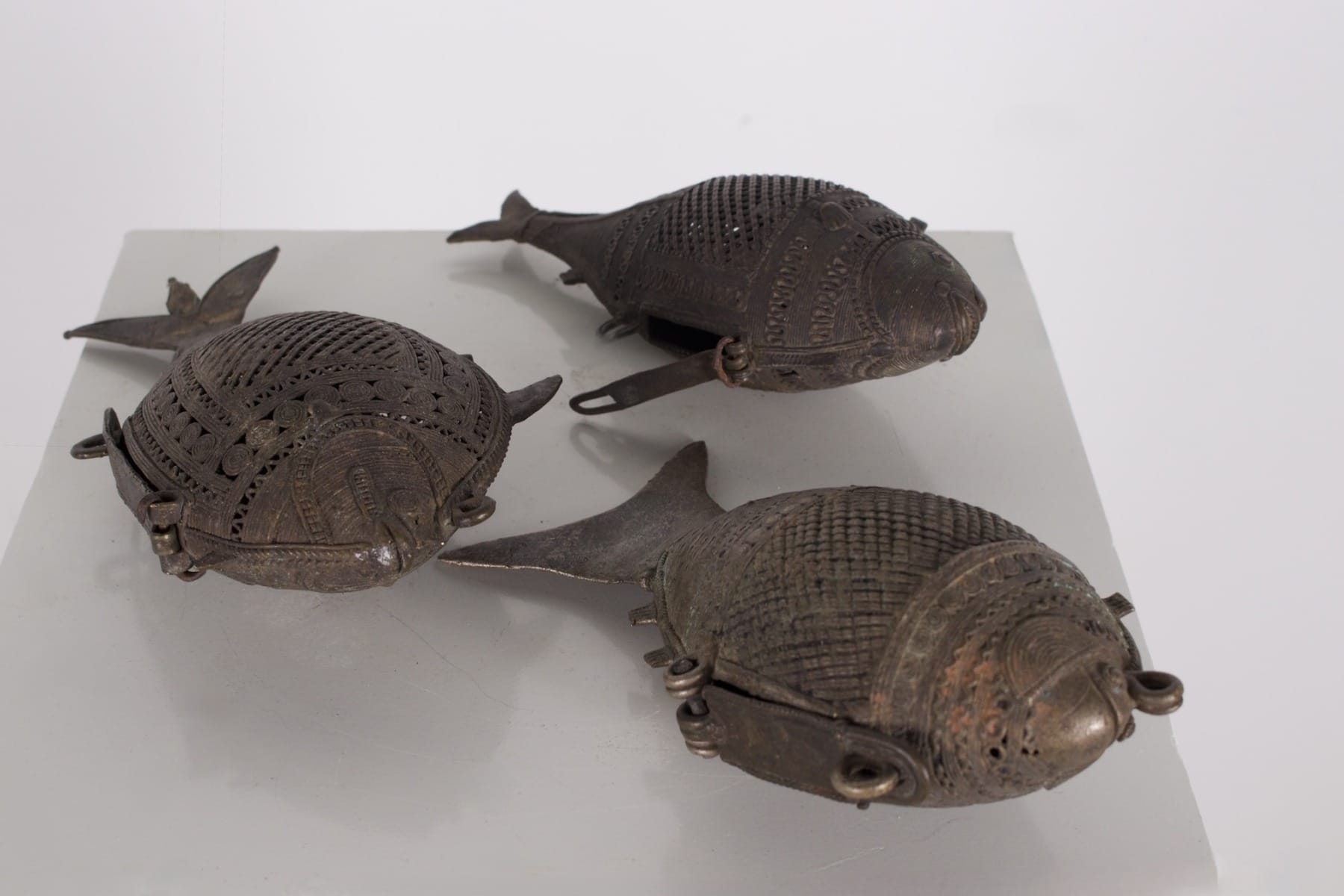
Set of three Dhokra fish-shaped containers, India, probably Odisha or a neighbouring area of eastern India, late 19th–early 20th century. Made in copper alloy by lost-wax casting, they feature fine openwork decoration and were likely intended to store coins, small objects, or products associated with betel.
Former collection of Claude de Marteau.
- L 22 cm x H 12 cm x D 6 cm
- L 20 cm x H 9 cm x D 6 cm
- L 19 cm x H 9 cm x D 5 cm
Total weight: 970 g
1 available in store

This set of three fish-shaped coin boxes belongs to the Indian tradition of Dhokra, or Dokra, an ancient lost-wax casting technique particularly developed in eastern and central India. Made in copper alloy, these pieces stand out for their openwork bodies, geometric ornament, and highly expressive animal silhouettes.
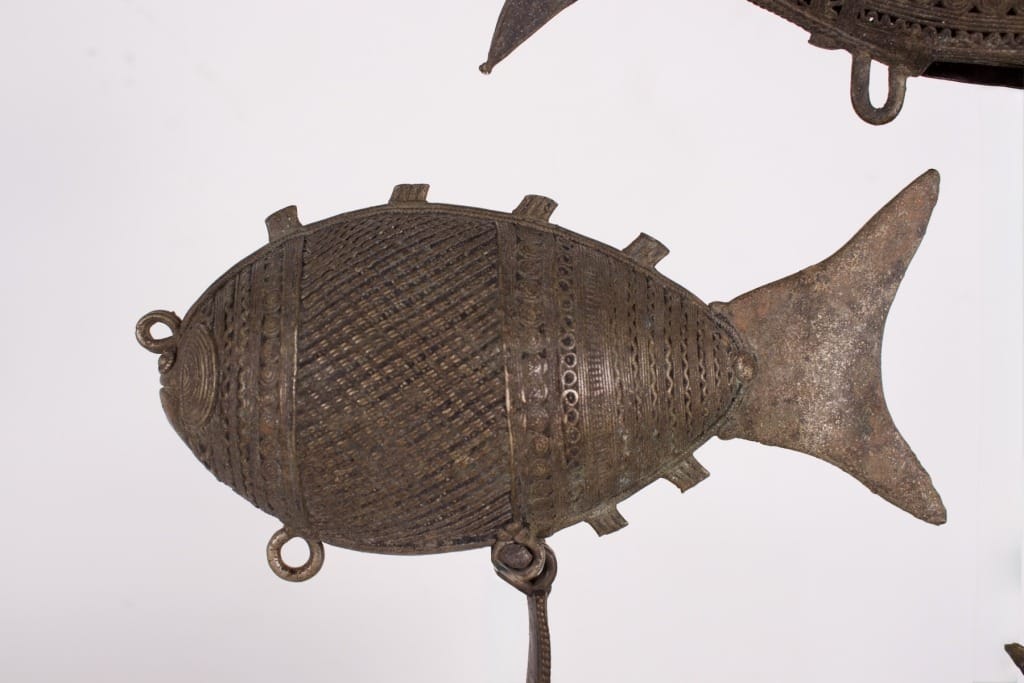
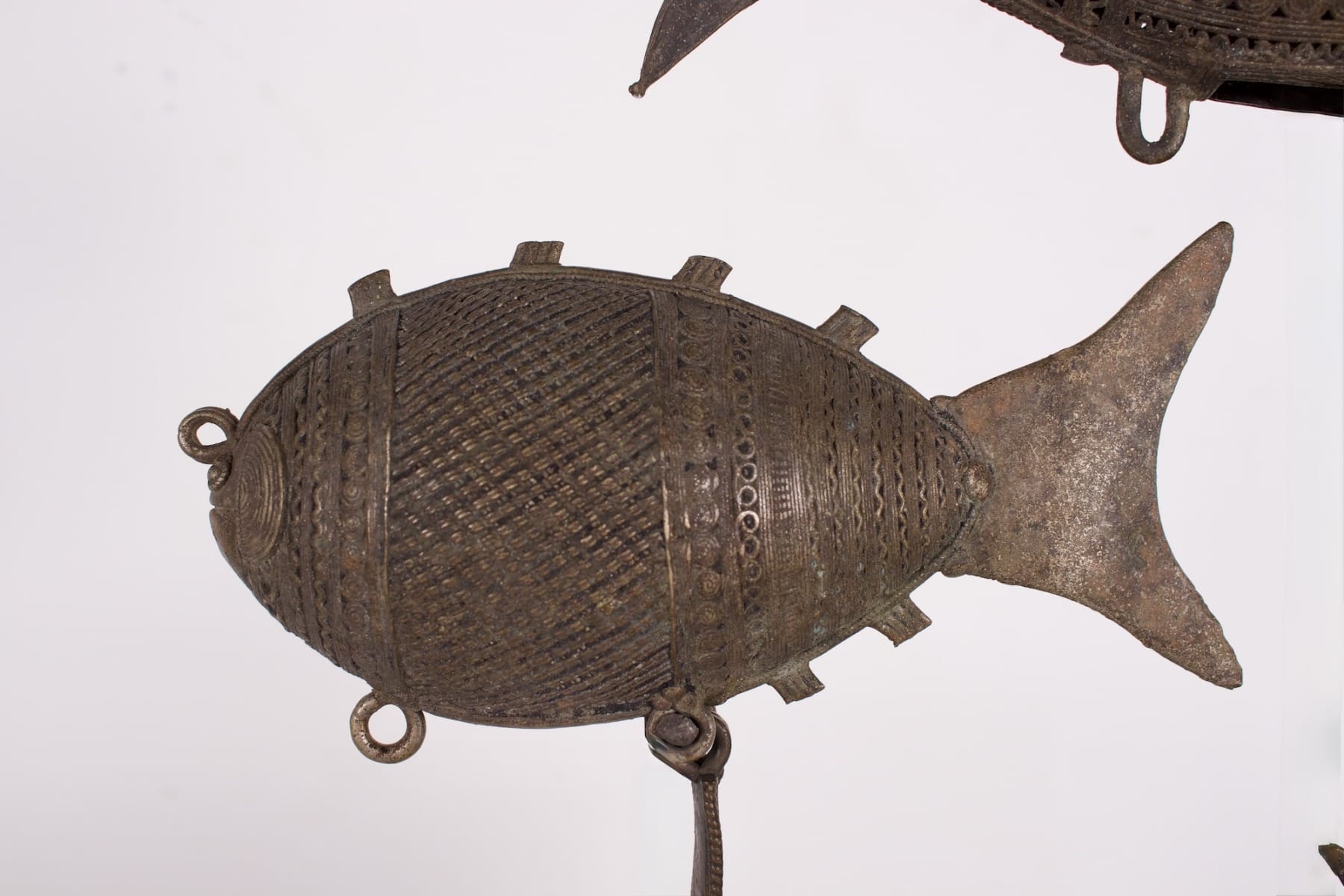
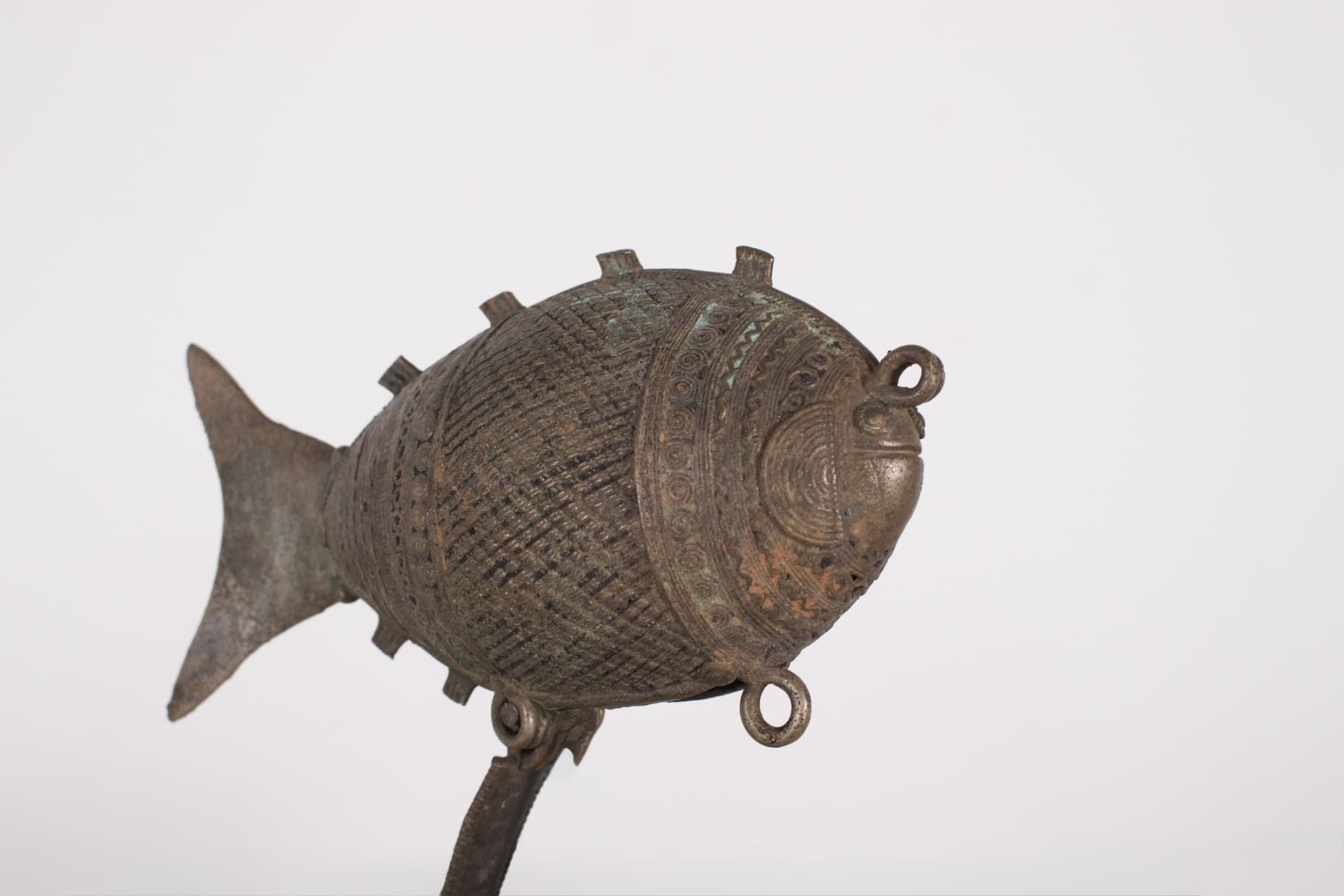
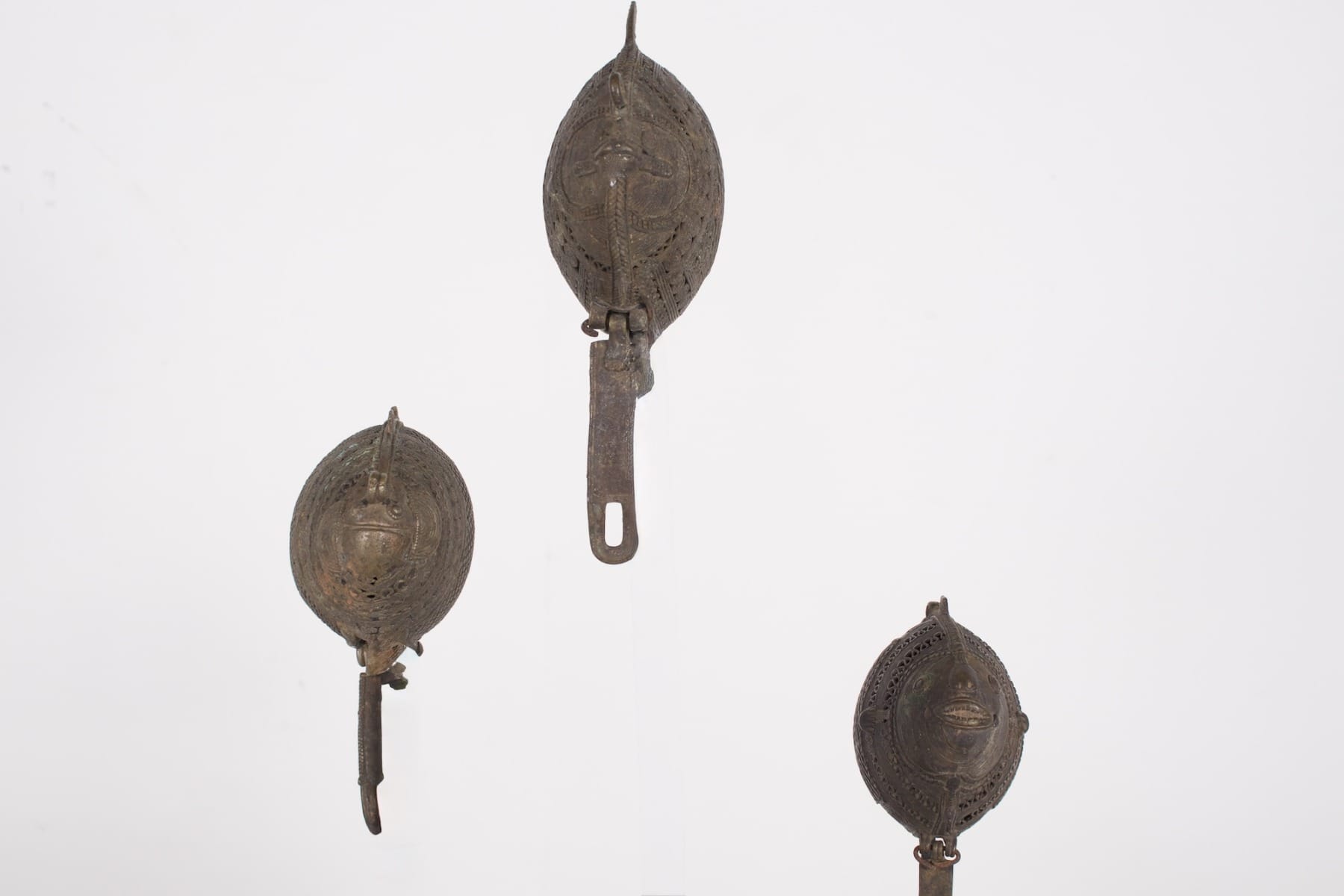
Each of the three fish presents a different design: more or less elongated bodies, triangular tails, stylised fins, crossed latticework, spirals, and decorative bands. This variety is characteristic of Dhokra work, each object being modelled individually before casting and thus retaining its own irregularities.
Dhokra fish-shaped coin boxes
The function of these objects is documented by several Indian collections. The Odisha State Museum notably holds a fish shaped Dhokra coin box, a Dhokra fish-shaped coin box, found at Badamba in the Narasimhapur area, and dated to the 19th century.

Badamba, in the Narasimhapur area of Odisha, is noted as the findspot of a 19th-century Dhokra fish-shaped coin box held by the Odisha State Museum.
More broadly, these objects may have belonged to the family of small domestic containers. In traditional Indian arts, metal boxes were used to store coins, small items, or products associated with betel consumption. The fish form thus appears across different categories of boxes and containers.
Despite their many openings, these fish are not cricket cages. This identification, sometimes proposed for perforated Asian objects, aligns poorly with known Indian comparisons. Their construction and opening system relate them far more directly to Dhokra fish boxes preserved in museum collections.
Decoration specific to the Dhokra technique
The openwork decoration is intimately linked to the manufacturing process. In traditional Dhokra casting, the artisan shapes a clay core and then covers it with wax or resin worked into fine cords. These form the crosspieces, spirals, and lines that will later appear in the metal. The whole is covered with clay, heated to evacuate the wax, then filled with molten metal.
The Philadelphia Museum of Art holds several fish-shaped containers made using this technique and precisely describes this principle of cords of waxy material arranged around a clay core. The latticework that characterises these three fish is therefore not a simple pierced ornament: it results directly from their manufacturing process.
Dhokra has a long tradition in Odisha, Bengal, and several regions of central and eastern India. Artisans developed a broad repertoire of animals, religious figures, and domestic objects, with the fish as one of their recurring motifs.
These three Dhokra fish boxes come from the former Claude de Marteau collection; they form a particularly decorative ensemble representative of India’s popular metal arts. A date around the late 19th or early 20th century appears consistent with comparable examples now held in museum collections.
You might also like…


Discover also...


Delivery to Belgium

Delivery to France

Delivery to Luxembourg
