




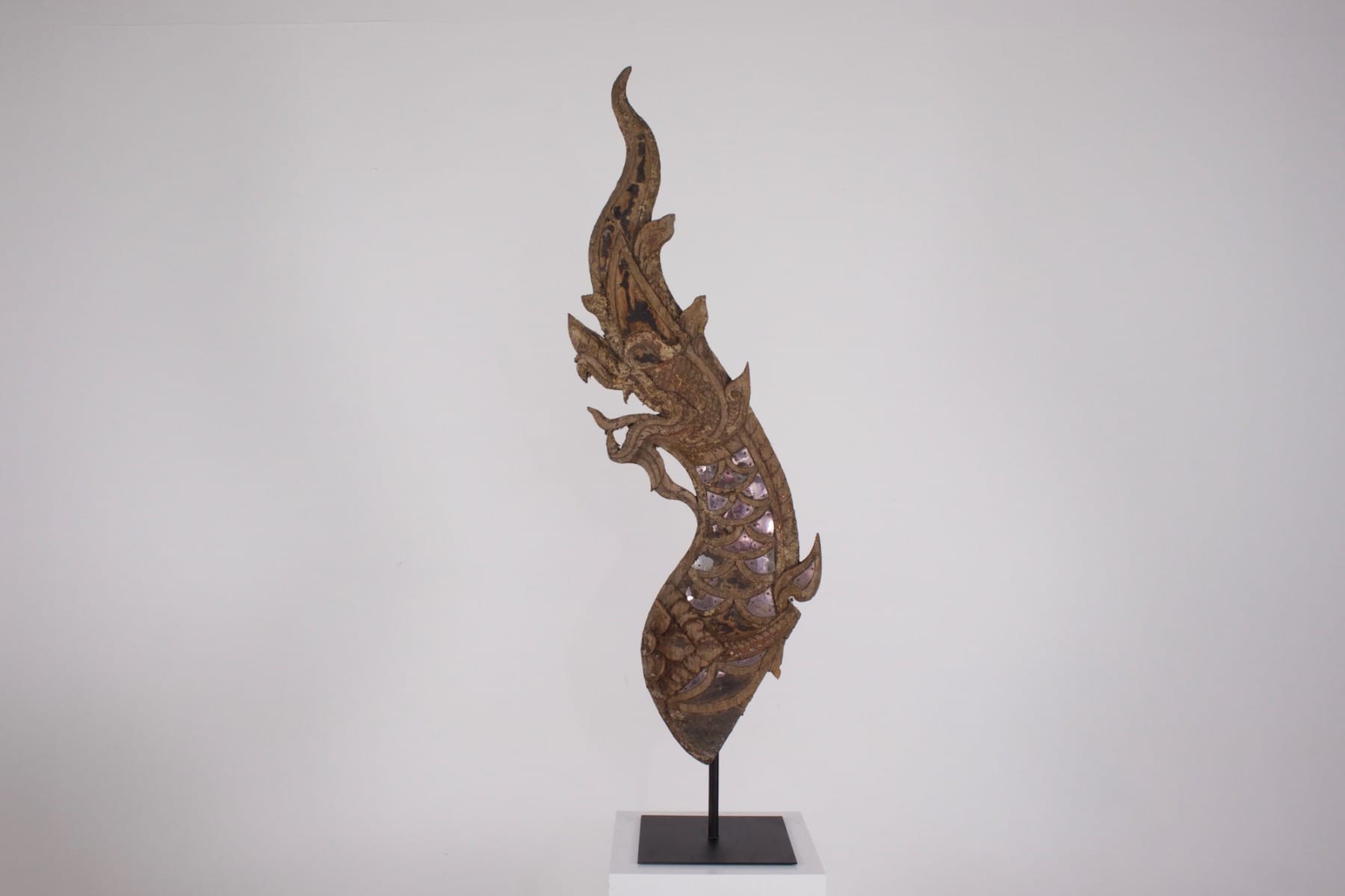



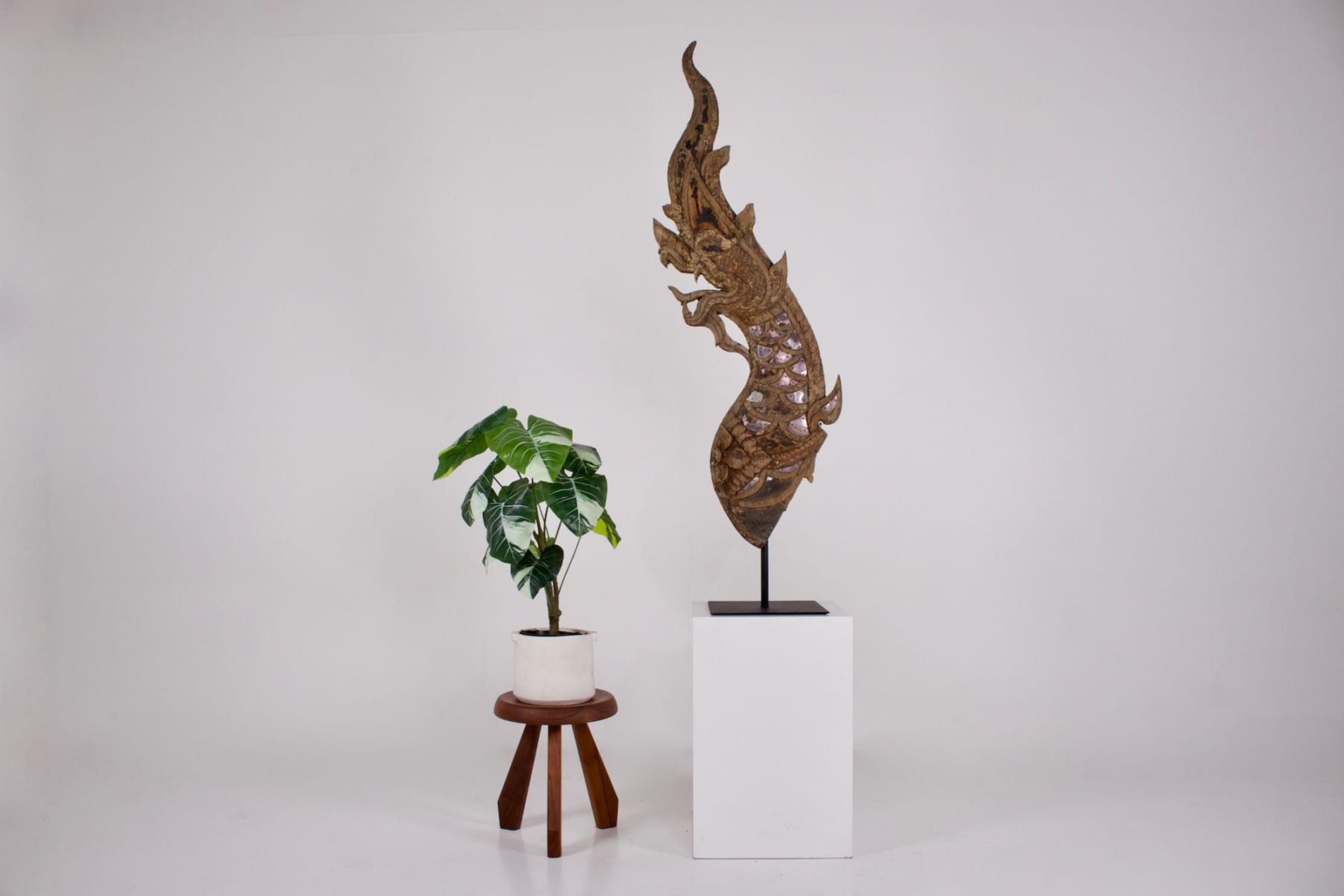
Hang Hong Naga Makara architectural ornament – Thailand
€950,00
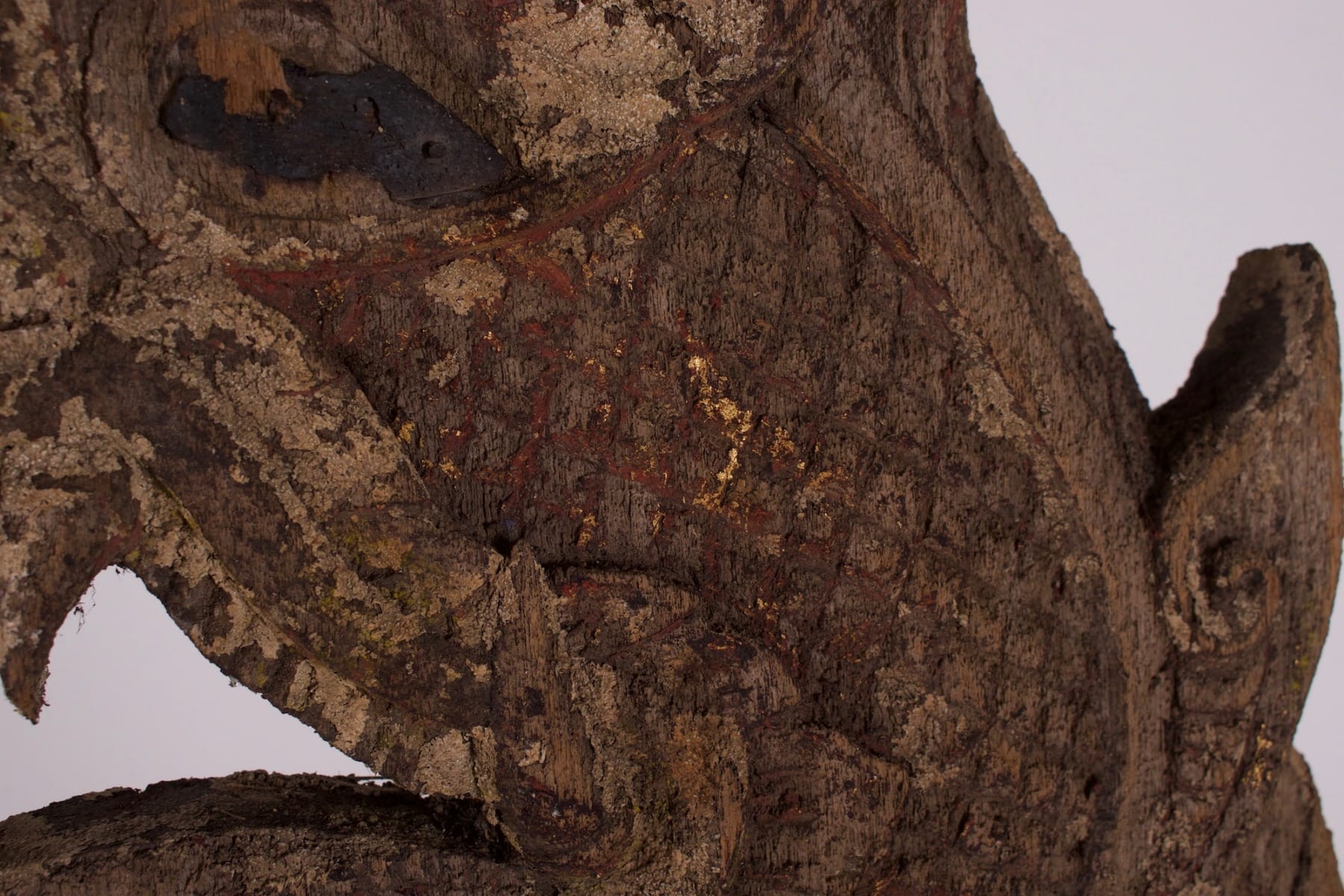
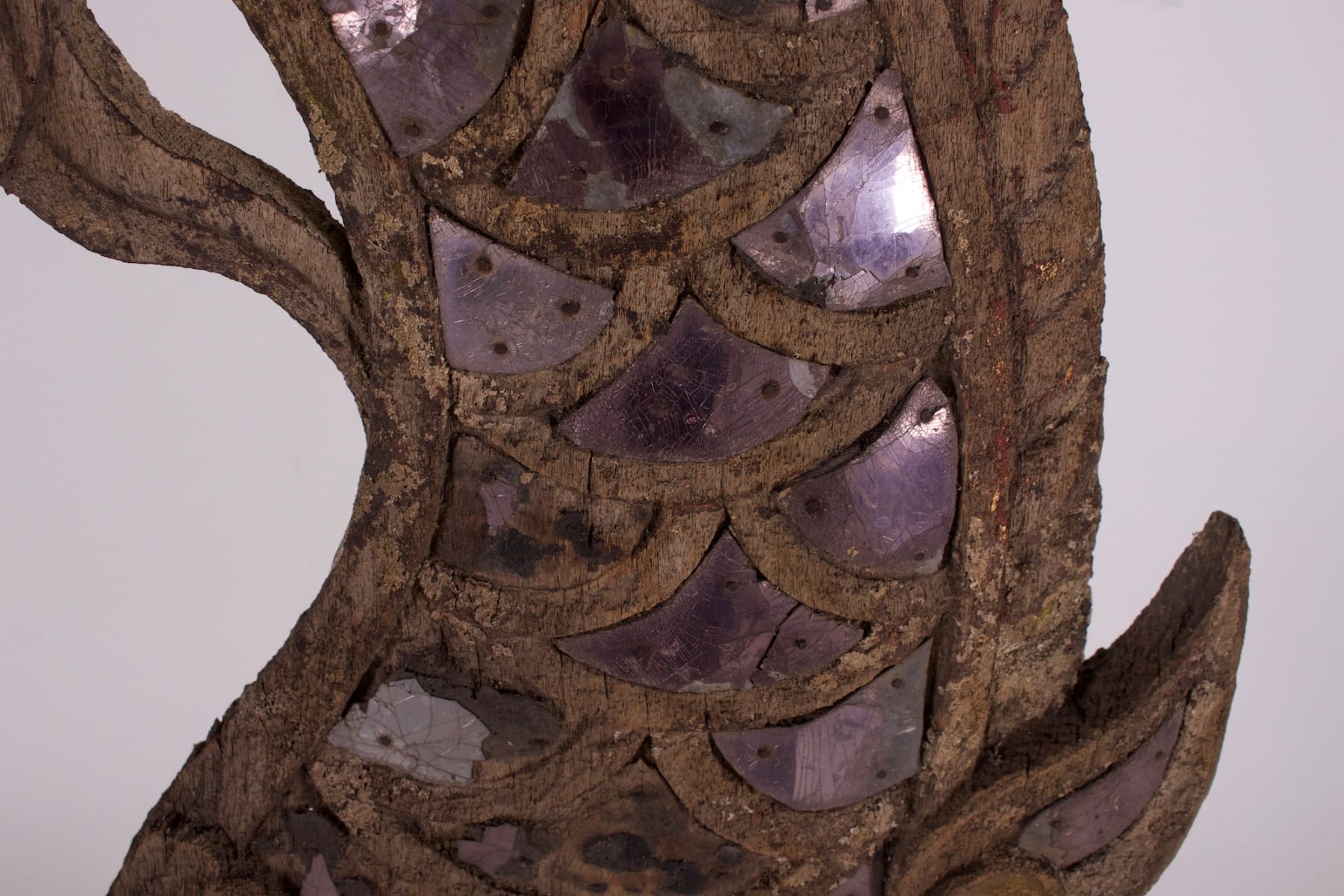
- Hang Hong Naga, a sacred and protective decorative element of a Buddhist temple. Carved wood with remnants of polychromy and mica inlays.
- Positioned along the roof edge, complementing the chofa set on the ridge in Thai religious architecture.
- Kingdom of Siam, lateAyutthaya period (late XVIIIᵉ century).
- Located at the lateral ends of temple roofs (lower edges of gables or lateral rafters), generally below the chofa.
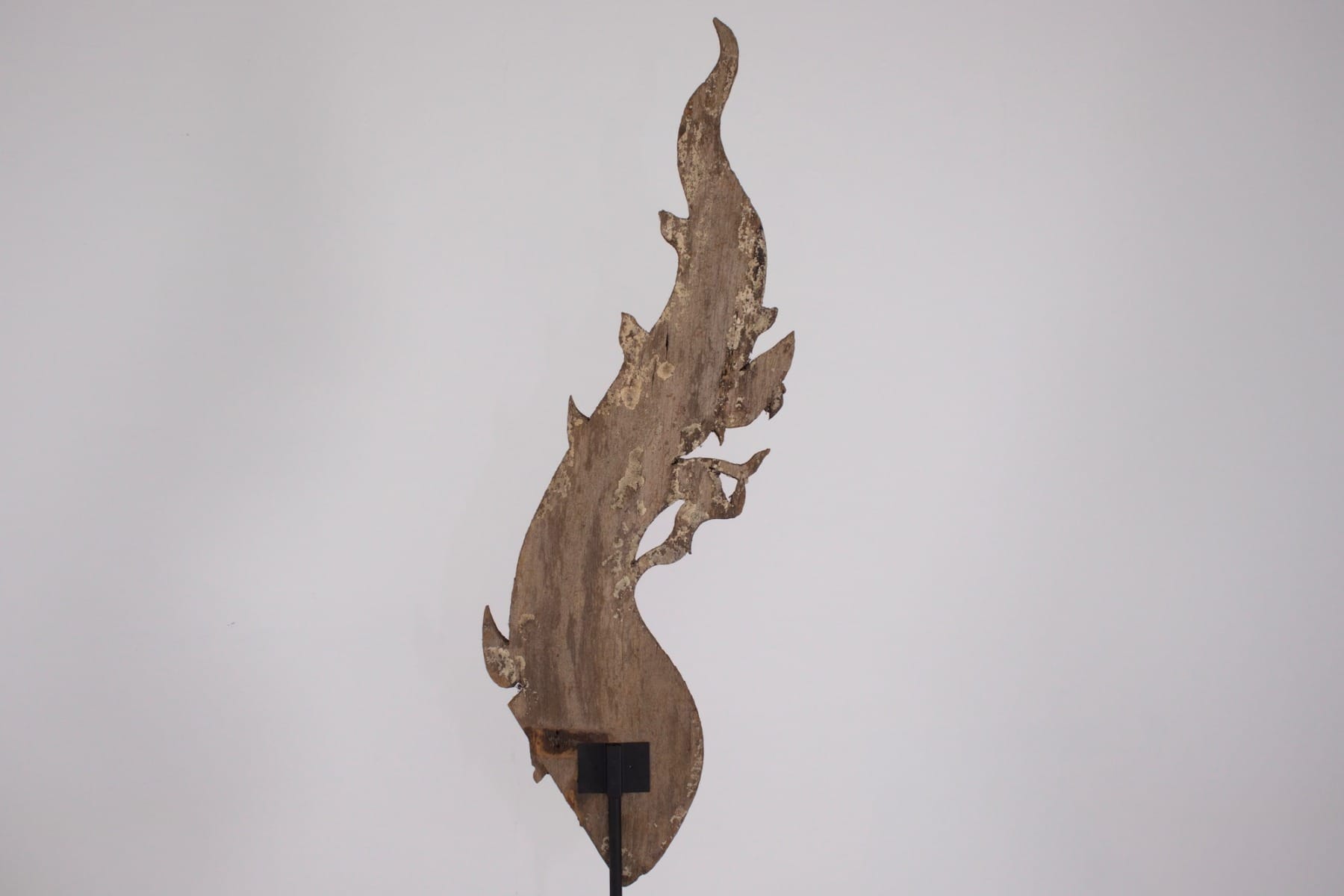
- The Hang Hong is carved in bas-relief, while the chofa is carved in the round.
- Provenance: estate of the collector Claude de Marteau.
- Sold with certificate of origin.
- Dimensions: H 154 cm × W 50 cm (base included).
- Woodwork only: H 140 cm.
1 available in store

Hang Hong: a Thai architectural ornament combining Naga and Makara
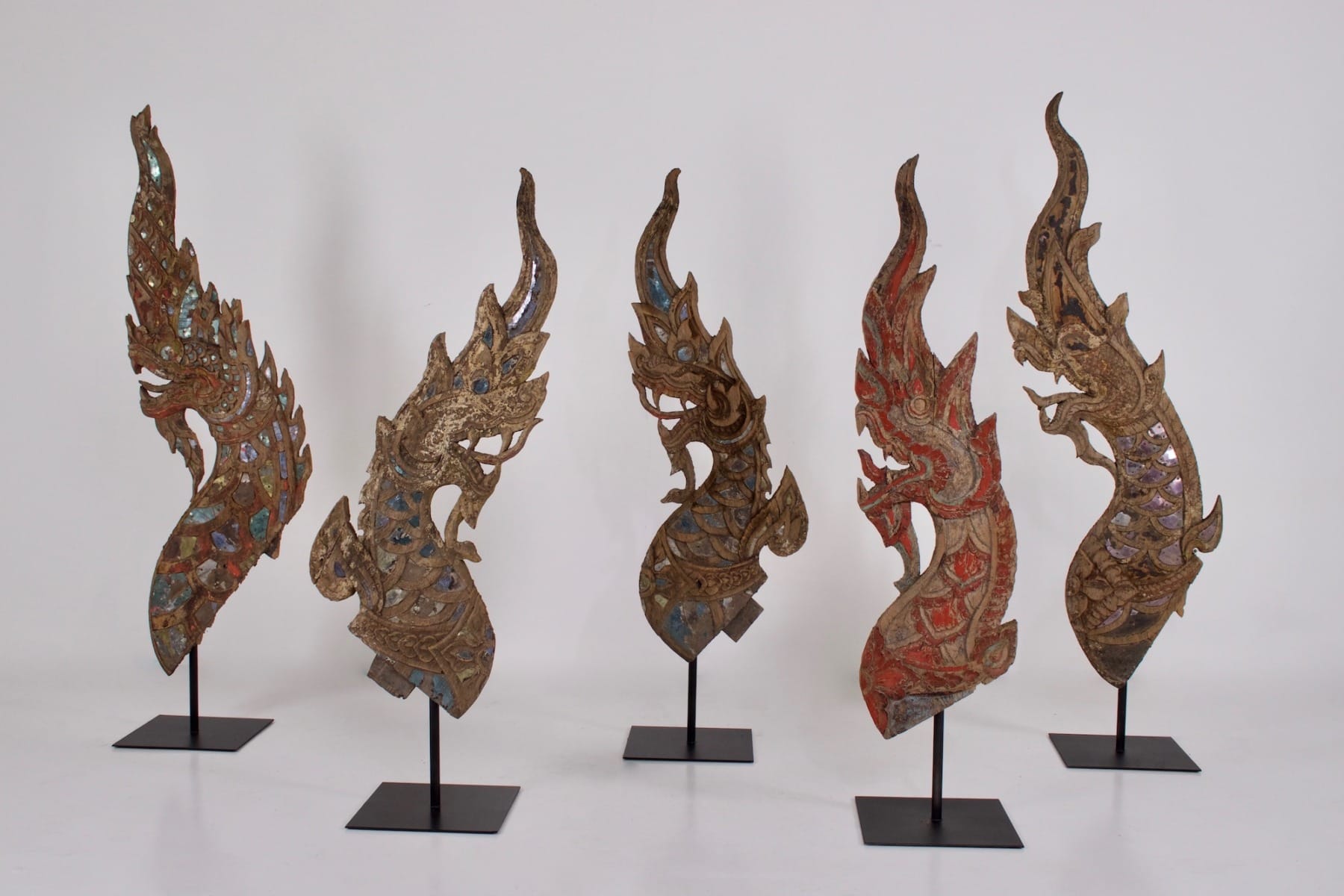
This antique Thai sculpture is a Hang Hong, a carved element of Thai religious architecture, placed laterally along temple roofs. It differs from the chofa, located at the top of the gables, by its position and decorative function.
The Hang Hong generally combines two major figures from the symbolic bestiary of Southeast Asia: the Naga, a mythical serpent associated with water and protection, and the Makara, a composite creature of Indian origin, often interpreted as an aquatic monster. This combination gives rise to a dynamic form, both protective and ornamental.
Photographs from the archives of Claude de Marteau make it possible to clearly observe this typological distinction as well as the diversity of formal interpretations of these elements. They also document their presence in traditional architecture and their preservation in collections. This antique Thai sculpture belongs to this coherent body of production.

Difference between Hang Hong (lateral) and Chofa (apex)
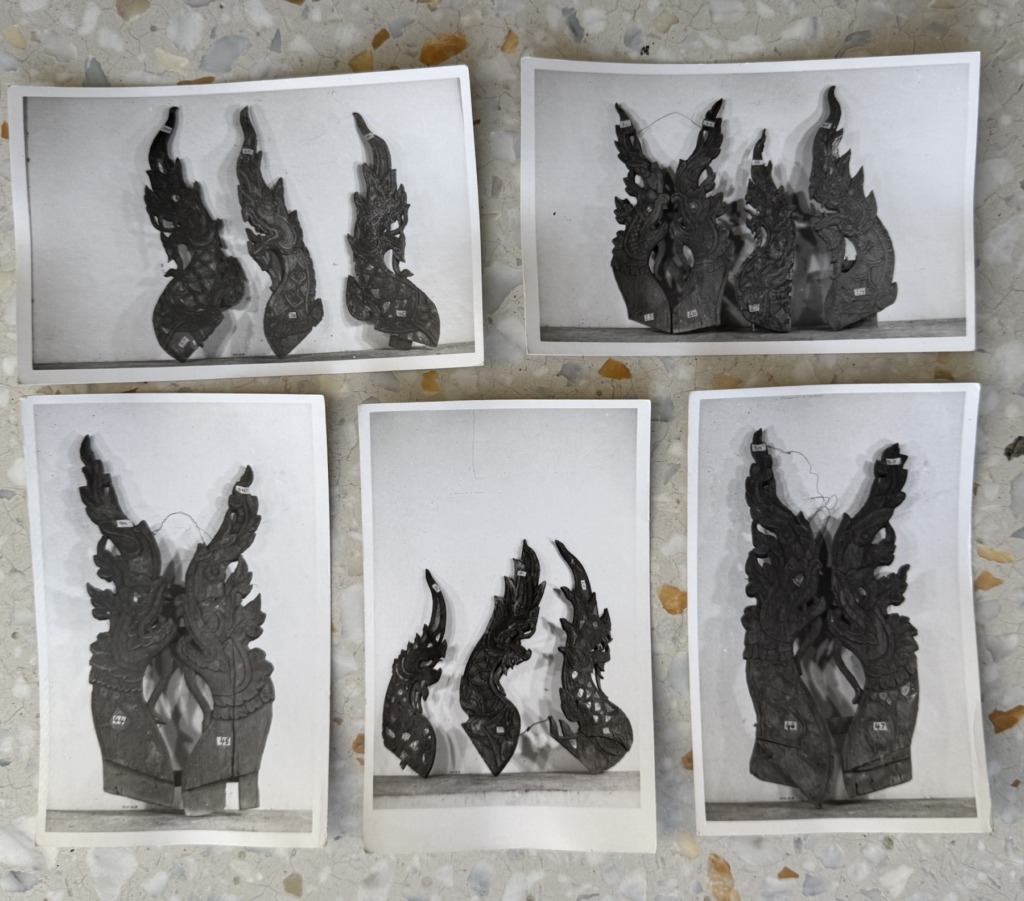
Archive photographs of Hang Hong from the Claude de Marteau collection
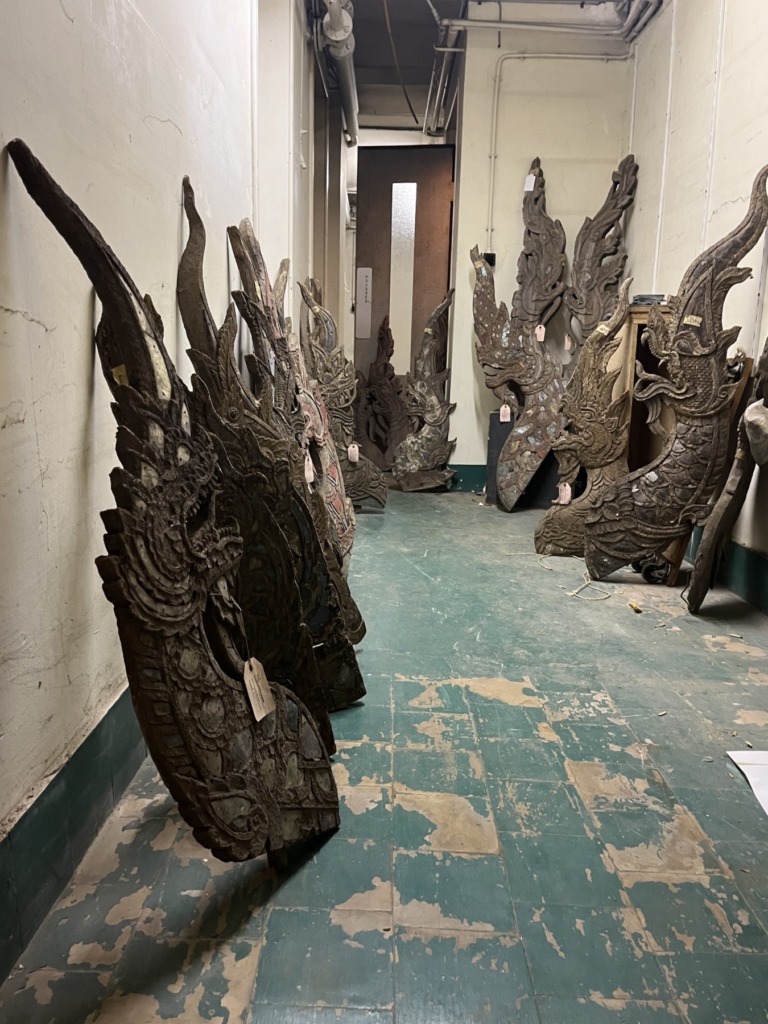
Examples of Hang Hong preserved in the Claude de Marteau collection
You might also like…


Discover also...


Delivery to Belgium

Delivery to France

Delivery to Luxembourg
