





Bronze Buddha Statue, Burma, 19th Century
€900,00
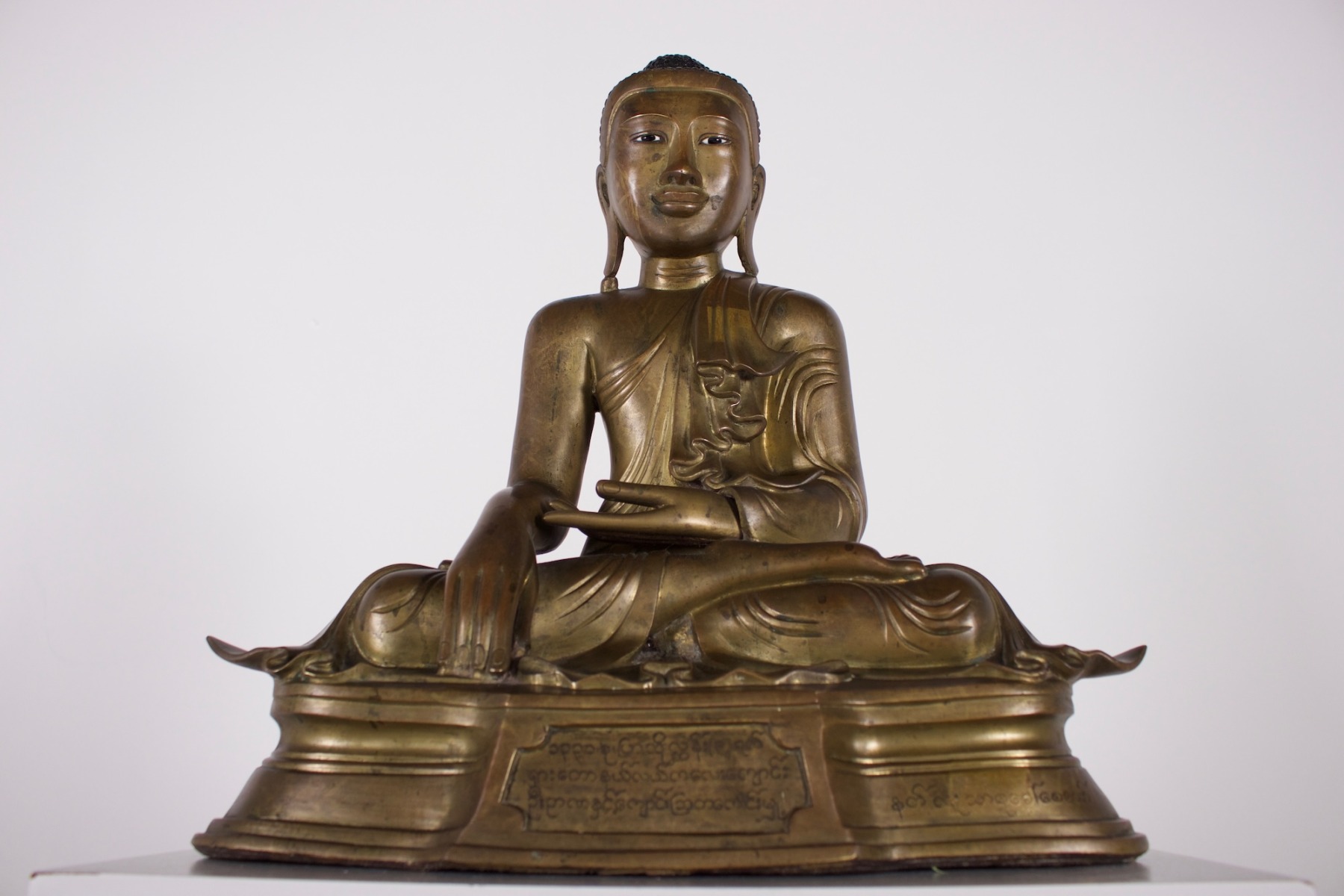
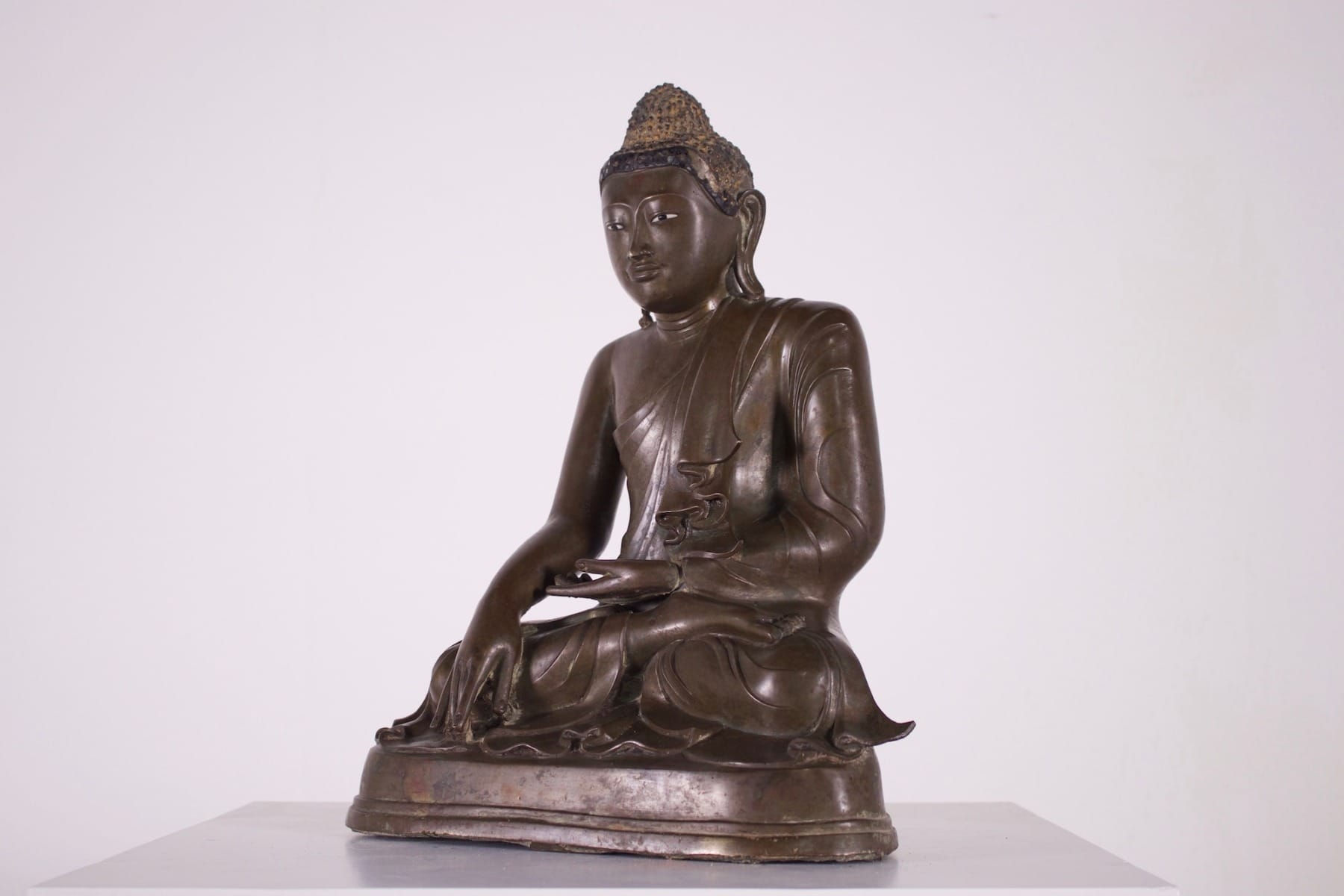
Antique bronze Buddha statue with a gilded patina, from Burma (Myanmar), depicting Shakyamuni Maravijaya seated in the lotus position. His right hand touches the earth (bhumisparsha mudra), calling the Earth goddess to witness his victory over Mara and his attainment of enlightenment. Last quarter of the 19th century, closely comparable to this other Buddha figure currently available
- A section is missing from the rear of the sculpture’s base, with no effect on its stability. The price reflects this.
- H 41 cm x W 33 cm x D 19 cm
- Weight: 10.040 kg
- Provenance: Former Claude de Marteau collection – Sold with a certificate.

Pigments and gilding in the Burmese Buddhist tradition
Traces of yellow pigment remain in the recesses of this Burmese bronze Buddha. Their presence may be linked to devotional practices specific to Theravāda Buddhism. In Burma, Buddha images traditionally receive offerings and ritual care. Applying gold leaf to statues is an act of devotion through which worshippers acquire karmic merit.

Traces of orpiment, known as saydan, in the recesses of the image of Shakyamuni
The devotional application of pigments has also been documented on some ancient bronzes from the Shan States in eastern Burma, whose recesses sometimes also retain traces of vermilion.
Among the mineral pigments traditionally used in Burma is orpiment, known as saydan, recognizable by its golden-yellow, sometimes orange color and its powdery or slightly crystalline appearance. A scientific study published in 2019 in the journal Heritage Science documents its use in Burmese decorative techniques, particularly lacquerwork.

These yellow residues could also be remnants of a preparatory layer for gilding. The use of lacquer to bind gold leaf to Burmese bronzes is documented under the Konbaung dynasty (1752–1885).
Although the exact nature of these pigments cannot be determined without analysis, their presence may reflect both ancient bronze-finishing techniques and this Buddha statue’s devotional history over generations.
Over the years, Claude de Marteau assembled a number of these Burmese bronze statues. Although they may all appear similar at first glance, each has its own distinctive features, like this one and its traces of yellow pigment, whose presence may be explained by the practices described above. This was precisely one of Claude de Marteau’s strengths: known for his keen eye, he could look beyond apparent similarities and discern the detail that gives each piece its own character.
You might also like…

Discover also...


Delivery to Belgium

Delivery to France

Delivery to Luxembourg
