The BIC ballpoint pen celebrates its 75th anniversary
Home ” Newspaper ” The BIC ballpoint pen celebrates its 75th anniversary
From the BIC Cristal to a universal industrial object
The BIC Cristal, which has become one of the most widely distributed objects in industrial history, originated from a simple observation. In the early 1930s, on a street in Budapest, an ordinary scene caught the attention of a passerby. Children were rolling marbles in a puddle left by the rain. With each movement, the spheres drew a thin, fleeting line on the water. This detail, insignificant to most, sparked an unexpected association of ideas for this man.
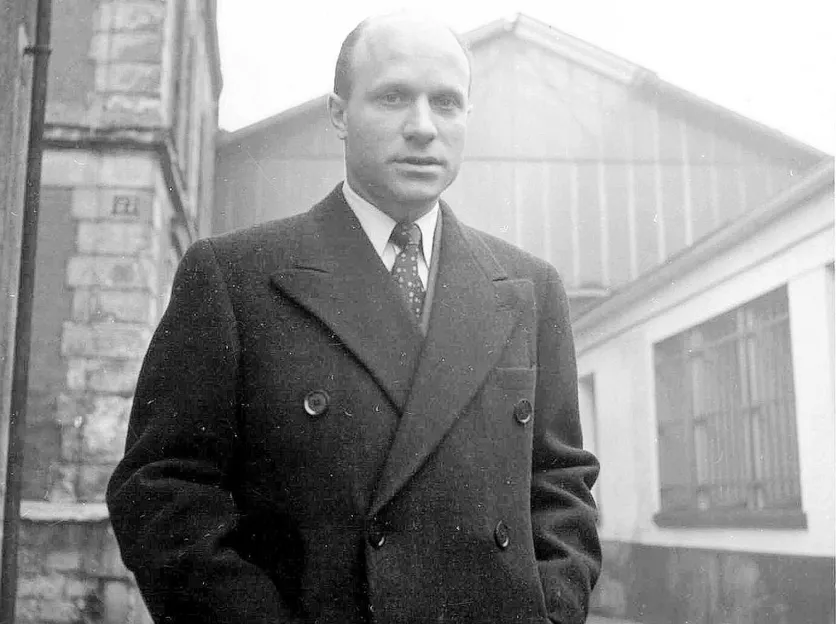
His name was László József Bíró. He wondered whether this rolling principle could solve a well-known problem: that of ink that runs, stains or dries badly.
Laszlo Biro
From this observation was born the idea that would lead, a few years later, to the BIC Cristal: a writing instrument using a metal ball to deposit ink evenly, without a nib or a fragile reservoir. Bíró called upon his brother György, a chemist. Together, they had to solve two major challenges: developing an ink thick enough not to leak, yet fluid enough to flow, and designing a housing that allowed the ball to rotate freely without jamming.
In 1931, a first prototype was presented at an international exhibition in Budapest. In 1938, the principle was patented. Despite this, the invention remained costly, technically delicate and without any real commercial outlet.
World War II turned their lives upside down. Forced to leave Europe, the brothers settled in Argentina, where they resumed their research in a modest workshop. The pen worked, but its price held back mass adoption.
The turning point came when the British Air Force tested the object. At high altitudes, where fountain pens became unusable, the ball mechanism remained reliable. For pilots, it was a practical solution. This technical success paved the way for a first strategic market. In 1943, the rights to the invention were sold to the United States for a considerable sum. A few years later, a French industrialist entered the scene. Marcel Bich bought the patent, simplified his name for commercial reasons, and launched standardized industrial production in 1950. The BIC Cristal was born. Its hexagonal shape, transparent body, and efficiency made it an object that was economical, reliable, and immediately recognizable.
Marcel Bich
Since then, more than 100 billion units have been produced. Millions are manufactured every day, and the original design has evolved very little. The BIC Cristal has become one of the most widely distributed objects in industrial history.
In 2025–2026, to mark the 75th anniversary of the BIC Cristal, the brand has chosen to celebrate this longevity with an unexpected reinterpretation: the creation of a lamp directly inspired by the pen. Presented at major international design events, this piece transforms the writing instrument into a lighting object.
Designed in collaboration with Seletti, this lamp faithfully reproduces the silhouette of the BIC Cristal, enlarged to a grand scale. The transparent body becomes a light diffuser, while the cartridge is replaced by an LED tube. The piece is available in several configurations—floor lamp, pendant, or wall sconce—and offered in the three historic colors of the pen: blue, red, and black.
Beyond the spectacular effect, this transformation highlights the strength of the original design. Without changing its essential codes, the BIC Cristal changes function and enters the field of interior design, proving that an object designed for the simplest use can transcend time and disciplines.
It all started with a marble rolling in a puddle.
The rest is design history.
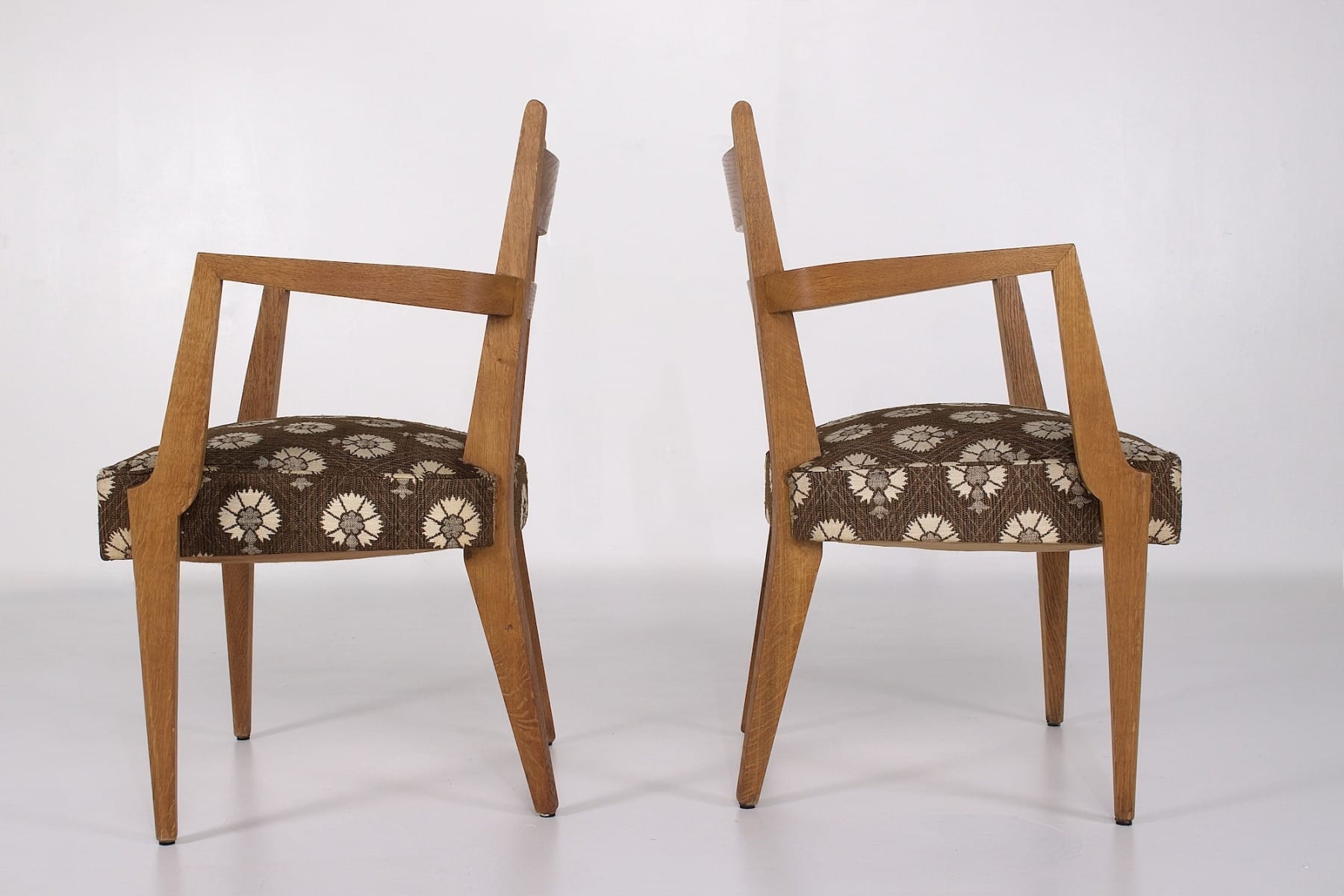
This transformation from a simple utilitarian object to a design piece illustrates how certain everyday items can, over time, enter the realm of collectibles and design history—much like many lighting fixtures and furniture pieces that are highly sought after today.
Joseph-André Motte holds a unique place in the renewal of post-war French furniture. However, his career was not limited to furniture design: he was also active in interior architecture, the layout of public facilities, teaching,...
René-Jean Caillette (1919–2004) belongs to that generation of designers who, in the 1950s and 60s, profoundly transformed French furniture. At a time when furnishing still hesitated between decorative tradition and industrial production, he resolutely chose...
In the history of post-war Belgian furniture, Alfred Hendrickx holds a singular place. Today, his name is mainly associated with Belform, its sideboards and credenzas with taut lines, its tables, seating and modular storage systems....
×
1
Product selection
2
Contact information
3
Review information
error: Content is protected !!
Gérer le consentement
Pour offrir les meilleures expériences, nous utilisons des technologies telles que les cookies pour stocker et/ou accéder aux informations des appareils. Le fait de consentir à ces technologies nous permettra de traiter des données telles que le comportement de navigation ou les ID uniques sur ce site. Le fait de ne pas consentir ou de retirer son consentement peut avoir un effet négatif sur certaines caractéristiques et fonctions.
Fonctionnel
Always active
L’accès ou le stockage technique est strictement nécessaire dans la finalité d’intérêt légitime de permettre l’utilisation d’un service spécifique explicitement demandé par l’abonné ou l’utilisateur, ou dans le seul but d’effectuer la transmission d’une communication sur un réseau de communications électroniques.
Préférences
L’accès ou le stockage technique est nécessaire dans la finalité d’intérêt légitime de stocker des préférences qui ne sont pas demandées par l’abonné ou l’internaute.
Statistiques
Le stockage ou l’accès technique qui est utilisé exclusivement à des fins statistiques.Le stockage ou l’accès technique qui est utilisé exclusivement dans des finalités statistiques anonymes. En l’absence d’une assignation à comparaître, d’une conformité volontaire de la part de votre fournisseur d’accès à internet ou d’enregistrements supplémentaires provenant d’une tierce partie, les informations stockées ou extraites à cette seule fin ne peuvent généralement pas être utilisées pour vous identifier.
Marketing
L’accès ou le stockage technique est nécessaire pour créer des profils d’internautes afin d’envoyer des publicités, ou pour suivre l’utilisateur sur un site web ou sur plusieurs sites web ayant des finalités marketing similaires.