





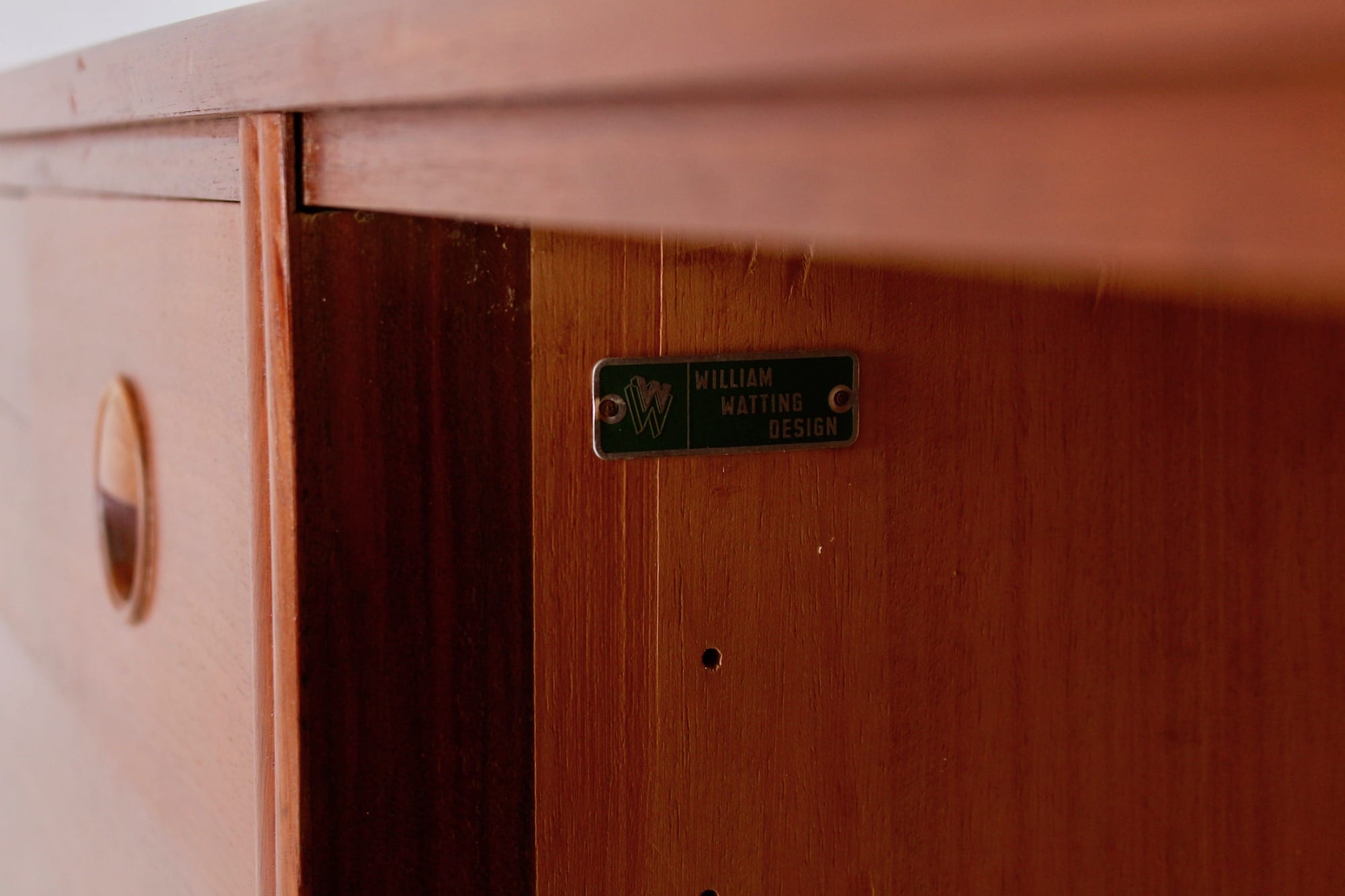
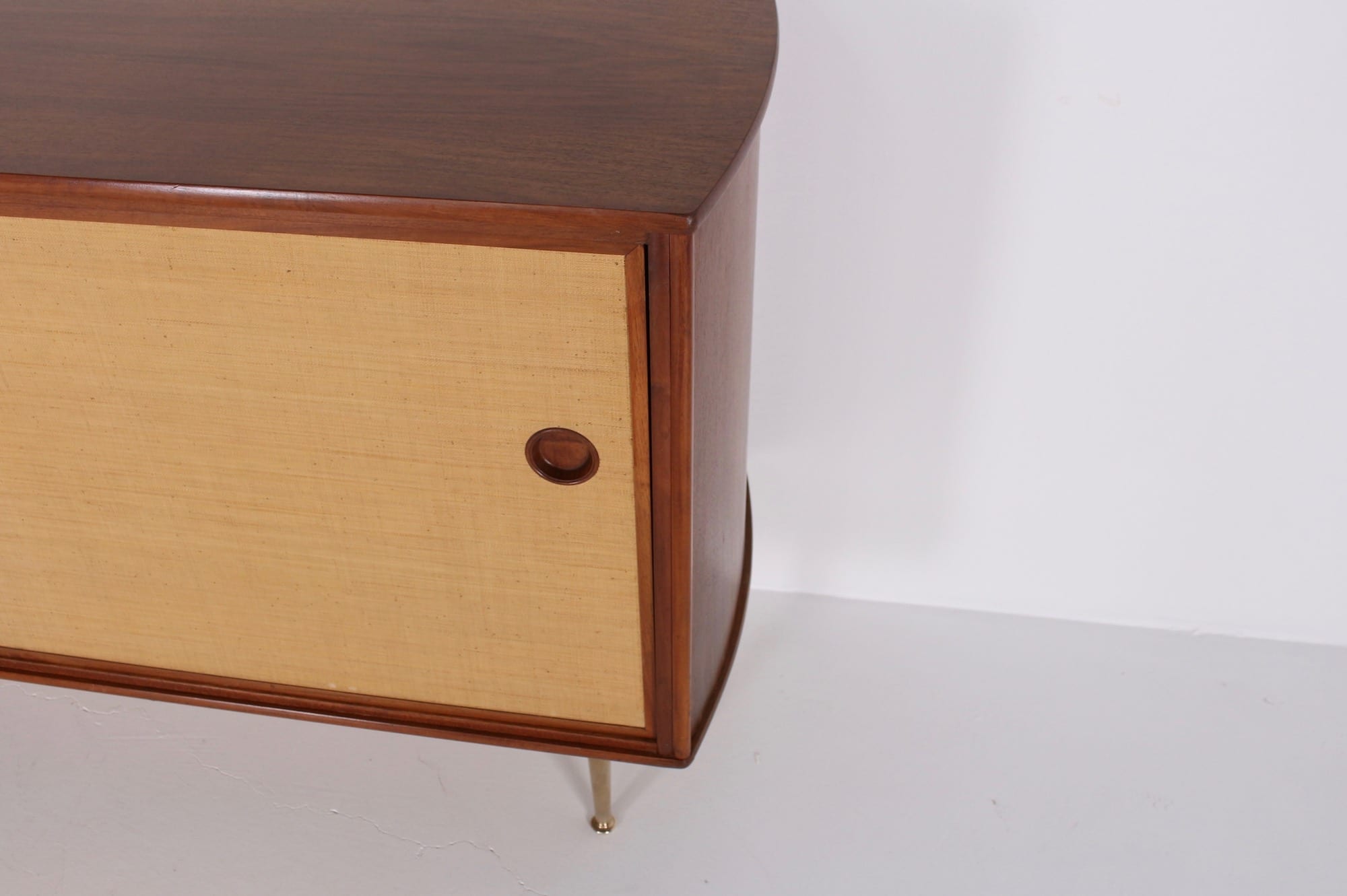
Large William Watting sideboard for Fristho – 1950s
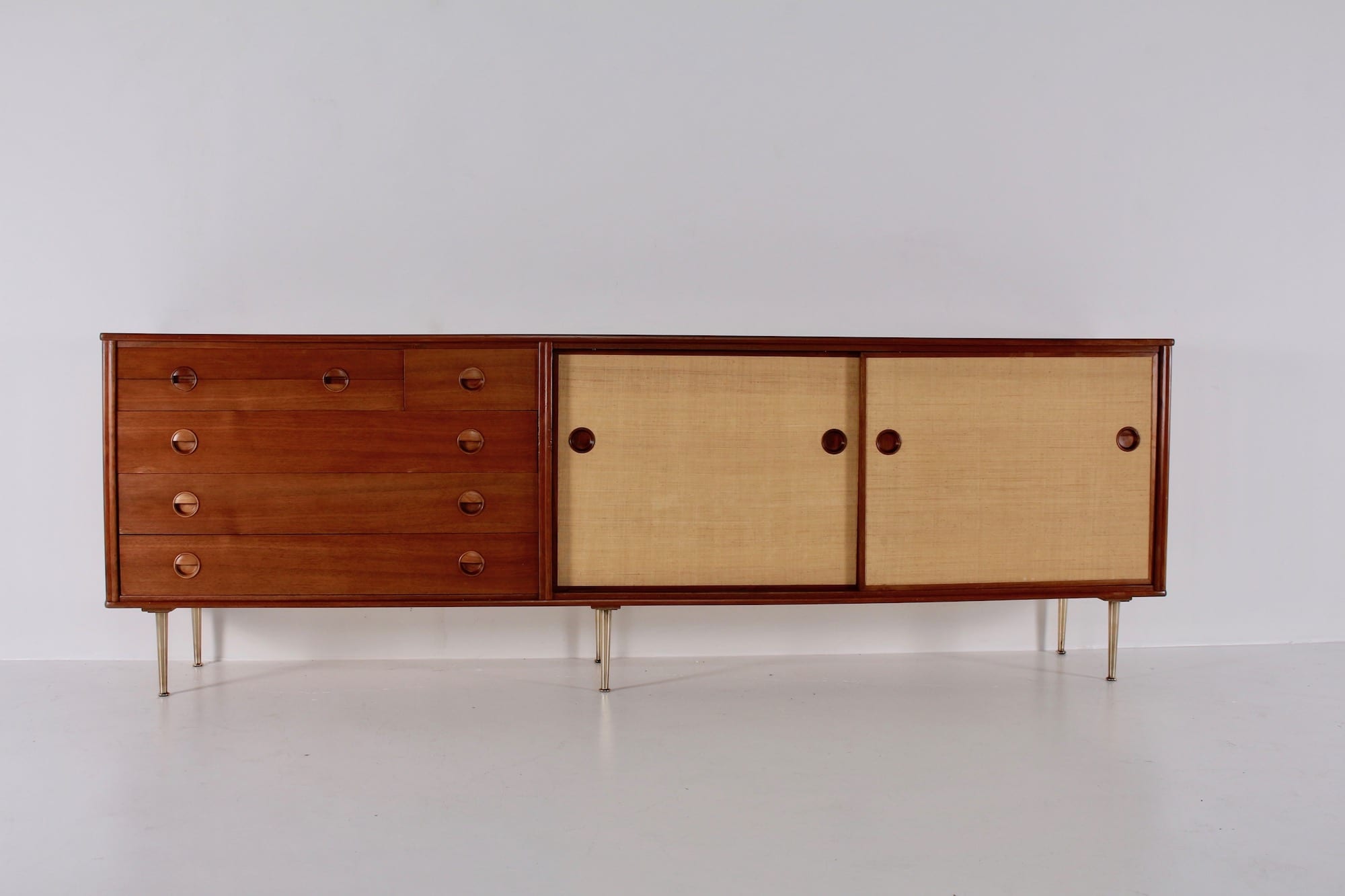
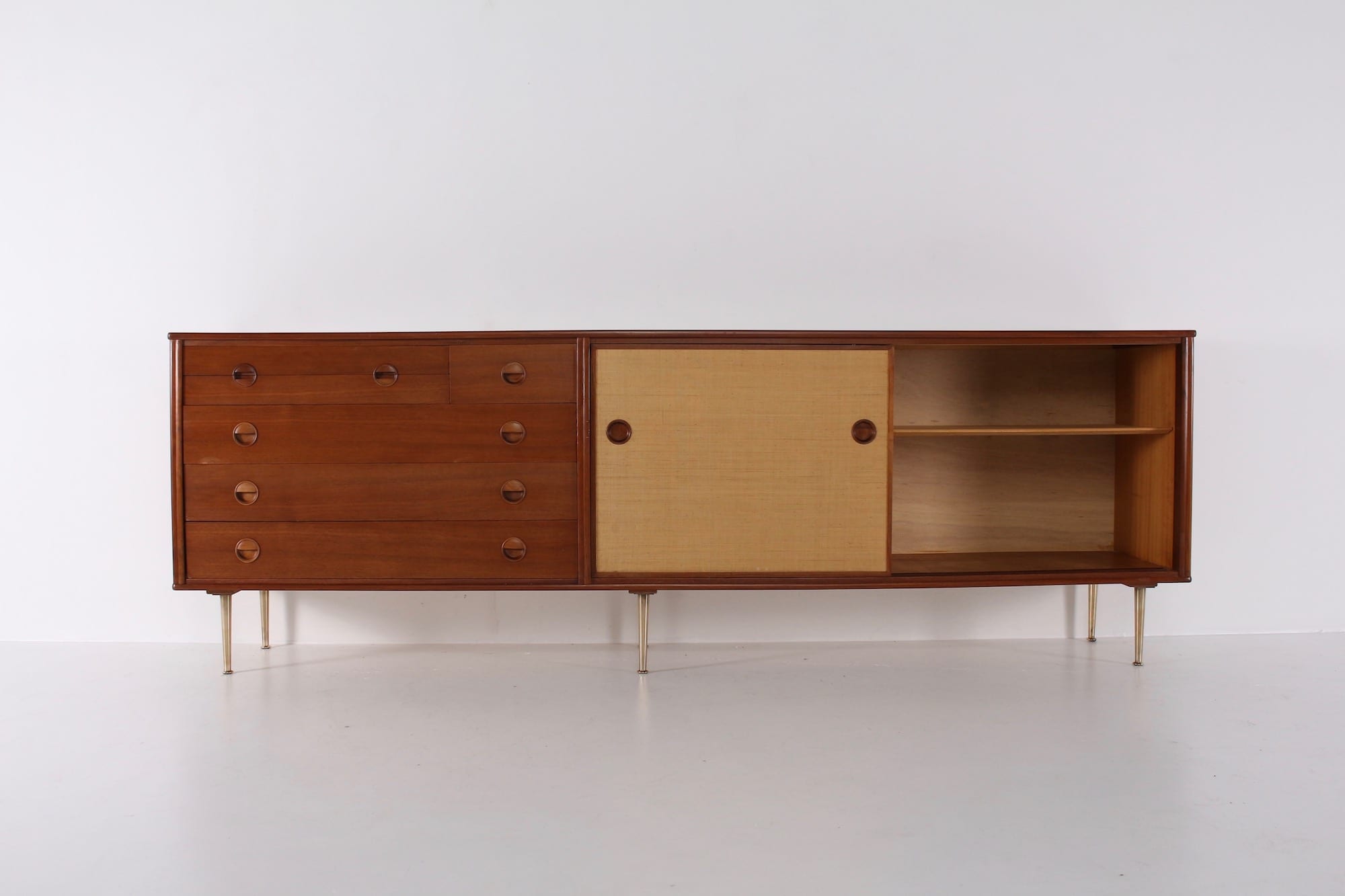
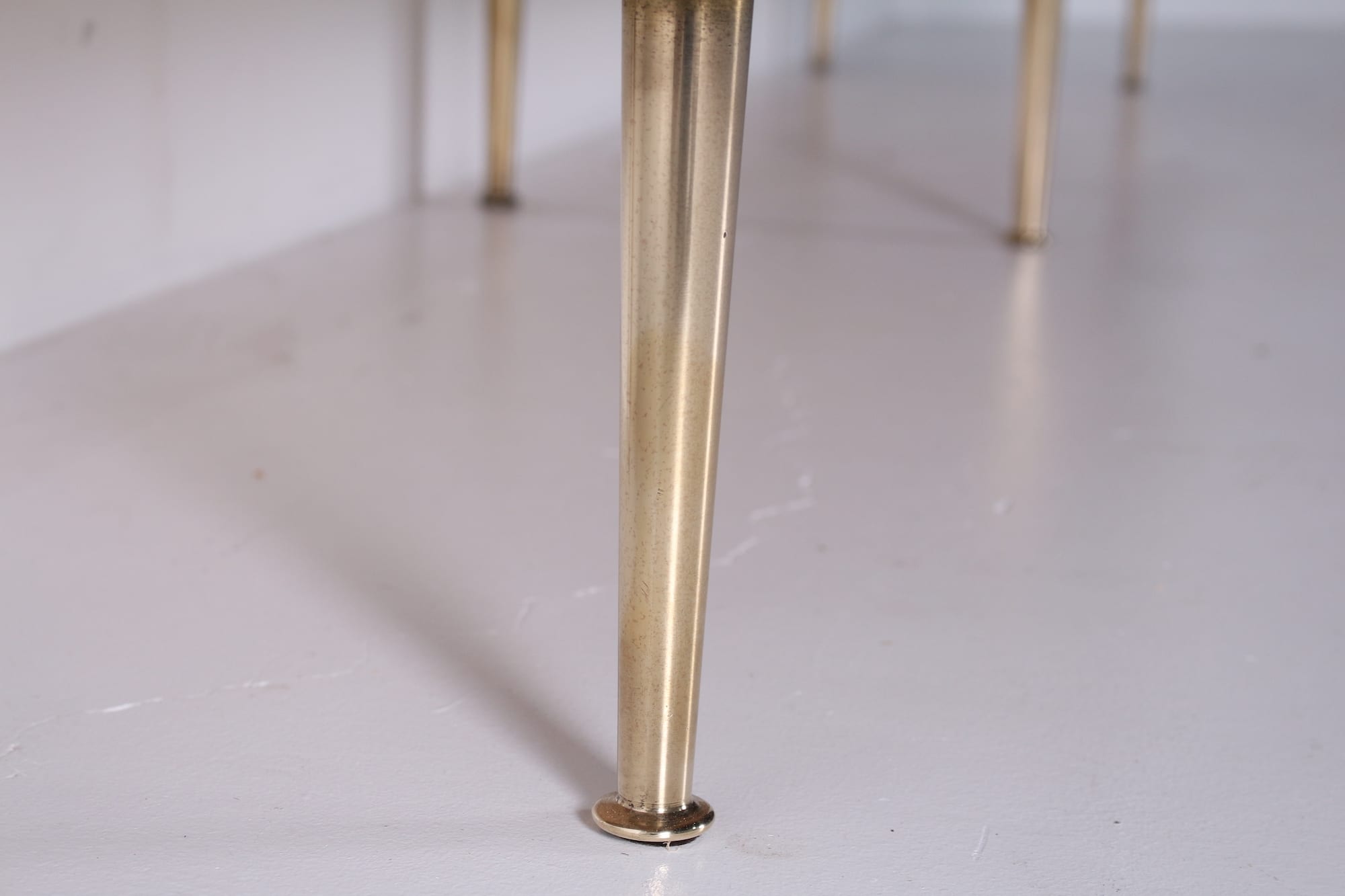
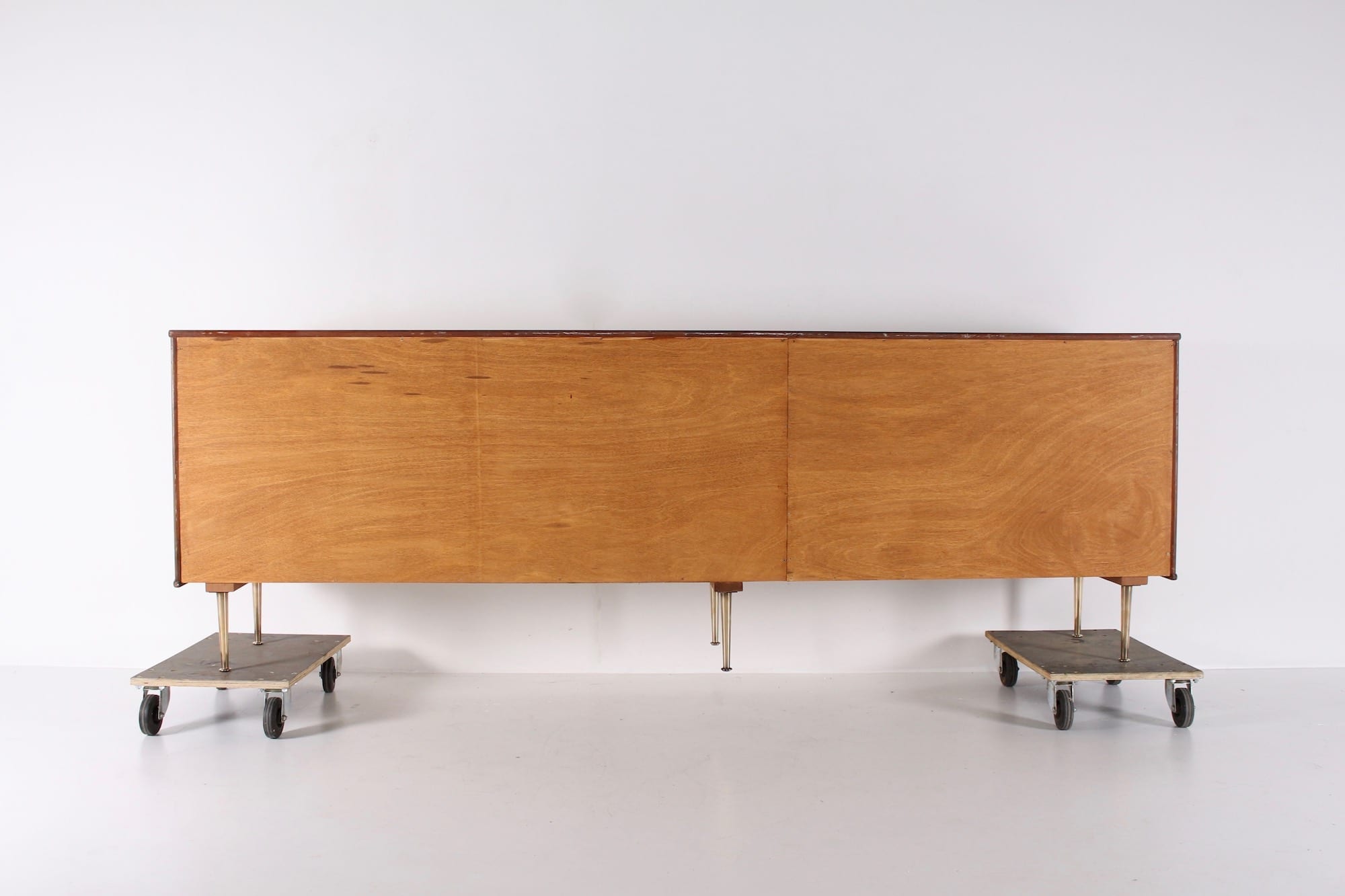
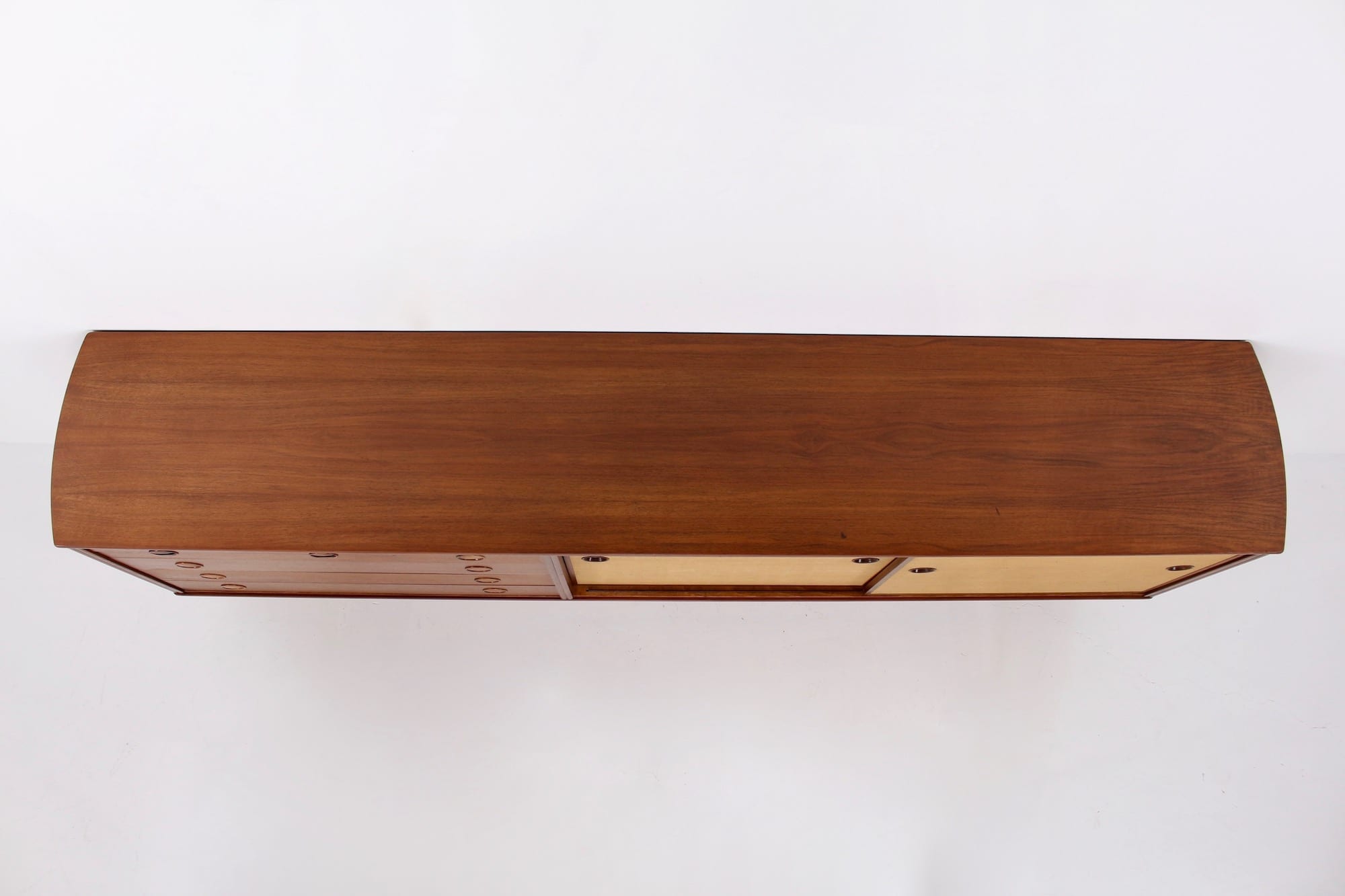
Sideboard designed by William Watting for Fristho, Netherlands, circa 1960. Teak structure, sliding doors laminated with raffia or wicker veneer, solid brass legs.
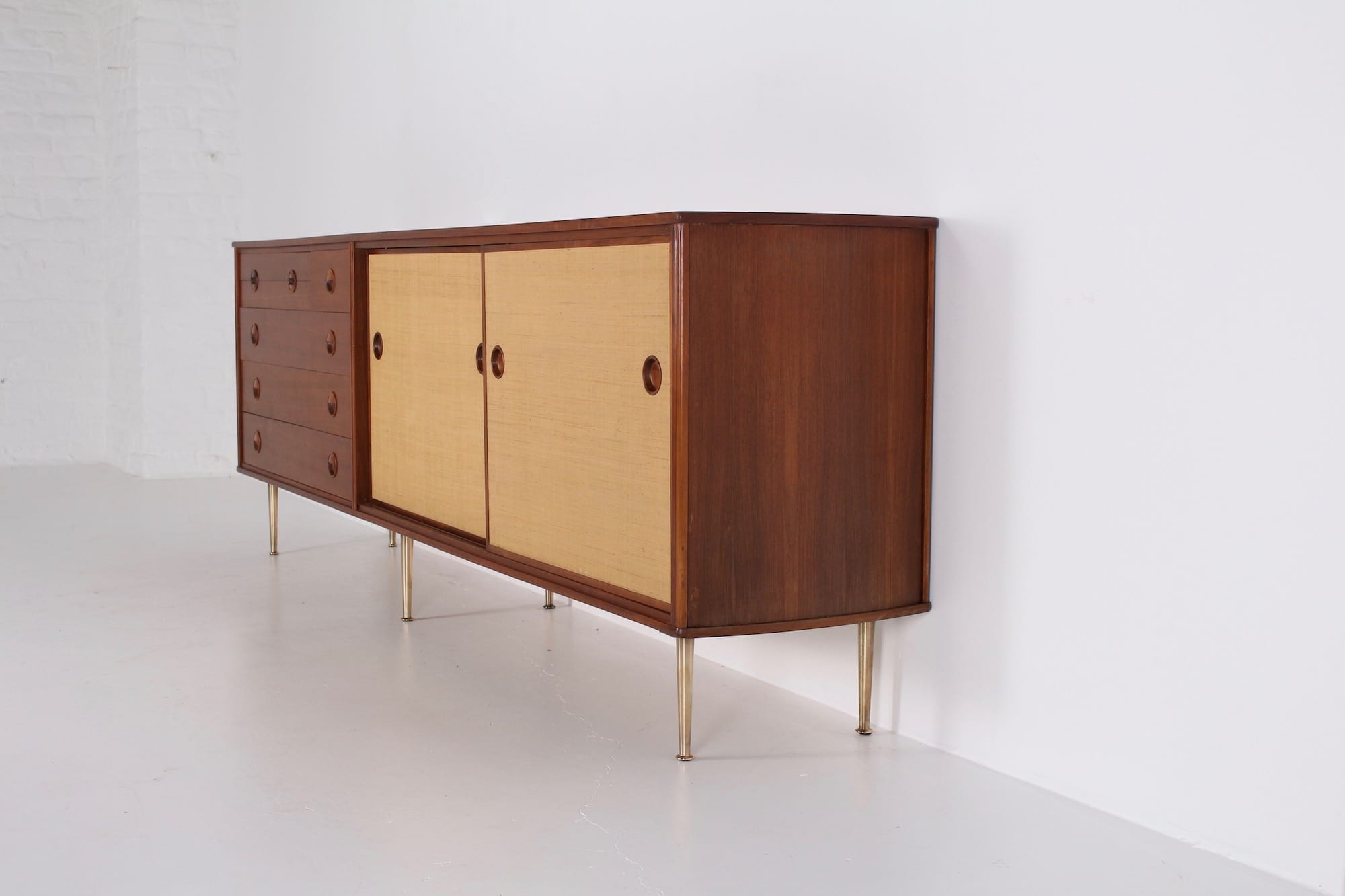
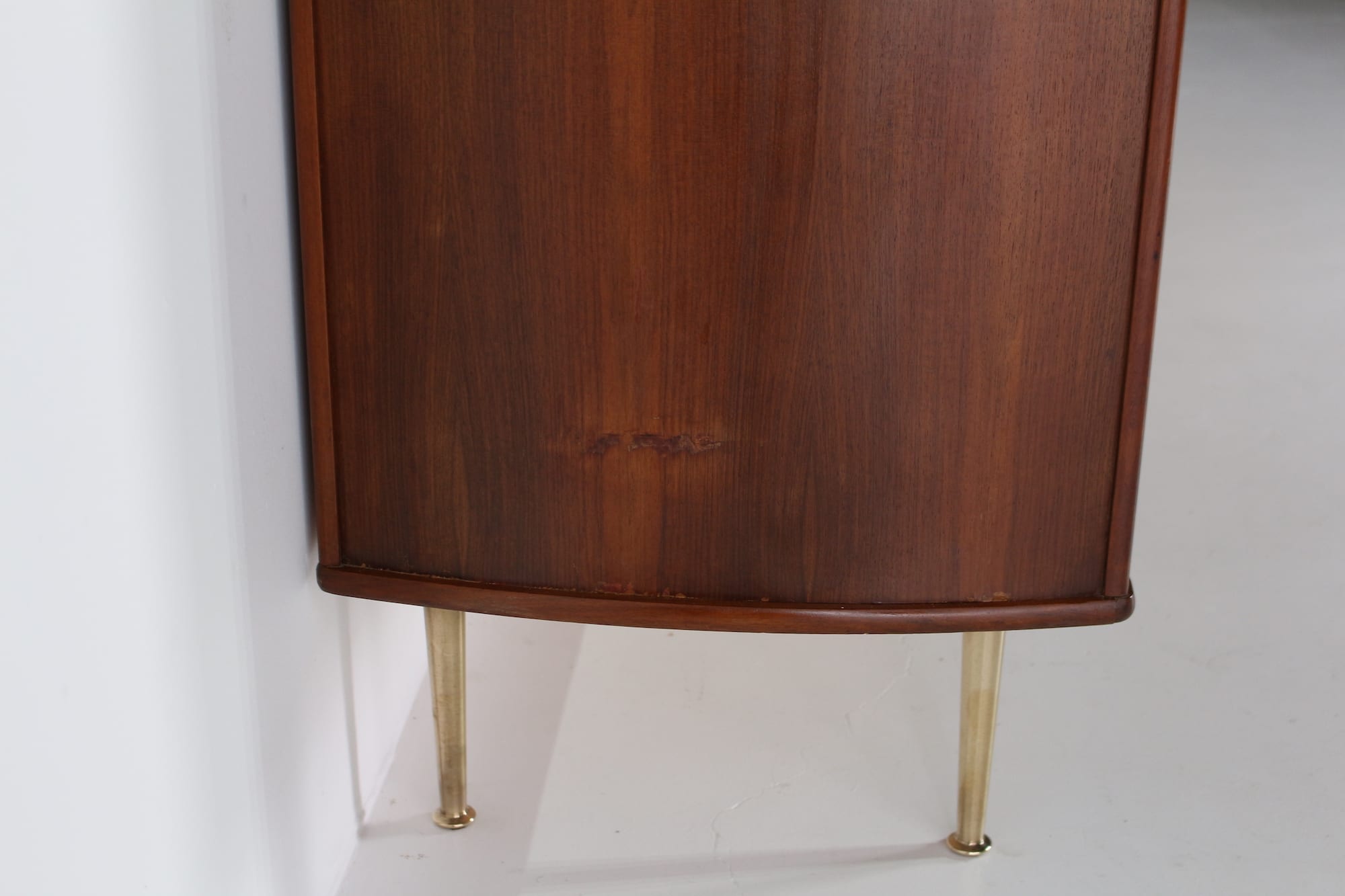
- The sides are curved, the left one has a (discreet) period restoration, see photo.
- The furniture has been completely refurbished by our restorer, very good condition.
- W 260 CM X H 85,5 CM X D 47,5 CM
- Useful depth 40 CM
- Useful drawer heights: 5/11/12 CM
Sold

Large modernist sideboard by William Watting for Fristho
Designed in the 1950s by the American-Danish designer William Watting for the Dutch manufacturer Fristho, this large sideboard illustrates the introduction of Scandinavian influences into post-war Dutch design. Fristho was then among the most important publishers of modernist furniture in the Netherlands and adopted during this period the slogan “No.1 in Nordic design”, clearly asserting its focus on furniture inspired by Scandinavian modernism.
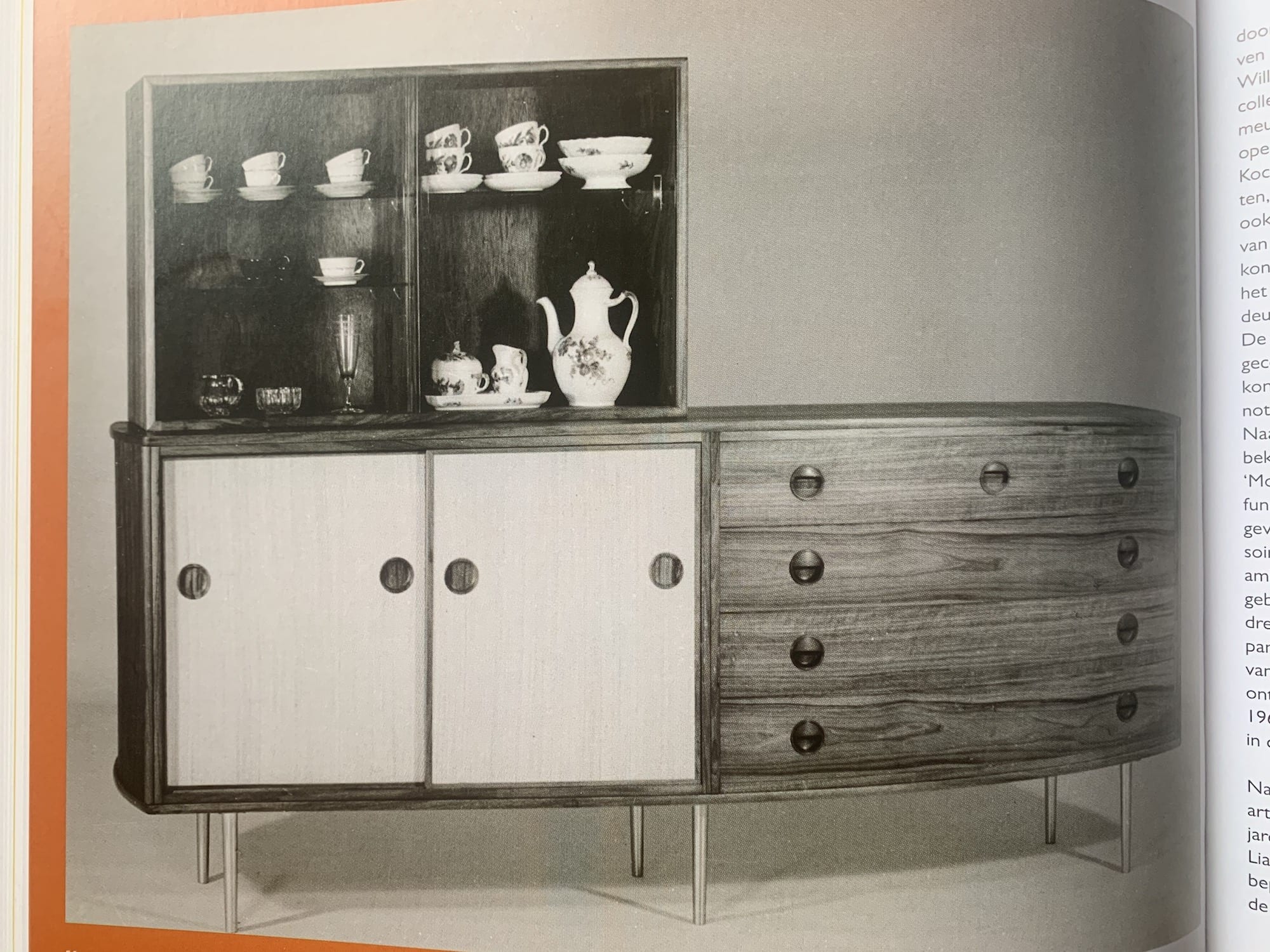
The model stands out for its particularly horizontal proportions, its curved ends, and the quality of its veneer work and brass details. These slightly organic lines are among the most recognizable signatures of the designs developed by William Watting for Fristho during the 1950s.
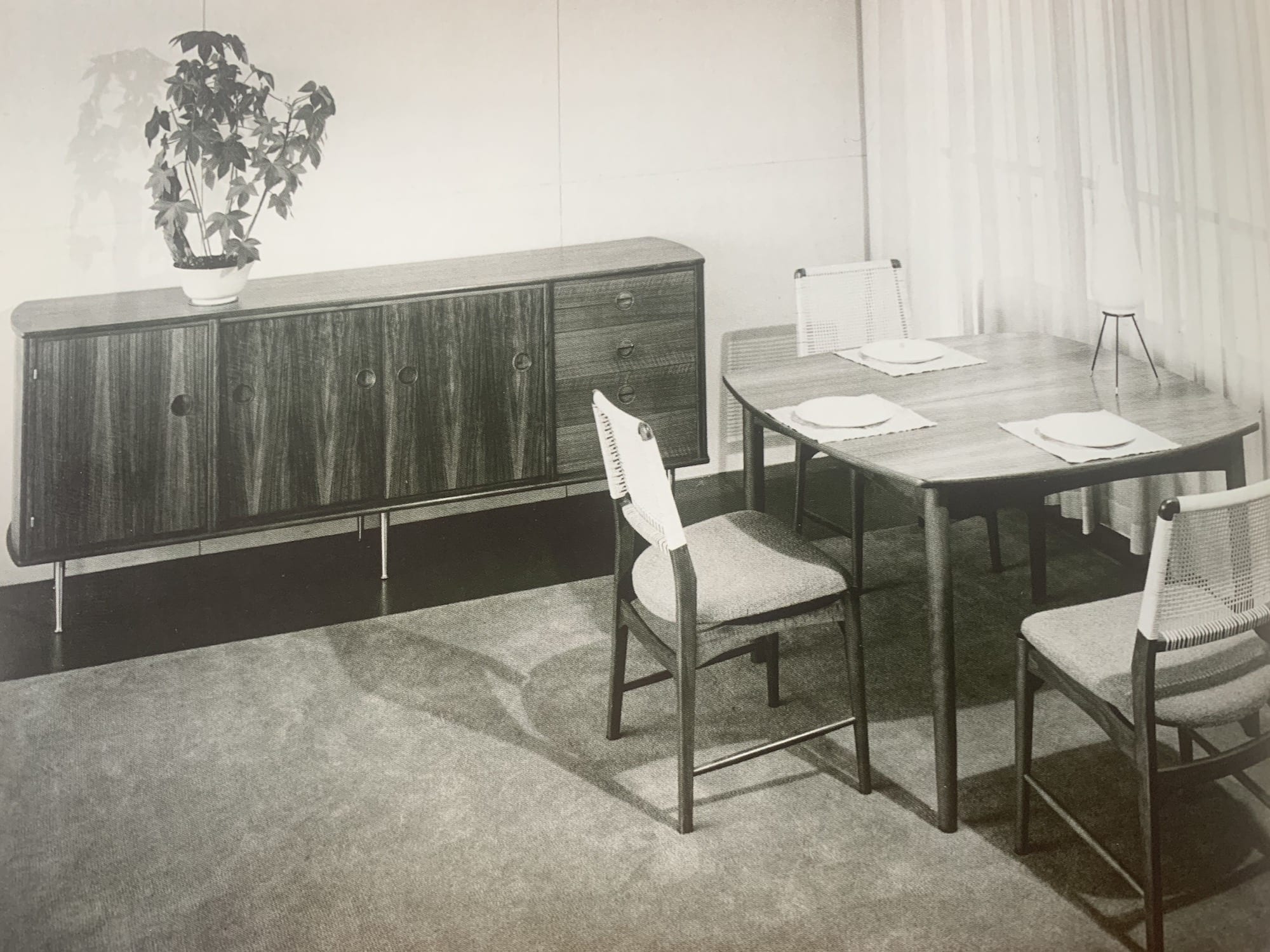
William Watting, an American-born designer who settled in Denmark after World War II, contributed to the development of Fristho’s first modernist collections under the names “Modern Art” or “Modernord”, series strongly influenced by Scandinavian furniture of the period. Several sources also mention production that was partly modular or made to order depending on the interiors for which the pieces were intended.
This sideboard belongs to a pivotal period in Dutch design during which Fristho helped introduce a lighter, more horizontal, and more architectural modernist language than traditional post-war production. This evolution would later continue with designers such as Kho Liang Ie and Wim Crouwel, who would shape the manufacturer’s modernist identity over the following decades.
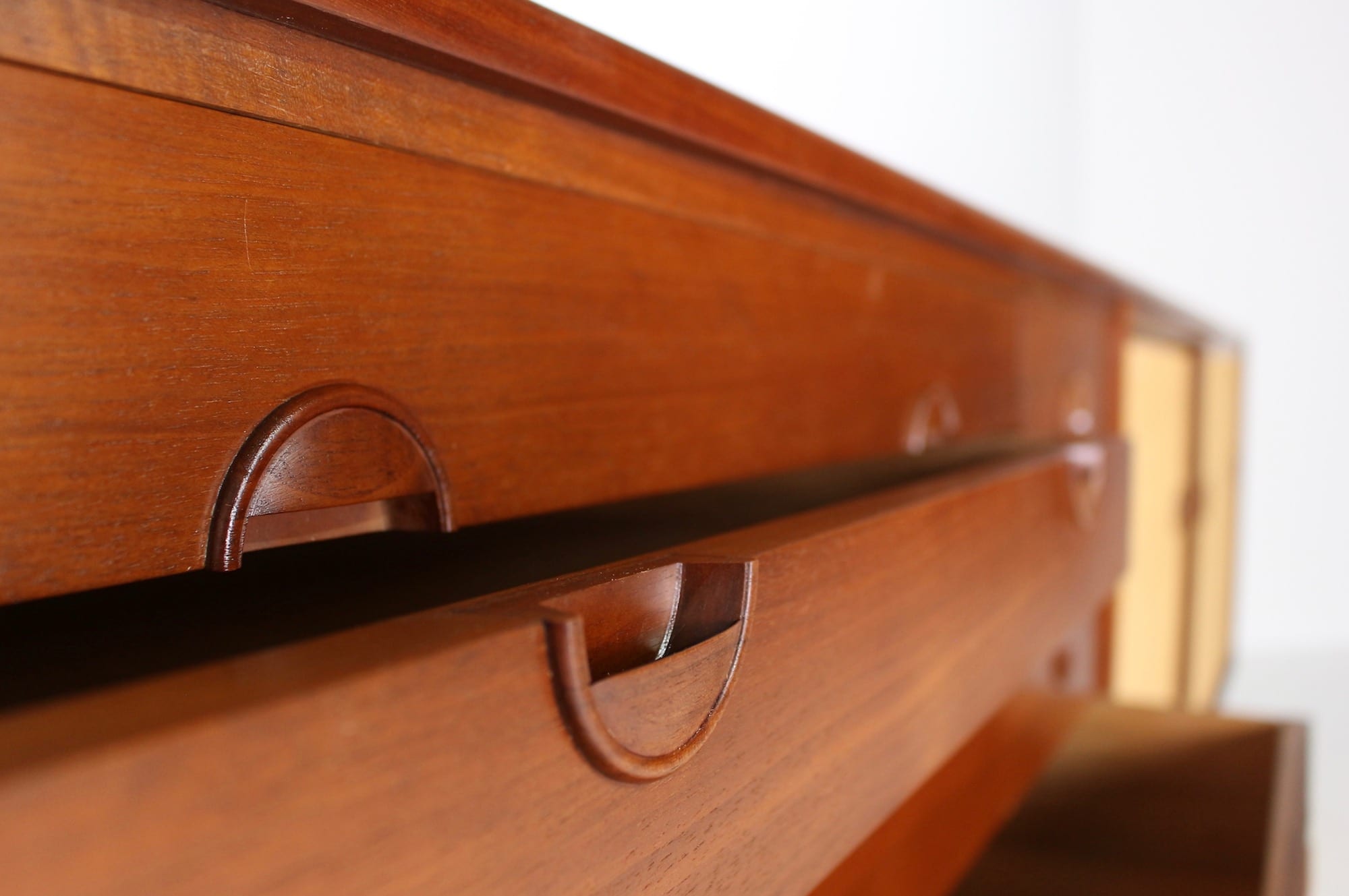
This piece retains a particularly architectural presence thanks to its long horizontal span, enhanced by its sliding doors, brass base, and the balance between solid surfaces, circular pulls, and rounded volumes.
- Bibliography: “FRISTHO Vooruitstrevende Meubelen 1921-1978” Bert Looper, Bornmeer Gorredijk 2014.
You might also like…


Discover also...


Delivery to Belgium

Delivery to France

Delivery to Luxembourg
