





Tonneau Chairs – Pierre Guariche for Steiner
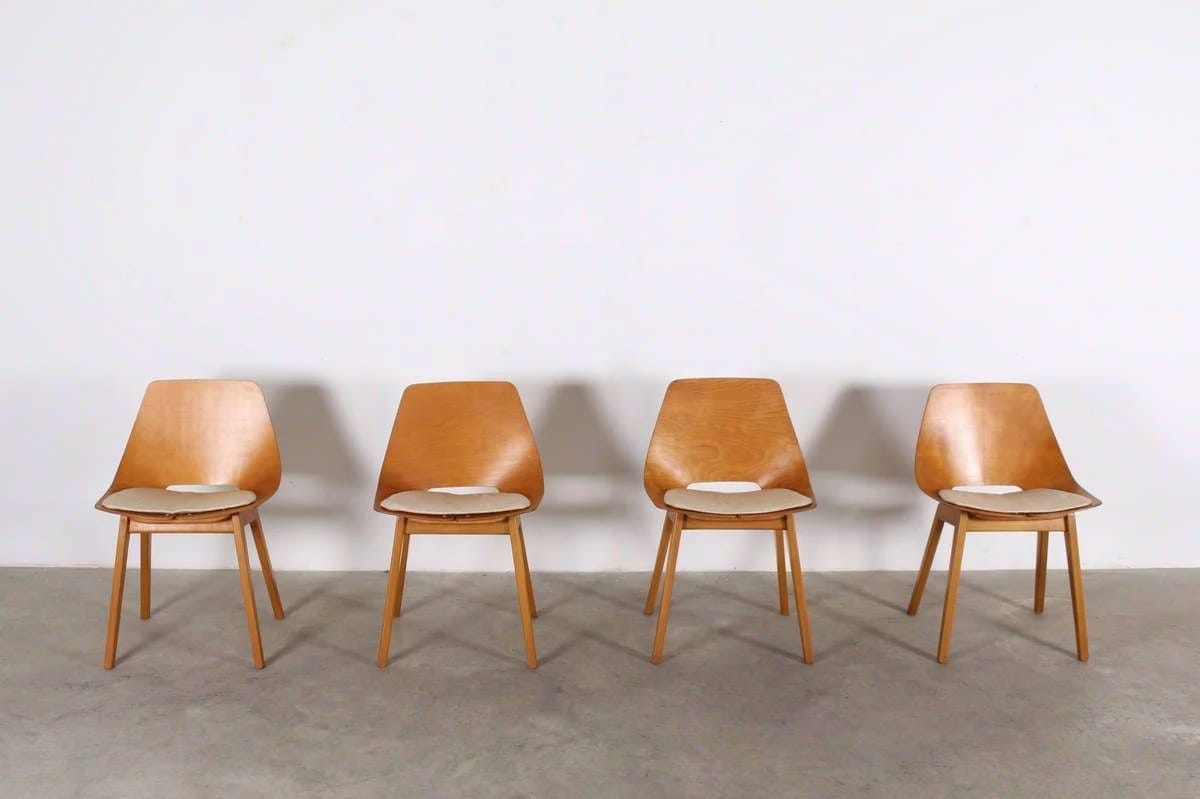
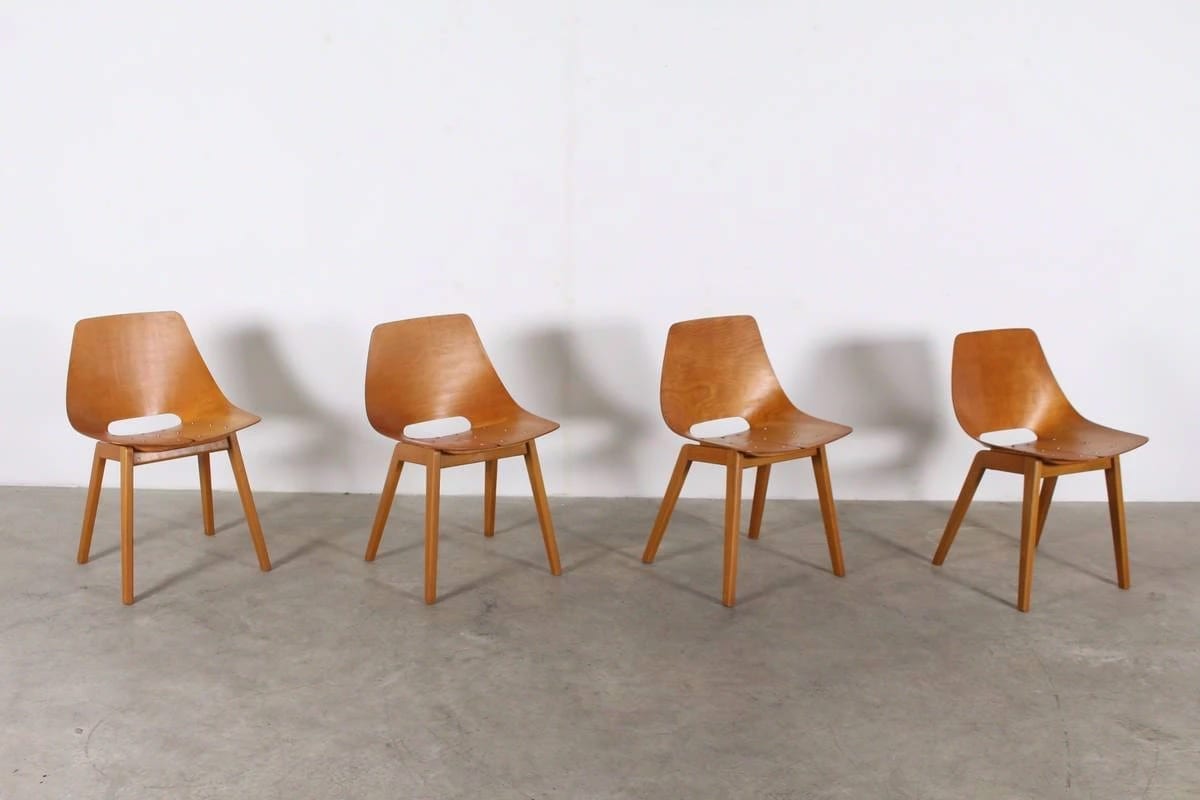
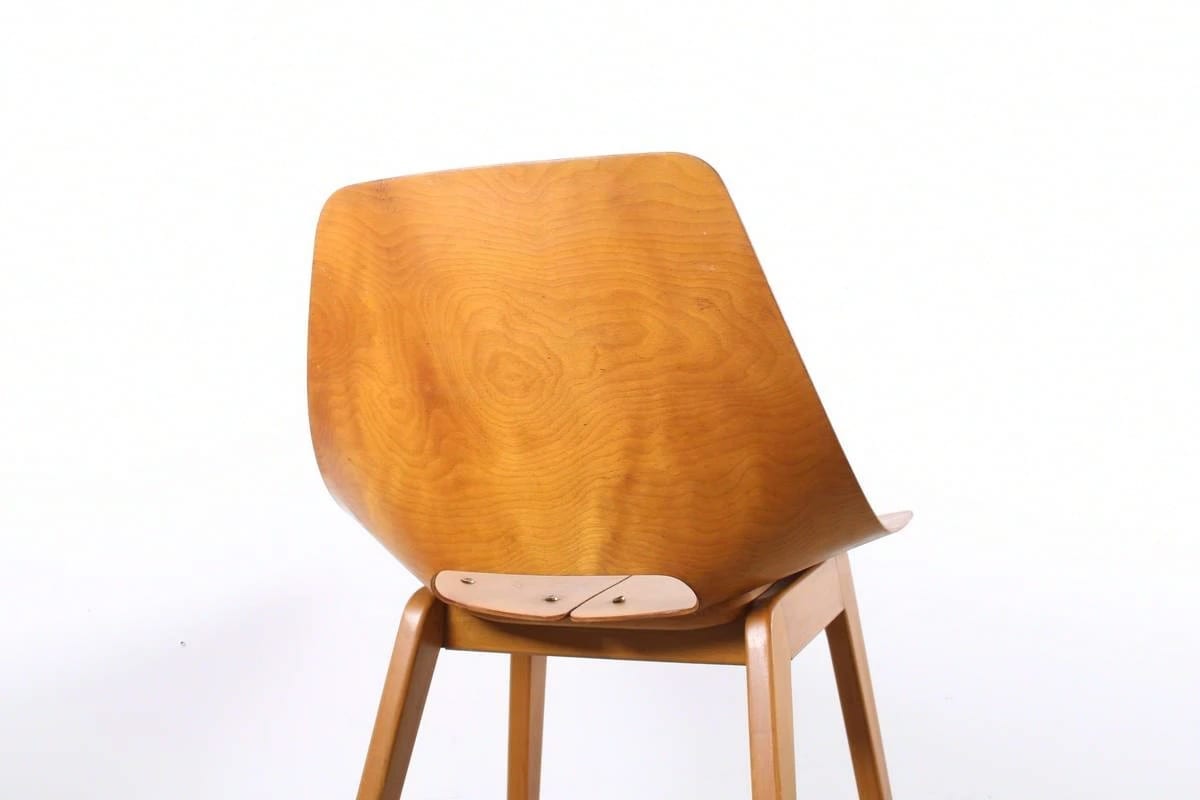
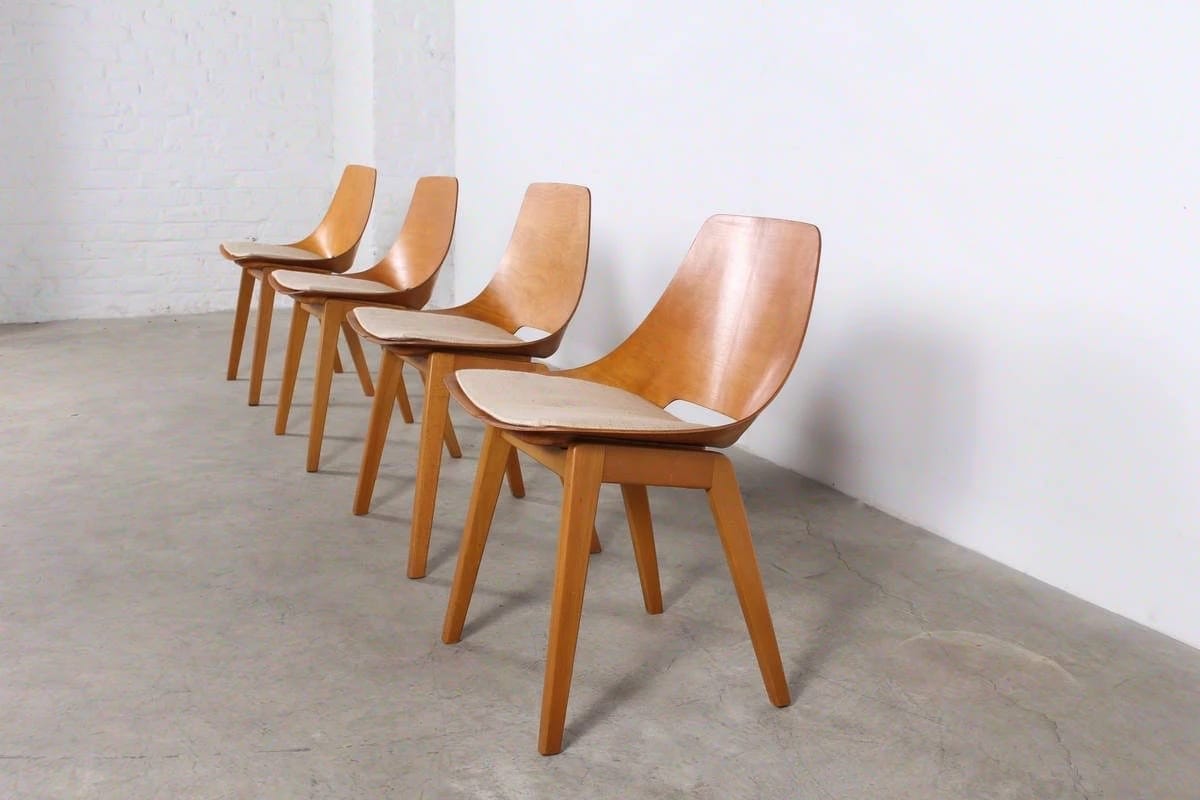
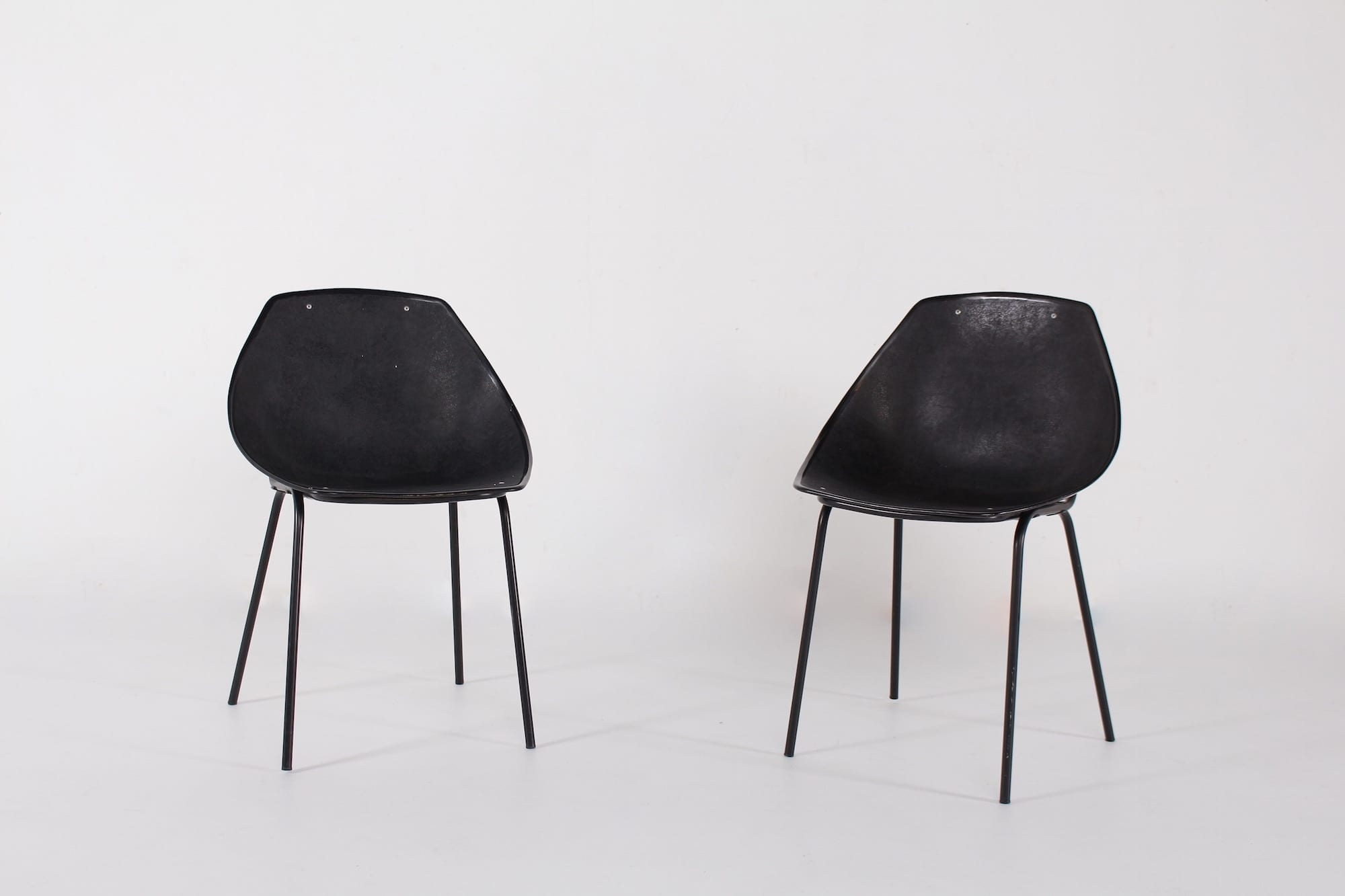
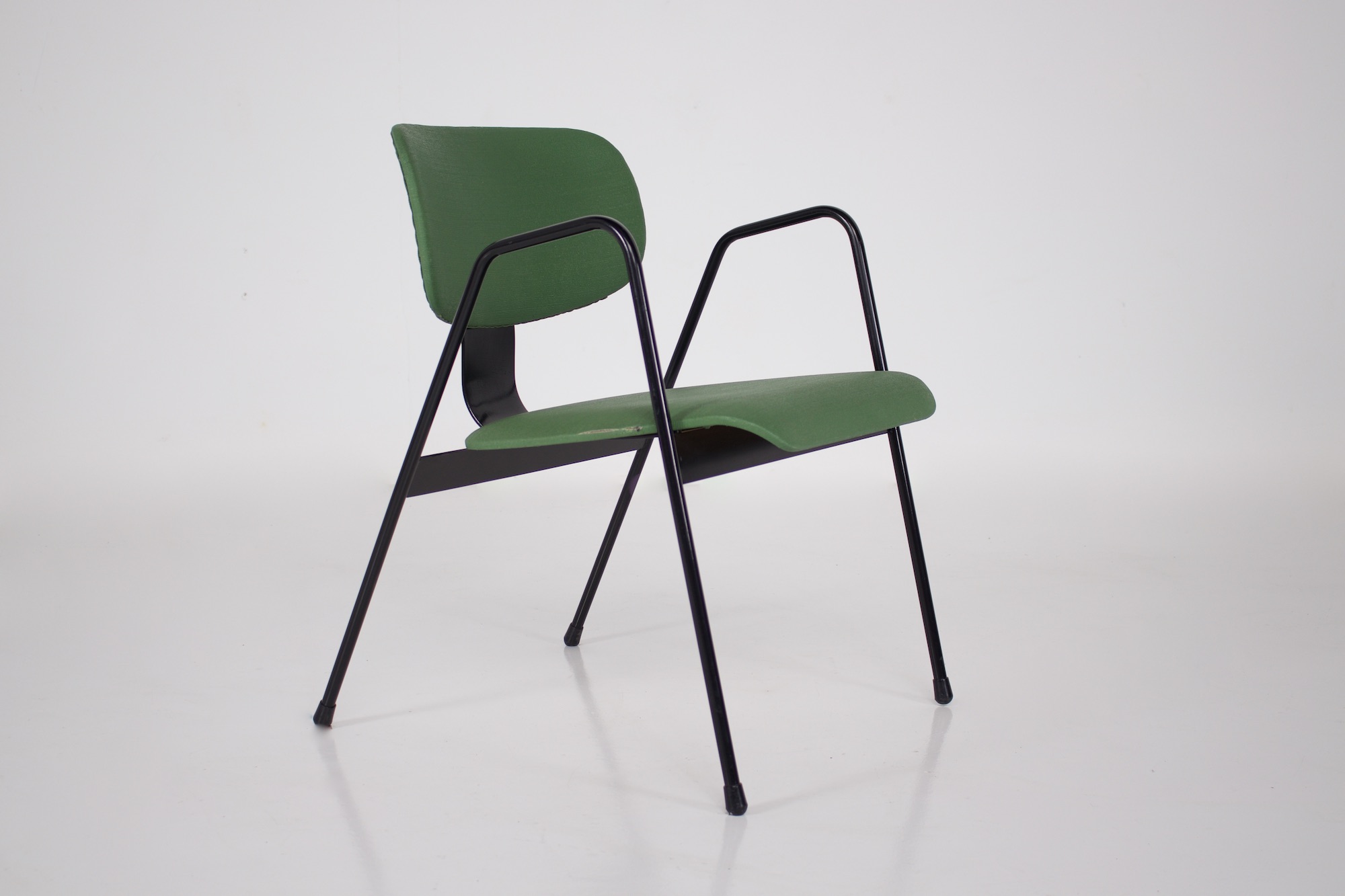
4 Tonneau chairs, Pierre Guariche for STEINER, “all wood” model, in molded plywood. Mid-1950s.
- Dimensions: H 77 cm x 49 cm x 36 cm
- Perfect condition.
- Similar model reproduced in: – Patrick Favardin, Steiner et l’aventure du design, Edition Norma, 2007, p.62.
- “Intérieurs. Le mobilier français 1945-1964”, édition du Regard, 1983, model reproduced p. 58.
Sold

Pierre Guariche and the Tonneau Chair
When discussing the work of Pierre Guariche, the Tonneau chair immediately stands out as one of his most significant creations. A leading figure in post-war French design, Guariche developed an approach perfectly aligned with the needs of his time.
The immediate post-war period was a turning point in France. During the 1950s and 1960s, new lifestyles emerged, marked by a search for functionality and modernity—trends already visible in the 1920s but then reserved for a minority. Reconstruction required meeting the needs of households living in often more compact housing, with furniture adapted to these new realities.
While Jean Prouvé, Charlotte Perriand, and Le Corbusier focused largely on collective programs, a new generation of designers sought to create high-quality, affordable, mass-produced furniture. Among them, Pierre Guariche (1926-1995) emerged as one of the most relevant.
Born into a family of Parisian goldsmiths, he graduated from the École Nationale Supérieure des Arts Décoratifs in 1949. He began his career in Marcel Gascoin’s workshop, quickly exhibiting at the Salon des Arts Ménagers and the Salon des Artistes Décorateurs before publishing his first models. His work caught the attention of Galerie MAI and then the Airborne company, founded in 1951.
For Airborne, he notably designed the “Prefacto” housing program, a complete set based on the combination of metal tubing and wood. He developed tables, chairs, and modular elements designed to meet the requirements of a modern, simple, and rational home.
In 1951, he began his collaboration with Steiner. It was in this context that he created the Tonneau chair, first in an aluminum and plastic version in 1953, then in molded plywood in 1954. This model represents a major milestone in the history of French seating. Its enveloping lines, relative ease of manufacture, and controlled cost largely explain its success.
At the same time, Pierre Guariche designed numerous light fixtures for Pierre Disderot, which are still considered among the most remarkable examples of 1950s French production.
In 1954, faced with growing demand, he joined Michel Mortier and Joseph-André Motte to found the ARP, the Atelier de Recherche Plastique. Together, they designed several furniture sets for the manufacturer Charles Minvielle, which received awards from the Centre Technique du Bois. Guariche also designed office furniture before becoming the artistic director of Meurop in Belgium in 1957.
His approach was based on a clear idea: to produce beautiful, useful furniture accessible to as many people as possible. He approached interior design holistically, with a precise sense of volume, materials, and usage. In the 1960s, his work shifted more toward interior architecture, with projects for offices, shops, the La Plagne ski resort, and the Firminy hospital.
He later became a consultant architect for several institutions and shared his experience through teaching, notably at the École Nationale Supérieure des Arts Décoratifs in Paris and the École Supérieure d’Architecture in Tournai.
More than half a century after their creation, Pierre Guariche’s works remain entirely relevant. The Tonneau chair is one of the most eloquent examples: an iconic model of post-war French design that is sober, innovative, and timeless.
You might also like…

Discover also...

Delivery to Belgium

Delivery to France

Delivery to Luxembourg
