



Niels Koefoed
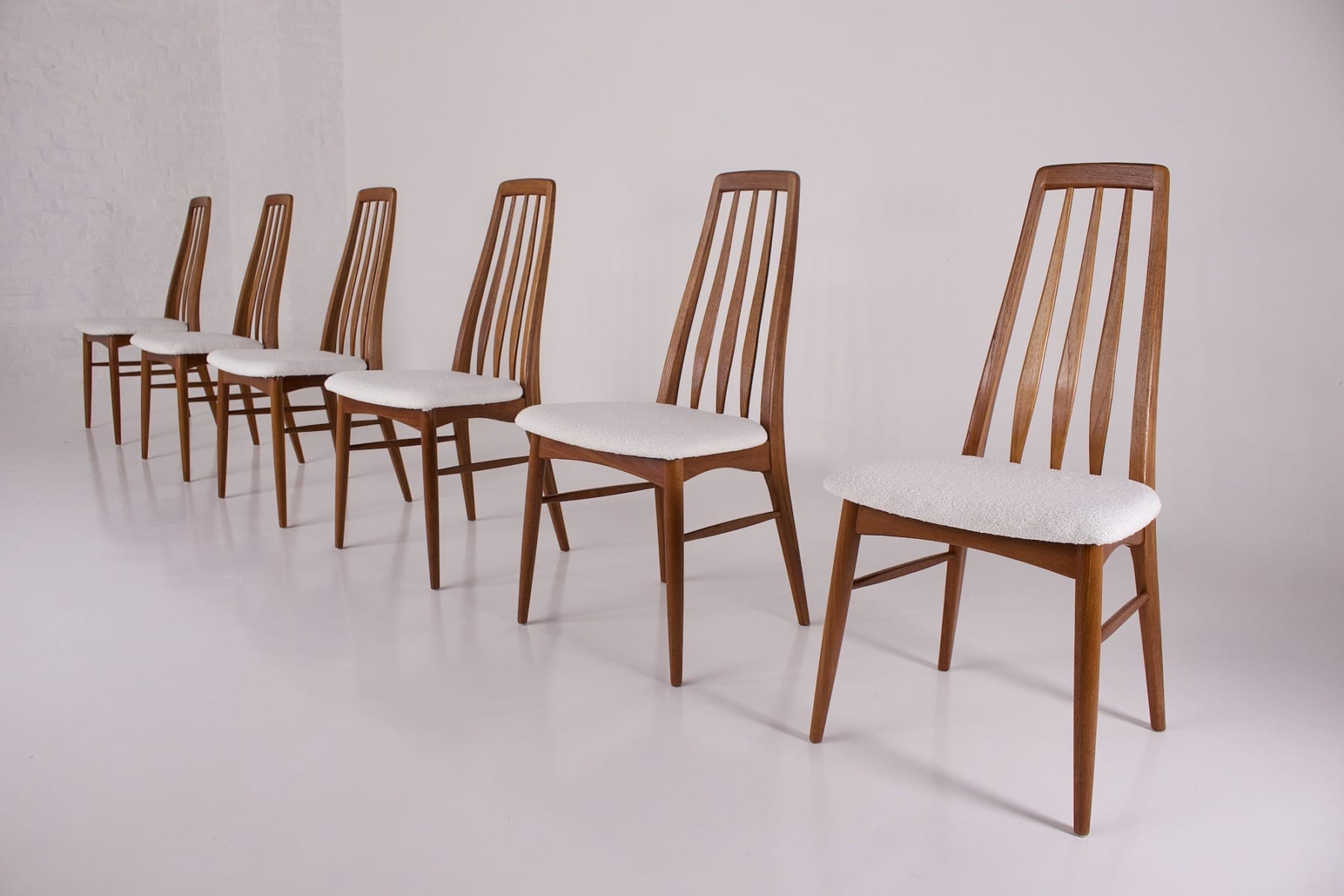
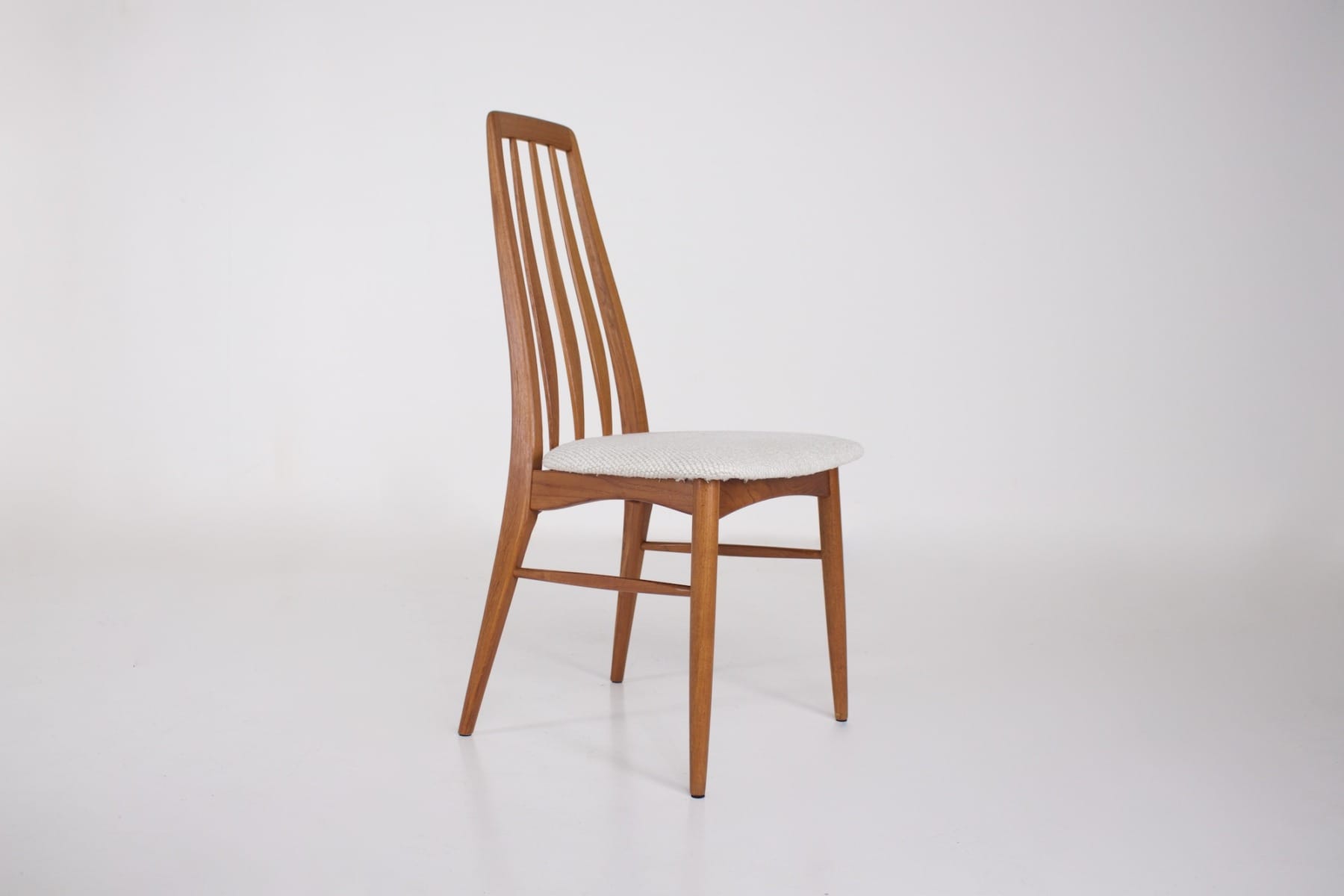
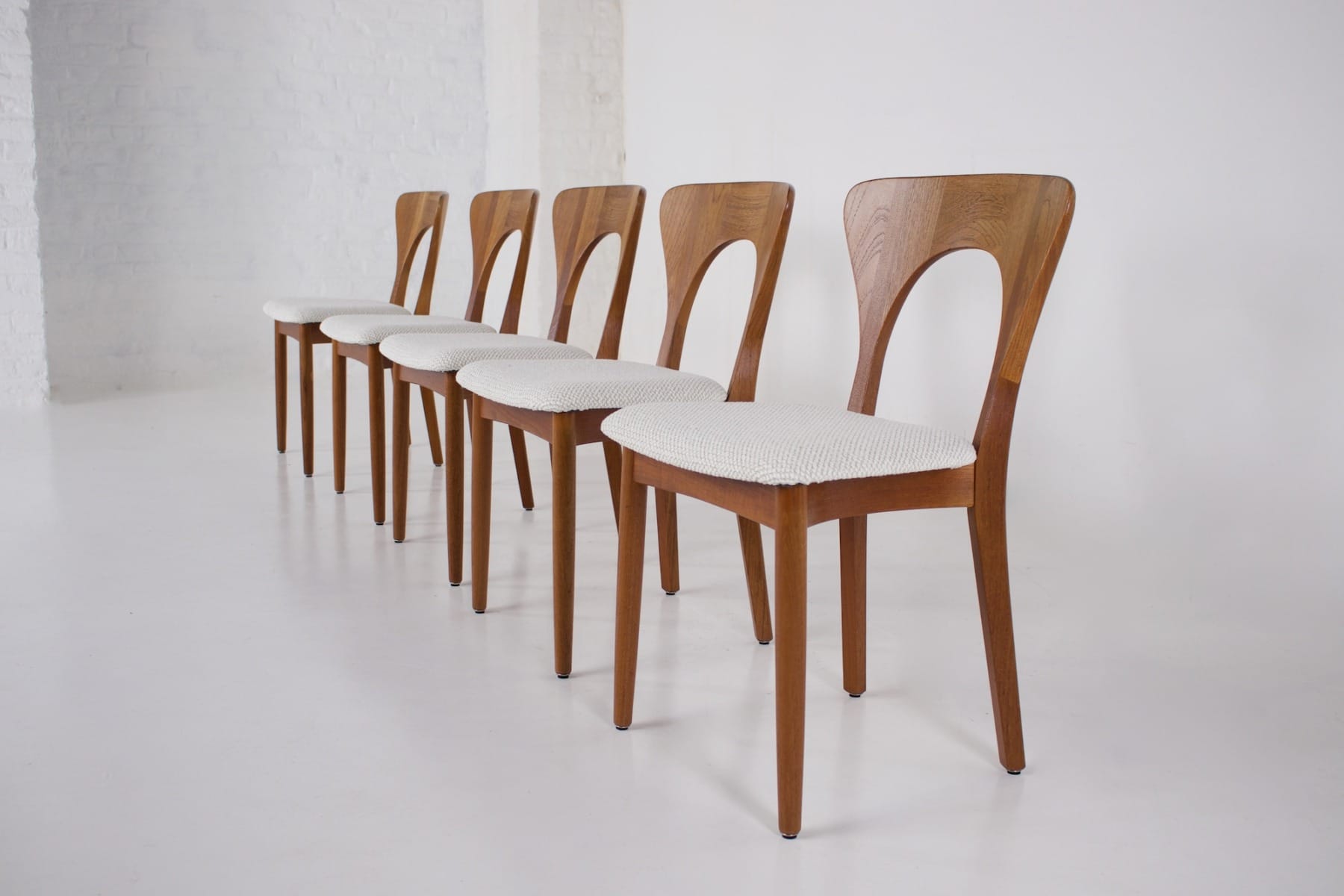
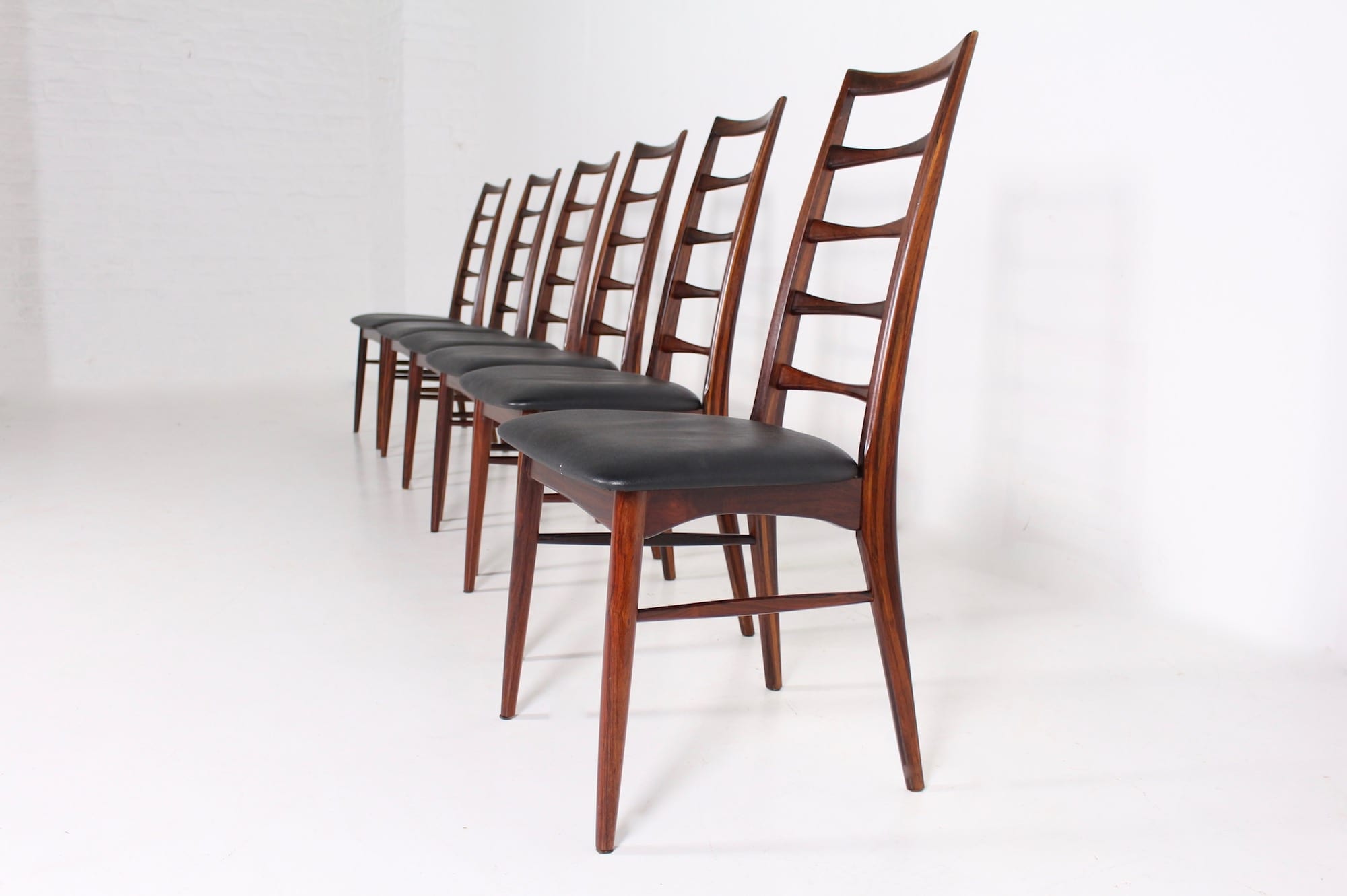
Eva, Lis, Peter, and Ingrid Chairs by Niels Koefoed
Crafted notably in teak, rosewood, or oak depending on the models and editions, these chairs illustrate the expertise of Danish manufacturers from the ’50s, ’60s, and ’70s. The design of the backrests, the profile of the legs, and the precision of the joinery contribute as much to their elegance as to their daily use.
Their understated lines and balanced proportions allow Niels Koefoed chairs to easily find their place around dining tables of different styles and periods. They can accompany a Scandinavian teak table or create a contrast with a contemporary table in wood, glass, or metal.
At Vintage Addict, our selection of Danish chairs includes several sets of Eva, Lis, and other Niels Koefoed models that have passed through our gallery. When their condition requires it, the structures and upholstery are handled by our restoration workshop to preserve their manufacturing quality and allow them to return to their place around a dining table.


Niels Koefoed and the Koefoeds Hornslet manufactory
A Danish furniture designer and manufacturer, Niels Koefoed is primarily known for his dining chairs designed for Koefoeds Hornslet. His creations, including the Peter, Lis, Ingrid, and Eva models, demonstrate the focus on comfort, proportions, and woodworking characteristic of post-war Scandinavian furniture.
The family factory was founded in the 1920s in Hornslet, Denmark, by Einar Koefoed, the designer’s father. Specializing in furniture manufacturing, it developed under Niels Koefoed’s leadership a production of seating recognizable by their detailed backrests, slender lines, and the quality of their joinery.
The Peter chair, created in 1957, is distinguished by its lightweight construction and refined design. The Lis chair, designed in 1961, features a horizontal slat-back, while the Ingrid chair, appearing in the 1960s, developed more rounded forms. In 1964, Niels Koefoed designed the Eva chair, whose high, slightly curved backrest, composed of three vertical slats, naturally follows the contour of the back. This model became one of the manufactory’s most popular designs.