








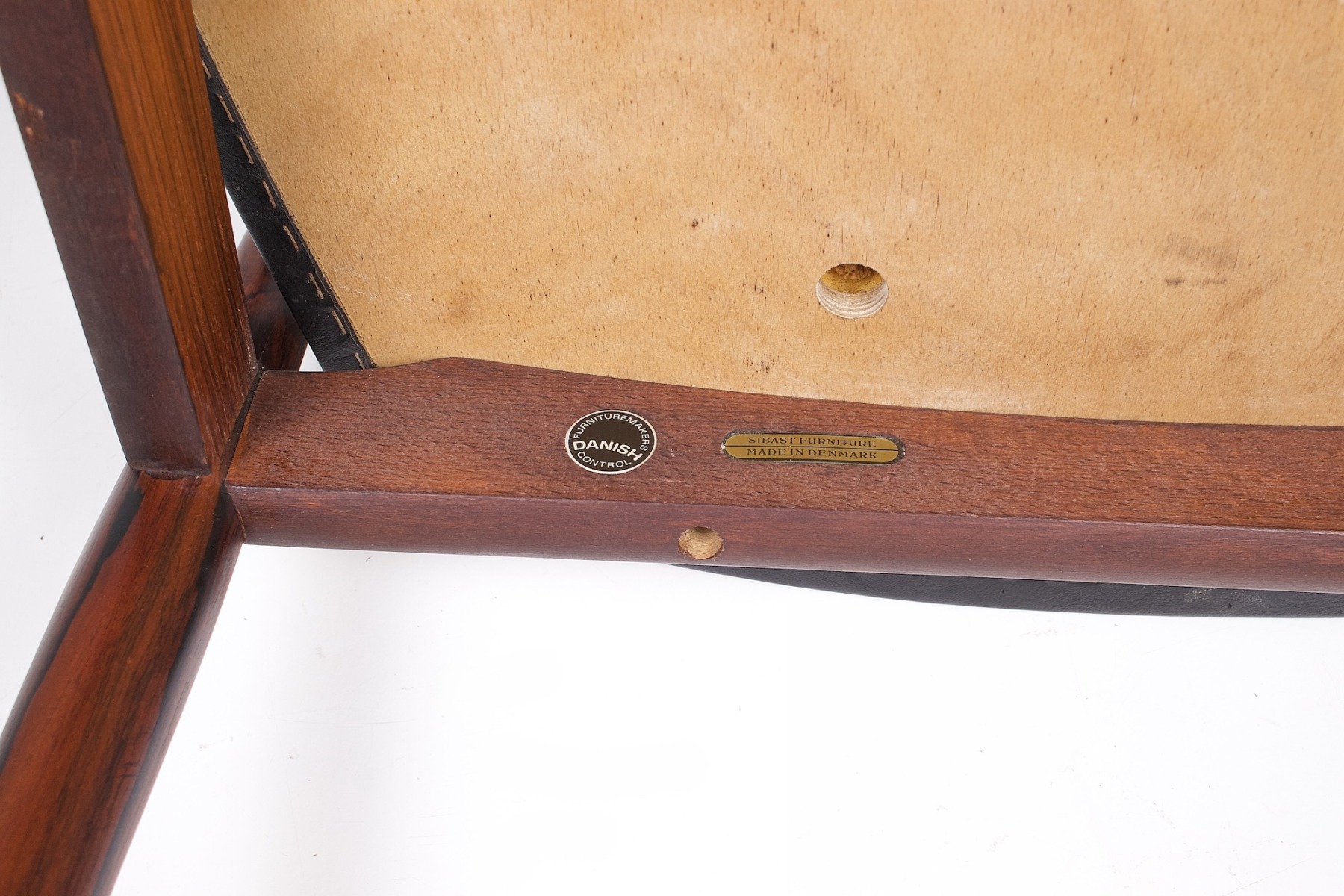

Sibast Model 62A Armchair – Arne Vodder
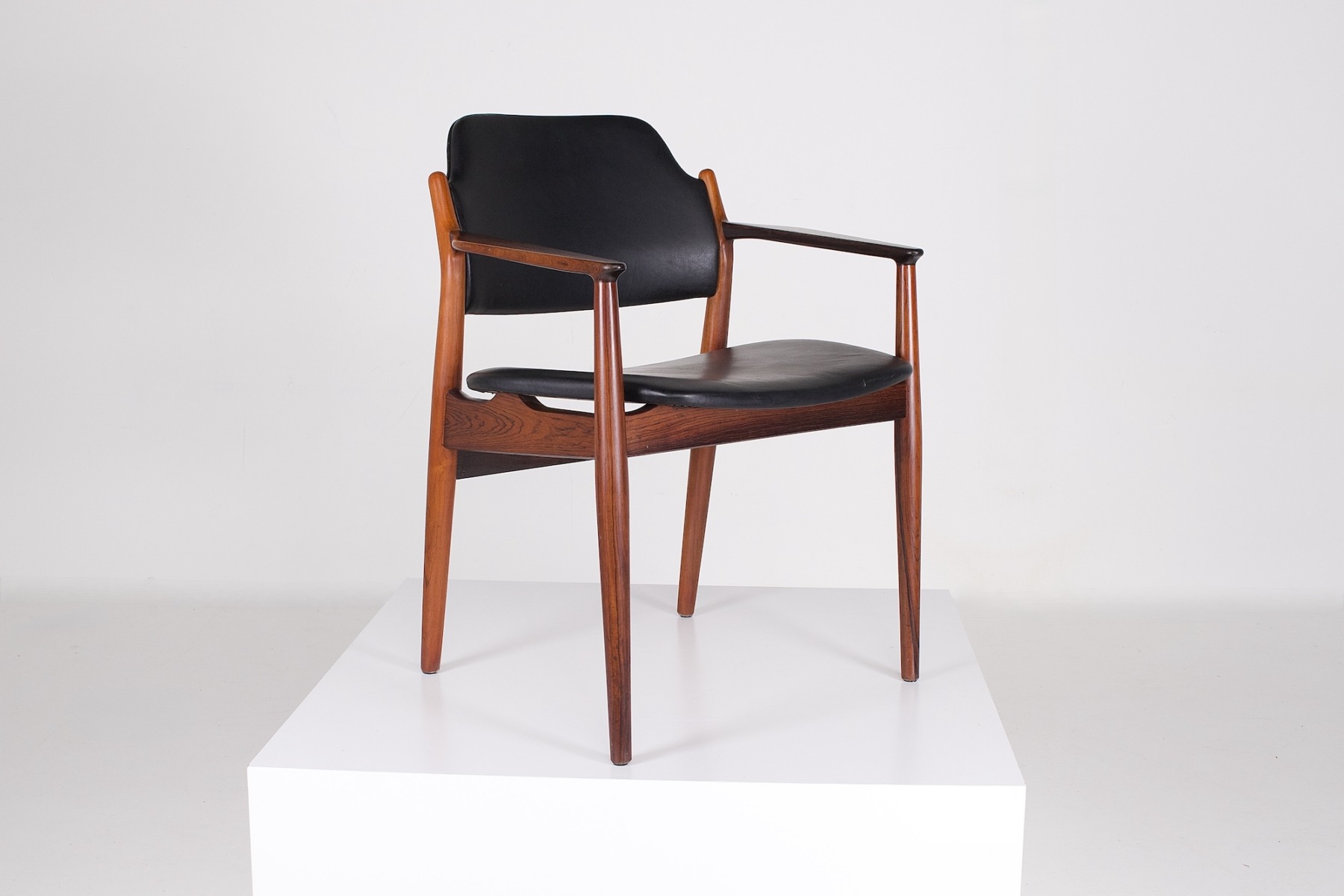
Model 62 A armchair, in rosewood and leather by Arne Vodder for Sibast, 1960s edition.
- Variant in rosewood and natural leather, the seats are firm and resilient.
- The leather and woodwork of this Danish chair have been restored by our conservator.
- H 80 CM X D 54 CM X W 62 CM.
- H of seat 44 CM.
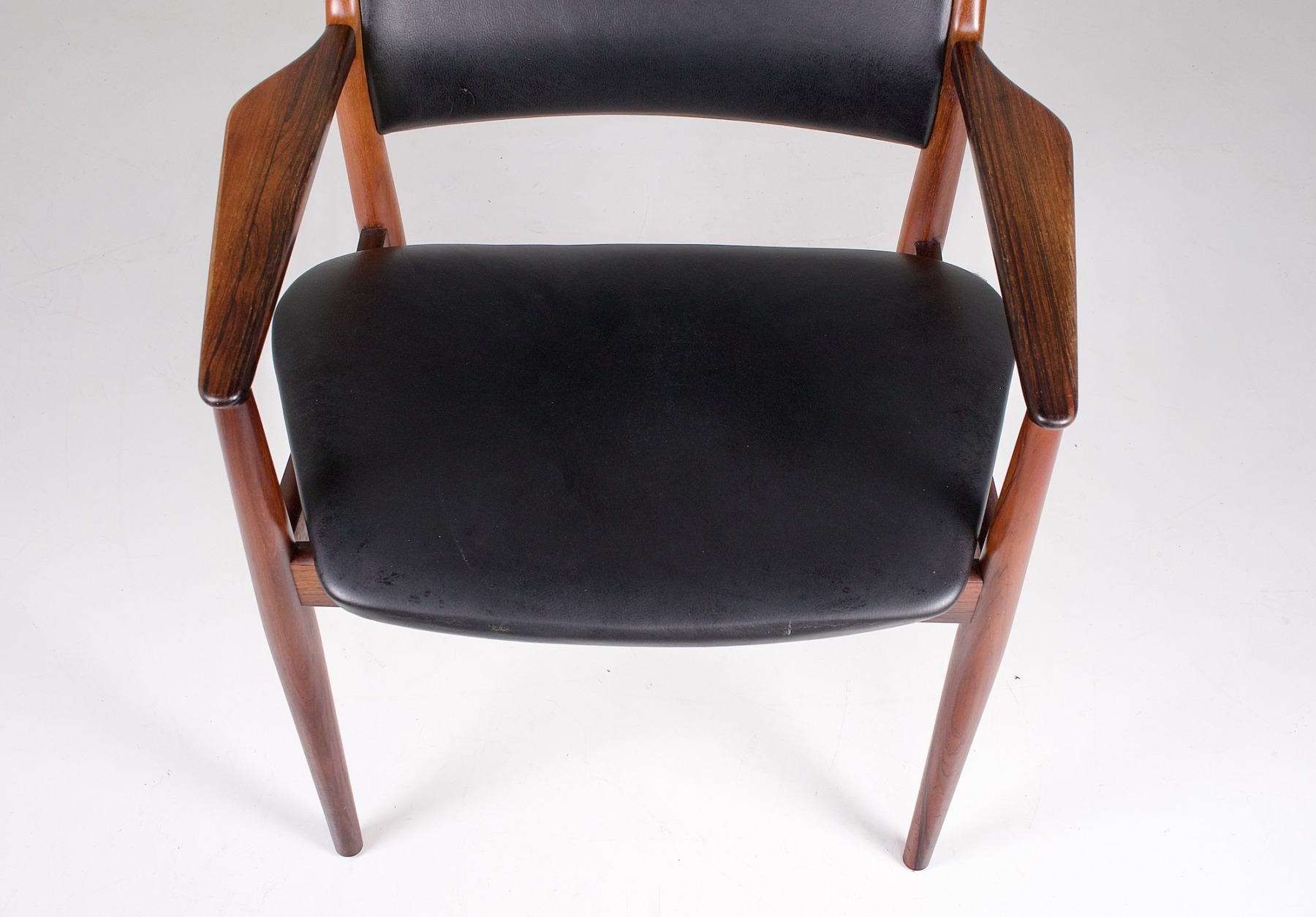
- Some very light normal wear marks on the edge of the seat (see photo).
Sold

Sibast Model 62A Armchair by Arne Vodder, circa 1960
The Model 62A, produced by Sibast in the early 1960s, precisely illustrates Arne Vodder’s approach, based on structural clarity and material enhancement.
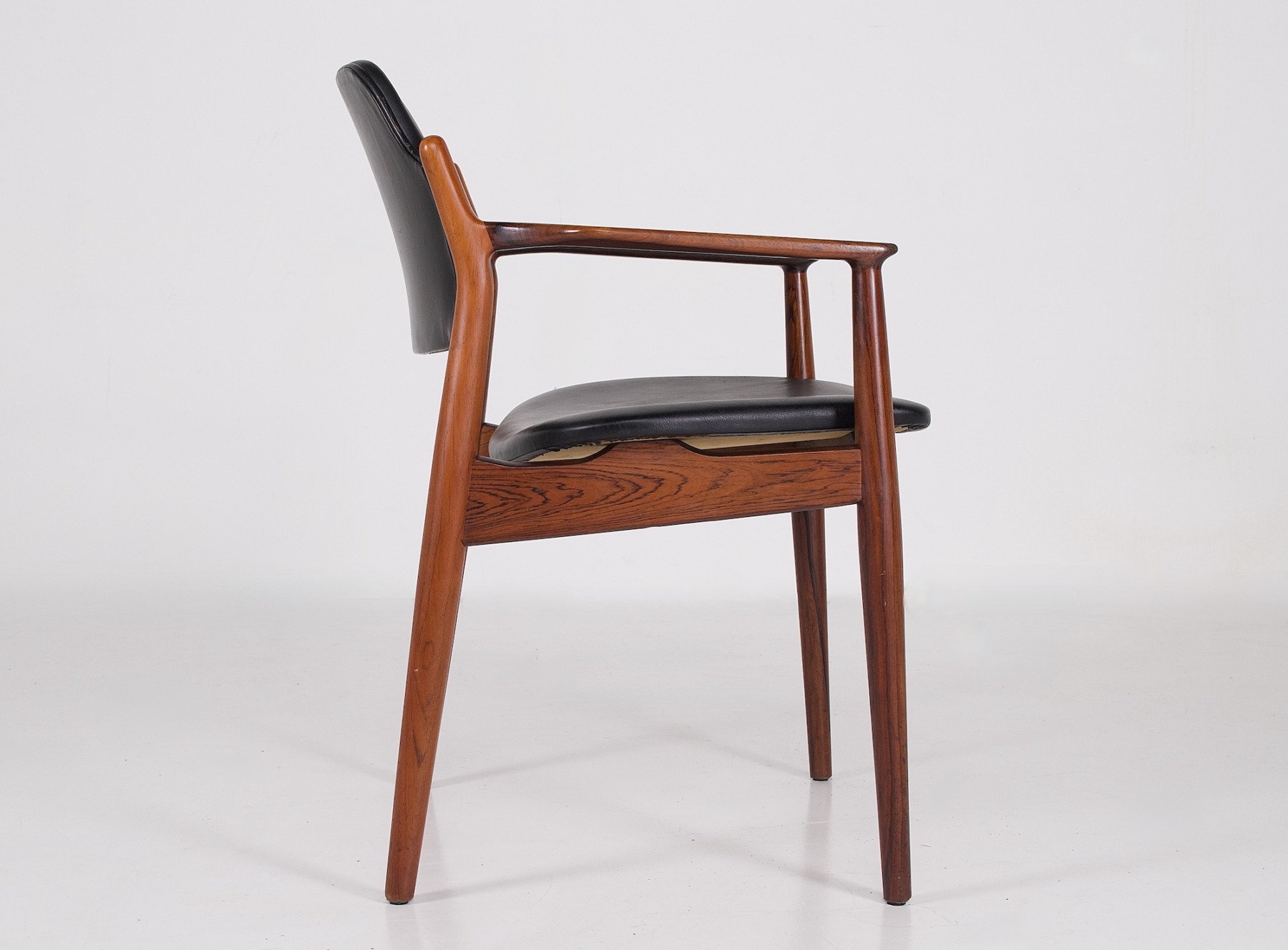
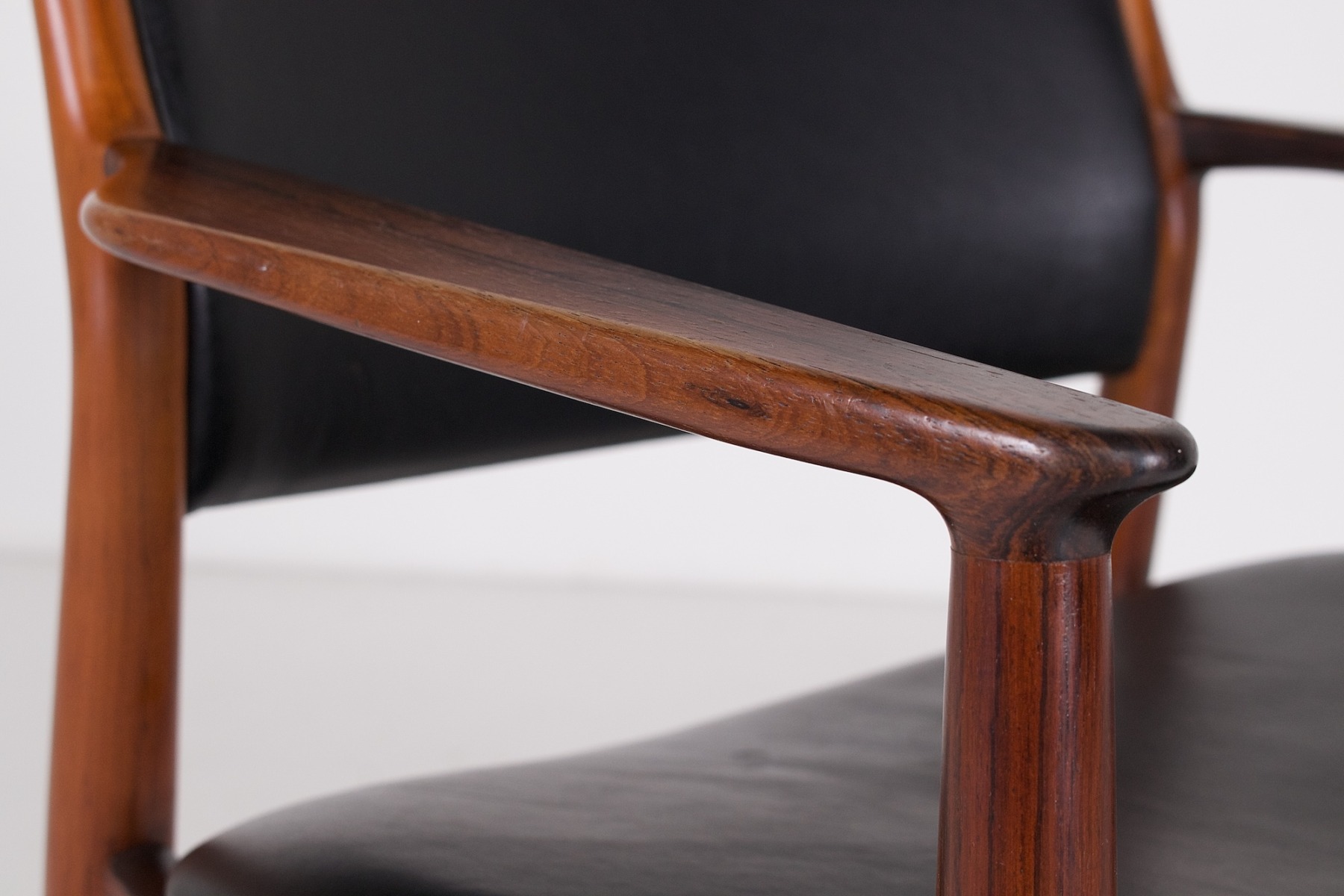
The example presented here features a solid rosewood frame with softened edges, extended by integrated armrests that flow seamlessly from the design. The overall construction is clear, with every element visible, free from superfluous effects, achieving a balanced equilibrium between function and presence.
The distinct and contrasting grain of the rosewood introduces a natural vibrancy that dialogues with the rigor of the structure. Paired with a denser, visually homogeneous black leather seat, it creates a controlled contrast between living material and taut surface. This opposition, characteristic of 1960s Danish design, fully contributes to the piece’s aesthetic interpretation. For comparison, a teak version of model 62A is also held in our archives.
The slightly reclined backrest and open seat provide this armchair with great versatility. Used as both a dining armchair and an office chair, it embodies a simple and adaptable functional logic, typical of Scandinavian furniture from this period.
This type of construction originates from Vodder’s background, trained in Copenhagen, notably at the Kunstakademiet alongside Hans Wegner and Børge Mogensen. His time in cabinetmaker Niels Vodder’s workshop allowed him to acquire practical knowledge of wood, before continuing his training with Finn Juhl, whose influence is evident in the continuity of lines and attention to proportions.
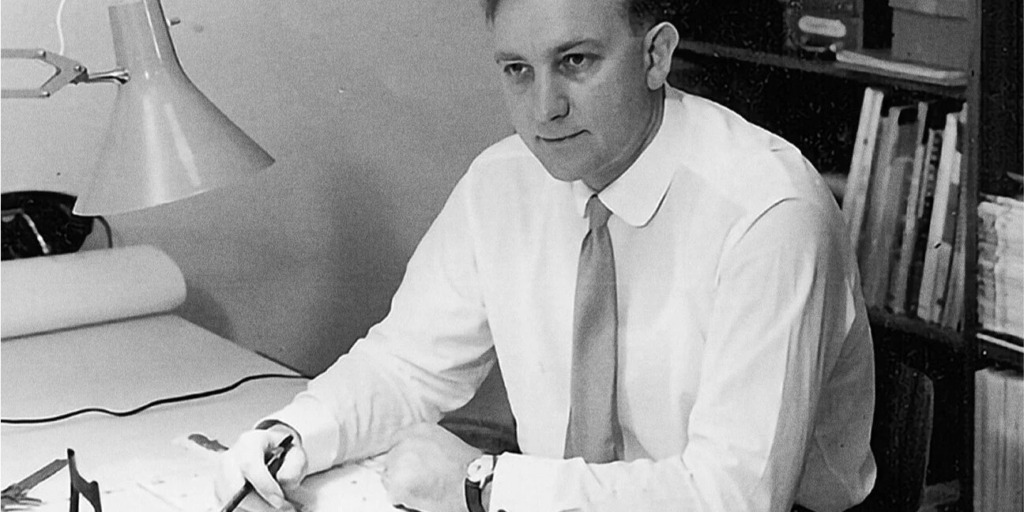
Produced by Sibast, with whom he collaborated closely from the 1950s, this model 62A contributed to the international reach of Danish design, appearing in private interiors and institutional settings across Europe and the United States.
You might also like…
Discover also...


Delivery to Belgium

Delivery to France

Delivery to Luxembourg
