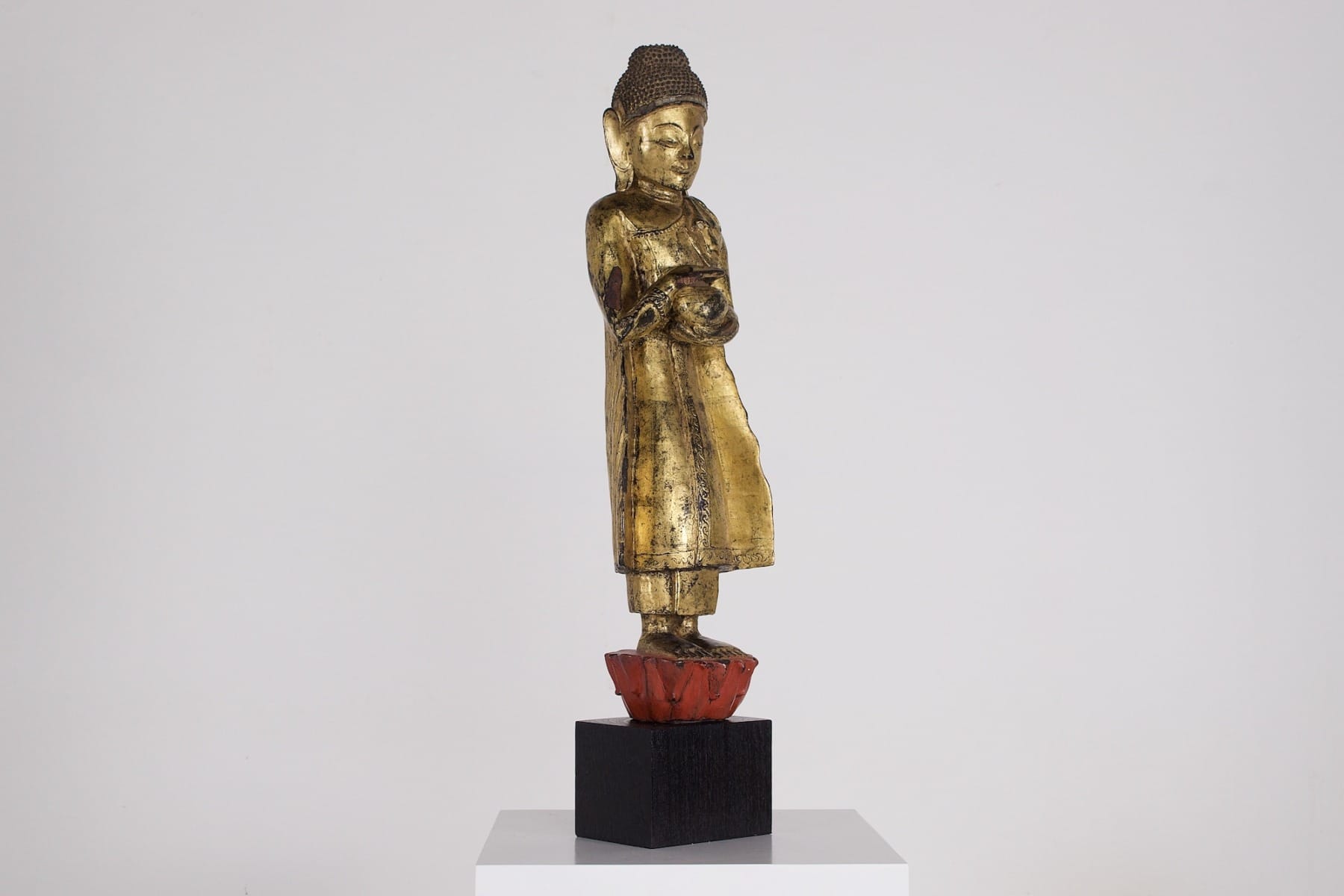

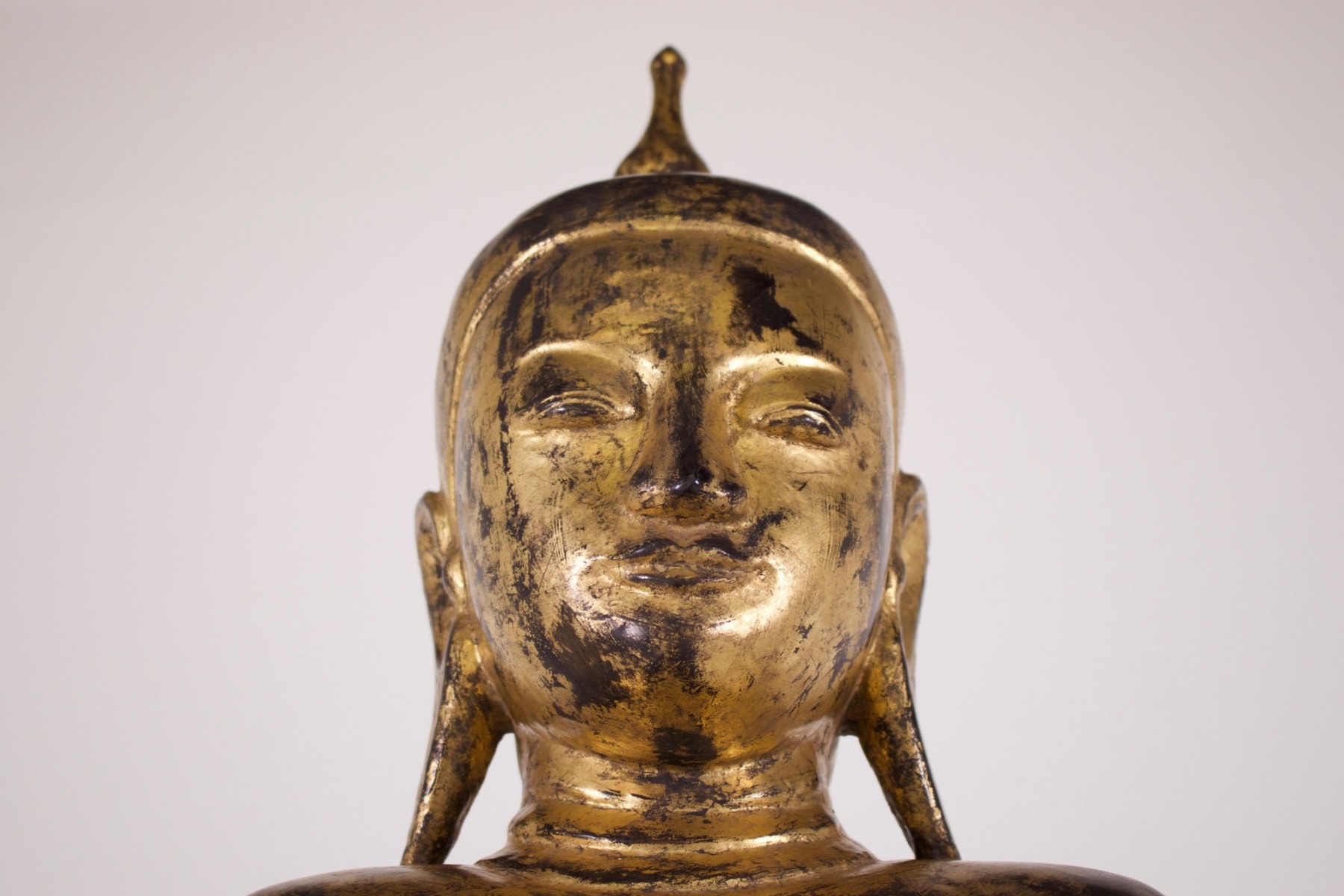
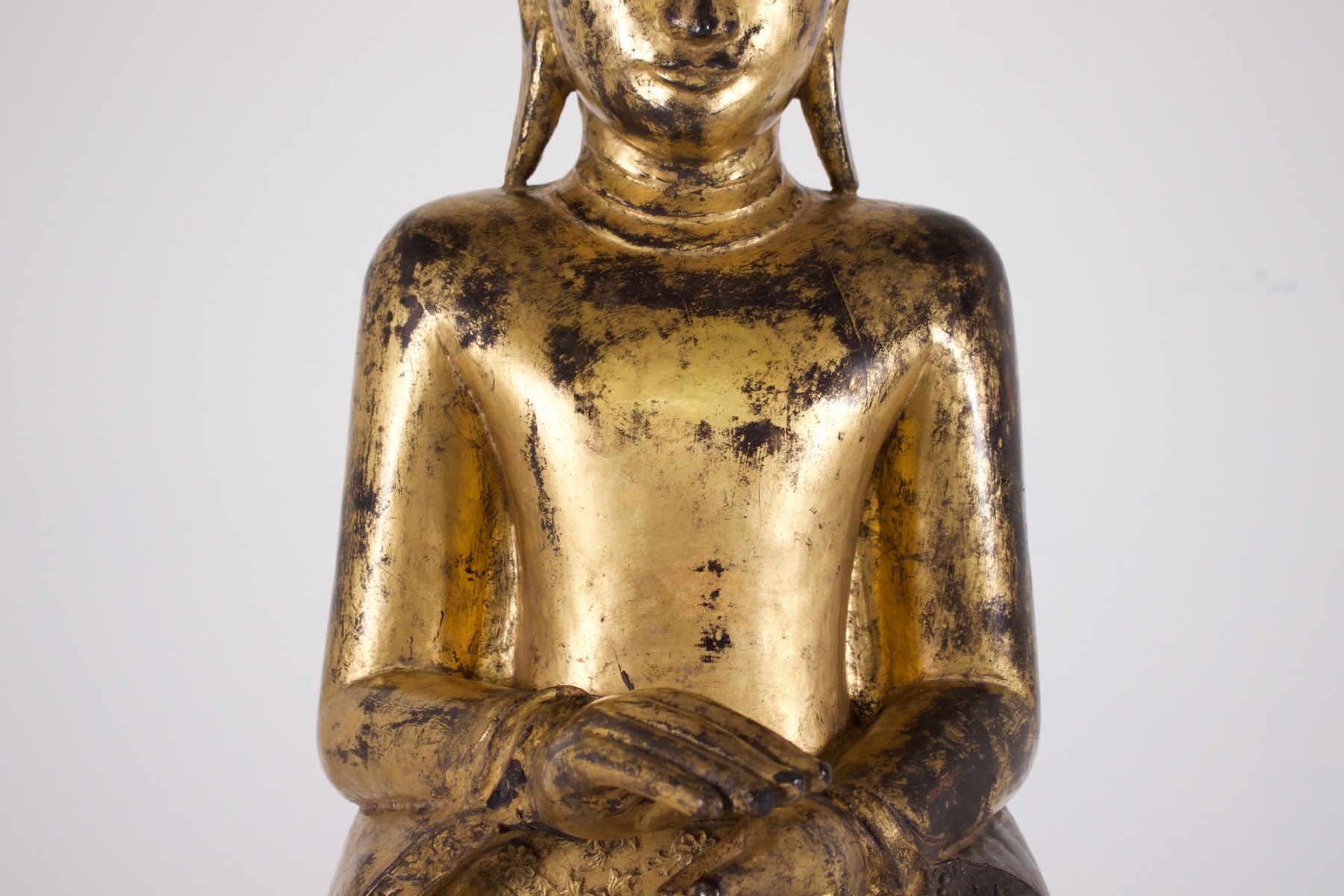
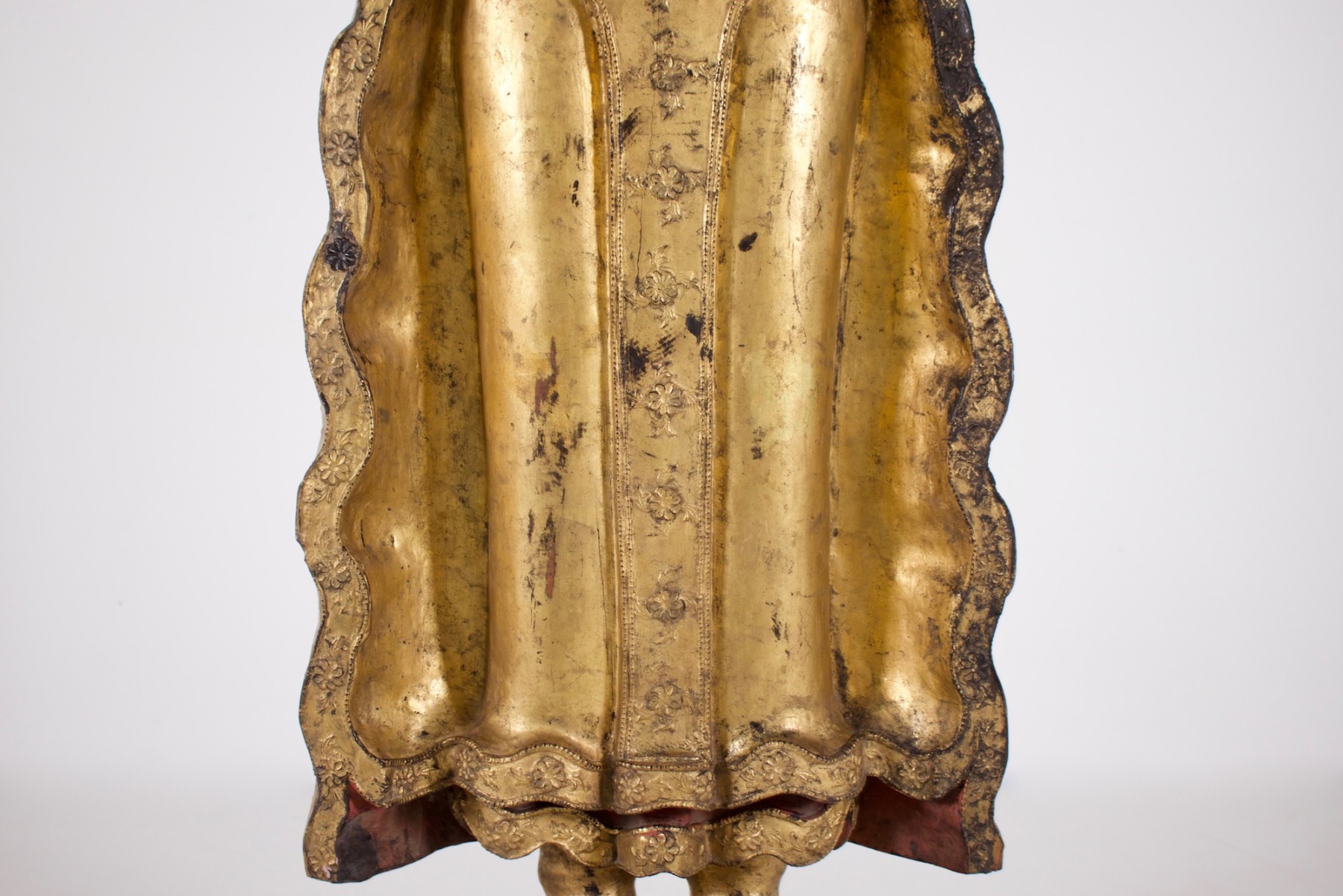

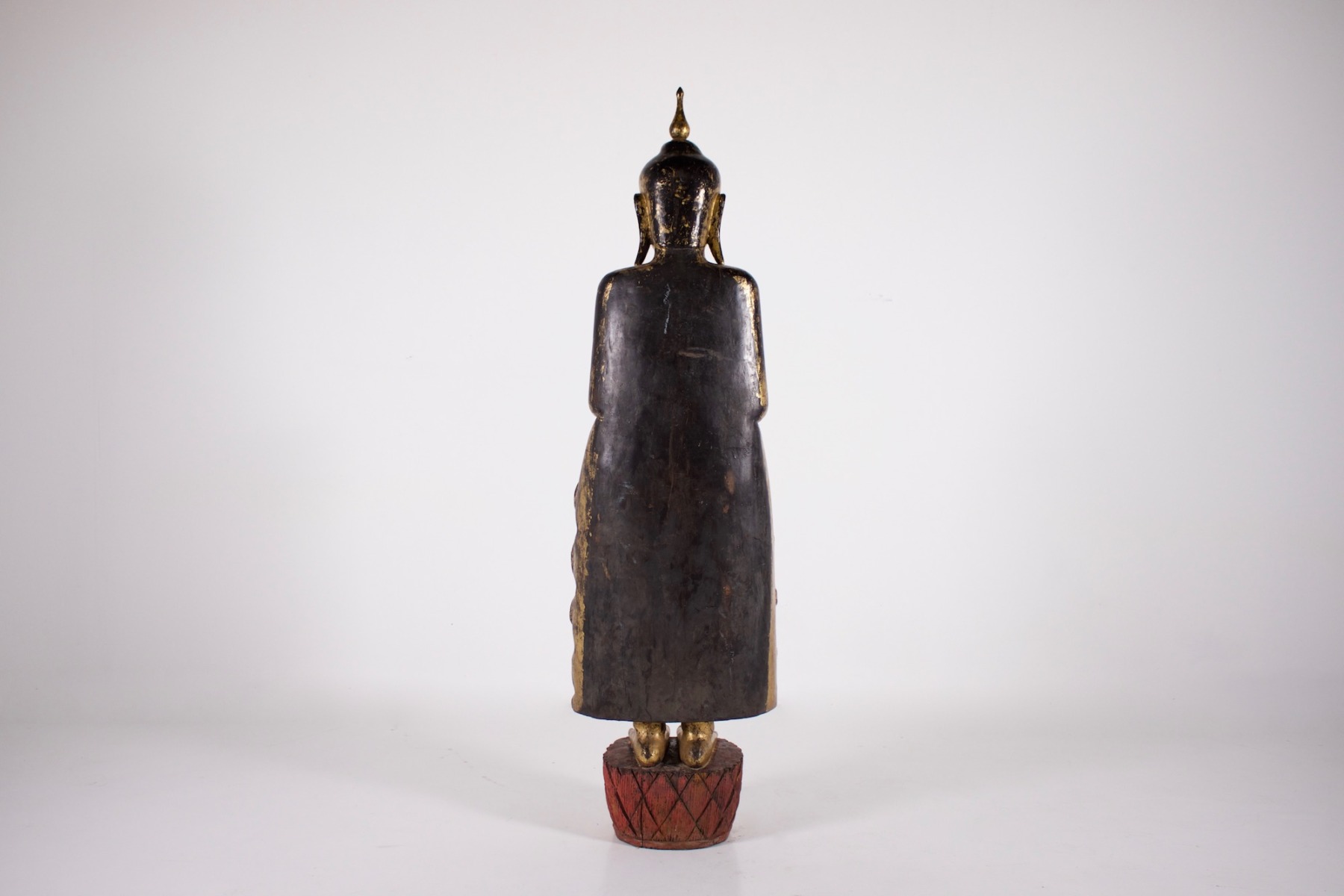
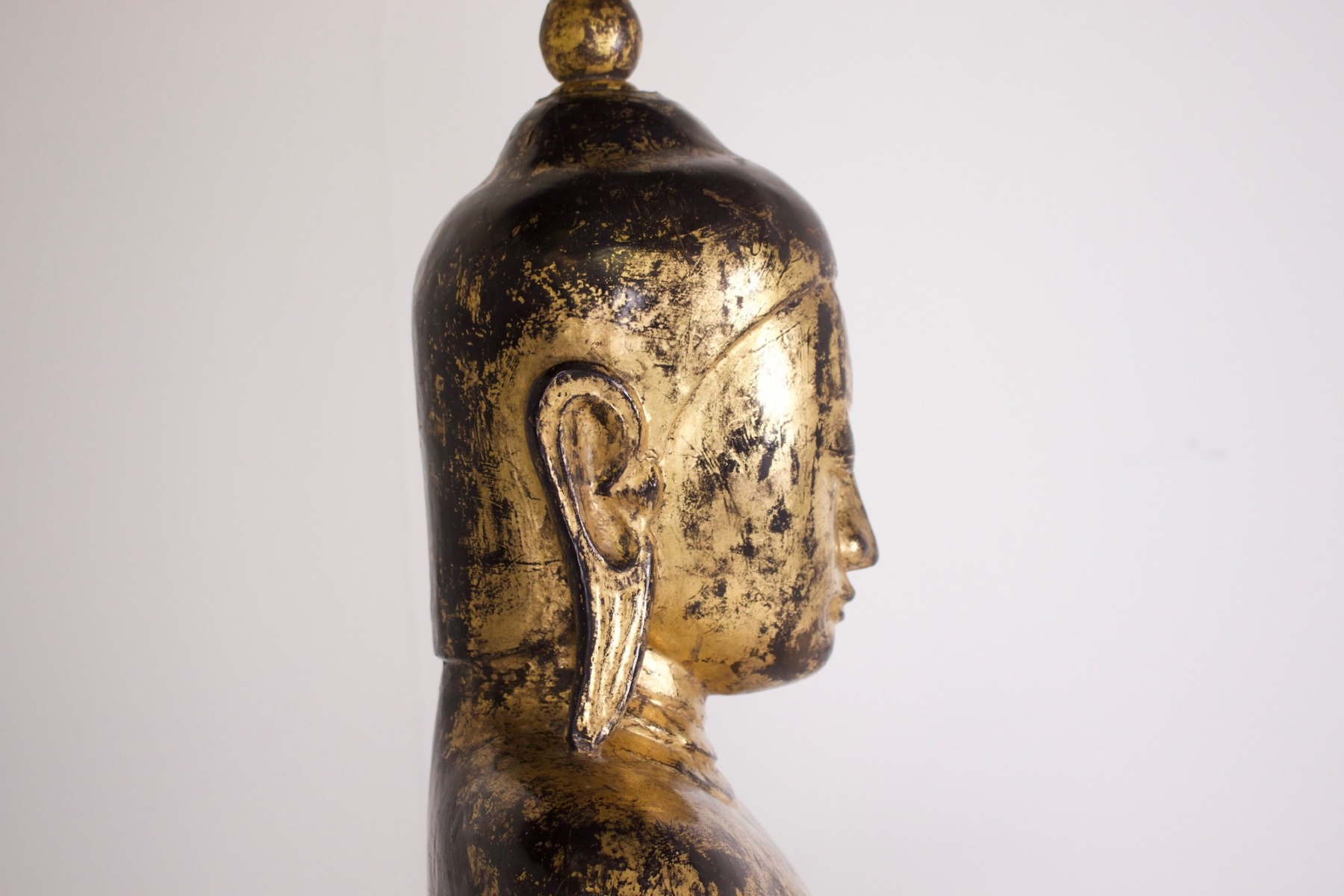
Large Burmese Standing Buddha in Pātra-Mudrā (163cm)
€9800,00
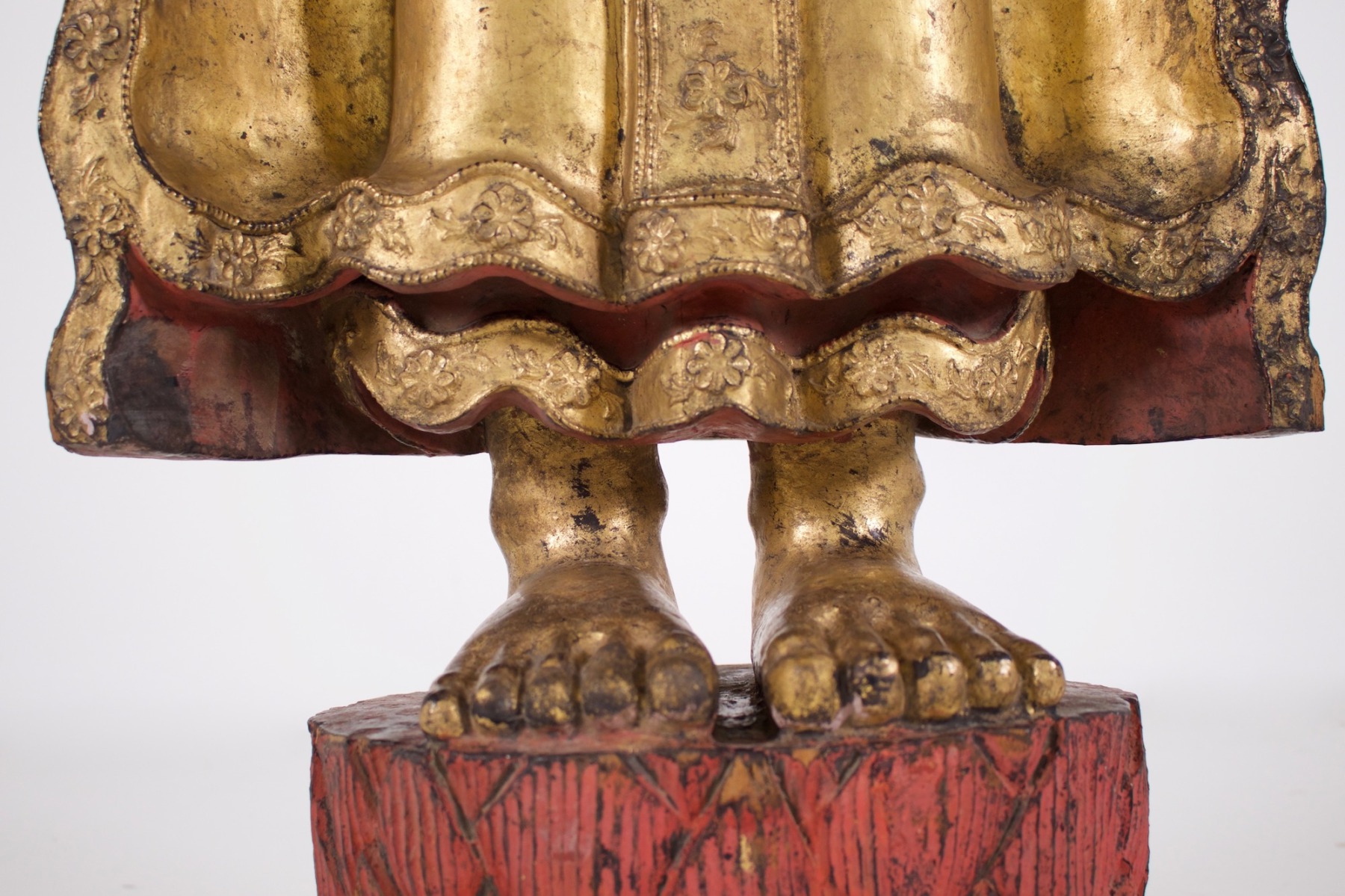
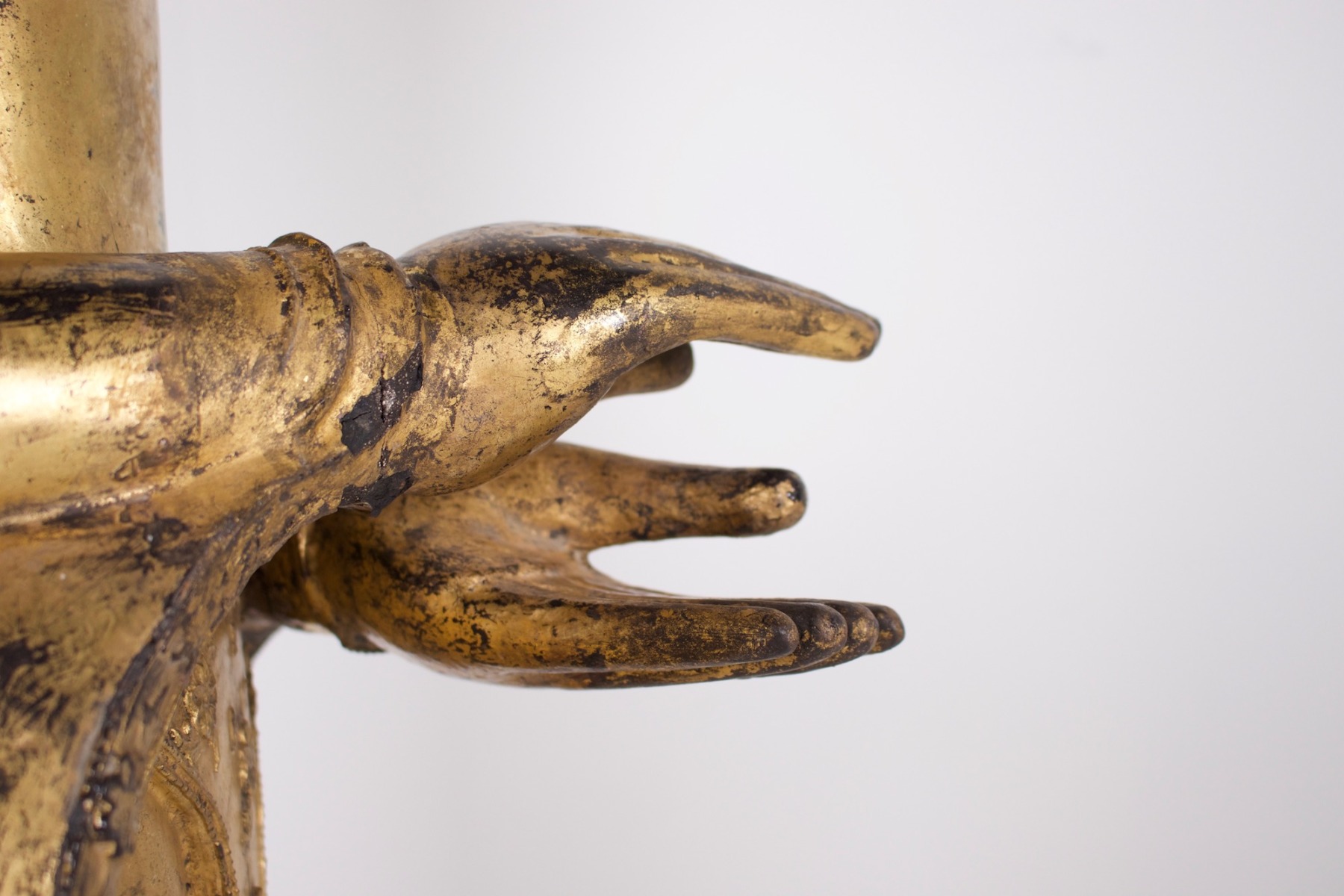
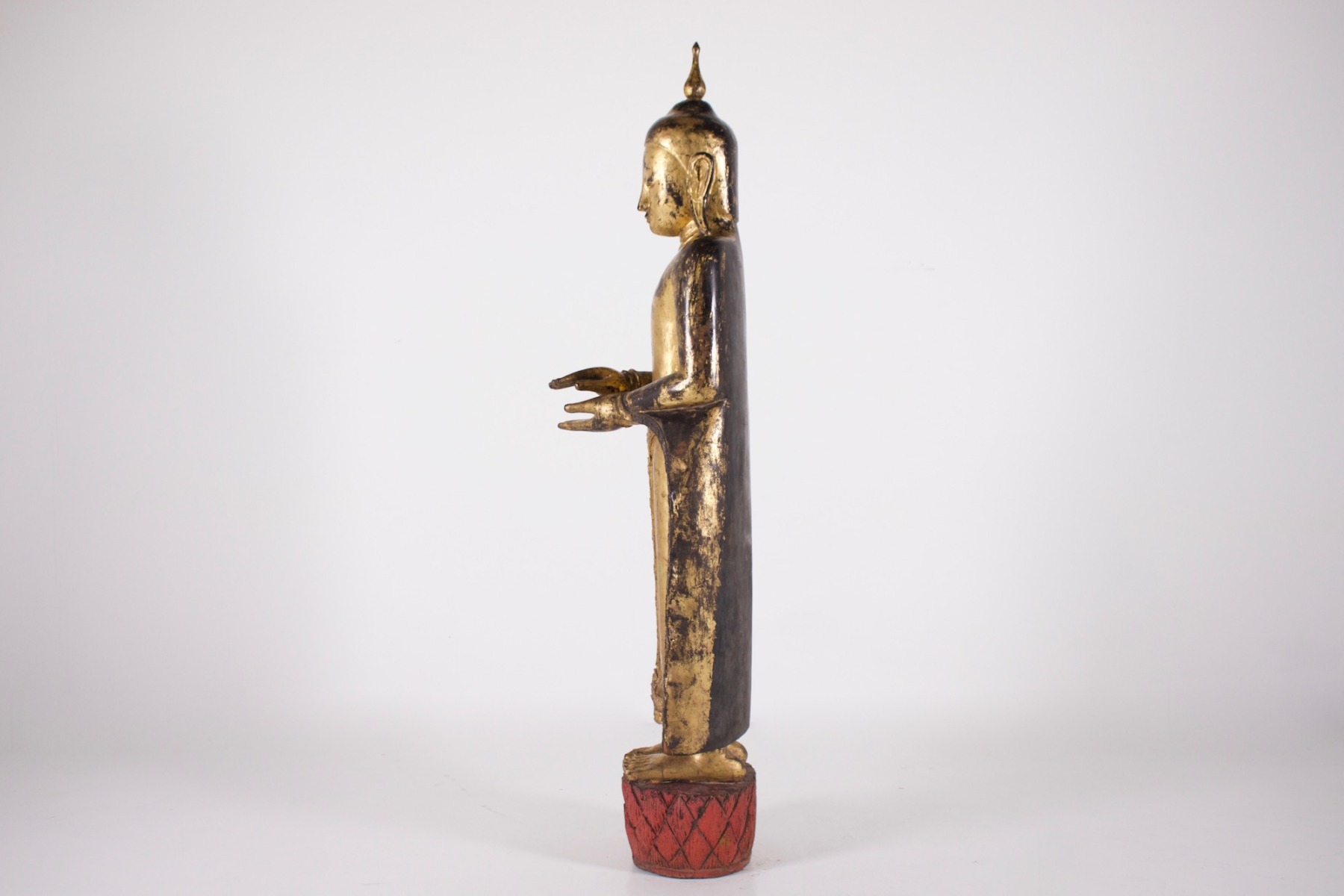
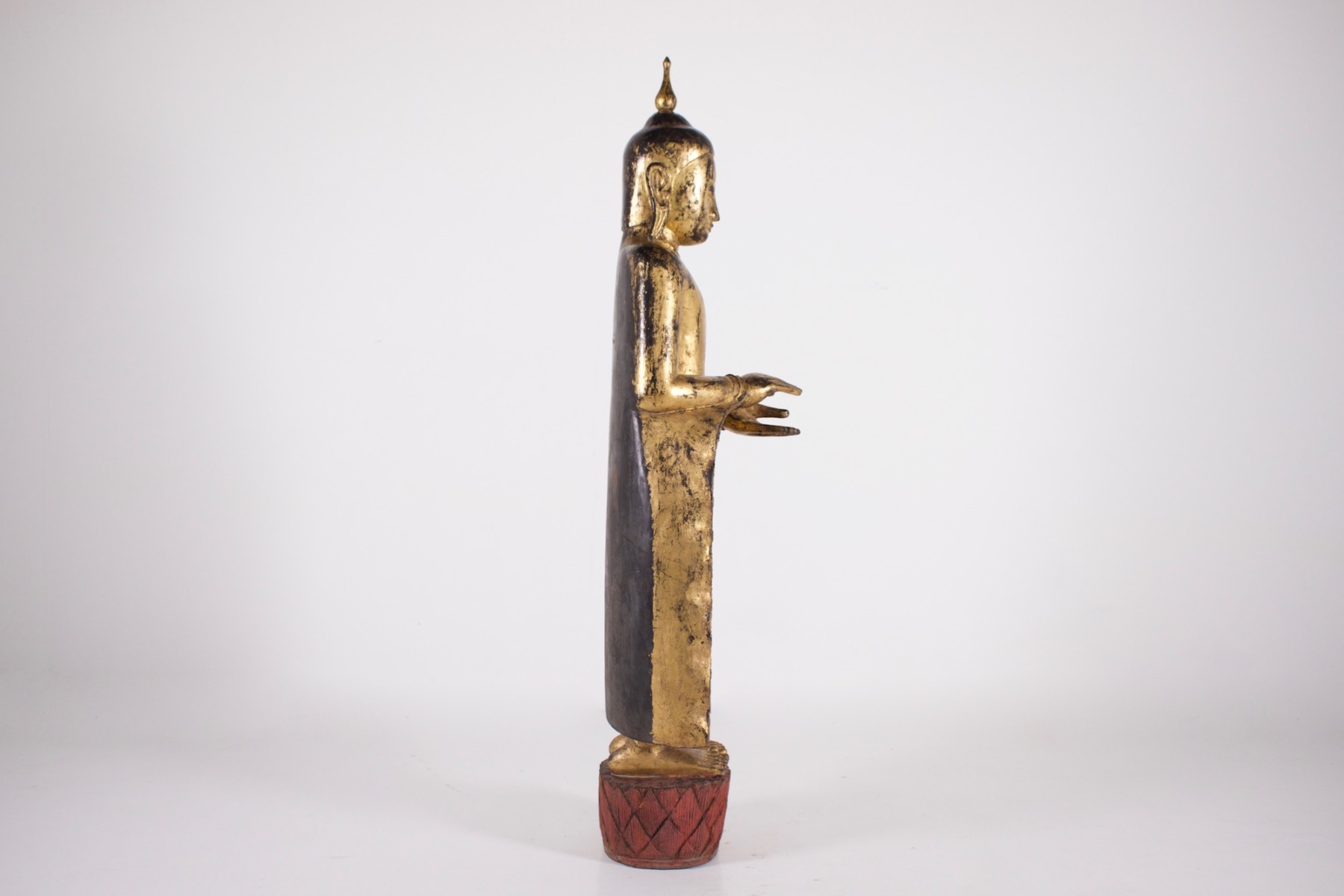
- Imposing Burmese image of the Buddha in lacquered and gilded wood, represented on his pedestal adorned with stylized lotus petals. His pātra-mudrā hands, a gesture of acceptance of the offering, once held his alms bowl in which devotees placed their offerings.
- Mandalay period, 19th century.
- Provenance: Claude de Marteau Collection
- Sold with certificate of origin.
- H 163 cm x W 45 cm x D 26 cm
- Weight: approx. 44kg
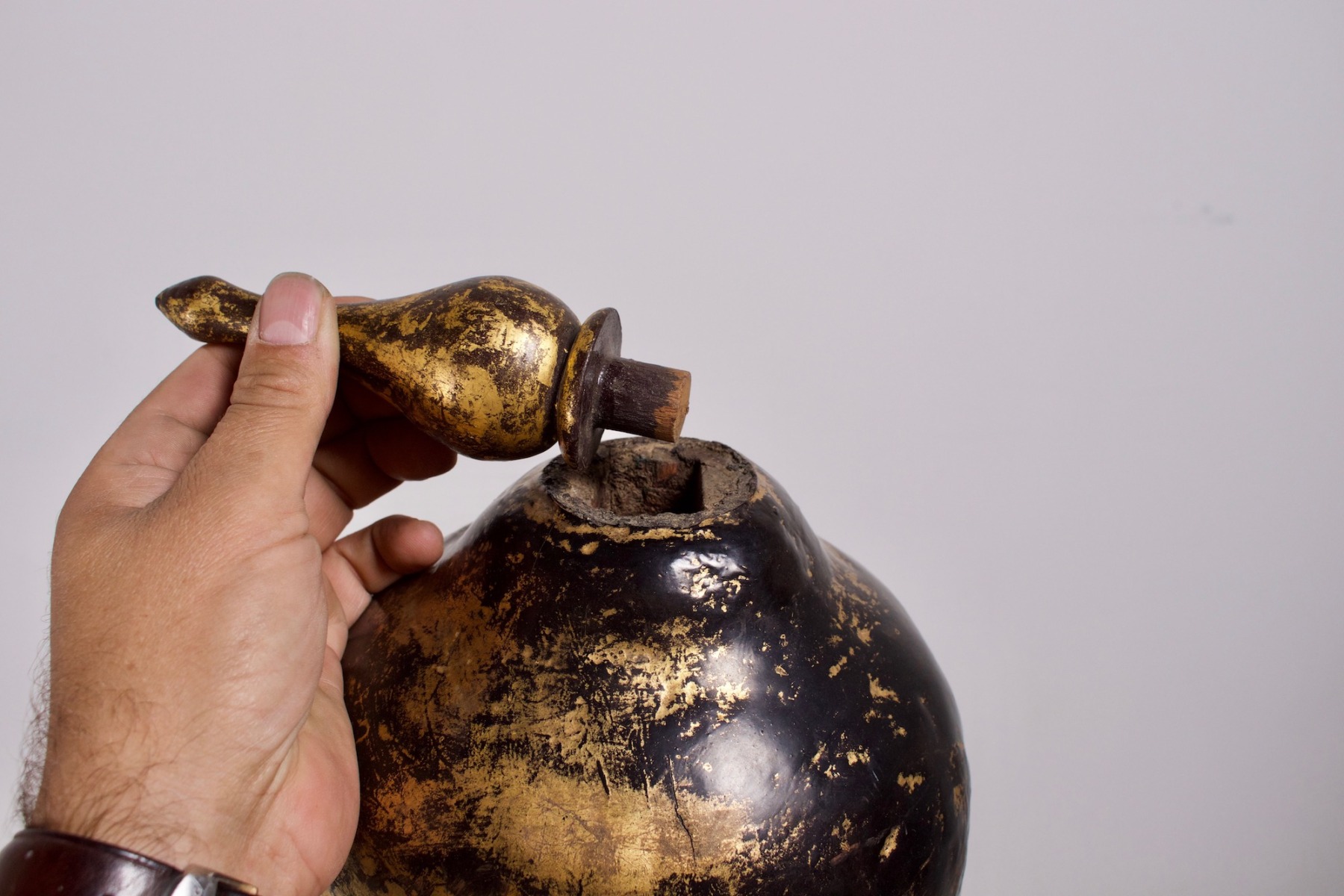
- The flame is probably not original, although it was found attached to the statue in Claude de Marteau’s house.
- Buddhist art is distinguished by its abundant symbolism, rich history and numerous regional variations, each bearing the cultural and spiritual imprint of its place of origin. Among these emblematic expressions is the statue of Buddha with his alms bowl. These sacred images reflect the Theravada Buddhist tradition (Teaching of the Ancients), which emphasizes the preservation of the original teachings of the historical Buddha and monastic life (as in the Pali canon) as the path to enlightenment….This posture symbolizes commitment to a life of humility, discipline and devotion.
- Originating in Mandalay, Burma’s last royal capital, this sculpture goes beyond the simple aesthetic dimension: it expresses the fundamental values of Buddhism and bears witness to the profound respect accorded to monastic life.
1 available in store

Delivery in Belgium

Delivery in France

Delivery in Luxembourg

Worldwide delivery
Founded in 1857 by King Mindon, Mandalay quickly became a major center of Buddhist culture and spirituality. This city, marked by a strong religious tradition, saw the development of a singular sculptural style, known as the Mandalay style (1853-1948). Developed under the Konbaung dynasty (1752-1885), it is characterized by finesse of execution, elegance of form and a particular spiritual intensity.
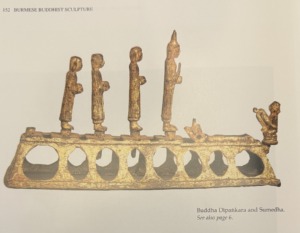
Dipankara is shown in the first position, standing on the right. Sumedha (the future Shakyamuni, is in front of him)
In a previous life, Gautama Buddha (Shakyamuni), then called Sumedha, was a wealthy Brahmin turned hermit. He knelt down and spread his long black hair on the ground so that Dipankara Buddha could cross a mud puddle without dirtying his feet. This encounter took place long before the awakening of Sumedha, who would later become Gautama Buddha (Shakyamuni).
Bibliography: “Burmese Buddhist Sculpture – The Johan Möger Collection”, Otto Karow, White Lotus, p.152