






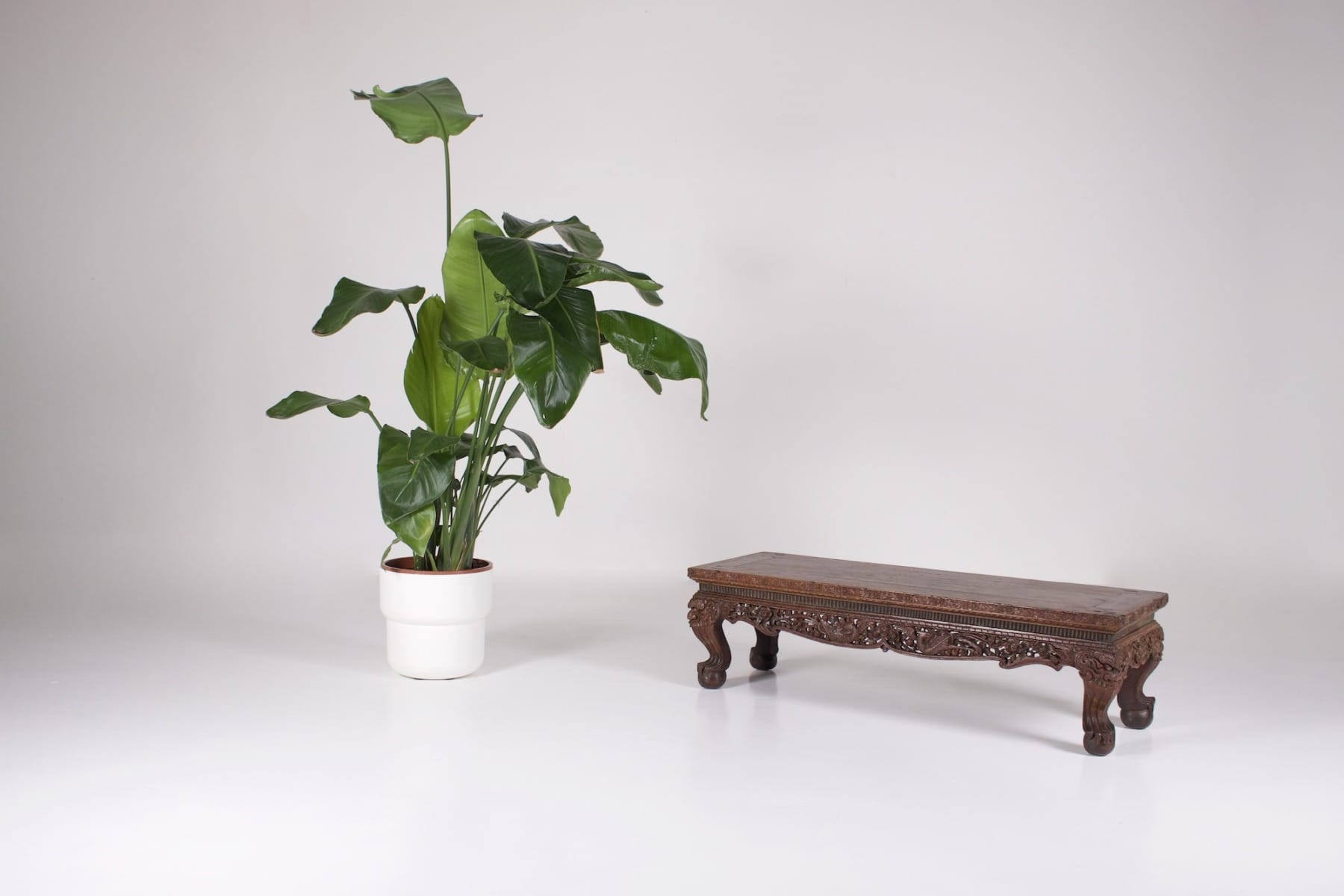
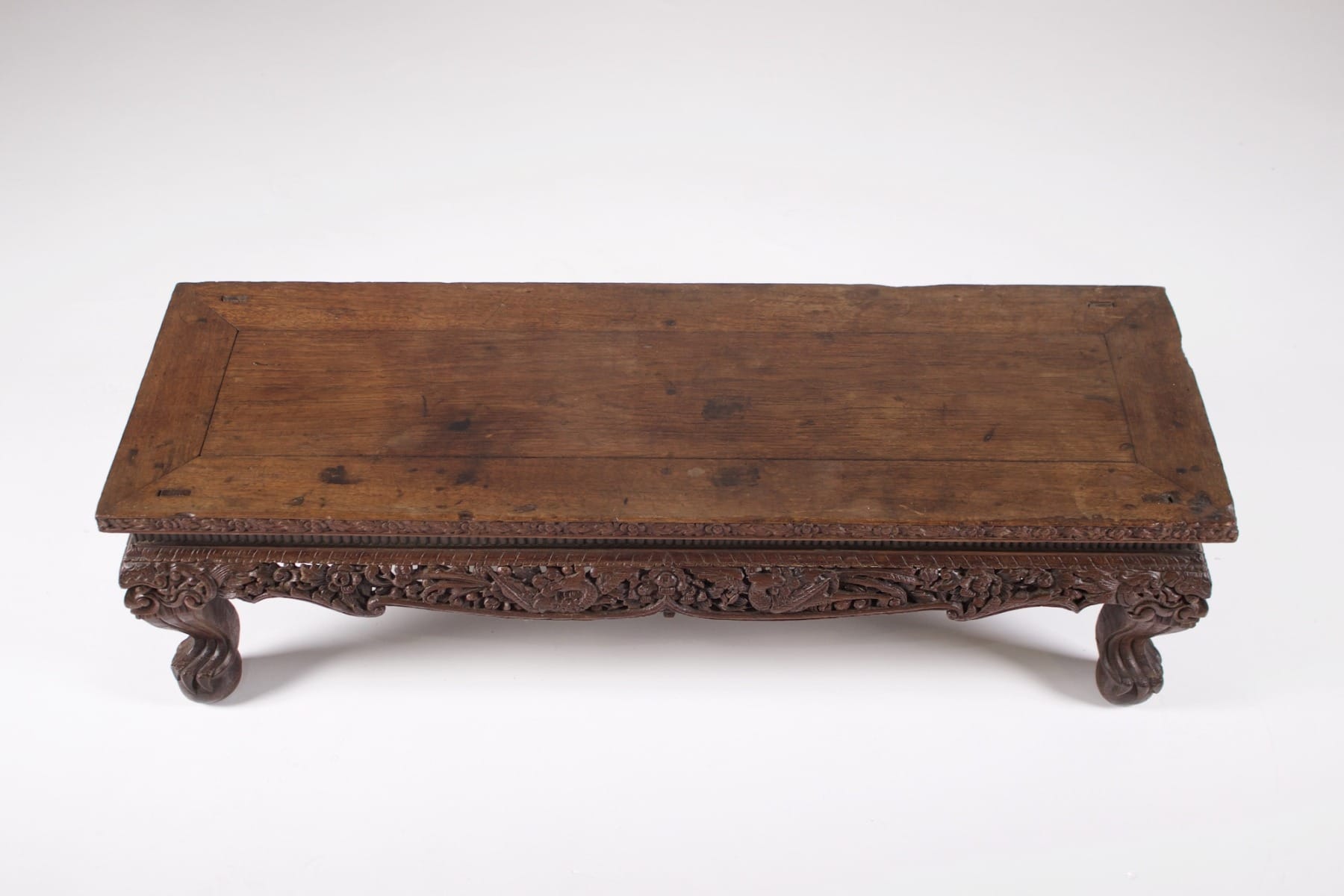
Devotional base, small Burmese altar
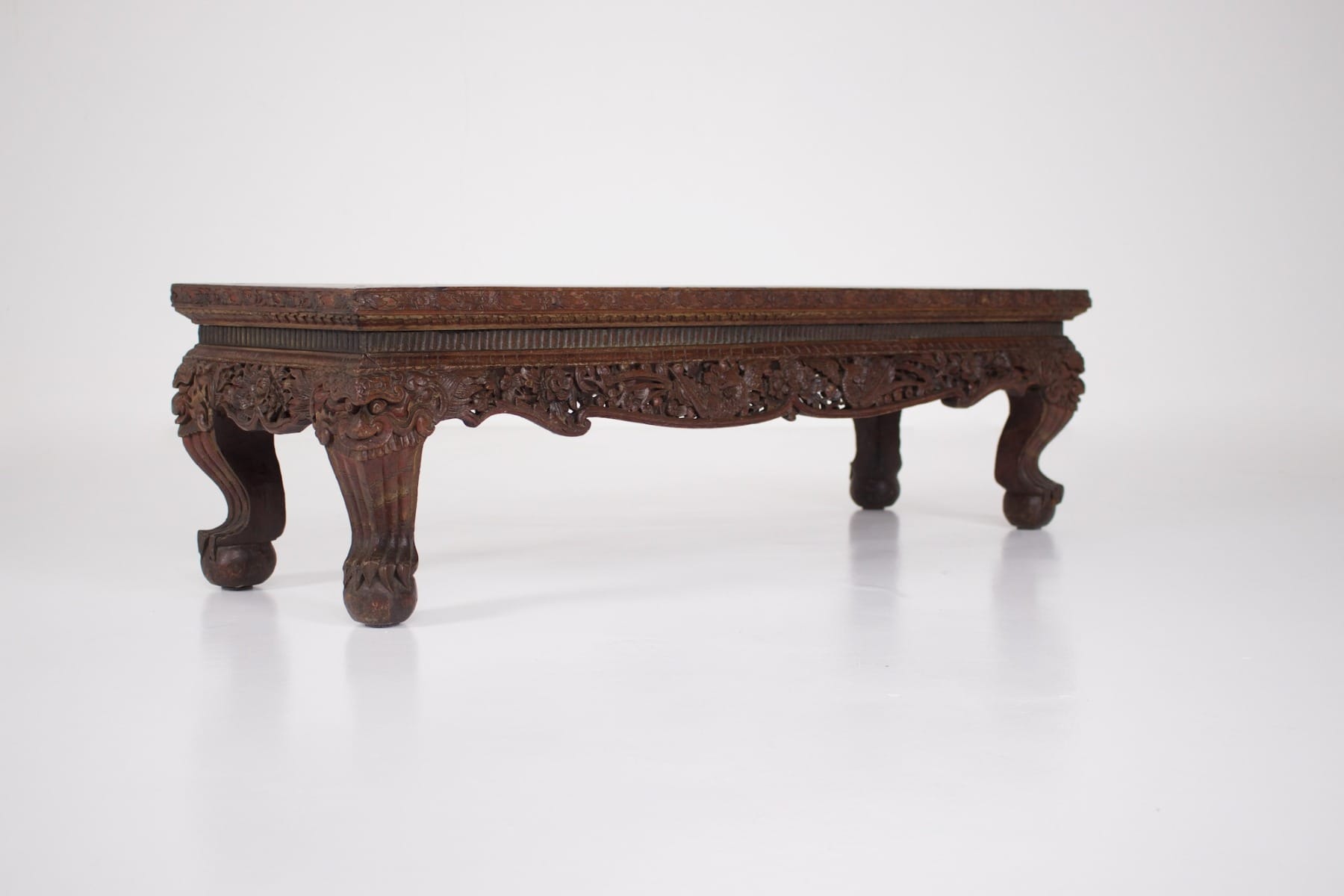
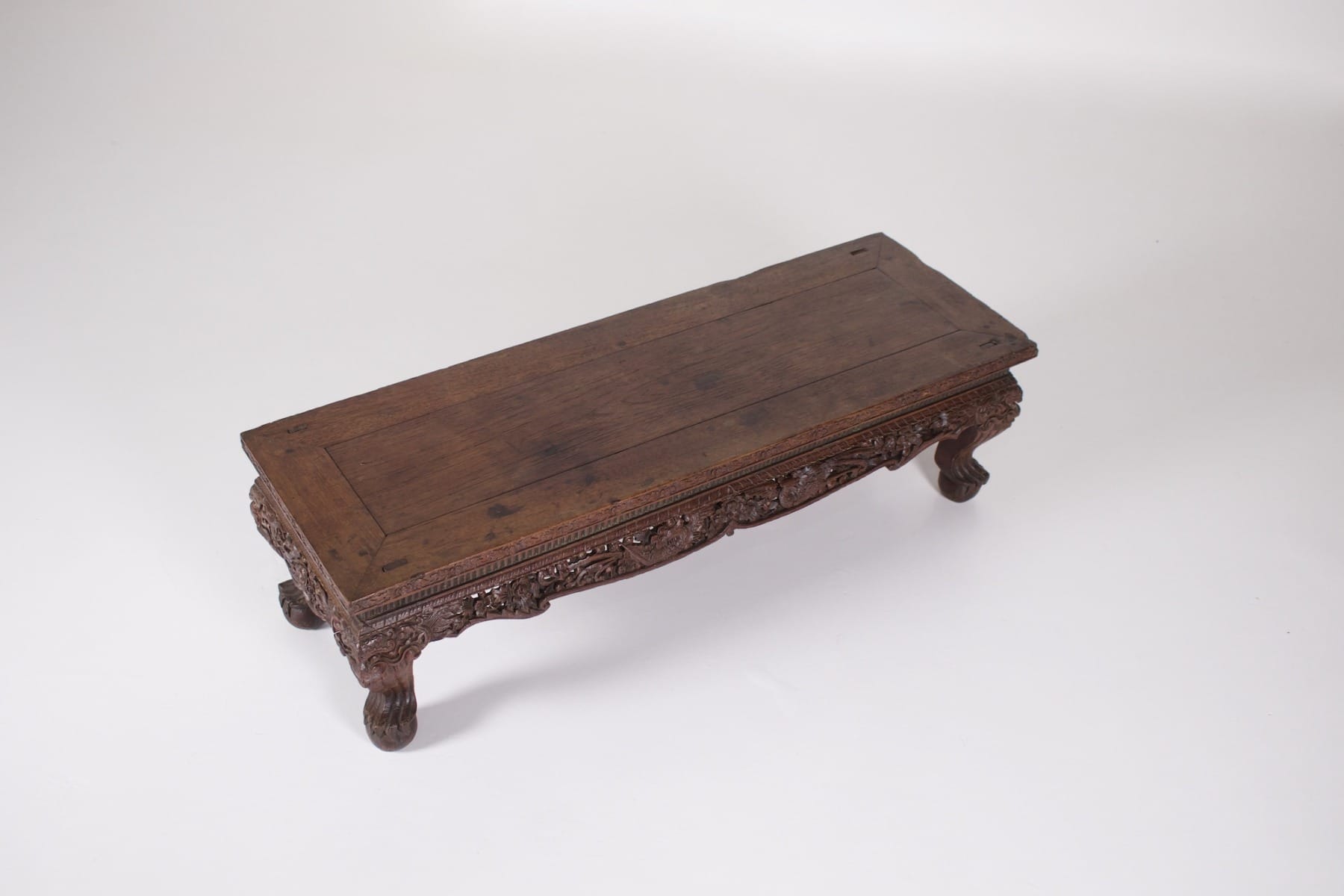
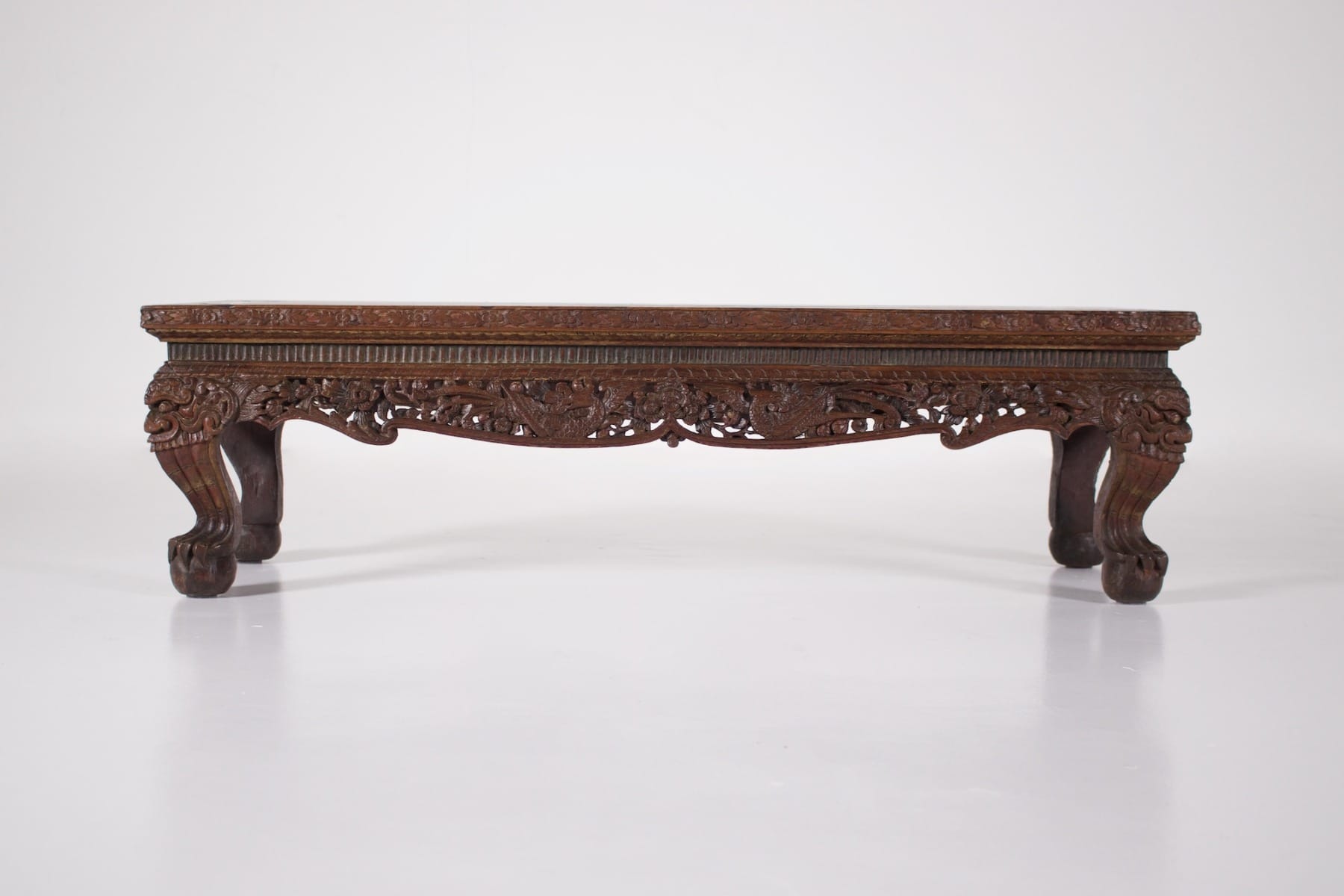
- This carved wooden Burmese altar dates from the late Konbaung period (19ᵉ century) and reflects a striking stylistic fusion between traditional Burmese art and British colonial influences. The claw-and-ball feet, a motif emanating from the British Chippendale style, bear witness to this Western influence while retaining a deeply Burmese structure and ornamentation.
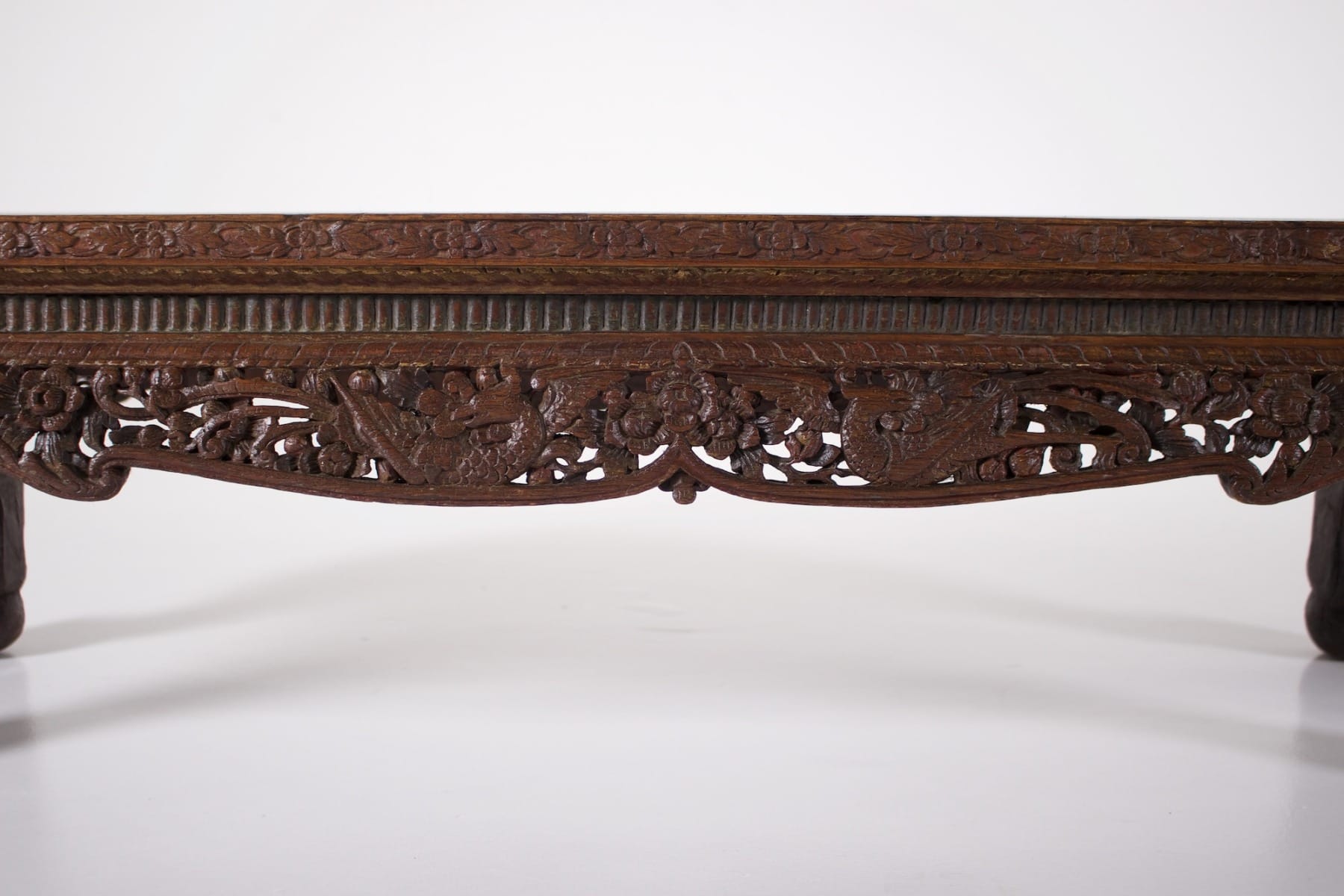
- The richly sculpted sides are adorned with frangipani blossoms, makaras (protective mythological creatures) and hamsas (sacred birds) symbolizing purity and spiritual transcendence. The back of the altar, finished in the most sober style, attests to its ritual use: to be placed against a wall, thus concentrating all the decorative richness on the visible parts of the altar.
- This piece of furniture is a fascinating example of the evolution of Burmese art under colonial influence, while retaining a strong cultural and spiritual identity.
- Some areas still contain traces of red pigments (monks’ robes, courage, devotion, transformation) and yellow pigments (purity, light, enlightenment, awakening).
- Very good condition, with normal wear and tear from age and use.
- Provenance: Claude de Marteau Collection
- Sold with certificate of origin.
- W 100 CM X D 33 CM X H 29 CM.
Sold

The red frangipani is a tree known for its beautiful flowers and their fragrance, as well as for its wood, which is used in marquetry. The red frangipani flower is an important symbol for Buddhists, hence its name ” temple flower”.
Discover also...

Delivery to Belgium

Delivery to France

Delivery to Luxembourg
