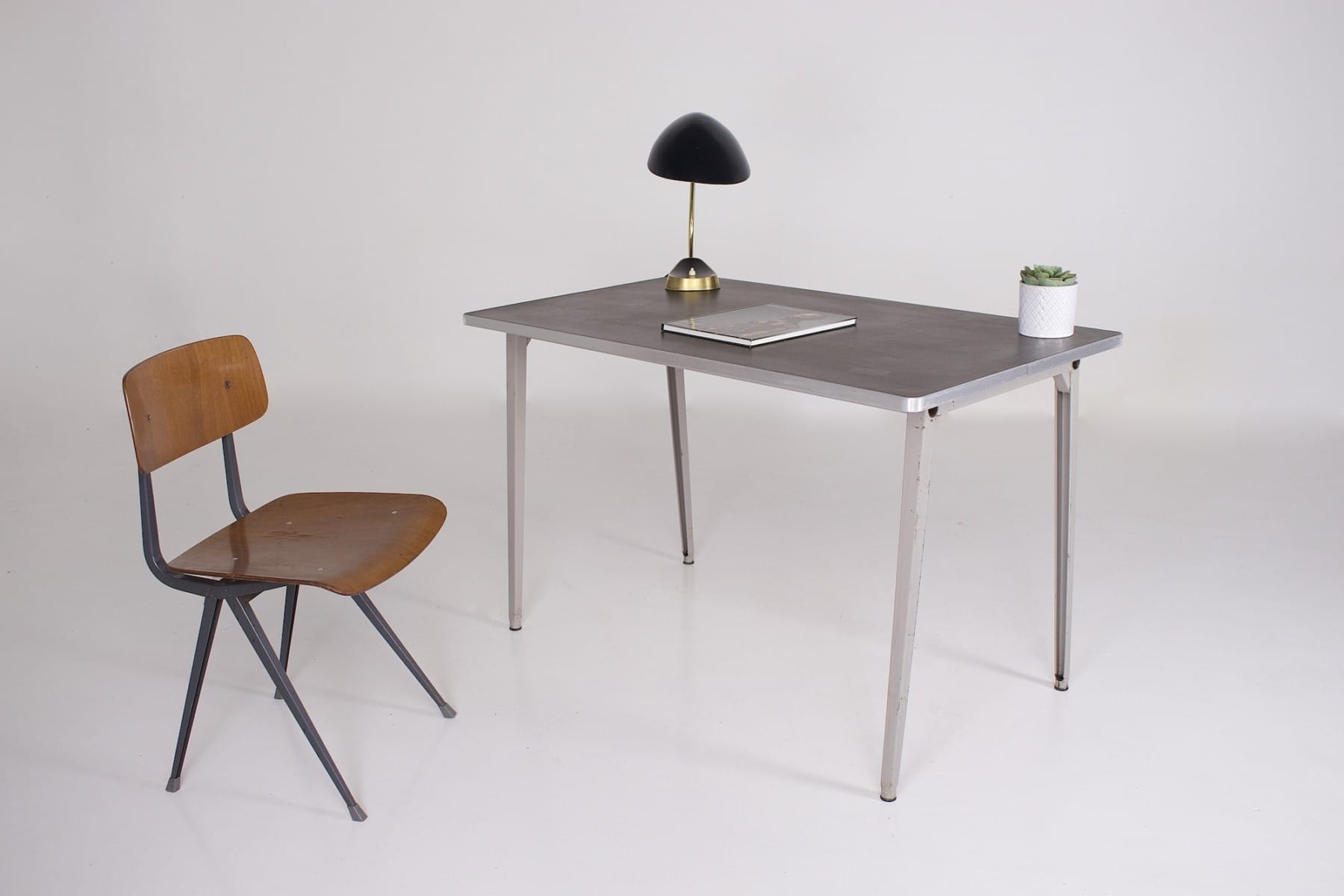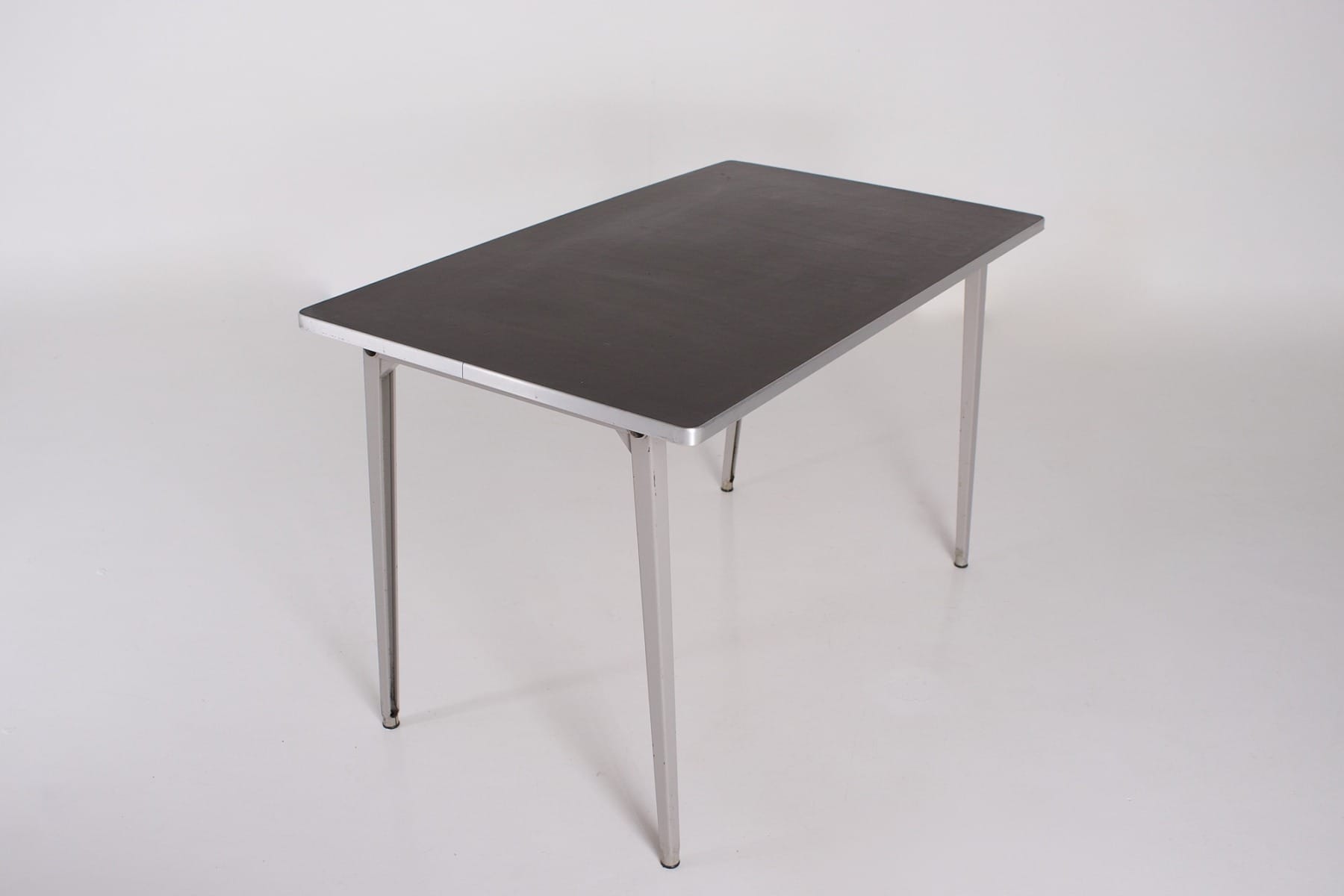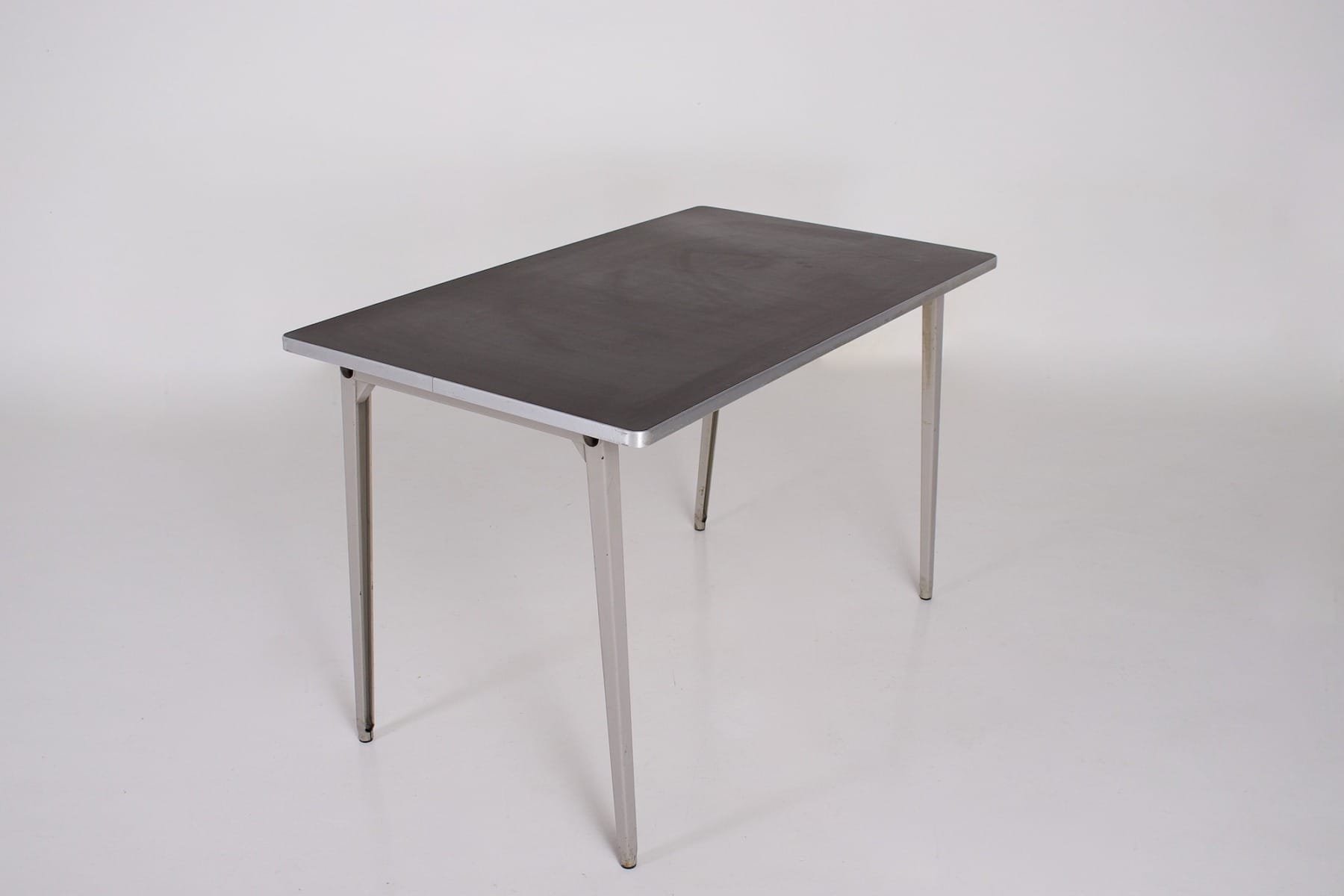
Reform Table – Friso Kramer
€680,00

Friso Kramer (1922-2019), Dutch designer, left his mark on post-war modernist furniture through his creations for Ahrend and De Cirkel. Discover our selection of Revolt and Result chairs, Reform tables, consoles, lecterns, and workshop stools.
Friso Kramer (1922-2019) is among the leading figures of post-war Dutch industrial design. He joined De Cirkel in 1948 and developed functional furniture for Ahrend intended for serial production. His work rests on a constant pursuit of simplicity, economy of materials, and ergonomics, in an approach where each element responds to a precise function.
From Revolt and Result chairs to Reform tables
In 1953, Friso Kramer designed the Revolt chair, whose base in folded sheet steel marked an evolution in the conception of institutional seating. In 1958, he developed the Result chair with Wim Rietveld, combining a light metal structure with a seat and backrest in thermoformed wood. These two creations testify to the renewal of Dutch industrial design during the 1950s.
This same constructive pursuit is found in the Reform table, conceived in 1955 for Ahrend De Cirkel. Its bent steel base, thin top, and balanced proportions give it a particularly airy silhouette. Its robust construction responds to the demands of professional furniture while retaining great simplicity of design.
The models developed by Friso Kramer during the 1950s continued their diffusion throughout the 1960s, then the 1970s. Our Reform tables, used as much as work tables as refectory tables, illustrate the longevity of a model conceived nearly fifty years earlier.
Our selection comprises several Reform tables of the same model, as well as industrial Revolt and Result chairs, consoles, and lectern desks. These creations testify to the diversity of Friso Kramer’s work and his capacity to adapt modernist principles to everyday uses.
Workshop stools and draughtsman furniture
Professional furniture constitutes an important aspect of Friso Kramer’s work. His workshop and draughtsman stools, also used in laboratories, illustrate his attention to ergonomics. Their robust metal structures and adjustment mechanisms allow the seat to be adapted to different professional activities. Depending on the model, they can be equipped with a footrest and an adjustable backrest, notably to respond to the demands of different architectural drawing stations.
Our restoration workshop also works on Friso Kramer furniture. We have notably documented the disassembly of the armrests of a Resort armchair, a swivel model published by Ahrend De Cirkel in the 1960s. This article presents the different stages necessary for the restoration of its armrests and testifies to our experience in the restoration of modernist furniture.