



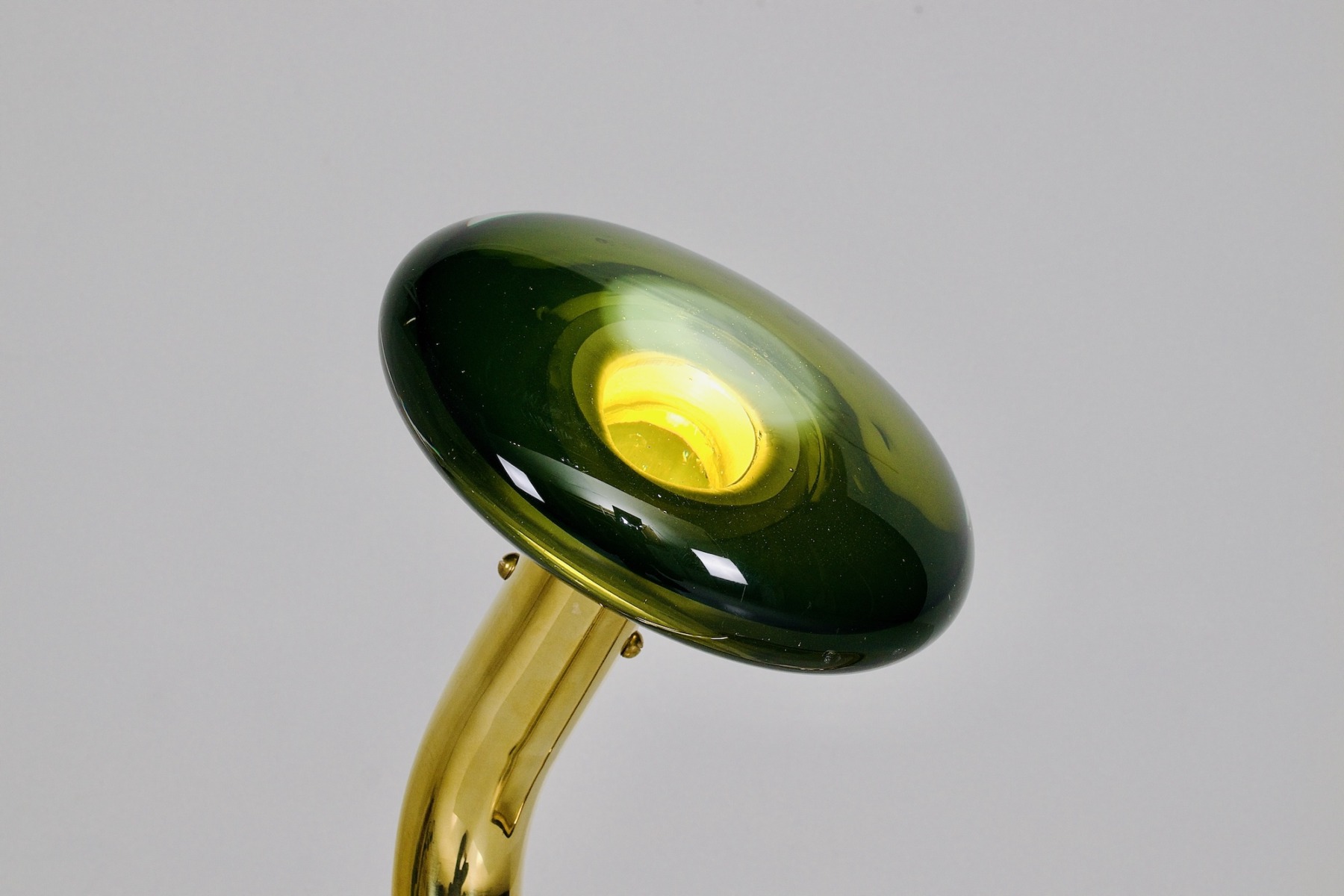
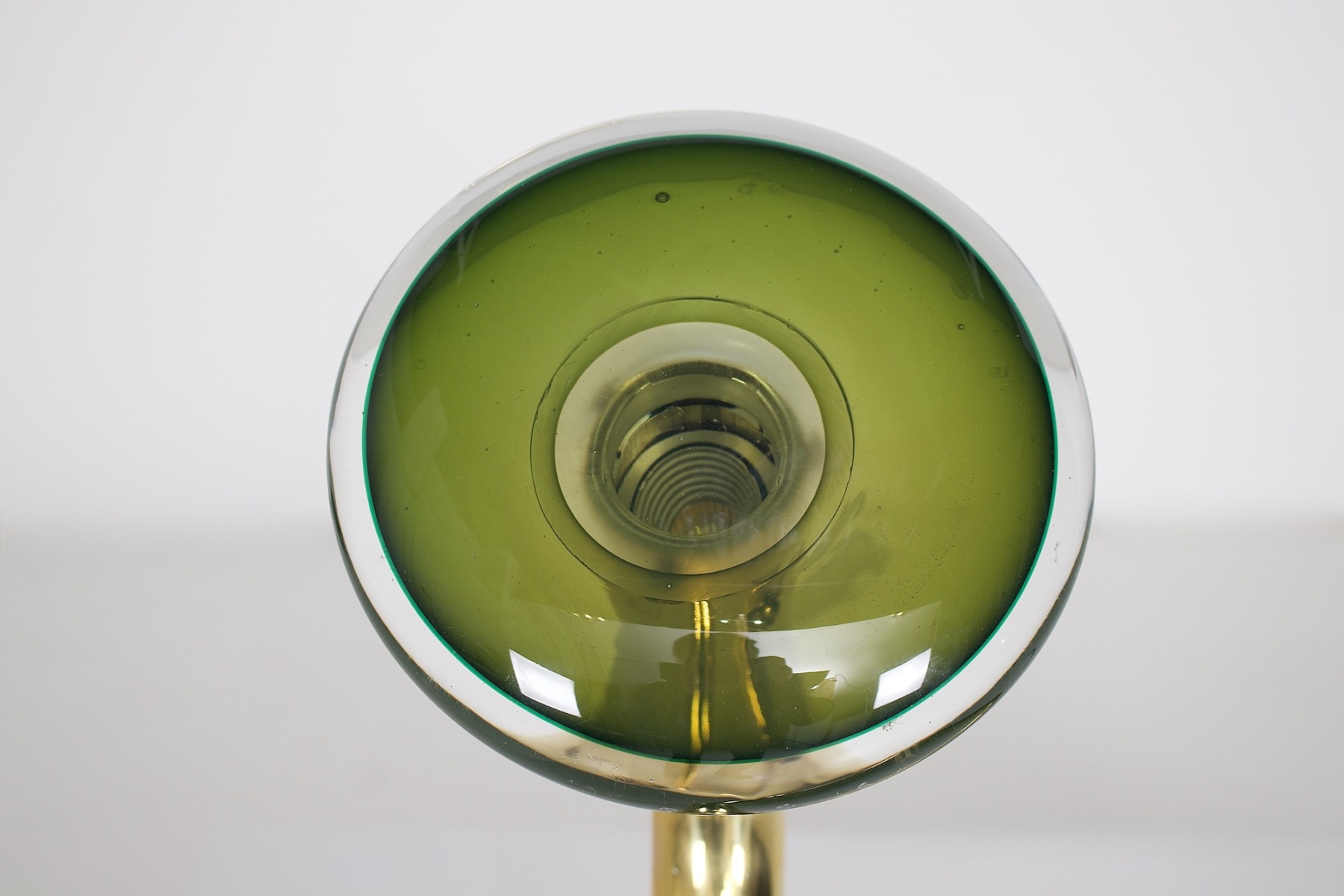
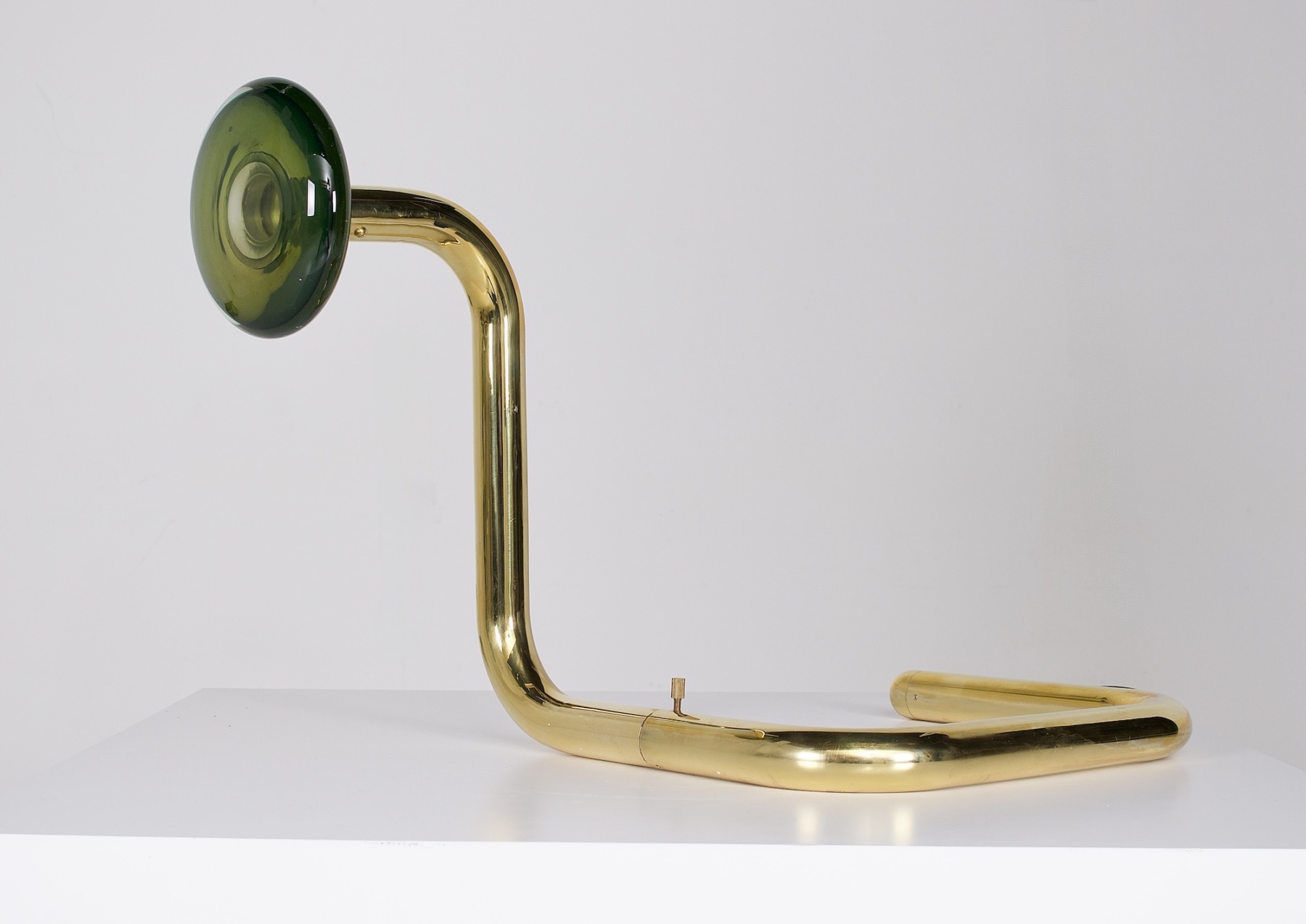
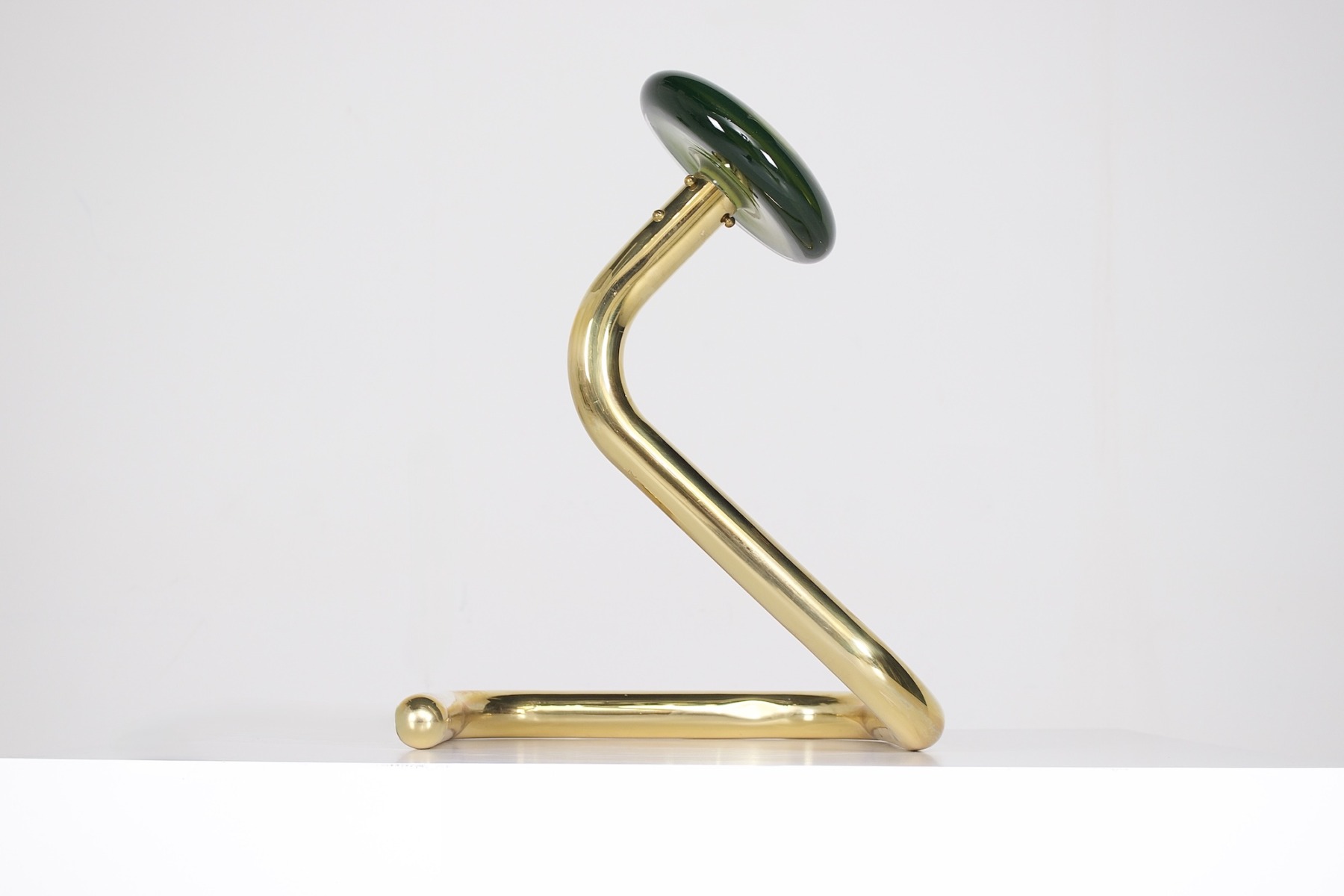

Mobile Sommerso Brass Lamp – Murano
€2800,00
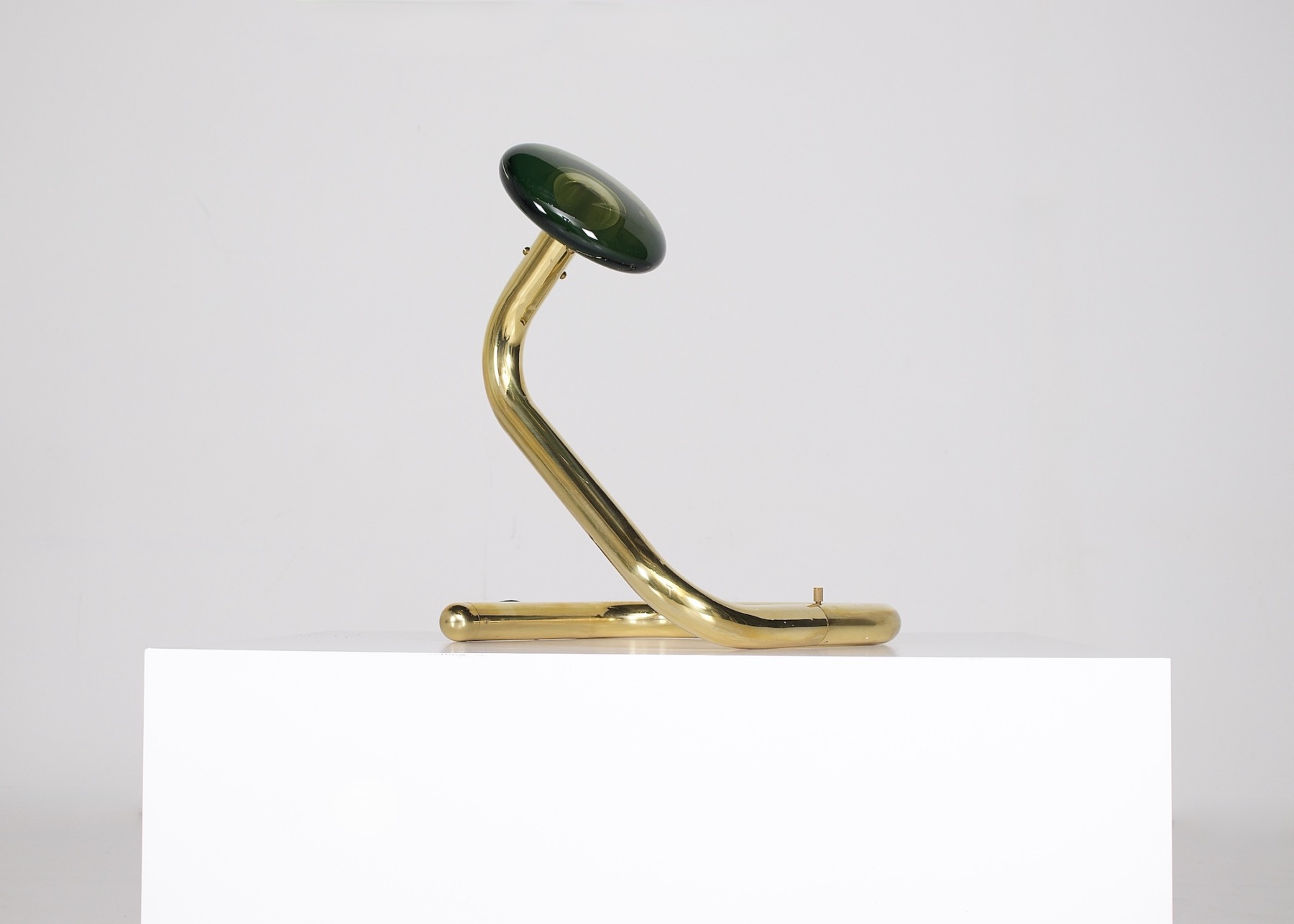
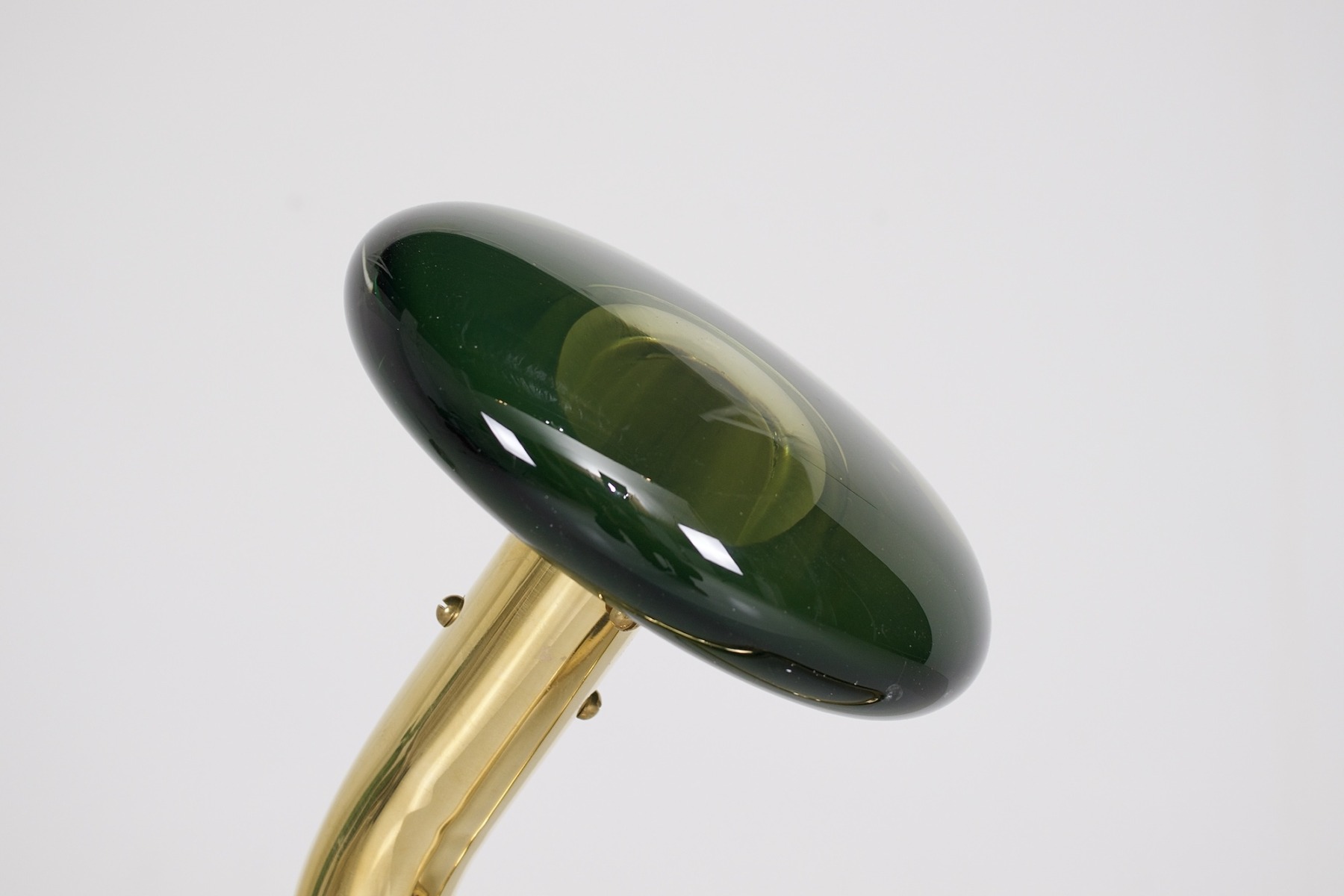
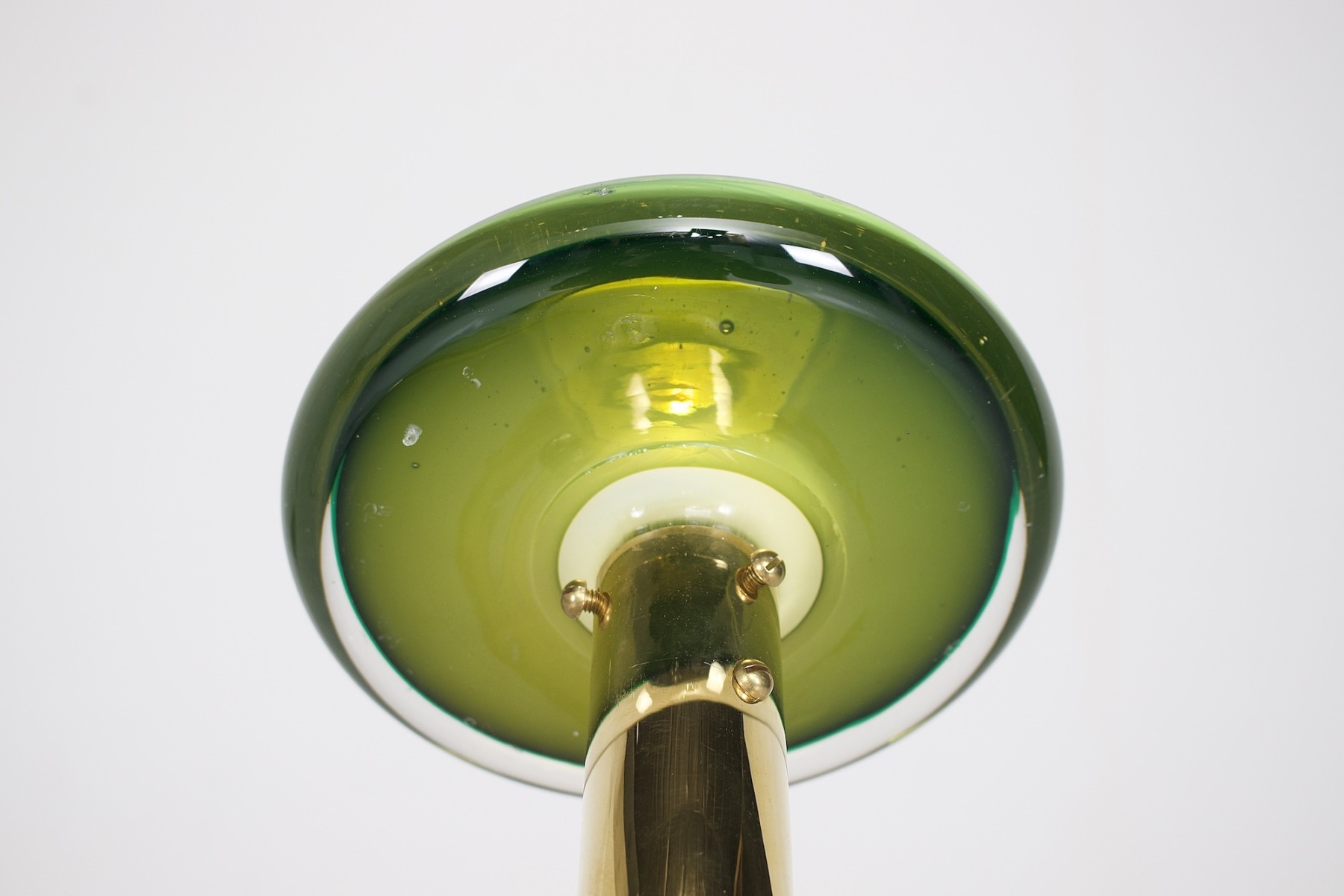
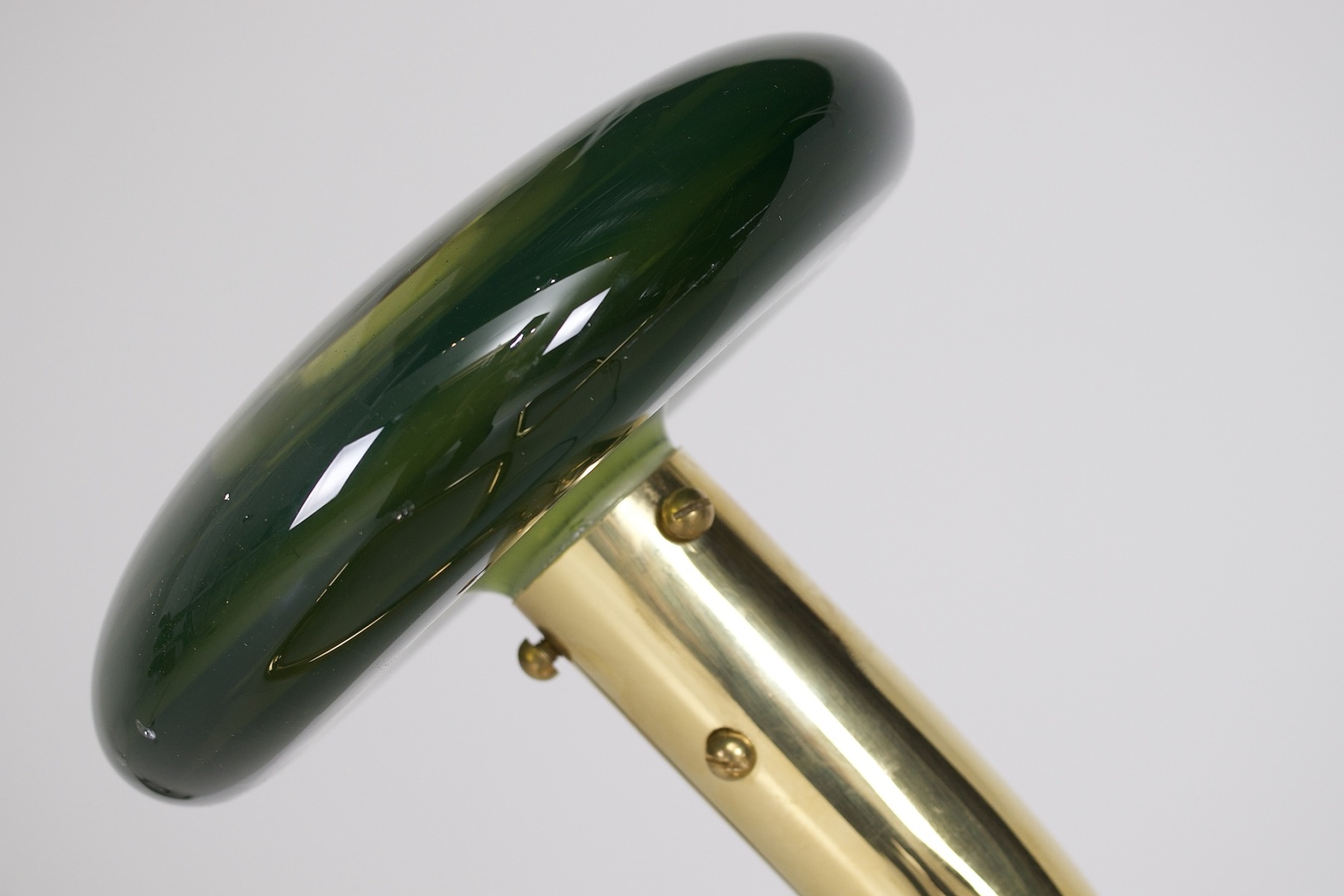
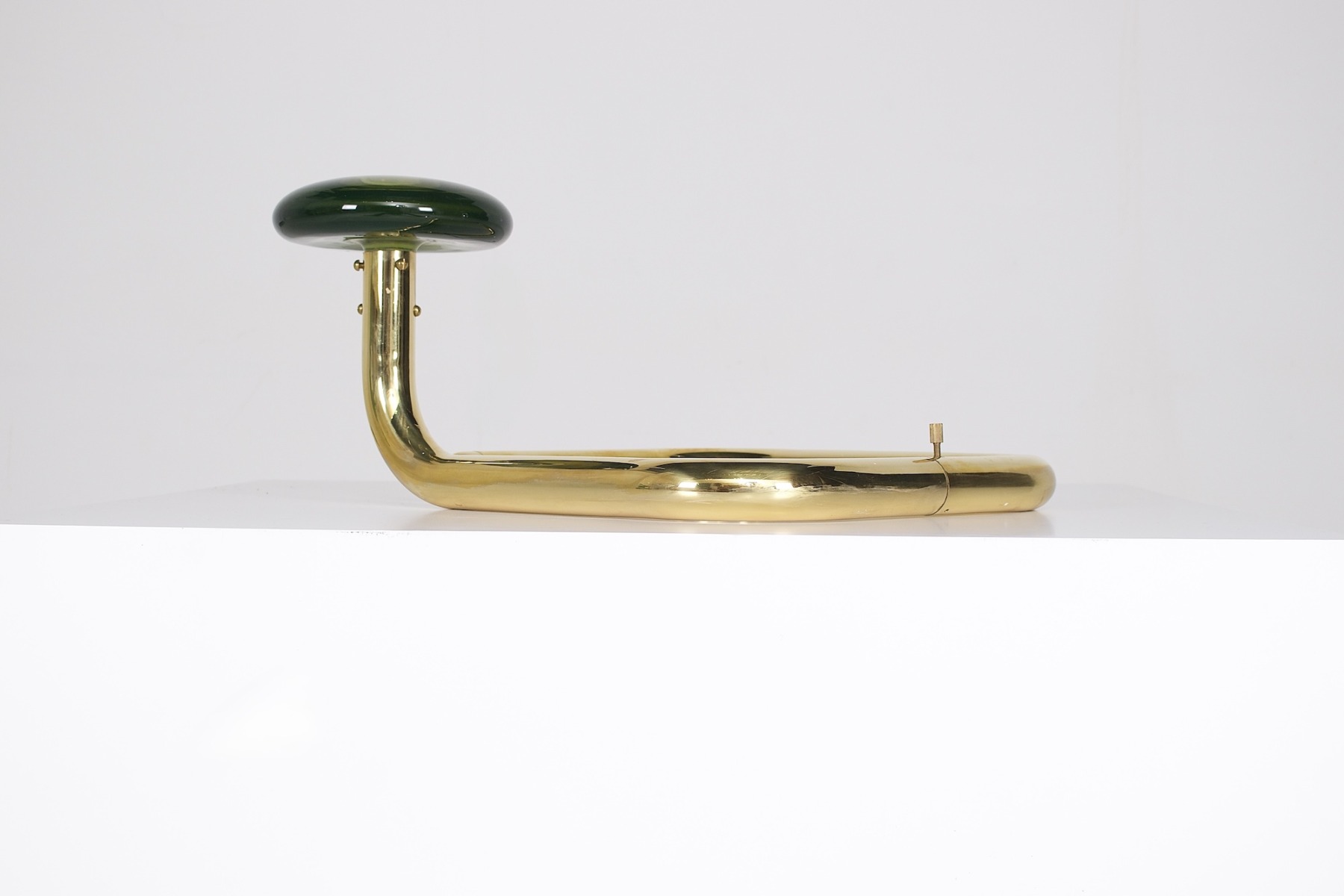
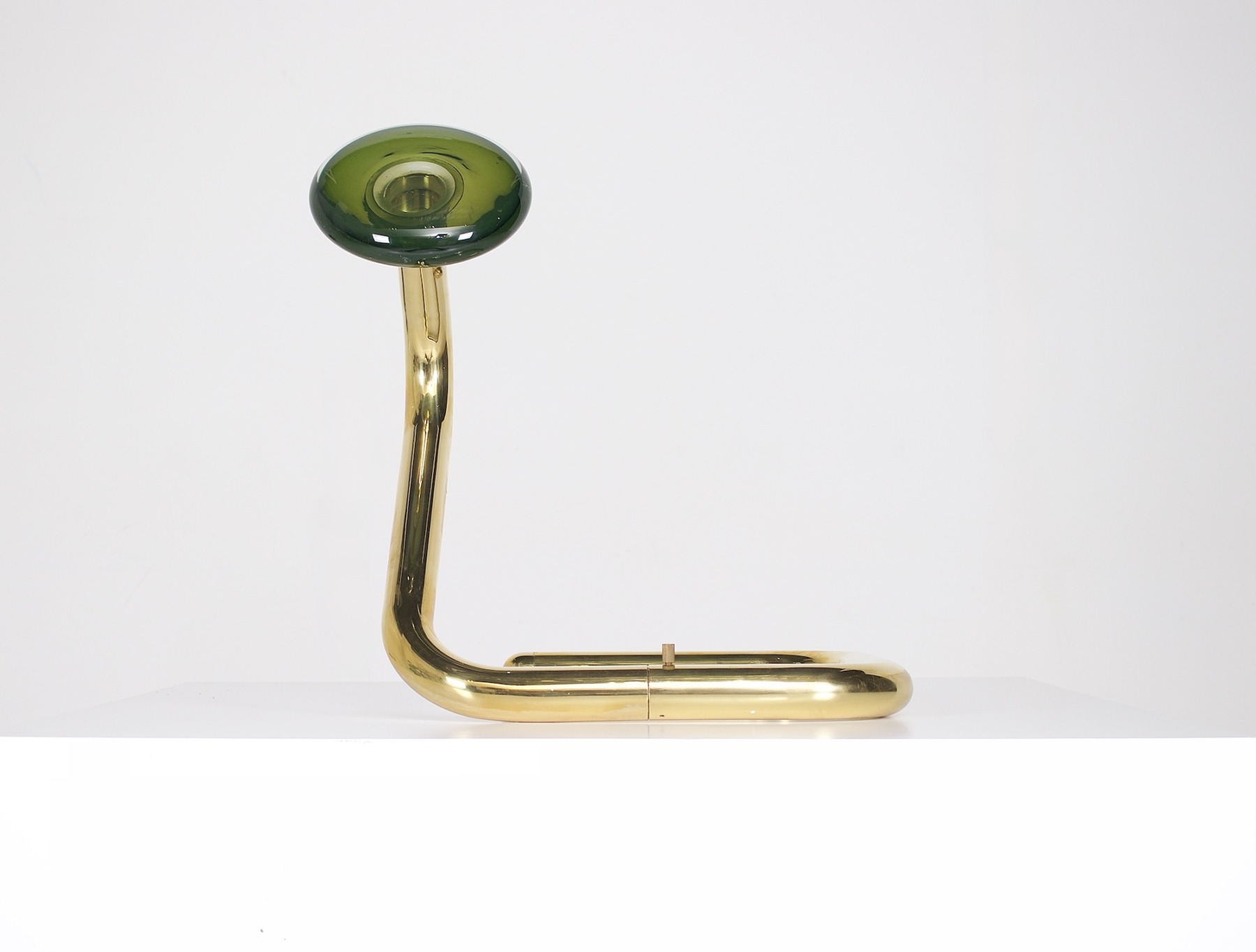
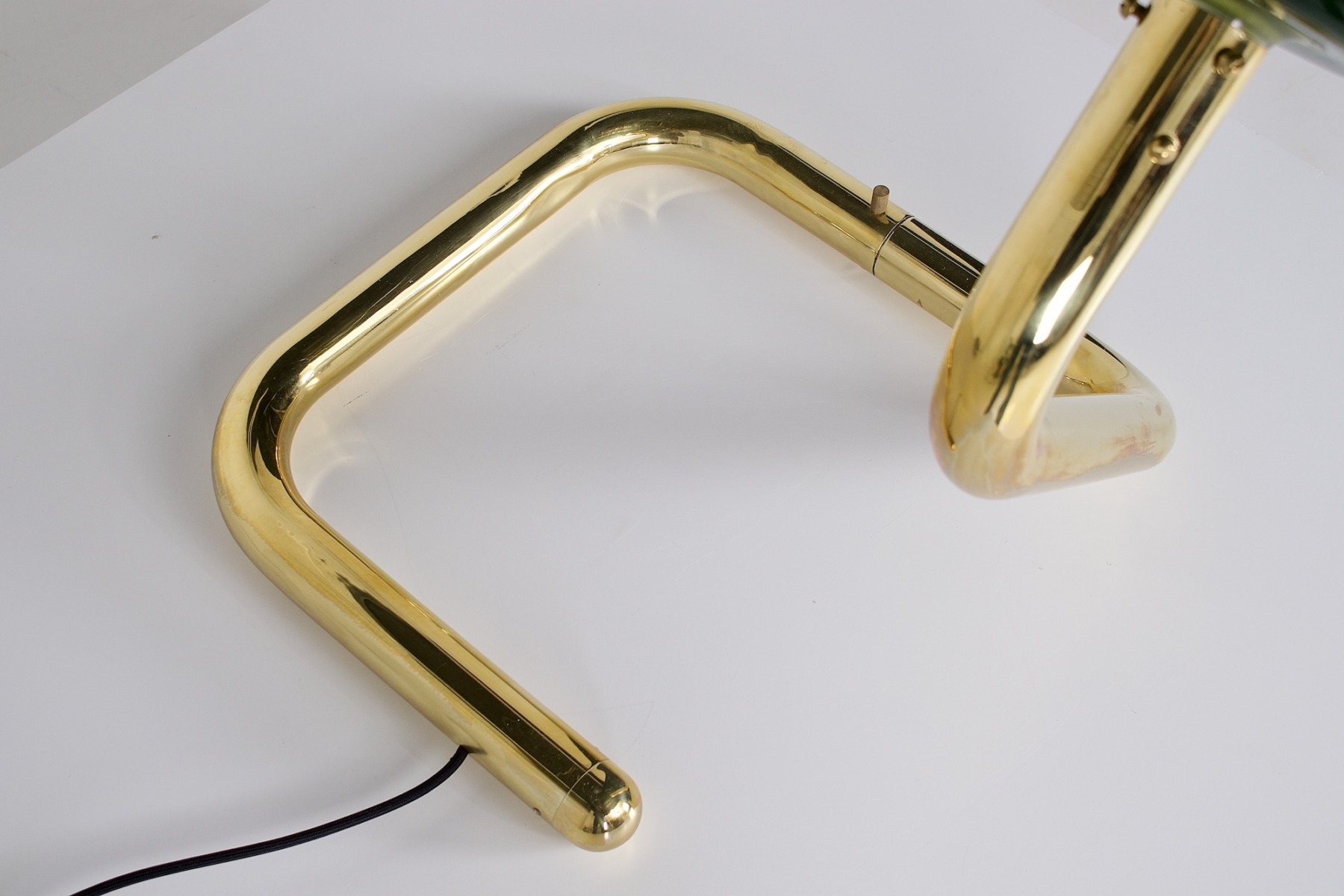
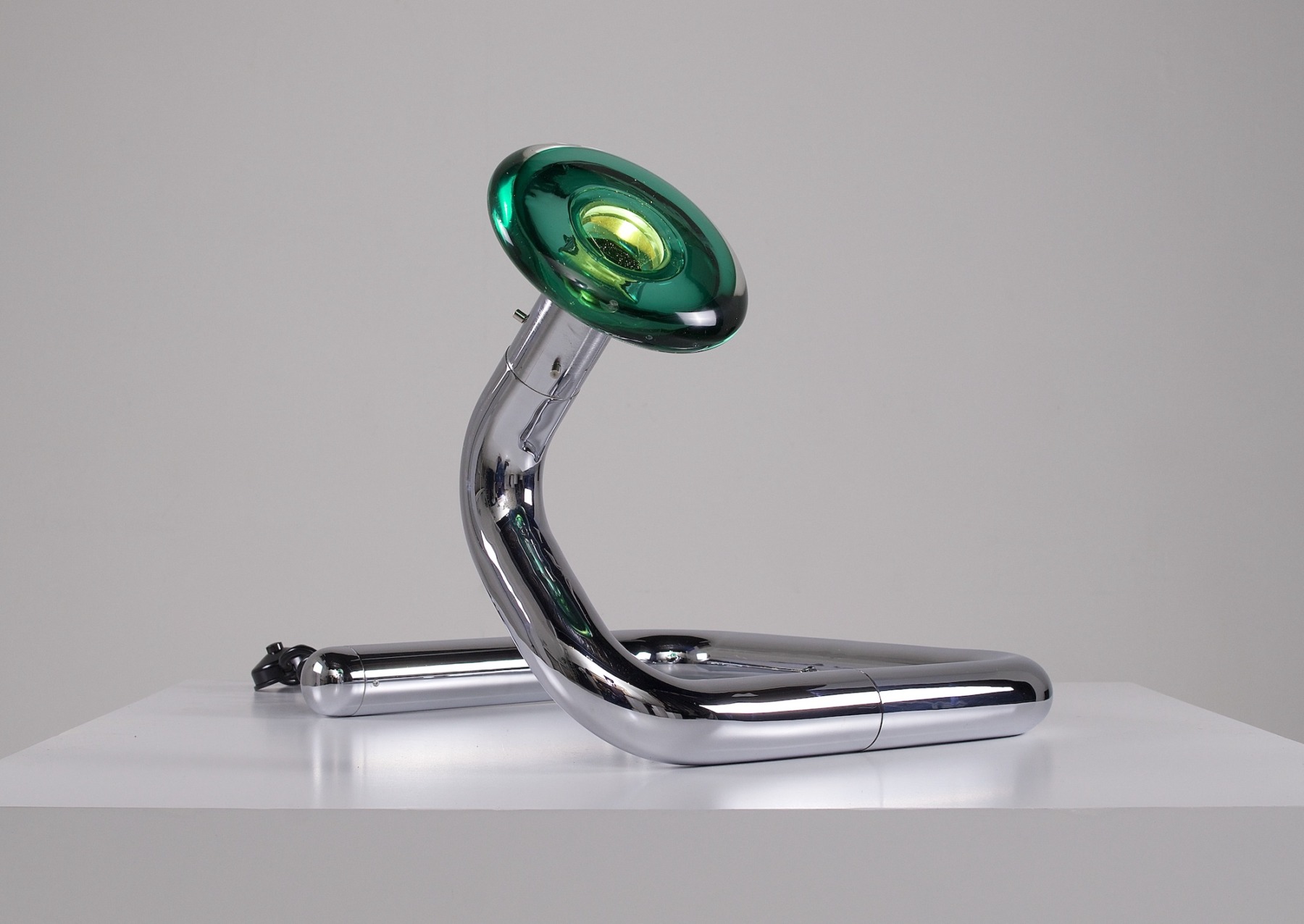
- Mobile lamp in solid brass tube, topped with a green translucent Murano Sommerso murrine, evoking the iconic “serpent lamps” of 1970s Italian design.
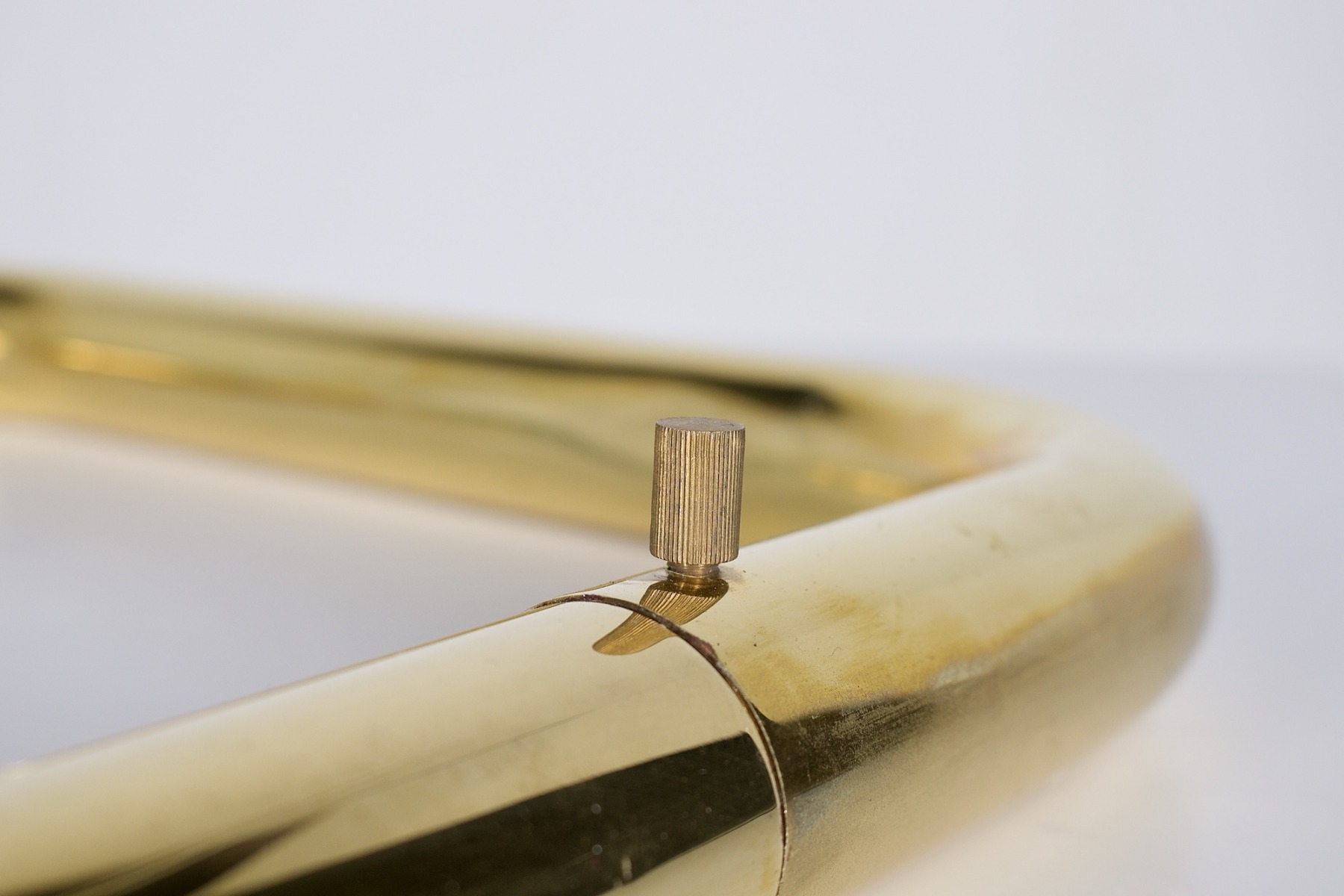
- The lamp’s elbow tilts; its forward or backward rotation (up/down) locks with a screw in 5 different positions.
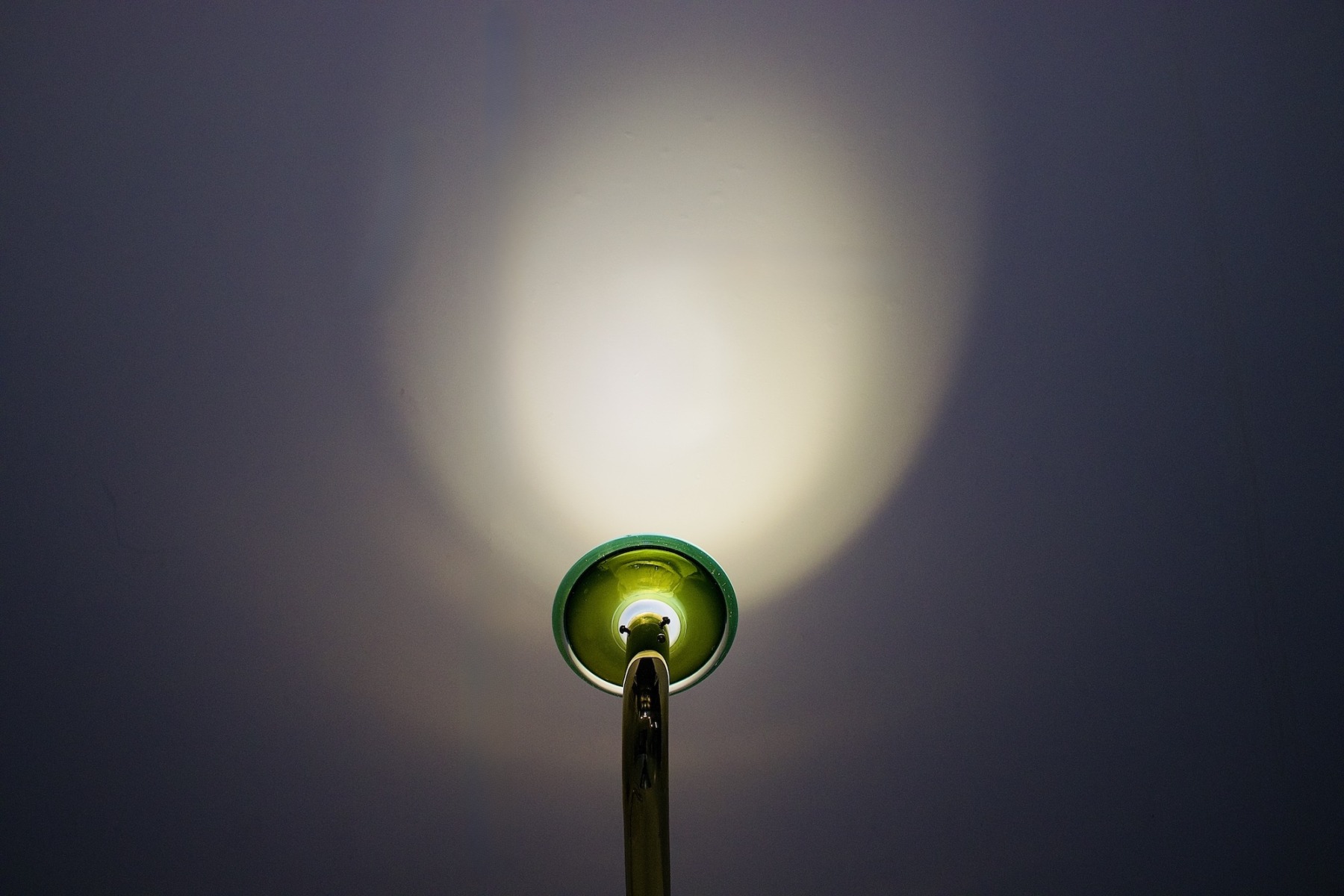
- Electrification replaced, 5W LED spotlight.
- H 55 cm x D 44 cm x W 44 cm.
- Reflector diameter 20 cm.
- A small (normal) wear mark on the glass.
1 available in store

The Sommerso Technique
The Sommerso glass technique was developed in the workshops of master glassmakers on the island of Murano in the mid-20th century, championed by numerous artisans and designers, including Flavio Poli, Alfredo Barbini, as well as creators associated with Venini, who contributed to establishing its technical and aesthetic standards.
During the 1950s, Flavio Poli (1900-1984) developed a major glass production based on the exploration of the sommerso technique. This complex process is based on the successive superimposition of layers of glass, obtained by immersing the object in different crucibles of molten glass. It enables depth effects and subtle chromatic combinations that are impossible to achieve with more traditional processes.
Between 1951 and 1954, he designed several emblematic models grouped under the Valve series, whose shapes were freely inspired by mollusc shells. At the same time, he created vases and bowls with pure lines, combining a layer of colorless glass with one or two layers of colored glass. Today, these creations are known as Sommerso, in direct reference to the technique used.

Vase from the Siderali series, blown crystal adorned with a central murrine, Seguso Vetri d’Arte, 1952.
This production quickly met with widespread critical success. The innovative nature of these pieces, both in their treatment of materials and in their formal language, earned him several awards, including the Compasso d’Oro in 1954. At the time, these objects were surprising for their aesthetics, often judged to be closer to Scandinavian design than to the Venetian glass tradition. During the same period, Swedish manufacturers such as Kosta Boda and Orrefors were producing similar formal designs.
The role of Angelo Seguso,Archimede Seguso‘s younger brother and successor, in the execution of the majority of these pieces is also noteworthy. His technical expertise was essential in mastering the particularly demanding sommerso process.
Flavio Poli developed and perfected the sommerso technique throughout his collaboration with Seguso Vetri d’Arte, which he left in 1963. While other Murano glassmakers subsequently produced comparable pieces, specialists agree that Flavio Poli, combined with Angelo Seguso’s expertise, remains one of the most accomplished interpreters of this technique.
You might also like…

Discover also...

Delivery to Belgium

Delivery to France

Delivery to Luxembourg
