



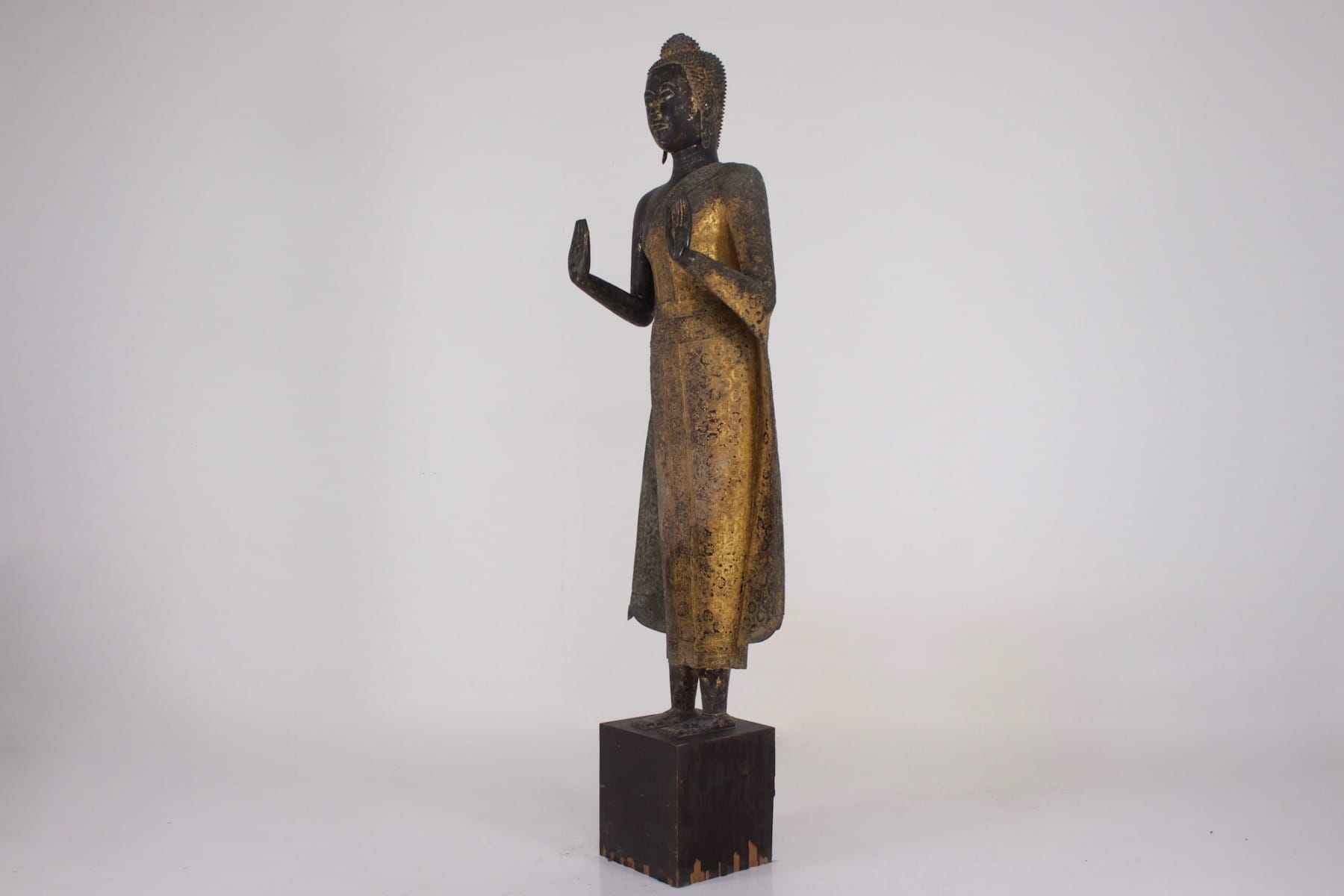


Large Bronze Buddha, Rattanakosin (185cm)
€15000,00
- Large black-lacquered bronze Buddha, partially gilded, shown with the hands in abhaya mudra. The eyes are executed in inlaid mother-of-pearl, heightening the expression of inwardness.
- Thailand, Rattanakosin period, circa 1800.
- Total height (including base): H 185 CM X W 48 cm x D 19 cm
- Base: H 30 cm x W 28 cm x D 28 cm
- Estimated weight 150 kg
- Provenance: Claude de Marteau Collection .
- Sold with certificate of origin.
1 available in store

Buddhist iconography: The abhaya mudra
Like the bhumisparsha mudra, the abhaya mudra, which symbolizes fearlessness, protection, and peace, is a common gesture in Buddhist iconography.
When the Buddha is depicted with only one hand in abhaya mudra, usually the right hand, it represents the gesture of protection or blessing. It’s a posture that signifies assurance and the allaying of fears. (The gesture of non-fear)
When depicted with both hands in abhaya mudra, this reinforces the message of protection and security, often symbolizing universal protection or widespread blessing. These gestures are expressions of compassion and reassurance, but the presence of both hands can also indicate a greater intensity or breadth of message.
The Rattanakosin period, or Bangkok period, extends from 1782 to the present day. It is marked by the founding of Bangkok as the capital of Thailand and is characterized by a cultural and artistic renewal, influenced by Theravāda Buddhism. The bronze artworks of this era stand out for their refinement (as here, with the use of mother-of-pearl for the eyes), their decorative richness, and the abundant use of gilding and lacquer.
Discover also...

Delivery to Belgium

Delivery to France

Delivery to Luxembourg
