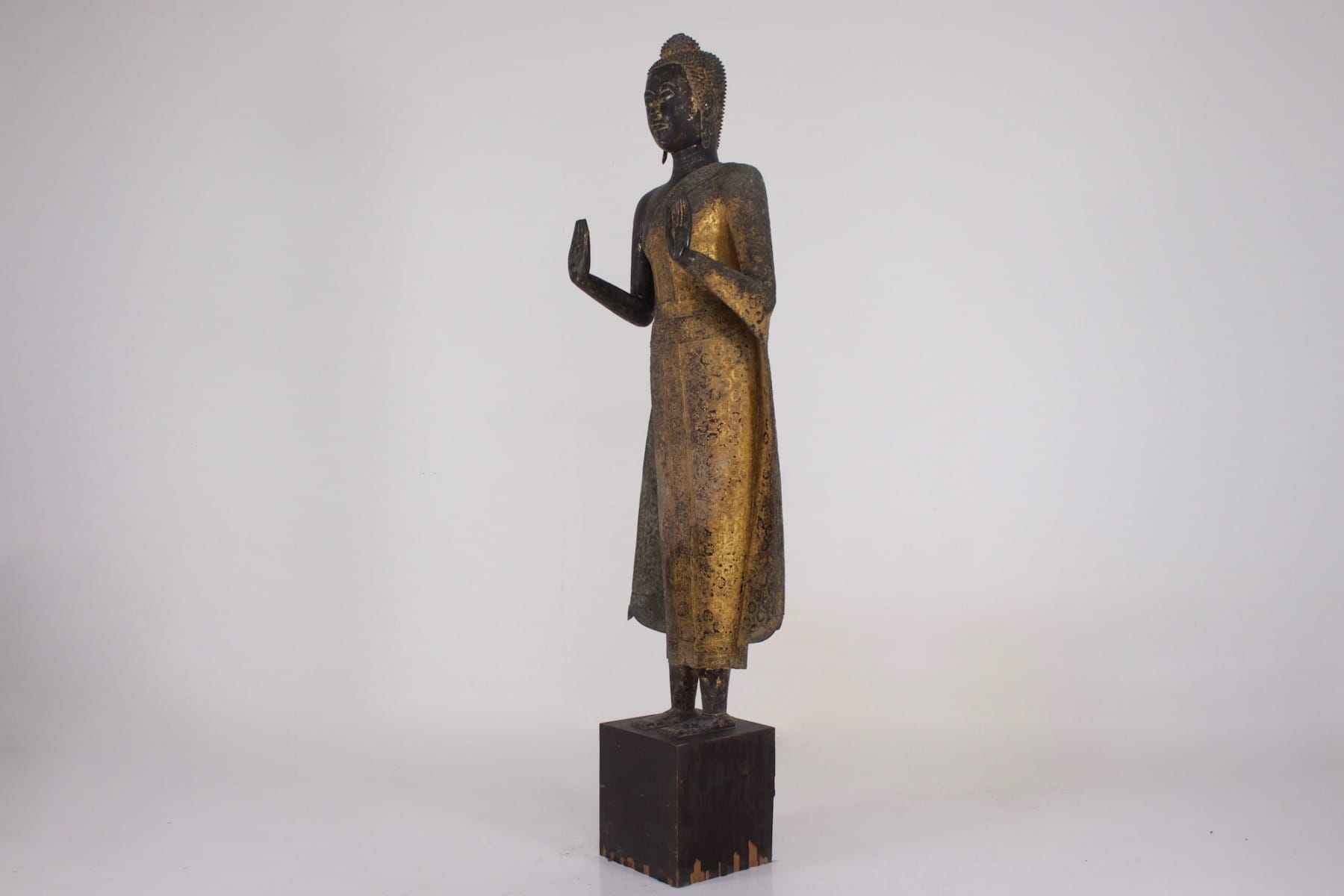
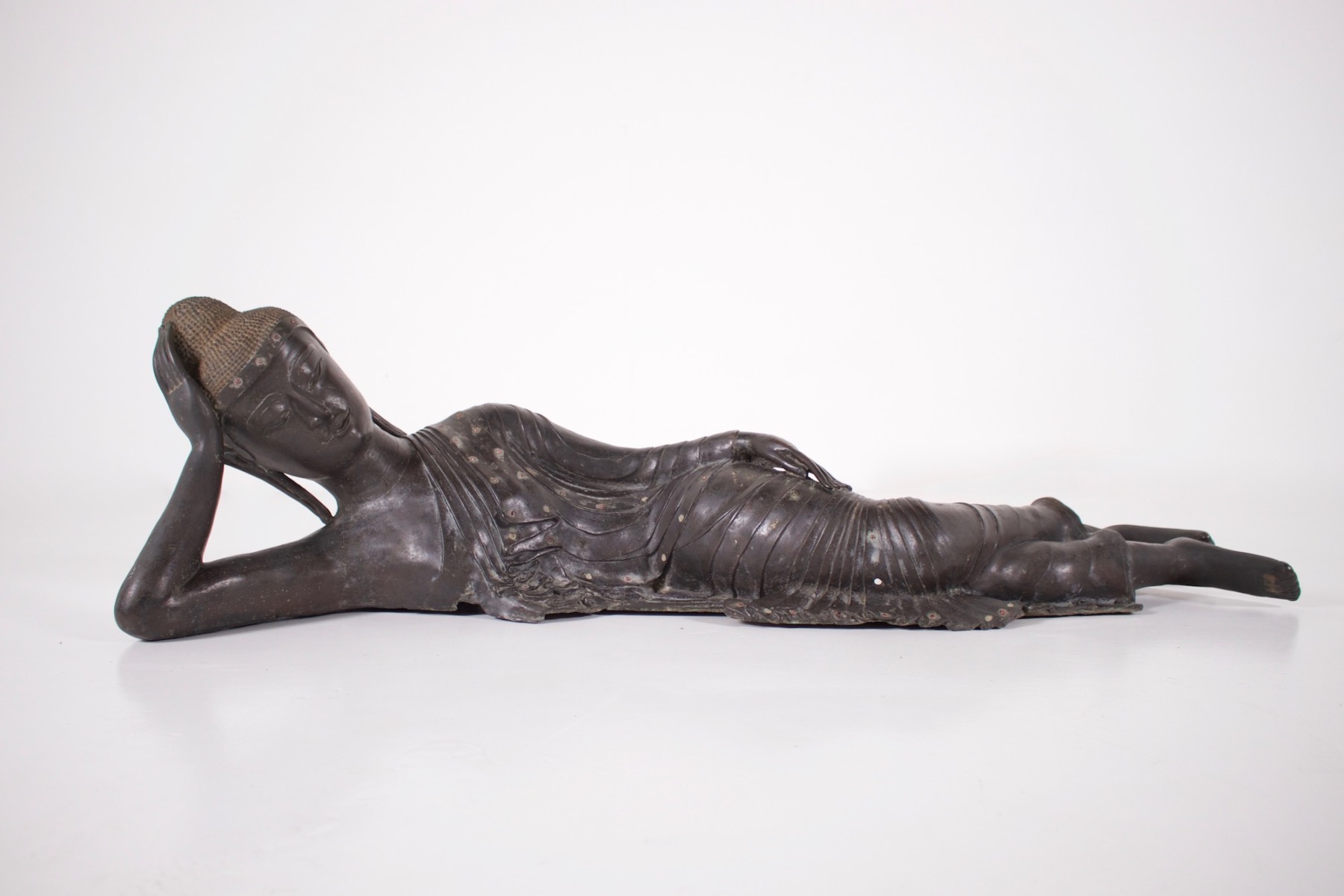
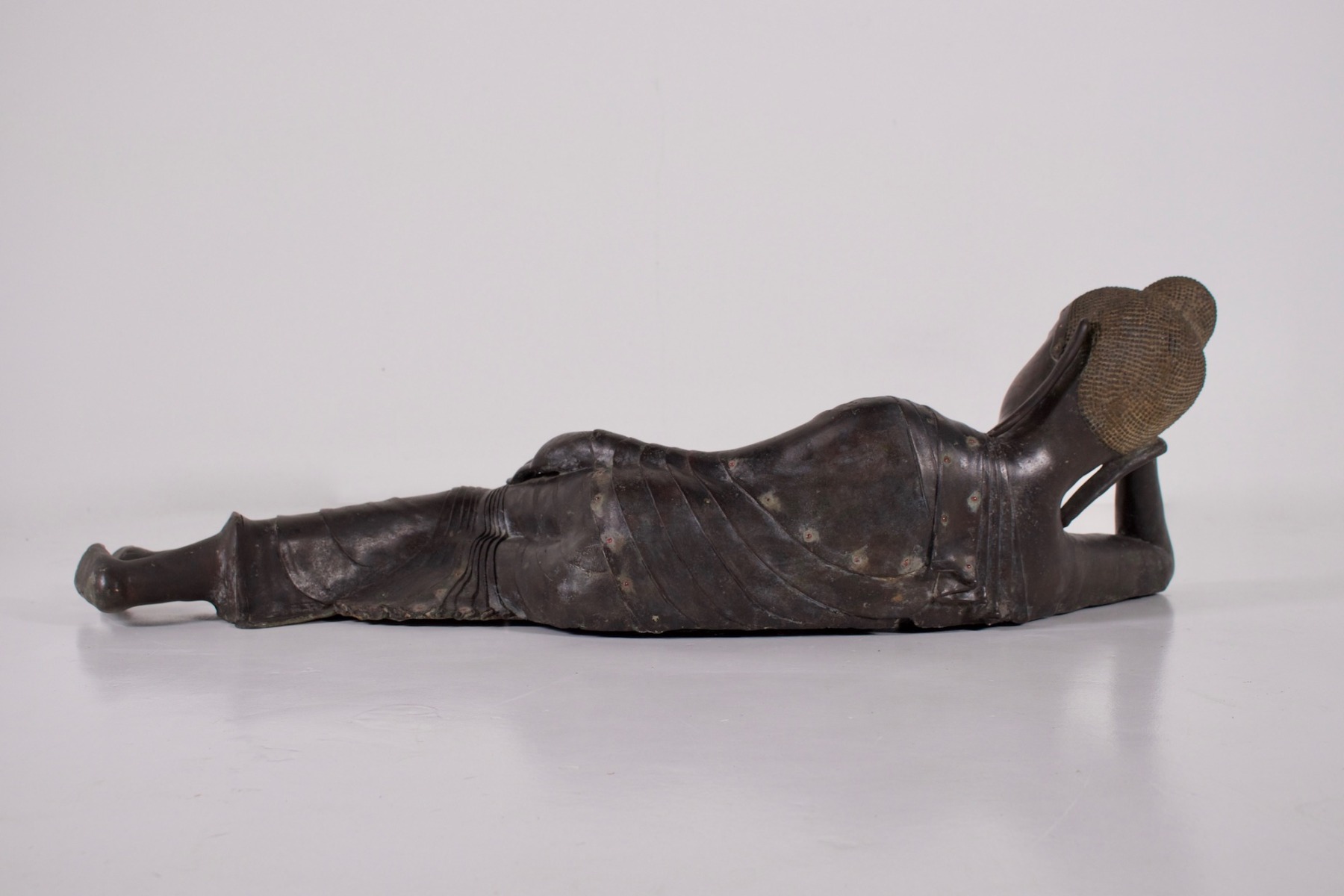
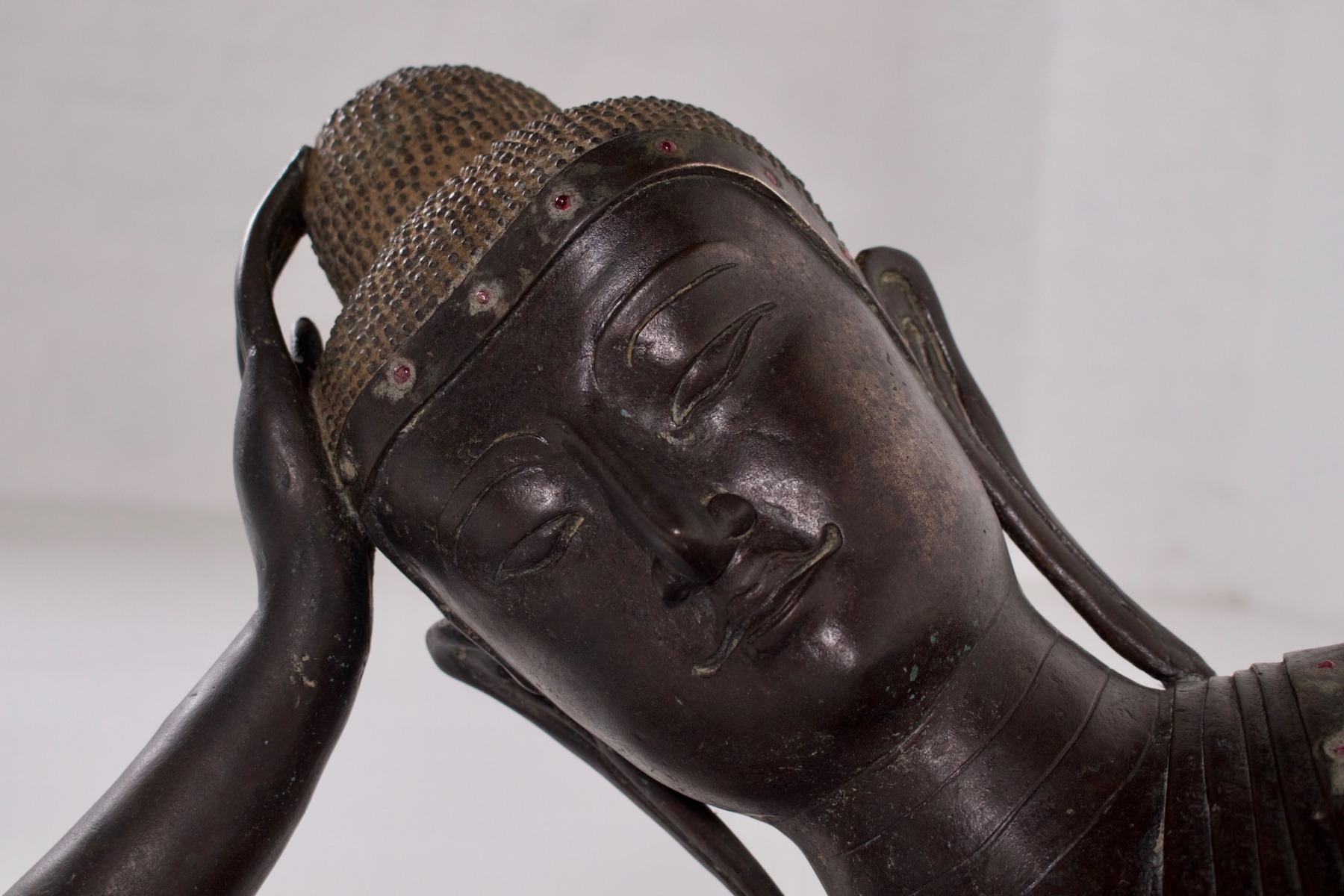
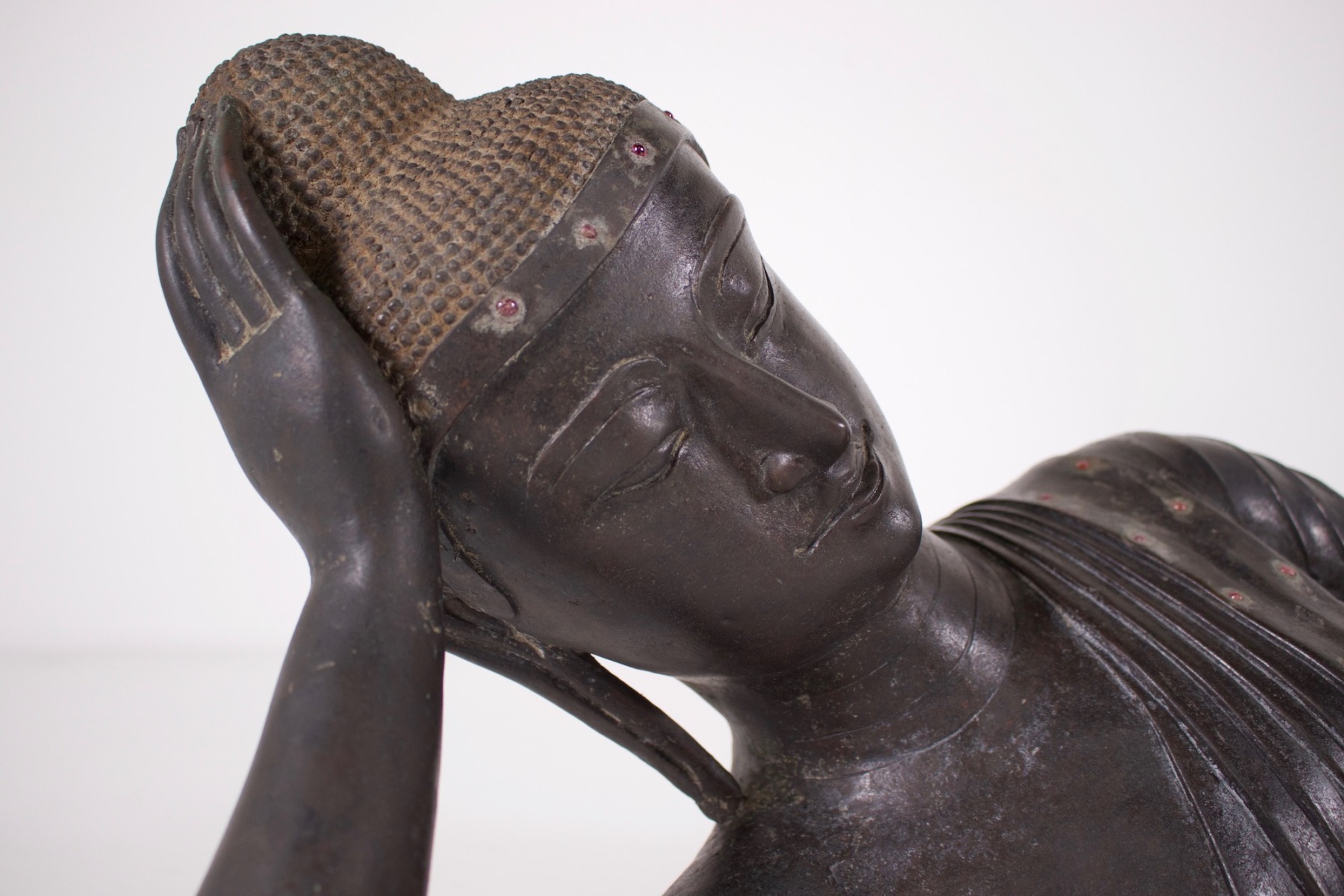
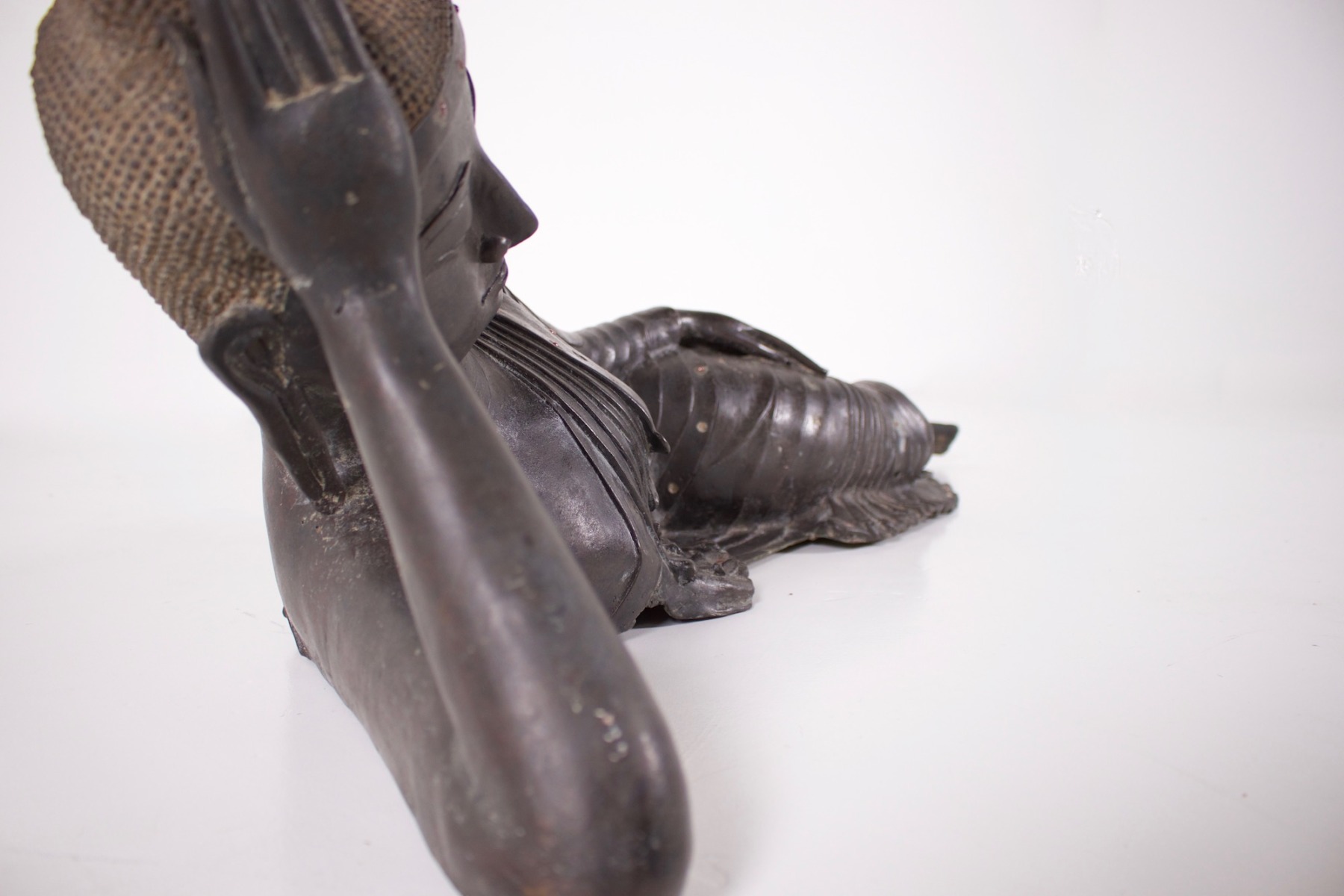


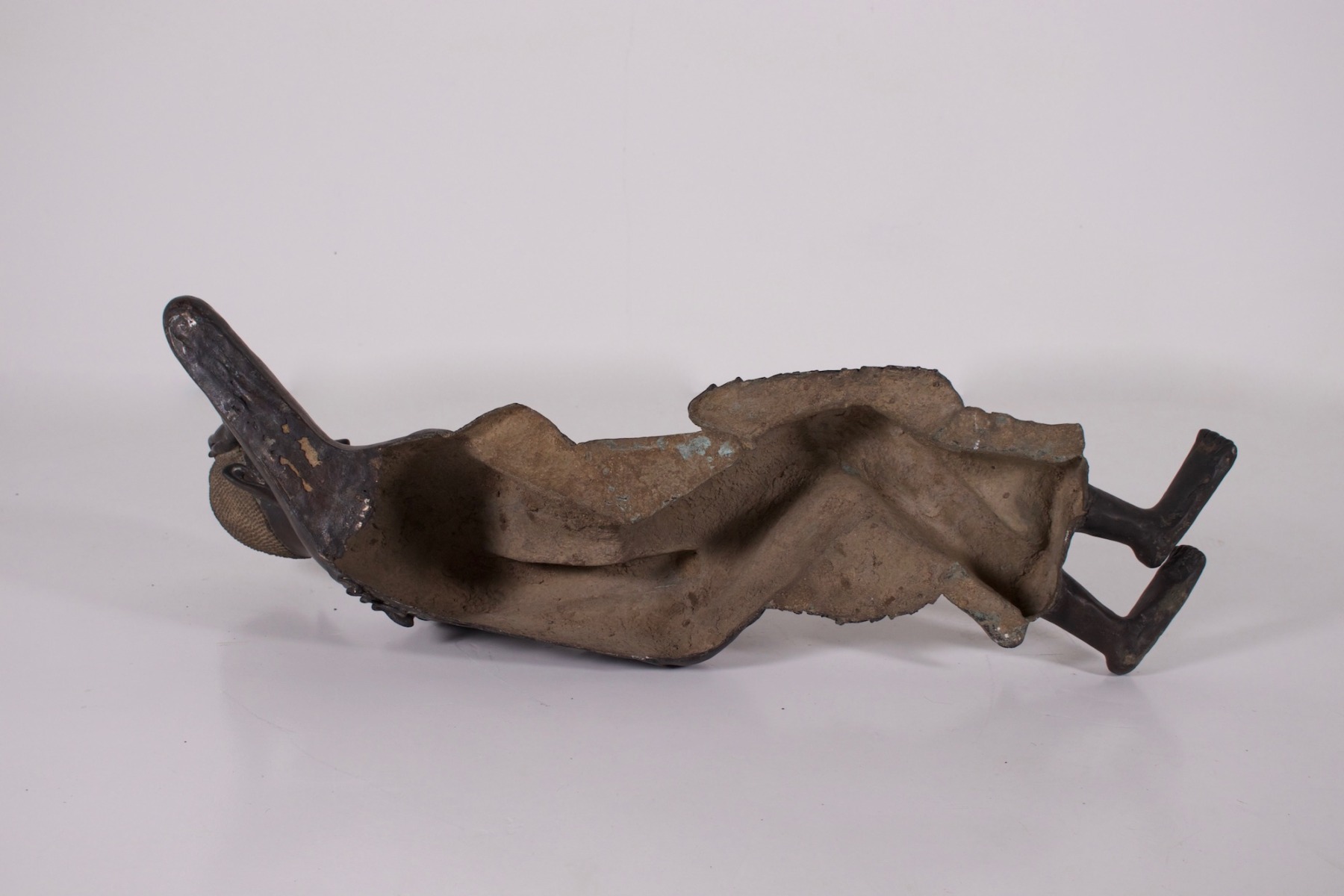
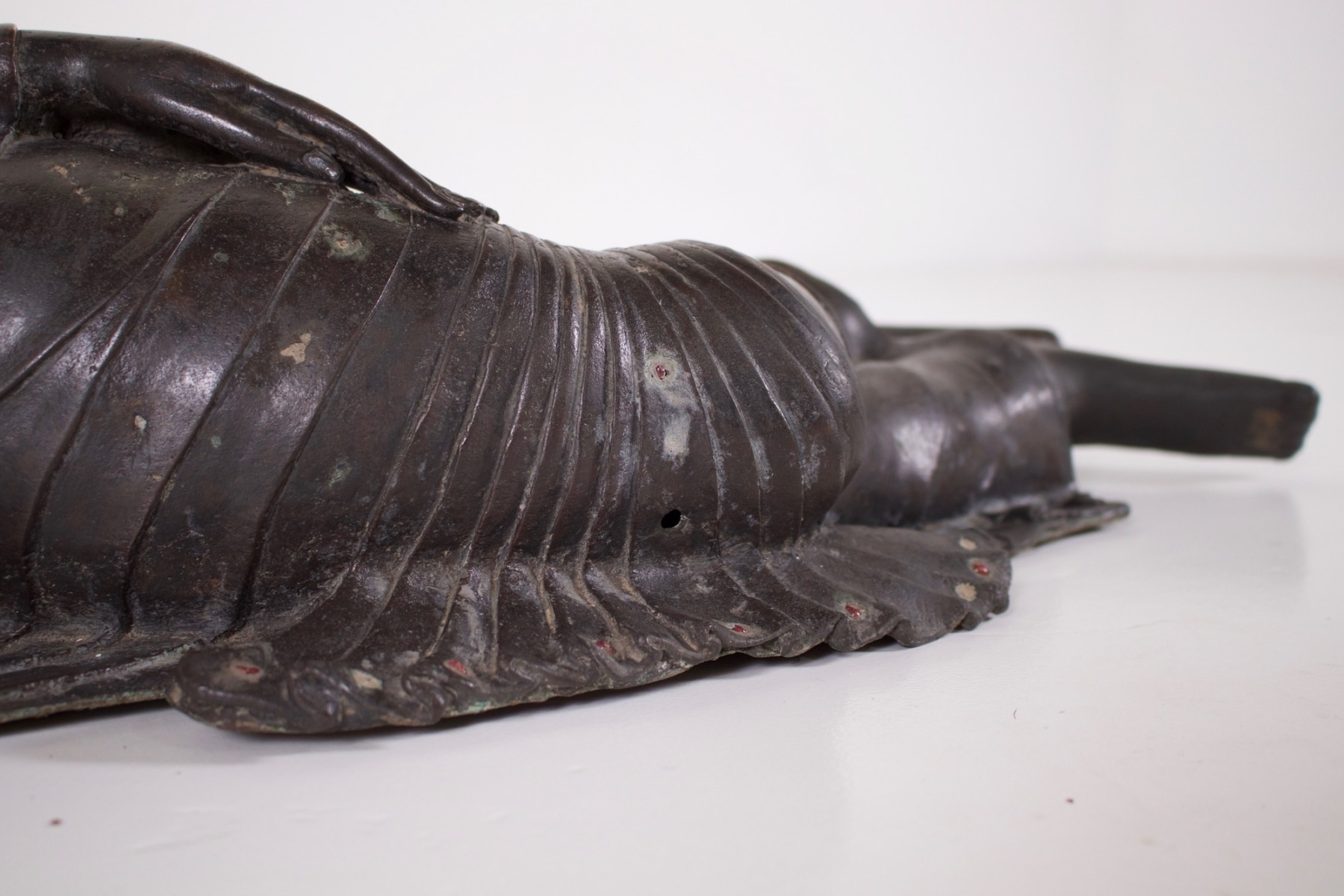

Large Ayutthaya Bronze Buddha Parinirvana (114 cm)
- Buddha Śākyamuni depicted in mahaparinirvana. This pose symbolizes the Enlightened One’s entry into nirvana and corresponds to the cessation of the cycle of births (Samsara). Here, greed, hatred and delusion as conditions of the cycle are extinguished, as is the thirst for existence.
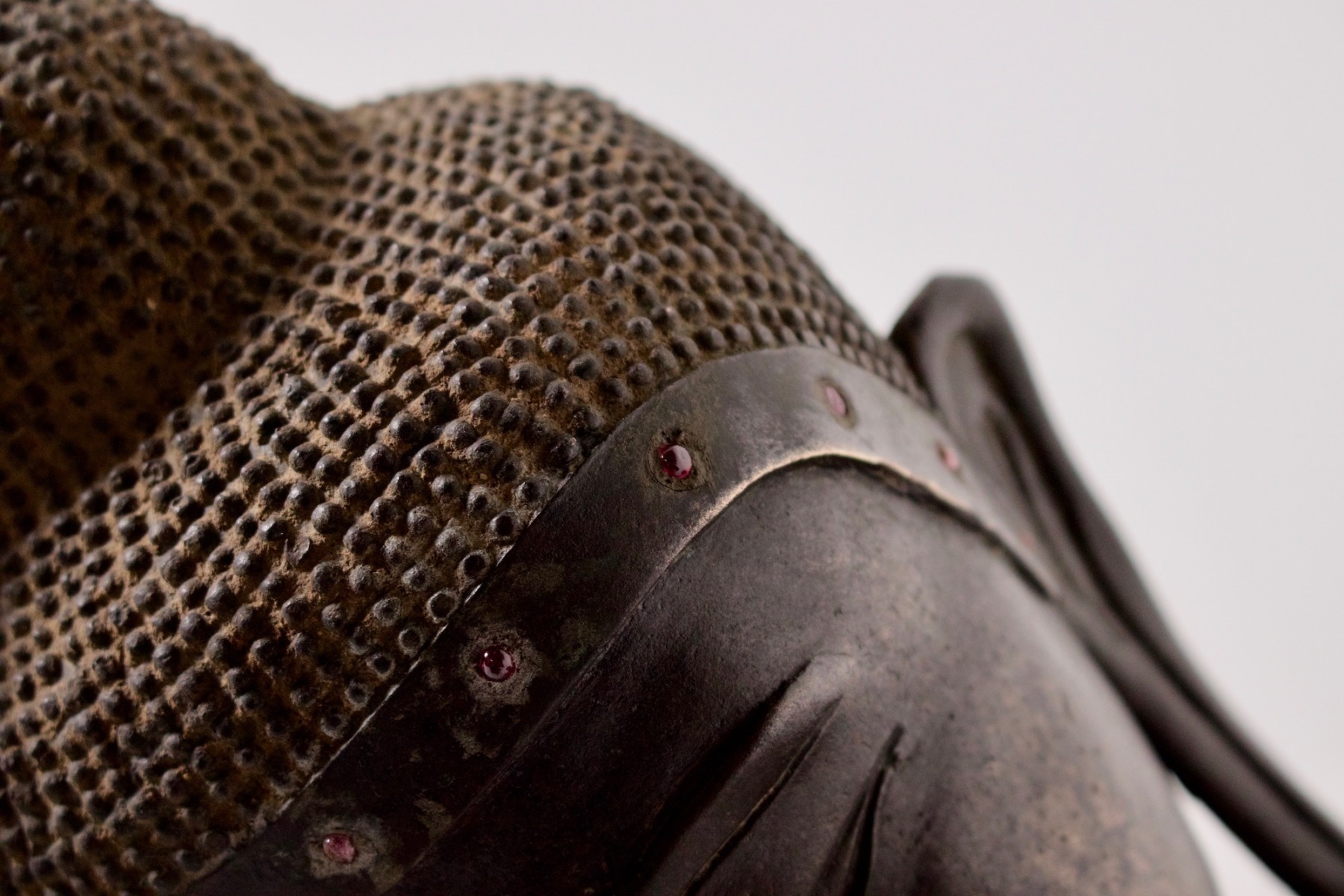
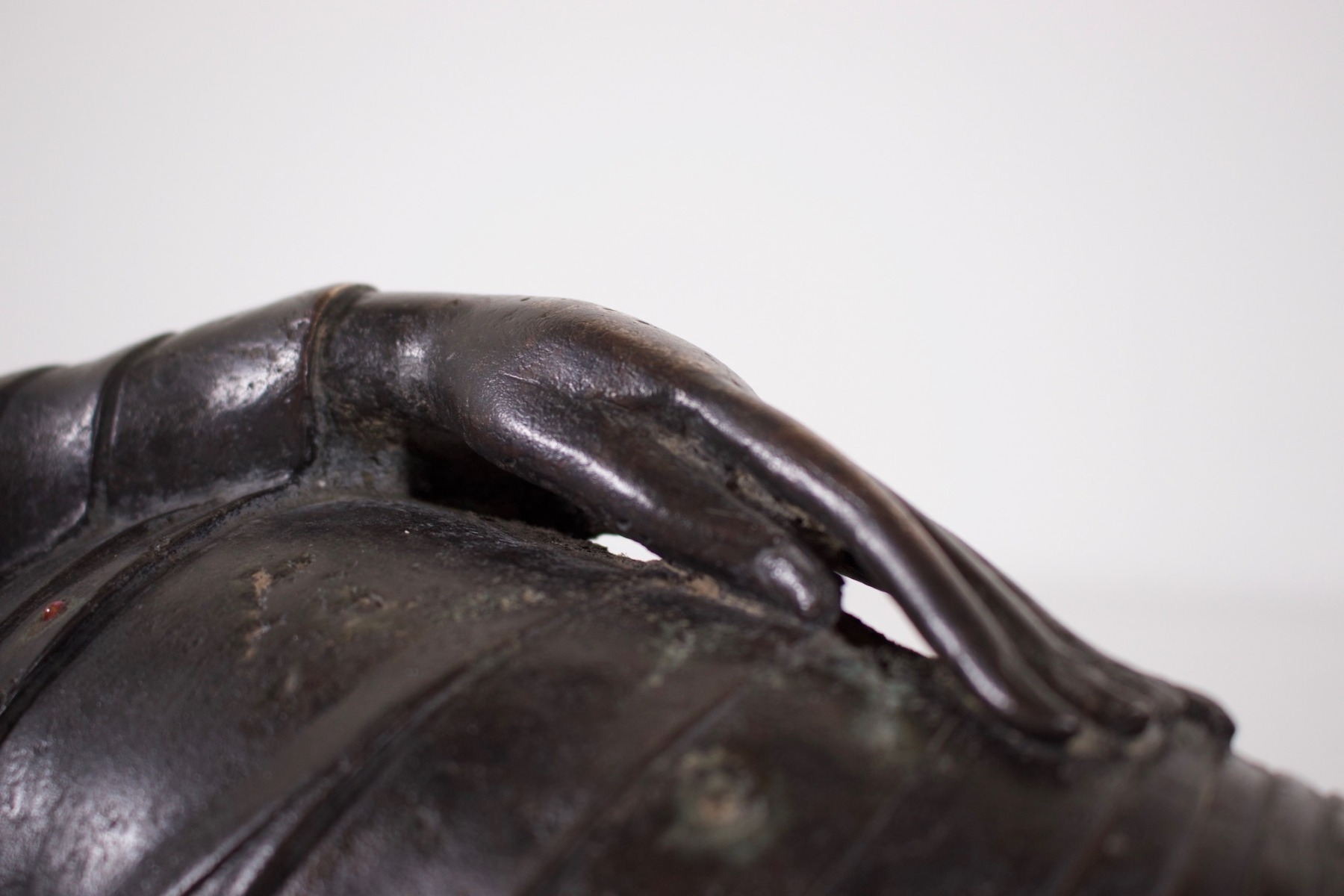
- Ayutthaya-style bronze (1351-1767), 19th century. The wide band and folds of the monastic robe are studded with ruby cabochons.
- Provenance: Estate of collector and art dealer Claude de Marteau. www.thecdmcollection.be
- Sold with certificate of origin.
- W 115 cm x D 30 cm x H 30 cm
- Weight 24 kg
Sold

Delivery in Belgium

Delivery in France

Delivery in Luxembourg

Worldwide delivery
Mahāparinirvāṇa is the term used to designate the Buddha’s physical death and final dissolution from the cycle of existences, a concept called parinirvāṇa. The prefix “mahā” (great, complete) emphasizes that this is the ultimate and complete attainment of nirvana, total liberation from all suffering and rebirth. The Mahāparinibbāna Sutta (or Mahāparinirvāṇa Sūtra) is a sacred text recounting the Buddha’s last days and his parinirvāṇa.
This is the state of complete cessation of suffering, which occurs after the death of a person who has already attained enlightenment (nirvana) during his or her lifetime: After death, the five aggregates (physical and mental components) that constitute a being cease to form, and there is no more rebirth; it is the total liberation from the cycle of death and birth (samsāra) and karma.
The Buddha’s specific Mahāparinirvāṇa
The Mahāparinirvāṇa of Śākyamuni Buddha is a major event in the history of Buddhism, marking the end of his earthly life. The Mahāparinibbāna Sutta (in the Theravāda canon) or the Mahāparinirvāṇa Sūtra (in the Mahāyāna) are sacred texts describing these events.